Amazon Product Video Maker
Turn product descriptions into professional Amazon listing videos in minutes. Agent Opus is an amazon product video maker that generates complete videos from a simple text prompt, script, or product URL. Describe your product, add your logo and product shots, and get a publish-ready video with AI motion graphics, voiceover, and social-ready formatting. No timeline, no editing, no stock footage hunting. Just prompt to video.

Explore what's possible with Agent Opus

Reasons why creators love Agent Opus' Amazon Product Video Maker
Consistent Brand Across Listings
Maintain your visual identity and messaging across every product video, building recognition with every click.
No Studio, No Problem
Skip rental fees and crew costs while still delivering professional-grade videos that convert browsers into buyers.
Launch-Ready in Minutes
Go from product idea to polished Amazon listing video without waiting on agencies or learning complex software.
How to use Agent Opus’ Amazon Product Video Maker
 1
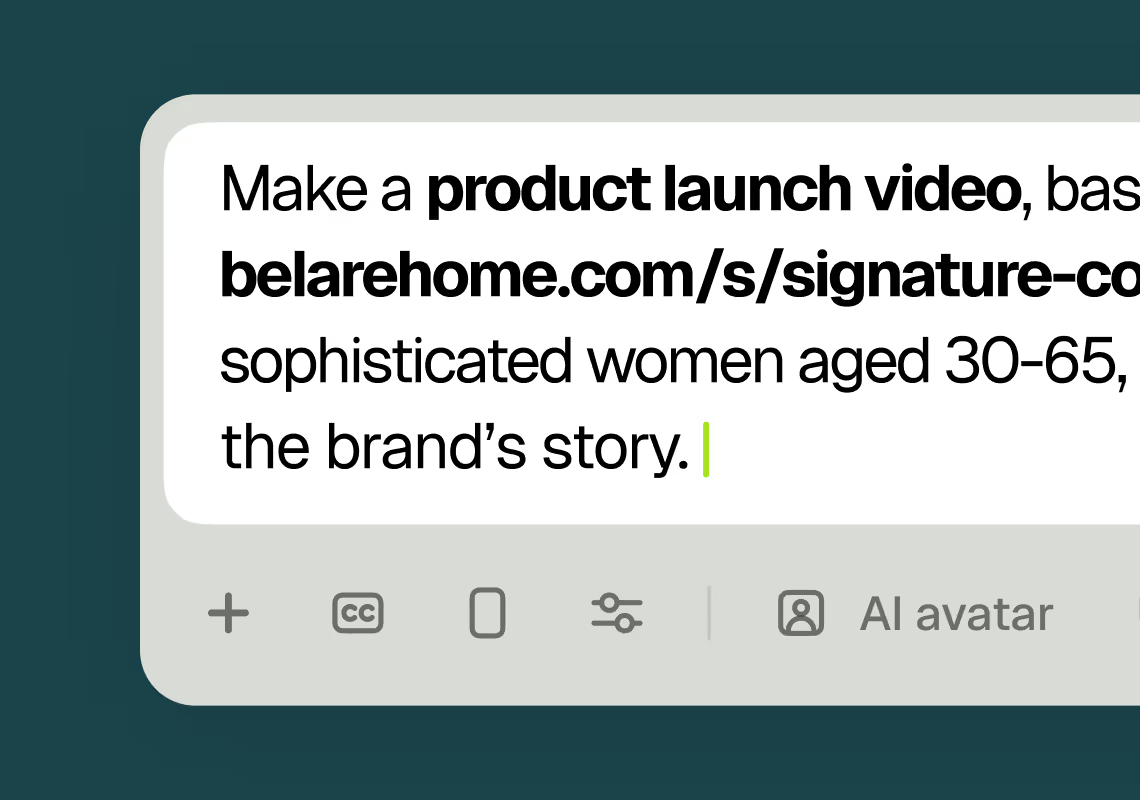
1Describe your video
Paste your promo brief, script, outline, or blog URL into Agent Opus.
 2
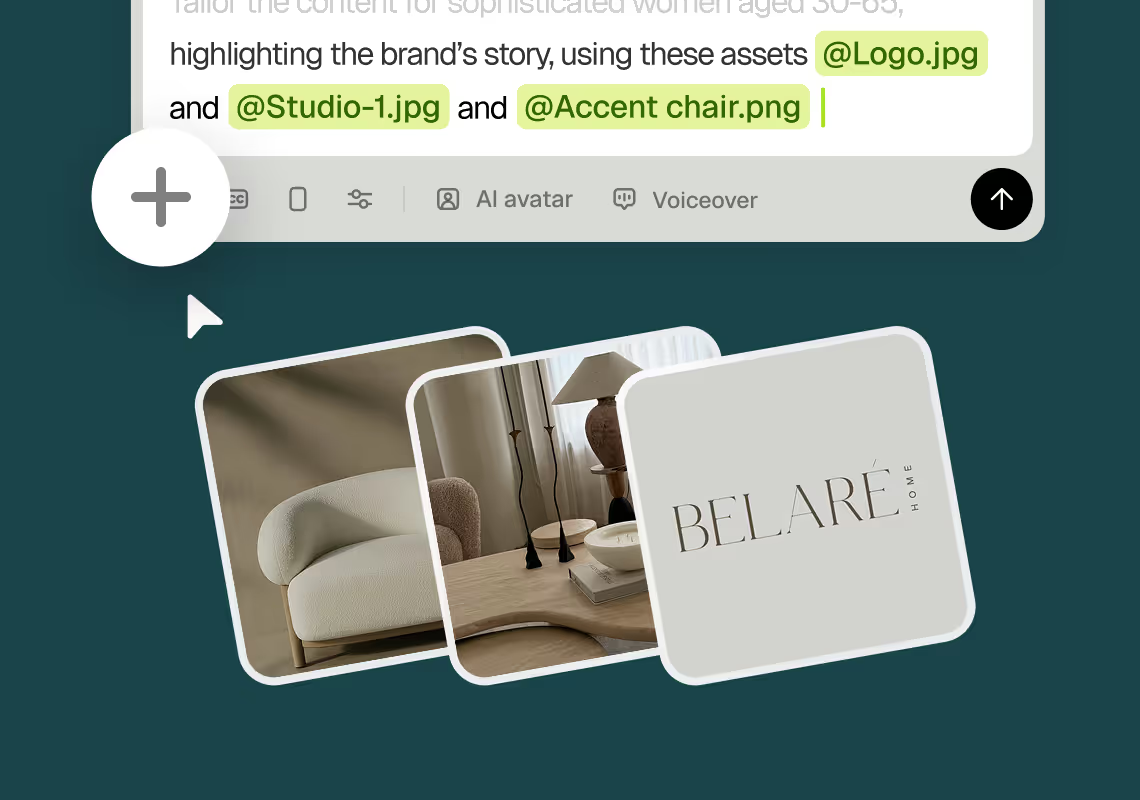
2Add assets and sources
Upload brand assets like logos and product images, or let the AI source stock visuals automatically.
 3
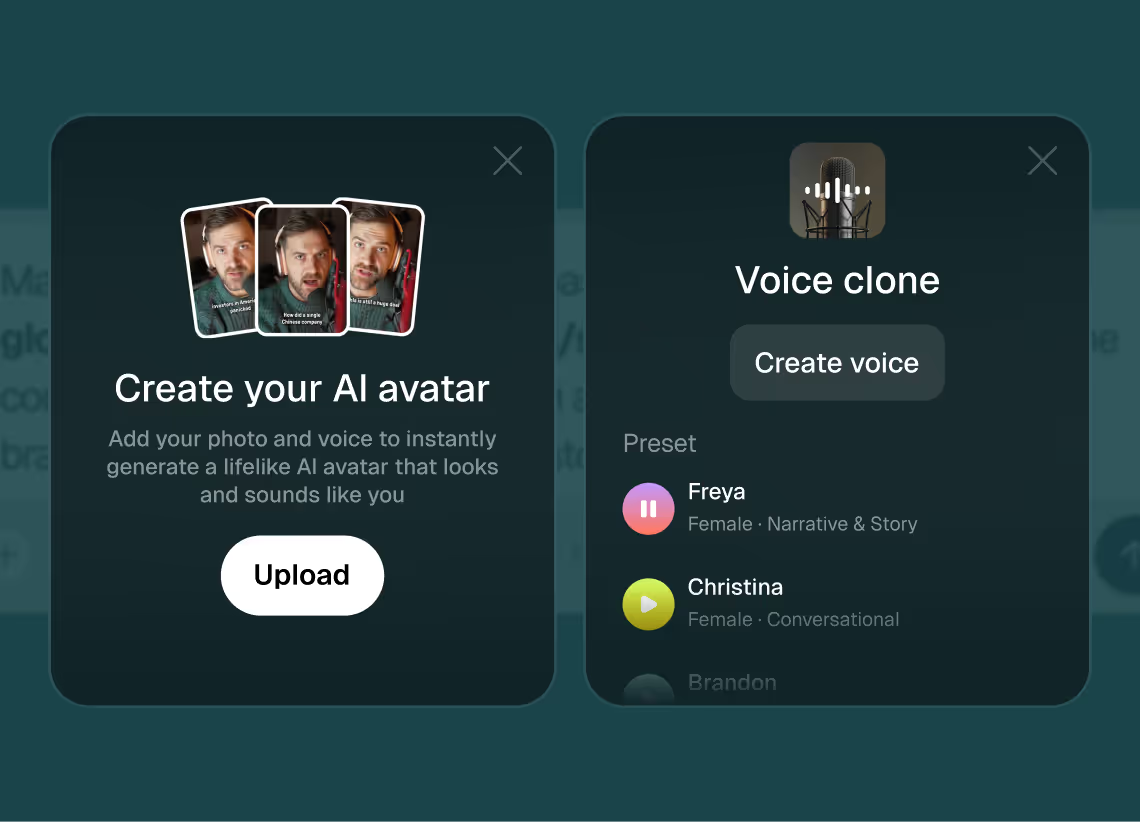
3Choose voice and avatar
Choose voice (clone yours or pick an AI voice) and avatar style (user or AI).
 4
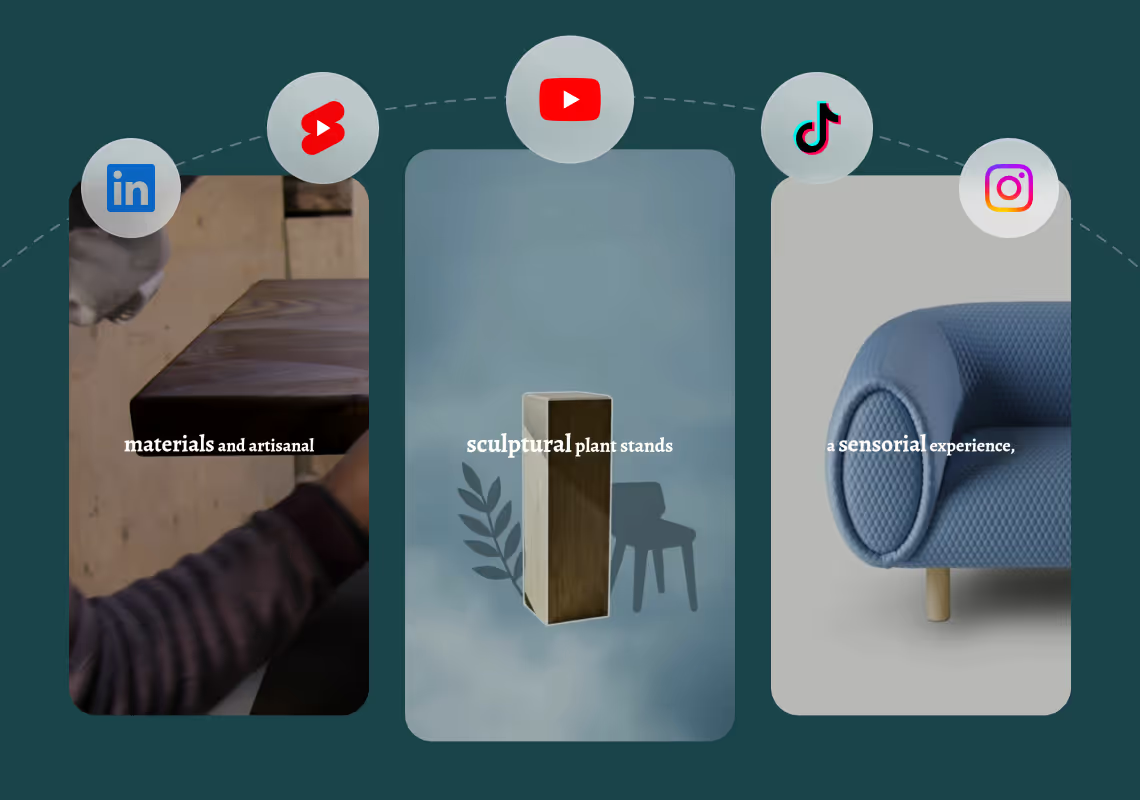
4Generate and publish-ready
Click generate and download your finished promo video in seconds, ready to publish across all platforms.


8 powerful features of Agent Opus' Amazon Product Video Maker
Text Overlay Highlights
Emphasize key selling points with animated text overlays that draw attention to product advantages.
Background Music Integration
Enhance product videos with royalty-free music tracks that match your brand tone and energy.
Multi-Angle Product Shots
Create dynamic videos with rotating views and zoom effects to showcase product details effectively.
Explore more Agent Opus tools
Testimonials
Awesome output, Most of my students and followers could not catch that it was using Agent Opus. Thank you Opus.
Wealth with Gaurav
This looks like a game-changer for us. We're building narrative-driven, visually layered content — and the ability to maintain character and motion consistency across episodes would be huge. If Agent Opus can sync branded motion graphics, tone, and avatar style seamlessly, it could easily become part of our production stack for short-form explainers and long-form investigative visuals.
srtaduck
I reviewed version a and I was very impressed with this version, it did very well in almost all aspects that users need, you would only have to make very small changes and maybe replace one of 2 of the pictures, but even saying that it could be used as is and still receive decent views or even chances at going viral depending on the story or the content the user chooses.
Jeremy
all in all LOVE THIS agent. I'm curious to see how I can push it (within reason) Just need to learn to get the consistency right with my prompts
Rebecca
Frequently Asked Questions
How does an amazon product video maker handle different product types and listing formats?
Agent Opus adapts to any product category by analyzing your input text and visual assets. When you provide a product description, feature list, or Amazon listing URL, the system identifies key selling points, technical specs, use cases, and benefit statements. For physical products, it emphasizes texture, scale, and functionality through motion graphics that highlight dimensions, materials, and features. For supplements or consumables, it focuses on ingredients, benefits, and lifestyle context. For electronics, it showcases interfaces, connectivity, and technical capabilities. The amazon product video maker automatically adjusts pacing based on product complexity. Simple items get concise 15-30 second videos, while technical products receive longer explanations with feature breakdowns. You control the emphasis by structuring your prompt. List features you want highlighted first, specify which product angles to showcase, and indicate whether to focus on problem-solving, lifestyle benefits, or technical specifications. The system sources complementary visuals from web and stock libraries when your product shots need context. For example, a yoga mat video might include studio environments or workout scenes, while a kitchen gadget video adds food prep contexts. Upload multiple product images to give the generator options for different scenes. The more visual assets you provide, the more authentic and varied your listing video becomes. Brand consistency is maintained through your logo placement, color scheme detection from uploaded assets, and voice selection that matches your brand tone.
What are best practices for writing prompts that generate high-converting Amazon listing videos?
Effective amazon product video maker prompts start with a clear structure: problem, solution, features, and call-to-action. Begin by stating the customer pain point your product solves, then introduce your product as the solution. List 3-5 key features or benefits in priority order, and end with a purchase prompt or guarantee statement. Be specific about visual emphasis. Instead of 'show the product,' write 'open with close-up of stainless steel blade, then pull back to show full knife set on marble counter.' Specify which product angles matter most. For apparel, mention fabric texture shots and fit demonstrations. For tools, call out grip details and action shots. The more visual direction you provide, the better the scene assembly. Include exact text you want on screen. Write out feature callouts like 'Waterproof IP68 Rating' or 'Includes 3 Bonus Attachments' so the motion graphics layer displays your precise messaging. Specify voiceover tone and pacing. Add notes like 'energetic, fast-paced for fitness audience' or 'calm, reassuring for baby products.' If using voice cloning, record your script sample with the exact energy and pacing you want in the final video. Reference your target customer in the prompt. 'For busy parents' or 'for professional contractors' helps the system choose appropriate visual contexts and lifestyle imagery. Mention competitor advantages if relevant, like 'unlike plastic alternatives' or 'twice the battery life of leading brands.' Keep prompts between 150-400 words for best results. Shorter prompts work for simple products, longer prompts suit complex items with multiple features. Test different prompt structures and compare outputs to find what converts best for your product category.
Can an amazon product video maker maintain consistent branding across an entire product catalog?
Agent Opus ensures brand consistency through asset libraries and style templates that apply across all your product videos. Upload your logo once and it appears in the same position across every video you generate. The system detects your brand colors from uploaded assets and applies them to motion graphics, text overlays, and transition elements. Create a voice clone from a 30-second sample and use that same voice across your entire catalog, ensuring every product video sounds like it comes from the same brand. For visual consistency, build an asset library with your standard product photography backgrounds, lifestyle contexts, and brand-specific imagery. When generating new videos, Agent Opus pulls from this library to maintain the same look and feel. If you photograph products on white backgrounds with consistent lighting, every generated video will match that aesthetic. Specify a brand style in your prompts using phrases like 'minimalist tech aesthetic' or 'warm, family-friendly tone' and the amazon product video maker applies those guidelines to scene composition, pacing, and visual effects. The motion graphics engine learns from your preferences. After generating several videos, the system recognizes patterns in which text styles, transition speeds, and visual effects you keep versus regenerate. This implicit feedback improves consistency over time. For agencies managing multiple brands, create separate workspaces with distinct asset libraries, voice clones, and style preferences for each client. Switch between brand contexts without cross-contamination. Export settings maintain consistency too. Set your preferred aspect ratio, video length range, and music genre once, then every subsequent video follows those specifications. This is critical for sellers with 50+ SKUs who need every listing video to feel cohesive while highlighting individual product differences. The result is a branded video library that looks professionally produced by a single creative team, even though each video was generated independently from text prompts.
How does this amazon product video maker handle technical products with complex features and specifications?
Agent Opus excels at technical product videos by breaking complex information into digestible visual sequences. When you input detailed specifications, the system identifies which technical details matter most to buyers and structures the video to explain them clearly. For electronics, it creates separate scenes for connectivity options, power specifications, compatibility lists, and performance metrics. Each technical point gets its own motion graphic treatment with clear on-screen text, iconography, and voiceover explanation. The amazon product video maker uses visual hierarchy to prevent information overload. Primary features like processor speed or battery capacity appear in larger, bold text with longer screen time. Secondary specs like dimensions or weight get briefer mentions with smaller text overlays. This mimics how buyers prioritize information when evaluating technical products. For products with multiple use cases, the generator creates distinct scenes for each application. A multi-tool might show separate 10-second sequences for cutting, measuring, and fastening tasks. A software product gets individual scenes for different features or user workflows. Upload diagrams, charts, or technical illustrations and Agent Opus integrates them into the video with animated callouts that highlight specific components or data points. This works well for products where internal mechanisms, chemical processes, or system architectures need explanation. The voiceover pacing adjusts for technical content. Complex specifications get slower narration with pauses between points, giving viewers time to absorb information. Simple feature lists move faster to maintain engagement. You control this by adding pacing notes in your prompt like 'explain slowly with pauses' or 'quick feature rundown.' For B2B or professional-grade products, the system adopts a more formal tone with precise terminology. Consumer products get simplified explanations that avoid jargon. Specify your audience expertise level in the prompt to calibrate the technical depth. The motion graphics for technical products emphasize clarity over flash. Expect clean diagrams, numbered lists, comparison tables, and before-after demonstrations rather than decorative animations. This matches buyer expectations for technical purchases where information density matters more than entertainment value.