Product Demo Video Maker
Turn a brief or script into a finished product demo video in minutes. Agent Opus is a product demo video maker that generates complete videos from text—assembling scenes, adding AI motion graphics, sourcing visuals, and syncing voiceover automatically. Describe your product, upload your logo and screenshots, and get a publish-ready demo for social, landing pages, or sales outreach. No timeline, no manual editing, no design skills required.

Explore what's possible with Agent Opus

Reasons why creators love Agent Opus' Product Demo Video Maker
Consistent Brand Voice
Every demo sounds and looks like your team made it, building trust across your entire product lineup.
Convert Browsers to Buyers
Show exactly how your product solves problems, turning curious visitors into confident customers faster.
How to use Agent Opus’ Product Demo Video Maker
 1
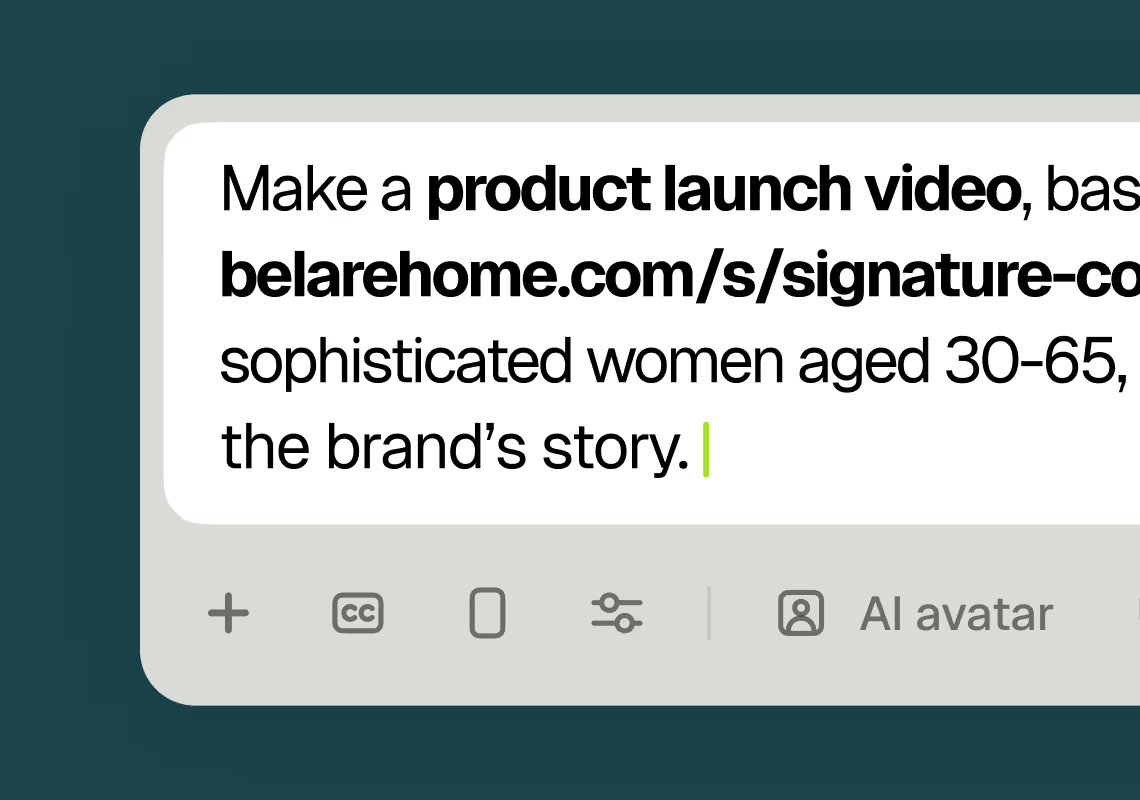
1Describe your video
Paste your promo brief, script, outline, or blog URL into Agent Opus.
 2
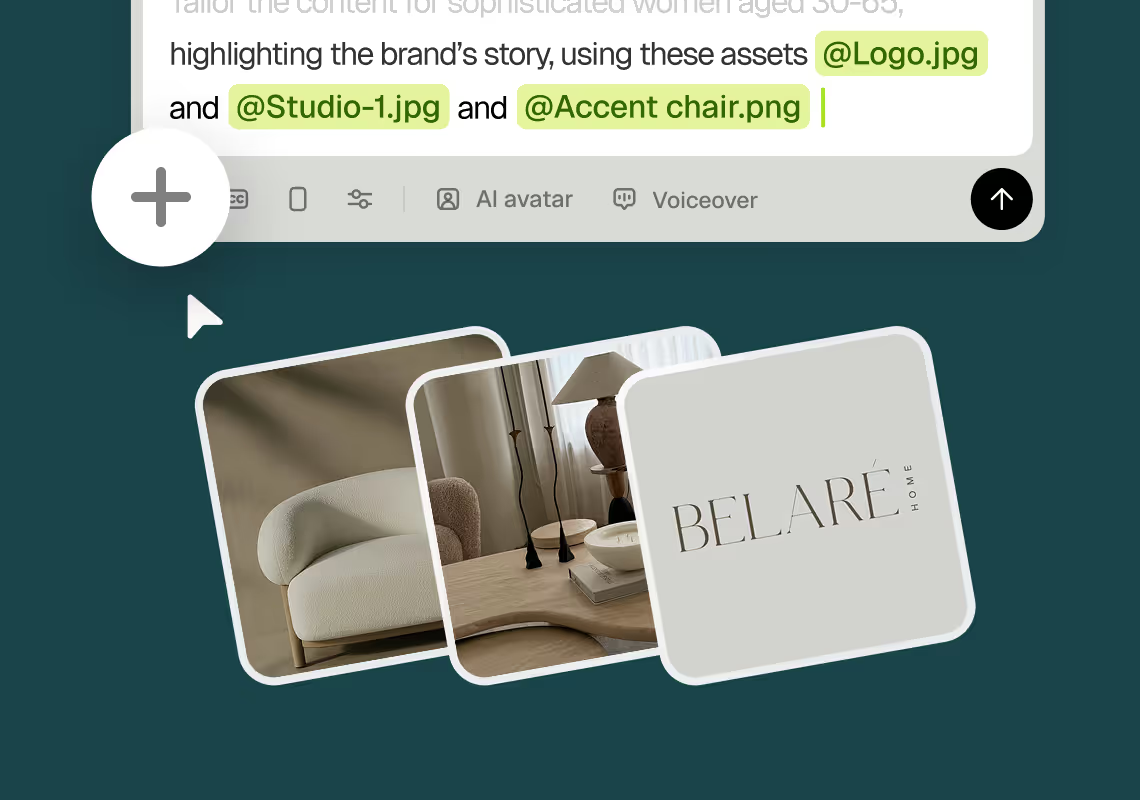
2Add assets and sources
Upload brand assets like logos and product images, or let the AI source stock visuals automatically.
 3
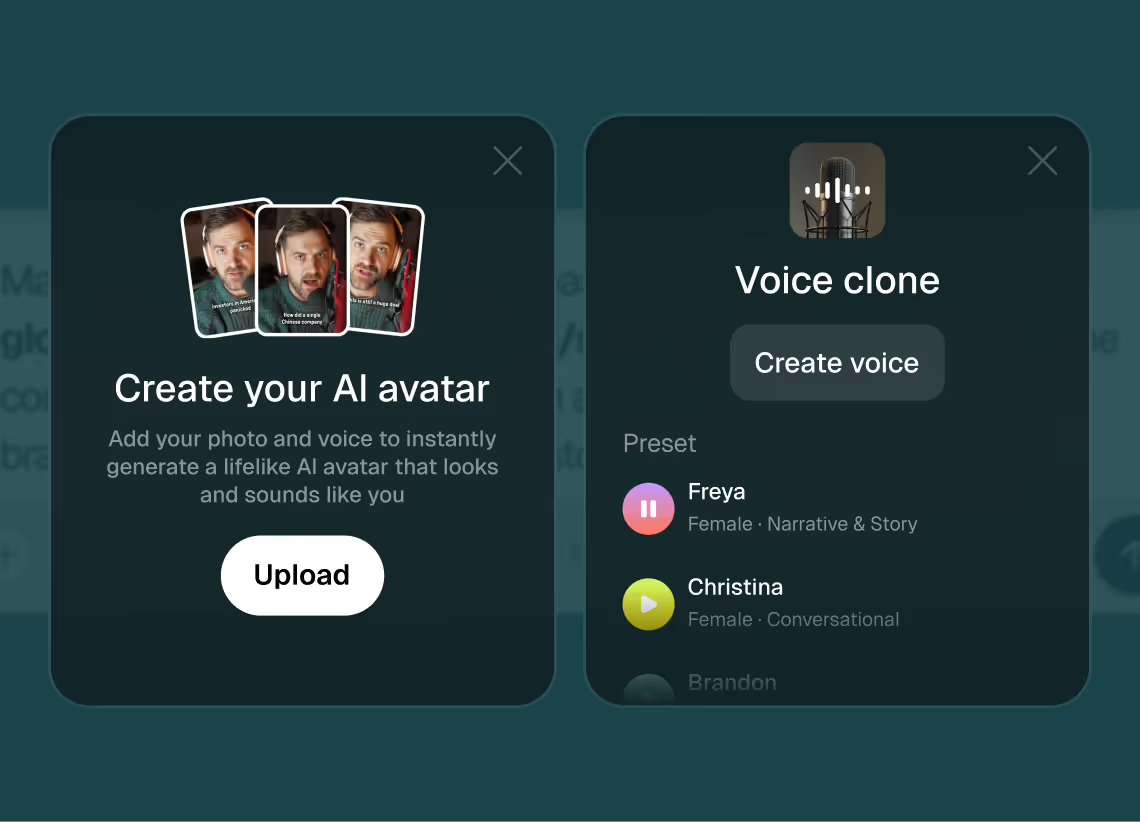
3Choose voice and avatar
Choose voice (clone yours or pick an AI voice) and avatar style (user or AI).
 4
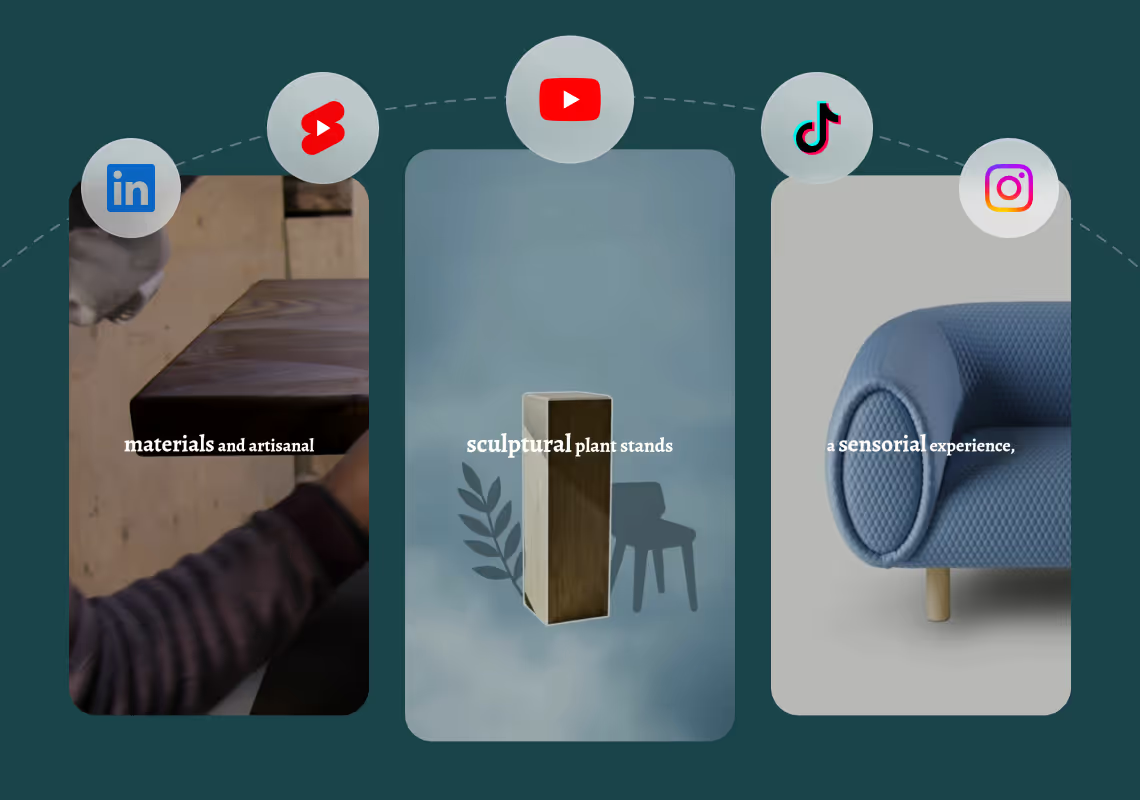
4Generate and publish-ready
Click generate and download your finished promo video in seconds, ready to publish across all platforms.


8 powerful features of Agent Opus' Product Demo Video Maker
Script to Demo Video
Turn product descriptions or feature lists into polished demo videos with AI narration and visuals.
Multi-Format Export
Generate demo videos optimized for landing pages, social media, and email campaigns in one workflow.
Automated Screen Recording Integration
Combine your screen captures with AI-generated intros, transitions, and voice-over for seamless demos.
Brand-Consistent Templates
Create demo videos that match your brand colors, fonts, and style guidelines automatically.
Call-to-Action Overlays
Embed clickable CTAs and end screens that drive viewers to sign up or learn more.
Instant Preview Renders
See your product demo video take shape in real time before finalizing and exporting.
AI Voice Narration
Add professional voice-over to your product demos without recording equipment or studio time.
Feature Highlight Sequences
Generate multi-scene videos that spotlight key product benefits with dynamic text and motion graphics.
Explore more Agent Opus tools
Testimonials
Awesome output, Most of my students and followers could not catch that it was using Agent Opus. Thank you Opus.
Wealth with Gaurav
This looks like a game-changer for us. We're building narrative-driven, visually layered content — and the ability to maintain character and motion consistency across episodes would be huge. If Agent Opus can sync branded motion graphics, tone, and avatar style seamlessly, it could easily become part of our production stack for short-form explainers and long-form investigative visuals.
srtaduck
I reviewed version a and I was very impressed with this version, it did very well in almost all aspects that users need, you would only have to make very small changes and maybe replace one of 2 of the pictures, but even saying that it could be used as is and still receive decent views or even chances at going viral depending on the story or the content the user chooses.
Jeremy
all in all LOVE THIS agent. I'm curious to see how I can push it (within reason) Just need to learn to get the consistency right with my prompts
Rebecca
Frequently Asked Questions
How does a product demo video maker like Agent Opus generate videos from a brief?
Agent Opus uses a multi-stage AI pipeline to transform text into a complete product demo video. When you submit a brief, script, or outline, the system first analyzes your input to identify key features, benefits, and messaging hierarchy. It then generates a scene-by-scene storyboard that maps each product point to a visual sequence. Next, the AI assembles scenes by integrating your uploaded assets—logos, product screenshots, app UI—with auto-sourced royalty-free stock imagery and web visuals that match your product category and aesthetic. AI motion graphics are applied to each scene, adding kinetic typography, animated callouts, transitions, and compositing effects that highlight features dynamically. Voiceover is generated using either your cloned voice or a professional AI voice, with natural pacing, emphasis, and sync to on-screen text. If you choose an avatar option, the AI composites a presenter (user or AI-generated) into the video, lip-synced to the voiceover. Finally, the system adds a background soundtrack, adjusts pacing for platform requirements, and exports social-ready files in multiple aspect ratios. The entire process runs automatically—no timeline scrubbing, no manual keyframing, no editing UI. You describe what you want, upload your product visuals, and Agent Opus delivers a publish-ready demo in minutes. This approach eliminates the traditional bottlenecks of scriptwriting, storyboarding, stock sourcing, and post-production, making professional product demo video creation accessible to any team or solo founder.
What are best practices for prompts in a product demo video maker workflow?
To get the best results from a product demo video maker like Agent Opus, structure your prompt or brief around three core elements: product context, key features, and desired outcome. Start with a one-sentence product description that defines what your product does and who it serves—for example, 'A project management tool for remote teams' or 'An AI writing assistant for marketers.' This context helps the AI select appropriate visuals, tone, and pacing. Next, list three to five key features or benefits you want to showcase, using plain language and specific examples. Instead of 'Great collaboration,' write 'Real-time document editing with live cursors and inline comments.' Specificity guides the AI to generate more accurate scenes and motion graphics. If you have a preferred structure—such as problem-solution-CTA or feature walkthrough—mention it explicitly. For example, 'Start with the pain point of scattered project files, then show how our unified dashboard solves it, and end with a free trial CTA.' Include any brand guidelines, such as tone (professional, playful, technical) or visual style (minimalist, bold, corporate). Upload high-quality product screenshots, logos, and app UI in PNG or JPG format, and label them clearly (e.g., 'dashboard-screenshot.png' or 'mobile-app-home.png'). If you want a specific voiceover style, describe it—'energetic and conversational' or 'calm and authoritative'—and choose voice cloning if you want your own voice, or select an AI voice that matches your brand. Avoid vague prompts like 'Make a cool demo'; instead, be directive: 'Show the onboarding flow, highlight the drag-and-drop builder, and emphasize speed with a 10-second task completion.' The more structured and specific your input, the more polished and on-target your product demo video will be.
Can a product demo video maker keep on-brand voices, logos, and visuals across multiple videos?
Yes. Agent Opus is designed to maintain brand consistency across every product demo video you generate. When you upload your logo, brand colors, product screenshots, and app UI, the system stores these assets and integrates them into every video you create. This means your logo appears in the same position, your color palette is applied to motion graphics and text overlays, and your product visuals are prioritized over generic stock imagery. For voiceover, Agent Opus offers voice cloning, which captures your unique vocal tone, cadence, and accent. Once cloned, your voice becomes a reusable asset—every demo you generate can use the same voice, ensuring a consistent presenter experience across product launches, feature updates, and sales videos. If you prefer an AI voice, you can select one from the library and use it consistently across all projects. The AI motion graphics engine also learns from your brand guidelines. If you specify a visual style in your first prompt—such as 'clean, minimalist animations with sans-serif typography'—Agent Opus applies that style to subsequent videos, reducing the need to re-describe your preferences. For teams managing multiple product lines or regional campaigns, this consistency is critical. You can generate dozens of product demo videos with different scripts and features, but every output will share the same logo placement, voice, color scheme, and motion graphics style. This eliminates the brand drift that occurs when multiple freelancers or agencies produce videos independently. The result is a cohesive video library that reinforces brand recognition and professionalism, whether you're publishing to social media, embedding on landing pages, or sharing in sales decks.
What are the limitations or edge cases of a product demo video maker like Agent Opus?
While Agent Opus automates the entire product demo video creation process, there are scenarios where the AI may require additional input or where manual refinement is beneficial. First, highly technical or niche products with specialized jargon may need more detailed prompts to ensure accurate visual representation. For example, if you're demoing a developer tool with complex code snippets or API workflows, you should provide annotated screenshots and explicit scene descriptions to guide the AI. Generic prompts like 'Show the API integration' may result in abstract visuals; instead, write 'Show a code editor with a sample API call, highlight the authentication header, and display the JSON response.' Second, Agent Opus relies on auto-sourced stock imagery and web visuals to supplement your uploaded assets. If your product has a unique UI or proprietary design elements not found in stock libraries, you must upload high-quality screenshots for every feature you want to showcase. The AI cannot invent product visuals from scratch—it assembles scenes using the assets you provide plus royalty-free imagery that matches your prompt. Third, voiceover pacing and emphasis are optimized for clarity and engagement, but if your demo requires a very specific cadence—such as matching a live presentation or syncing to a pre-recorded audio track—you may need to adjust your script or provide timing cues in your prompt. Fourth, while Agent Opus exports social-ready videos in multiple aspect ratios, platform-specific constraints like maximum video length (e.g., 60 seconds for TikTok) may require you to shorten your script or focus on fewer features per video. The AI will not automatically truncate content; you control the scope of each demo. Finally, Agent Opus generates publish-ready videos without a manual editing UI, which means you cannot trim individual frames, adjust keyframes, or rearrange scenes after generation. If you need a different structure or emphasis, you refine your prompt and regenerate. This trade-off—speed and automation versus granular control—is intentional. For most product demo use cases, the AI's output is immediately usable, but teams with highly specific creative requirements may need to iterate on prompts or supplement with light post-production in external tools.