Split Screen Video Maker
Agent Opus is a complete split screen video maker that generates professional multi-panel videos from text. Describe your vision—side-by-side comparisons, before-and-after reveals, dual perspectives, or product showcases—and get a finished, publish-ready split screen video in minutes. No timeline, no manual layout work, no editing UI. Just prompt to polished video with AI motion graphics, synchronized pacing, voiceover, and social-ready aspect ratios. Perfect for creators, marketers, and founders who need compelling split screen content without the production overhead.

Explore what's possible with Agent Opus

Reasons why creators love Agent Opus' Split Screen Video Maker
No Studio, No Problem
Create professional side-by-side comparisons and tutorials without cameras, crews, or expensive production setups.
Scale Content Faster
Repurpose one recording into multiple split-screen variations for different platforms, multiplying your reach with minimal effort.
How to use Agent Opus’ Split Screen Video Maker
 1
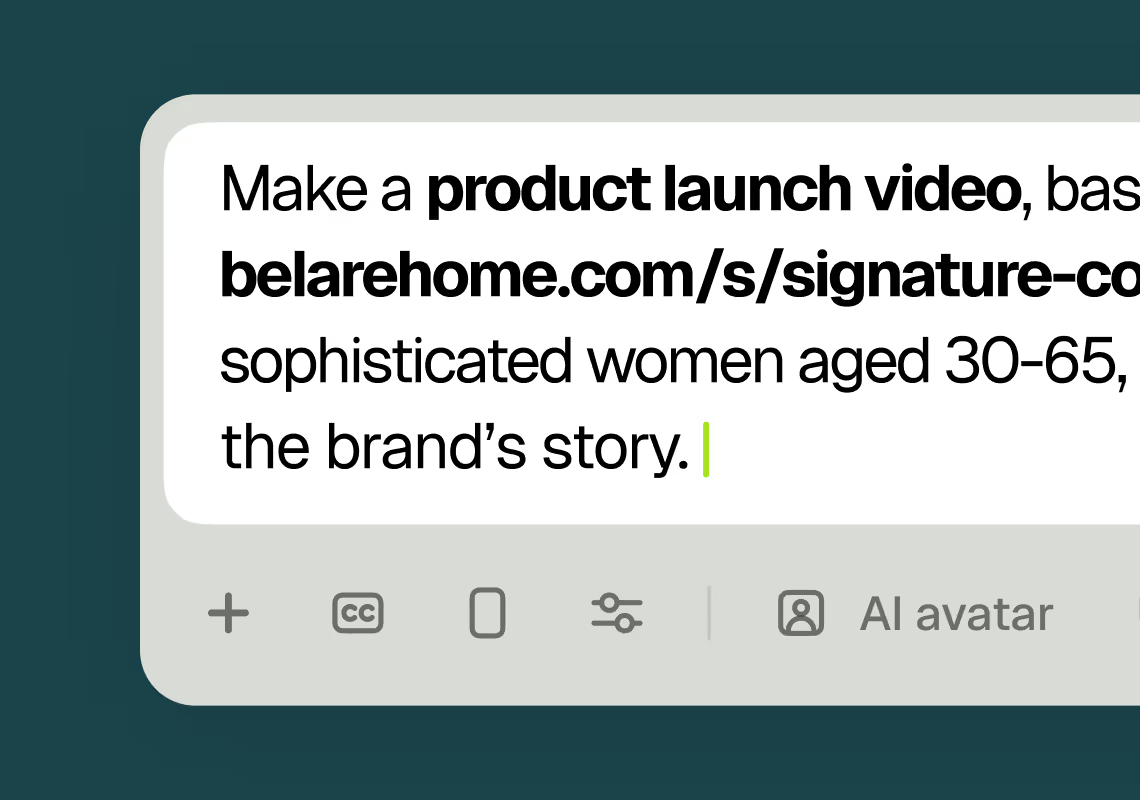
1Describe your video
Paste your promo brief, script, outline, or blog URL into Agent Opus.
 2
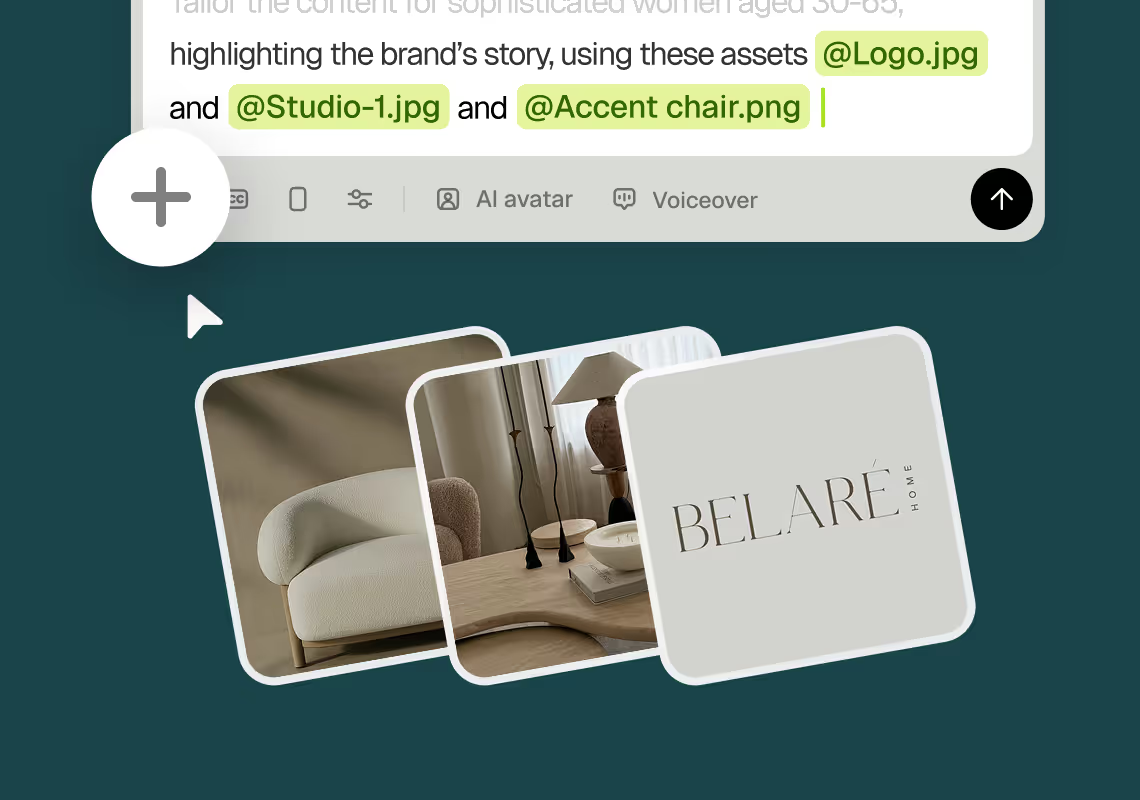
2Add assets and sources
Upload brand assets like logos and product images, or let the AI source stock visuals automatically.
 3
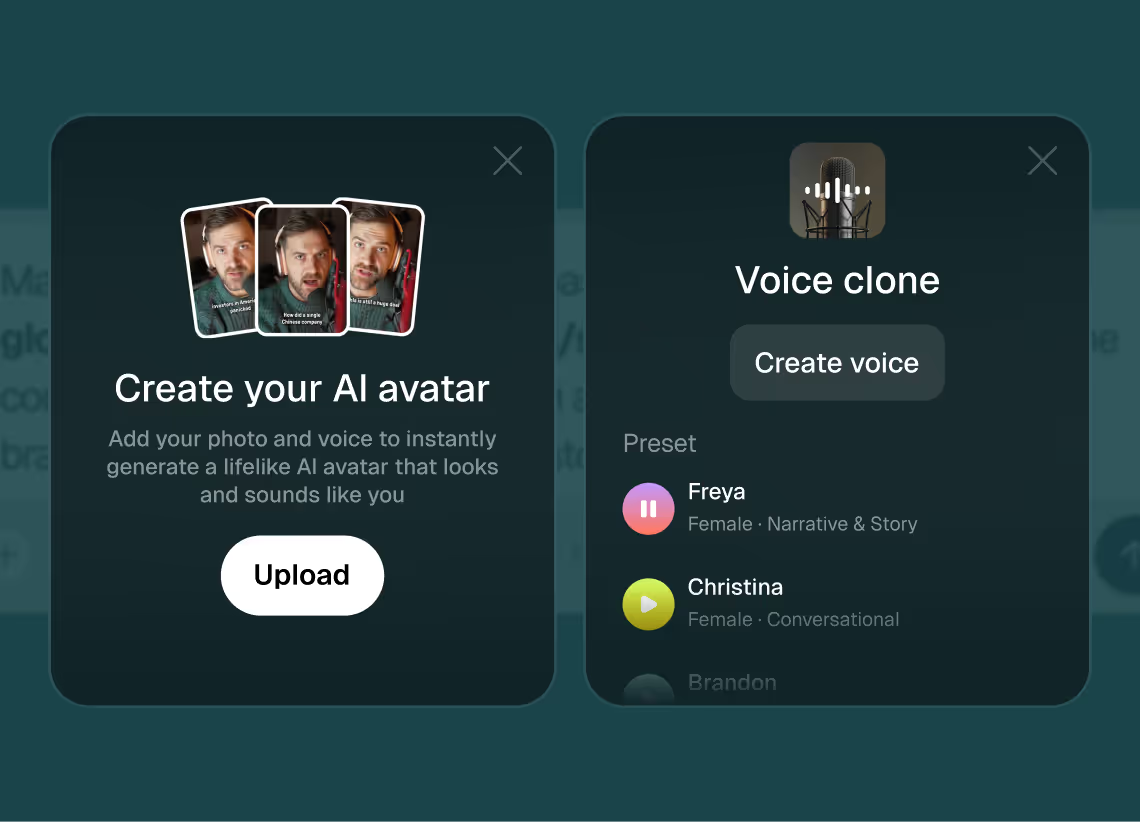
3Choose voice and avatar
Choose voice (clone yours or pick an AI voice) and avatar style (user or AI).
 4
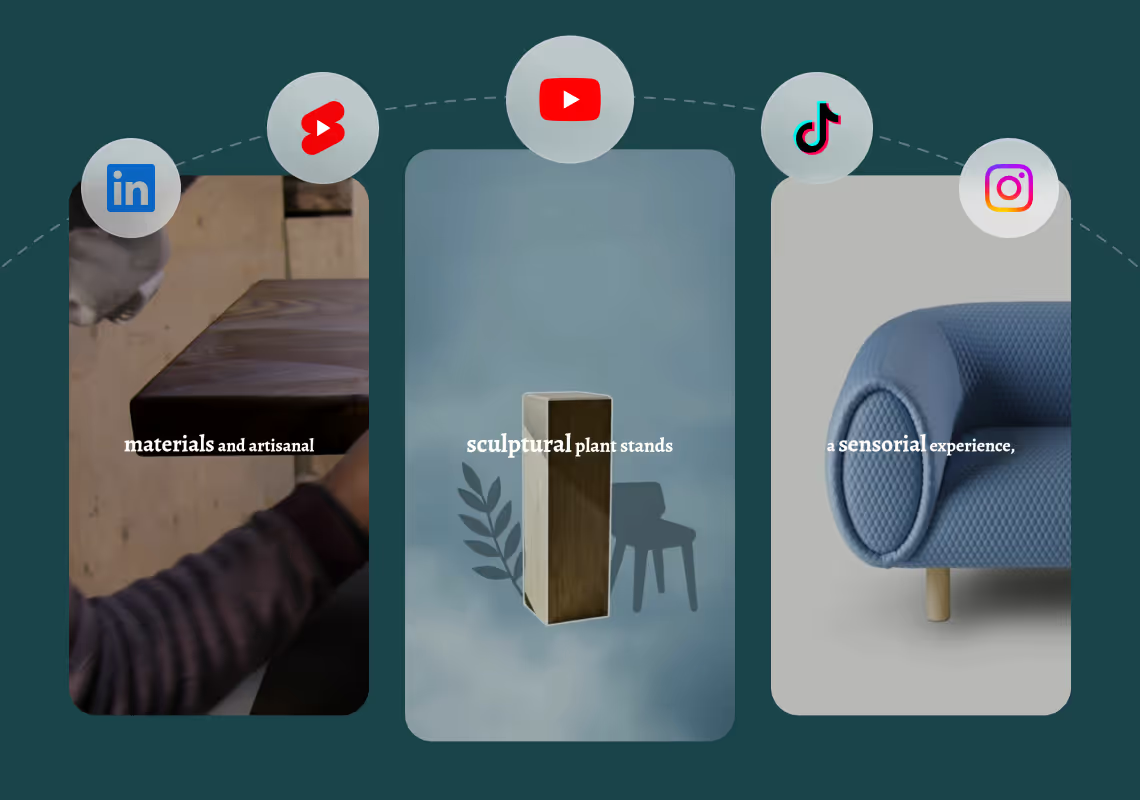
4Generate and publish-ready
Click generate and download your finished promo video in seconds, ready to publish across all platforms.


8 powerful features of Agent Opus' Split Screen Video Maker
Multi-Angle Storytelling
Show different perspectives or locations simultaneously through AI-powered split screen video generation.
Dual Scene Generation
Generate two distinct video scenes side by side from separate text prompts simultaneously.
Synchronized Split Layouts
Create perfectly timed split screen videos where both panels play in harmony automatically.
Tutorial Split Screens
Generate instructional videos showing process and result simultaneously in split screen format.
Branded Split Templates
Generate split screen videos with custom layouts that match your brand style and colors.
Comparison Video Creation
Build before-and-after or product comparison videos with AI-generated split screen visuals instantly.
Social-Ready Dimensions
Produce split screen videos optimized for Instagram, TikTok, and YouTube in one generation.
Reaction Video Builder
Create engaging reaction-style split screen content with AI avatars responding to generated footage.
Explore more Agent Opus tools
Testimonials
Awesome output, Most of my students and followers could not catch that it was using Agent Opus. Thank you Opus.
Wealth with Gaurav
This looks like a game-changer for us. We're building narrative-driven, visually layered content — and the ability to maintain character and motion consistency across episodes would be huge. If Agent Opus can sync branded motion graphics, tone, and avatar style seamlessly, it could easily become part of our production stack for short-form explainers and long-form investigative visuals.
srtaduck
I reviewed version a and I was very impressed with this version, it did very well in almost all aspects that users need, you would only have to make very small changes and maybe replace one of 2 of the pictures, but even saying that it could be used as is and still receive decent views or even chances at going viral depending on the story or the content the user chooses.
Jeremy
all in all LOVE THIS agent. I'm curious to see how I can push it (within reason) Just need to learn to get the consistency right with my prompts
Rebecca
Frequently Asked Questions
How does a split screen video maker handle different panel content types and layouts?
Agent Opus approaches split screen generation by parsing your prompt for layout intent and content requirements across panels. When you describe a side-by-side product comparison, the AI identifies two distinct content streams and assembles a balanced horizontal split. For before-and-after reveals, it sequences the panels with synchronized transitions. For tutorial steps or multi-perspective narratives, it can generate three or four-panel grids with coordinated timing. The system analyzes your script or brief to determine optimal panel count, arrangement, and aspect ratio. Each panel receives independent visual sourcing—product shots for one side, customer testimonials for another, or web images and stock footage as needed. The AI then applies motion graphics and compositing effects that respect panel boundaries while maintaining visual cohesion. Transitions between scenes are synchronized so all panels advance together or in deliberate sequence based on narrative flow. This eliminates the manual work of importing separate clips, resizing viewports, aligning timelines, and keyframing transitions. You simply describe the split screen concept and content for each panel, and the system generates the complete multi-panel composition with professional pacing and polish. The result is a finished split screen video that looks hand-edited but required zero timeline manipulation or rendering from you.
What are best practices for prompts when creating split screen videos with this tool?
Effective split screen prompts clearly specify panel count, layout orientation, and distinct content for each section. Start by stating the split configuration: side-by-side, top-bottom, or multi-panel grid. Then describe what appears in each panel with specific visual and narrative details. For product comparisons, name the items and highlight key differentiators you want emphasized in each panel. For tutorial or process videos, outline the steps or stages that occupy each section and how they relate temporally. If one panel should feature an avatar or presenter while another shows screen recordings or product demos, state that explicitly. Include pacing cues—whether panels should advance simultaneously or if one leads the narrative while others provide supporting visuals. Mention any brand assets like logos, product shots, or specific imagery you want incorporated into particular panels. Specify voiceover tone and whether narration should address both panels equally or focus on one while the other provides visual context. For before-and-after or transformation content, describe the starting state, the change mechanism, and the end result so the AI can sequence the reveal effectively. The more precise your panel-by-panel description, the better the system can coordinate visual sourcing, motion graphics, and timing. Avoid vague prompts like create a split screen video about my product—instead, detail what each panel shows, how they interact, and what story the combined layout tells. This specificity ensures the generated split screen video matches your creative vision without requiring manual adjustments.
Can a split screen video maker maintain brand consistency across multiple panels and videos?
Agent Opus supports brand consistency in split screen videos through asset integration and style coordination. When you provide brand guidelines, logos, color palettes, and product imagery, the system applies these elements across all panels in your split screen layout. If your left panel features a product demo with your logo watermark, and your right panel shows customer testimonials, the AI ensures both panels use consistent typography, color grading, and motion graphics style. This brand coherence extends across multiple video generations—once you establish visual standards in your prompts or asset library, subsequent split screen videos maintain that look without manual template building. For companies producing regular comparison content, tutorial series, or multi-perspective campaigns, this consistency is critical. The AI remembers your brand voice, visual style, and formatting preferences, so every split screen video feels part of a unified content strategy. You can specify brand-specific motion graphics treatments, transition styles, and layout conventions in your prompts, and the system will apply them across all panels and future videos. This eliminates the fragmentation that often occurs when different team members edit split screen content manually—everyone works from the same AI-generated baseline that respects brand standards. The result is a library of split screen videos that look professionally produced and cohesively branded, even when generated rapidly for different campaigns, products, or messaging angles. Brand consistency becomes automatic rather than a manual quality control checkpoint.
What are the limitations or edge cases when generating split screen videos from text prompts?
Split screen video generation works best when prompts provide clear panel-by-panel content direction and realistic visual expectations. The system excels at standard layouts—side-by-side, top-bottom, and simple grids—but highly complex multi-panel arrangements with irregular shapes or overlapping elements may require iterative prompt refinement. If your concept involves more than four distinct panels with independent narratives, consider breaking it into multiple videos or simplifying the layout for clarity. Visual sourcing depends on available assets and web imagery—if you request highly specific, niche visuals for one panel that lack sufficient stock or web coverage, the AI may substitute related imagery that approximates your intent. Providing your own product shots, logos, or custom images ensures those panels match your vision exactly. Timing and synchronization are automated based on narrative flow, but if you need frame-perfect alignment for specific moments—like a reveal that must hit at exactly 3.2 seconds—you may need to adjust your prompt or generate multiple variations to achieve that precision. The system handles voiceover and avatar integration well, but if you want different voices or avatars in different panels simultaneously, that level of audio-visual complexity may require separate video generations combined externally. For most marketing, tutorial, and comparison use cases, these limitations rarely surface. The tool is optimized for the 80% of split screen scenarios—product comparisons, before-and-after reveals, dual perspectives, and tutorial steps—where clear prompts yield professional results instantly. Understanding these boundaries helps you craft prompts that play to the system's strengths and achieve publish-ready split screen videos without manual editing.