Tutorial Screen Capture Video Maker
Agent Opus is a tutorial screen capture video maker that generates complete how-to videos from text. Describe your tutorial concept, paste a script, or share a blog URL, and Agent Opus assembles a finished video with screen recordings, AI motion graphics, voiceover, and social-ready formatting. No timeline. No manual editing. Just prompt to publish-ready tutorial content that teaches your audience exactly what they need to know.

Explore what's possible with Agent Opus

Reasons why creators love Agent Opus' Tutorial Screen Capture Video Maker
Update Once, Deploy Everywhere
Refresh outdated tutorials instantly when your product changes, keeping your content accurate without starting from scratch.
Your Voice, Zero Takes
Sound professional and consistent across every tutorial without recording voiceovers or worrying about background noise.
Reach Every Learner
Make your tutorials accessible to global audiences and different learning styles without extra production cycles.
Scale Without Burnout
Create entire tutorial libraries faster than traditional methods, freeing you to focus on strategy instead of production.
How to use Agent Opus’ Tutorial Screen Capture Video Maker
 1
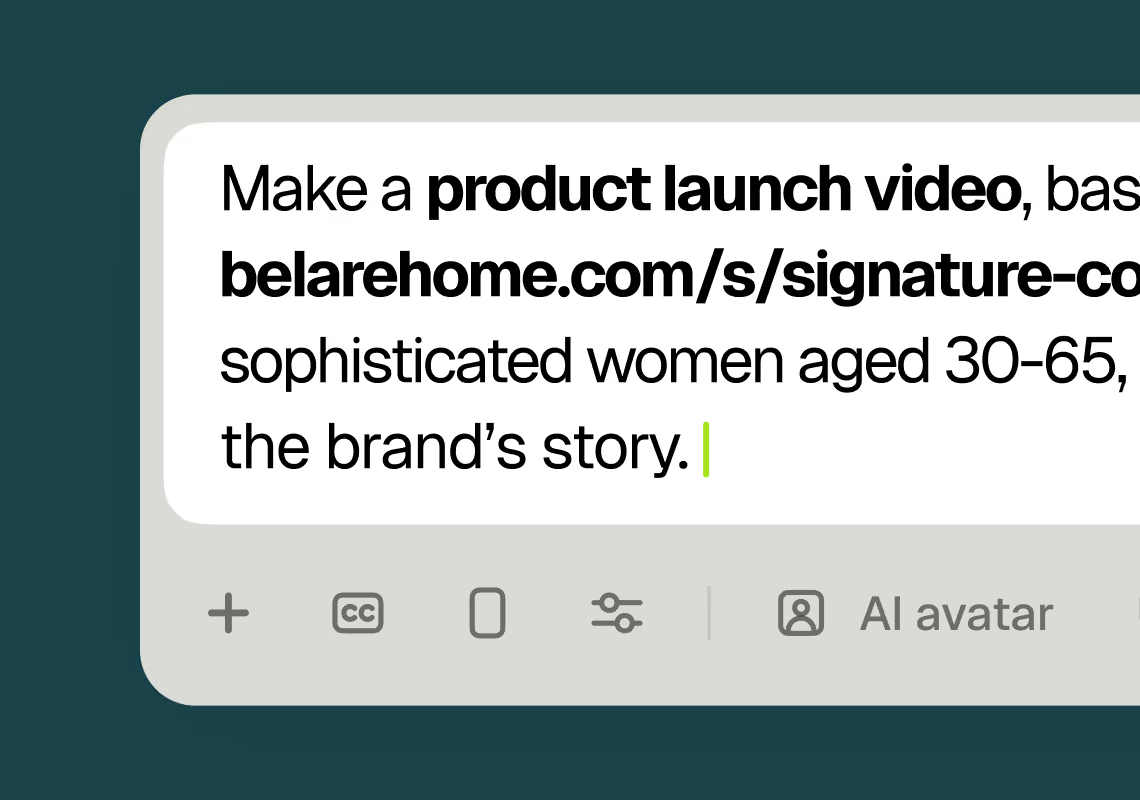
1Describe your video
Paste your promo brief, script, outline, or blog URL into Agent Opus.
 2
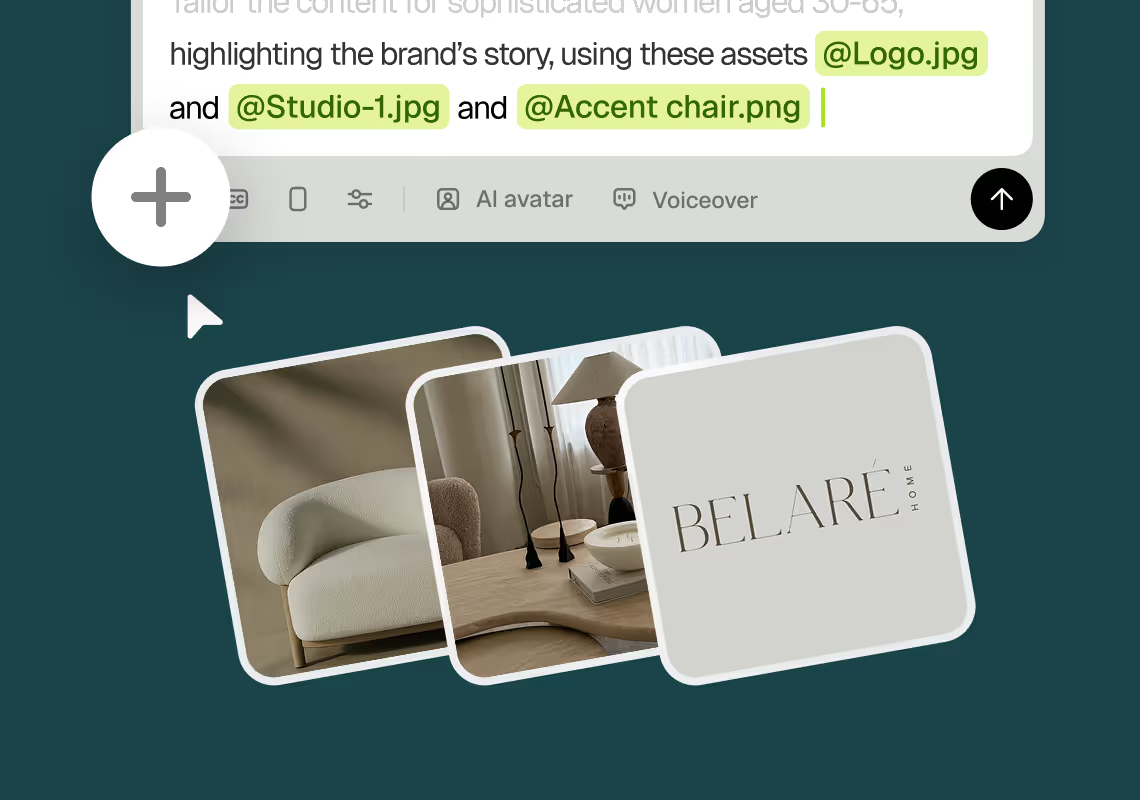
2Add assets and sources
Upload brand assets like logos and product images, or let the AI source stock visuals automatically.
 3
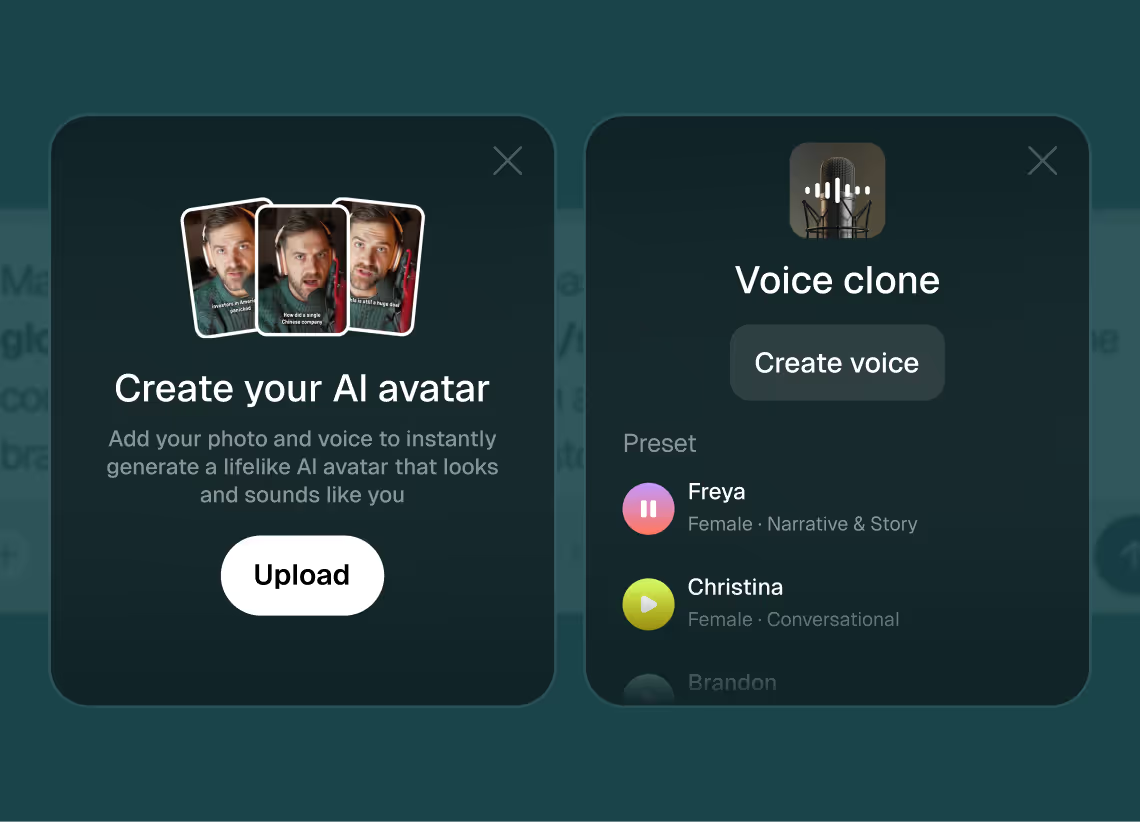
3Choose voice and avatar
Choose voice (clone yours or pick an AI voice) and avatar style (user or AI).
 4
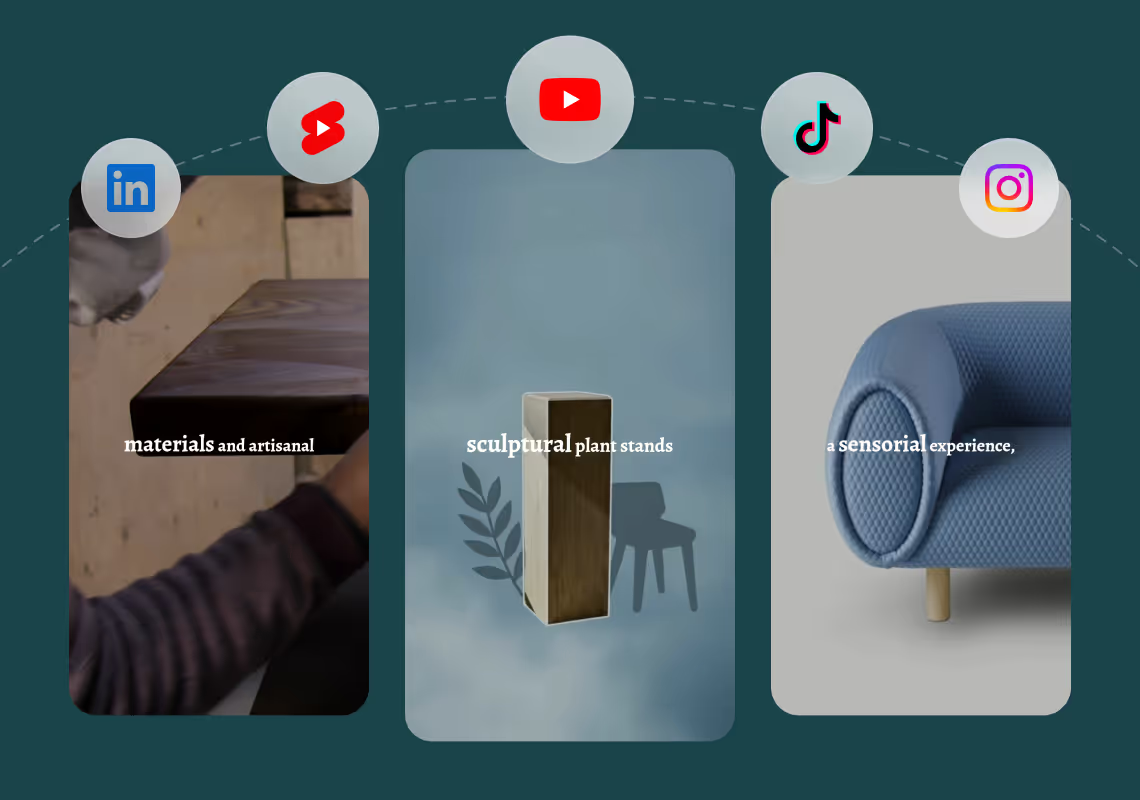
4Generate and publish-ready
Click generate and download your finished promo video in seconds, ready to publish across all platforms.


8 powerful features of Agent Opus' Tutorial Screen Capture Video Maker
Script to Screen Capture
Turn written instructions into polished tutorial videos with automated screen recording visuals.
Automated Step Highlighting
AI emphasizes key actions and interface elements so learners follow along effortlessly.
Branded Tutorial Templates
Apply consistent intros, outros, and overlays to maintain your brand across all tutorials.
Multi-Format Export
Output tutorial videos optimized for YouTube, training portals, or knowledge base platforms.
Explore more Agent Opus tools
Testimonials
Awesome output, Most of my students and followers could not catch that it was using Agent Opus. Thank you Opus.
Wealth with Gaurav
This looks like a game-changer for us. We're building narrative-driven, visually layered content — and the ability to maintain character and motion consistency across episodes would be huge. If Agent Opus can sync branded motion graphics, tone, and avatar style seamlessly, it could easily become part of our production stack for short-form explainers and long-form investigative visuals.
srtaduck
I reviewed version a and I was very impressed with this version, it did very well in almost all aspects that users need, you would only have to make very small changes and maybe replace one of 2 of the pictures, but even saying that it could be used as is and still receive decent views or even chances at going viral depending on the story or the content the user chooses.
Jeremy
all in all LOVE THIS agent. I'm curious to see how I can push it (within reason) Just need to learn to get the consistency right with my prompts
Rebecca
Frequently Asked Questions
How does a tutorial screen capture video maker handle different types of input like prompts versus full scripts?
Agent Opus accepts multiple input formats to match your workflow. If you have a detailed script with exact narration and step descriptions, paste it directly and the system will generate screen captures, motion graphics, and voiceover that follow your script precisely. If you only have a brief prompt like 'tutorial on exporting reports in our dashboard,' Agent Opus expands that concept into a complete tutorial structure, sourcing relevant interface screenshots, adding instructional callouts, and generating clear narration that walks viewers through each step. For outline-based inputs, you can provide bullet points of the key steps and Agent Opus fills in the visual storytelling, pacing, and voiceover details. The tutorial screen capture video maker also accepts blog or support article URLs, extracting the how-to content and converting it into a video tutorial with appropriate screen recordings and annotations. Regardless of input type, the output is always a finished, publish-ready tutorial video with synchronized visuals, motion graphics, and narration. The system intelligently adapts to your level of detail, whether you want full creative control through a script or prefer to let AI handle the instructional design from a simple concept. This flexibility means you can create tutorial content at whatever stage your documentation exists, from rough idea to polished article, and get a professional video tutorial without manual screen recording or editing.
What are best practices for prompts when using a tutorial screen capture video maker for software or product how-tos?
Effective prompts for tutorial screen capture videos should specify the software or product name, the exact task or outcome you want to teach, and any critical steps or features to highlight. For example, 'tutorial showing how to create a new project in Figma, including setting up frames and adding components' gives Agent Opus clear direction on the workflow to demonstrate. Include details about your target audience skill level, such as 'beginner-friendly tutorial' or 'advanced workflow for power users,' so the pacing and depth match viewer expectations. If your tutorial involves specific UI elements, mention them explicitly: 'show how to access settings menu, enable dark mode, and customize keyboard shortcuts.' For product tutorials, reference any branding assets or product screenshots you want included, and Agent Opus will source or incorporate those visuals into the screen capture sequence. Specify the desired tone for narration, whether conversational and friendly or formal and technical, and the system will generate voiceover that matches. If your tutorial has a specific structure like 'problem, solution, step-by-step, result,' outline that flow in your prompt. The tutorial screen capture video maker works best when you provide context about what viewers should learn and any must-include steps, but you do not need to script every word or describe every visual transition. Agent Opus handles the instructional design, motion graphics timing, and visual pacing automatically. For recurring tutorial types like onboarding or feature releases, you can develop prompt templates that maintain consistency across your video library while allowing customization for each specific topic.
Can a tutorial screen capture video maker maintain on-brand voices, logos, and product visuals across multiple how-to videos?
Yes, Agent Opus supports brand consistency across your entire tutorial library through voice cloning, logo integration, and custom visual sourcing. When you create your first tutorial screen capture video, you can upload a sample of your voice or a team member's voice for cloning. Agent Opus then uses that cloned voice for narration across all subsequent tutorials, ensuring every how-to video sounds like it comes from the same instructor. This is especially valuable for product companies and SaaS platforms where consistent narration builds trust and recognition. For visual branding, you can provide your logo, product screenshots, and interface images, and Agent Opus incorporates these assets into the screen capture sequences and motion graphics. If you have a style guide for colors, fonts, or annotation styles, those preferences can inform how callouts, arrows, and highlights appear in your tutorials. The tutorial screen capture video maker automatically sources web and stock images when needed, but prioritizes your provided assets to maintain brand alignment. For teams creating large tutorial libraries, this means you can generate dozens of how-to videos that all look and sound cohesive without manually enforcing brand standards in each video. Voice cloning eliminates the need to re-record narration if your original instructor is unavailable, and visual asset integration ensures every tutorial reflects your current product UI and branding. The system also supports optional AI or user avatars, so if you want a consistent on-screen presenter across tutorials, you can use the same avatar in every video. This level of brand control is critical for knowledge bases, customer onboarding sequences, and training programs where visual and audio consistency directly impacts learning outcomes and brand perception.
What are the limitations or edge cases when generating tutorial screen capture videos from text prompts?
While Agent Opus generates complete tutorial videos from text, certain scenarios require more detailed input for optimal results. If your tutorial involves highly specific or proprietary software interfaces that are not publicly documented, you should provide product screenshots or interface images so the system can accurately represent your UI rather than relying on generic or outdated visuals. For tutorials with complex branching workflows like 'if the user selects option A, show this path; if option B, show that path,' a detailed script or outline helps Agent Opus structure the video correctly rather than a brief prompt. The tutorial screen capture video maker excels at linear, step-by-step how-tos but may need explicit guidance for conditional or multi-path tutorials. If your tutorial requires real-time interaction demonstrations, such as showing live cursor movement or typing speed, describe that pacing in your prompt or script so the motion graphics and visual timing match the intended user experience. For tutorials that depend on very recent product updates or features released after the system's training data, providing a blog post URL or updated documentation ensures the video reflects current functionality. Agent Opus handles most common tutorial formats automatically, including onboarding, feature walkthroughs, troubleshooting guides, and best practice videos, but edge cases like highly technical developer tutorials with code snippets or command-line interfaces benefit from more structured input. The system does not perform actual screen recording of live software, so it assembles tutorial visuals from sourced images, product shots, and AI-generated motion graphics rather than capturing real-time screen activity. This approach works well for most tutorial content but means you should verify that auto-sourced visuals accurately represent your current product state, especially for fast-moving SaaS platforms with frequent UI changes. For maximum accuracy, pair your prompt with a script or provide reference images, and Agent Opus will generate a tutorial screen capture video that precisely matches your instructional intent.