Tutorial Video Maker
Create polished tutorial videos from a simple text prompt. Agent Opus is a tutorial video maker that transforms your training outline, script, or product documentation into finished instructional content complete with motion graphics, voiceover, and visual demonstrations. No timeline editing, no manual screen recording, no video production experience required. Describe what you want to teach, and Agent Opus generates a publish-ready tutorial video optimized for YouTube, knowledge bases, onboarding flows, and social platforms.

Explore what's possible with Agent Opus

Reasons why creators love Agent Opus' Tutorial Video Maker
Sound Like a Pro
Deliver crystal-clear narration in every tutorial without investing in expensive microphones or studio space.
Focus on Teaching, Not Tech
Spend your energy perfecting explanations and examples instead of wrestling with cameras, mics, and editing software.
Update Without Reshooting
Refresh outdated tutorials instantly when tools or processes change, keeping your content accurate without starting from scratch.
Keep Learners Engaged
Hold attention with dynamic visuals and clear explanations that make even technical concepts easy to follow.
How to use Agent Opus’ Tutorial Video Maker
 1
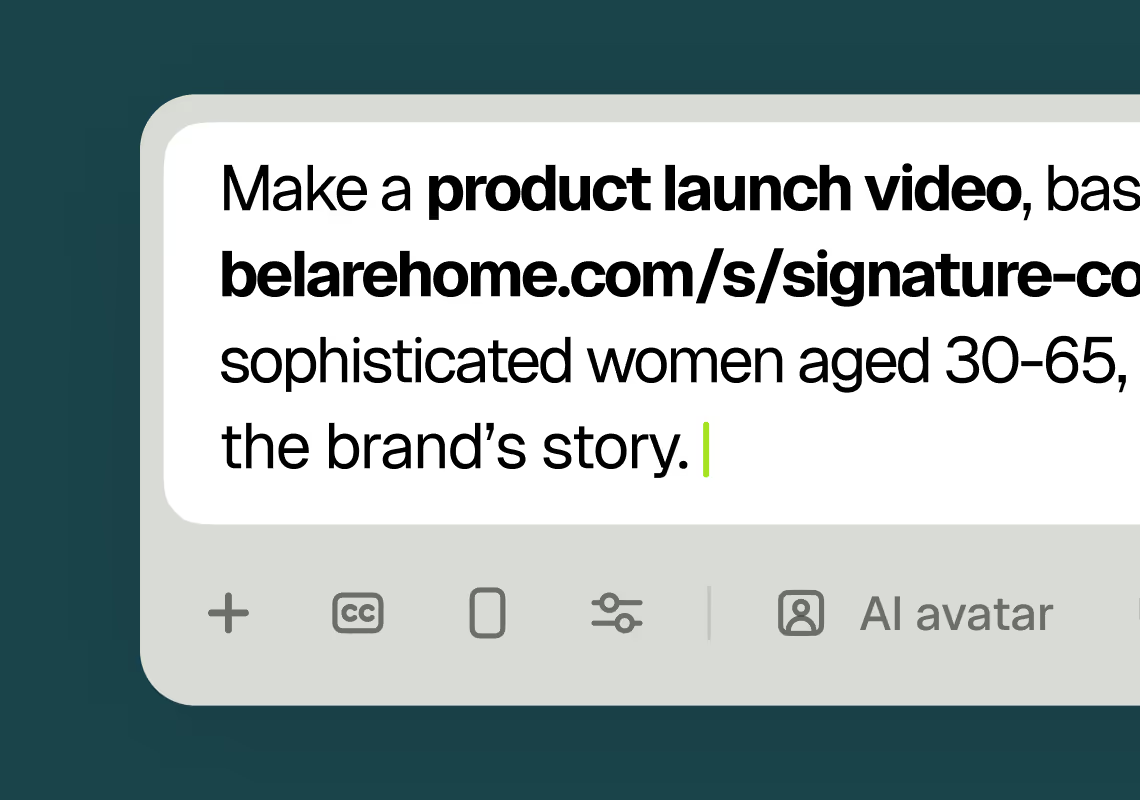
1Describe your video
Paste your promo brief, script, outline, or blog URL into Agent Opus.
 2
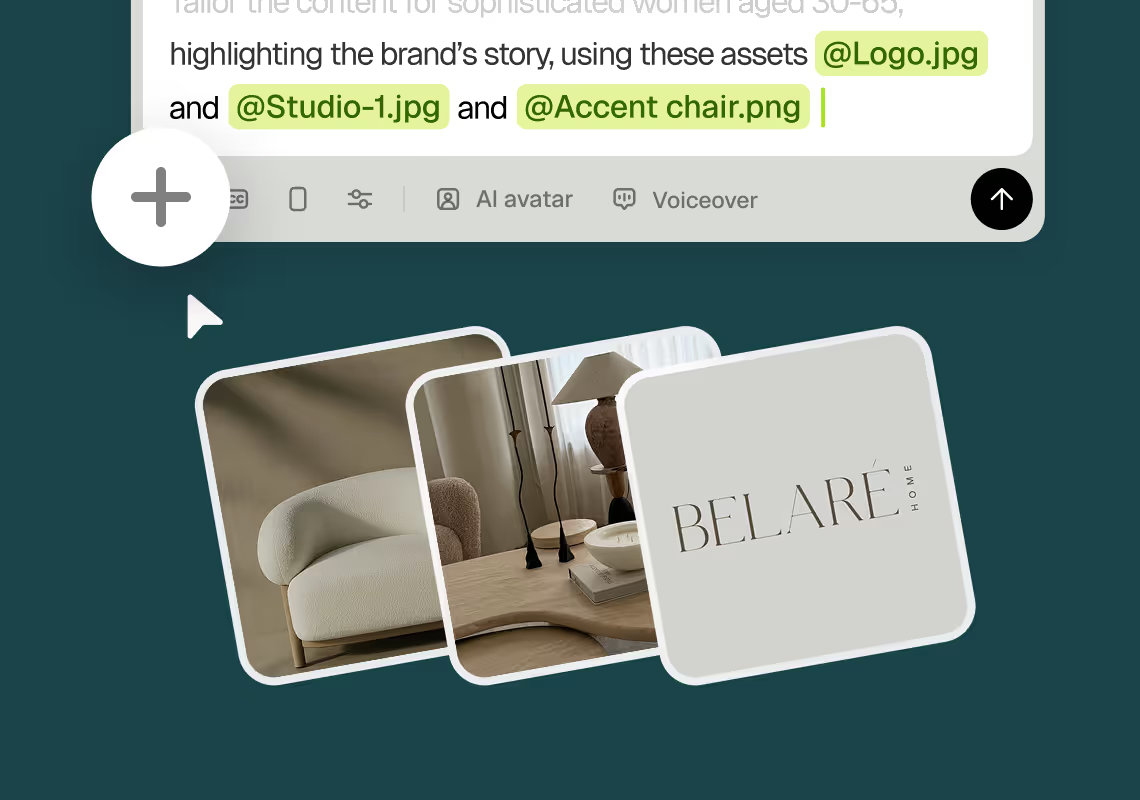
2Add assets and sources
Upload brand assets like logos and product images, or let the AI source stock visuals automatically.
 3
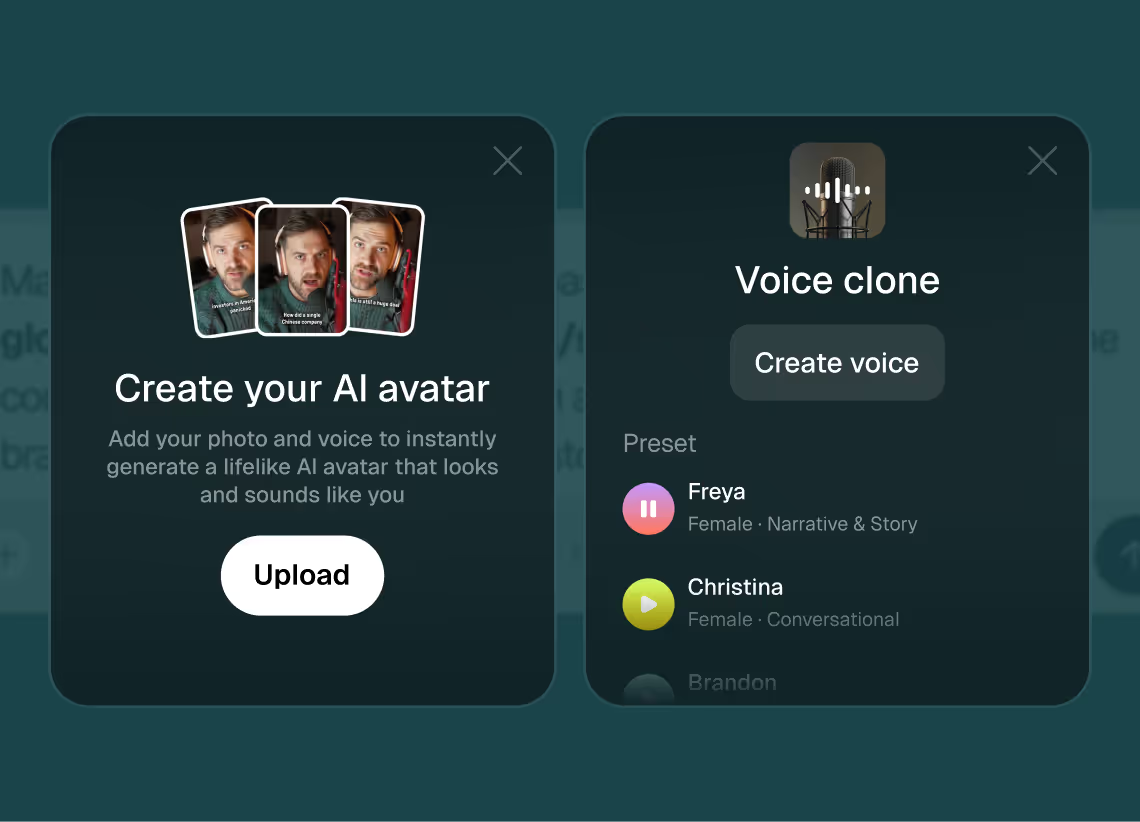
3Choose voice and avatar
Choose voice (clone yours or pick an AI voice) and avatar style (user or AI).
 4
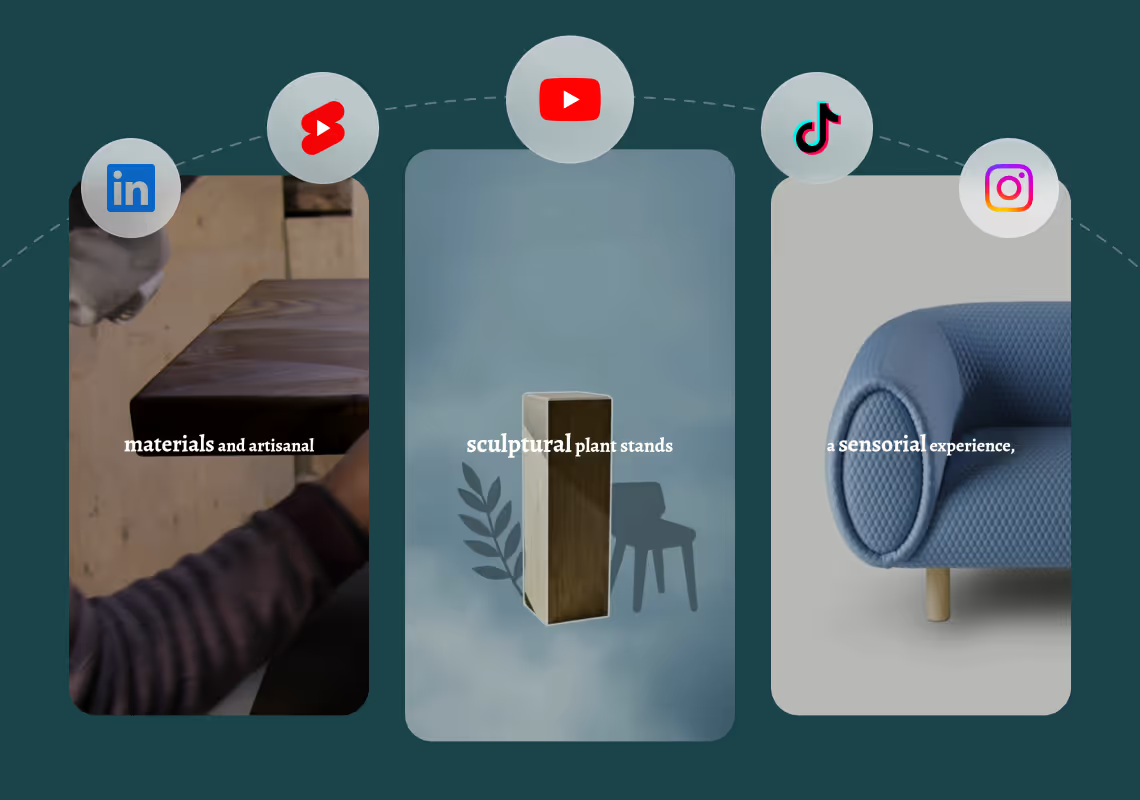
4Generate and publish-ready
Click generate and download your finished promo video in seconds, ready to publish across all platforms.


8 powerful features of Agent Opus' Tutorial Video Maker
Concept to Demonstration
Transform teaching ideas into visual demonstrations that show exactly how something works.
Educational Video Templates
Start with tutorial-optimized formats designed for clear instruction and viewer retention.
Explore more Agent Opus tools
Testimonials
Awesome output, Most of my students and followers could not catch that it was using Agent Opus. Thank you Opus.
Wealth with Gaurav
This looks like a game-changer for us. We're building narrative-driven, visually layered content — and the ability to maintain character and motion consistency across episodes would be huge. If Agent Opus can sync branded motion graphics, tone, and avatar style seamlessly, it could easily become part of our production stack for short-form explainers and long-form investigative visuals.
srtaduck
I reviewed version a and I was very impressed with this version, it did very well in almost all aspects that users need, you would only have to make very small changes and maybe replace one of 2 of the pictures, but even saying that it could be used as is and still receive decent views or even chances at going viral depending on the story or the content the user chooses.
Jeremy
all in all LOVE THIS agent. I'm curious to see how I can push it (within reason) Just need to learn to get the consistency right with my prompts
Rebecca
Frequently Asked Questions
How does a tutorial video maker handle different types of training content?
Agent Opus adapts to multiple tutorial formats by analyzing your input structure and generating appropriate visual sequences. For step-by-step process tutorials, the system creates sequential scenes with numbered annotations and motion graphics that highlight each action. When you provide product documentation, it identifies key features and generates demonstration sequences with callouts and visual emphasis. For conceptual training content, Agent Opus assembles explanatory graphics and diagrams that illustrate abstract ideas. The tutorial video maker automatically adjusts pacing based on content complexity, spending more time on technical steps while moving quickly through simple concepts. You can input training briefs as bullet points, paste complete help articles, upload process documents, or describe workflows in plain language. The system parses your content, identifies learning objectives, and structures visual sequences that match instructional design principles. For software tutorials, Agent Opus sources interface screenshots and generates cursor movements and click animations. For physical product training, it assembles product photography with zoom effects and rotational views. The motion graphics engine creates arrows, highlights, text overlays, and animated diagrams that reinforce key teaching points without manual keyframing. Voice narration syncs automatically to visual pacing, and the system generates social-optimized versions for different platforms while maintaining instructional clarity across aspect ratios.
What are best practices for prompts in a tutorial video maker?
Effective tutorial prompts focus on learning outcomes and target audience context rather than visual specifications. Start by defining who needs to learn what, then describe the process or concept in logical sequence. For example, instead of requesting specific graphics, describe the workflow: explain that new users need to understand account setup in three steps, then list those steps with any important warnings or tips. Agent Opus interprets instructional intent and generates appropriate visual treatments automatically. Structure longer tutorials with clear section breaks by using headers or numbered lists in your input. This helps the tutorial video maker create natural chapter divisions and pacing transitions. Include context about common mistakes or confusion points, and the system will generate emphasis graphics and slower pacing for those segments. When providing product documentation URLs, ensure the source content has clear headings and logical flow, as Agent Opus uses document structure to inform scene assembly. For voice consistency across tutorial series, specify whether you want your cloned voice or a particular AI voice style, and mention if an on-screen avatar would help learner engagement. If your tutorial requires specific brand elements, note which logos or product shots should appear, and Agent Opus will integrate them into motion graphics and scene compositions. Avoid over-specifying visual details like transitions or graphic styles; the system applies instructional design principles automatically. Focus your prompt on pedagogical elements: what learners should understand, what actions they need to perform, and what outcomes they should achieve. The tutorial video maker translates those learning objectives into effective visual instruction.
Can a tutorial video maker maintain consistent branding across training libraries?
Agent Opus preserves brand consistency across entire tutorial collections through asset integration and style memory. Upload your brand logos, product screenshots, and visual guidelines once, and the tutorial video maker applies them consistently across all generated training videos. Voice cloning ensures instructor continuity, so every tutorial in your library sounds like the same trainer even when generated from different source documents. This is particularly valuable for companies building knowledge bases or course sequences where learners expect consistent presentation. The system maintains color schemes and visual hierarchy across tutorials when you provide brand guidelines in your initial prompts. Motion graphics styles remain consistent, so callouts, annotations, and emphasis treatments look cohesive across your entire training catalog. For product tutorials, Agent Opus uses your actual interface screenshots and product photography rather than generic stock imagery, ensuring learners see exactly what they will encounter. When you update product features or branding, regenerate affected tutorials by providing updated documentation, and the system produces new versions that match your current visual identity while maintaining the same instructional structure. The tutorial video maker also preserves terminology consistency by using language from your source documentation, avoiding the generic phrasing that makes some AI content feel disconnected from actual products. For organizations with multiple product lines or departments, you can specify different brand treatments in prompts, and Agent Opus will generate tutorials that respect those distinctions while maintaining overall organizational coherence. This brand consistency extends to social outputs, where the system adapts your visual identity to different aspect ratios without losing recognizability.
What are the limitations of using a tutorial video maker for complex technical training?
Agent Opus excels at generating instructional content from documentation but works within certain constraints that affect highly specialized technical training. The tutorial video maker sources visual content from web images, stock libraries, and your provided assets, so extremely niche technical subjects with limited visual reference material may require you to supply more custom product shots or diagrams. For software tutorials involving complex multi-step workflows, break longer processes into focused segments rather than attempting 20-minute comprehensive guides in a single generation. The system handles technical terminology well when it appears in your source documentation, but highly specialized jargon in emerging fields may need additional context in your prompt to ensure accurate visual representation. Agent Opus generates motion graphics and annotations automatically, but if your tutorial requires precise technical diagrams with specific measurements or engineering specifications, you may need to provide those diagrams as input assets rather than expecting the system to create them from descriptions alone. The tutorial video maker does not perform actual screen recording or capture live software interactions; it assembles visual sequences from screenshots and generates simulated interface animations. For tutorials requiring real-time demonstration of software bugs or edge cases, you will need to provide screen captures of those specific scenarios. Voice narration syncs to visual pacing automatically, but if your technical content requires extremely precise timing between spoken explanations and visual demonstrations, you may need to iterate prompts to achieve optimal synchronization. The system outputs finished videos without manual editing capability, so if your technical training requires mid-tutorial interactivity, branching scenarios, or embedded quizzes, Agent Opus works best as a content generation tool within a larger learning management system. For most technical tutorial use cases, including software onboarding, product training, process documentation, and conceptual instruction, the tutorial video maker provides professional results that significantly accelerate content production compared to traditional video editing workflows.