Doblador de Voz
Agent Opus es un doblador de voz que convierte texto en vídeos terminados con locuciones naturales. Describe tu vídeo, sube un guion o la URL de un blog, y obtén un vídeo listo para publicar con tu voz clonada o narración con IA. Sin estudio de grabación, sin línea de tiempo de edición, sin sincronización manual. Solo de prompt a vídeo con doblaje de voz profesional integrado. Perfecto para creadores, profesionales del marketing y fundadores que necesitan locuciones auténticas a escala sin la carga de producción.

Explore what's possible with Agent Opus

Reasons why creators love Agent Opus' Doblador de Voz
Scale Without Hiring
Expand into new markets instantly without building translation teams or booking voice talent.
Audience Trust Built In
Deliver natural-sounding dubbed videos that feel personal, not robotic or machine-generated.
Launch-Ready in Minutes
Skip studio costs and still sound like a pro in every video, no matter the language.
On-Brand in Every Frame
Maintain consistent messaging and voice quality across all your dubbed content without reshoots.
Create More, Stress Less
Turn one video into multiple language versions in the time it used to take to edit one.
Your Voice, Every Language
Keep your authentic tone and personality intact while reaching audiences across the globe.
How to use Agent Opus’ Doblador de Voz
 1
1Describe your video
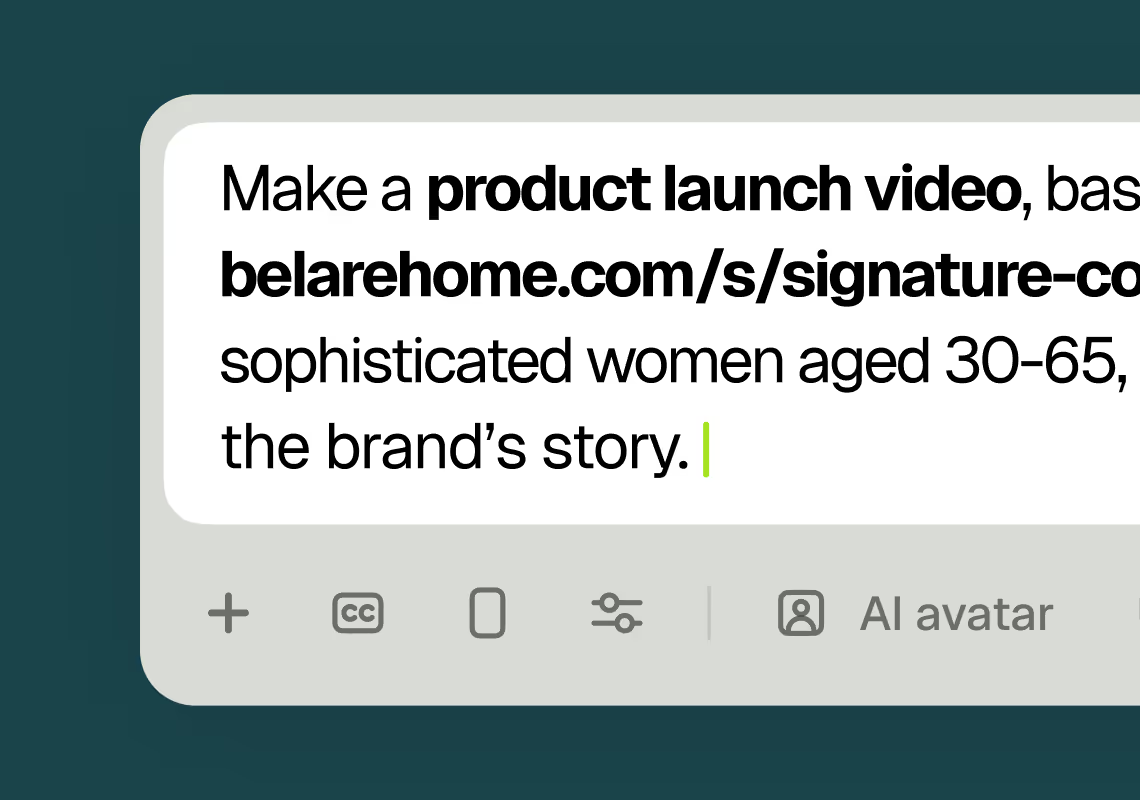
Paste your promo brief, script, outline, or blog URL into Agent Opus.
 2
2Add assets and sources
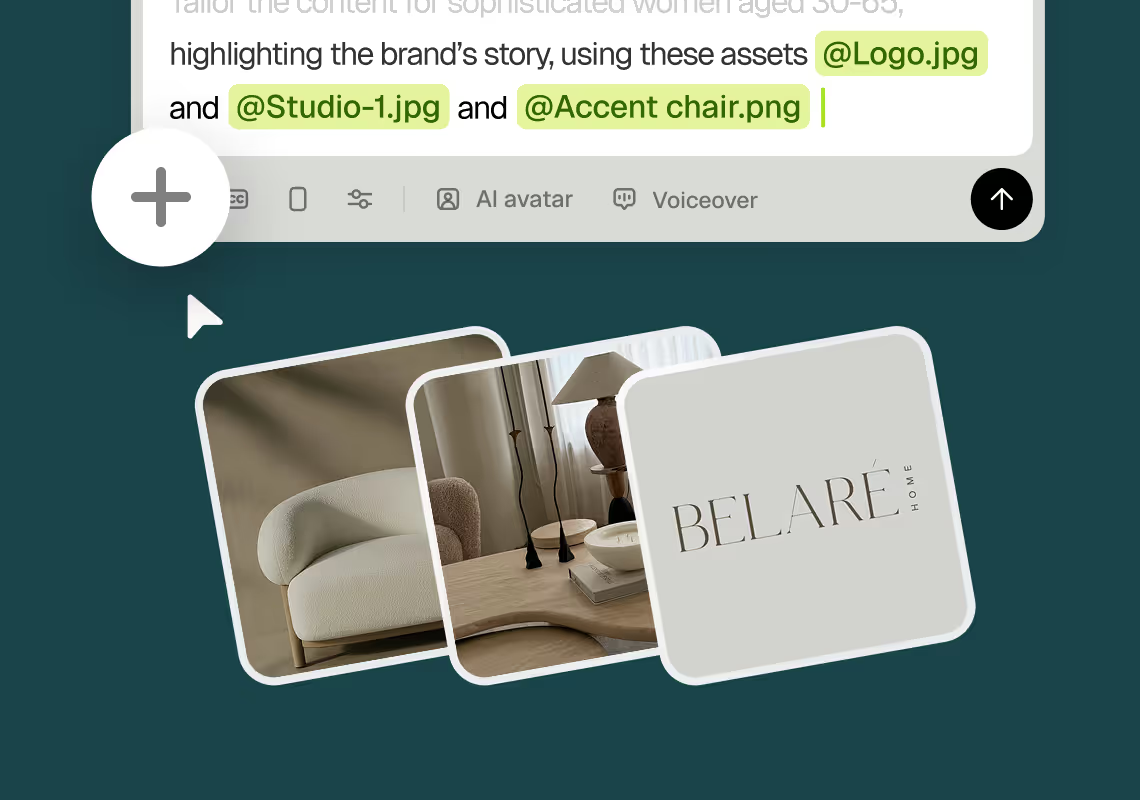
Upload brand assets like logos and product images, or let the AI source stock visuals automatically.
 3
3Choose voice and avatar
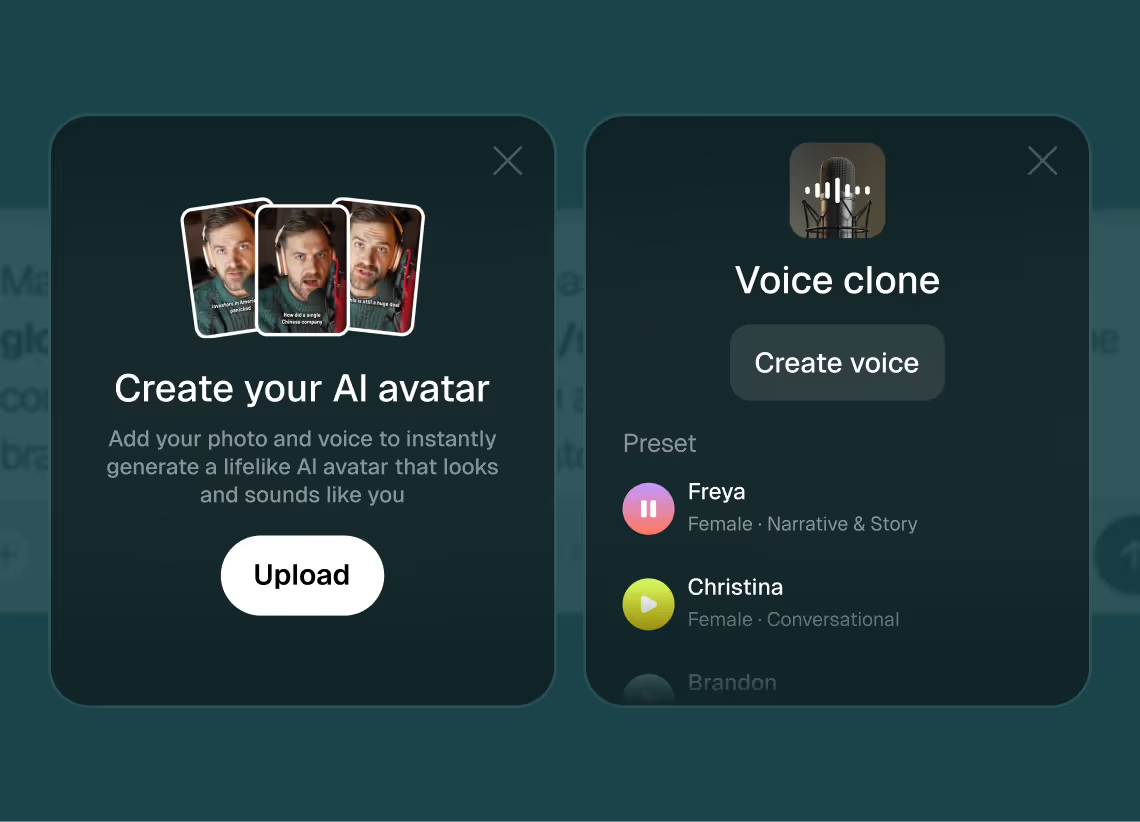
Choose voice (clone yours or pick an AI voice) and avatar style (user or AI).
 4
4Generate and publish-ready
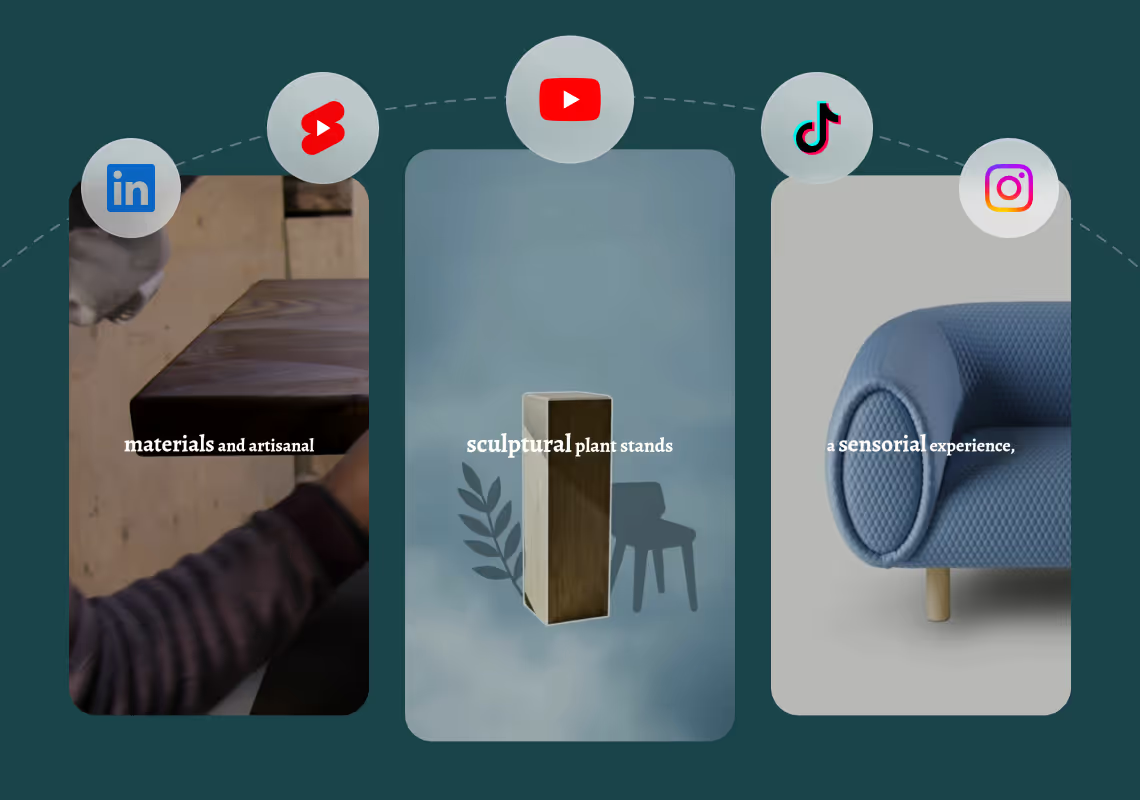
Click generate and download your finished promo video in seconds, ready to publish across all platforms.


8 powerful features of Agent Opus' Doblador de Voz
Accent Customization
Choose regional accents and dialects to localize content for specific audiences.
Tone Preservation
Maintain original emotional intent and pacing when dubbing into new languages.
Automated Lip Sync
Synchronize dubbed audio with on-screen mouth movements for natural-looking videos.
Instant Voice Dubbing
Replace original audio with AI-generated voices in multiple languages for global reach.
Batch Dubbing Workflow
Process multiple videos simultaneously with consistent voice settings across your library.
Multi-Language Support
Dub videos into dozens of languages while preserving tone and emotional delivery.
Voice Matching Technology
Match dubbed voices to original speaker characteristics for seamless audio replacement.
Professional Voice Quality
Generate broadcast-ready dubbed audio with studio-grade clarity and natural inflection.
Explore more Agent Opus tools
Testimonials
This looks like a game-changer for us. We're building narrative-driven, visually layered content — and the ability to maintain character and motion consistency across episodes would be huge. If Agent Opus can sync branded motion graphics, tone, and avatar style seamlessly, it could easily become part of our production stack for short-form explainers and long-form investigative visuals.
srtaduck
I reviewed version a and I was very impressed with this version, it did very well in almost all aspects that users need, you would only have to make very small changes and maybe replace one of 2 of the pictures, but even saying that it could be used as is and still receive decent views or even chances at going viral depending on the story or the content the user chooses.
Jeremy
i got to say honestly really impressed me with the subtle click sound on each of the edits, it may seem little but that polish honestly makes it seem near the quality to publish without any further edits
Tony
Frequently Asked Questions
¿Cómo gestiona el doblador de voz la clonación de voz frente a la selección de narrador con IA?
El doblador de voz de Agent Opus ofrece dos opciones de narración según tus necesidades. La clonación de voz requiere una muestra de audio corta, normalmente de 30 segundos a dos minutos de habla clara. Sube tu muestra una vez y el sistema analiza el tono, el tono de voz, la cadencia y los patrones de pronunciación. A partir de ese momento, cada vídeo que generes puede usar tu voz clonada seleccionándola de tu biblioteca de voces. El clon se adapta automáticamente a nuevos guiones, manteniendo tu estilo natural de habla en diferentes duraciones de contenido y temas. Esto es ideal cuando quieres una marca personal consistente o cuando tu audiencia espera escuchar tu voz. La selección de narrador con IA omite el paso de clonación y te permite elegir de una biblioteca de voces preentrenadas. Estas voces cubren múltiples acentos, géneros y estilos tonales, desde enérgico y animado hasta calmado y autoritario. Puedes cambiar de narrador entre proyectos o incluso probar múltiples voces para el mismo guion para ver cuál conecta mejor con tu audiencia. Ambas opciones se integran perfectamente en el flujo de trabajo del doblador de voz. Cuando introduces un guion o brief, simplemente eliges tu fuente de voz, y Agent Opus genera el vídeo con esa narración incorporada. El sistema gestiona el ritmo, el énfasis y la cadencia para que la voz coincida con las transiciones de escena y el texto en pantalla. Si actualizas el guion más tarde, regenerar el vídeo con la misma voz lleva minutos, no horas de regrabación. La clonación de voz es mejor para marcas personales, liderazgo de opinión y contenido donde la autenticidad importa. Los narradores con IA funcionan bien para producción de alto volumen, pruebas A/B de diferentes tonos, o cuando necesitas un estilo de voz fuera de tu rango natural. Ambas opciones ofrecen audio de calidad de estudio sin micrófonos, insonorización ni postproducción.
¿Cuáles son las mejores prácticas para guiones al usar el doblador de voz para generación de vídeo?
El doblador de voz de Agent Opus funciona mejor cuando tu guion está escrito para ser hablado, no para lectura silenciosa. Empieza leyendo tu guion en voz alta antes de enviarlo. Si las frases resultan incómodas o demasiado largas al hablarlas, divídelas en frases más cortas. Las locuciones necesitan puntos naturales de respiración, así que intenta que las frases tengan menos de 20 palabras cuando sea posible. Usa contracciones y lenguaje conversacional en lugar de frases formales o académicas. El doblador de voz reflejará el tono y la estructura que proporciones, así que guiones casuales producen narración casual, y guiones autoritarios suenan más pulidos. Incluye indicaciones de énfasis si ciertas palabras o frases necesitan más peso. Aunque Agent Opus infiere el énfasis del contexto, puedes guiarlo usando cursivas o negritas en tu guion, o escribiendo el énfasis de forma natural. Por ejemplo, en lugar de escribir 'Esto es importante', escribe 'Esto es realmente importante' si quieres que el narrador enfatice ese punto. Evita jerga densa o siglas a menos que tu audiencia las conozca bien. El doblador de voz pronunciará términos desconocidos fonéticamente, lo que puede sonar poco natural. Deletrea las siglas en el primer uso o proporciona pistas fonéticas entre paréntesis si es necesario. Mantén tu guion centrado en un mensaje principal por vídeo. El doblador de voz funciona mejor con arcos narrativos claros, ya sea una estructura problema-solución, un tutorial paso a paso, o una historia con principio, desarrollo y final. Guiones divagantes o con múltiples temas confunden el motor de ritmo y resultan en vídeos que se sienten inconexos. Si estás generando desde una URL de blog en lugar de un guion en bruto, elige artículos con introducciones fuertes y separaciones de sección claras. El doblador de voz extraerá los puntos clave y los estructurará en escenas, pero el material fuente necesita un flujo lógico. Evita listas con más de 20 elementos o artículos que saltan entre subtemas no relacionados. Finalmente, prueba primero con guiones cortos. Genera un vídeo de 30 segundos para escuchar cómo tu clon de voz o el narrador con IA elegido maneja tu estilo de escritura. Ajusta la redacción, la longitud de las frases y el tono basándote en ese resultado, luego escala a guiones más largos. Este enfoque iterativo ahorra tiempo y asegura que tus vídeos finales suenen exactamente como quieres.
¿Puede el doblador de voz mantener elementos visuales de marca, logotipos y fotos de producto junto con la narración?
Sí. El doblador de voz de Agent Opus genera tanto la locución como la composición visual en un único flujo de trabajo, por lo que tus activos de marca se integran perfectamente con la narración. Cuando creas un proyecto, puedes subir tu logotipo, imágenes de producto y cualquier elemento visual personalizado que quieras incluir. El sistema trata estos como activos prioritarios y los entrelaza en el vídeo junto con metraje de stock y gráficos en movimiento obtenidos automáticamente. Por ejemplo, si tu guion menciona tu producto por nombre, el doblador de voz narrará esa línea mientras muestra tu foto de producto en pantalla. El tiempo y la ubicación ocurren automáticamente basándose en el contexto del guion. No necesitas sincronizar manualmente los elementos visuales con el audio ni especificar cuándo deben aparecer los activos. La IA analiza tu guion, identifica los momentos clave y ensambla escenas que refuerzan la narración. Los logotipos pueden aparecer como marcas de agua persistentes, tarjetas de intro/outro, o superposiciones contextuales dependiendo de las directrices de tu marca. Si quieres que tu logotipo sea visible durante todo el vídeo, configúralo como marca de agua en los ajustes de tu proyecto. Si prefieres que aparezca solo al principio y al final, el sistema lo colocará en las escenas de apertura y cierre. Las fotos de producto funcionan de manera similar. Sube múltiples ángulos o variaciones, y el doblador de voz selecciona la imagen más relevante para cada escena. Si tu guion describe una característica, el sistema mostrará la foto de producto que mejor ilustre esa característica mientras el narrador la explica. Esto mantiene los elementos visuales y la locución estrechamente alineados sin edición manual. Los gráficos en movimiento y las superposiciones de texto también se sincronizan con la narración. Si el doblador de voz dice una estadística o frase clave, ese texto puede aparecer en pantalla en el momento exacto en que se pronuncia, reforzando el mensaje visualmente. El sistema gestiona la selección de fuentes, el tiempo de animación y la ubicación para que todo se sienta cohesivo. Para mantener la consistencia de marca en múltiples vídeos, guarda tus activos en una plantilla de proyecto. Cada nuevo vídeo que generes puede extraer de esa plantilla, asegurando que el mismo logotipo, esquema de colores y fotos de producto aparezcan en el mismo estilo. Esto es especialmente útil para contenido en serie o formatos de vídeo recurrentes donde la consistencia visual importa tanto como la consistencia de voz. El doblador de voz no te obliga a elegir entre narración profesional y elementos visuales de marca. Ambos se generan juntos, y ambos reflejan tu input. El resultado es un vídeo que suena como tú y se ve como tu marca, listo para publicar sin trabajo adicional de diseño o audio.
¿Cuáles son las limitaciones o casos especiales del doblador de voz para ciertos tipos de contenido?
El doblador de voz de Agent Opus destaca en contenido narrativo con un solo locutor, pero tiene restricciones específicas que vale la pena entender. Primero, está optimizado para un narrador principal por vídeo. Si tu guion requiere múltiples locutores, como un formato de diálogo o entrevista, el doblador de voz tratará todo el guion como una sola voz. No puedes asignar diferentes voces a diferentes personajes dentro de una generación. Para contenido con múltiples locutores, necesitarías generar vídeos separados para cada locutor y combinarlos externamente, lo que anula el flujo de trabajo de un solo prompt. Segundo, la calidad de la clonación de voz depende de tu audio fuente. Si tu muestra tiene ruido de fondo, volumen inconsistente o múltiples personas hablando a la vez, el clon heredará esos artefactos. Grabaciones limpias, en solitario y en un entorno silencioso producen los mejores clones. Si el único audio disponible que tienes es de un podcast ruidoso o una llamada de conferencia, considera usar un narrador con IA en su lugar. Tercero, el doblador de voz está diseñado para contenido guionizado o semi-guionizado, no para habla espontánea o improvisada. Si pegas una transcripción en bruto con muletillas, falsos comienzos y divagaciones, la narración sonará poco pulida. El sistema no limpia automáticamente los patrones de habla conversacional. Necesitas editar tu guion en una narrativa coherente antes de la generación. Cuarto, guiones extremadamente largos pueden exceder la duración óptima de vídeo para plataformas sociales. Agent Opus puede manejar guiones de hasta varios minutos de narración, pero los vídeos de más de 90 segundos ven caídas pronunciadas en engagement en TikTok, Reels y Shorts. Si tu guion es largo, considera dividirlo en una serie en lugar de forzar un único vídeo extendido. El doblador de voz mantendrá la consistencia de voz en múltiples vídeos si usas el mismo clon o narrador con IA. Quinto, la terminología altamente técnica o de nicho puede causar problemas de pronunciación. Aunque el doblador de voz maneja bien la mayoría de la jerga de la industria, nombres de productos oscuros, palabras no españolas o términos inventados pueden no sonar naturales. Prueba estos en un vídeo corto primero y ajusta la ortografía o redacción si es necesario. Sexto, el sistema no soporta modulación de voz en tiempo real ni efectos como cambio de tono, reverberación o distorsión. La voz que clonas o seleccionas es la voz que obtienes. Si necesitas audio estilizado, como un filtro robótico o efecto de eco, necesitarías aplicar eso en software de audio externo después de exportar. Finalmente, el doblador de voz no es un reemplazo para la grabación en vivo cuando la espontaneidad y la reacción en tiempo real importan. Si tu contenido depende de la improvisación, la interacción con la audiencia o capturar emociones genuinas en el momento, la grabación tradicional sigue siendo la mejor opción. El doblador de voz de Agent Opus está construido para narración repetible, escalable y pulida donde el guion es la base y la voz es el mecanismo de entrega.