Whiteboard Video Maker
Agent Opus is a complete whiteboard video maker that transforms your ideas into professional explainer videos. Describe your concept, paste a script, or share a blog URL, and watch as AI generates a finished whiteboard-style video with motion graphics, voiceover, and dynamic visual storytelling. No drawing skills, no manual animation, no editing timeline. Just prompt-to-publish whiteboard videos ready for YouTube, LinkedIn, sales pages, and training platforms. Perfect for educators, marketers, and founders who need engaging explainer content without the production overhead.

Explore what's possible with Agent Opus

Reasons why creators love Agent Opus' Whiteboard Video Maker
Ship Videos in Hours, Not Weeks
Skip the back-and-forth with freelancers and produce polished explainer videos the same day you need them.
How to use Agent Opus’ Whiteboard Video Maker
 1
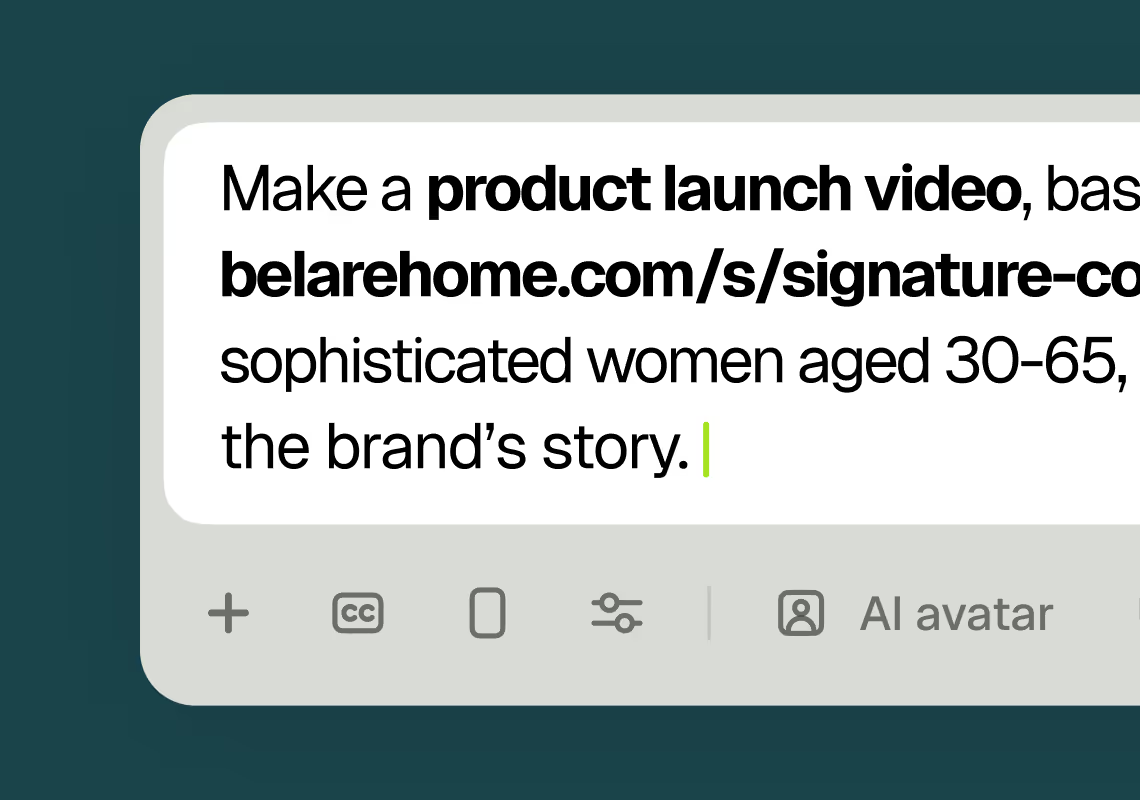
1Describe your video
Paste your promo brief, script, outline, or blog URL into Agent Opus.
 2
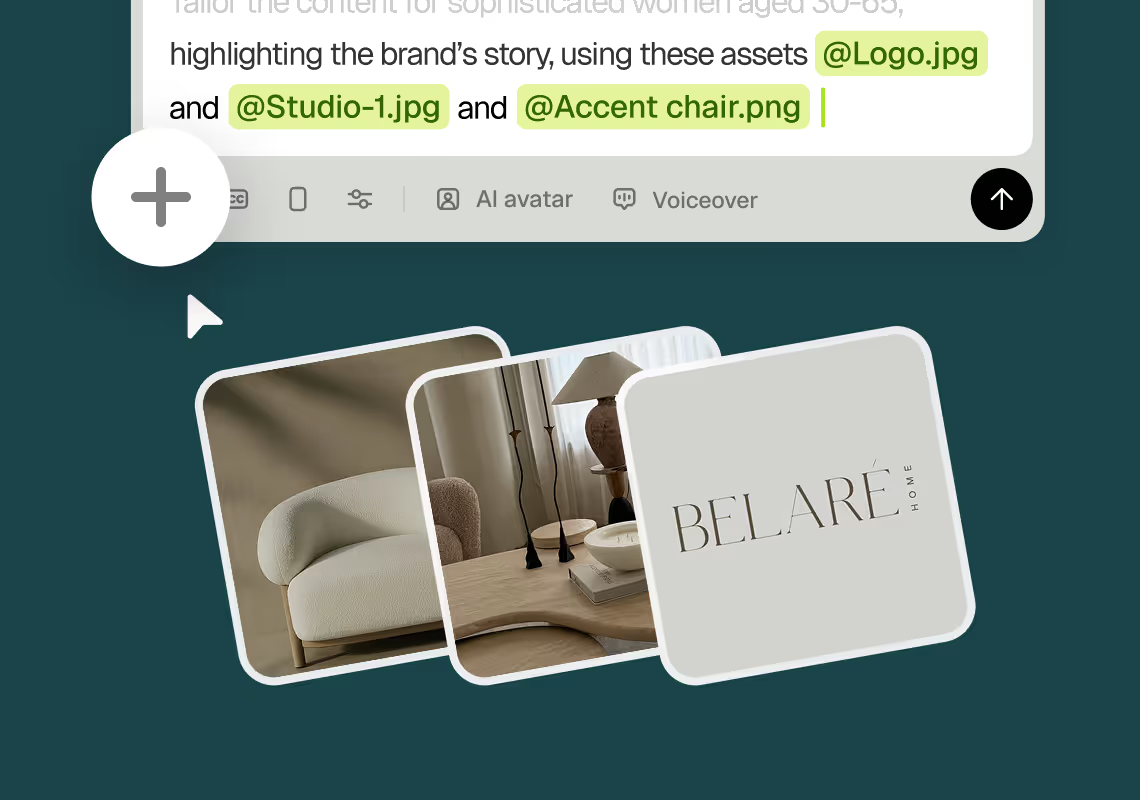
2Add assets and sources
Upload brand assets like logos and product images, or let the AI source stock visuals automatically.
 3
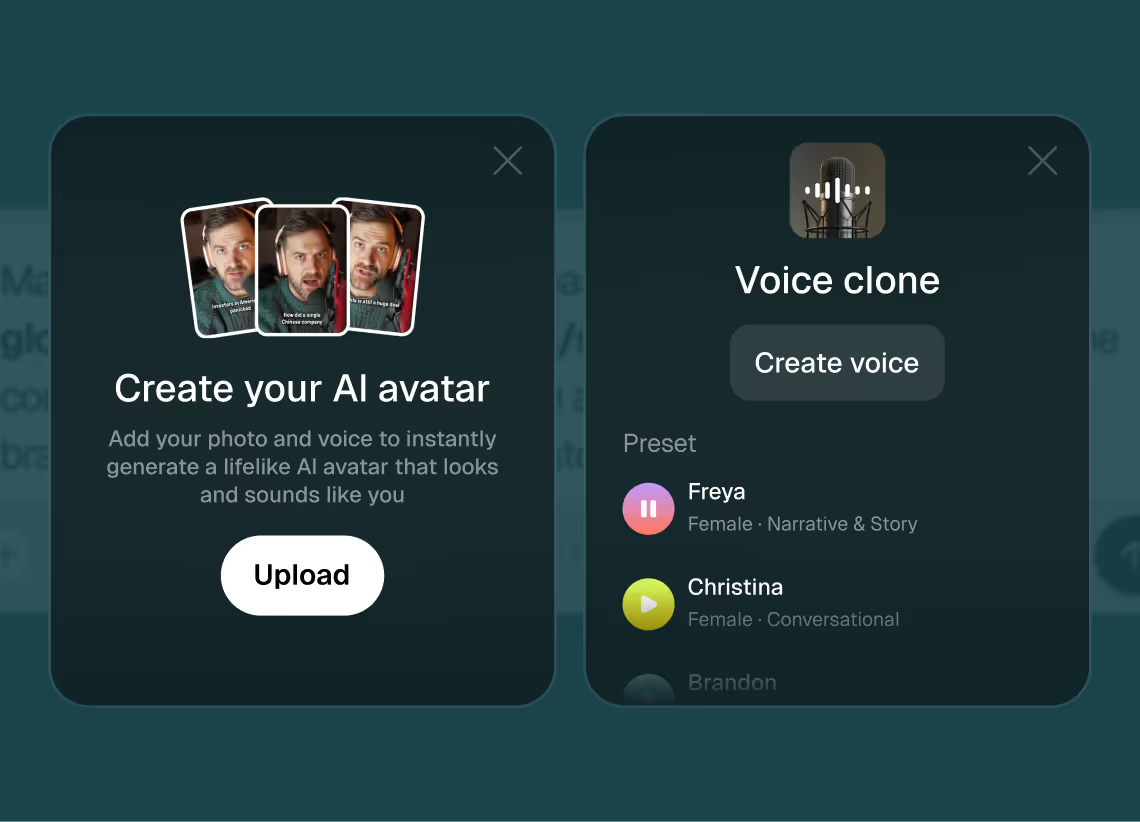
3Choose voice and avatar
Choose voice (clone yours or pick an AI voice) and avatar style (user or AI).
 4
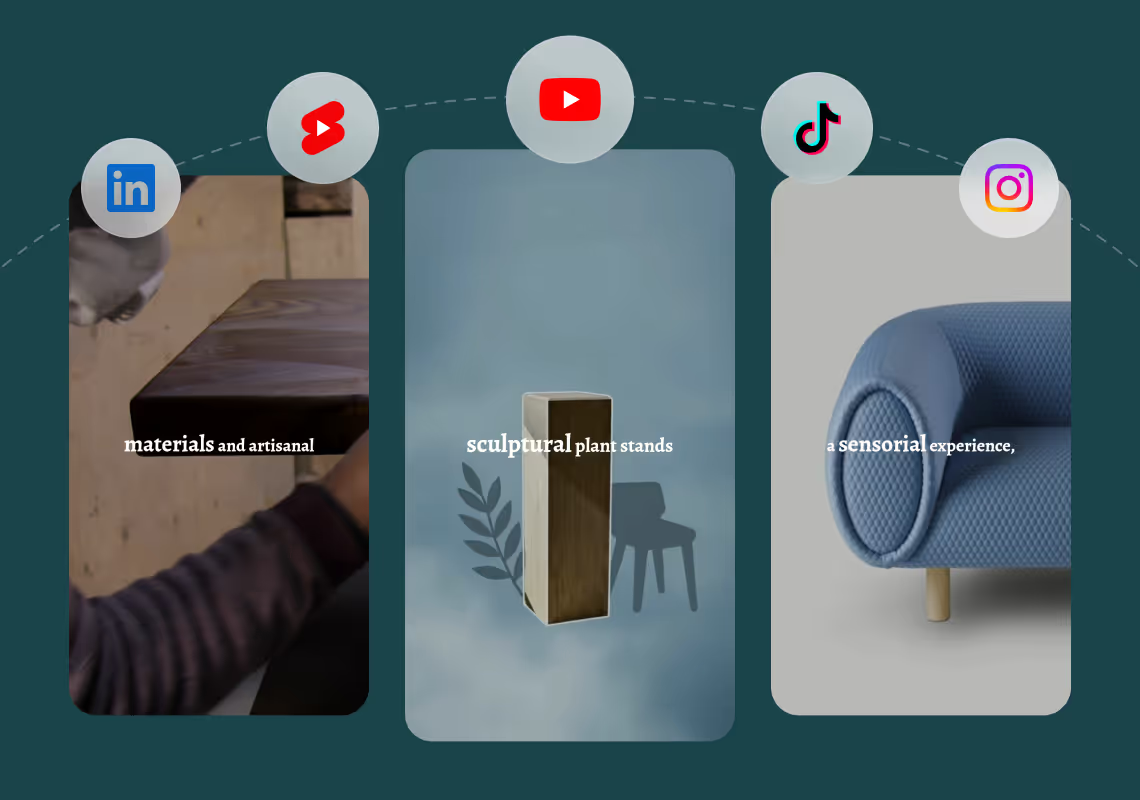
4Generate and publish-ready
Click generate and download your finished promo video in seconds, ready to publish across all platforms.


8 powerful features of Agent Opus' Whiteboard Video Maker
Instant Diagram Generation
AI creates charts, icons, and visual metaphors that illustrate your concepts on the whiteboard.
Educational Video Templates
Start with pre-built whiteboard layouts designed for tutorials, lessons, and training content.
Explore more Agent Opus tools
Testimonials
Awesome output, Most of my students and followers could not catch that it was using Agent Opus. Thank you Opus.
Wealth with Gaurav
This looks like a game-changer for us. We're building narrative-driven, visually layered content — and the ability to maintain character and motion consistency across episodes would be huge. If Agent Opus can sync branded motion graphics, tone, and avatar style seamlessly, it could easily become part of our production stack for short-form explainers and long-form investigative visuals.
srtaduck
I reviewed version a and I was very impressed with this version, it did very well in almost all aspects that users need, you would only have to make very small changes and maybe replace one of 2 of the pictures, but even saying that it could be used as is and still receive decent views or even chances at going viral depending on the story or the content the user chooses.
Jeremy
all in all LOVE THIS agent. I'm curious to see how I can push it (within reason) Just need to learn to get the consistency right with my prompts
Rebecca
Frequently Asked Questions
How does a whiteboard video maker like Agent Opus handle different input formats?
Agent Opus accepts four primary input types for whiteboard video generation, each optimized for different workflows. First, you can write a simple prompt or brief describing what you want to explain. For example, you might say 'Create a whiteboard explainer showing how our project management tool helps remote teams stay aligned.' The AI interprets your intent, structures a narrative, sources relevant visuals, and assembles a complete whiteboard-style video with motion graphics and voiceover. Second, you can paste a full script with scene-by-scene instructions. Agent Opus parses the script, maps each section to visual elements, and generates whiteboard animation that syncs perfectly with your narration. Third, you can provide an outline or bullet list. The AI expands your points into a cohesive explainer narrative, adding transitions and visual metaphors that make abstract concepts concrete. Fourth, you can input a blog post or article URL. Agent Opus extracts key points, restructures the content for video storytelling, and generates a whiteboard explainer that distills your written content into an engaging visual format. Across all input types, the whiteboard video maker automatically handles scene pacing, visual reveals, motion graphics timing, and voiceover synchronization. You never touch a timeline or manually position assets. The AI understands explainer video structure, so it knows when to introduce concepts, when to add visual emphasis, and how to pace reveals for maximum clarity and retention. This flexibility means you can start from wherever you are in your content creation process, whether that's a rough idea, a polished script, or existing written content, and still get a professional whiteboard video in minutes.
What are best practices for prompts when using a whiteboard video maker?
Effective prompts for whiteboard video generation balance clarity with creative freedom. Start by defining your core message and target audience. For example, 'Explain blockchain to small business owners' gives Agent Opus context for tone, complexity, and visual metaphors. Be specific about the problem you're solving or the concept you're teaching. Instead of 'Make a video about our app,' try 'Show how freelancers use our invoicing app to get paid faster, focusing on the three-step workflow from project completion to payment.' This specificity helps the AI select relevant visuals and structure the narrative logically. Include any must-have elements like brand colors, logos, or specific product screenshots. You might say, 'Use our blue and orange brand colors, include our logo in the intro, and show screenshots of the dashboard in the second half.' Agent Opus integrates these assets seamlessly into the whiteboard animation. If you have a preferred tone, mention it. 'Keep it conversational and upbeat' or 'Use a professional, authoritative tone for B2B decision-makers' guides the AI's scriptwriting and pacing. For complex topics, consider breaking your prompt into sections. 'First, explain the problem remote teams face with async communication. Then show how our tool solves it with threaded conversations. Finally, highlight the time savings with a before-and-after comparison.' This structure ensures the whiteboard video follows a logical flow. Don't over-specify visual details unless critical. The AI excels at choosing metaphors and visual representations that clarify concepts. Saying 'Use a lightbulb to represent ideas' is helpful, but micromanaging every icon limits the AI's ability to create cohesive, engaging whiteboard animation. After your first generation, you can refine. If the pacing feels rushed, ask for a slower reveal. If a section needs more emphasis, request additional visual detail or a pause. The whiteboard video maker learns from your feedback, so iterative prompts help you dial in exactly the style and structure that works for your audience and use case.
Can a whiteboard video maker maintain consistent branding across multiple explainer videos?
Yes, Agent Opus is designed to support brand consistency across all your whiteboard video content. When you upload brand assets like logos, color palettes, fonts, and product images, the AI stores these elements and applies them automatically to every video you generate. This means your whiteboard explainers maintain a cohesive visual identity whether you're creating one video or fifty. For voice branding, Agent Opus offers voice cloning. Record a short sample of your voice or your brand spokesperson's voice, and the AI replicates it for all future whiteboard video narrations. This ensures every explainer sounds like it comes from the same trusted source, building familiarity and authority with your audience. If you prefer AI voices, you can select a specific voice profile and use it consistently across all projects. The whiteboard video maker also supports style templates. Once you've generated a whiteboard video you love, you can save its visual style, pacing, and motion graphics approach as a template. Future videos can inherit this style, so your entire library of explainer content feels like part of a unified brand experience. For teams, this is especially powerful. Multiple team members can generate whiteboard videos using the same brand assets and style guidelines, ensuring that marketing, sales, and customer success all produce on-brand explainer content without needing a central design review. Agent Opus also handles logo placement intelligently. Your logo can appear in the intro, outro, or as a subtle watermark throughout the whiteboard animation, depending on your preference. Product screenshots and custom visuals integrate naturally into the hand-drawn aesthetic, so even when you're showcasing real software interfaces or physical products, they blend seamlessly with the whiteboard style. This level of brand control means you can scale whiteboard video production without sacrificing consistency. Whether you're creating explainer videos for different product features, customer onboarding flows, or sales enablement, every video reinforces your brand identity and builds recognition across touchpoints.
What are the limitations or edge cases when using a whiteboard video maker for complex topics?
While Agent Opus excels at generating whiteboard explainer videos for a wide range of topics, understanding its limitations helps you set realistic expectations and structure your content effectively. First, highly technical or niche subjects may require more detailed prompts or scripts. If you're explaining quantum computing or advanced medical procedures, the AI benefits from explicit guidance on terminology, visual metaphors, and the level of detail appropriate for your audience. Providing a script rather than a brief prompt often yields better results for these edge cases. Second, whiteboard video format works best for conceptual explanations, processes, and narratives. If your content is heavily data-driven with complex charts, graphs, or tables, consider whether a whiteboard style is the right fit. Agent Opus can incorporate data visualizations, but the hand-drawn aesthetic may not convey precision as effectively as a more formal presentation style. For data-heavy content, you might use the whiteboard video maker for the narrative framework and then supplement with static slides or screen recordings. Third, extremely long explainer videos, say over ten minutes, may lose the engagement advantage that whiteboard animation provides. The format thrives on concise, focused storytelling. If you have a lot to cover, consider breaking your content into a series of shorter whiteboard videos, each tackling one concept or feature. This also improves viewer retention and makes your content more shareable. Fourth, real-time or live-action footage doesn't fit the whiteboard aesthetic. If your explainer requires product demos with actual screen recordings or live customer testimonials, Agent Opus can generate the whiteboard portions and you can integrate other footage in post-production, though this adds a manual step. Fifth, cultural or regional nuances in visual metaphors may require review. The AI sources visuals from a global library, but certain icons or symbols may not resonate equally across all audiences. If you're creating whiteboard videos for international markets, consider whether the visual language translates effectively. Finally, while Agent Opus handles motion graphics and pacing automatically, you may occasionally want a specific visual reveal or timing that differs from the AI's default choices. In these cases, providing more granular direction in your prompt or script helps. For example, 'Pause for three seconds after revealing the cost savings stat' or 'Show the product logo growing from small to large over two seconds' gives the whiteboard video maker explicit timing cues. Understanding these edge cases doesn't mean the tool is limited, it means you can structure your input and expectations to get the best possible whiteboard explainer video for your specific use case.