3D Explainer Video Maker
Agent Opus is a complete 3D explainer video maker that transforms text into polished, publish-ready videos. Describe your concept in a prompt, paste a script, or drop in a blog URL, and Agent Opus generates a full explainer video with AI motion graphics, dynamic 3D visuals, voiceover, and optional avatars. No timeline, no manual editing, no stock footage hunting. Just prompt to video, ready for YouTube, LinkedIn, your website, or any platform where clear explanations drive results.

Explore what's possible with Agent Opus

Reasons why creators love Agent Opus' 3D Explainer Video Maker
Ship in Minutes, Not Hours
Generate a publish-ready video in under 10 minutes from a single prompt — no timeline editing, no asset hunting, no creative dry spells.
Zero Editing Skills Required
Describe your concept and Agent Opus handles scene composition, motion graphics, voiceover, and platform formatting automatically — even if you've never opened a video editor.
Studio-Grade Output
Cinematic motion graphics, beat-synced cuts, professional voiceover, and precise typography — every video ships looking production-quality from the first generation.
Stays On-Brand
Upload your logo, fonts, and color palette once. Agent Opus applies them across every video automatically so your content stays visually consistent.
How to use Agent Opus’ 3D Explainer Video Maker
 1
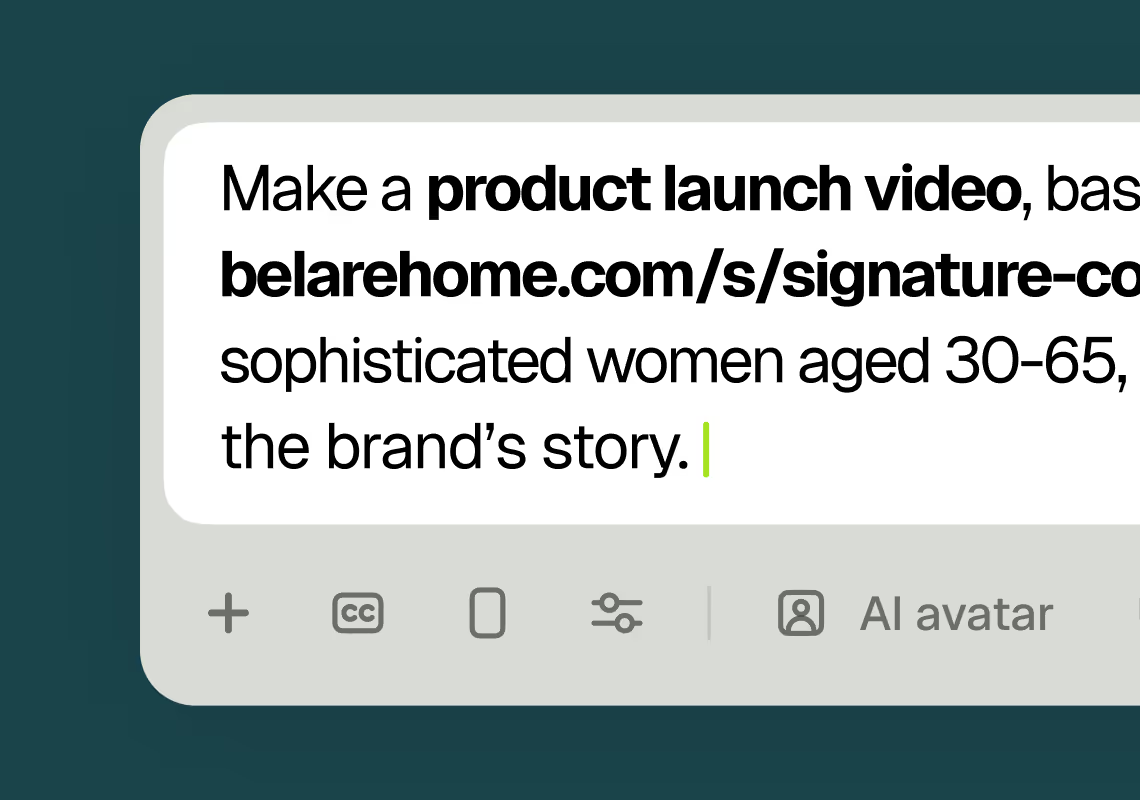
1Describe your video
Paste your promo brief, script, outline, or blog URL into Agent Opus.
 2
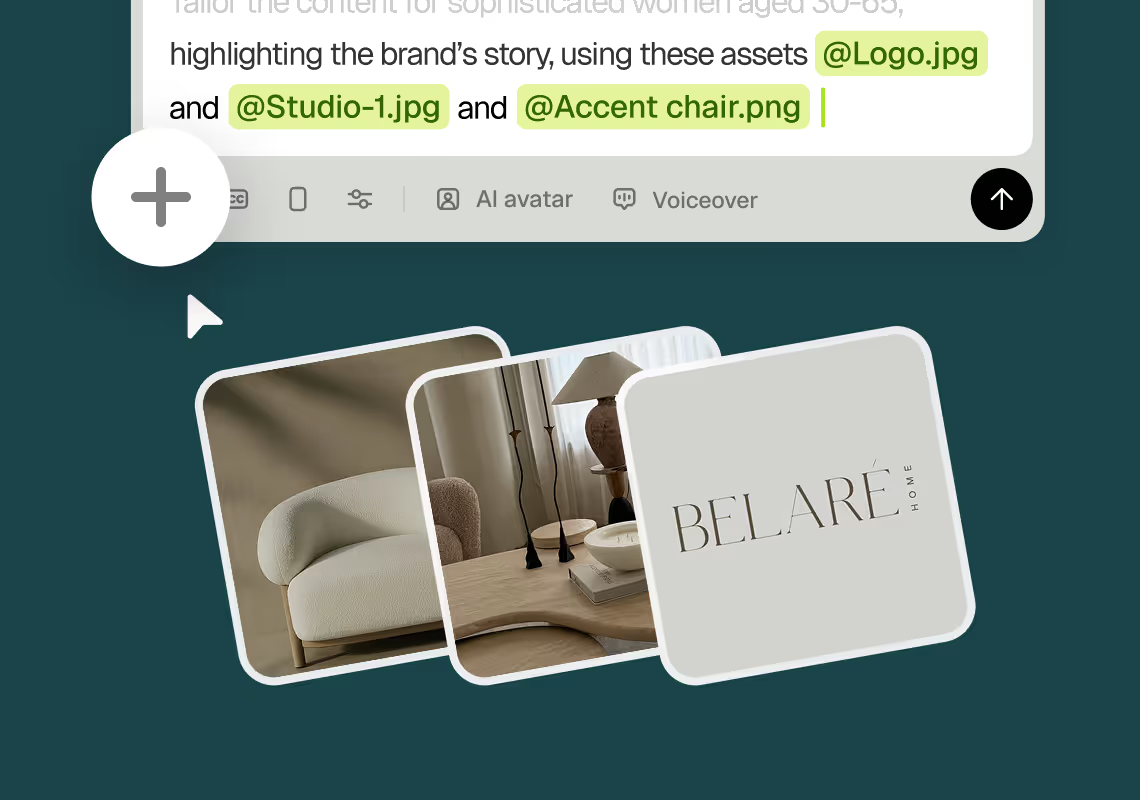
2Add assets and sources
Upload brand assets like logos and product images, or let the AI source stock visuals automatically.
 3
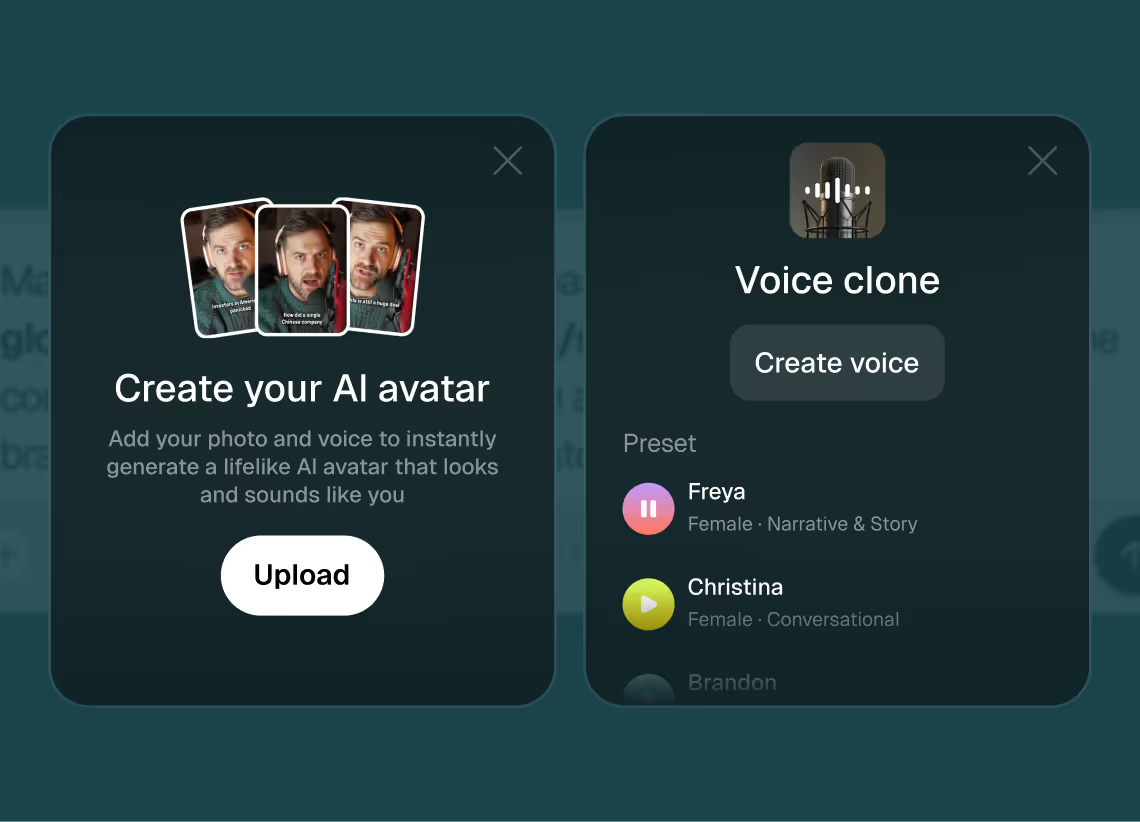
3Choose voice and avatar
Choose voice (clone yours or pick an AI voice) and avatar style (user or AI).
 4
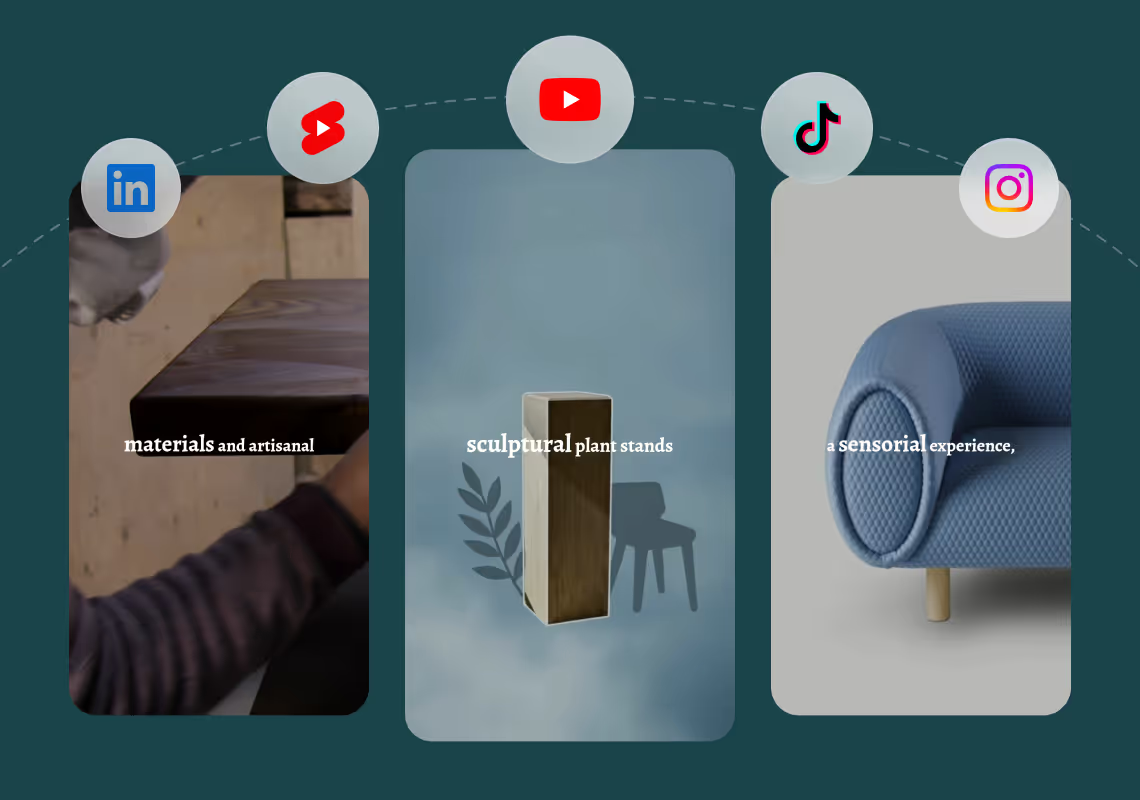
4Generate and publish-ready
Click generate and download your finished promo video in seconds, ready to publish across all platforms.


8 powerful features of Agent Opus' 3D Explainer Video Maker
Prompt-to-Video Generation
Turn a one-line idea into a finished video. The agent handles structure, pacing, B-roll selection, and final assembly automatically.
Script and Outline Support
Paste a full script, drop in an outline with section headers, or supply a blog or article URL — Agent Opus reads any of them and builds a video around the content.
AI Voiceover and Voice Cloning
Pick from natural-sounding AI voices in 30+ languages, or clone your own voice once. Every video then ships with your authentic narration.
Beat-Synced Motion Graphics
Dynamic visuals that lock to the beat of your audio or the pacing of your script — kinetic typography, transitions, and effects, no manual keyframing required.
Automatic Captions and Subtitles
Burn-in captions for short-form, soft subtitles for long-form, and multi-language translations — all generated and synced automatically.
Multi-Aspect-Ratio Export
9:16, 1:1, and 16:9 outputs from one job, with intelligent reframing of text, motion graphics, and focal elements for each ratio.
Brand Asset Integration
Upload your logo, watermark, fonts, and color palette. Agent Opus applies them consistently across every video automatically.
Avatar and Talking Head Support
Add an AI avatar, your own video footage, or a synthetic spokesperson to any video — useful for explainers, ads, and personal-brand content.
Testimonials
This looks like a game-changer for us. We're building narrative-driven, visually layered content — and the ability to maintain character and motion consistency across episodes would be huge. If Agent Opus can sync branded motion graphics, tone, and avatar style seamlessly, it could easily become part of our production stack for short-form explainers and long-form investigative visuals.
srtaduck
wow that's actually great 🔥
irtaza65
I dont think id change a thing
Quirky Collectables
Frequently Asked Questions
How does a 3D explainer video maker like Agent Opus handle different input types?
Agent Opus accepts four input formats for generating 3D explainer videos: a short prompt or brief, a full script, an outline with key points, or a blog or article URL. Each format gives the AI a different level of creative freedom. A brief like 'Explain how our SaaS dashboard simplifies project management' lets Agent Opus script the narrative, select visuals, and pace scenes autonomously. A full script locks in your exact wording, and Agent Opus focuses on visual assembly, motion graphics timing, and voiceover sync. An outline provides structure without micromanaging language, so the AI can expand each point into a scene with supporting 3D elements and transitions. A blog URL is ideal when you already have written content; Agent Opus extracts key ideas, condenses them into explainer-friendly language, and builds a video that mirrors the article's logic. Regardless of input, the output is always a complete, publish-ready 3D explainer video with motion graphics, voiceover, optional avatar, and social formatting. The system does not require you to switch modes or tools; it adapts to your input and delivers a cohesive explainer every time.
What makes the 3D motion graphics in this 3D explainer video maker different from template-based tools?
Traditional explainer video tools rely on fixed templates where you swap text and images into pre-animated slots. Agent Opus generates motion graphics dynamically based on your script and visual intent. The AI analyzes each scene's message, then assembles 3D elements, kinetic typography, transitions, and visual effects that match the narrative flow. For example, if your script explains a three-step process, Agent Opus might animate numbered 3D blocks that rotate into view, highlight each step with layered text and iconography, and transition smoothly to the next point. If you describe a product feature, the AI can integrate your product screenshot into a 3D environment with depth, lighting, and camera movement that draws attention to key UI elements. This approach means every explainer video is unique, not a reskinned template. The motion graphics adapt to your content, brand assets, and pacing, creating a polished, professional look without requiring you to learn animation software or hire a motion designer. The result is a 3D explainer video that feels custom-built, not cookie-cutter.
Can I use my own voice and branding in a 3D explainer video maker workflow?
Yes. Agent Opus supports full brand customization within the 3D explainer video maker workflow. For voiceover, you can upload a short audio sample of your voice, and Agent Opus clones it to narrate the entire explainer video in your tone and cadence. This is ideal for founders, educators, or brand voices who want consistency across content. Alternatively, choose from the AI voice library, which includes professional narrators in multiple languages and styles. For branding, upload your logo, product screenshots, brand colors, or any visual assets you want featured. Agent Opus integrates these elements into the motion graphics, overlaying logos at strategic moments, incorporating product images into 3D scenes, and matching color palettes to your brand guidelines. You can also specify an avatar: use your own video or photo, or select an AI-generated avatar that matches your brand persona. The system weaves all these inputs into a cohesive explainer video, so the final output looks and sounds like it came from your team, not a generic template. This level of customization ensures your 3D explainer video reinforces brand identity while explaining your concept clearly.
What are best practices for writing prompts in a 3D explainer video maker?
Effective prompts for a 3D explainer video maker balance clarity with creative freedom. Start by defining the core message: what problem does your product or idea solve, and for whom? A prompt like 'Explain how our AI scheduling tool helps remote teams coordinate meetings across time zones' gives Agent Opus a clear objective and audience. Next, specify any must-have visuals or brand elements: 'Include our logo, use our product dashboard screenshot, and feature a professional female avatar.' This ensures the video stays on-brand. If you have a preferred structure, outline it: 'Start with the problem, show three key features, end with a call to action.' Agent Opus will follow that flow while generating motion graphics and pacing scenes. Avoid over-scripting in a prompt; if you want exact wording, provide a full script instead. Prompts work best when they describe outcomes and constraints, not every visual detail. For example, 'Use 3D animated icons to represent each feature' is helpful; 'Make the icon blue and rotate it 45 degrees at 2.3 seconds' is too granular and limits the AI's ability to optimize pacing and transitions. Finally, test and iterate. Generate a first draft, review how Agent Opus interpreted your prompt, then refine. The AI learns from specificity, so if a scene missed the mark, add a note like 'Emphasize the dashboard UI in scene two' in your next prompt. This iterative approach helps you dial in the perfect 3D explainer video quickly.