AI Ad Generator
Agent Opus is an AI ad generator that transforms your brief, script, or product description into a finished video ad. Describe your campaign goal, upload your logo and product shots, and get a publish-ready ad with motion graphics, voiceover, and social-ready formatting. No timeline, no editing software, no production team. Just prompt to polished ad creative in minutes. Perfect for Facebook, Instagram, TikTok, YouTube, and LinkedIn campaigns that need to ship fast and perform.

Explore what's possible with Agent Opus

Reasons why creators love Agent Opus' AI Ad Generator
On-Brand Every Time
Maintain consistent visual identity and messaging across every ad without manual oversight.
Scale Without Hiring
Generate high-volume ad content for multiple platforms without expanding your creative team.
Test More, Spend Less
Produce multiple ad variations without blowing your budget on reshoots or agency fees.
Data-Driven Iterations
Quickly refresh underperforming ads based on real campaign metrics instead of waiting weeks.
Launch-Ready in Minutes
Turn campaign ideas into polished ads faster than traditional production timelines allow.
How to use Agent Opus’ AI Ad Generator
 1
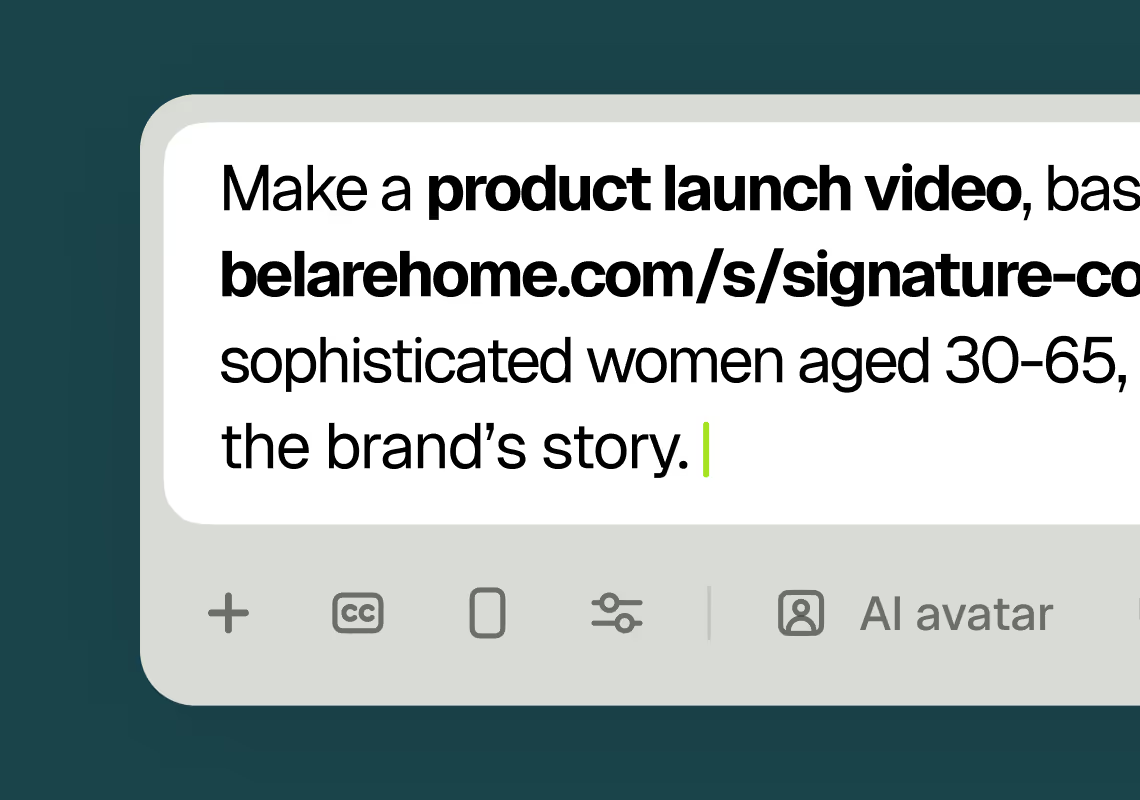
1Describe your video
Paste your promo brief, script, outline, or blog URL into Agent Opus.
 2
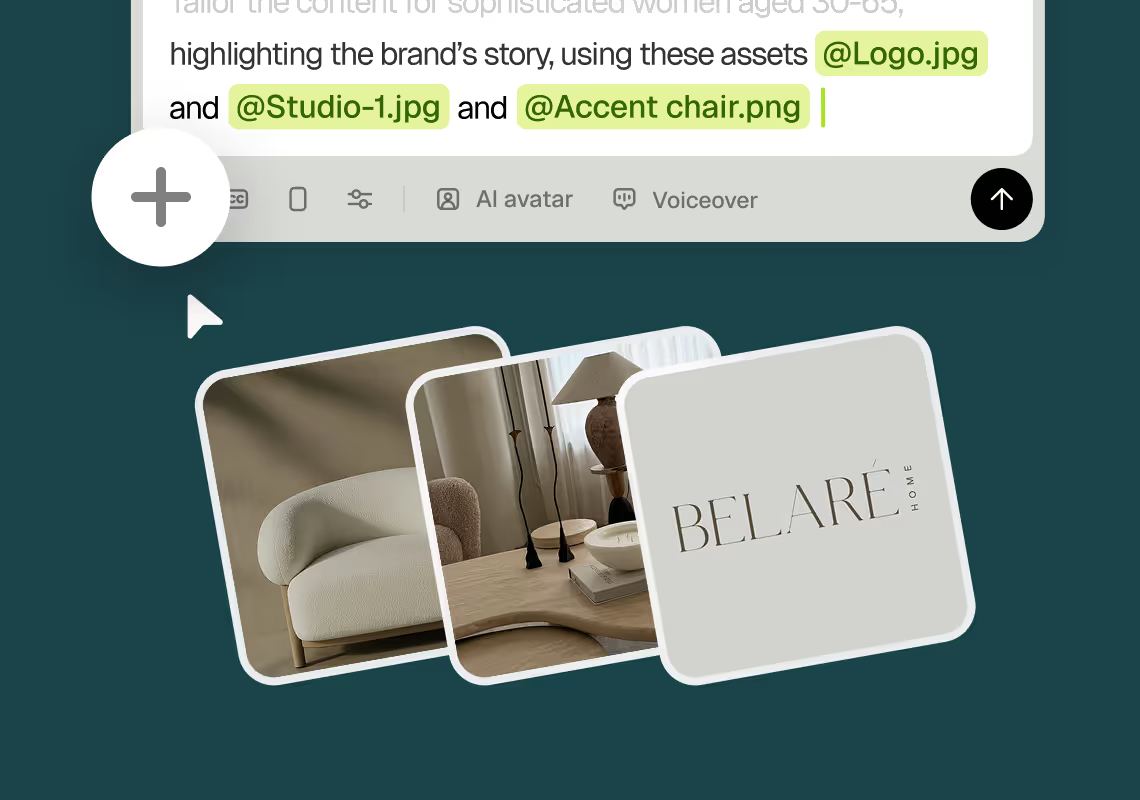
2Add assets and sources
Upload brand assets like logos and product images, or let the AI source stock visuals automatically.
 3
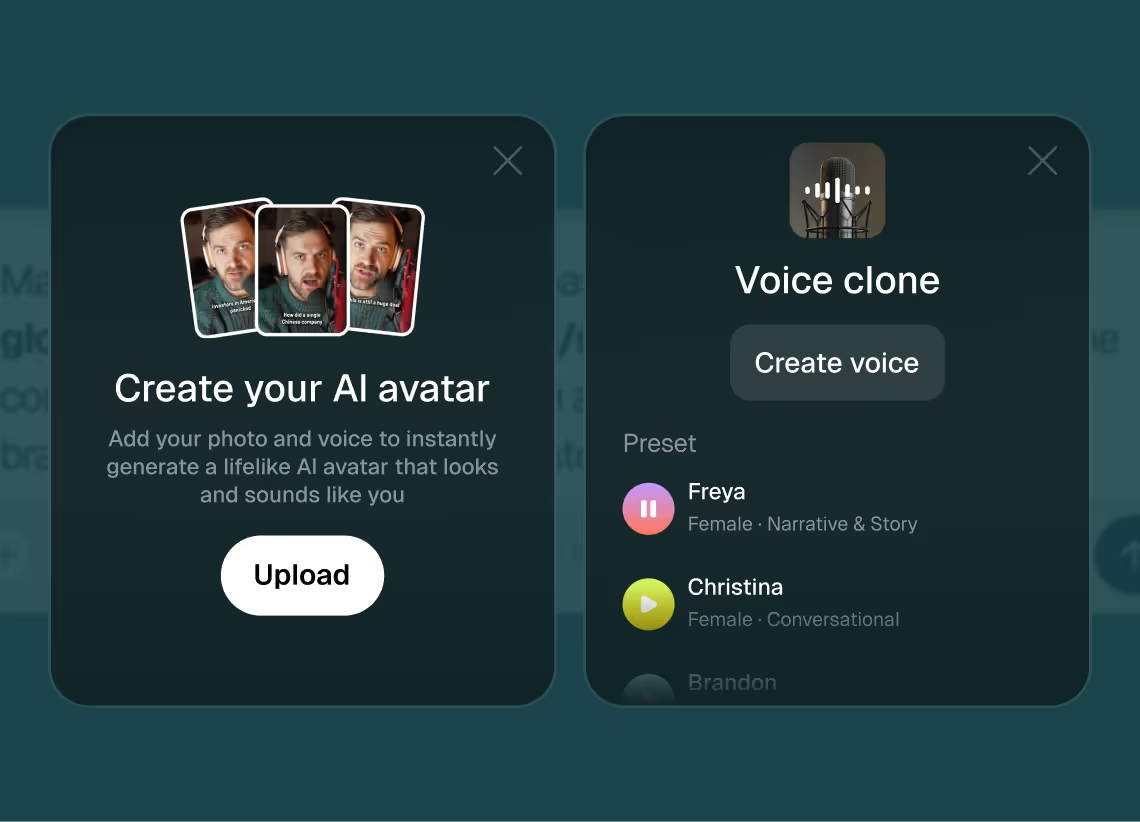
3Choose voice and avatar
Choose voice (clone yours or pick an AI voice) and avatar style (user or AI).
 4
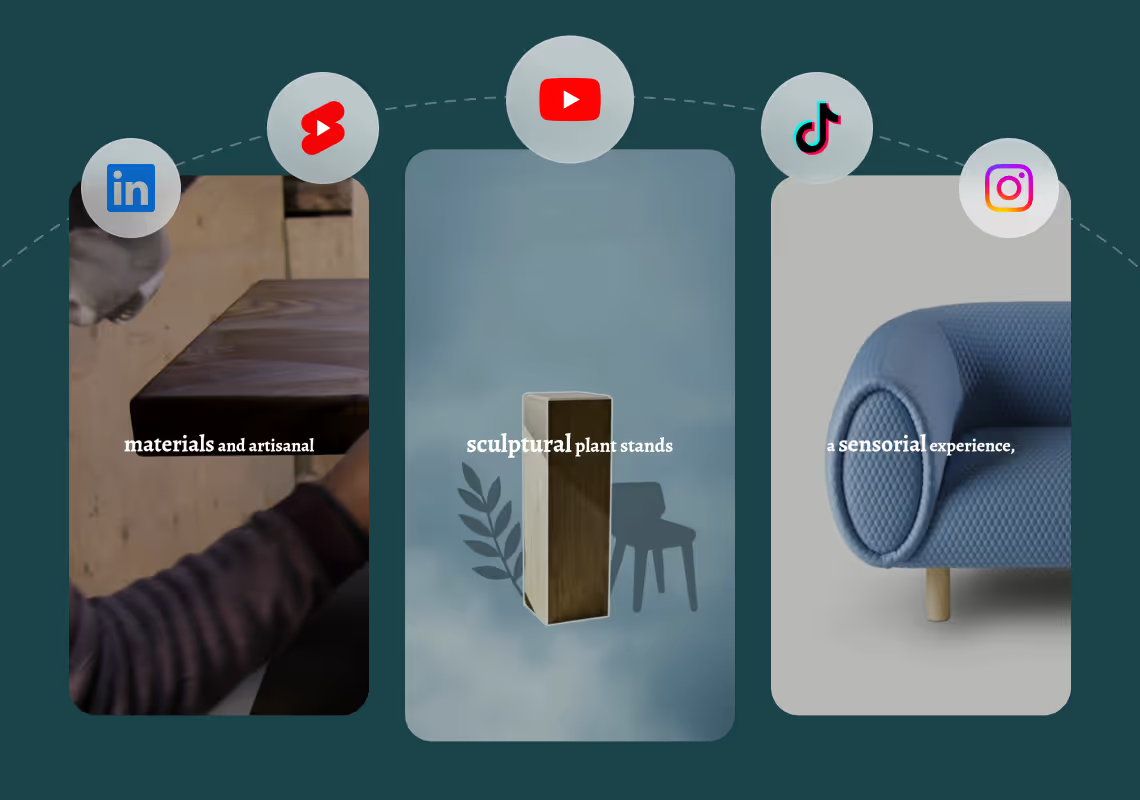
4Generate and publish-ready
Click generate and download your finished promo video in seconds, ready to publish across all platforms.


8 powerful features of Agent Opus' AI Ad Generator
Brand-Matched Visuals
Generate ads that automatically align with your logo, colors, and style guidelines.
Testimonials
Awesome output, Most of my students and followers could not catch that it was using Agent Opus. Thank you Opus.
Wealth with Gaurav
I reviewed version a and I was very impressed with this version, it did very well in almost all aspects that users need, you would only have to make very small changes and maybe replace one of 2 of the pictures, but even saying that it could be used as is and still receive decent views or even chances at going viral depending on the story or the content the user chooses.
Jeremy
i got to say honestly really impressed me with the subtle click sound on each of the edits, it may seem little but that polish honestly makes it seem near the quality to publish without any further edits
Tony
Frequently Asked Questions
How does an AI ad generator handle different campaign goals and messaging angles?
Agent Opus adapts to your campaign intent by analyzing the brief or script you provide. If you're launching a product, describe the key benefit and target audience. The AI ad generator will structure scenes to highlight features, build desire, and close with a clear call to action. If you're running a limited-time offer, emphasize urgency and scarcity in your prompt. The system adjusts pacing, visual emphasis, and voiceover tone to match. You can also specify the ad format: awareness, consideration, or conversion. For awareness, expect broader storytelling and emotional hooks. For conversion, expect tighter messaging, product focus, and direct CTAs. The AI ad generator doesn't guess. It follows your creative direction and assembles assets accordingly. Best practice: write a one-paragraph brief that includes your audience, the main benefit, the desired action, and any key visuals or proof points. The more specific your input, the more aligned your output. If you want to test multiple angles, create separate prompts for each. One might lead with social proof, another with a problem-solution narrative, and a third with a feature demo. Generate all three and compare performance in real campaigns. This approach lets you validate messaging before committing to large media buys.
Can I use my own product images, logos, and brand assets in the AI ad generator?
Yes. Agent Opus is built for brand consistency. Upload your logo, product photos, packaging shots, or any visual asset you want featured. The AI ad generator integrates them into the final video automatically, placing them in scenes where they reinforce your message. For example, if you're advertising a skincare product, upload high-resolution product shots and your brand logo. The system will composite them into lifestyle scenes, add motion graphics that draw attention to key features, and ensure your branding is visible throughout. You can also specify brand colors and visual style in your brief. If your brand is minimalist, mention that. If it's bold and energetic, say so. The AI adjusts motion, transitions, and visual density to match. This is especially valuable for agencies and in-house teams managing multiple brands. You don't need separate templates or manual asset libraries. Just upload the assets for each client or campaign, and the AI ad generator handles placement and styling. One important note: use high-resolution images. Low-quality uploads will degrade the final output. Aim for at least 1080p for product shots and vector formats for logos when possible. The system can work with web images and stock, but your own assets will always look sharper and more authentic. If you're running a campaign across multiple platforms, upload assets once and generate versions for each aspect ratio. Your branding stays consistent whether the ad runs on Instagram Stories, YouTube pre-roll, or LinkedIn feed.
What are the best practices for writing prompts that produce high-converting ad creative?
Effective prompts for an AI ad generator follow a simple structure: audience, problem, solution, proof, and action. Start by naming your target audience and their pain point. For example, 'busy parents who struggle to find healthy snacks their kids will actually eat.' Next, introduce your product as the solution and explain the key benefit in one sentence. Then add proof: a statistic, testimonial snippet, or before-and-after scenario. Finally, state the desired action: 'visit our site,' 'download the app,' 'claim your discount,' etc. This structure gives the AI ad generator a clear narrative arc to follow. It knows where to place emotional hooks, product visuals, and CTAs. Avoid vague prompts like 'make an ad for my product.' The system needs context. If you're selling software, describe the workflow it improves. If you're promoting an event, explain who should attend and what they'll gain. Specificity drives relevance. Another best practice: include tone and pacing cues. Words like 'urgent,' 'playful,' 'authoritative,' or 'inspirational' guide the AI's creative choices. If you want a fast-paced, high-energy ad, say so. If you want a calm, trust-building message, mention that. The AI ad generator adjusts scene length, transition speed, and voiceover cadence accordingly. For voiceover, specify whether you want a conversational tone, a direct sales pitch, or an educational explainer. If you're cloning your own voice, record a sample that matches the tone you want in the final ad. The AI will mimic your delivery style. Finally, test iteratively. Generate a first version, review it, then refine your prompt based on what worked and what didn't. If the CTA felt weak, make it more explicit in the next prompt. If the visuals didn't match your brand, add more descriptive detail about style and color. The AI ad generator improves with clearer input, and each iteration gets you closer to a winning creative.
How does the AI ad generator handle voiceover and spokesperson options?
Agent Opus offers two voiceover paths: AI-generated voices and voice cloning. AI voices are pre-trained, professional-sounding narrators available in multiple tones and accents. You select one that matches your brand personality, and the system generates the voiceover from your script automatically. These voices are ideal for speed and consistency, especially if you're producing high volumes of ad creative. Voice cloning lets you use your own voice or a team member's voice. Record a short sample, upload it, and the AI ad generator replicates your tone, cadence, and delivery style. This is powerful for founder-led brands, personal brands, or campaigns where authenticity and recognition matter. Your audience hears a familiar voice, which builds trust and connection. Cloned voices work especially well for spokesperson-style ads where the founder or expert explains the product directly to the camera. Beyond voiceover, you can add an avatar: either an AI-generated character or a video of yourself. AI avatars are useful when you want a human presence without recording video. They lip-sync to the voiceover and add personality to the ad. User avatars are your own video clips. Upload a short recording of yourself speaking, and the system integrates it into the ad. This approach combines the efficiency of AI generation with the authenticity of real human presence. Best practice for voiceover: write your script in a natural, conversational tone. Avoid overly formal or jargon-heavy language unless your audience expects it. The AI ad generator performs best when the script sounds like something a real person would say. If you're using voice cloning, record your sample in a quiet space with clear audio. Background noise and echo will carry over into the final voiceover. For AI voices, test a few options before committing. Different voices resonate with different audiences, and a quick test can reveal which one drives better engagement.