AI Anime Generator
Create stunning anime-style videos from text with Agent Opus, the AI anime generator that transforms your ideas into finished content. Describe your vision, paste a script, or drop a blog URL, and watch Agent Opus assemble scenes, motion graphics, voiceover, and soundtrack into a publish-ready anime video. No timeline. No manual editing. Just prompt to video in minutes, optimized for TikTok, YouTube Shorts, Instagram Reels, and every social platform where anime content thrives.

Explore what's possible with Agent Opus

Reasons why creators love Agent Opus' AI Anime Generator
Ship in Minutes, Not Hours
Generate a publish-ready video in under 10 minutes from a single prompt — no timeline editing, no asset hunting, no creative dry spells.
Zero Editing Skills Required
Describe your concept and Agent Opus handles scene composition, motion graphics, voiceover, and platform formatting automatically — even if you've never opened a video editor.
Studio-Grade Output
Cinematic motion graphics, beat-synced cuts, professional voiceover, and precise typography — every video ships looking production-quality from the first generation.
Stays On-Brand
Upload your logo, fonts, and color palette once. Agent Opus applies them across every video automatically so your content stays visually consistent.
How to use Agent Opus’ AI Anime Generator
 1
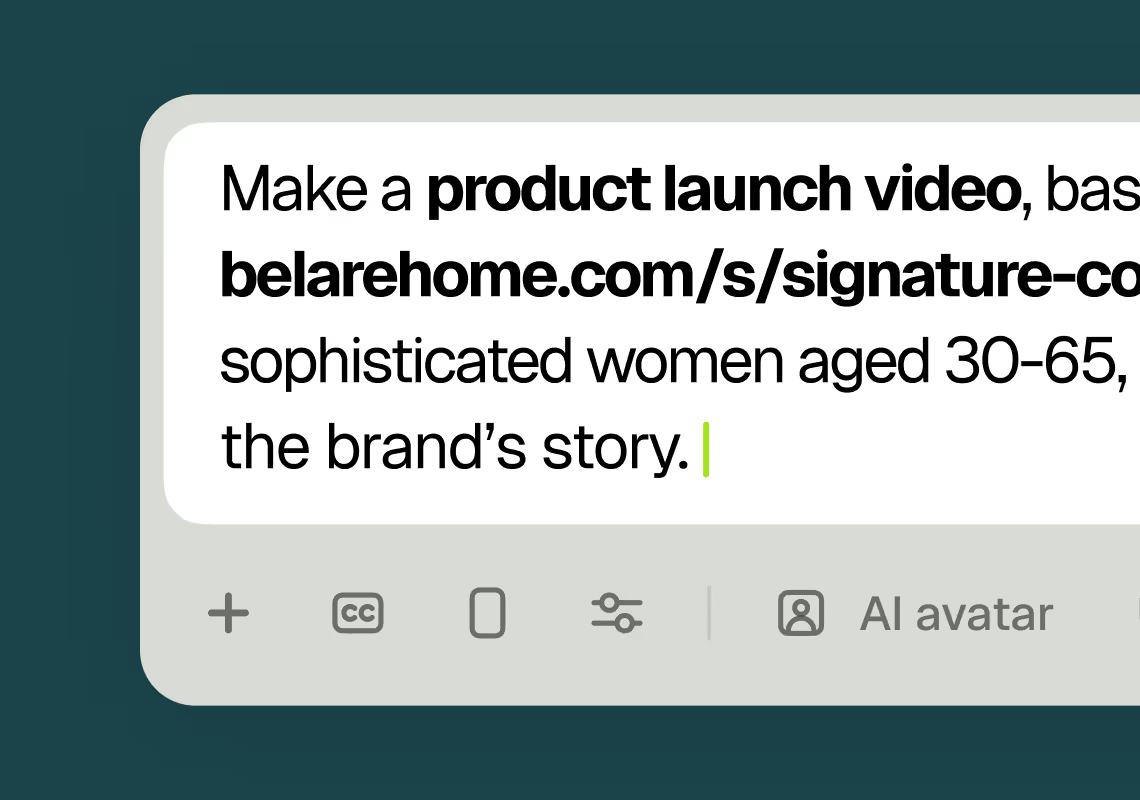
1Describe your video
Paste your promo brief, script, outline, or blog URL into Agent Opus.
 2
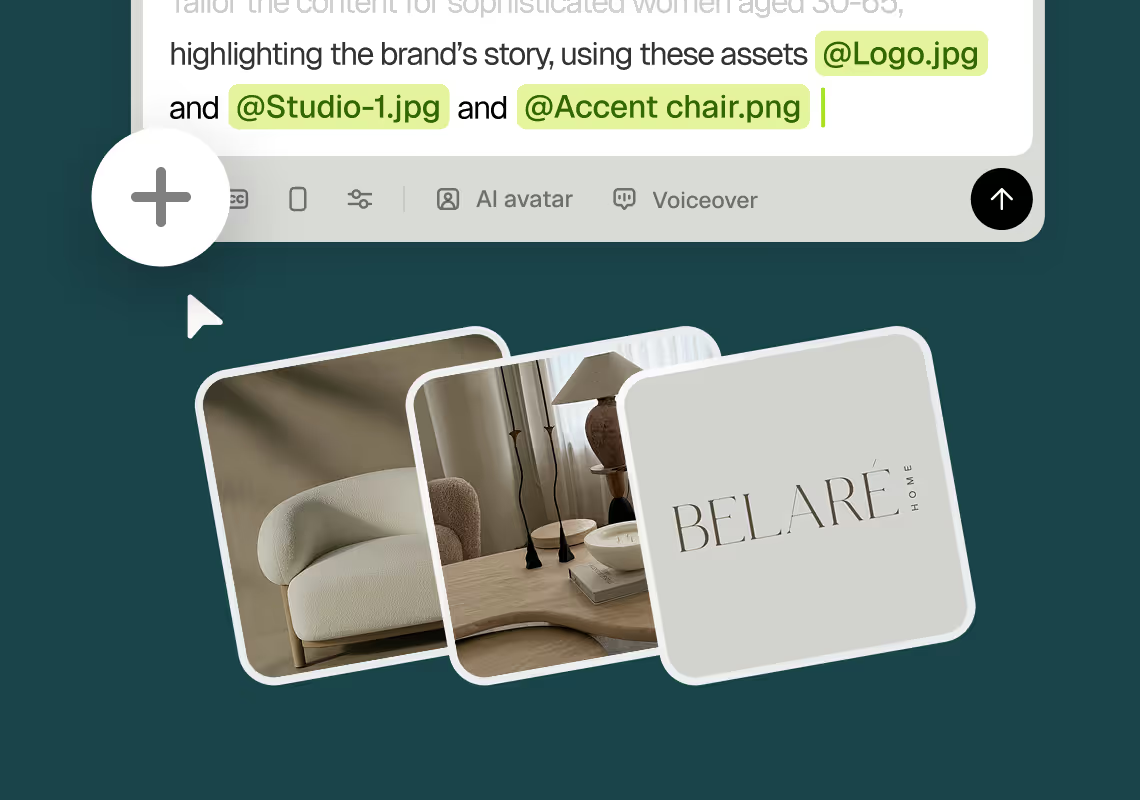
2Add assets and sources
Upload brand assets like logos and product images, or let the AI source stock visuals automatically.
 3
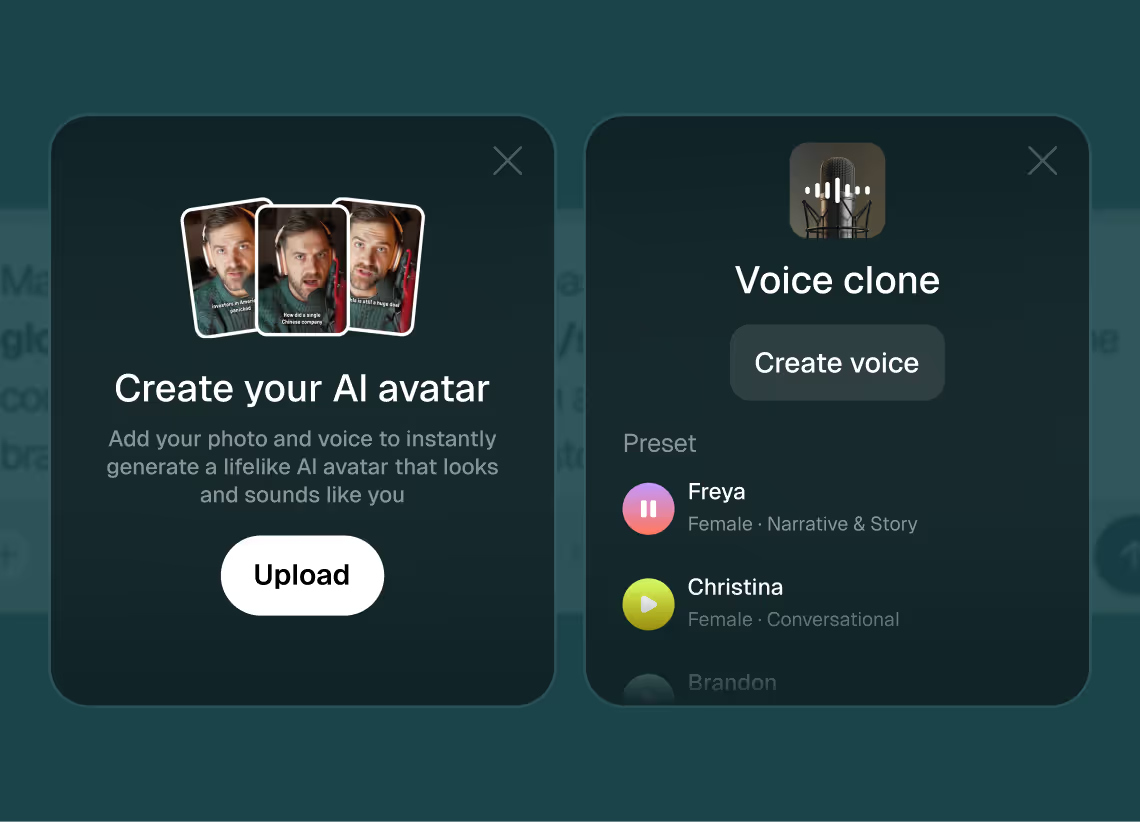
3Choose voice and avatar
Choose voice (clone yours or pick an AI voice) and avatar style (user or AI).
 4
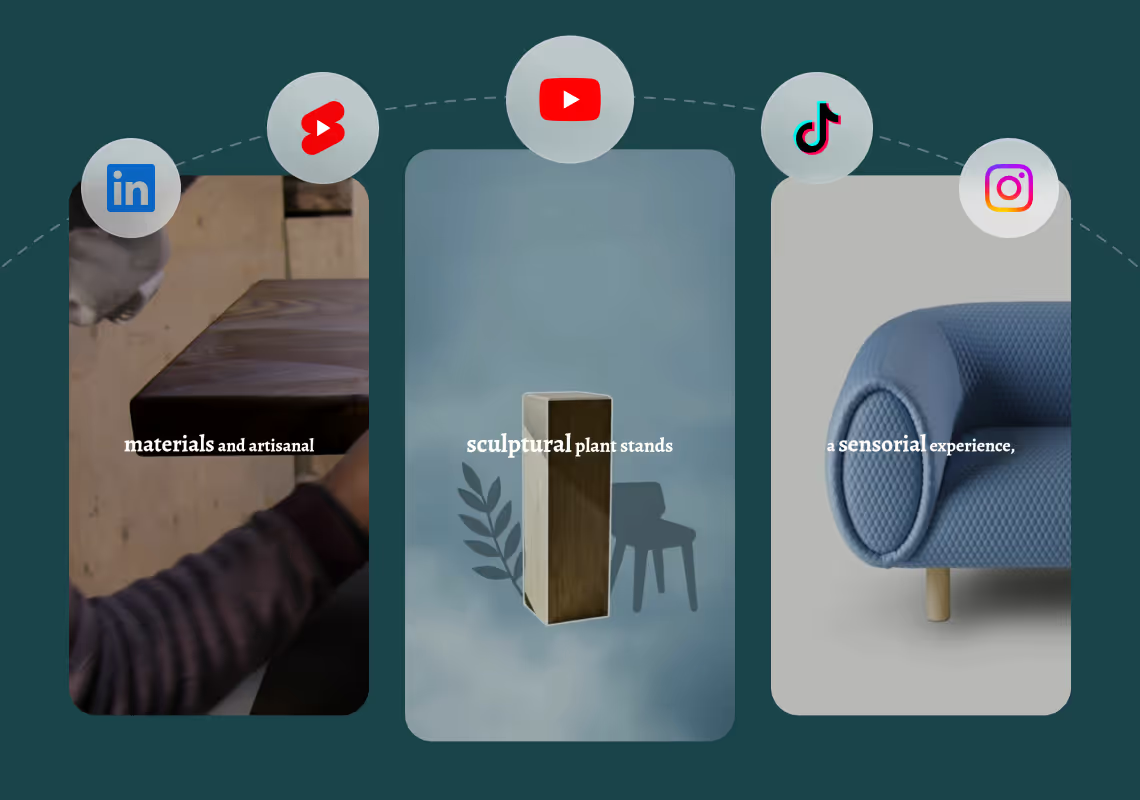
4Generate and publish-ready
Click generate and download your finished promo video in seconds, ready to publish across all platforms.


8 powerful features of Agent Opus' AI Anime Generator
Prompt-to-Video Generation
Turn a one-line idea into a finished video. The agent handles structure, pacing, B-roll selection, and final assembly automatically.
Script and Outline Support
Paste a full script, drop in an outline with section headers, or supply a blog or article URL — Agent Opus reads any of them and builds a video around the content.
AI Voiceover and Voice Cloning
Pick from natural-sounding AI voices in 30+ languages, or clone your own voice once. Every video then ships with your authentic narration.
Beat-Synced Motion Graphics
Dynamic visuals that lock to the beat of your audio or the pacing of your script — kinetic typography, transitions, and effects, no manual keyframing required.
Automatic Captions and Subtitles
Burn-in captions for short-form, soft subtitles for long-form, and multi-language translations — all generated and synced automatically.
Multi-Aspect-Ratio Export
9:16, 1:1, and 16:9 outputs from one job, with intelligent reframing of text, motion graphics, and focal elements for each ratio.
Brand Asset Integration
Upload your logo, watermark, fonts, and color palette. Agent Opus applies them consistently across every video automatically.
Avatar and Talking Head Support
Add an AI avatar, your own video footage, or a synthetic spokesperson to any video — useful for explainers, ads, and personal-brand content.
Testimonials
all in all LOVE THIS agent. I'm curious to see how I can push it (within reason) Just need to learn to get the consistency right with my prompts
Rebecca
I reviewed version a and I was very impressed with this version, it did very well in almost all aspects that users need, you would only have to make very small changes and maybe replace one of 2 of the pictures, but even saying that it could be used as is and still receive decent views or even chances at going viral depending on the story or the content the user chooses.
Jeremy
I dont think id change a thing
Quirky Collectables
Frequently Asked Questions
How does the AI anime generator handle different input types like prompts versus full scripts?
Agent Opus adapts its anime video generation workflow to the input you provide, whether that is a short creative prompt, a detailed script, a structured outline, or even a blog post URL. When you submit a brief prompt like 'anime hero discovers hidden power in neon city,' the AI anime generator interprets the narrative arc, visual style cues, and pacing requirements, then assembles scenes that match anime storytelling conventions such as dramatic reveals, action beats, and emotional close-ups. For full scripts, Agent Opus parses dialogue, scene descriptions, and stage directions to build a frame-accurate anime sequence with voiceover sync, motion graphics, and transitions that honor your written vision. Outline inputs let you define act structure and key moments while leaving visual interpretation to the AI, which sources anime-style imagery, applies motion effects, and layers soundtrack to match the tone you specify. Blog URL inputs trigger a content extraction process where Agent Opus identifies the main narrative, key points, and supporting details, then translates that text into an anime video format complete with visual metaphors, character-style avatars if relevant, and pacing that keeps viewers engaged across social platforms. Regardless of input type, the AI anime generator maintains consistent anime aesthetics through its motion graphics engine, which applies techniques like speed lines, dramatic lighting shifts, and stylized transitions that define the genre. The system also adjusts scene length and visual complexity based on your target platform, so a TikTok anime short emphasizes rapid cuts and bold visuals while a YouTube anime explainer balances detail with narrative flow. This flexibility means you can start with whatever creative asset you have, from a single sentence to a thousand-word article, and trust Agent Opus to deliver a publish-ready anime video that feels intentional, polished, and true to the anime style your audience expects.
What are the best practices for writing prompts that produce high-quality anime videos with this AI anime generator?
Effective prompts for the AI anime generator balance creative direction with flexibility, giving Agent Opus enough context to make smart visual and narrative choices while leaving room for the AI to apply anime conventions you might not think to specify. Start by defining the core narrative or message in one clear sentence, such as 'a young inventor builds a robot companion and learns about friendship' or 'explain blockchain technology through the journey of a digital samurai.' This anchor helps the AI anime generator establish tone, pacing, and visual metaphors that align with anime storytelling traditions. Next, include style cues that signal the anime subgenre or aesthetic you want, like 'shonen action with bright colors and dynamic fight choreography' or 'slice-of-life with soft pastels and gentle character moments.' These descriptors guide the motion graphics engine and image sourcing logic so your video feels cohesive and genre-appropriate. If your video includes specific branding elements, mention them explicitly: 'feature our logo in the opening scene' or 'show our product as a futuristic gadget the protagonist uses.' Agent Opus integrates logos and product shots naturally into anime compositions, treating them as story elements rather than intrusive overlays. For voiceover, specify tone and energy: 'enthusiastic narrator with upbeat pacing' or 'calm, reflective voice that matches contemplative visuals.' The AI anime generator adjusts vocal delivery and scene timing to match, ensuring audio and visuals reinforce each other. Avoid over-prescribing every visual detail; prompts like 'show exactly three characters standing in a triangular formation with the sunset at 45 degrees' constrain the AI and often produce less natural results than 'three friends face a difficult choice at sunset,' which lets Agent Opus apply anime visual language like silhouette framing, lens flare, and emotional close-ups. If you are adapting existing content like a blog post, add a prompt overlay that reframes the material for anime: 'turn this article into an anime origin story where each section is a chapter in the hero's journey.' This gives the AI anime generator permission to interpret, dramatize, and visualize rather than simply illustrate. Finally, test and iterate; generate a video, note what works, then refine your prompt with more specific style or pacing guidance for the next version. The AI learns your preferences across sessions, so consistent terminology and structure in your prompts help Agent Opus deliver anime videos that match your creative vision faster with each project.
Can the AI anime generator maintain consistent branding, voices, and visual styles across multiple anime video projects?
Yes, Agent Opus is built to support brand consistency across every anime video you generate, which is critical for creators and marketers who need a recognizable visual identity and voice across campaigns, series, or content libraries. The AI anime generator stores your brand assets, including logos, color palettes, product images, and custom fonts, so every video automatically incorporates these elements in ways that feel native to anime composition rather than generic overlays. For example, if you upload a logo, Agent Opus might integrate it as a glowing emblem on a character's gear, a holographic display in a futuristic scene, or a stylized watermark that matches the anime aesthetic of each frame. This approach keeps branding visible without disrupting the storytelling flow that makes anime content engaging. Voice consistency is equally robust; when you clone your voice or select an AI narrator, Agent Opus saves that voice profile and applies it to all future projects unless you specify otherwise. This means your anime explainer series, product demos, and social shorts all feature the same vocal identity, building audience familiarity and trust. If you work with multiple team members or clients, you can manage separate voice profiles and switch between them per project while maintaining the same anime visual style. Visual style consistency comes from the motion graphics engine and image sourcing logic, which learn your preferences as you generate videos. If your first anime video uses high-contrast neon visuals with cyberpunk elements, Agent Opus tags that style and prioritizes similar aesthetics in subsequent projects when you use related prompts or keywords. You can also define style templates by saving successful prompts as starting points for new videos, ensuring that your anime content library shares a cohesive look even as individual videos explore different topics or narratives. For series or episodic content, the AI anime generator can reference previous videos to maintain character designs, setting details, and narrative continuity, so your audience experiences a unified story world across episodes. This is especially valuable for educational series, product launch campaigns, or brand storytelling where each video builds on the last. Agent Opus also supports batch generation, letting you create multiple anime videos from a list of prompts or scripts in one session, all styled consistently because the AI applies the same visual and audio parameters across the batch. The result is a content pipeline that feels intentional and professional, with every anime video reinforcing your brand identity while delivering the creative variety that keeps audiences engaged and coming back for more.
What are the limitations or edge cases when using an AI anime generator like Agent Opus for complex or niche anime projects?
While Agent Opus delivers publish-ready anime videos for a wide range of use cases, understanding its limitations helps you set realistic expectations and plan projects that play to the AI anime generator's strengths. First, highly specific character consistency across long-form series can be challenging; if your project requires the exact same character design, outfit details, and facial features in every scene across dozens of episodes, you may need to provide reference images and use detailed prompts to guide the AI, and even then, minor variations can occur as the motion graphics engine interprets each scene independently. For short-form content and episodic series with flexible character designs, this is rarely an issue, but creators building multi-season anime narratives should test early and provide feedback to refine character rendering. Second, the AI anime generator excels at sourcing and integrating royalty-free and web-based anime visuals, but if your project demands exclusive custom artwork or collaboration with a specific illustrator, Agent Opus is not a replacement for commissioning original animation; instead, use it to prototype concepts, generate supporting content, or create marketing videos that complement your custom animation work. Third, complex action choreography with frame-by-frame precision, such as martial arts sequences with specific move timing or intricate mecha battles with detailed transformation sequences, may not match the control level of traditional animation software where you direct every keyframe. Agent Opus applies anime motion conventions like speed lines, impact frames, and dynamic camera angles, but the AI interprets action based on your prompt rather than executing a shot list, so results lean toward stylized storytelling over technical fight animation. For most marketing, educational, and social content, this approach works beautifully, but if your project is an action-heavy anime short film with choreography as the centerpiece, consider using Agent Opus for pre-visualization or supplementary scenes rather than the entire production. Fourth, niche anime subgenres with very specific visual languages, such as avant-garde experimental anime or hyper-detailed mecha designs with engineering accuracy, may require more prompt iteration to achieve the desired aesthetic because the AI anime generator optimizes for broadly recognizable anime styles that perform well across social platforms. You can still create content in these niches, but expect to refine prompts and test multiple generations to dial in the look. Fifth, audio limitations exist around complex soundscapes; while Agent Opus provides background music and voiceover, projects requiring original score composition, licensed anime theme songs, or multi-layered sound design with precise audio cues will need post-production audio work outside the platform. Finally, the AI anime generator is optimized for social-first video lengths, typically under five minutes, with the sweet spot being 30 seconds to two minutes for maximum engagement. Longer-form anime content is supported, but as video length increases, maintaining narrative coherence and visual variety requires more detailed prompts and potentially breaking the project into segments that you generate and sequence separately. These limitations are not dealbreakers; they simply define the use cases where Agent Opus shines, which include anime explainers, product demos, social shorts, educational series, brand storytelling, and marketing campaigns where speed, consistency, and publish-ready output matter more than frame-level animation control.