AI Avatar Generator
Create professional talking avatar videos from text in minutes. Agent Opus is an AI avatar generator that transforms your script, prompt, or blog into a complete video with AI avatars, voiceovers, motion graphics, and social-ready formatting. No camera, no studio, no editing. Describe what you want, and get a publish-ready avatar video instantly. Perfect for creators, marketers, and founders who need authentic video content without the production overhead.

Explore what's possible with Agent Opus

Reasons why creators love Agent Opus' AI Avatar Generator
Ship in Minutes, Not Hours
Generate a publish-ready video in under 10 minutes from a single prompt — no timeline editing, no asset hunting, no creative dry spells.
Zero Editing Skills Required
Describe your concept and Agent Opus handles scene composition, motion graphics, voiceover, and platform formatting automatically — even if you've never opened a video editor.
Studio-Grade Output
Cinematic motion graphics, beat-synced cuts, professional voiceover, and precise typography — every video ships looking production-quality from the first generation.
Stays On-Brand
Upload your logo, fonts, and color palette once. Agent Opus applies them across every video automatically so your content stays visually consistent.
How to use Agent Opus’ AI Avatar Generator
 1
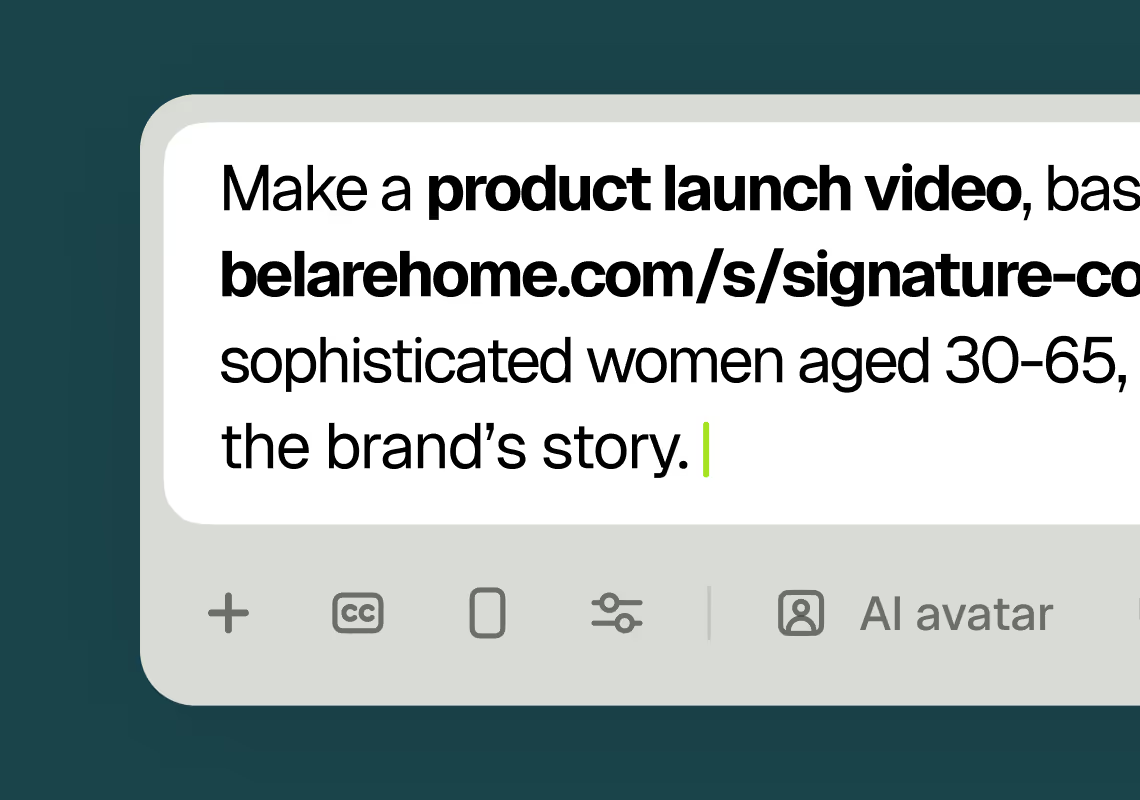
1Describe your video
Paste your promo brief, script, outline, or blog URL into Agent Opus.
 2
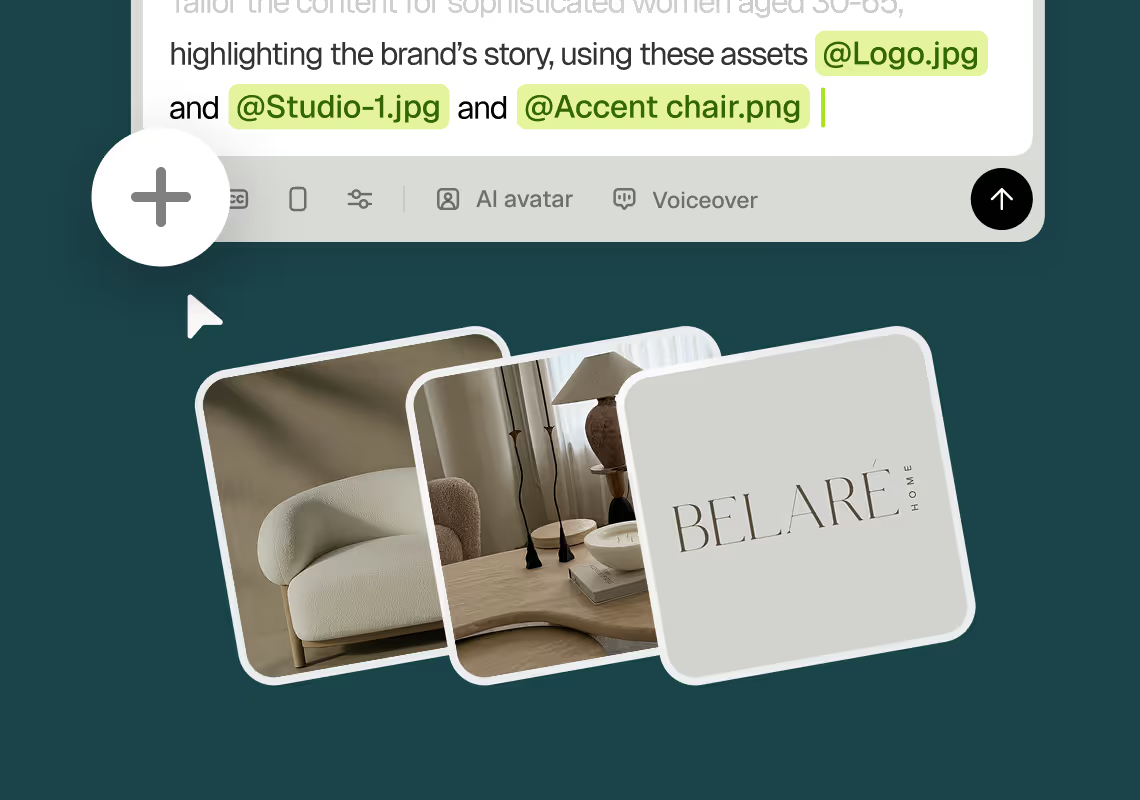
2Add assets and sources
Upload brand assets like logos and product images, or let the AI source stock visuals automatically.
 3
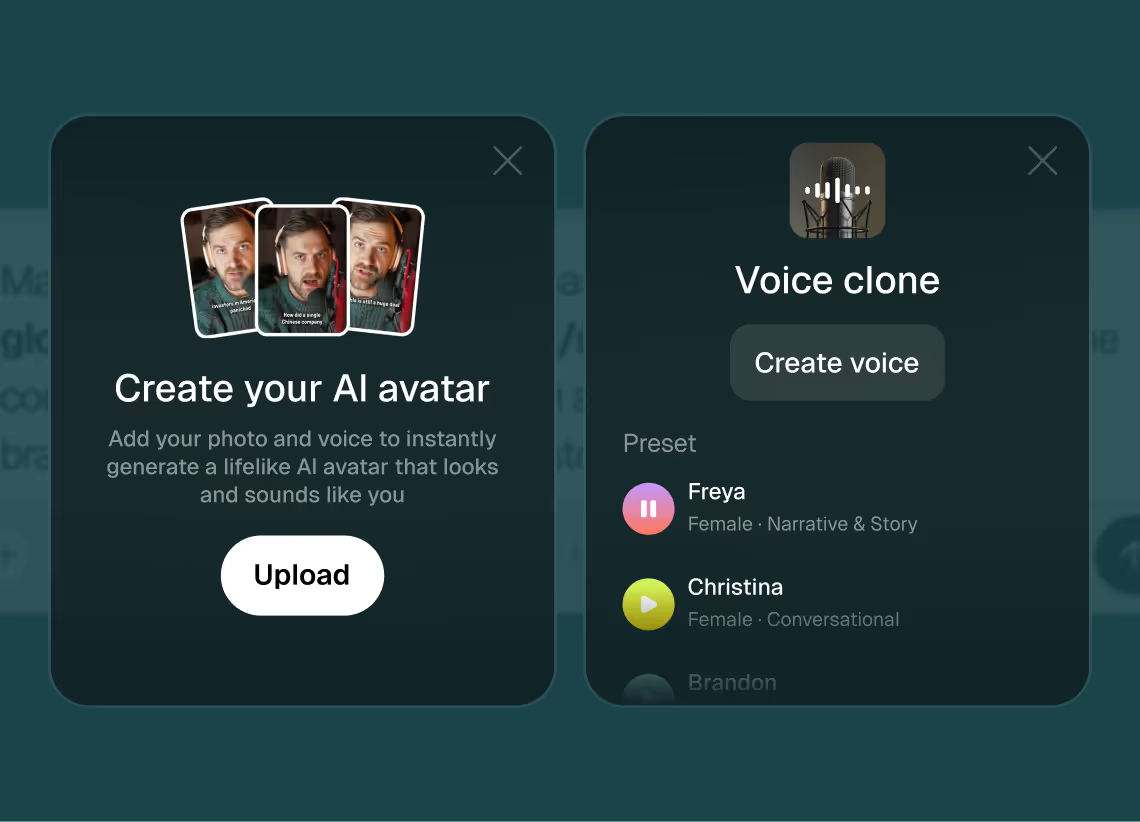
3Choose voice and avatar
Choose voice (clone yours or pick an AI voice) and avatar style (user or AI).
 4
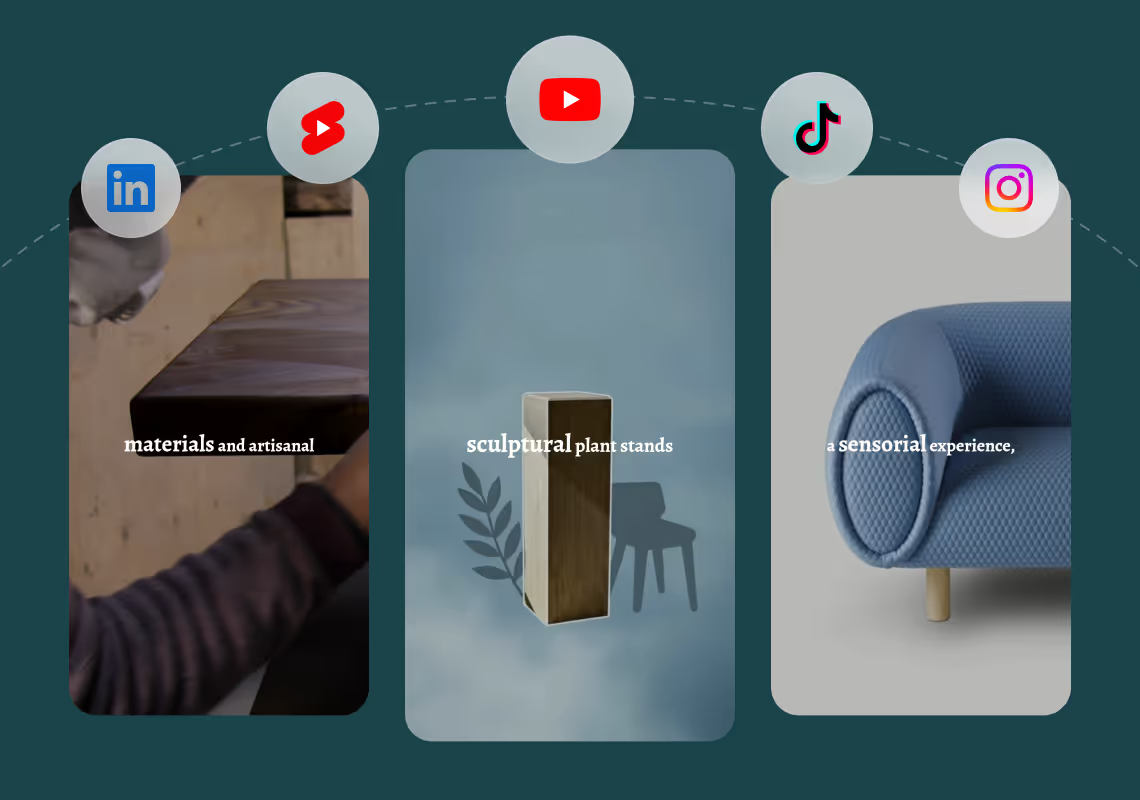
4Generate and publish-ready
Click generate and download your finished promo video in seconds, ready to publish across all platforms.


8 powerful features of Agent Opus' AI Avatar Generator
Prompt-to-Video Generation
Turn a one-line idea into a finished video. The agent handles structure, pacing, B-roll selection, and final assembly automatically.
Script and Outline Support
Paste a full script, drop in an outline with section headers, or supply a blog or article URL — Agent Opus reads any of them and builds a video around the content.
AI Voiceover and Voice Cloning
Pick from natural-sounding AI voices in 30+ languages, or clone your own voice once. Every video then ships with your authentic narration.
Beat-Synced Motion Graphics
Dynamic visuals that lock to the beat of your audio or the pacing of your script — kinetic typography, transitions, and effects, no manual keyframing required.
Automatic Captions and Subtitles
Burn-in captions for short-form, soft subtitles for long-form, and multi-language translations — all generated and synced automatically.
Multi-Aspect-Ratio Export
9:16, 1:1, and 16:9 outputs from one job, with intelligent reframing of text, motion graphics, and focal elements for each ratio.
Brand Asset Integration
Upload your logo, watermark, fonts, and color palette. Agent Opus applies them consistently across every video automatically.
Avatar and Talking Head Support
Add an AI avatar, your own video footage, or a synthetic spokesperson to any video — useful for explainers, ads, and personal-brand content.
Testimonials
I dont think id change a thing
Quirky Collectables
wow that's actually great 🔥
irtaza65
Frequently Asked Questions
How does an AI avatar generator create realistic talking videos from text?
An AI avatar generator like Agent Opus uses advanced neural networks to synthesize realistic human avatars that speak your script with natural lip sync, facial expressions, and body language. When you input text (a prompt, script, outline, or blog URL), the system first processes your content to understand tone, pacing, and key message points. It then generates or selects an avatar that matches your brand or presentation style. The voice component works in parallel: you can clone your own voice by uploading a short sample, or choose from a library of professional AI voices with different accents, genders, and speaking styles. The AI avatar generator synchronizes the chosen voice with the avatar's mouth movements using phoneme-level analysis, ensuring every syllable matches the lip position. Beyond the avatar itself, Agent Opus layers in motion graphics, background visuals sourced from stock libraries or web images, and dynamic scene transitions that keep viewers engaged. The entire composition happens automatically based on your input text and any brand assets you provide (logos, product images, color schemes). The result is a complete talking avatar video that looks professionally produced, with no manual animation, no green screen filming, and no frame-by-frame editing. This approach makes avatar video creation accessible to creators and marketers who lack video production skills or studio access, while maintaining the authenticity and polish audiences expect from professional content.
What are the best practices for writing prompts that produce high-quality AI avatar videos?
Creating effective prompts for an AI avatar generator requires clarity about your message, audience, and desired video style. Start with a clear objective: are you explaining a product feature, sharing a testimonial, teaching a concept, or making an announcement? State this purpose in your prompt or script opening. For example, 'Create a 60-second explainer video where an AI avatar introduces our new project management tool to small business owners' gives the system context for tone, pacing, and visual style. Be specific about your avatar's persona and delivery style. Phrases like 'professional but approachable,' 'energetic startup founder,' or 'calm educational instructor' help the AI avatar generator select appropriate expressions, gestures, and voice characteristics. If you're using a script rather than a brief prompt, write in spoken language, not formal prose. Contractions, short sentences, and conversational phrasing produce more natural avatar delivery. Include pauses and emphasis cues if needed: 'This is the breakthrough (pause) everyone's been waiting for.' Specify any visual elements you want featured: 'Show our app interface at 15 seconds,' or 'Display customer logos in the background.' If you have brand assets (logos, product shots, specific color schemes), mention them in your prompt so Agent Opus can integrate them throughout the video. For voice, indicate whether you want your cloned voice or a specific AI voice style. Length matters: be realistic about how much content fits in your target duration. A 30-second video typically accommodates 75-90 words, while a 60-second video handles 150-180 words comfortably. Finally, consider your platform: if you're creating for TikTok or Reels, front-load your hook in the first 3 seconds of your script. For LinkedIn or YouTube, you can build more gradually. The AI avatar generator will handle pacing, but your prompt structure determines whether viewers stay engaged.
Can I maintain consistent branding and avatar style across multiple videos?
Yes, an AI avatar generator like Agent Opus is designed to maintain visual and tonal consistency across your entire video library, which is critical for brand recognition and audience trust. When you create your first video, you establish brand parameters: your logo placement, color palette, preferred avatar style (professional, casual, animated, photorealistic), voice choice (your cloned voice or a specific AI voice), and visual themes (modern tech, warm lifestyle, bold startup energy). Agent Opus stores these preferences so subsequent videos automatically inherit your brand identity. For avatar consistency, you can select a specific avatar character or style that becomes your brand's video spokesperson. This avatar will appear in all your videos with the same facial features, clothing style, and mannerisms, creating a recognizable presence similar to a recurring on-camera host. If you're using voice cloning, your personal voice becomes a permanent brand asset. Every video you generate will feature your authentic speaking style, cadence, and tone, even if you never record new audio. This is especially valuable for founders and thought leaders who want their personal brand embedded in content but lack time for constant filming. Visual branding extends to motion graphics, transitions, and background elements. If your first video features your product interface with specific animation styles, Agent Opus will apply similar visual treatments to future videos, maintaining a cohesive look and feel. You can also upload brand assets (logos, product images, style guides) that the AI avatar generator references when assembling each video. For teams managing multiple content streams, you might create different avatar personas for different audiences or topics while keeping overall brand elements consistent. For example, a SaaS company might use a professional avatar for enterprise explainers and a more casual avatar for social tips, but both videos would share the same logo placement, color scheme, and motion graphic style. This flexibility lets you scale video production without sacrificing brand coherence or requiring manual design work for each piece of content.
How does AI avatar video generation compare to traditional video production for ROI?
The ROI difference between an AI avatar generator and traditional video production is dramatic, especially for teams creating regular content. Traditional talking-head video production involves multiple cost layers: talent fees (actors or spokespeople), studio rental, lighting and camera equipment, audio recording gear, makeup and wardrobe, a production crew (director, camera operator, audio engineer), and post-production editing (cutting, color grading, audio mixing, graphics). A single professional talking-head video typically costs $2,000 to $10,000 and takes 1-3 weeks from concept to delivery. If you need multiple videos per month, these costs multiply quickly, and in-house production requires dedicated staff and equipment. An AI avatar generator eliminates nearly all these expenses. You pay a software subscription instead of per-video production costs, and you can generate unlimited videos within your plan. There's no talent scheduling, no studio booking, no equipment maintenance. A video that would take weeks in traditional production is ready in minutes with Agent Opus. For creators and marketers who need consistent content output (weekly product updates, daily social posts, monthly educational series), the time savings alone justify the switch. You can test multiple messages, iterate on scripts, and produce variations for different platforms without additional cost or delay. The quality comparison has also shifted dramatically. Early AI avatar tools produced obviously synthetic results, but modern AI avatar generators create videos that are visually indistinguishable from professional productions for most use cases. Facial expressions are natural, voice sync is precise, and motion graphics are polished. Audiences respond to the message and delivery, not the production method. For certain applications, AI avatars actually outperform traditional video: they never have bad hair days, they're available 24/7, they can be updated instantly when messaging changes, and they scale across languages and markets without re-shooting. The ROI calculation becomes clear when you factor in speed, cost, and scalability. A marketing team spending $50,000 annually on traditional video production can redirect that budget to distribution, testing, and strategy while generating more content with an AI avatar generator. The break-even point typically hits within the first month of consistent use.