AI Brainrot Video Generator
Agent Opus is your AI brainrot video generator that turns chaotic prompts into finished, publish-ready videos. Describe your unhinged idea, absurd concept, or overstimulating vision, and watch Agent Opus assemble the perfect storm of motion graphics, rapid cuts, layered visuals, and AI voiceover. No timeline. No editing. No manual assembly. Just pure, algorithm-friendly chaos delivered in minutes. Whether you're creating Subway Surfers commentary overlays, multi-layered meme compilations, or hyperstimulating product demos, this AI brainrot video generator handles the entire production from your text prompt to social-ready output.

Explore what's possible with Agent Opus

Reasons why creators love Agent Opus' AI Brainrot Video Generator
Hook Gen Z Instantly
Capture short attention spans with hyperstimulating visuals that keep viewers glued to every second of your content.
Pump Out Videos Daily
Create multiple brainrot videos in the time it used to take for one, keeping your feed fresh and algorithm-friendly.
Stand Out in the Feed
Break through endless scrolling with sensory-overload content that stops thumbs and racks up shares organically.
Trend-Proof Your Content
Stay ahead of fleeting internet culture with AI that understands what makes overstimulating videos actually work.
Viral-Ready in One Click
Generate chaotic, layered content that feels native to TikTok and YouTube Shorts without hours of manual editing.
No Editing Skills Required
Skip complex timelines and effects - just describe your brainrot vision and watch it come to life automatically.
How to use Agent Opus’ AI Brainrot Video Generator
 1
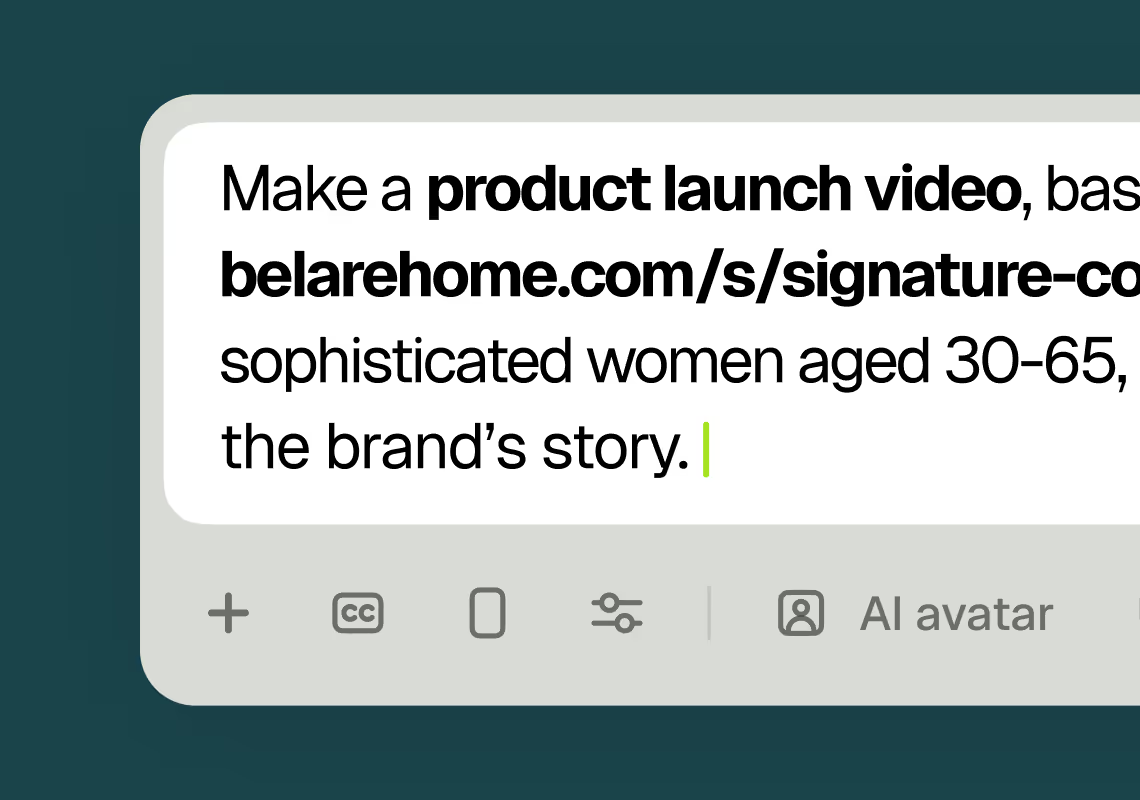
1Describe your video
Paste your promo brief, script, outline, or blog URL into Agent Opus.
 2
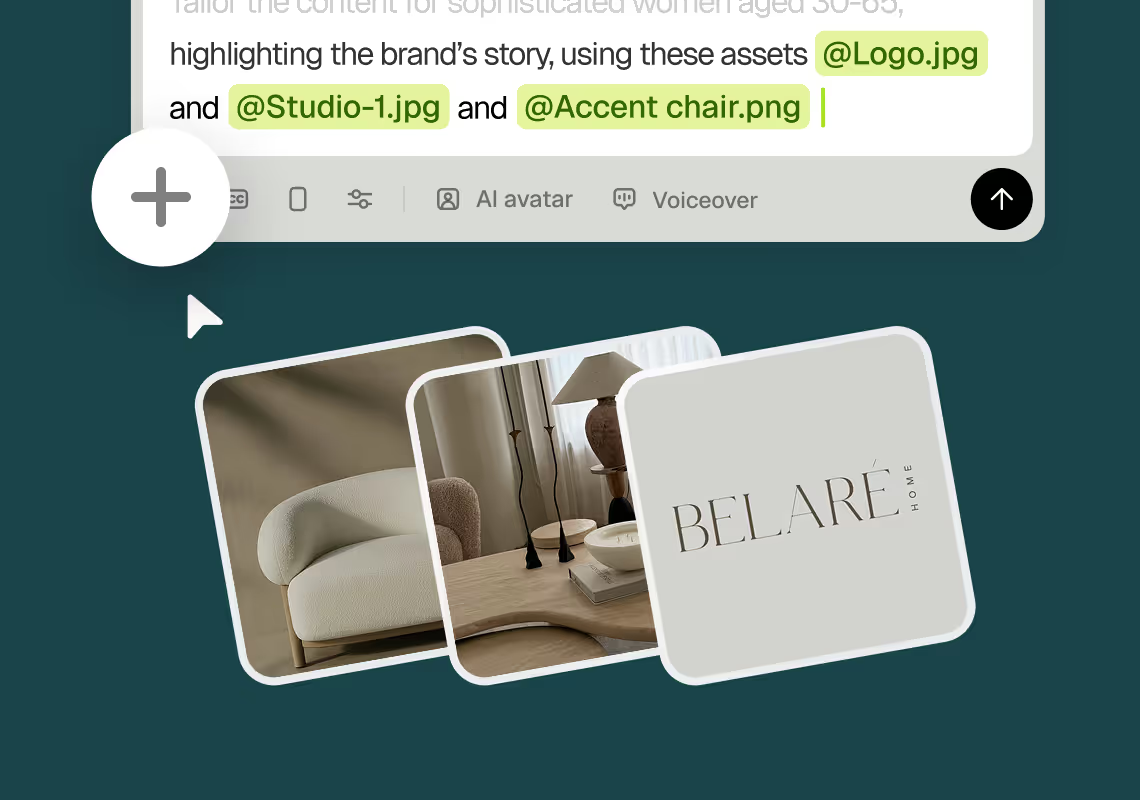
2Add assets and sources
Upload brand assets like logos and product images, or let the AI source stock visuals automatically.
 3
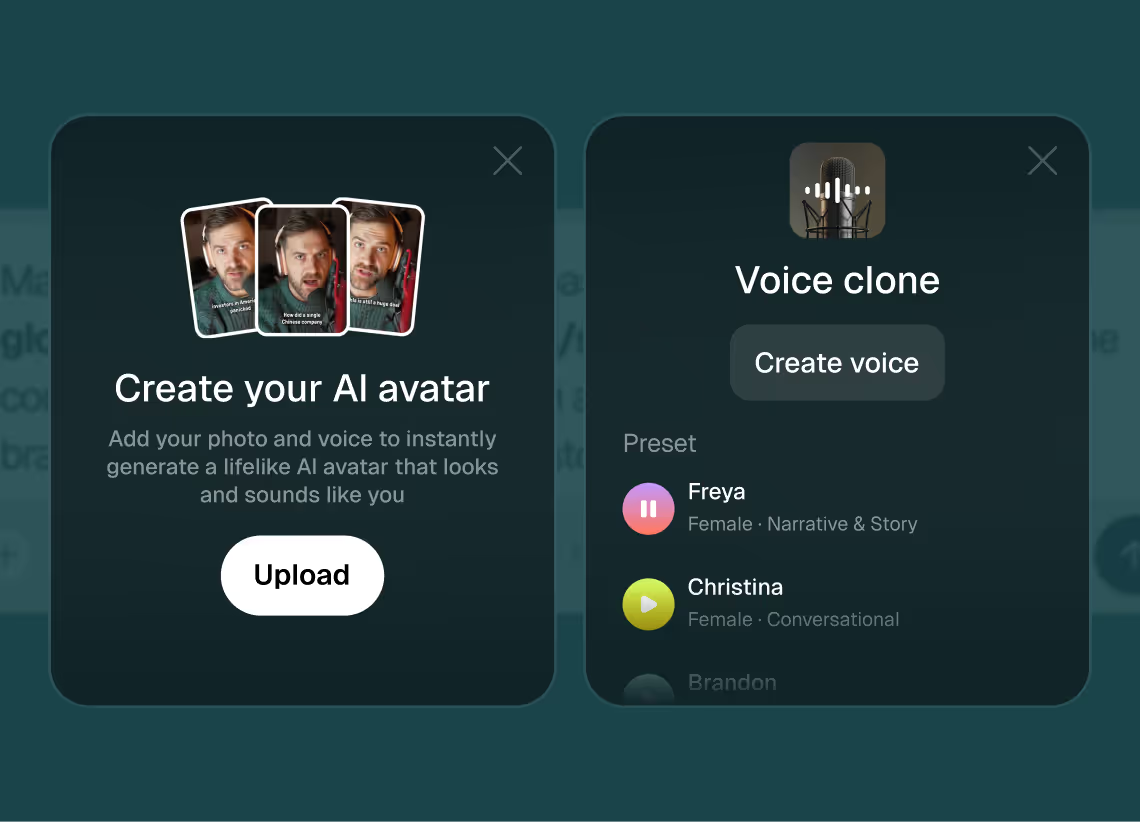
3Choose voice and avatar
Choose voice (clone yours or pick an AI voice) and avatar style (user or AI).
 4
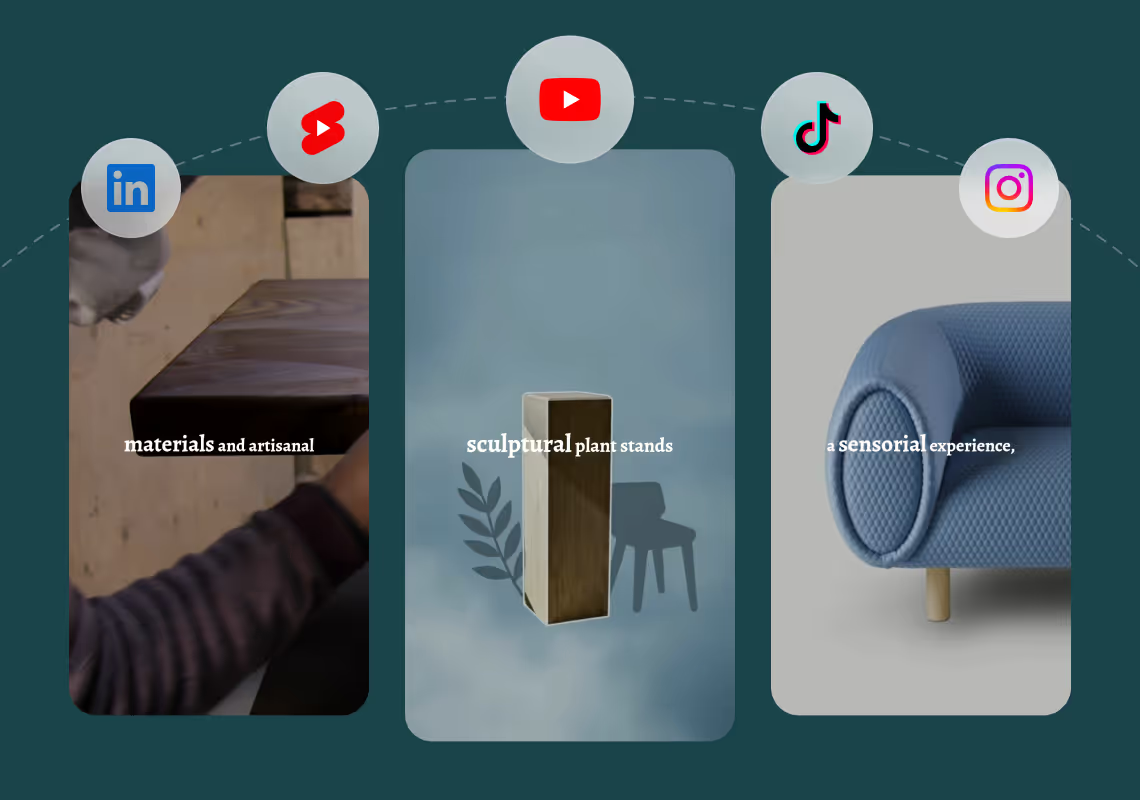
4Generate and publish-ready
Click generate and download your finished promo video in seconds, ready to publish across all platforms.


8 powerful features of Agent Opus' AI Brainrot Video Generator
Auto Caption Spam
Generate rapid-fire, oversized captions with bold colors that demand viewer attention.
Multi-Layer Chaos
Stack gameplay footage, subtitles, and random clips automatically for maximum sensory overload.
Distorted Audio Mix
Layer trending sounds, voiceovers, and effects for the signature chaotic audio experience.
TikTok-Ready Pacing
AI optimizes frame timing and transitions to match viral short-form attention patterns.
One-Prompt Generation
Describe your topic and let AI assemble the entire brainrot video automatically.
Instant Brainrot Style
Generate chaotic, overstimulating videos with rapid cuts and layered visuals in seconds.
Random B-Roll Injection
AI inserts unrelated satisfying clips and memes to maintain hyperstimulation throughout.
Subway Surfers Integration
Add endless runner gameplay backgrounds to any script for authentic brainrot aesthetics.
Testimonials
I reviewed version a and I was very impressed with this version, it did very well in almost all aspects that users need, you would only have to make very small changes and maybe replace one of 2 of the pictures, but even saying that it could be used as is and still receive decent views or even chances at going viral depending on the story or the content the user chooses.
Jeremy
all in all LOVE THIS agent. I'm curious to see how I can push it (within reason) Just need to learn to get the consistency right with my prompts
Rebecca
This looks like a game-changer for us. We're building narrative-driven, visually layered content — and the ability to maintain character and motion consistency across episodes would be huge. If Agent Opus can sync branded motion graphics, tone, and avatar style seamlessly, it could easily become part of our production stack for short-form explainers and long-form investigative visuals.
srtaduck
Frequently Asked Questions
How does an AI brainrot video generator handle the chaotic multi-layer aesthetic?
Agent Opus uses advanced scene assembly algorithms specifically designed for high-density, overstimulating content. When you describe a brainrot concept in your prompt, the system identifies the core narrative or commentary thread, then automatically layers complementary visual elements around it. For example, if your prompt describes a product review with chaotic energy, Agent Opus will place your main content in the primary visual zone, then add gameplay footage, meme reactions, or abstract motion graphics in secondary layers. The AI determines optimal opacity, positioning, and timing for each layer to maintain visual hierarchy while maximizing stimulation. Transition timing is accelerated compared to traditional video pacing, with cuts happening every two to four seconds to match the signature brainrot rhythm. Motion graphics are procedurally generated to complement your content theme, whether that means glitch effects, particle systems, or animated text overlays. The system also manages audio layering, ensuring voiceover remains intelligible despite background music and sound effects. You can guide the intensity level in your prompt by using descriptors like "mild chaos," "full brainrot," or "maximum overstimulation," and the generator adjusts layer density and transition speed accordingly. This automated approach eliminates the hours of manual timeline work normally required to achieve the aesthetic, while maintaining the precise timing and visual density that makes brainrot content effective on modern platforms.
What are best practices for prompts when using this AI brainrot video generator?
Effective prompts for brainrot video generation balance creative direction with technical clarity. Start by defining your core content type, whether that's commentary, tutorial, product showcase, or pure entertainment. Then specify the chaos level you want, using terms like "high energy," "overstimulating," or "maximum brainrot" to guide the AI's layering intensity. Include details about your target audience and platform, since TikTok brainrot differs slightly from YouTube Shorts brainrot in pacing and visual density. Describe any specific visual elements you want included, such as "Subway Surfers gameplay in background" or "meme reaction overlays." If you have a script or talking points, provide them directly rather than just describing them, as this gives Agent Opus precise timing anchors for scene transitions. Mention your brand assets if you're creating commercial content, specifying where logos or product shots should appear. For voiceover, indicate whether you want rapid-fire commentary, deadpan delivery, or hype energy, and whether you're using voice cloning or AI voices. Avoid vague prompts like "make it viral" and instead focus on concrete elements: "60-second product demo with gameplay background, fast cuts every 3 seconds, energetic voiceover, meme overlays at key points." You can also reference existing brainrot creators or videos as style guides, though Agent Opus will generate original content rather than copying. The more specific your prompt about pacing, visual density, and content structure, the closer the first output will match your vision, reducing iteration cycles.
Can this AI brainrot video generator maintain brand consistency while delivering chaotic aesthetics?
Yes, Agent Opus separates brand identity from content chaos, allowing you to maintain professional consistency within an overstimulating format. When you upload brand assets like logos, color palettes, or product imagery, the system treats them as anchor elements that remain visually stable while surrounding content shifts rapidly. Your logo can persist in a corner with consistent sizing and positioning across all generated videos, even as background layers cycle through gameplay footage and meme inserts. Product shots are integrated as primary visual elements with proper lighting and framing, while chaotic elements occupy secondary visual zones. This hierarchy ensures your brand message stays clear despite the surrounding stimulation. For voiceover, you can clone your own voice or a brand spokesperson's voice, maintaining tonal consistency across your brainrot content library. The AI learns your brand's visual language over time, understanding which motion graphics styles, color treatments, and transition types align with your identity. You can also set guardrails in your prompts, specifying elements to avoid or visual themes that conflict with your brand. For example, a tech brand might request "futuristic glitch effects and neon accents" while avoiding meme culture references, creating brainrot energy through motion and pacing rather than internet humor. The result is content that captures attention with modern platform aesthetics while reinforcing rather than diluting your brand identity. This balance is especially valuable for brands entering younger demographics where brainrot content dominates, allowing you to speak the platform's visual language without abandoning your established identity.
What are the limitations or edge cases when generating brainrot videos with AI?
Agent Opus handles most brainrot concepts effectively, but understanding its boundaries helps you craft better prompts and set realistic expectations. The system excels at visual density and rapid pacing but has practical limits on layer complexity. Extremely intricate prompts requesting ten simultaneous visual elements may result in cluttered output where individual components become illegible, especially on mobile screens. In these cases, simplifying your prompt or breaking the concept into multiple videos produces better results. Timing precision is another consideration. While Agent Opus matches voiceover to visuals automatically, very specific timing requirements like "meme insert at exactly 7.3 seconds" are harder to guarantee than natural timing cues like "meme reaction after each key point." The AI also works within platform constraints, so requesting 10-minute brainrot videos will be chunked into shorter segments since the aesthetic loses effectiveness beyond 90 seconds. Content sourcing has guardrails too. Agent Opus uses royalty-free and licensed stock footage, so requests for specific copyrighted gameplay or branded content may be fulfilled with similar alternatives rather than exact matches. If you need specific game footage or meme clips, providing them as custom assets ensures accuracy. Voice cloning requires a clean audio sample of at least 30 seconds for optimal results. Shorter samples work but may have slight quality variations. The system also assumes you want social-ready vertical video by default. If you need landscape or square formats, specify that in your prompt. Finally, while Agent Opus generates original content, extremely niche internet subcultures or very recent meme formats may not be recognized if they emerged after the AI's training cutoff. In those cases, describing the visual concept rather than naming the meme helps the system understand your intent.