AI Compilation Video Maker
Turn a simple prompt into a complete compilation video in minutes. Agent Opus is an AI compilation video maker that generates finished videos from text, assembling scenes, motion graphics, voiceover, and background music automatically. Describe your compilation concept or paste a script, and get a publish-ready video for TikTok, Reels, YouTube Shorts, or LinkedIn. No manual editing, no timeline, no stock hunting. Just prompt to video.

Explore what's possible with Agent Opus

Reasons why creators love Agent Opus' AI Compilation Video Maker
Brand Consistency Across Series
Every compilation maintains your signature style and tone, building recognition with your audience.
Consistent Pacing Every Time
Your compilations flow seamlessly with intelligent scene transitions that keep viewers hooked from start to finish.
No Editing Skills Required
Create polished, professional compilations without learning complex software or hiring an editor.
Scale Your Content Output
Produce multiple compilation videos per week without burning out or sacrificing quality.
Perfect Timing for Viral Moments
AI identifies your strongest clips and sequences them for maximum impact and shareability.
Hours Saved Per Compilation
Stop hunting through footage and manually stitching clips—let AI curate and assemble your best moments in minutes.
How to use Agent Opus’ AI Compilation Video Maker
 1
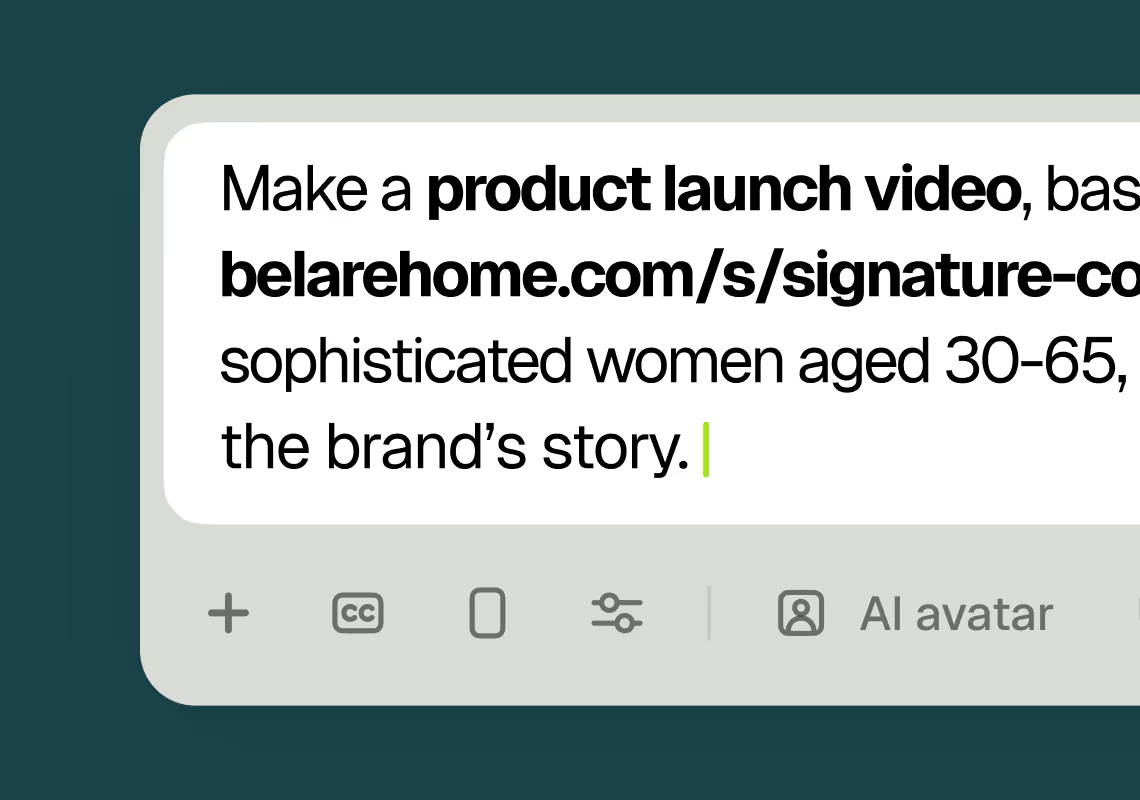
1Describe your video
Paste your promo brief, script, outline, or blog URL into Agent Opus.
 2
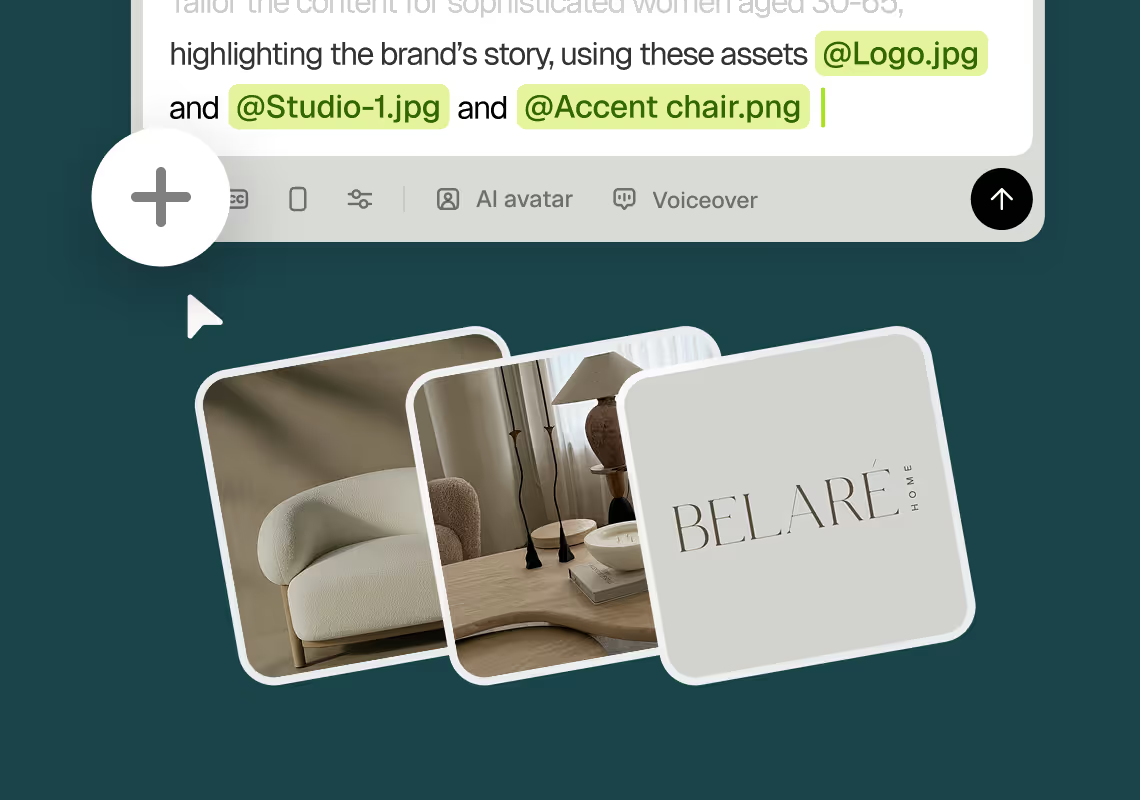
2Add assets and sources
Upload brand assets like logos and product images, or let the AI source stock visuals automatically.
 3
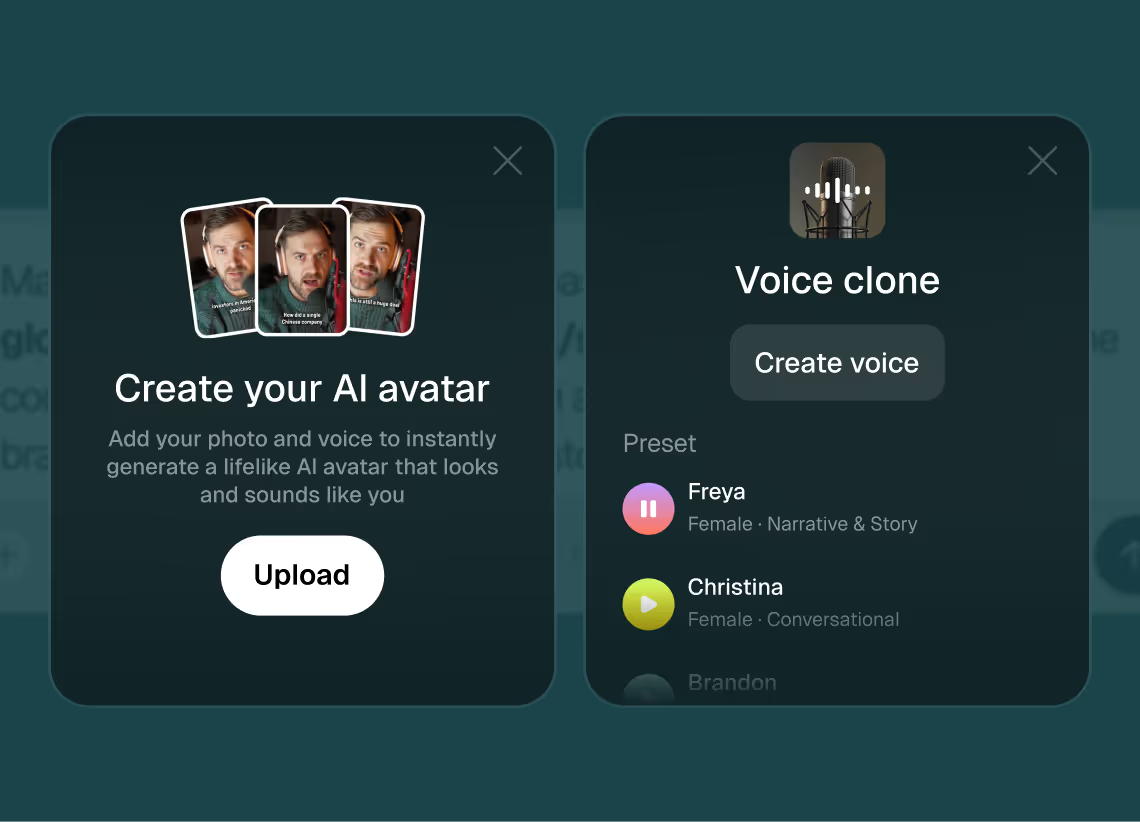
3Choose voice and avatar
Choose voice (clone yours or pick an AI voice) and avatar style (user or AI).
 4
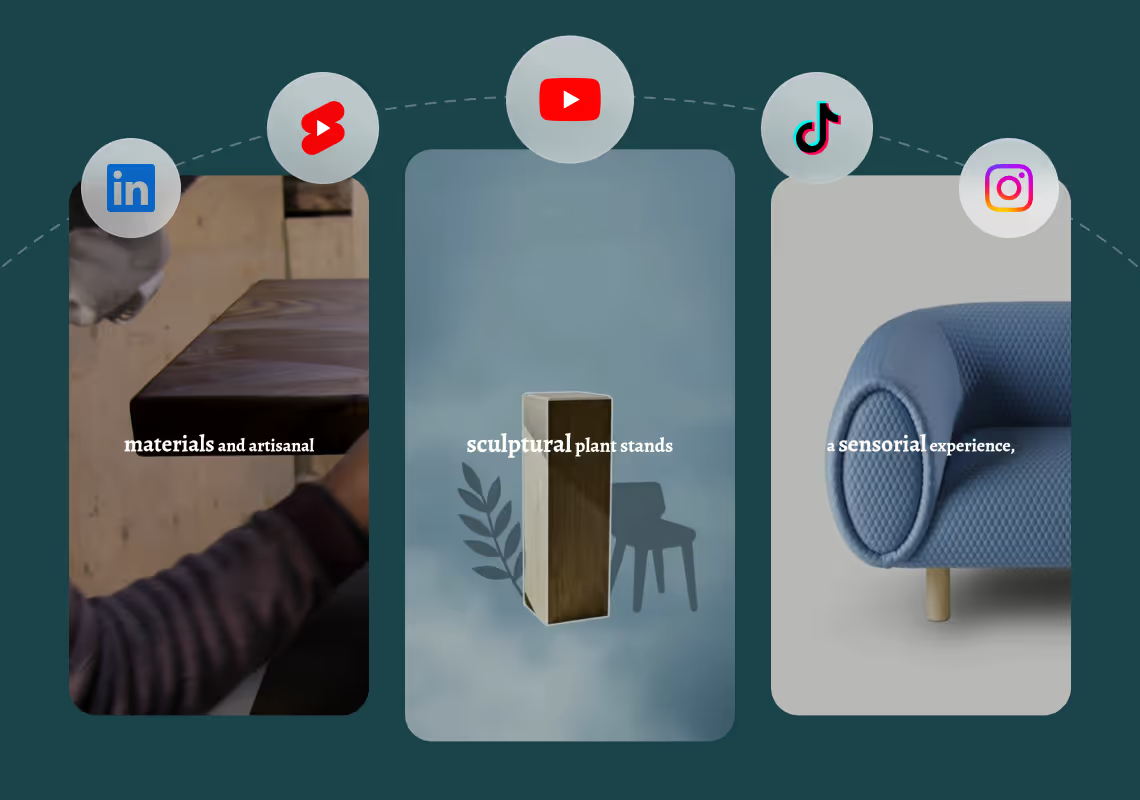
4Generate and publish-ready
Click generate and download your finished promo video in seconds, ready to publish across all platforms.


8 powerful features of Agent Opus' AI Compilation Video Maker
Automated Music Sync
Generate compilation videos with background music that syncs perfectly to your assembled clips and pacing.
Smart Scene Transitions
AI automatically applies smooth transitions between compilation segments for professional-looking video flow.
Theme-Based Compilation Generation
Create themed compilation videos by describing your concept and letting AI select and arrange matching clips.
Consistent Visual Style
Maintain unified aesthetics across all compilation segments with AI-driven style consistency throughout the video.
Instant Multi-Clip Assembly
Generate compilation videos from text prompts that automatically sequence multiple scenes into one cohesive video.
Batch Prompt Processing
Input multiple text descriptions at once and generate a single compilation video from all prompts combined.
One-Click Compilation Export
Generate and download your finished compilation video in social-ready formats without manual editing steps.
Highlight Reel Creation
Describe key moments or topics and AI compiles them into a single highlight video automatically.
Testimonials
This looks like a game-changer for us. We're building narrative-driven, visually layered content — and the ability to maintain character and motion consistency across episodes would be huge. If Agent Opus can sync branded motion graphics, tone, and avatar style seamlessly, it could easily become part of our production stack for short-form explainers and long-form investigative visuals.
srtaduck
I reviewed version a and I was very impressed with this version, it did very well in almost all aspects that users need, you would only have to make very small changes and maybe replace one of 2 of the pictures, but even saying that it could be used as is and still receive decent views or even chances at going viral depending on the story or the content the user chooses.
Jeremy
all in all LOVE THIS agent. I'm curious to see how I can push it (within reason) Just need to learn to get the consistency right with my prompts
Rebecca
Frequently Asked Questions
How does an AI compilation video maker handle different compilation formats like top-10 lists, before-and-after sequences, or product showcases?
An AI compilation video maker like Agent Opus adapts to your compilation structure by analyzing your prompt or script. For top-10 lists, the system divides your content into numbered segments, assigns visual assets to each item, and paces transitions to match the countdown rhythm. Before-and-after compilations trigger side-by-side or sequential scene layouts, with motion graphics that emphasize contrast. Product showcases pull brand logos, product shots you upload, and web images that match each feature or benefit you describe. The AI identifies structural cues in your text like numbered points, comparison language, or feature lists and builds scenes accordingly. You control the format by how you write your prompt. A brief like create a top 5 productivity tools video triggers a countdown structure. A script with distinct before and after headers produces a comparison layout. An outline listing product features generates a showcase flow. The motion graphics engine applies text overlays, transitions, and pacing rules that fit each format. You do not configure layouts manually. The AI infers the best visual treatment from your content structure. If your compilation mixes formats, like a top-10 list with product demos in each segment, Agent Opus layers both treatments. The result is a cohesive video that feels intentionally designed for your specific compilation type, whether educational, promotional, or entertainment-focused.
What are best practices for writing prompts that produce high-quality compilation videos with this AI compilation video maker?
High-quality compilation videos start with clear, structured prompts. First, define your compilation theme and format upfront. Instead of make a video about marketing tools, write create a top 7 marketing tools compilation video with voiceover and product screenshots. Specificity helps the AI compilation video maker choose the right pacing, visual style, and scene count. Second, outline your segments if you want precise control. List each item, feature, or comparison point on a new line or in a numbered format. The AI treats each segment as a distinct scene and sources visuals accordingly. Third, describe the tone and audience. A prompt like energetic compilation for social media marketers under 30 triggers faster pacing and modern motion graphics. A prompt like professional product showcase for B2B decision-makers produces slower transitions and cleaner layouts. Fourth, specify visual assets you want included. Mention use our logo, include product demo screenshots, or source stock footage of office environments. Agent Opus prioritizes uploaded assets and matches stock images to your keywords. Fifth, indicate voiceover style. Write use a confident female AI voice or clone my voice for narration. If you want an avatar, say include AI avatar introducing each segment. Sixth, keep prompts focused. A 200-word brief works better than a 2000-word essay. The AI extracts key points and builds scenes around them. If you have a long script, break it into clear sections with headers. Seventh, iterate. Generate a first draft, review the output, then refine your prompt with more specific visual or pacing notes. The AI compilation video maker learns from your adjustments and produces better results on the second pass.
Can an AI compilation video maker maintain consistent branding across multiple compilation videos for a series or campaign?
Yes, an AI compilation video maker like Agent Opus supports brand consistency across multiple videos through asset reuse and prompt templates. Start by uploading your brand assets once: logo files, color hex codes, font preferences, and any recurring visual elements like lower-thirds or intro cards. Agent Opus stores these and applies them to every video you generate. When you create a new compilation, reference your brand in the prompt with phrases like use our standard logo and brand colors or apply the intro template from our last video. The AI pulls your uploaded assets and applies them consistently. For video series, create a prompt template that defines your format, tone, and visual style. For example, a weekly top-5 series might use a template like: create a top 5 [topic] compilation video, energetic tone, use brand logo in bottom-right corner, AI voiceover with confident female voice, 60-second runtime for Reels. Save that template and swap the topic each week. The AI generates videos with identical structure, pacing, and branding, but different content. Voice consistency is automatic if you clone your voice once. Every subsequent video uses the same voice profile unless you specify otherwise. Avatar consistency works the same way: choose an AI avatar or upload your own, and Agent Opus applies it across all videos. Motion graphics styles remain consistent because the AI uses the same animation engine and design rules for each generation. If you want variation within a consistent brand, adjust specific elements in your prompt while keeping the core template intact. For example, change the background music style or adjust the scene count, but keep the logo placement and voice the same. The result is a library of compilation videos that feel like a cohesive series, not one-off experiments. This approach works for content calendars, product launch campaigns, educational series, or any scenario where brand recognition and visual continuity matter.
What are the limitations or edge cases when using an AI compilation video maker for complex or niche compilation topics?
An AI compilation video maker excels at structured, clearly defined topics but faces challenges with highly abstract, niche, or ambiguous content. First, visual sourcing limits: if your compilation topic involves rare or hyper-specific imagery like obscure historical artifacts, proprietary product prototypes, or niche subcultures the AI may default to generic stock footage. Solution: upload your own images or provide detailed visual descriptions in your prompt to guide the search. Second, context gaps: the AI interprets your text literally. If your compilation assumes deep domain knowledge like a top 10 quantum computing breakthroughs video without explanatory context the generated scenes may lack the nuance experts expect. Solution: write prompts with explicit explanations for each point, as if teaching a general audience. Third, pacing mismatches: compilations with uneven segment lengths like three short points and two long deep-dives can produce awkward transitions if the AI defaults to uniform scene timing. Solution: specify pacing in your prompt, like spend 10 seconds on points 1 to 3, 20 seconds each on points 4 and 5. Fourth, tone ambiguity: if your topic mixes serious and humorous elements like a compilation of workplace fails with safety lessons the AI may struggle to balance tone. Solution: define tone per segment in your script or prompt. Fifth, brand asset conflicts: if you upload multiple logo versions or conflicting style guides, the AI may apply them inconsistently. Solution: organize assets clearly and reference the specific version you want in each prompt. Sixth, voiceover complexity: highly technical jargon, non-English names, or invented terms may be mispronounced by AI voices. Solution: use phonetic spelling in your script or clone your own voice for precise pronunciation. Seventh, platform-specific constraints: a compilation optimized for YouTube Shorts may not translate well to LinkedIn if the content assumes vertical framing and fast cuts. Solution: generate separate versions with platform-specific prompts. Despite these edge cases, an AI compilation video maker handles the majority of use cases effectively. The key is prompt clarity, asset preparation, and willingness to iterate. Most limitations are workflow issues, not AI capability gaps.