AI Explainer Video Maker for Kids
Turn any lesson, concept, or story into a captivating explainer video designed for young learners. Agent Opus is an AI explainer video maker for kids that transforms your script, outline, or simple prompt into a finished video complete with colorful motion graphics, age-appropriate voiceover, and dynamic visuals that hold attention. No timeline, no editing software, no design skills. Describe what you want to teach, and Agent Opus assembles scenes, sources imagery, adds narration, and delivers a publish-ready video optimized for YouTube Kids, classroom screens, or social platforms. Perfect for educators, edutechs, children's content creators, and parent influencers who need professional explainer videos fast.

Explore what's possible with Agent Opus

Reasons why creators love Agent Opus' AI Explainer Video Maker for Kids
Publish Lessons in Minutes
Go from concept to finished explainer without hiring animators or spending weeks in production.
Makes Learning Feel Like Play
Transform dry facts into fun, interactive experiences that spark curiosity and boost retention.
Keeps Young Minds Engaged
Turn complex topics into colorful, animated stories that hold kids' attention from start to finish.
No Design Skills Required
Anyone can create professional, kid-tested videos without learning animation software or hiring a team.
Scales Your Teaching Impact
Reach more students with consistent, high-quality explainers that work across classrooms and devices.
Safe, Age-Appropriate Content
Create videos you can trust, with kid-friendly visuals and language that parents and educators approve.
How to use Agent Opus’ AI Explainer Video Maker for Kids
 1
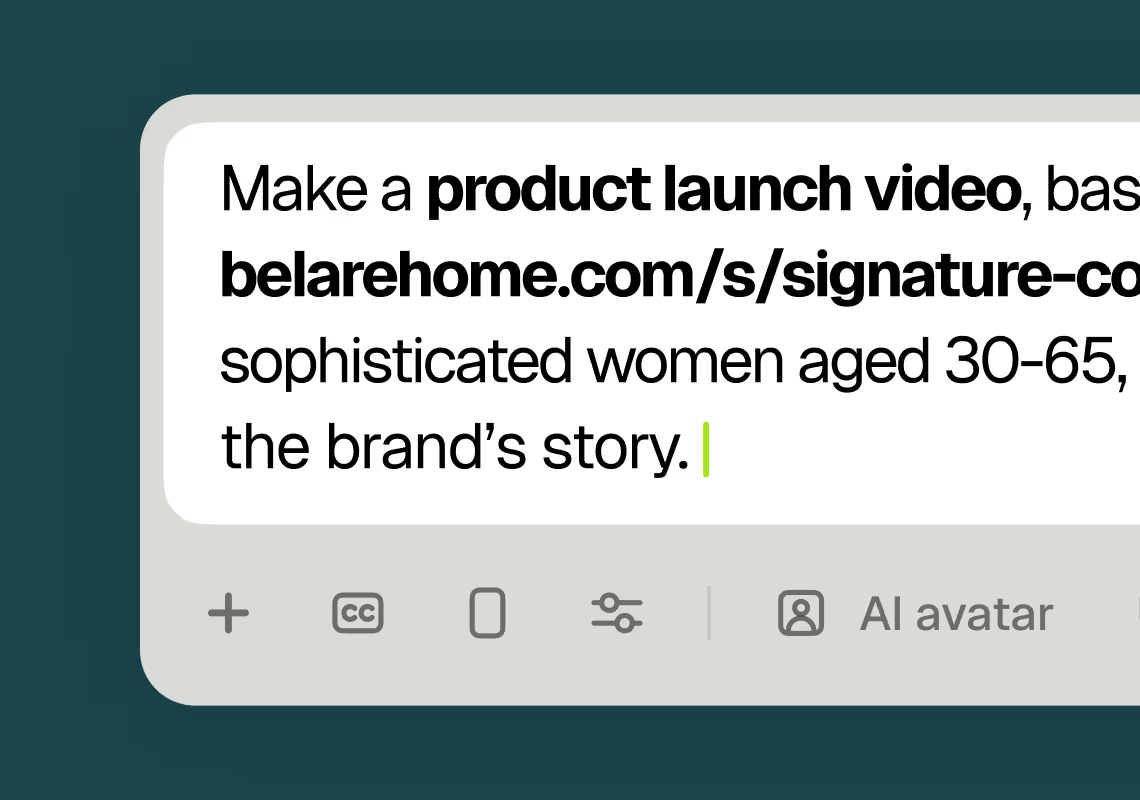
1Describe your video
Paste your promo brief, script, outline, or blog URL into Agent Opus.
 2
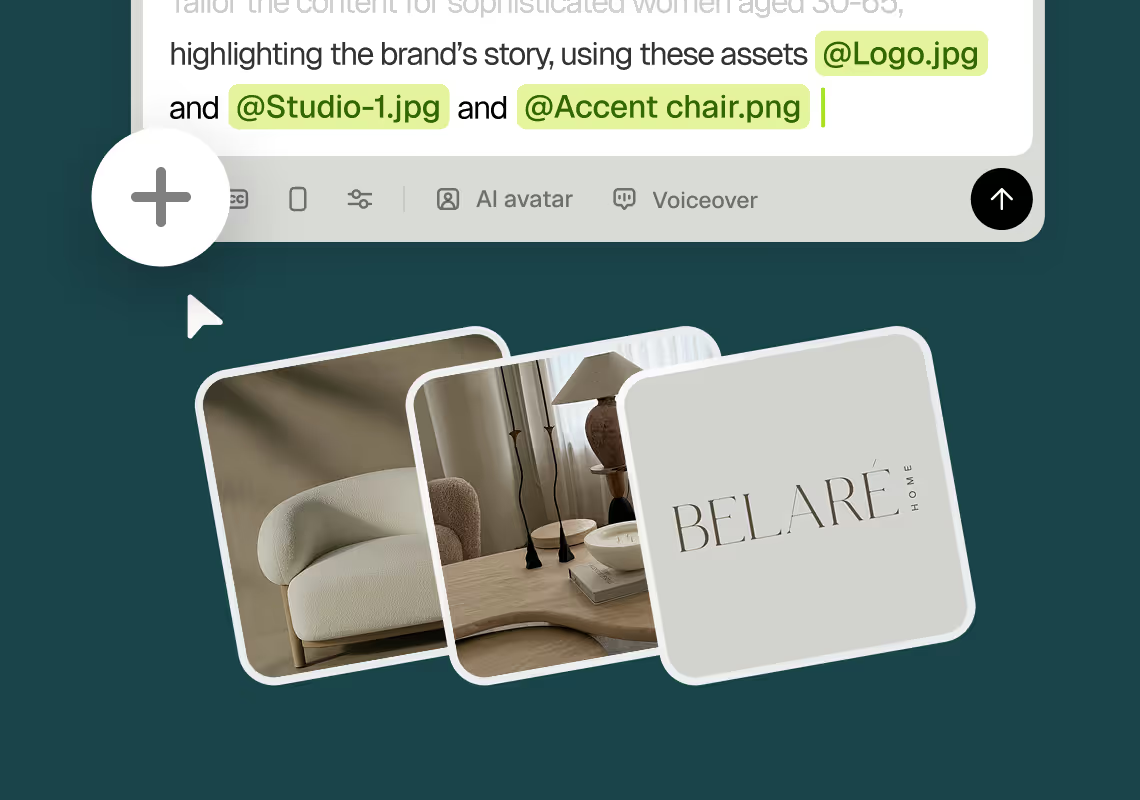
2Add assets and sources
Upload brand assets like logos and product images, or let the AI source stock visuals automatically.
 3
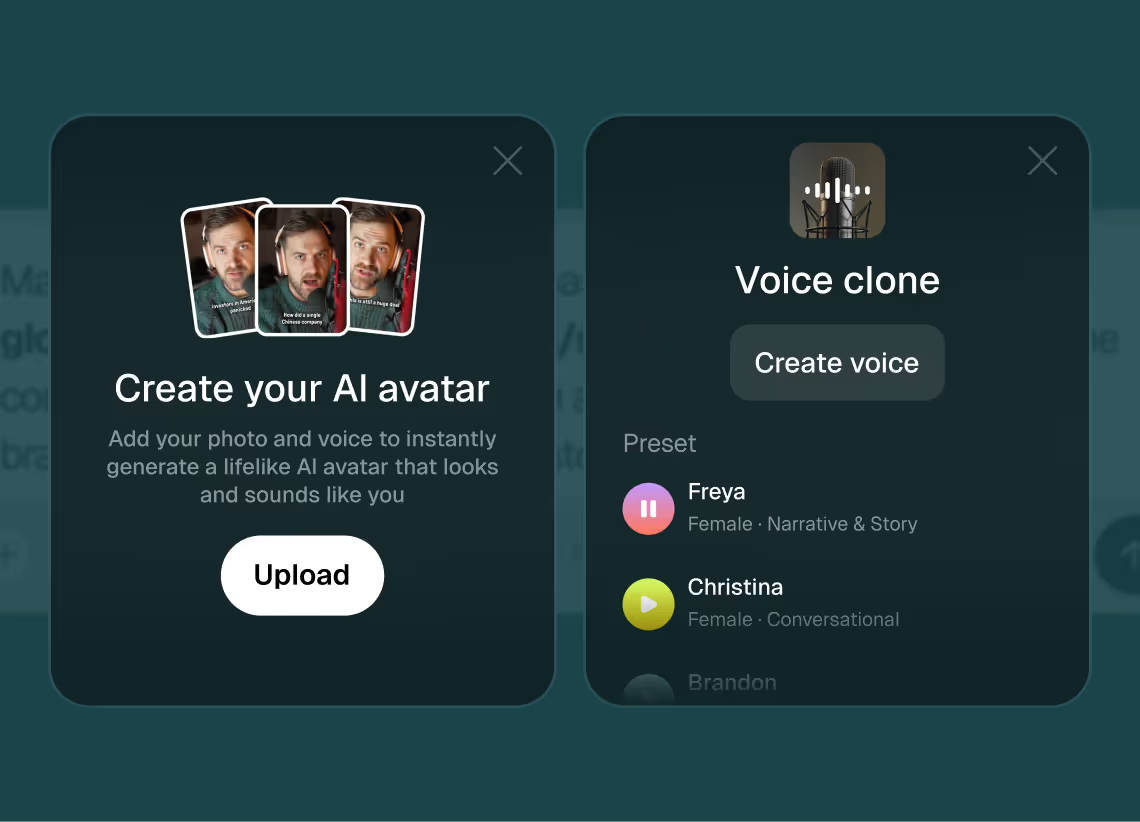
3Choose voice and avatar
Choose voice (clone yours or pick an AI voice) and avatar style (user or AI).
 4
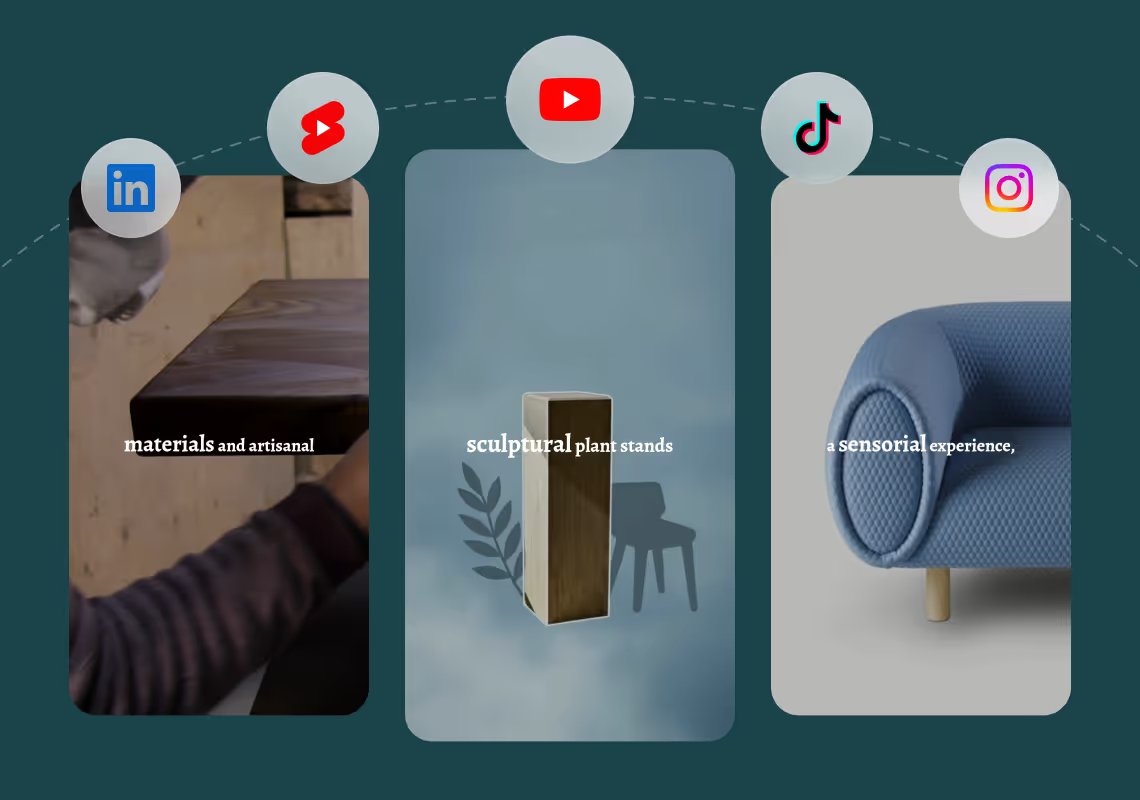
4Generate and publish-ready
Click generate and download your finished promo video in seconds, ready to publish across all platforms.


8 powerful features of Agent Opus' AI Explainer Video Maker for Kids
Educational Script to Video
Turn lesson plans or teaching scripts into engaging animated videos kids love to watch.
Kid-Friendly Visual Storytelling
Generate colorful, animated explainer videos that simplify complex topics for young learners.
Quick Classroom-Ready Videos
Produce short explainer videos in minutes, ready to share in virtual or in-person classrooms.
Interactive Learning Prompts
Add on-screen questions or prompts that encourage kids to think and participate while watching.
Safe, Moderated Content
Generate videos with child-safe visuals and language, ensuring appropriate educational material every time.
Simple Concept Breakdown
Transform abstract ideas into step-by-step visual sequences that make learning fun and clear.
Age-Appropriate Narration
Choose cheerful AI voices that speak at a pace and tone perfect for children.
Bright Character Animations
Bring friendly characters and mascots to life to hold young viewers' attention throughout.
Testimonials
This looks like a game-changer for us. We're building narrative-driven, visually layered content — and the ability to maintain character and motion consistency across episodes would be huge. If Agent Opus can sync branded motion graphics, tone, and avatar style seamlessly, it could easily become part of our production stack for short-form explainers and long-form investigative visuals.
srtaduck
I reviewed version a and I was very impressed with this version, it did very well in almost all aspects that users need, you would only have to make very small changes and maybe replace one of 2 of the pictures, but even saying that it could be used as is and still receive decent views or even chances at going viral depending on the story or the content the user chooses.
Jeremy
all in all LOVE THIS agent. I'm curious to see how I can push it (within reason) Just need to learn to get the consistency right with my prompts
Rebecca
Frequently Asked Questions
How does an AI explainer video maker for kids handle different age groups and learning levels?
Agent Opus adapts to your input, so the key to targeting different age groups lies in how you write your prompt or script. For younger children (ages 4 to 7), use simple vocabulary, short sentences, and concrete examples in your script. The AI will match that tone by selecting bright, playful motion graphics and pacing scenes more slowly to allow comprehension. For older kids (ages 8 to 12), you can introduce more complex concepts, longer explanations, and layered visuals. Agent Opus reads your script's structure and adjusts scene transitions, visual density, and narration speed accordingly. If you're explaining a science concept like the water cycle, a prompt for younger kids might say, 'Show rain falling, water going into rivers, then evaporating back into clouds with simple animations.' For older students, you might write, 'Explain evaporation, condensation, precipitation, and collection with labeled diagrams and real-world examples.' The AI sources imagery and assembles motion graphics that match the complexity you specify. You can also guide visual style by mentioning 'cartoon style,' 'colorful illustrations,' or 'realistic photos' in your prompt. Voice selection matters too. Choose a slower, warmer AI voice for preschoolers and a more energetic, conversational tone for tweens. If you're creating a series, maintain consistency by reusing the same voice clone or AI voice across videos. The system does not auto-detect age, so clarity in your input is critical. The more specific you are about vocabulary level, pacing, and visual style, the better the AI explainer video maker for kids will tailor the final output to your target audience's developmental stage and attention span.
What types of educational topics work best with an AI explainer video maker for kids?
Agent Opus excels at visual, concept-driven topics where motion graphics and narration can clarify abstract ideas or illustrate processes. STEM subjects are ideal: math (fractions, geometry, word problems), science (life cycles, weather, simple machines, human body systems), and technology (how computers work, coding basics). Social studies topics like maps, community helpers, historical events, and cultural traditions also translate well because the AI can source diverse imagery and create timelines or geographic visuals. Language arts concepts such as story structure, parts of speech, and reading comprehension strategies benefit from animated examples and character-driven scenes. Even soft skills like emotional regulation, conflict resolution, and growth mindset can be explained through relatable scenarios and visual metaphors. The AI explainer video maker for kids works less well for topics that require live demonstration of physical skills (like tying shoes or playing an instrument) unless you provide your own footage or product shots. However, you can still explain the theory or steps verbally and visually. For example, a video on 'how to practice piano' could show illustrated keyboard diagrams, finger positions, and practice tips even without live-action footage. Topics with clear cause-and-effect, step-by-step processes, or compare-and-contrast structures are easiest for the AI to visualize. If your lesson involves a lot of abstract philosophy or nuanced debate, you'll need to simplify it into concrete examples or analogies in your script. The system handles both short, single-concept explainers (two to three minutes) and longer, multi-part lessons (five to eight minutes) as long as your script is well-organized. You can also create series by generating one video per subtopic, then linking them in a playlist. The key is to write scripts that describe what should appear on screen, not just what should be said, so the AI knows which visuals to source and how to pace the motion graphics for maximum clarity and engagement.
Can an AI explainer video maker for kids maintain consistent branding and visual style across a video series?
Yes, and consistency is crucial for building recognition and trust with young audiences. Agent Opus supports brand logo uploads, so your school, channel, or company logo can appear in the same position across every video in a series. You can also upload product shots, mascot images, or custom graphics (like a recurring character or background template) that the AI will incorporate into scenes. To maintain visual style, use the same descriptive language in every prompt. For example, if your first video uses 'bright pastel colors, flat illustration style, friendly rounded shapes,' copy that exact phrase into subsequent prompts. The AI will source similar imagery and apply comparable motion graphics. Voice consistency is even simpler: clone your voice once, then select that clone for every video. If you prefer an AI voice, note the exact voice name and settings (speed, pitch) and reuse them. For avatar-based series, upload the same avatar image or video clip each time, or use the same AI avatar model. The system does not auto-remember previous videos, so you must manually specify these elements in each new prompt or script. A best practice is to create a 'series template' document that lists your logo file, voice clone name, color palette description, visual style keywords, and any recurring characters or graphics. Paste that template into every new prompt along with the lesson-specific content. This ensures that whether you're explaining addition one week and the solar system the next, the look, feel, and voice remain identical. Consistent branding also helps with platform algorithms: YouTube and social platforms reward channels with cohesive visual identity, which can boost discoverability. For educators building a curriculum library, this consistency makes it easier for students to navigate and recognize your content. The AI explainer video maker for kids does not enforce branding automatically, but it gives you full control to define and replicate it across unlimited videos.
How do I write effective prompts for an AI explainer video maker for kids to get the best results?
Great prompts for an AI explainer video maker for kids combine clear learning objectives, visual direction, and age-appropriate language. Start with a one-sentence goal: 'Explain photosynthesis to second graders' or 'Teach the concept of fractions using pizza slices.' Then outline the structure: introduction, main points, conclusion, or problem-setup-solution. For each section, describe both what should be said and what should be shown. For example, 'Intro: Show a sunny garden. Narration: Plants need sunlight, water, and air to make food. Visual: Animated sun, water droplets, and air molecules moving toward a plant.' This dual-layer approach (narration plus visual cues) helps the AI source the right imagery and pace scenes correctly. Use specific visual keywords: 'cartoon style,' 'bright colors,' 'simple diagrams,' 'real photos of animals,' 'labeled parts,' or 'step-by-step animation.' The more concrete your visual requests, the better the motion graphics will match your intent. Avoid vague prompts like 'make it fun' or 'keep it engaging' without explaining how. Instead, say 'use a friendly animated character to guide the lesson' or 'show before-and-after comparisons with split-screen.' If your topic has multiple steps, number them in the script so the AI can create clear transitions. For younger kids, keep sentences short and repeat key terms. For older kids, you can introduce definitions, examples, and rhetorical questions. Always specify the target age or grade level in the prompt, as this signals the AI to adjust vocabulary and pacing. If you want a specific voice tone, mention it: 'warm and encouraging,' 'energetic and playful,' or 'calm and patient.' You can also request a call-to-action at the end, like 'Ask students to draw their own example' or 'Encourage kids to try this at home.' If you're starting from a blog post or article, paste the URL and add a note like 'Simplify this for third graders and add visual examples for each main idea.' The AI will extract key points and generate age-appropriate narration and visuals. Finally, review the first draft and refine your prompt based on what worked. If the pacing was too fast, add 'slow down transitions and pause between concepts.' If visuals were too abstract, specify 'use literal, concrete images only.' The AI explainer video maker for kids learns from your input, so iterative prompting leads to better, more targeted results over time.