AI Marketing Video Generator
Turn marketing briefs into publish-ready videos instantly. Agent Opus is an AI marketing video generator that transforms your text prompts, scripts, outlines, or blog URLs into professional videos complete with motion graphics, voiceovers, and your brand assets. No timeline, no editing, no stock footage hunting. Just describe your campaign, and get a finished video optimized for every social platform in minutes.

Explore what's possible with Agent Opus

Reasons why creators love Agent Opus' AI Marketing Video Generator
Sound Like a Pro
Skip studio costs and still deliver clear, professional narration that builds trust and keeps viewers watching until the CTA.
Repurpose in Seconds
Turn one core message into vertical ads, LinkedIn posts, and email headers without starting from scratch each time.
Scale Without Hiring
Produce dozens of ad variations, product demos, and social clips without expanding your team or blowing your budget.
Test More, Waste Less
Spin up multiple creative angles in one session and let performance data guide your spend instead of guessing what resonates.
Launch Campaigns Faster
Turn marketing briefs into polished videos in minutes, not days, so you can test messages and iterate at the speed of your audience.
Stay On-Brand Effortlessly
Your brand voice, colors, and style stay consistent across every campaign without micromanaging each asset or freelancer.
How to use Agent Opus’ AI Marketing Video Generator
 1
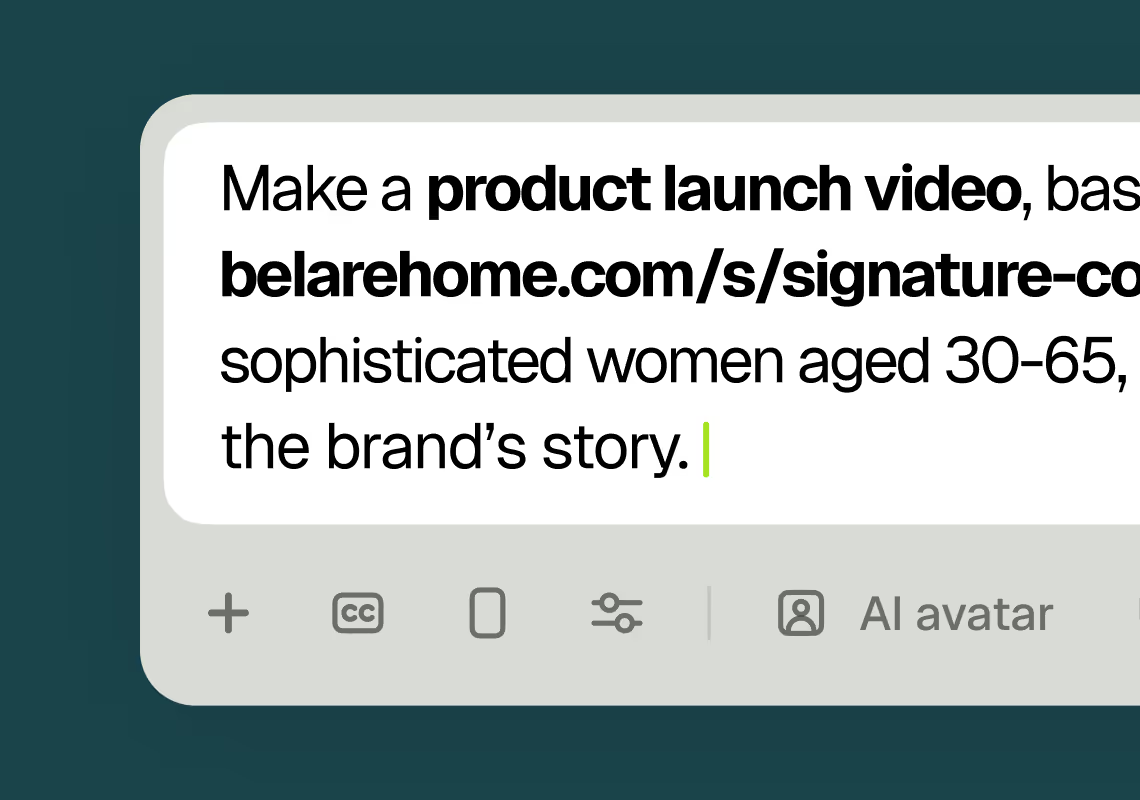
1Describe your video
Paste your promo brief, script, outline, or blog URL into Agent Opus.
 2
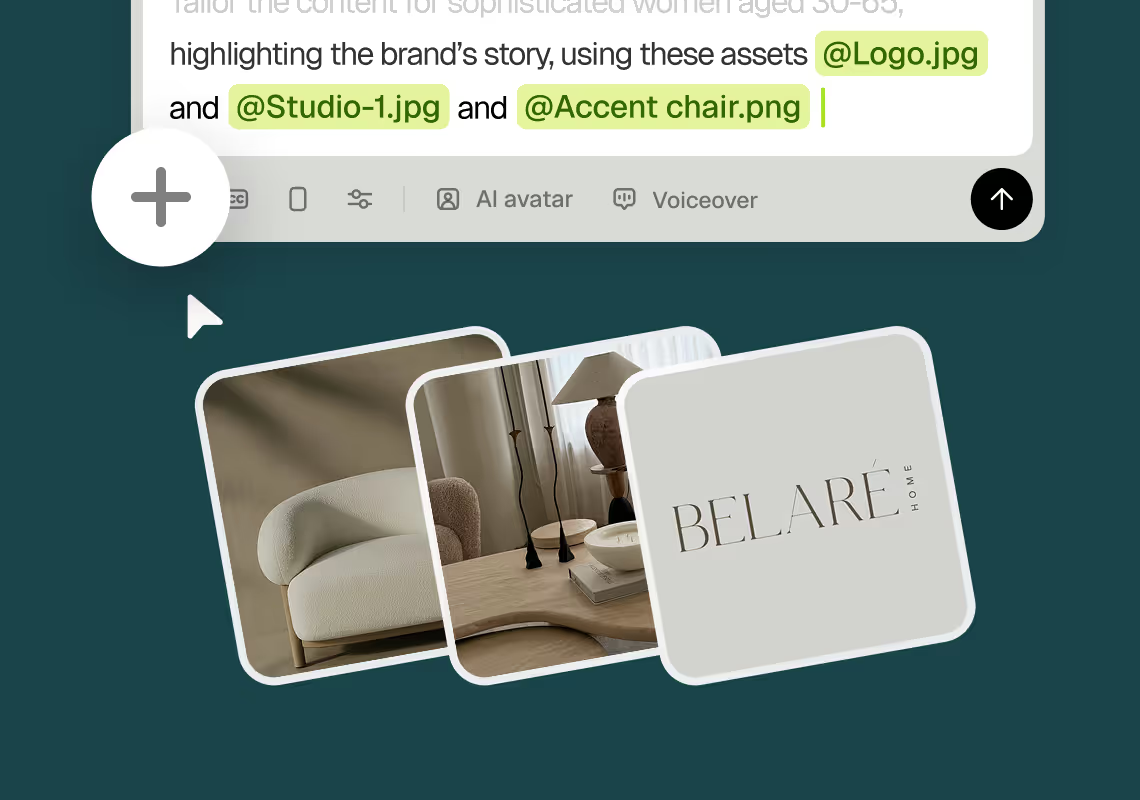
2Add assets and sources
Upload brand assets like logos and product images, or let the AI source stock visuals automatically.
 3
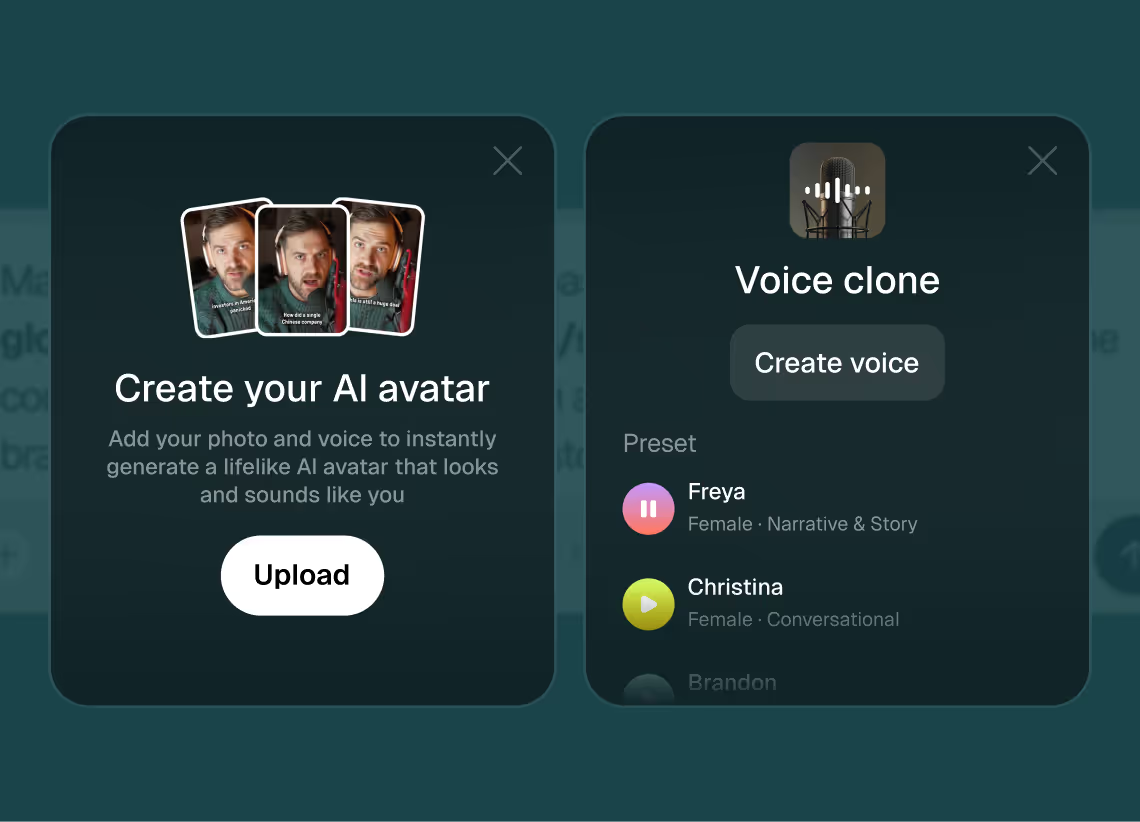
3Choose voice and avatar
Choose voice (clone yours or pick an AI voice) and avatar style (user or AI).
 4
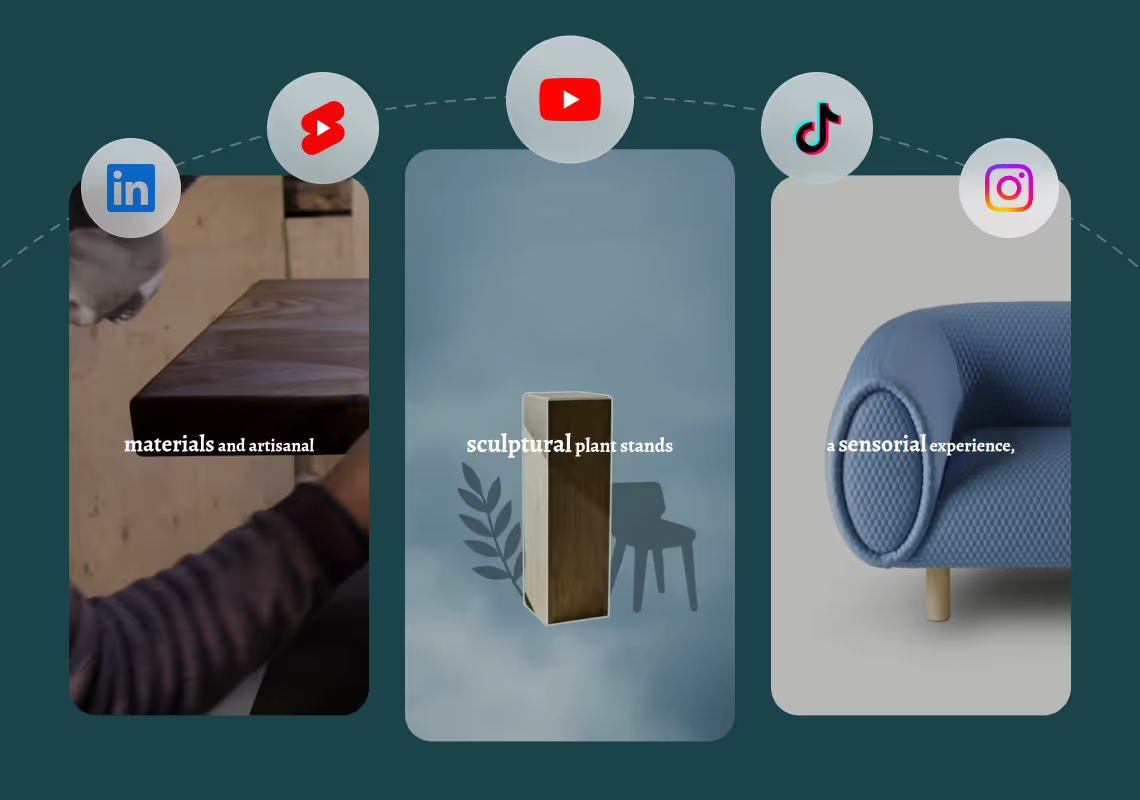
4Generate and publish-ready
Click generate and download your finished promo video in seconds, ready to publish across all platforms.


8 powerful features of Agent Opus' AI Marketing Video Generator
AI Voiceover Integration
Add professional narration to marketing videos using natural-sounding AI voices in multiple languages.
Batch Campaign Generation
Produce multiple marketing video variations from a single prompt for A/B testing and audience targeting.
Conversion-Focused Pacing
AI structures video flow to maximize viewer retention and drive action on calls to action.
Music and Motion Graphics
Automatically layer background music and animated elements that enhance your marketing message impact.
Brand-Aligned Visual Styles
AI applies your brand colors, fonts, and aesthetic preferences automatically across every generated video.
Product Showcase Automation
Turn product descriptions into compelling demo videos with dynamic visuals and persuasive messaging.
Multi-Platform Format Export
Create videos optimized for Instagram, TikTok, YouTube, and LinkedIn in one generation workflow.
Campaign-Ready Videos in Minutes
Generate polished marketing videos from text prompts without filming or editing experience.
Testimonials
This looks like a game-changer for us. We're building narrative-driven, visually layered content — and the ability to maintain character and motion consistency across episodes would be huge. If Agent Opus can sync branded motion graphics, tone, and avatar style seamlessly, it could easily become part of our production stack for short-form explainers and long-form investigative visuals.
srtaduck
all in all LOVE THIS agent. I'm curious to see how I can push it (within reason) Just need to learn to get the consistency right with my prompts
Rebecca
I reviewed version a and I was very impressed with this version, it did very well in almost all aspects that users need, you would only have to make very small changes and maybe replace one of 2 of the pictures, but even saying that it could be used as is and still receive decent views or even chances at going viral depending on the story or the content the user chooses.
Jeremy
Frequently Asked Questions
How does an AI marketing video generator handle different campaign types and messaging styles?
Agent Opus adapts to your specific marketing objectives through intelligent prompt interpretation and content analysis. When you input a product launch brief, the AI marketing video generator identifies key value propositions, feature highlights, and call-to-action elements, then structures scenes to build anticipation and drive conversions. For brand awareness campaigns, it emphasizes visual storytelling and emotional resonance. Promotional videos get dynamic pacing with urgency cues and offer highlights. The system analyzes your input text for tone markers, whether that is professional B2B messaging, playful consumer content, or educational explainer style, and adjusts motion graphics, transitions, and voiceover delivery accordingly. You can provide detailed creative direction in your prompt, such as specifying opening hooks, testimonial placement, or product demo sequences, and the generator follows that structure while optimizing visual flow. For blog-to-video conversion, the AI identifies the core marketing message within article content, extracts key statistics or quotes, and transforms written persuasion into visual storytelling. The motion graphics library includes templates optimized for different marketing verticals, from SaaS product demos to e-commerce seasonal sales to service business testimonials. Scene assembly considers platform best practices, so TikTok outputs front-load hooks within the first three seconds while LinkedIn versions allow slightly longer brand establishment. This contextual intelligence means you are not just getting automated video assembly but marketing-optimized content that understands campaign goals and audience psychology.
What are best practices for writing prompts that generate high-converting marketing videos?
Effective prompts for an AI marketing video generator balance creative direction with strategic clarity. Start by defining your core marketing objective in the first sentence, such as driving product trial signups, announcing a limited-time offer, or establishing thought leadership. This frames the entire video structure around conversion goals. Next, outline your key message hierarchy, listing the three to five most important points you want viewers to retain, in priority order. The AI uses this to allocate screen time and visual emphasis appropriately. Include specific brand voice guidelines, whether that is authoritative and data-driven, friendly and conversational, or bold and disruptive. Mention any mandatory elements like logos, product shots, or testimonial quotes you want incorporated, and the system will source or integrate those assets. For voiceover, specify whether you want your cloned voice for personal brand consistency or an AI voice that matches your target demographic. Describe your ideal viewer journey: do you want to start with a problem statement, lead with social proof, or open with a bold claim? This guides scene sequencing. Reference visual style preferences such as minimalist motion graphics, energetic transitions, or cinematic pacing. If you are adapting existing content like a blog post or script, add context about what to emphasize or condense, since written content often needs restructuring for video format. Avoid vague requests like make it engaging; instead, specify engagement tactics like opening with a surprising statistic, using on-screen text to reinforce key points, or ending with a clear next-step CTA. The more you treat the prompt as a creative brief you would give a video producer, the more precisely the AI marketing video generator delivers on your vision while handling all technical execution.
Can an AI marketing video generator maintain brand consistency across multiple campaigns and team members?
Agent Opus ensures brand consistency through systematic asset management and style memory that persists across all your marketing video projects. When you first upload brand assets like logos, color palettes, typography guidelines, and product photography, the AI marketing video generator stores these as your visual identity foundation. Every subsequent video automatically applies these elements in appropriate contexts, whether that is logo placement in lower thirds, product shots in feature highlight scenes, or brand colors in motion graphics and text overlays. Voice consistency is maintained through voice cloning technology that captures your unique vocal signature or that of your designated brand spokesperson, ensuring every video sounds like it comes from the same source regardless of who writes the prompt. If multiple team members generate videos, they all draw from the same asset library and style parameters, preventing the visual fragmentation that happens when different designers interpret brand guidelines differently. The AI also learns from your approval patterns over time. If you consistently favor certain transition styles, scene pacing, or opening hook formats, the system weights those preferences in future generations. For agencies managing multiple client brands, you can maintain separate brand profiles that switch context based on which client campaign you are creating, ensuring no cross-contamination of visual identity. The motion graphics engine applies brand-appropriate animation styles, so a fintech client gets clean, professional kinetic typography while a youth-focused consumer brand gets energetic, trend-forward effects. This systematic approach means your marketing video output maintains professional consistency whether you are producing one video per month or fifty, whether created by your CMO or an intern, and whether for a single product line or an entire portfolio. The result is a cohesive brand presence across all video marketing channels without requiring centralized creative review bottlenecks.
How does AI marketing video generation compare to traditional video production for campaign velocity and iteration?
The speed advantage of an AI marketing video generator fundamentally changes how marketing teams approach video campaigns. Traditional production requires scripting sessions, storyboard approval, asset gathering, filming or animation, editing rounds, revision cycles, and final rendering, typically spanning one to three weeks for a single video. Agent Opus compresses that entire workflow into minutes. You write a campaign brief as a prompt, and the system delivers a publish-ready video before your first creative meeting would have even started. This velocity enables true test-and-learn marketing. You can generate five different video variations testing different hooks, value propositions, or visual styles, publish them simultaneously across platforms, and let performance data guide your creative direction rather than relying on pre-launch intuition. When market conditions shift or a competitor launches a rival product, you can have a response video live within the hour instead of scrambling to brief an agency. Seasonal campaigns no longer require months of advance planning; you can capitalize on trending moments, viral topics, or breaking news while they are still relevant. The iteration advantage is equally transformative. If a video underperforms, you do not need to schedule reshoots or re-enter an editing queue. You refine your prompt, adjust messaging emphasis, or try a different visual approach, and generate a new version immediately. A/B testing becomes practical at scale when you can produce dozens of variants without multiplying production costs. For product launches, you can create announcement videos, feature deep-dives, testimonial compilations, and FAQ explainers all in a single session, ensuring comprehensive campaign coverage. Marketing teams shift from rationing video as an expensive, slow-turnaround asset to treating it as a primary, always-available communication medium. The creative energy that previously went into project managing production timelines now focuses on strategy, messaging refinement, and performance optimization. This is not just faster video production but a complete reimagining of how video fits into agile marketing operations.