AI Movie Generator
Turn any text into a complete movie with AI. Agent Opus is an AI movie generator that transforms prompts, scripts, outlines, or blog URLs into finished, publish-ready videos. No timeline. No manual editing. Just describe what you want, and get a full video with motion graphics, voiceover, avatars, and social-ready formatting. Perfect for creators, marketers, and founders who need professional video content without the production overhead. From concept to completed movie in minutes, powered by AI that handles scene assembly, visual sourcing, voice cloning, and dynamic compositing automatically.

Explore what's possible with Agent Opus

Reasons why creators love Agent Opus' AI Movie Generator
Scale Your Storytelling
Produce multiple films, pilots, or series episodes simultaneously without multiplying your team size or production timeline.
Ship Your Vision in Hours
Turn scripts into finished movies the same day, so you can iterate fast and meet deadlines that traditional production can't touch.
Consistent Cinematic Style
Maintain visual coherence across scenes and sequels automatically, so your audience recognizes your signature look every time.
Budget-Friendly Blockbusters
Produce high-quality films for a fraction of traditional costs, freeing up resources for marketing, distribution, and your next project.
Studio Quality Without the Studio
Create cinematic productions that look professionally shot without renting equipment, hiring crews, or booking locations.
Full Creative Control, Zero Compromise
Direct every scene, adjust every angle, and refine every detail without negotiating with vendors or waiting on post-production schedules.
How to use Agent Opus’ AI Movie Generator
 1
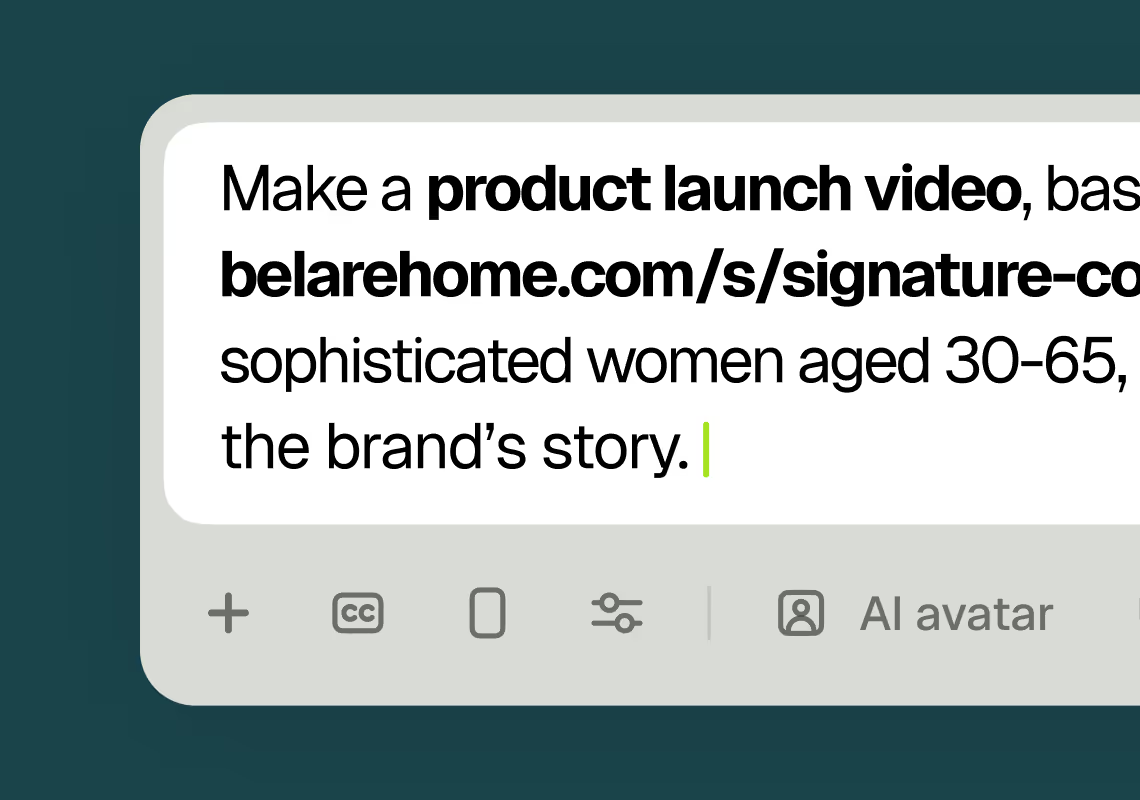
1Describe your video
Paste your promo brief, script, outline, or blog URL into Agent Opus.
 2
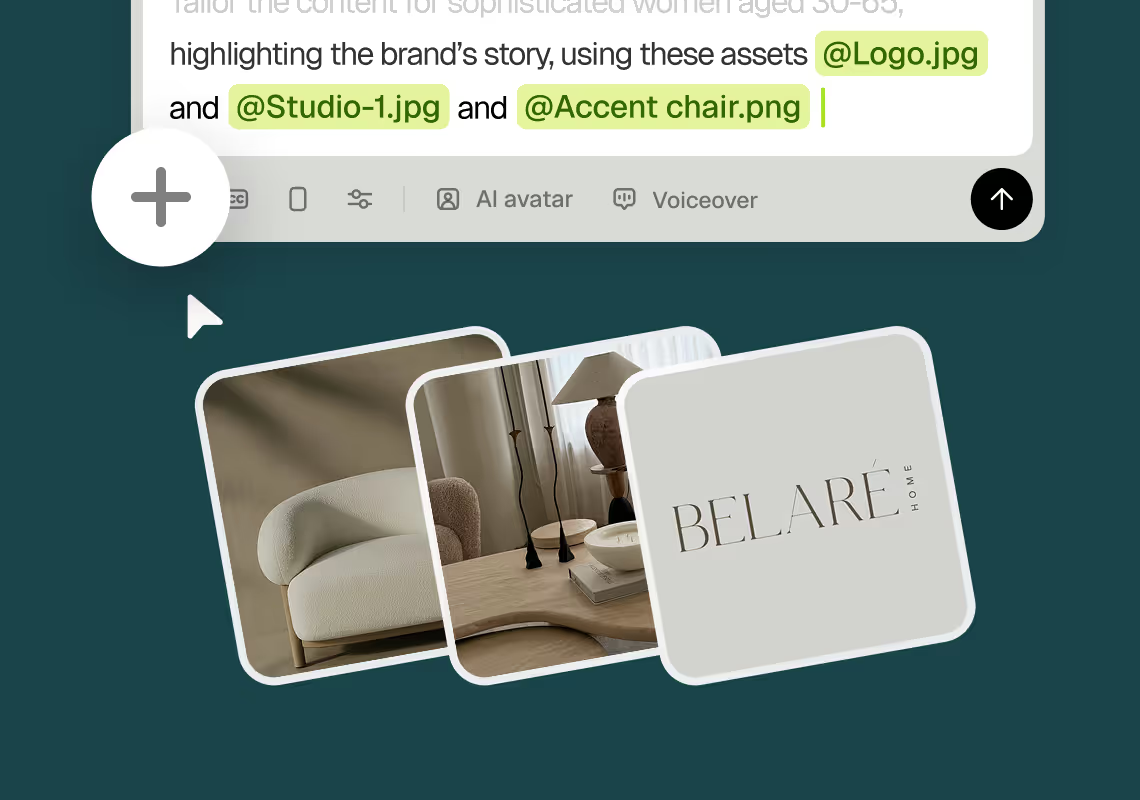
2Add assets and sources
Upload brand assets like logos and product images, or let the AI source stock visuals automatically.
 3
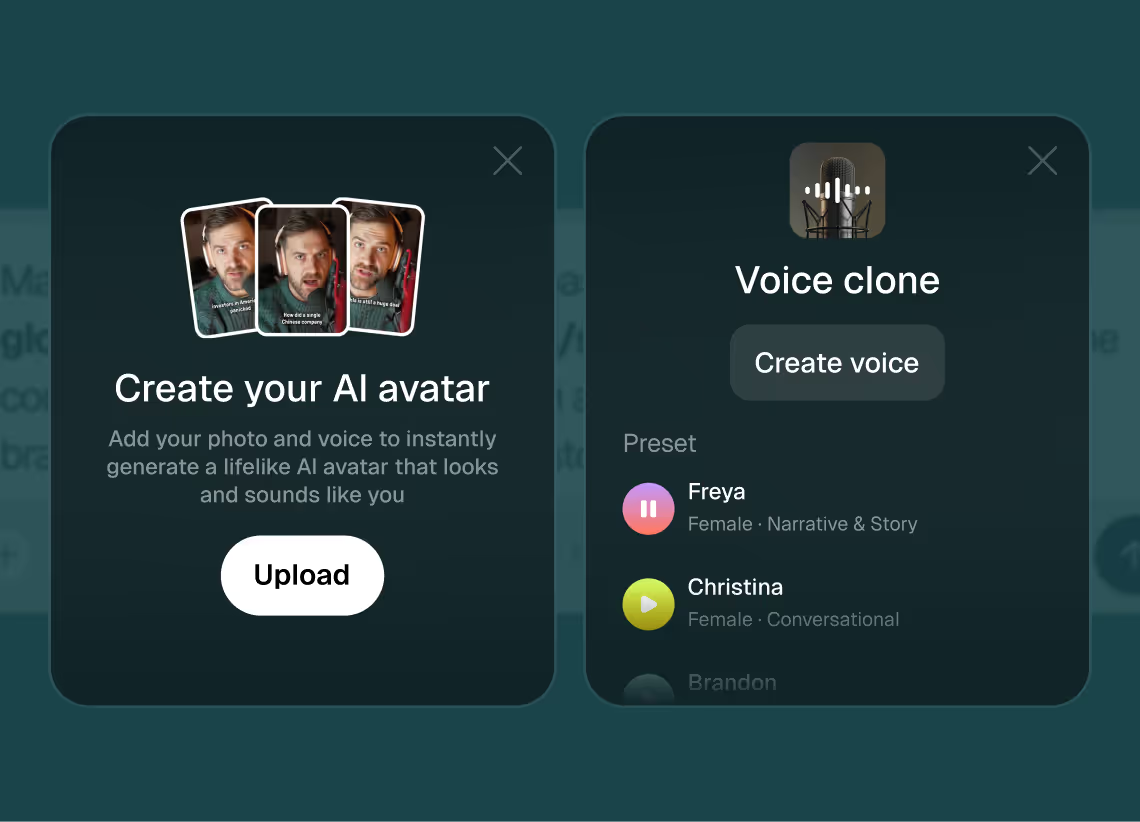
3Choose voice and avatar
Choose voice (clone yours or pick an AI voice) and avatar style (user or AI).
 4
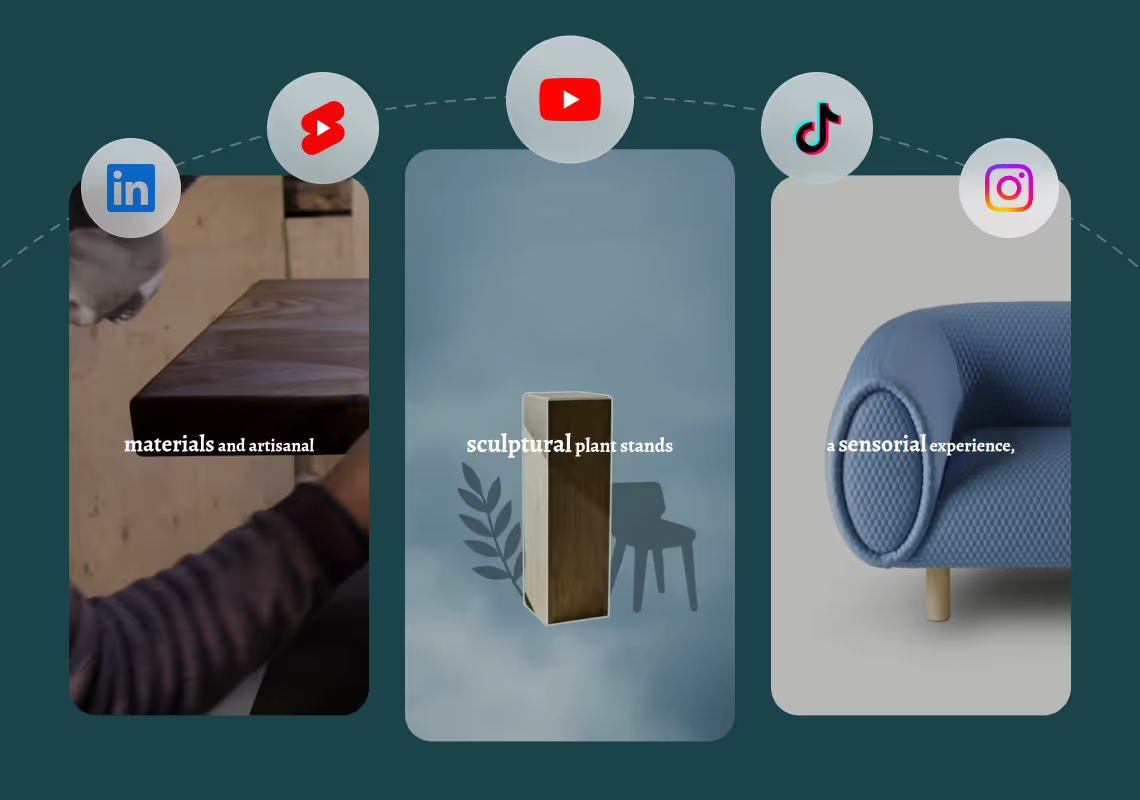
4Generate and publish-ready
Click generate and download your finished promo video in seconds, ready to publish across all platforms.


8 powerful features of Agent Opus' AI Movie Generator
Dynamic Character Creation
Generate consistent characters across scenes with AI-powered appearance, expression, and movement control.
Dialogue Lip-Sync
Automatically match character mouth movements to spoken dialogue for realistic conversational scenes.
Genre-Specific Styling
Apply cinematic styles from thriller to romance, adapting lighting and tone to match your genre.
Multi-Scene Continuity
Maintain visual consistency across multiple scenes for seamless narrative flow in longer productions.
Soundtrack Integration
Sync AI-generated or custom music with scene transitions for emotionally resonant movie experiences.
Instant Preview Rendering
Review generated movie segments in real-time before finalizing your complete cinematic production.
Cinematic Camera Movements
Apply professional camera angles, pans, and zooms automatically to enhance your movie's visual impact.
Script to Scene Generation
Transform written scripts into cinematic sequences with automated scene composition and visual storytelling.
Testimonials
Awesome output, Most of my students and followers could not catch that it was using Agent Opus. Thank you Opus.
Wealth with Gaurav
I reviewed version a and I was very impressed with this version, it did very well in almost all aspects that users need, you would only have to make very small changes and maybe replace one of 2 of the pictures, but even saying that it could be used as is and still receive decent views or even chances at going viral depending on the story or the content the user chooses.
Jeremy
i got to say honestly really impressed me with the subtle click sound on each of the edits, it may seem little but that polish honestly makes it seem near the quality to publish without any further edits
Tony
Frequently Asked Questions
How does an AI movie generator handle different input types like prompts versus full scripts?
An AI movie generator like Agent Opus adapts its generation strategy based on input detail. When you provide a short prompt or brief, the system expands your concept into a full narrative structure, determining scene count, pacing, visual style, and messaging hierarchy. It infers tone, target audience, and content goals from your description, then generates a complete movie that matches your intent. For full scripts, the AI movie generator treats your text as the authoritative narrative, breaking it into scenes based on natural story beats and dialogue transitions. It respects your exact wording for voiceover while making intelligent decisions about visual accompaniment, motion graphics timing, and scene duration. Outline inputs fall between these extremes: the generator uses your structure as a skeleton, fleshing out each section with appropriate visuals, pacing, and voiceover detail. Blog URL inputs trigger a different workflow where the AI movie generator extracts key points, restructures content for video format, and creates a narrative flow optimized for viewer retention rather than reader scanning. Across all input types, the system maintains consistency in visual style, brand voice, and production quality. The key advantage is flexibility: you can start with whatever content asset you have, whether that's a two-sentence idea, a polished screenplay, or an existing article, and receive a finished movie tailored to that starting point without manual conversion work.
What makes AI movie generator outputs different from template-based video tools?
An AI movie generator creates unique videos from scratch rather than filling predefined templates. Template tools require you to choose a layout, then manually populate text boxes, image slots, and timing markers. Every video follows the same structural pattern, limiting creative expression and making outputs feel repetitive. Agent Opus as an AI movie generator analyzes your input content and generates a custom scene structure, visual composition, and motion graphics sequence designed specifically for your narrative. No two movies share the same scene count, timing, or visual treatment unless you explicitly request it. The system decides how many scenes your story needs, how long each should run, which visuals best support each moment, and how motion graphics should guide viewer attention. This generative approach means your movie about product features will have a completely different structure than your movie about customer success stories, even if both are 60 seconds long. The AI movie generator also handles visual sourcing intelligently: instead of offering a library of stock clips to browse, it searches and selects imagery based on semantic understanding of your script. When your voiceover mentions 'team collaboration,' the system finds relevant visuals without you typing search terms or previewing options. Motion graphics aren't preset animations applied uniformly; they're generated to emphasize specific points in your narrative, appearing when and where they add clarity or impact. This level of customization would require hours of manual work in traditional tools. The AI movie generator delivers it automatically, making every output feel purpose-built rather than template-derived.
How does an AI movie generator maintain brand consistency across multiple videos?
An AI movie generator like Agent Opus learns and applies your brand guidelines across every video you create. Start by uploading your logo, brand colors, product imagery, and any visual assets you want consistently featured. The system stores these as your brand library, automatically incorporating them into appropriate scenes without manual placement. When generating a movie, the AI recognizes contexts where your logo should appear, such as intro sequences, product demonstrations, or closing frames, and positions it with proper sizing and placement. Brand colors influence motion graphics palettes, text overlays, and visual transitions, ensuring every element aligns with your identity. For voice consistency, the AI movie generator uses your cloned voice across all projects, maintaining the same tone, pacing, and delivery style that audiences associate with your brand. If you prefer an AI voice, selecting one voice profile and using it consistently creates the same recognition effect. Avatar options work similarly: upload footage of yourself or a team member once, and the AI movie generator can feature that presenter across multiple movies, building familiarity with your audience. The system also learns from your generation history. If you consistently approve certain visual styles, motion graphics treatments, or pacing choices, the AI movie generator weights future outputs toward those preferences. This doesn't lock you into rigid templates but creates a recognizable aesthetic that evolves with your brand. For teams, shared brand libraries ensure everyone generates on-brand content regardless of who writes the prompt. The AI movie generator becomes a brand consistency engine, eliminating the visual drift that happens when multiple people create content using different tools and assets.
What are the practical limitations of an AI movie generator for complex storytelling?
An AI movie generator excels at structured narratives with clear messaging but faces challenges with highly abstract or experimental storytelling. Agent Opus performs best when your input provides concrete concepts, logical flow, and defined outcomes. Marketing explainers, product demos, educational content, and narrative-driven social videos are ideal use cases. The system understands cause-and-effect relationships, problem-solution structures, and chronological sequences, translating them into coherent visual stories. However, if your movie concept relies on subtle symbolism, non-linear timelines, or avant-garde visual metaphors, the AI movie generator may interpret your intent too literally. It optimizes for clarity and viewer comprehension, which can flatten intentionally ambiguous or layered narratives. Another limitation involves highly specific visual requirements. While the AI movie generator sources relevant imagery and generates appropriate motion graphics, it can't replicate exact shots you've envisioned unless those assets already exist in your brand library or available stock sources. If your movie demands a particular camera angle, lighting setup, or visual composition not found in existing media, you'll need to provide that footage. The system also works within the constraints of its training data: extremely niche topics or emerging trends may not have sufficient visual references for optimal scene generation. Length is another consideration. The AI movie generator handles short-form content exceptionally well, but movies exceeding several minutes require more detailed input to maintain narrative coherence and pacing. A two-sentence prompt works for a 30-second video but may produce shallow results for a five-minute piece. For longer movies, provide structured outlines or full scripts to guide scene development. Finally, while the AI movie generator creates publish-ready output, 'ready' means suitable for most platforms and audiences. If you need frame-perfect timing for a specific broadcast standard or highly specialized formatting, you may need post-generation adjustments outside the system.