AI Pixel Art Generator
Turn text into pixel art videos instantly. Agent Opus is an AI pixel art generator that transforms your prompts, scripts, or blog URLs into fully animated retro-style videos. No manual sprite work, no timeline editing. Describe your vision, and get a publish-ready pixel art video with motion graphics, voiceover, and social-optimized formatting. Perfect for game devs, retro content creators, and brands targeting nostalgia-driven audiences. Generate your first pixel art video in minutes.

Explore what's possible with Agent Opus

Reasons why creators love Agent Opus' AI Pixel Art Generator
Ship in Minutes, Not Hours
Generate a publish-ready video in under 10 minutes from a single prompt — no timeline editing, no asset hunting, no creative dry spells.
Zero Editing Skills Required
Describe your concept and Agent Opus handles scene composition, motion graphics, voiceover, and platform formatting automatically — even if you've never opened a video editor.
Studio-Grade Output
Cinematic motion graphics, beat-synced cuts, professional voiceover, and precise typography — every video ships looking production-quality from the first generation.
Stays On-Brand
Upload your logo, fonts, and color palette once. Agent Opus applies them across every video automatically so your content stays visually consistent.
How to use Agent Opus’ AI Pixel Art Generator
 1
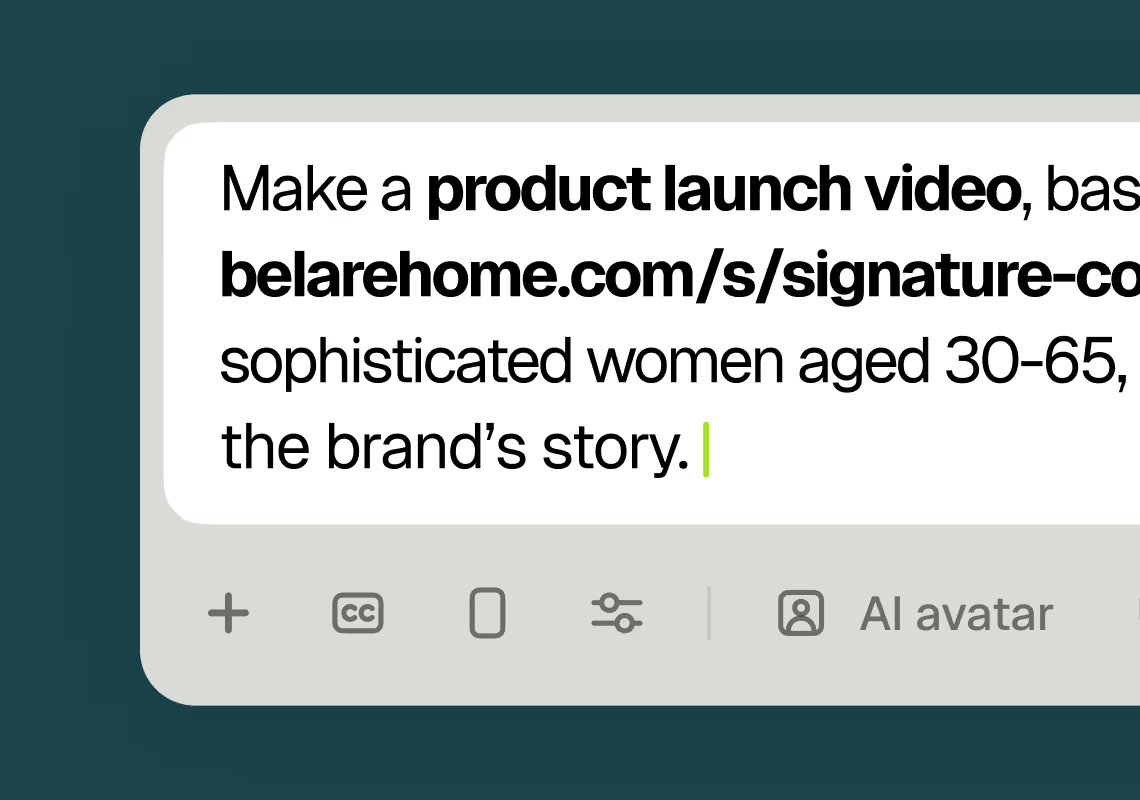
1Describe your video
Paste your promo brief, script, outline, or blog URL into Agent Opus.
 2
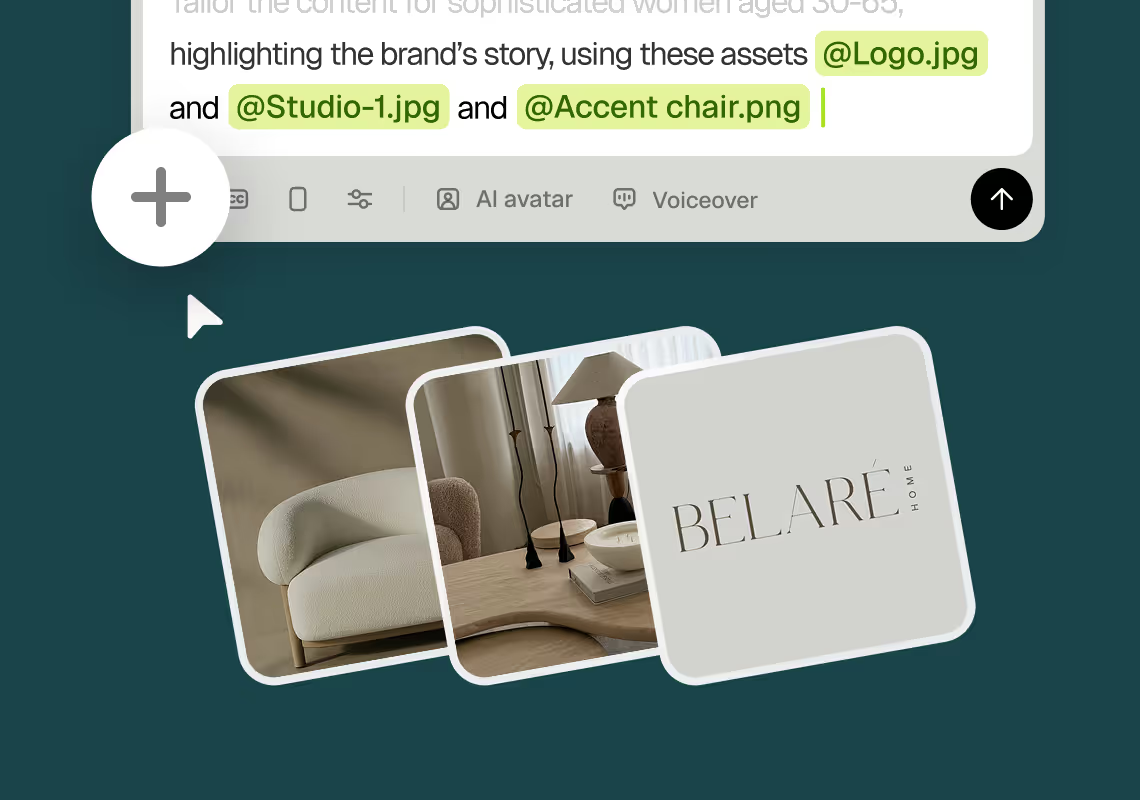
2Add assets and sources
Upload brand assets like logos and product images, or let the AI source stock visuals automatically.
 3
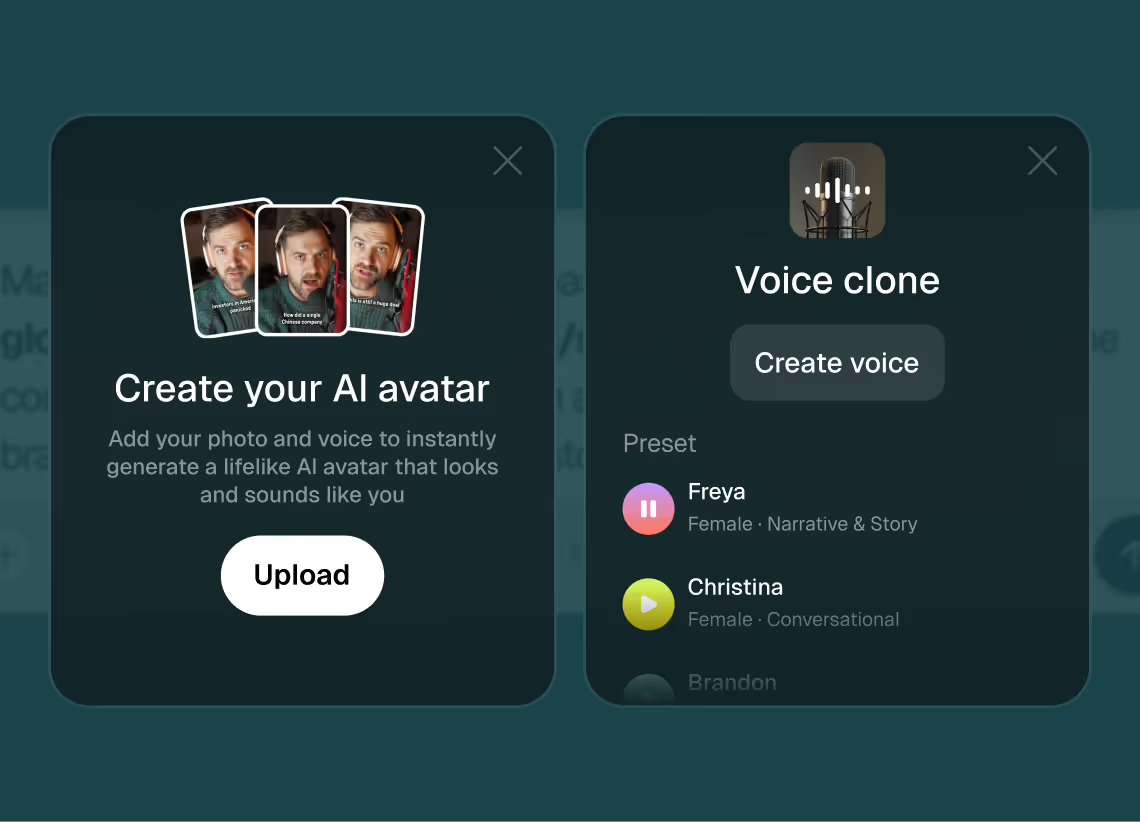
3Choose voice and avatar
Choose voice (clone yours or pick an AI voice) and avatar style (user or AI).
 4
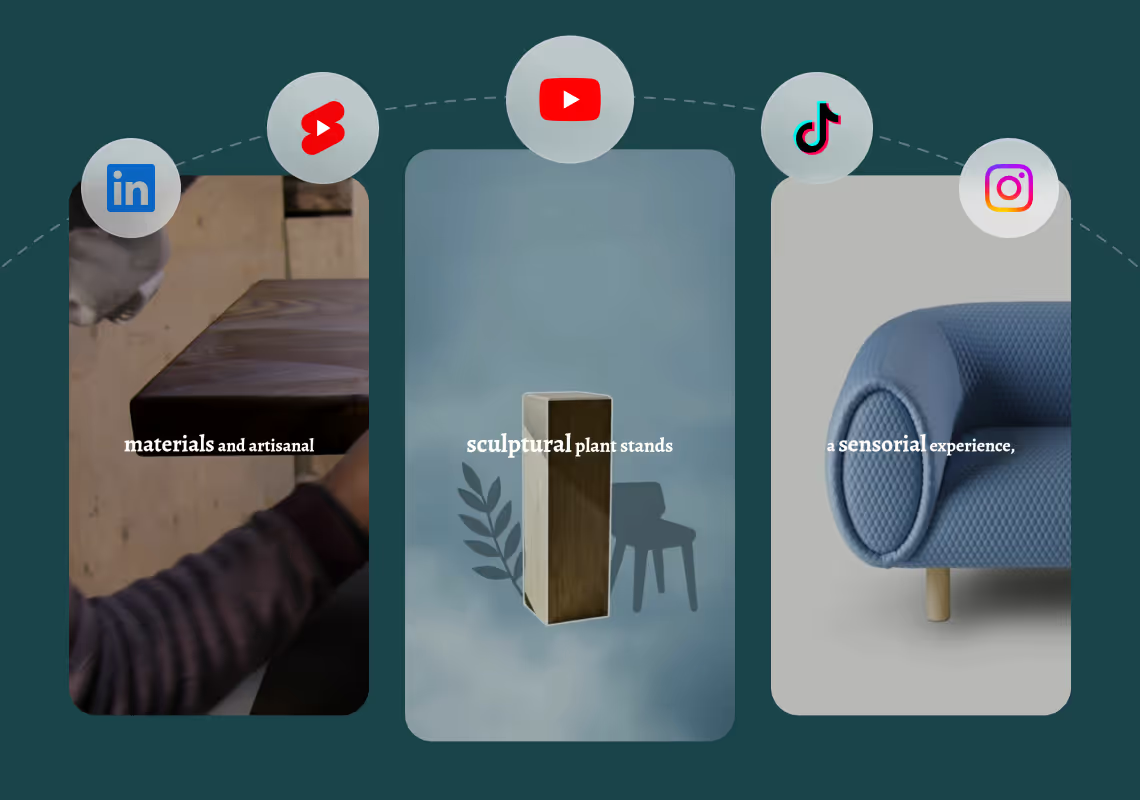
4Generate and publish-ready
Click generate and download your finished promo video in seconds, ready to publish across all platforms.


8 powerful features of Agent Opus' AI Pixel Art Generator
Prompt-to-Video Generation
Turn a one-line idea into a finished video. The agent handles structure, pacing, B-roll selection, and final assembly automatically.
Script and Outline Support
Paste a full script, drop in an outline with section headers, or supply a blog or article URL — Agent Opus reads any of them and builds a video around the content.
AI Voiceover and Voice Cloning
Pick from natural-sounding AI voices in 30+ languages, or clone your own voice once. Every video then ships with your authentic narration.
Beat-Synced Motion Graphics
Dynamic visuals that lock to the beat of your audio or the pacing of your script — kinetic typography, transitions, and effects, no manual keyframing required.
Automatic Captions and Subtitles
Burn-in captions for short-form, soft subtitles for long-form, and multi-language translations — all generated and synced automatically.
Multi-Aspect-Ratio Export
9:16, 1:1, and 16:9 outputs from one job, with intelligent reframing of text, motion graphics, and focal elements for each ratio.
Brand Asset Integration
Upload your logo, watermark, fonts, and color palette. Agent Opus applies them consistently across every video automatically.
Avatar and Talking Head Support
Add an AI avatar, your own video footage, or a synthetic spokesperson to any video — useful for explainers, ads, and personal-brand content.
Testimonials
all in all LOVE THIS agent. I'm curious to see how I can push it (within reason) Just need to learn to get the consistency right with my prompts
Rebecca
i got to say honestly really impressed me with the subtle click sound on each of the edits, it may seem little but that polish honestly makes it seem near the quality to publish without any further edits
Tony
I reviewed version a and I was very impressed with this version, it did very well in almost all aspects that users need, you would only have to make very small changes and maybe replace one of 2 of the pictures, but even saying that it could be used as is and still receive decent views or even chances at going viral depending on the story or the content the user chooses.
Jeremy
Frequently Asked Questions
How does an AI pixel art generator handle different retro visual styles?
Agent Opus supports multiple pixel art aesthetics, from classic 8-bit NES-style visuals to more detailed 16-bit SNES-era graphics. When you describe your video concept in the prompt, you can specify the retro style you want, such as 'create an 8-bit pixel art explainer video' or 'generate a 16-bit pixel art product demo with Game Boy color palette.' The AI pixel art generator analyzes your input and applies the appropriate visual treatment, including color depth, sprite resolution, and animation frame rate that matches your chosen era. For 8-bit content, expect chunky pixels, limited color palettes (typically 4-16 colors per sprite), and simpler motion patterns reminiscent of early console games. For 16-bit styles, you'll get smoother animations, richer color gradients, and more detailed background layers. The system automatically adjusts motion graphics complexity, particle effects, and transition styles to maintain authenticity. If you're creating content for a specific game genre, like platformers, RPGs, or shoot-em-ups, mention that in your prompt. Agent Opus will match visual conventions from those genres, including UI elements, health bars, score displays, and character movement patterns. You can also reference specific games or consoles as style guides, and the AI will interpret those aesthetic cues. The pixel art generator maintains consistency across scenes, so your entire video feels cohesive, whether you're producing a 30-second social clip or a longer tutorial. This flexibility lets indie game developers showcase gameplay concepts, retro brands create nostalgic marketing content, and educators build engaging pixel art explainers without needing pixel art skills or animation experience.
What are best practices for prompts in an AI pixel art generator?
Effective prompts for pixel art video generation combine clear visual direction with specific retro references. Start by stating your core message or story, then add pixel art style descriptors. For example, instead of 'make a video about my game,' write 'create an 8-bit pixel art trailer showing a knight battling a dragon in a castle, with NES-style graphics and chiptune energy.' The AI pixel art generator responds well to era-specific language: mention console generations (NES, SNES, Game Boy, Genesis), color palette constraints (CGA, EGA, Game Boy green), or genre conventions (metroidvania, JRPG, arcade). If you're promoting a product, describe how it would appear in pixel form: 'show our coffee maker as a 16-bit sprite with steam particles and a health-bar style progress indicator.' For motion and pacing, use game terminology: 'scrolling background,' 'sprite animation,' 'boss battle intensity,' or 'idle animation loops.' These cues help the system generate appropriate motion graphics and scene transitions. Include audio direction too. Specify 'chiptune soundtrack,' '8-bit sound effects,' or 'retro arcade voiceover style' to align audio with visuals. If you want a specific mood, reference game moments: 'Zelda dungeon atmosphere,' 'Sonic speed run energy,' or 'Pokémon battle tension.' For branding, mention where your logo or product shots should appear: 'place logo in top-right corner like a game HUD' or 'show product as collectible item sprite.' The AI pixel art generator can incorporate real images and convert them to pixel art style, so you can say 'pixelate our team photo as character sprites' or 'turn our office into a 16-bit background layer.' Avoid vague requests like 'make it retro' without specifics. The more concrete your visual and stylistic references, the better the output matches your vision. Test short prompts first, then iterate by adding detail about color schemes, animation intensity, and scene composition.
Can an AI pixel art generator maintain brand consistency across multiple videos?
Yes, Agent Opus maintains brand consistency in pixel art videos through several mechanisms. First, you can upload brand assets like logos, color palettes, and product images, which the AI pixel art generator converts to pixel art style while preserving recognizable brand elements. Your logo becomes a consistent sprite that appears across all videos, positioned according to your brand guidelines (corner placement, HUD integration, or scene watermark). Color consistency is crucial in pixel art, where limited palettes define the aesthetic. Specify your brand colors in hex codes or RGB values, and the system will build pixel art palettes around those colors, ensuring every video uses your brand's signature hues even within 8-bit or 16-bit constraints. For example, if your brand uses a specific blue, the AI will map that to the closest pixel art equivalent and use it consistently for UI elements, backgrounds, or character sprites. Character and mascot consistency works similarly. If you have a brand mascot, describe it once in detail, and Agent Opus will generate a pixel sprite version that appears across videos. The system remembers sprite designs within your account, so your mascot maintains the same pixel art style, proportions, and animation patterns in every video. This is especially valuable for game developers creating multiple trailers or tutorial videos where character recognition matters. Voice consistency is another factor. If you clone your voice or select a specific AI voice for your first pixel art video, you can reuse that voice profile for all subsequent videos, creating audio brand recognition alongside visual consistency. The same applies to music and sound effects. Choose a chiptune style or specific retro audio aesthetic, and the AI pixel art generator will apply similar audio treatments across your video library. For content series, like weekly retro gaming tips or pixel art product updates, you can establish templates by describing your preferred layout, scene structure, and visual hierarchy in your initial prompt. Then reference that structure in future prompts: 'use the same layout as last week's video but change the topic to X.' The system will maintain your established format while updating content. This approach lets you build a cohesive pixel art video brand without manually recreating sprites, backgrounds, or animation styles for each new video.
What are the limitations of an AI pixel art generator for complex animations?
While Agent Opus excels at generating pixel art videos from text, understanding its limitations helps you set realistic expectations and craft better prompts. Complex character animations with many unique frames, like fighting game combos or detailed walk cycles with multiple angles, may be simplified compared to hand-crafted sprite work. The AI pixel art generator prioritizes overall scene composition and motion flow over frame-by-frame precision. If your project requires pixel-perfect animation timing for gameplay footage or highly detailed sprite interactions, you may need to provide more specific direction in your prompt or accept that the output will favor visual storytelling over technical animation accuracy. Extremely detailed backgrounds with parallax scrolling layers and intricate environmental storytelling, common in games like Owlboy or Hyper Light Drifter, may be condensed. The system generates backgrounds that support your narrative and maintain retro aesthetics, but won't replicate the depth of manually designed multi-layer environments. If background detail is critical, describe specific elements you need: 'include a three-layer parallax background with mountains, trees, and grass, each moving at different speeds.' Text and UI elements in pixel art have readability constraints. Small pixel fonts can be hard to read, especially in social media formats. The AI pixel art generator will render text in retro fonts, but if you have critical information to display, consider using voiceover to reinforce key points rather than relying solely on on-screen text. For very specific pixel art styles, like exact color palette matching from a particular game or console, the system interprets your references but may not replicate them identically. If you need precise color accuracy, provide hex codes and specify 'use only these exact colors' in your prompt. The generator works best with clear, concrete descriptions rather than abstract artistic direction. Vague prompts like 'make it feel nostalgic' produce generic results, while specific requests like 'use a CGA 4-color palette with cyan, magenta, black, and white' yield more targeted outputs. Licensing and asset sourcing are transparent: Agent Opus uses royalty-free assets and generates original pixel art, but if you want to incorporate copyrighted game characters or trademarked elements, you're responsible for ensuring you have rights to use those references. Finally, iteration speed matters. While the AI pixel art generator is fast, highly experimental projects where you're testing many visual styles may require multiple generation cycles. Start with a clear vision, generate a first version, then refine your prompt based on what you see rather than expecting perfection on the first try.