Turn questions and answers into polished videos instantly with AI Q&A Video Maker. Describe your Q&A content, paste your script, or provide a blog URL, and Agent Opus generates a complete, publish-ready video with AI voices, avatars, motion graphics, and social-ready formatting. No timeline, no editing, no manual assembly. Just prompt to video in minutes. Perfect for creators, marketers, and founders who need professional question-answer videos without production overhead. Generate your first Q&A video free today.

Explore what's possible with Agent Opus

Reasons why creators love Agent Opus'
Ship in Minutes, Not Hours
Generate a publish-ready video in under 10 minutes from a single prompt — no timeline editing, no asset hunting, no creative dry spells.
Zero Editing Skills Required
Describe your concept and Agent Opus handles scene composition, motion graphics, voiceover, and platform formatting automatically — even if you've never opened a video editor.
Studio-Grade Output
Cinematic motion graphics, beat-synced cuts, professional voiceover, and precise typography — every video ships looking production-quality from the first generation.
Stays On-Brand
Upload your logo, fonts, and color palette once. Agent Opus applies them across every video automatically so your content stays visually consistent.
How to use Agent Opus’
 1
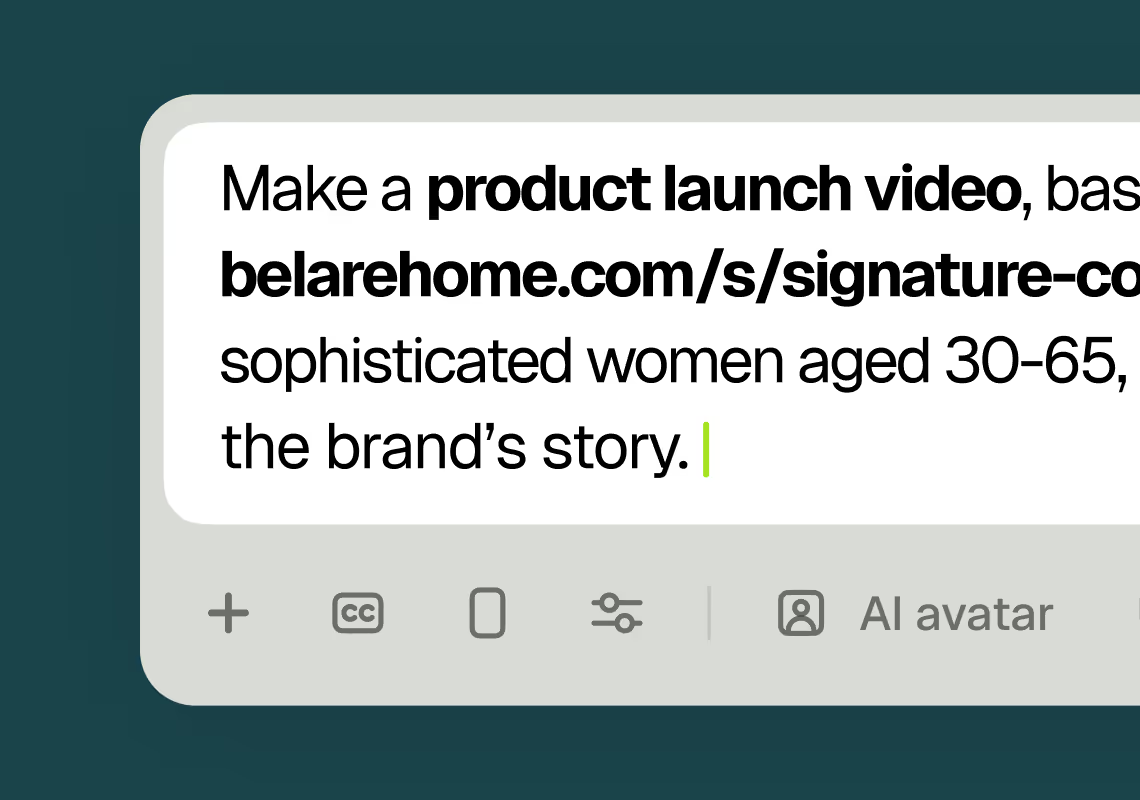
1Describe your video
Paste your promo brief, script, outline, or blog URL into Agent Opus.
 2
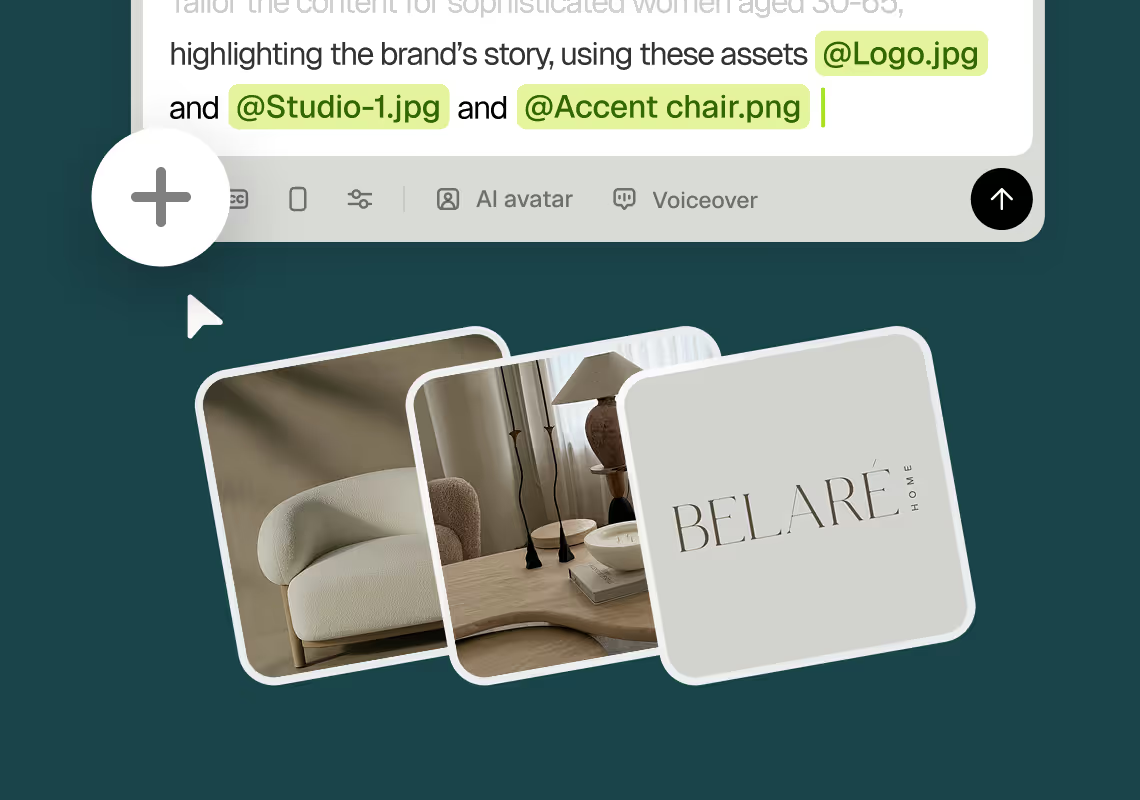
2Add assets and sources
Upload brand assets like logos and product images, or let the AI source stock visuals automatically.
 3
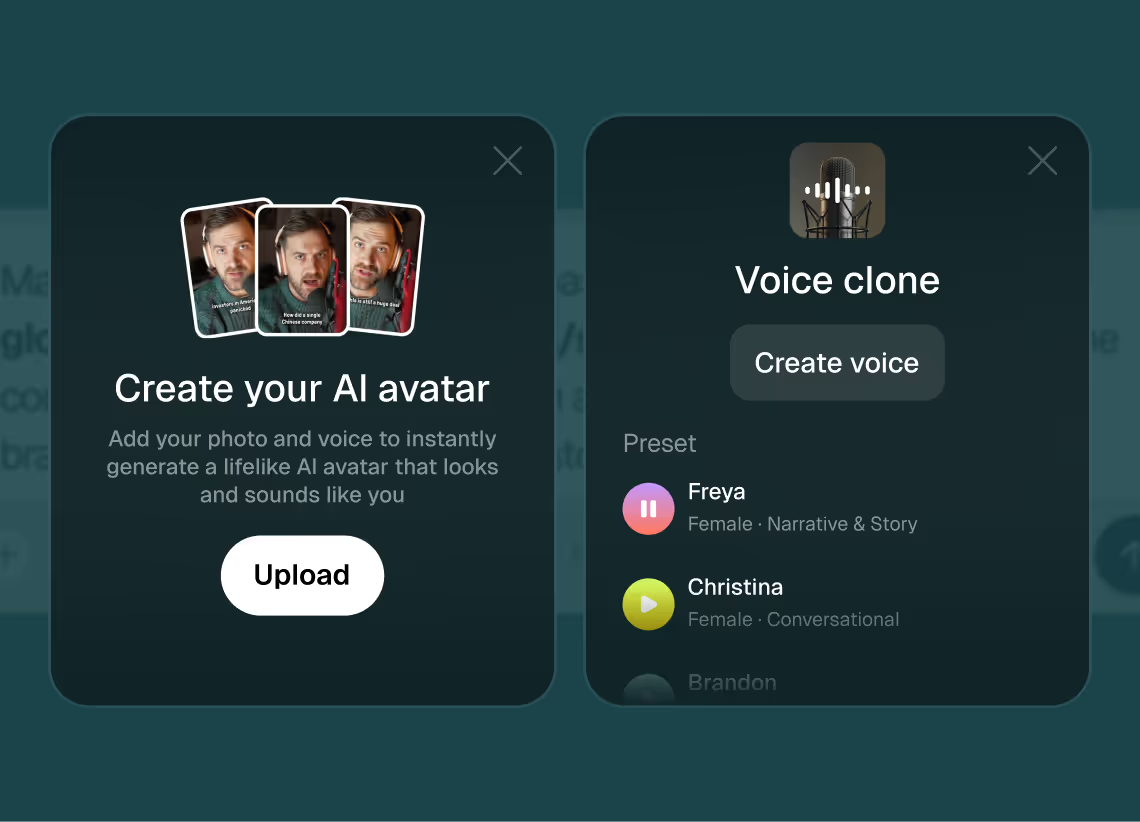
3Choose voice and avatar
Choose voice (clone yours or pick an AI voice) and avatar style (user or AI).
 4
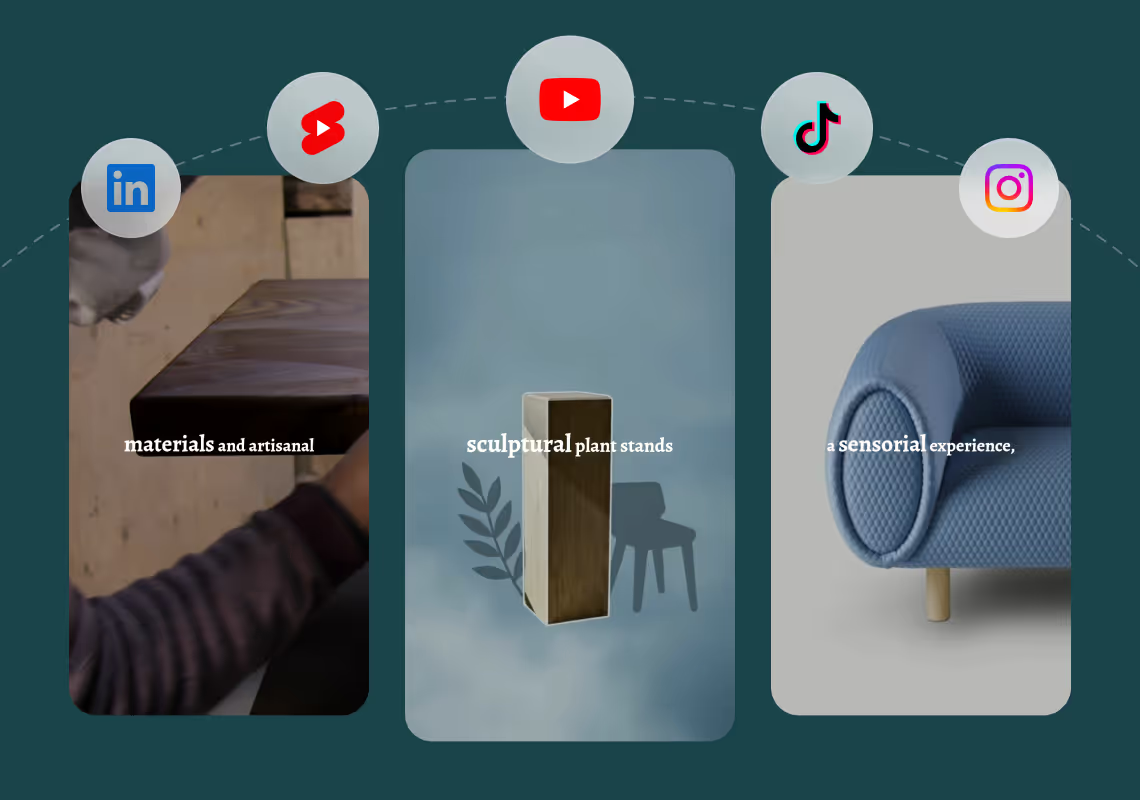
4Generate and publish-ready
Click generate and download your finished promo video in seconds, ready to publish across all platforms.


8 powerful features of Agent Opus'
Prompt-to-Video Generation
Turn a one-line idea into a finished video. The agent handles structure, pacing, B-roll selection, and final assembly automatically.
Script and Outline Support
Paste a full script, drop in an outline with section headers, or supply a blog or article URL — Agent Opus reads any of them and builds a video around the content.
AI Voiceover and Voice Cloning
Pick from natural-sounding AI voices in 30+ languages, or clone your own voice once. Every video then ships with your authentic narration.
Beat-Synced Motion Graphics
Dynamic visuals that lock to the beat of your audio or the pacing of your script — kinetic typography, transitions, and effects, no manual keyframing required.
Automatic Captions and Subtitles
Burn-in captions for short-form, soft subtitles for long-form, and multi-language translations — all generated and synced automatically.
Multi-Aspect-Ratio Export
9:16, 1:1, and 16:9 outputs from one job, with intelligent reframing of text, motion graphics, and focal elements for each ratio.
Brand Asset Integration
Upload your logo, watermark, fonts, and color palette. Agent Opus applies them consistently across every video automatically.
Avatar and Talking Head Support
Add an AI avatar, your own video footage, or a synthetic spokesperson to any video — useful for explainers, ads, and personal-brand content.
Testimonials
Frequently Asked Questions
How does AI Q&A Video Maker handle different question formats and answer lengths?
<p>AI Q&A Video Maker is designed to adapt to the natural structure of question-answer content, whether you're working with short FAQ-style exchanges or longer educational explanations. When you input your Q&A content as a prompt, script, or blog URL, Agent Opus analyzes the structure and automatically determines optimal pacing and visual treatment for each question-answer pair. For short questions with brief answers, the system generates tight, punchy scenes with quick transitions and bold text overlays that emphasize the key point. For longer, more detailed answers, Agent Opus extends scene duration, layers in supporting visuals like product shots or stock imagery, and uses AI motion graphics to break complex answers into digestible visual chunks. The system also recognizes when a single answer contains multiple sub-points and will create visual separators or numbered lists to maintain clarity. If you're converting a blog post with embedded Q&A sections, Agent Opus intelligently extracts the question-answer structure and formats each pair as a distinct video segment with consistent visual branding. You can also provide explicit instructions in your prompt, such as asking for faster pacing for social media or slower, more detailed treatment for educational content. The voice pacing adjusts automatically as well, with natural pauses between questions and answers and emphasis on key terms within longer explanations. This flexibility means AI Q&A Video Maker works equally well for quick customer FAQ videos, in-depth tutorial Q&As, interview-style content, or educational series where each question deserves thorough exploration. The result is always a cohesive, publish-ready video that respects the intent and depth of your original Q&A content without requiring you to manually time scenes or adjust transitions.</p>
What are best practices for writing prompts in AI Q&A Video Maker to get high-quality results?
<p>The quality of your AI Q&A video depends heavily on how you structure your input, whether you're using a simple prompt, a full script, or a blog URL. For best results, start by clearly separating questions from answers in your text. Use explicit markers like 'Q:' and 'A:' or number your questions if you're providing a list. This helps Agent Opus understand the structure and create distinct visual segments for each pair. When writing questions, be specific and conversational. Instead of 'What is this product?', try 'What makes this product different from traditional solutions?' The more natural and specific your question, the better the AI can frame the visual context and voiceover delivery. For answers, aim for clarity and completeness, but avoid overly long paragraphs. If an answer has multiple points, use bullet points or numbered lists in your script. Agent Opus will translate these into visual separators or animated lists in the final video. Include context about your brand, product, or topic in the prompt. For example, 'Create a Q&A video about our AI video tool, Agent Opus, targeting marketers who want to create content faster. Use a professional but approachable tone.' This context helps the system select appropriate stock imagery, set the right pacing, and choose visual styles that match your audience. If you want specific visuals, mention them explicitly: 'Show product screenshots when answering the features question' or 'Use office/team imagery for the company culture question.' You can also specify voice and avatar preferences in the prompt: 'Use a female AI voice with a friendly tone' or 'Include an AI avatar presenting the answers.' For blog-to-video conversions, make sure your blog post has clear Q&A formatting with headers or bold text marking each question. Agent Opus will extract the structure, but clean formatting improves accuracy. Finally, test with a short 3-5 question video first to see how the system interprets your style, then refine your prompt based on the output. The more you use AI Q&A Video Maker, the better you'll understand how to structure prompts for your specific content style and audience needs.</p>
Can AI Q&A Video Maker maintain consistent branding across multiple question-answer videos?
<p>Yes, AI Q&A Video Maker is built to support consistent branding across entire video series, which is essential for creators and marketers building FAQ libraries, educational content, or ongoing customer support videos. Agent Opus allows you to integrate your brand assets directly into the generation process. You can upload your logo, which will appear consistently in each video, typically in a corner or lower-third position. You can also provide product shots, team photos, or other branded imagery that Agent Opus will prioritize when sourcing visuals for your answers. This means instead of generic stock footage, your Q&A videos feature your actual products, workspace, or team members, creating a cohesive brand experience. For voice consistency, you have two powerful options. First, you can clone your own voice or a team member's voice, then use that same voice clone across every Q&A video you generate. This creates a recognizable audio brand, especially important if you're building a series where the same 'expert' answers questions over time. Alternatively, you can select a specific AI voice and use it consistently across all videos. Agent Opus remembers your voice selection, so you don't have to re-specify it each time. The same applies to avatars: if you choose to include an AI avatar or use yourself on camera, you can maintain that same avatar across your entire Q&A video library. Visual style consistency is also built in. Agent Opus uses AI motion graphics that follow modern design principles, and when you generate multiple videos for the same project or campaign, the system maintains similar animation styles, color treatments, and text overlay formats. You can also include brand color preferences in your prompts: 'Use blue and white color scheme to match our brand' or 'Keep visuals minimal and professional.' For teams managing large Q&A video libraries, this consistency is critical. You can create dozens of question-answer videos over weeks or months, and each one will feel like part of the same series. Viewers recognize the format, voice, and visual style, which builds trust and makes your content library feel professionally produced. The key is to establish your brand guidelines in your first few videos, then reference those same assets and preferences in subsequent prompts. Agent Opus handles the rest, ensuring every Q&A video you generate maintains your brand identity without requiring manual editing or post-production adjustments.</p>
What are the limitations or edge cases of AI Q&A Video Maker that creators should know about?
<p>While AI Q&A Video Maker is powerful and handles most question-answer scenarios automatically, understanding its limitations helps you set realistic expectations and structure your content for best results. First, Agent Opus is optimized for text-to-video generation, not video editing. If you already have recorded Q&A footage and want to trim, rearrange, or add graphics to existing video, this tool is not designed for that workflow. It generates new videos from text inputs, so your starting point should always be written questions and answers, not raw video files. Second, extremely long answers (over 500 words for a single question) may result in videos that feel too lengthy for social platforms. Agent Opus will generate the full content, but for social media use cases, consider breaking very long answers into multiple shorter question-answer pairs. This keeps each video segment tight and engaging. Third, highly technical or niche topics may require more explicit visual guidance in your prompt. Agent Opus sources royalty-free and stock imagery automatically, but if your Q&A covers very specialized subjects (like rare medical procedures or obscure industrial processes), the AI may default to generic visuals. In these cases, provide specific visual instructions in your prompt or upload custom images as part of your brand assets. Fourth, while Agent Opus supports voice cloning, the quality of the clone depends on the quality of your source audio. For best results, provide clear, noise-free voice samples. If your source audio is muffled or has background noise, the cloned voice may not sound as natural. AI voices are a reliable alternative if voice cloning doesn't meet your standards. Fifth, Agent Opus generates complete, publish-ready videos, but it does not offer a manual editing interface. You cannot open a timeline and adjust individual scenes, trim clips, or rearrange segments after generation. If the output isn't quite right, the best approach is to refine your prompt and regenerate. This is faster than traditional editing, but it does require a different mindset: think of it as iterative prompting rather than post-production tweaking. Sixth, while the system handles most Q&A formats automatically, highly unconventional structures (like nested questions, branching logic, or choose-your-own-adventure style Q&As) may not translate cleanly. Stick to linear question-answer pairs for best results. Finally, Agent Opus is designed for net-new video creation, not for repurposing or clipping existing content. If you need to extract clips from a long video or add subtitles to pre-recorded footage, those workflows fall outside the scope of AI Q&A Video Maker. Understanding these boundaries helps you use the tool effectively and avoid frustration. For the vast majority of Q&A video use cases, from customer FAQs to educational content to interview-style videos, Agent Opus delivers fast, professional results with zero manual editing.</p>