AI Scene Generator
Turn text into complete video scenes instantly. Agent Opus is an AI scene generator that transforms prompts, scripts, or blog URLs into finished video scenes with motion graphics, voiceover, and dynamic visuals. Describe what you need, and get a publish-ready video with zero manual assembly. Perfect for creators, marketers, and founders who need professional video scenes without the production overhead.

Explore what's possible with Agent Opus

Reasons why creators love Agent Opus' AI Scene Generator
Launch-Ready in Minutes
Turn ideas into polished scenes without waiting on crews, locations, or post-production delays.
Consistent Brand Aesthetic
Maintain your signature look across every scene without coordinating multiple shoots or editing teams.
Scale Content Without Burnout
Produce weeks of video material in hours, freeing you to focus on strategy instead of logistics.
Studio Quality, Zero Overhead
Skip equipment rentals and location fees while still delivering cinematic scenes that captivate your audience.
Unlimited Creative Variations
Test different settings, moods, and styles instantly to find the perfect visual direction for your story.
Creative Control, Start to Finish
Shape every visual detail on your terms, no compromises with third-party vendors or production schedules.
How to use Agent Opus’ AI Scene Generator
 1
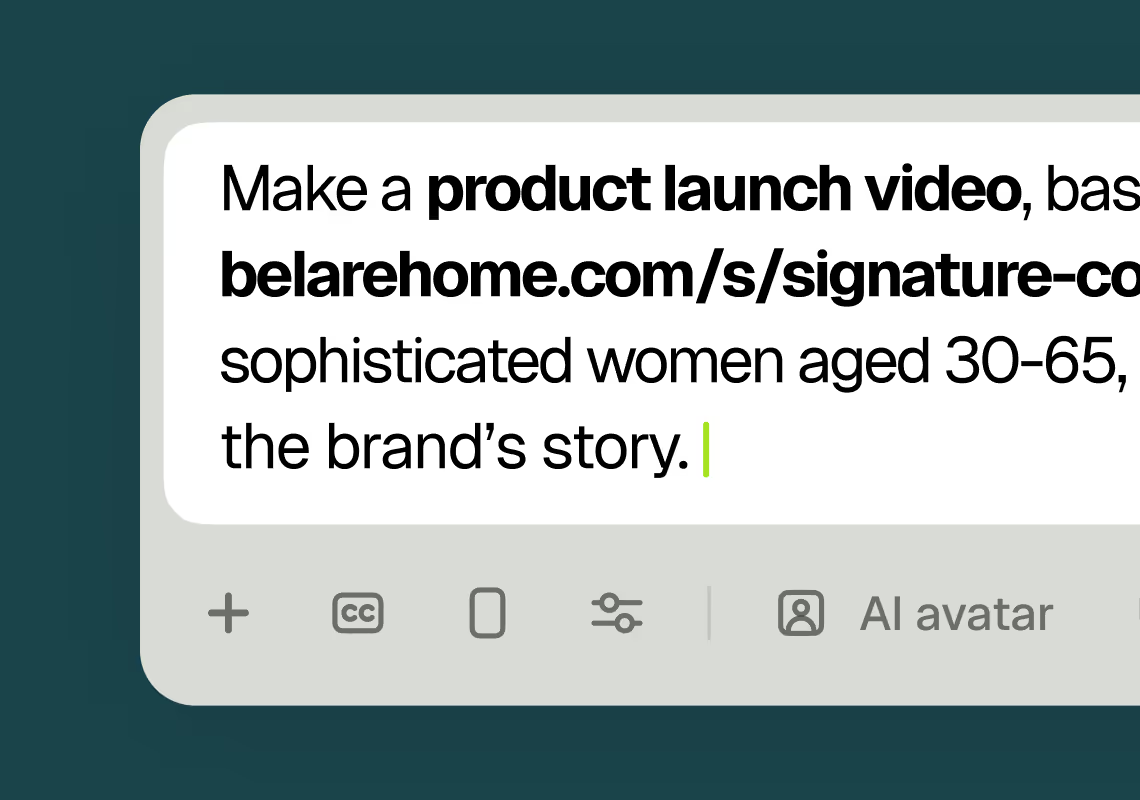
1Describe your video
Paste your promo brief, script, outline, or blog URL into Agent Opus.
 2
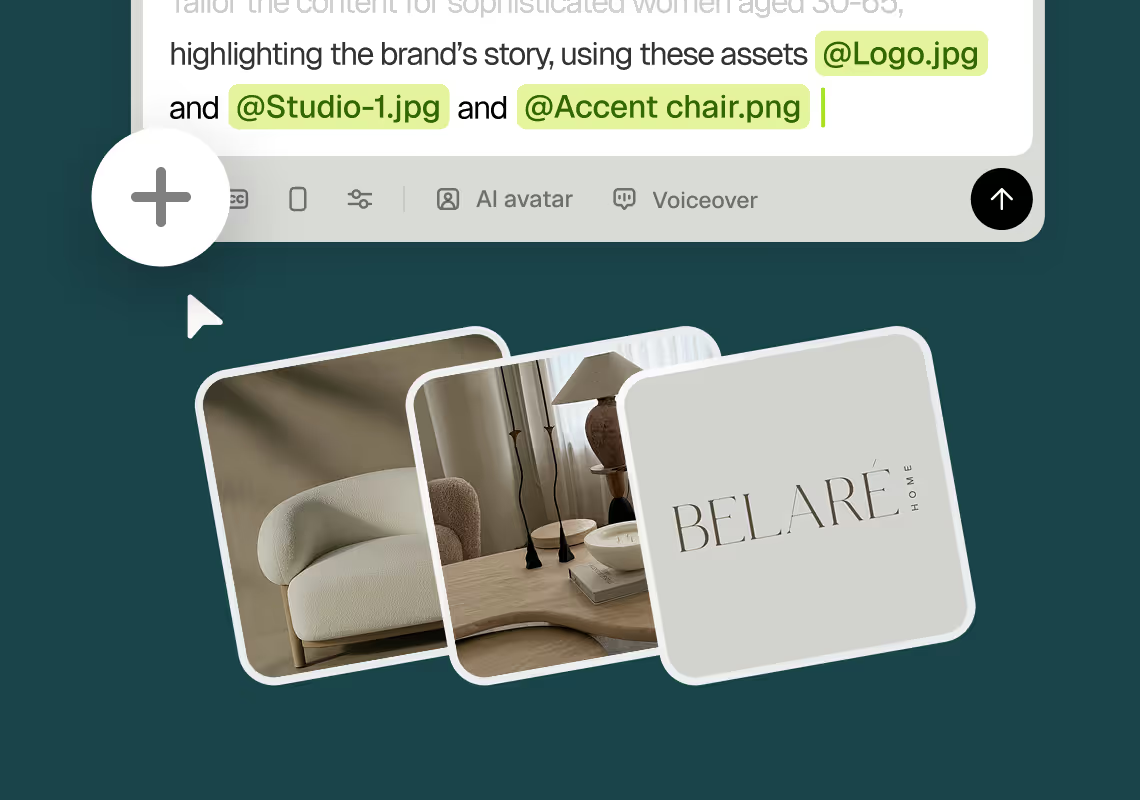
2Add assets and sources
Upload brand assets like logos and product images, or let the AI source stock visuals automatically.
 3
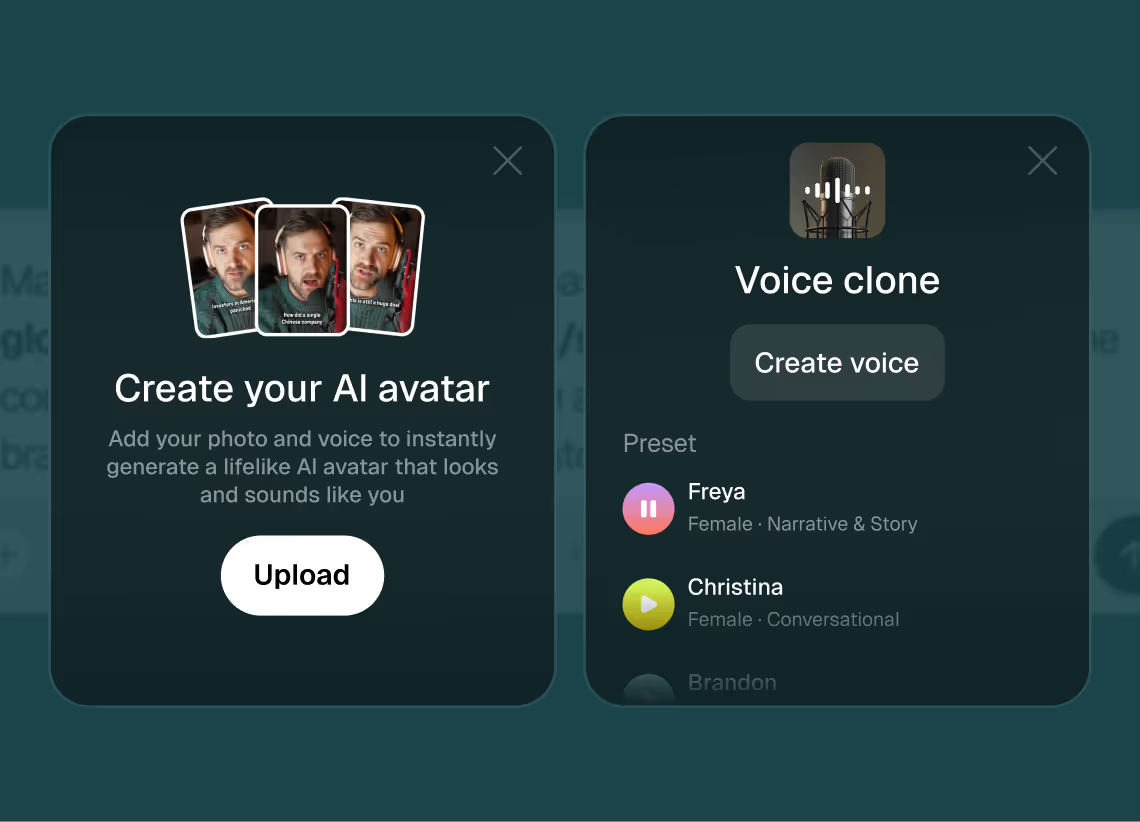
3Choose voice and avatar
Choose voice (clone yours or pick an AI voice) and avatar style (user or AI).
 4
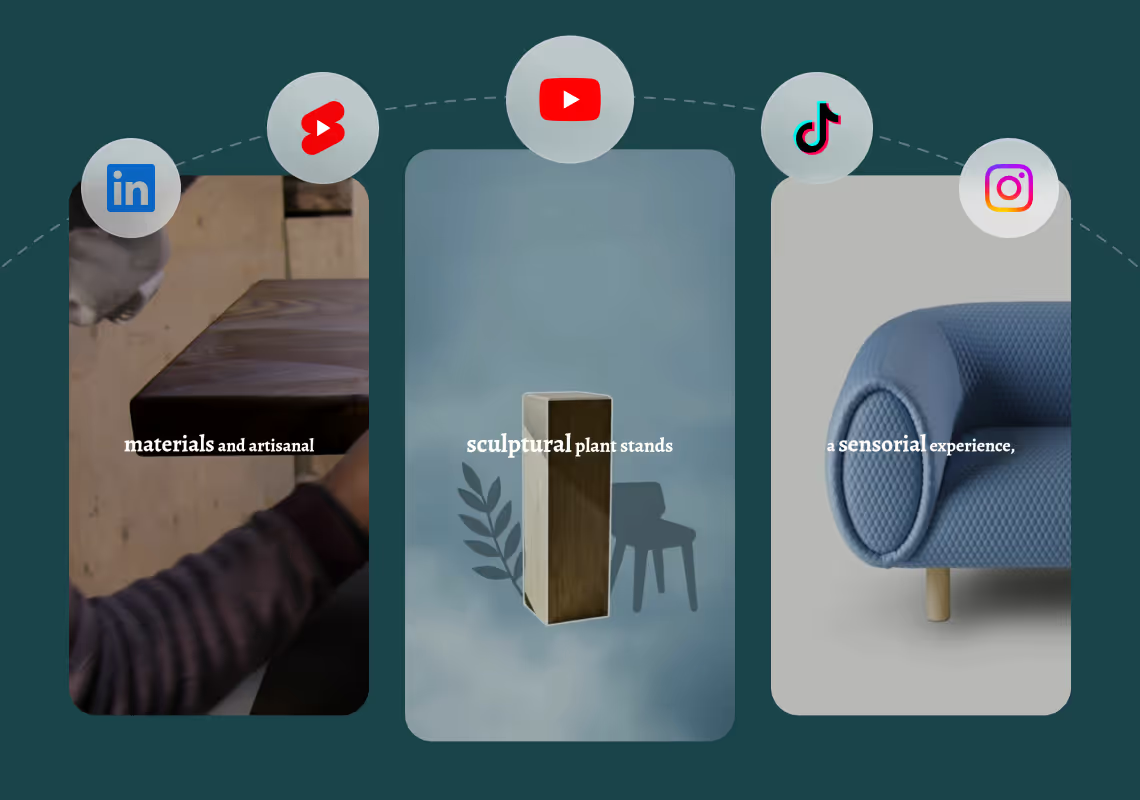
4Generate and publish-ready
Click generate and download your finished promo video in seconds, ready to publish across all platforms.


8 powerful features of Agent Opus' AI Scene Generator
Sequencing multiple scenes
Combine multiple AI-generated scenes to create coherent video stories with smooth transitions.
Dynamic Camera Movements
AI automatically adds cinematic pans, zooms, and tracking shots to bring generated scenes to life.
Instant Scene Variations
Regenerate the same scene concept with different angles, compositions, or visual styles in seconds.
Text to Scene Generation
Describe any setting in words and watch Agent Opus generate fully realized video scenes instantly.
Weather and Time Effects
Generate scenes with rain, fog, sunset, or night conditions to match your creative vision.
Environment Customization
Specify indoor, outdoor, fantasy, or futuristic settings and generate matching video scenes on demand.
Character Scene Integration
Place AI avatars or custom characters directly into generated scenes with natural spatial positioning.
Atmospheric Lighting Control
Generate scenes with precise lighting moods from golden hour warmth to dramatic noir shadows.
Testimonials
wow that's actually great 🔥
irtaza65
I reviewed version a and I was very impressed with this version, it did very well in almost all aspects that users need, you would only have to make very small changes and maybe replace one of 2 of the pictures, but even saying that it could be used as is and still receive decent views or even chances at going viral depending on the story or the content the user chooses.
Jeremy
all in all LOVE THIS agent. I'm curious to see how I can push it (within reason) Just need to learn to get the consistency right with my prompts
Rebecca
Frequently Asked Questions
How does an AI scene generator handle different input types like prompts versus full scripts?
Agent Opus adapts its scene generation process based on the input you provide. When you submit a short prompt or brief, the AI expands your idea into a structured narrative, then builds scenes that match the tone and pacing you describe. It infers visual style, motion graphics complexity, and scene transitions from context clues in your prompt. For example, a prompt like 'explain our SaaS pricing in 60 seconds' triggers a fast-paced, text-heavy scene structure with animated graphics and clear voiceover pacing. If you provide a full script, Agent Opus treats each paragraph or dialogue block as a distinct scene beat. It parses your script for natural scene breaks, matches visuals to the narrative arc, and synchronizes voiceover timing to your written pacing. The AI also respects formatting cues like scene headings or speaker labels if you include them. When you paste a blog URL or article, the system extracts key points, condenses the content into a video-friendly structure, and generates scenes that mirror the article's logical flow. Each scene corresponds to a section or argument in the original text, with visuals sourced to match the topic. Regardless of input type, the AI scene generator maintains consistent visual style, voiceover tone, and motion graphics complexity across all scenes in the final video. You can mix input types too. Start with a brief to generate a draft, then refine specific scenes by adding script details in a follow-up prompt. The system merges your edits into the existing scene structure without rebuilding from scratch. This flexibility lets you control how much creative direction you provide while still getting a complete, publish-ready video.
What are best practices for writing prompts that produce high-quality scenes with an AI scene generator?
Effective prompts for an AI scene generator balance specificity with creative freedom. Start by defining your video's purpose and audience in one sentence. For example, 'Create a 90-second product demo for B2B marketers highlighting our analytics dashboard.' This gives the AI context for tone, pacing, and visual style. Next, outline the key points or story beats you want covered. You don't need a full script, just the main ideas in order. Something like 'Scene 1: problem statement, Scene 2: dashboard walkthrough, Scene 3: results and CTA' helps the AI structure the narrative and allocate time per scene. Specify visual preferences when they matter. If you want your product UI featured prominently, say 'show dashboard screenshots in Scene 2.' If you prefer abstract motion graphics over literal visuals, note 'use animated icons and data visualizations instead of stock footage.' The AI scene generator will prioritize your visual direction while filling gaps with appropriate assets. Describe the voiceover tone and pacing. Phrases like 'energetic and fast-paced' or 'calm and educational' guide the AI's narration style and scene timing. If you're cloning your voice, mention whether you want a conversational or formal delivery. Include brand elements in your prompt. Reference your logo placement, brand colors, or specific product shots you've uploaded. The AI will integrate these assets consistently across scenes. Avoid over-specifying technical details like exact frame counts or transition types. The AI handles those decisions based on best practices for the platform and format you're targeting. Instead, focus on the message, audience, and desired outcome. Test iterative prompts. Generate a draft, review the scenes, then refine with a follow-up prompt like 'make Scene 2 more visual and less text-heavy' or 'add a customer testimonial in Scene 3.' The AI scene generator adapts without rebuilding the entire video.
Can an AI scene generator maintain consistent branding, voices, and visual style across multiple videos?
Yes, Agent Opus is built for brand consistency across all your AI-generated scenes and videos. The system stores your brand assets, voice profile, and visual preferences so every video you create maintains the same look, sound, and feel. Start by uploading your brand kit during setup. This includes your logo, product images, brand colors, and any custom fonts or graphic elements you use regularly. Once uploaded, the AI scene generator automatically integrates these assets into every video. Your logo appears in consistent positions, your product shots are prioritized when relevant, and motion graphics use your brand color palette. Voice consistency works through cloning. Record a short voice sample once, and Agent Opus clones your voice for all future videos. The AI matches your tone, pacing, and delivery style across scenes and projects. If you're using AI voices instead, you can select a default voice profile that becomes your brand's voice. Every video generated after that uses the same voice unless you specify otherwise. Visual style consistency comes from the AI learning your preferences over time. If you consistently choose minimalist motion graphics, the system prioritizes that style in future scene generation. If you prefer live-action stock footage over illustrations, the AI adapts its sourcing strategy. You can also set style templates. Define a 'product demo' template with specific scene structures, visual treatments, and pacing rules. When you generate a new product video, reference that template in your prompt, and the AI scene generator applies those rules automatically. For teams, Agent Opus supports shared brand profiles. Everyone on your team generates videos using the same assets, voice, and style guidelines. This eliminates the inconsistency that comes from multiple creators working independently. You can update brand assets anytime. Upload a new logo or refresh your color palette, and all future videos reflect the change. Past videos remain unchanged unless you regenerate them with the updated assets. The AI scene generator also maintains narrative consistency. If you're creating a video series, the system can reference previous videos to match tone, pacing, and visual callbacks. This makes serialized content feel cohesive without manual coordination.
What are the limitations or edge cases when using an AI scene generator for complex video projects?
Agent Opus handles most video generation tasks end-to-end, but understanding its boundaries helps you plan projects effectively. The AI scene generator excels at narrative-driven videos with clear structure, like explainers, product demos, tutorials, and social content. It struggles with highly abstract or experimental visual concepts that lack clear narrative logic. If your vision requires surreal imagery or non-linear storytelling, you may need to provide more detailed visual direction or accept that the AI will interpret your prompt literally. Scene length and complexity have practical limits. The system generates videos up to several minutes long, but extremely long-form content like 20-minute webinars may require breaking the project into segments. Each segment can be generated separately with consistent branding, then combined if needed. Very short scenes under three seconds can feel rushed because the AI needs time to establish visuals and sync voiceover. If you need rapid-fire cuts, consider grouping related ideas into slightly longer scenes. The AI sources royalty-free and stock assets automatically, but highly specific or niche visuals may not always be available. If you need footage of a rare product, unique location, or proprietary process, upload those assets yourself. The AI scene generator will prioritize your uploads over generic stock footage. Voice cloning works best with clear, high-quality audio samples. Background noise, heavy accents, or inconsistent recording conditions can affect clone accuracy. If your cloned voice sounds off, re-record your sample in a quiet space with consistent microphone distance. AI avatars are effective for talking-head scenes but don't replicate complex human expressions or body language. If your video requires nuanced emotional delivery or physical demonstrations, consider using your own video avatar or focusing on voiceover with motion graphics instead. The system generates social-ready outputs, but platform-specific features like interactive polls, clickable links, or live captions require post-generation additions through the platform itself. Agent Opus delivers the video file ready to upload, not platform-native interactive elements. Brand asset integration assumes you've uploaded the files. If you reference a logo or product shot in your prompt but haven't uploaded it, the AI will generate a placeholder or skip that element. Always upload key assets before generating scenes that depend on them.