AI Storyboard Generator
Transform scripts, outlines, and prompts into complete video storyboards in minutes. Agent Opus AI storyboard generator builds scene-by-scene visuals with motion graphics, voiceover, and dynamic pacing. No manual layout, no stock hunting, no timeline editing. Describe your concept or paste your script, and get a publish-ready video storyboard that maps every beat of your story with AI-generated visuals, transitions, and audio. Perfect for pitch decks, client previews, social campaigns, and production planning.

Explore what's possible with Agent Opus

Reasons why creators love Agent Opus' AI Storyboard Generator
Ship in Minutes, Not Hours
Generate a publish-ready video in under 10 minutes from a single prompt — no timeline editing, no asset hunting, no creative dry spells.
Zero Editing Skills Required
Describe your concept and Agent Opus handles scene composition, motion graphics, voiceover, and platform formatting automatically — even if you've never opened a video editor.
Studio-Grade Output
Cinematic motion graphics, beat-synced cuts, professional voiceover, and precise typography — every video ships looking production-quality from the first generation.
Stays On-Brand
Upload your logo, fonts, and color palette once. Agent Opus applies them across every video automatically so your content stays visually consistent.
How to use Agent Opus’ AI Storyboard Generator
 1
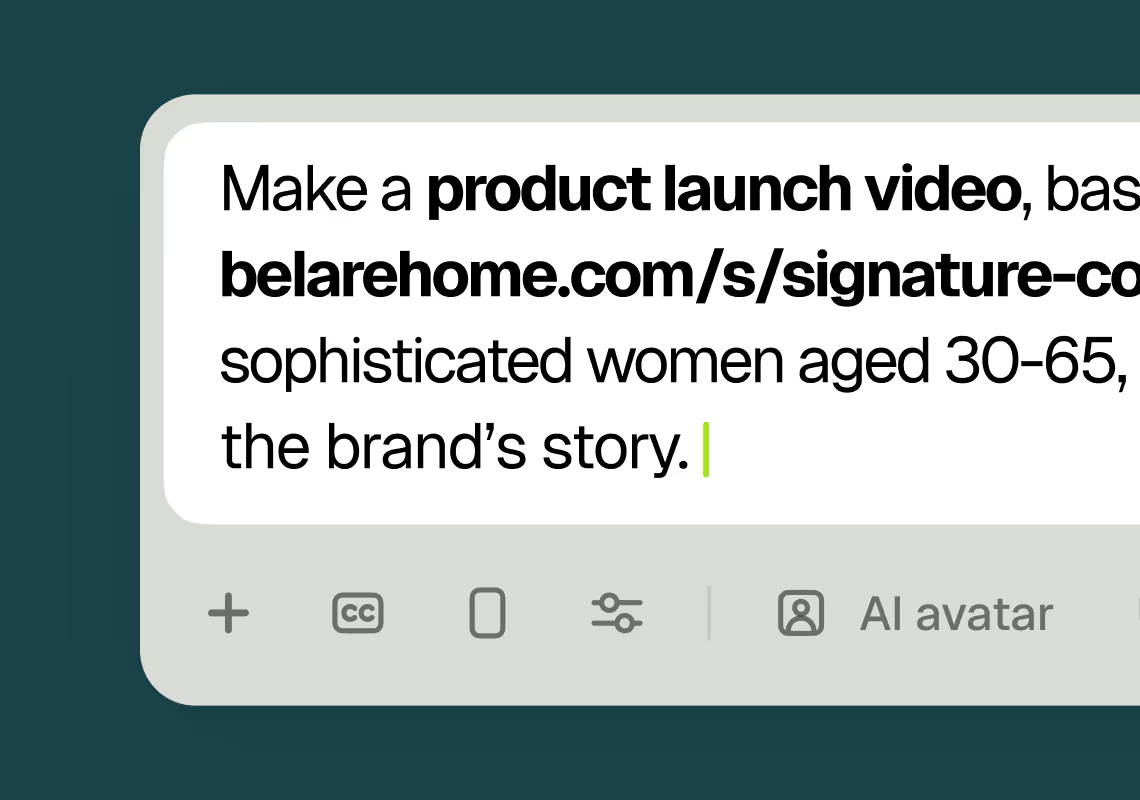
1Describe your video
Paste your promo brief, script, outline, or blog URL into Agent Opus.
 2
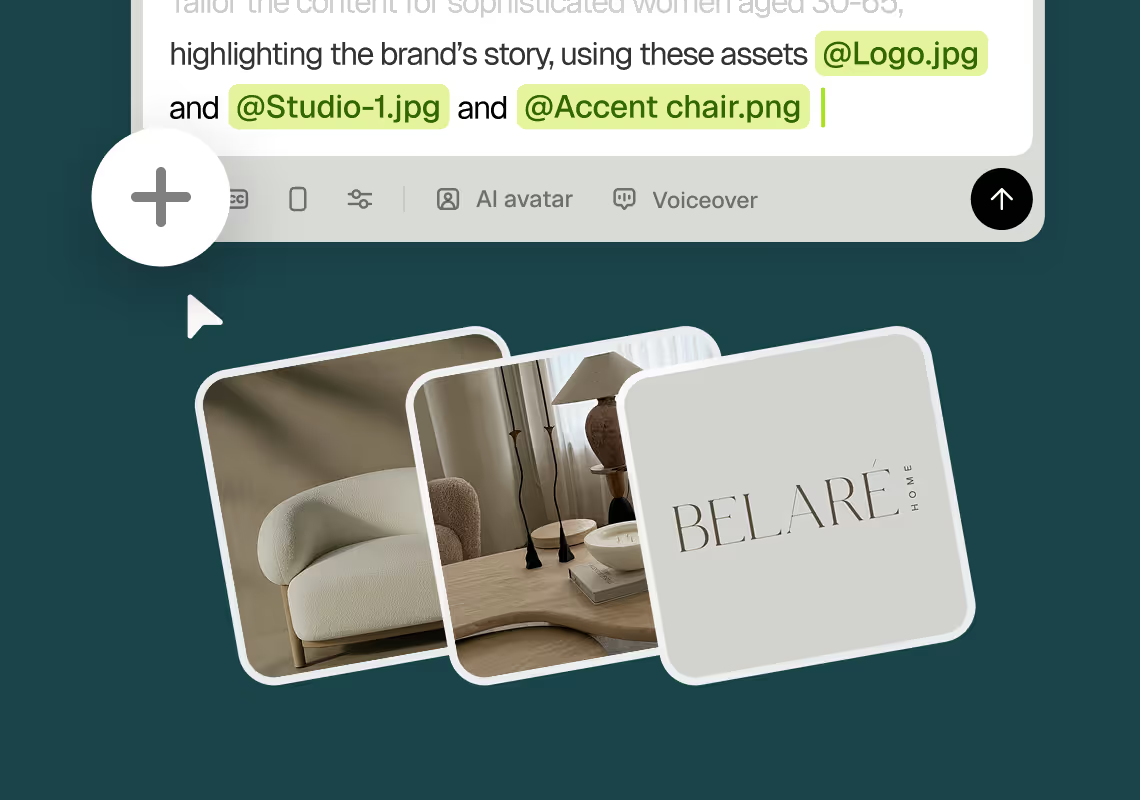
2Add assets and sources
Upload brand assets like logos and product images, or let the AI source stock visuals automatically.
 3
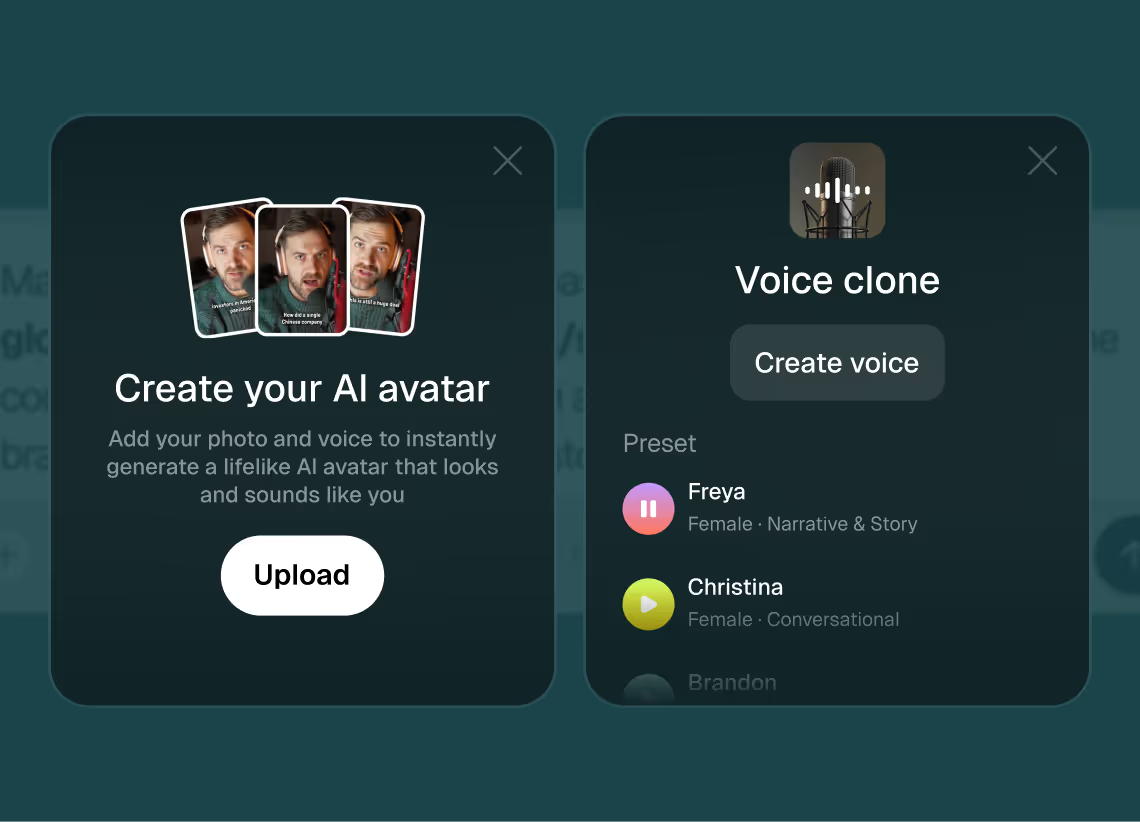
3Choose voice and avatar
Choose voice (clone yours or pick an AI voice) and avatar style (user or AI).
 4
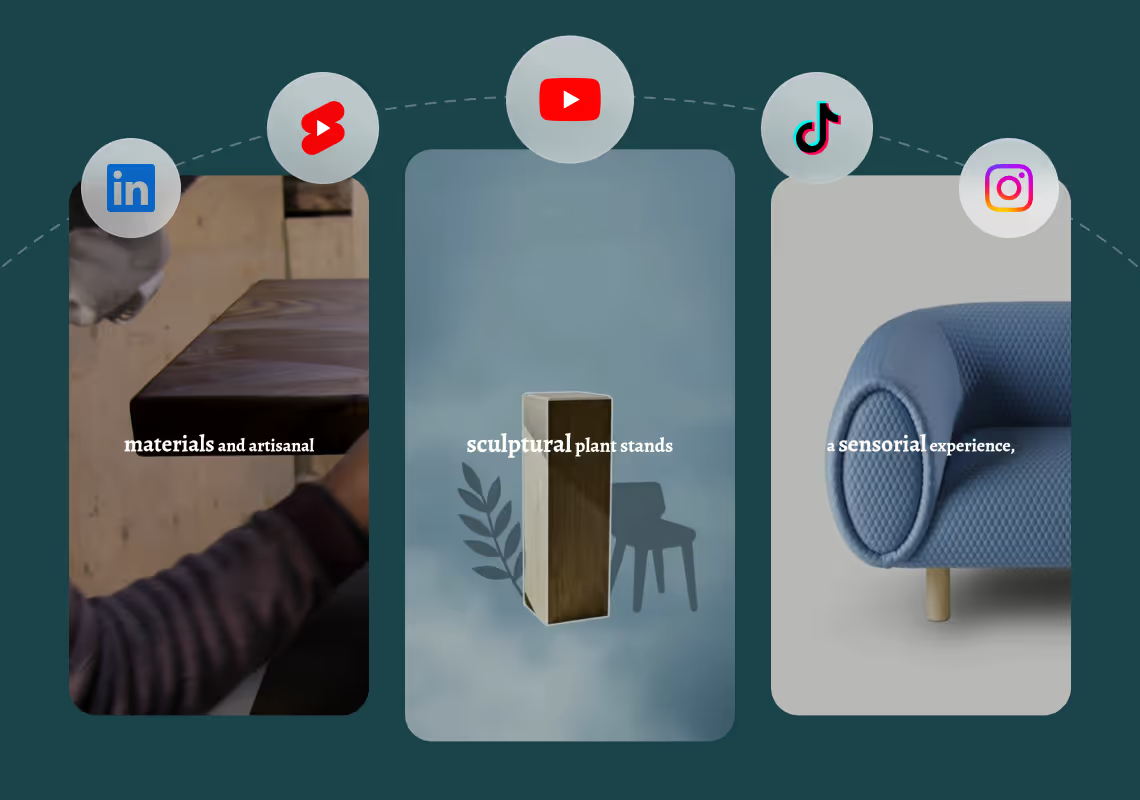
4Generate and publish-ready
Click generate and download your finished promo video in seconds, ready to publish across all platforms.


8 powerful features of Agent Opus' AI Storyboard Generator
Prompt-to-Video Generation
Turn a one-line idea into a finished video. The agent handles structure, pacing, B-roll selection, and final assembly automatically.
Script and Outline Support
Paste a full script, drop in an outline with section headers, or supply a blog or article URL — Agent Opus reads any of them and builds a video around the content.
AI Voiceover and Voice Cloning
Pick from natural-sounding AI voices in 30+ languages, or clone your own voice once. Every video then ships with your authentic narration.
Beat-Synced Motion Graphics
Dynamic visuals that lock to the beat of your audio or the pacing of your script — kinetic typography, transitions, and effects, no manual keyframing required.
Automatic Captions and Subtitles
Burn-in captions for short-form, soft subtitles for long-form, and multi-language translations — all generated and synced automatically.
Multi-Aspect-Ratio Export
9:16, 1:1, and 16:9 outputs from one job, with intelligent reframing of text, motion graphics, and focal elements for each ratio.
Brand Asset Integration
Upload your logo, watermark, fonts, and color palette. Agent Opus applies them consistently across every video automatically.
Avatar and Talking Head Support
Add an AI avatar, your own video footage, or a synthetic spokesperson to any video — useful for explainers, ads, and personal-brand content.
Testimonials
wow that's actually great 🔥
irtaza65
This looks like a game-changer for us. We're building narrative-driven, visually layered content — and the ability to maintain character and motion consistency across episodes would be huge. If Agent Opus can sync branded motion graphics, tone, and avatar style seamlessly, it could easily become part of our production stack for short-form explainers and long-form investigative visuals.
srtaduck
Awesome output, Most of my students and followers could not catch that it was using Agent Opus. Thank you Opus.
Wealth with Gaurav
Frequently Asked Questions
How does an AI storyboard generator handle complex scripts with multiple scenes and characters?
Agent Opus parses your script to identify scene breaks, character introductions, dialogue beats, and action sequences. The AI storyboard generator maps each narrative beat to a visual scene, selecting images and motion graphics that match the tone and context. For example, if your script describes a product demo followed by a customer testimonial, Agent Opus will generate a scene showing the product in use, then transition to a testimonial-style frame with an avatar or voiceover. You can include stage directions or visual cues in your script (e.g., 'close-up of dashboard,' 'cut to outdoor shot') and the generator will prioritize those references when sourcing visuals. For multi-character narratives, you can specify avatar roles or use AI voices with distinct tones to differentiate speakers. The motion graphics layer adds animated text for character names, location titles, or key dialogue, making it easy to follow complex story arcs. If a scene feels off, refine your prompt with more specific visual direction (e.g., 'warm lighting,' 'urban background,' 'minimalist style') and regenerate that section. The AI storyboard generator learns from your adjustments and applies consistent visual logic across all scenes, so your storyboard maintains narrative coherence from opening to closing frame.
What are best practices for writing prompts that produce high-quality AI storyboards?
Start with a clear narrative structure. Break your concept into distinct scenes or beats, even if you're working from a short prompt rather than a full script. For example, instead of 'make a video about our app,' write 'Scene 1: user frustrated with old tool. Scene 2: discovers our app. Scene 3: completes task easily, smiles.' This gives the AI storyboard generator explicit cues for pacing and visual transitions. Include sensory and emotional details: 'bright, energetic office' or 'calm, focused close-up' help the generator select images and motion graphics that match your intended mood. Specify any must-have visuals like product shots, logos, or specific locations. If you want an avatar, note whether it should be AI-generated or user-based, and describe the presentation style (e.g., 'friendly explainer,' 'professional host'). For voiceover, indicate tone and pacing: 'upbeat, fast-paced narration' versus 'slow, thoughtful voiceover.' If you're generating a storyboard from a blog post or article URL, the AI will extract key points and structure them into scenes automatically, but you can add a supplementary prompt to emphasize certain sections or request a specific visual style. After the first generation, review the storyboard and refine your prompt with targeted adjustments. The more context you provide about audience, platform, and visual references, the closer the first draft will be to your vision.
Can an AI storyboard generator maintain consistent branding and visual style across multiple projects?
Yes. Agent Opus allows you to upload brand assets like logos, color palettes, and product images, which the AI storyboard generator integrates into every scene. Once you've set brand guidelines in your account, the system applies them automatically to motion graphics, text overlays, and visual composition. For example, if your brand uses a specific font and color scheme, those elements will appear in animated titles and callouts throughout the storyboard. You can also define a preferred visual style in your prompts: 'modern, minimalist with bold typography' or 'vibrant, playful with hand-drawn elements.' The generator will prioritize images and motion graphics that align with that aesthetic. For teams managing multiple campaigns, you can save prompt templates that include brand voice, visual style, and structural preferences. This ensures every storyboard generated for a client or product line follows the same creative direction. If you're working with a specific aspect ratio or platform (e.g., vertical for TikTok, square for Instagram), the AI adjusts composition and text placement to fit that format while maintaining brand consistency. Over time, as you refine prompts and regenerate storyboards, the system learns your preferences and delivers more on-brand results with less manual direction. This is especially valuable for agencies and in-house teams producing high volumes of video content across different campaigns and clients.
What are the limitations or edge cases when using an AI storyboard generator for production planning?
Agent Opus excels at generating visual storyboards from text, but it relies on available web and stock imagery, so highly specific or niche visuals (e.g., proprietary product prototypes, custom illustrations) may require you to upload reference images. The AI storyboard generator can incorporate those assets, but it won't create original artwork from scratch. For live-action productions with precise shot lists (e.g., 'low-angle dolly shot through warehouse'), the storyboard will provide a visual approximation using stock footage or images, but it won't replicate exact camera angles or lighting setups. In those cases, use the generated storyboard as a conceptual preview and supplement it with traditional shot planning. Complex animations or 3D renders are represented with motion graphics and dynamic compositing, but if your project requires custom 3D modeling, you'll need to integrate those assets separately. The voiceover and avatar features are excellent for narrative-driven storyboards, but they won't replace on-set direction for actors or detailed performance notes. If your script includes rapid scene changes or abstract concepts (e.g., 'visualize the feeling of innovation'), provide concrete visual metaphors in your prompt (e.g., 'light bulb turning on,' 'hands assembling puzzle pieces') to guide the generator. Finally, while the AI handles pacing and transitions automatically, you may want to adjust timing for specific beats, especially in high-stakes pitch decks or client presentations. The storyboard is designed to be a working draft that communicates your vision quickly; treat it as a foundation for further refinement rather than a final production blueprint.