AI Storytelling Video Maker
Transform your narrative into a finished video in minutes. Agent Opus is an AI storytelling video maker that turns prompts, scripts, outlines, or blog URLs into complete, publish-ready videos. No timeline. No manual editing. Just describe your story, and Agent Opus assembles scenes, sources visuals, adds motion graphics, generates voiceover, and delivers social-ready videos. Whether you're sharing brand stories, educational content, or creative narratives, this AI storytelling video maker handles every production step automatically. Your story becomes a video the moment you hit generate.

Explore what's possible with Agent Opus

Reasons why creators love Agent Opus' AI Storytelling Video Maker
Captivate Without a Camera
Turn ideas into compelling visual narratives without filming a single frame or hiring a production crew.
Launch-Ready in Minutes
Go from concept to polished story faster than traditional production timelines, keeping your audience engaged and growing.
Professional Polish, Creator Budget
Deliver studio-quality storytelling videos without the five-figure price tag or months of post-production.
Stories That Scale
Produce consistent, high-quality storytelling content across campaigns without burning out your creative team.
Authentic Voice, Zero Recording
Maintain your unique narrative style and tone in every video without stepping in front of a microphone.
Emotion That Converts
Craft narratives that resonate deeply with viewers, turning passive scrollers into loyal followers and customers.
How to use Agent Opus’ AI Storytelling Video Maker
 1
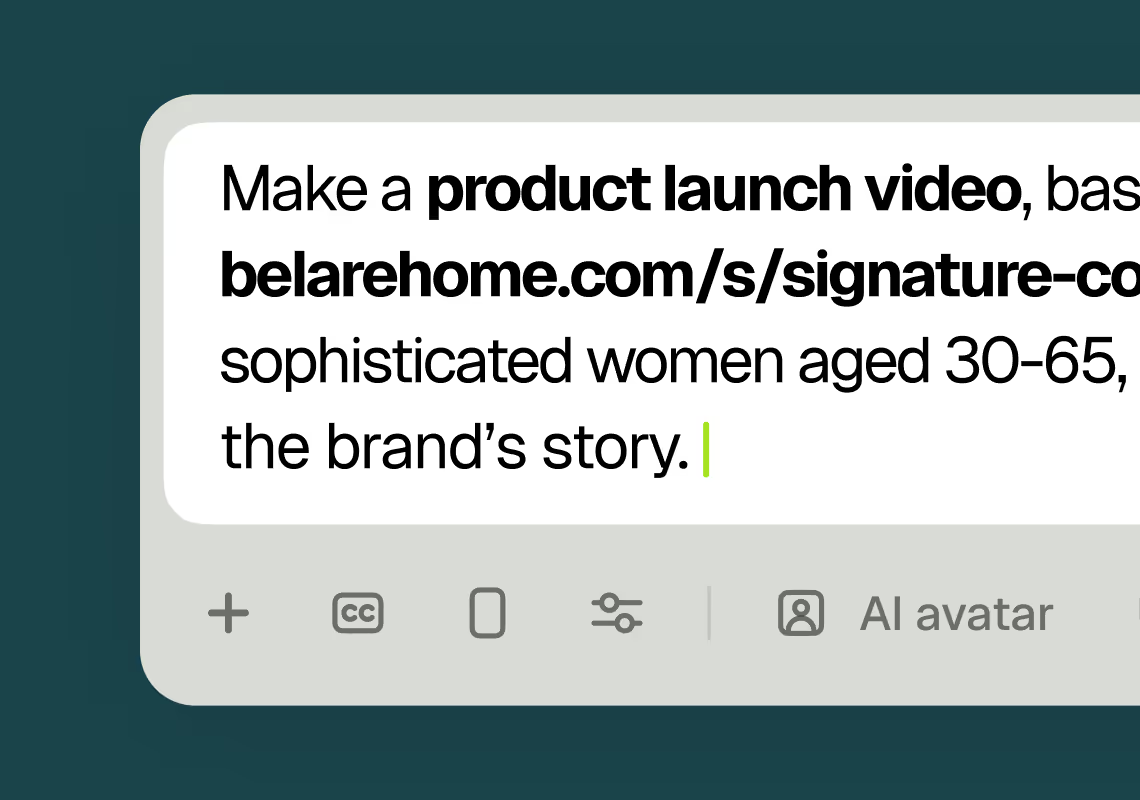
1Describe your video
Paste your promo brief, script, outline, or blog URL into Agent Opus.
 2
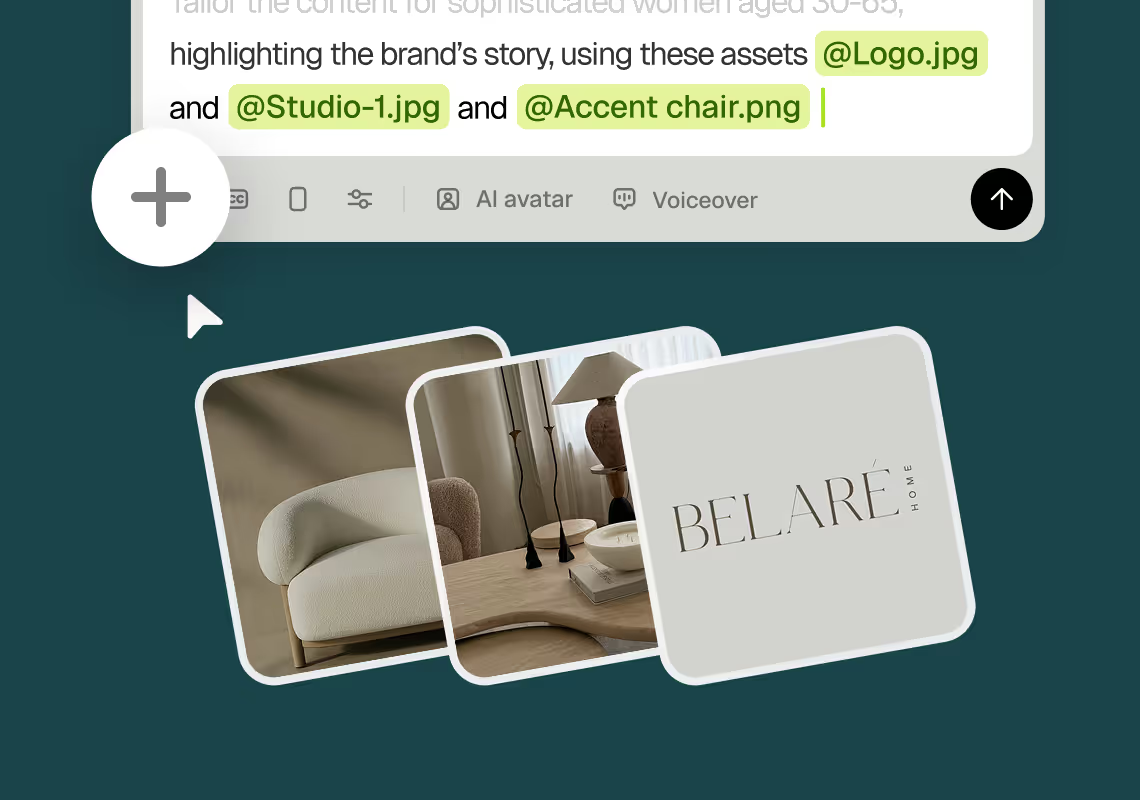
2Add assets and sources
Upload brand assets like logos and product images, or let the AI source stock visuals automatically.
 3
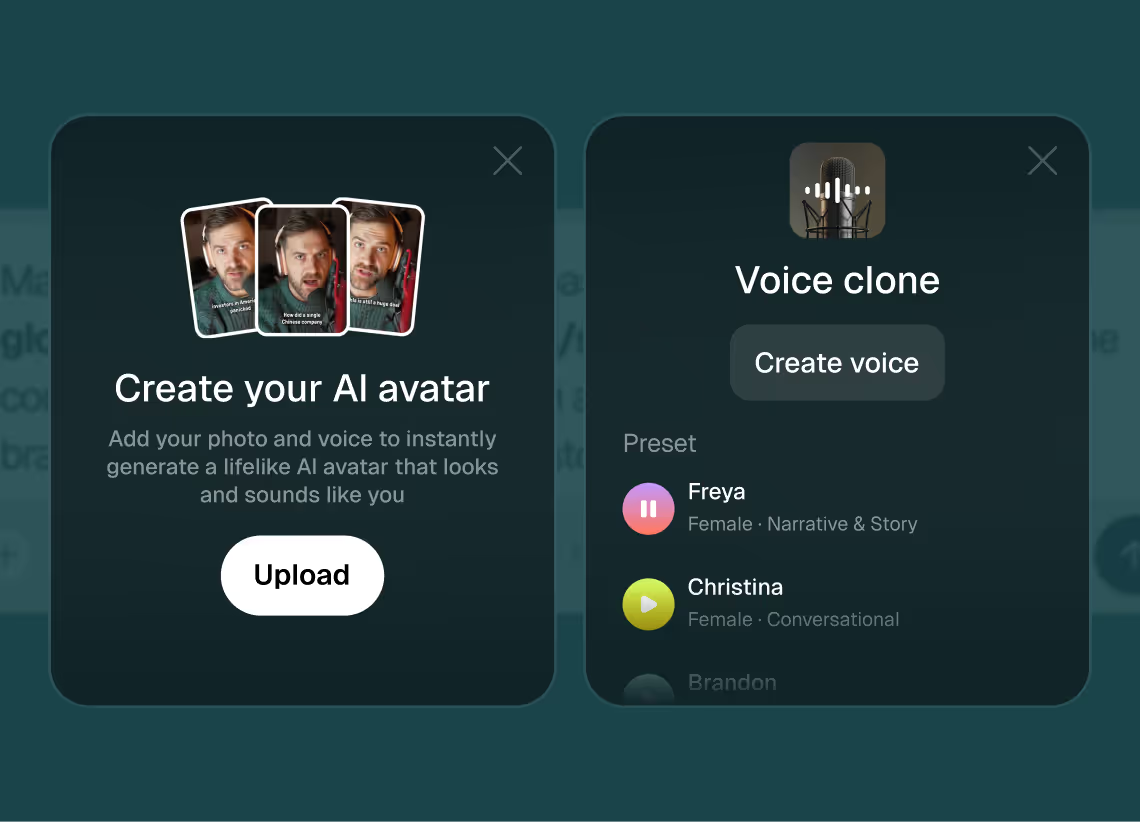
3Choose voice and avatar
Choose voice (clone yours or pick an AI voice) and avatar style (user or AI).
 4
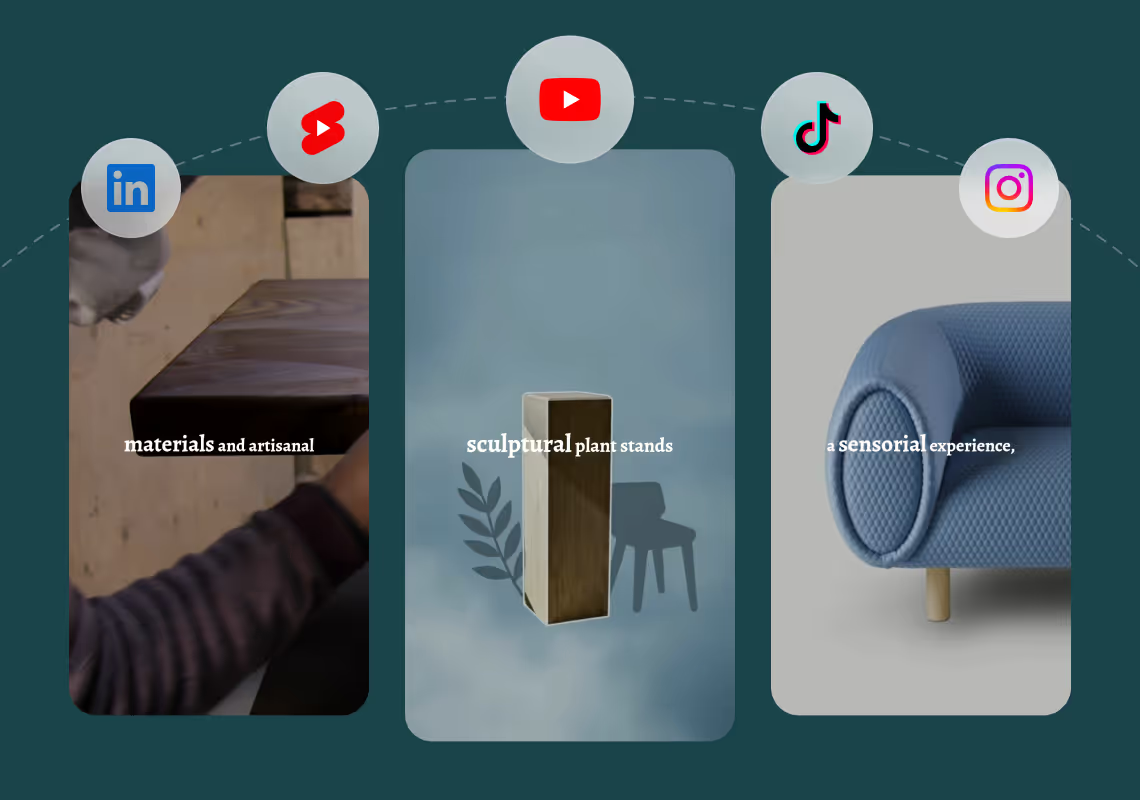
4Generate and publish-ready
Click generate and download your finished promo video in seconds, ready to publish across all platforms.


8 powerful features of Agent Opus' AI Storytelling Video Maker
Narrative Pacing Control
Adjust scene duration and transition timing to match dramatic beats and emotional story rhythms.
Voiceover Narration Sync
Automatically pair AI-generated voiceovers with corresponding visual storytelling moments for seamless narrative flow.
Multi-Chapter Story Builder
Generate episodic video content from chapter outlines, keeping visual style and plot threads connected throughout.
Genre-Specific Templates
Choose from fantasy, thriller, romance, or sci-fi presets that shape visual aesthetics to match storytelling conventions.
Mood-Based Visual Styling
Apply cinematic color grading and lighting that reflects your story's emotional tone in every frame.
Script to Scene Generation
Transform written narratives into fully visualized video scenes with automated character placement and environment design.
Plot Point Visualization
Convert key story moments into dynamic video sequences that highlight conflict, resolution, and character development.
Character Consistency Engine
Maintain the same protagonist appearance and personality traits across every scene in your story arc.
Testimonials
Frequently Asked Questions
How does an AI storytelling video maker handle different narrative structures and pacing?
Agent Opus analyzes your input—whether it's a prompt, script, outline, or blog URL—and automatically structures the video to match your narrative arc. If you provide a three-act script, the system identifies setup, conflict, and resolution beats, then assembles scenes with appropriate pacing and transitions. For outlines, it expands each bullet point into a visual scene with supporting imagery and motion graphics. The AI storytelling video maker applies dynamic pacing rules: faster cuts for action or tension, slower transitions for emotional moments or explanations. You can guide pacing through your prompt by specifying tone (urgent, reflective, inspirational) or scene length preferences. The system also adapts visual density—complex ideas get more visual support, while simple statements remain clean. Motion graphics and text overlays emphasize key story beats automatically. If your narrative includes dialogue, the AI synchronizes voiceover timing with on-screen visuals. For educational storytelling, the system layers explanatory graphics over narration. For brand stories, it integrates logos and product shots at natural story moments. The result is a video that feels intentionally directed, not randomly assembled. Every scene transition, visual choice, and pacing decision serves the narrative structure you provided, creating a cohesive storytelling experience without manual timeline editing.
What types of visuals does the AI storytelling video maker source, and can I control brand consistency?
Agent Opus sources visuals from three primary pools: royalty-free stock libraries, web-scraped images, and your uploaded brand assets. When you describe a story element—like a product launch, customer journey, or abstract concept—the system searches for relevant imagery that matches the narrative context. For brand storytelling, you upload logos, product photos, team headshots, or custom graphics, and the AI storytelling video maker prioritizes those assets throughout the video. You can specify visual style in your prompt: minimalist, cinematic, vibrant, corporate, or hand-drawn aesthetics. The system applies consistent color grading and motion graphic styles across all scenes to maintain visual coherence. If your brand uses specific colors or fonts, include those details in your prompt or upload a style guide, and the AI adapts text overlays and graphic elements accordingly. For abstract storytelling—like explaining values or emotions—the system selects metaphorical imagery (sunrise for new beginnings, bridges for connection) and applies motion graphics to reinforce meaning. You can also request specific visual treatments: split-screen comparisons, before-and-after sequences, or animated infographics. The AI storytelling video maker balances visual variety with brand consistency, ensuring every scene feels part of a unified narrative while avoiding repetitive imagery. If you're unhappy with a visual choice, regenerate the video with more specific prompt guidance, and the system adjusts its sourcing priorities.
How do voice cloning and AI narration work in storytelling videos, and which should I choose?
Agent Opus offers two narration paths: voice cloning and AI voices. Voice cloning captures your unique vocal tone, pacing, and inflection by analyzing a short audio sample you provide. The AI storytelling video maker then generates narration in your cloned voice, making brand stories, founder narratives, or personal storytelling feel authentic. This works best when you want viewers to connect the story directly to you or your brand identity. Upload a 30-second to 2-minute sample of clear speech, and the system trains a voice model that handles your entire script. AI voices, by contrast, offer professional narration without recording. Choose from dozens of voices across genders, accents, ages, and tones—authoritative for corporate stories, warm for customer testimonials, energetic for product launches. You can specify narration style in your prompt: conversational, dramatic, instructional, or inspirational. The AI storytelling video maker adjusts pacing, emphasis, and emotional tone to match your narrative structure. For educational storytelling, AI voices deliver clear, measured narration. For emotional brand stories, they add warmth and pauses for impact. Both options synchronize perfectly with on-screen visuals and motion graphics. If your story includes multiple characters or perspectives, you can assign different AI voices to each narrative thread. Voice cloning is ideal for personal branding and authenticity; AI voices excel when you need professional narration without recording equipment or when testing multiple narrative styles quickly.
Can the AI storytelling video maker handle complex narratives with multiple story threads or timelines?
Yes. Agent Opus manages multi-threaded narratives by analyzing your script or outline structure and assembling scenes that reflect parallel or interwoven story arcs. If your script includes flashbacks, multiple character perspectives, or before-and-after comparisons, describe those transitions clearly in your prompt or use section headers in your outline. The AI storytelling video maker applies visual cues—color grading shifts, transition styles, or text overlays—to signal timeline changes or perspective switches. For example, a customer success story might alternate between the customer's challenge (desaturated visuals, slower pacing) and the solution (vibrant colors, dynamic motion graphics). The system maintains narrative coherence by tracking which story thread is active and selecting visuals that reinforce context. For educational content with multiple concepts, the AI structures each idea as a distinct chapter with its own visual style, then ties them together with recurring branding or thematic graphics. You can also request specific storytelling techniques in your prompt: parallel editing, chronological vs non-linear structure, or cause-and-effect sequences. The AI storytelling video maker adapts scene length and transition timing to match narrative complexity—simpler stories get faster pacing, while layered narratives allow more time for each thread to develop. If you're telling a brand origin story with founder interviews, product evolution, and customer impact, the system weaves those elements into a cohesive arc without manual scene arrangement. The result is a video that handles narrative complexity while remaining easy to follow.