AI Text to Video Generator
Agent Opus transforms any text into a complete, publish-ready video. Describe what you want, paste a script, share an outline, or drop in a blog URL. Agent Opus handles scene assembly, AI motion graphics, voiceover, avatar placement, and social formatting automatically. No timeline. No trimming. No manual editing. Just prompt to video in minutes. Built for creators, marketers, and founders who need professional AI text to video output without the production overhead.

Explore what's possible with Agent Opus

Reasons why creators love Agent Opus' AI Text to Video Generator
Ship in Minutes, Not Hours
Generate a publish-ready video in under 10 minutes from a single prompt — no timeline editing, no asset hunting, no creative dry spells.
Zero Editing Skills Required
Describe your concept and Agent Opus handles scene composition, motion graphics, voiceover, and platform formatting automatically — even if you've never opened a video editor.
Studio-Grade Output
Cinematic motion graphics, beat-synced cuts, professional voiceover, and precise typography — every video ships looking production-quality from the first generation.
Stays On-Brand
Upload your logo, fonts, and color palette once. Agent Opus applies them across every video automatically so your content stays visually consistent.
How to use Agent Opus’ AI Text to Video Generator
 1
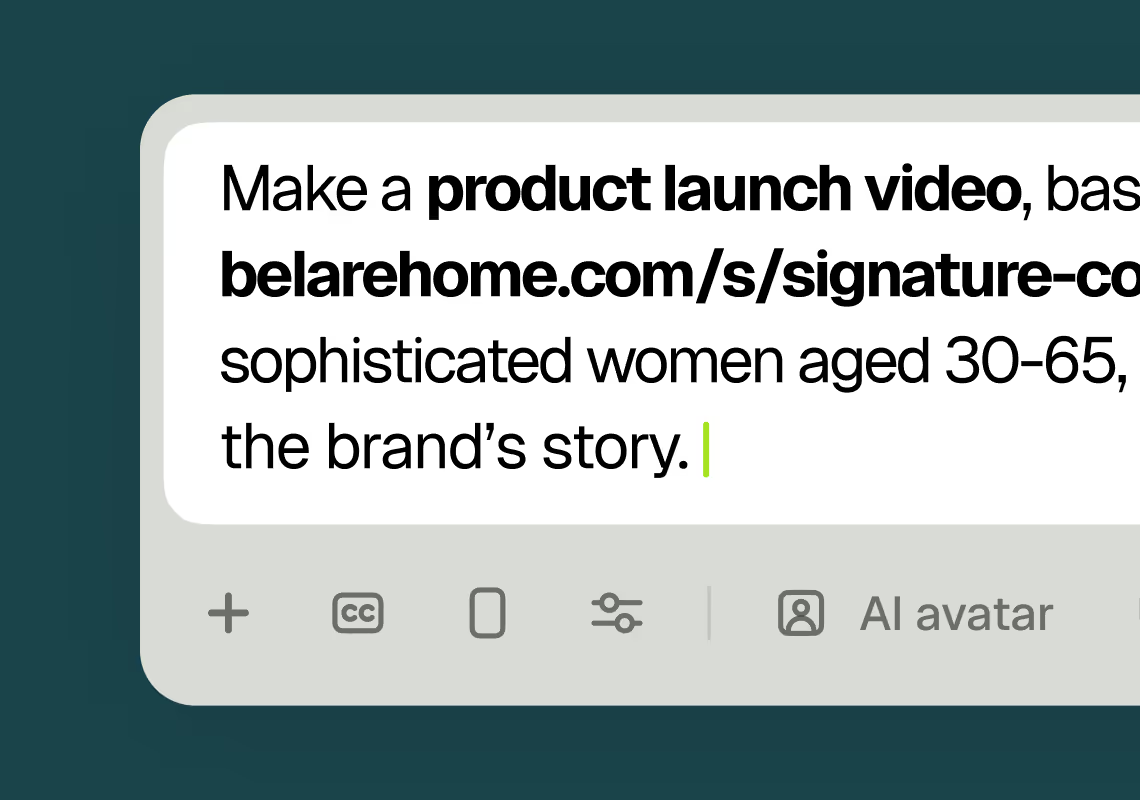
1Describe your video
Paste your promo brief, script, outline, or blog URL into Agent Opus.
 2
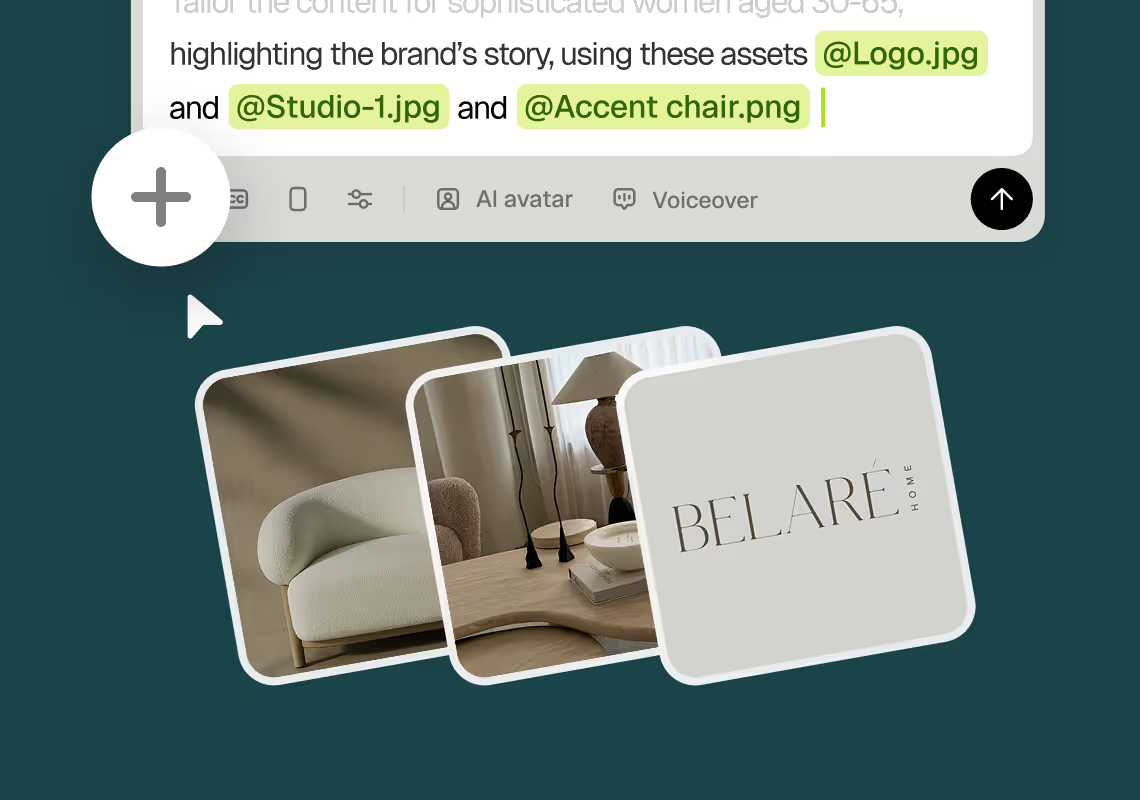
2Add assets and sources
Upload brand assets like logos and product images, or let the AI source stock visuals automatically.
 3
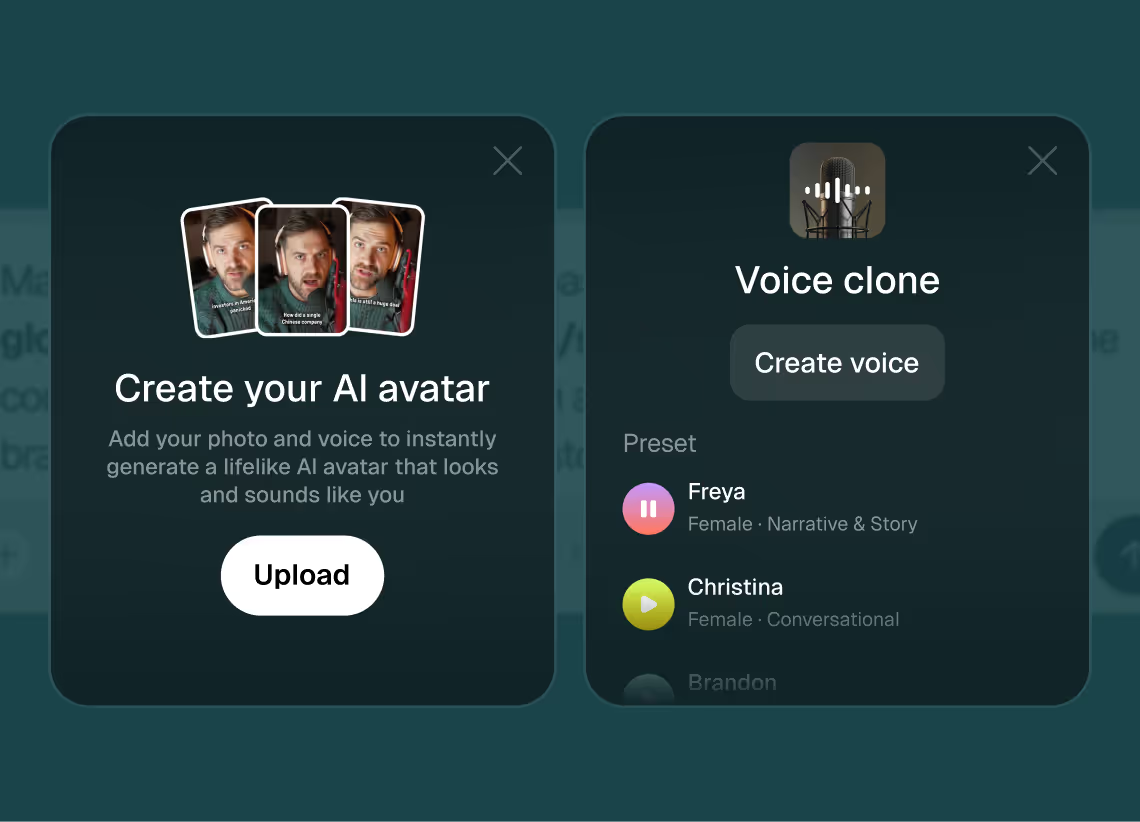
3Choose voice and avatar
Choose voice (clone yours or pick an AI voice) and avatar style (user or AI).
 4
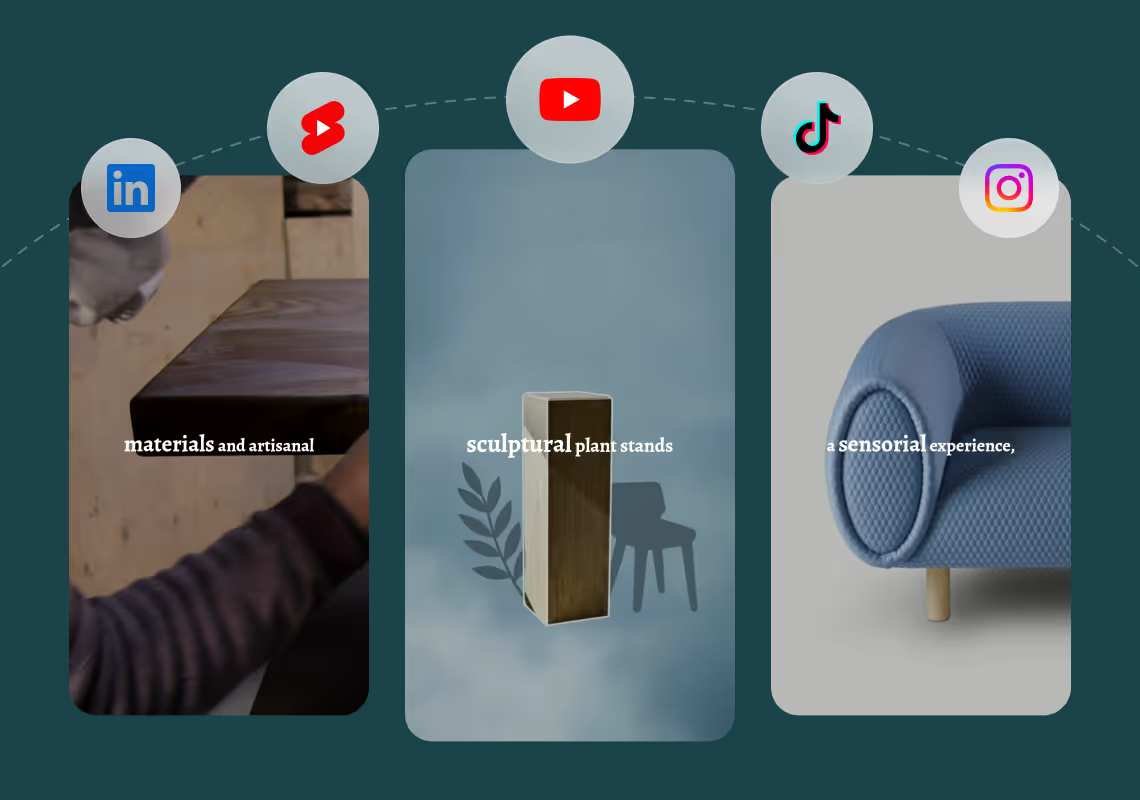
4Generate and publish-ready
Click generate and download your finished promo video in seconds, ready to publish across all platforms.


8 powerful features of Agent Opus' AI Text to Video Generator
Prompt-to-Video Generation
Turn a one-line idea into a finished video. The agent handles structure, pacing, B-roll selection, and final assembly automatically.
Script and Outline Support
Paste a full script, drop in an outline with section headers, or supply a blog or article URL — Agent Opus reads any of them and builds a video around the content.
AI Voiceover and Voice Cloning
Pick from natural-sounding AI voices in 30+ languages, or clone your own voice once. Every video then ships with your authentic narration.
Beat-Synced Motion Graphics
Dynamic visuals that lock to the beat of your audio or the pacing of your script — kinetic typography, transitions, and effects, no manual keyframing required.
Automatic Captions and Subtitles
Burn-in captions for short-form, soft subtitles for long-form, and multi-language translations — all generated and synced automatically.
Multi-Aspect-Ratio Export
9:16, 1:1, and 16:9 outputs from one job, with intelligent reframing of text, motion graphics, and focal elements for each ratio.
Brand Asset Integration
Upload your logo, watermark, fonts, and color palette. Agent Opus applies them consistently across every video automatically.
Avatar and Talking Head Support
Add an AI avatar, your own video footage, or a synthetic spokesperson to any video — useful for explainers, ads, and personal-brand content.
Testimonials
Awesome output, Most of my students and followers could not catch that it was using Agent Opus. Thank you Opus.
Wealth with Gaurav
I reviewed version a and I was very impressed with this version, it did very well in almost all aspects that users need, you would only have to make very small changes and maybe replace one of 2 of the pictures, but even saying that it could be used as is and still receive decent views or even chances at going viral depending on the story or the content the user chooses.
Jeremy
This looks like a game-changer for us. We're building narrative-driven, visually layered content — and the ability to maintain character and motion consistency across episodes would be huge. If Agent Opus can sync branded motion graphics, tone, and avatar style seamlessly, it could easily become part of our production stack for short-form explainers and long-form investigative visuals.
srtaduck
Frequently Asked Questions
How does AI text to video generation work with different input types?
Agent Opus accepts four input formats for AI text to video creation, each optimized for different workflows. First, you can write a simple prompt or brief describing the video concept, target audience, key message, and desired tone. Agent Opus interprets that brief and generates a complete video structure, sourcing visuals and pacing scenes to match your intent. Second, you can paste a full script with dialogue, narration, or talking points. Agent Opus parses the script, assigns voiceover timing, and builds scenes around each narrative beat. Third, you can provide an outline with bullet points or section headers. Agent Opus expands that outline into a coherent video narrative, filling gaps with contextually relevant visuals and transitions. Fourth, you can drop in a blog or article URL. Agent Opus extracts the core message, identifies key points, and transforms the written content into a video format with matching imagery and voiceover. Across all four input types, the AI text to video engine handles scene assembly, motion graphics, voiceover synchronization, and social formatting automatically. You do not need to specify shot lists, transition types, or visual styles unless you want to. Agent Opus infers those details from the text itself, applying best practices for pacing, visual hierarchy, and audience retention. The result is a publish-ready video that reflects your original text without requiring manual editing, timeline work, or asset hunting.
What are best practices for writing prompts in AI text to video tools?
Effective prompts for AI text to video generation balance specificity with creative freedom. Start by defining the video's purpose in one sentence: educate, promote, entertain, or inform. Agent Opus uses that purpose to guide tone, pacing, and visual style. Next, describe your audience. Mention their role, pain points, or interests so the AI can tailor language, imagery, and examples. For instance, a prompt targeting B2B marketers will yield different visuals and messaging than one aimed at fitness enthusiasts. Include the key message or takeaway you want viewers to remember. This anchors the narrative and ensures every scene supports that core idea. If you have a preferred structure, outline it briefly: problem-solution, listicle, story arc, or tutorial format. Agent Opus adapts scene flow to match. Mention any must-have elements like brand colors, product shots, or specific data points. The AI text to video engine prioritizes those assets when sourcing visuals. Specify video length if it matters: 30 seconds for ads, 60 seconds for social, or 90 seconds for explainers. Agent Opus adjusts pacing and scene count accordingly. Avoid over-prescribing visual details unless they are brand-critical. Let the AI handle shot composition, transitions, and motion graphics based on best practices. If you want a specific voice or avatar style, mention it: professional, casual, energetic, or calm. Agent Opus matches voiceover tone and avatar demeanor to your description. Finally, test iteratively. Generate a video, review the output, then refine your prompt with more detail or constraints. Agent Opus learns from your adjustments and improves alignment with each iteration.
Can AI text to video tools maintain brand consistency across multiple videos?
Agent Opus is built for brand consistency in AI text to video workflows. Upload your brand assets once: logo files, product images, color palettes, and font preferences. Agent Opus stores those assets and applies them automatically to every video you generate. When you create a new video from text, the AI prioritizes your uploaded visuals over generic stock imagery. Your logo appears in consistent positions across scenes. Product shots integrate naturally into narrative beats. Brand colors influence background choices, text overlays, and motion graphics accents. Voice consistency is equally important. Clone your voice once using a short audio sample. Agent Opus saves that voice profile and uses it for all future AI text to video projects. Every video sounds like the same presenter, reinforcing brand identity and audience trust. If you prefer a specific AI voice, select it as your default. Agent Opus applies that voice across all scripts, maintaining tonal consistency whether you are generating a product demo, a tutorial, or a promotional video. Avatar consistency works the same way. Upload a video of yourself or a brand spokesperson. Agent Opus extracts the avatar and places it in future videos, matching lighting and framing to each scene. Alternatively, generate an AI avatar once and reuse it across projects. The avatar's appearance, gestures, and expressions remain consistent, creating a recognizable on-screen presence. Beyond assets, Agent Opus learns your content patterns. If you generate multiple videos on related topics, the AI text to video engine identifies recurring themes, messaging frameworks, and visual motifs. It applies those patterns to new videos, ensuring stylistic coherence across your content library. For teams, shared asset libraries and voice profiles mean every team member generates on-brand videos without manual alignment. Agent Opus becomes your brand's video production standard, delivering consistency at scale.
What are the limitations of AI text to video generation for complex projects?
AI text to video tools like Agent Opus excel at structured, narrative-driven content but face constraints with highly specialized or abstract concepts. First, visual specificity has limits. If your text describes a niche technical process, rare historical event, or proprietary product feature, Agent Opus may not find exact matching imagery in stock or web sources. The AI will source the closest visual analogs, but you may need to upload custom assets for precision. Second, creative interpretation varies. Agent Opus infers tone, pacing, and style from your text, but subjective creative choices like humor, irony, or avant-garde aesthetics require explicit prompting. If your vision depends on a specific artistic direction, provide detailed descriptions or reference examples in your prompt. Third, long-form content requires segmentation. Agent Opus handles scripts and outlines up to several minutes of video, but feature-length or documentary-style projects exceed the AI text to video engine's single-generation scope. Break long projects into chapters or segments, generate each separately, then sequence them manually if needed. Fourth, real-time or live-action footage is not generated. Agent Opus assembles videos from existing images, stock clips, and motion graphics. If your concept requires original live filming, custom animation, or interactive elements, those must be produced externally and uploaded as assets. Fifth, highly regulated industries may need compliance review. Agent Opus generates videos based on your text, but it does not verify legal claims, medical accuracy, or financial advice. Review output for regulatory compliance before publishing. Sixth, voiceover and avatar realism improve with quality input. Voice cloning works best with clear, noise-free audio samples. Avatar generation depends on well-lit, stable video uploads. Low-quality inputs yield lower-fidelity outputs. Finally, iterative refinement is part of the process. The first AI text to video generation may not perfectly match your vision. Expect to adjust prompts, swap assets, or regenerate scenes to achieve the exact result you want. Agent Opus accelerates production, but creative alignment still requires human judgment.