AI Timelapse Video Maker
Create stunning timelapse videos from a simple text prompt with Agent Opus. Our AI timelapse video maker transforms your ideas, scripts, or blog posts into polished, publish-ready timelapse content in minutes. No manual editing, no timeline adjustments, just describe your vision and watch it come to life. Perfect for showcasing product development, construction progress, event highlights, or creative transformations. Generate professional timelapse videos with AI motion graphics, dynamic pacing, voiceover, and social-ready formatting. From concept to completed video, Agent Opus handles everything automatically.

Explore what's possible with Agent Opus

Reasons why creators love Agent Opus' AI Timelapse Video Maker
Consistent Quality at Scale
Produce multiple timelapse videos with the same polished look, perfect for series content or client deliverables.
Publish While It's Relevant
Create and share project updates in hours instead of weeks, keeping your audience engaged throughout the journey.
Turn Data Into Drama
Visualize growth charts, construction phases, or seasonal changes as dynamic timelapses that make numbers feel epic.
Perfect Pacing Every Time
Skip the tedious speed adjustments and frame calculations—get professionally timed sequences that hold attention start to finish.
No Camera Crew Required
Generate stunning timelapse sequences without setting up equipment, monitoring footage, or managing gigabytes of raw files.
Months Compressed Into Moments
Transform long-term projects into captivating visual stories that showcase progress your audience can actually watch.
How to use Agent Opus’ AI Timelapse Video Maker
 1
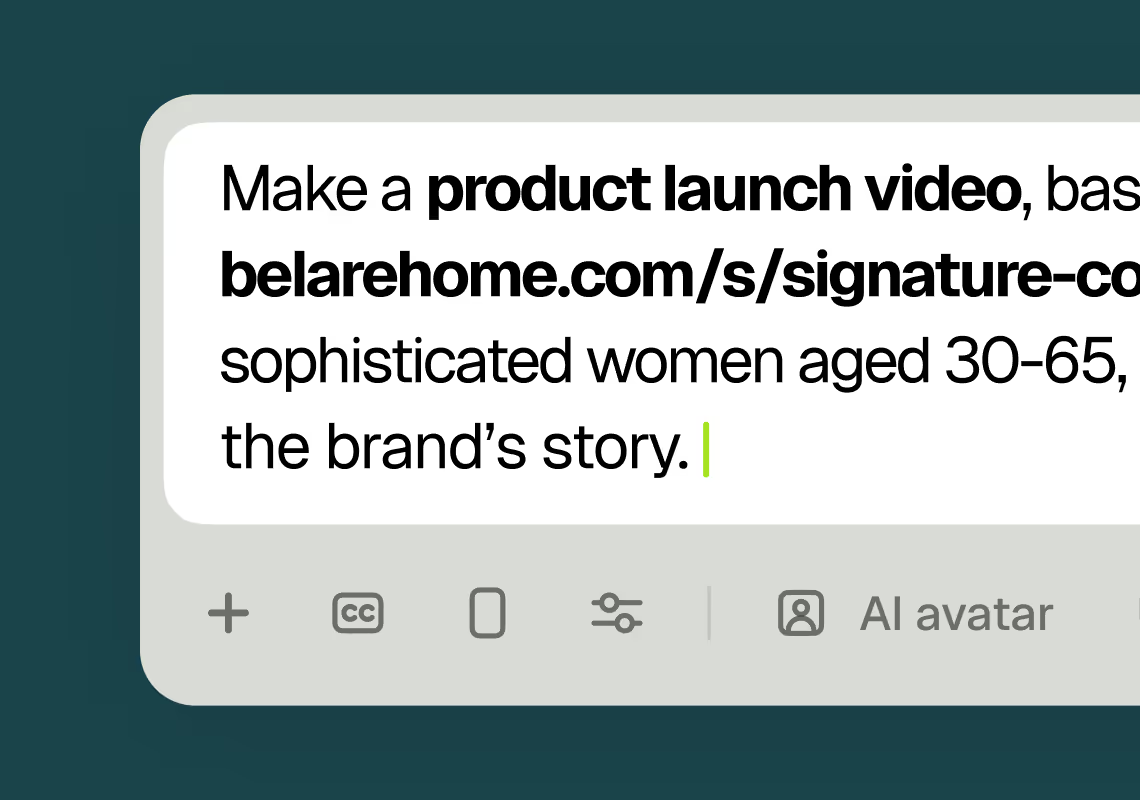
1Describe your video
Paste your promo brief, script, outline, or blog URL into Agent Opus.
 2
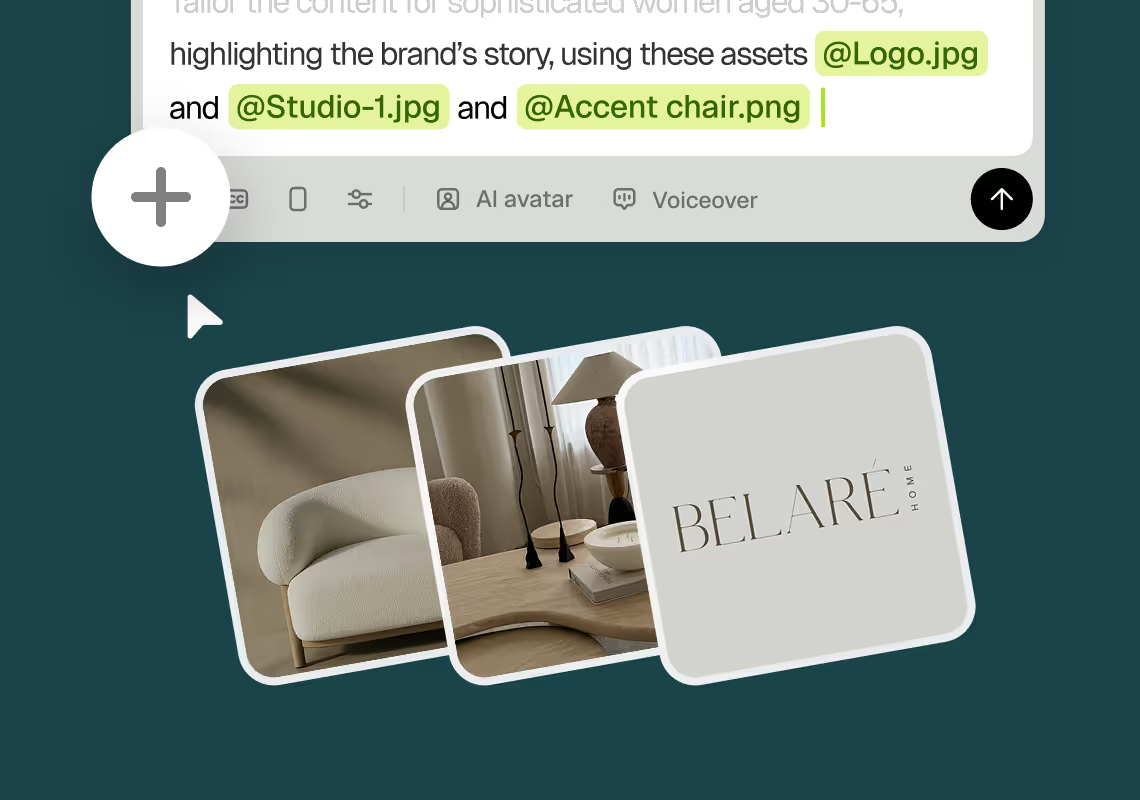
2Add assets and sources
Upload brand assets like logos and product images, or let the AI source stock visuals automatically.
 3
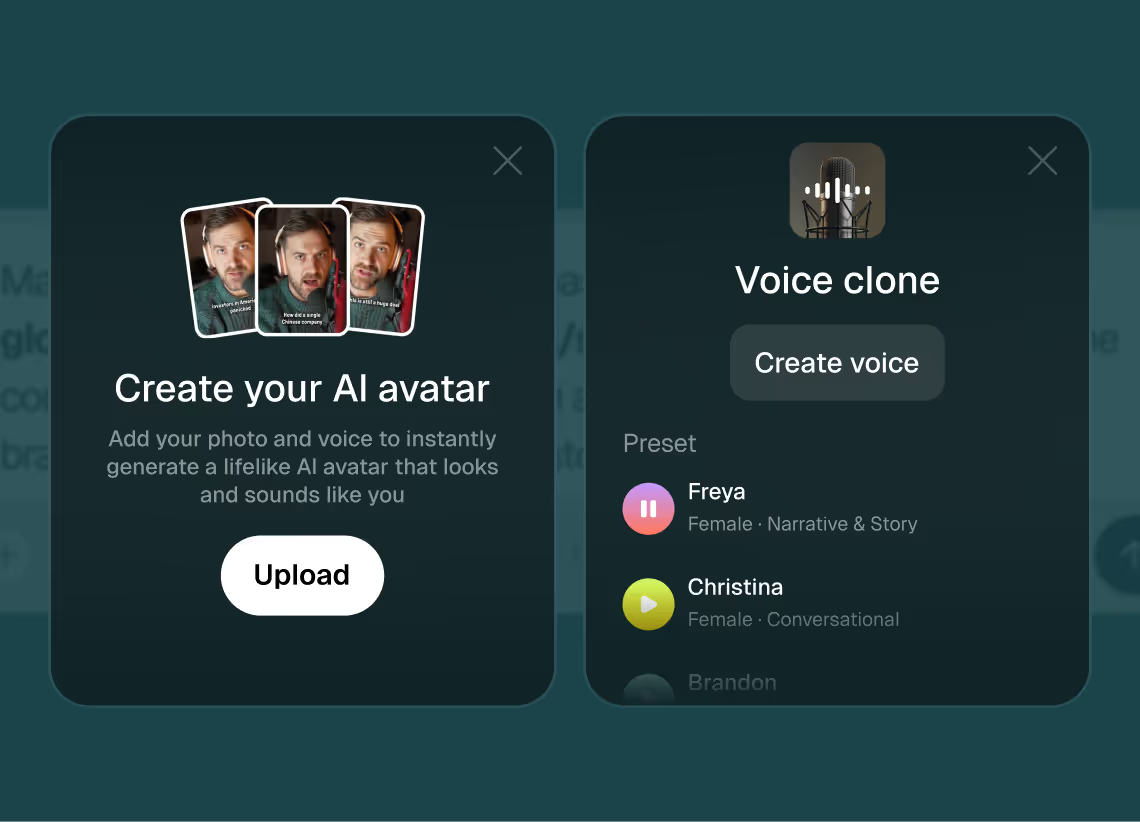
3Choose voice and avatar
Choose voice (clone yours or pick an AI voice) and avatar style (user or AI).
 4
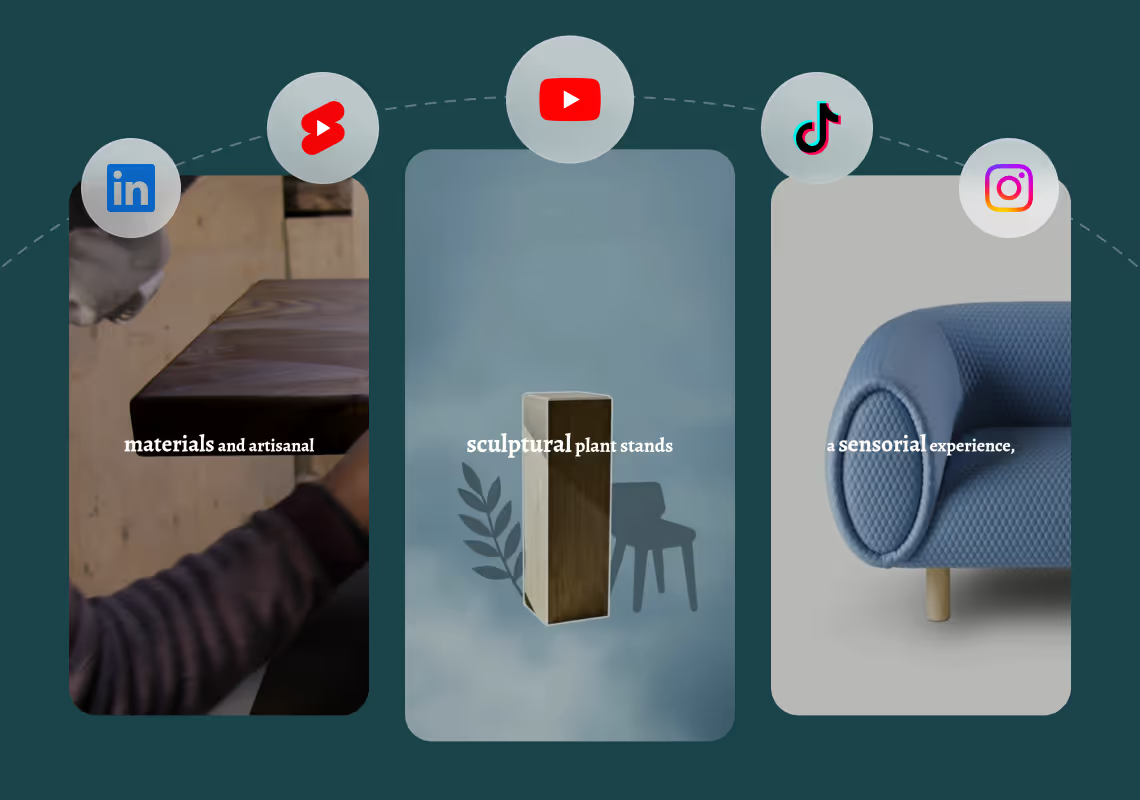
4Generate and publish-ready
Click generate and download your finished promo video in seconds, ready to publish across all platforms.


8 powerful features of Agent Opus' AI Timelapse Video Maker
Scene Progression
Generate smooth transitions between timeframes showing natural evolution from start to finish seamlessly.
Atmospheric Effects
Add weather changes, lighting shifts, and seasonal transformations to enhance your timelapse storytelling.
Soundtrack Sync
AI matches music tempo and intensity to your timelapse rhythm for perfectly synchronized audio-visual experiences.
Motion Graphics Overlay
Layer animated elements and data visualizations onto your timelapse to highlight key moments and changes.
Dynamic Speed Control
AI adjusts pacing automatically to compress hours into seconds while maintaining visual clarity and impact.
Batch Timelapse Creation
Produce multiple timelapse variations from one prompt to test different speeds and visual styles quickly.
Resolution Optimization
Generate crisp 4K timelapse videos optimized for any platform without quality loss or rendering delays.
Text to Timelapse
Describe your vision in words and watch Agent Opus generate a complete timelapse video instantly.
Testimonials
Frequently Asked Questions
How does AI timelapse video maker handle different types of progression stories?
Agent Opus adapts timelapse generation to match your specific progression narrative, whether you're documenting a physical build, illustrating conceptual growth, or showcasing event highlights. When you provide a prompt or script, the AI analyzes the temporal structure of your story and identifies key moments that represent meaningful change. For construction or product development timelapses, Agent Opus sources visuals that show stages of completion, applies motion graphics that emphasize transformation, and paces scenes to create a satisfying sense of forward momentum. For abstract or conceptual timelapses like business growth or skill development, the system selects metaphorical imagery and uses dynamic zoom and transition effects to convey evolution visually. You can guide the AI by specifying milestones in your prompt, such as foundation, framing, finishing for a build, or ideation, prototyping, launch for a product. The motion graphics engine automatically applies timelapse-specific effects like accelerated pacing, smooth crossfades between stages, and visual emphasis on before-and-after contrasts. If you include voiceover narration, Agent Opus synchronizes visual transitions with your script's key points, ensuring the timelapse rhythm matches your storytelling beats. For event-based timelapses, the AI can compress hours into seconds while highlighting peak moments, using your outline or blog post to identify which segments deserve emphasis. The result is a cohesive timelapse video that feels intentionally crafted, not randomly assembled, because the AI understands progression as a narrative structure, not just a visual effect.
What are best practices for prompts when creating timelapse videos with AI?
Effective timelapse prompts for Agent Opus should clearly define the transformation you want to show, the timeframe or stages involved, and the emotional or practical outcome. Start by stating the subject and scope, such as transforming a blank canvas into a finished mural or documenting a startup's first year from idea to launch. Then specify the key stages or milestones you want represented, even if you phrase them conceptually. For example, a product development timelapse might include stages like initial sketches, prototype testing, final design, and market release. The AI uses these markers to structure visual progression and pacing. Include sensory or stylistic guidance to shape the motion graphics and visual tone. Phrases like fast-paced and energetic, smooth and contemplative, or dramatic with bold transitions help the AI choose appropriate zoom speeds, crossfade styles, and visual rhythm. If your timelapse involves real-world assets like logos, product images, or specific locations, mention them explicitly so Agent Opus integrates your brand visuals seamlessly. For voiceover-driven timelapses, provide a script or outline that narrates the transformation, and the AI will synchronize visual changes with your spoken milestones. Avoid vague prompts like make a timelapse video; instead, be specific about what changes and why it matters. If you're working from a blog post or article, ensure it describes a clear before-and-after or multi-stage process, as the AI extracts progression cues from your content structure. You can also specify the intended platform and audience, such as a 30-second Instagram Reel for product launches or a 60-second LinkedIn video for case study storytelling, and Agent Opus will adjust pacing and aspect ratio accordingly. The more context you provide about the transformation's meaning and the audience's expectations, the more intentional and engaging your AI-generated timelapse will be.
Can AI timelapse video maker maintain brand consistency across multiple timelapse videos?
Agent Opus ensures brand consistency in timelapse videos by integrating your logos, color schemes, product imagery, and voice identity into every generation. When you upload brand assets like logo files or product photos, the AI incorporates them naturally into timelapse sequences, placing logos in consistent positions and using your product visuals as focal points during key transformation stages. For example, if you're creating a series of timelapse videos showcasing different product features, Agent Opus can open each video with your branded intro graphic, transition through feature-specific visuals, and close with a consistent call-to-action frame that includes your logo and tagline. The motion graphics engine applies uniform animation styles across videos, so zoom speeds, transition effects, and pacing feel cohesive even when the subject matter varies. Voice consistency is equally important for brand identity. If you use voice cloning, Agent Opus replicates your voice or a designated brand voice across all timelapse narrations, ensuring tonal and stylistic uniformity. You can also select a specific AI voice and reuse it for every timelapse, creating a recognizable audio signature. For visual branding, you can specify color palettes or stylistic preferences in your prompts, such as use bold reds and blacks with high-contrast transitions or keep visuals clean and minimal with soft fades, and the AI will apply those guidelines consistently. If you're generating timelapses from blog posts or scripts that follow a similar structure, Agent Opus recognizes patterns and maintains visual and narrative consistency across outputs. This is especially valuable for content series like weekly progress updates, monthly product showcases, or seasonal campaign highlights, where audiences expect a familiar format. The AI also supports social-ready outputs with consistent aspect ratios, so whether you're posting to TikTok, LinkedIn, or YouTube, your timelapse videos maintain the same professional look and feel, reinforcing brand recognition and trust.
What are the limitations or edge cases when generating timelapse videos with AI?
Agent Opus excels at creating timelapse videos from text-based inputs, but certain scenarios require thoughtful prompt design to achieve optimal results. The AI generates timelapses by assembling visuals and applying motion graphics, so it works best when your transformation story can be represented through imagery and narration rather than requiring live-action footage of a specific real-world event. For example, if you want a timelapse of your exact office renovation with your actual construction crew, Agent Opus will create a stylized representation using sourced construction imagery and your brand assets, not a camera-captured recording of your specific site. This makes it ideal for conceptual, illustrative, or representative timelapses, but not a replacement for traditional timelapse photography of unique, one-time events. Another consideration is visual specificity. If your timelapse depends on highly niche or proprietary visuals that aren't available in stock libraries or web sources, you'll need to upload those assets directly. For instance, a timelapse showing the evolution of a custom software interface would benefit from screenshots or design mockups you provide, as the AI may not find exact matches through automated sourcing. The motion graphics engine is optimized for smooth, professional transitions, but extremely fast-paced timelapses with dozens of micro-stages may require simplification in your prompt to ensure visual clarity. If you're compressing a year-long process into 30 seconds, focus on 5 to 7 key milestones rather than trying to represent every incremental change, as too many transitions can overwhelm viewers. Voiceover synchronization works best when your script or narration aligns naturally with visual stages. If your narration is highly detailed or technical, consider structuring it to match clear visual beats, so the AI can time transitions effectively. For avatar-led timelapses, the AI avatar performs best in presenter or explainer roles rather than as a character within the timelapse action itself. Finally, while Agent Opus outputs social-ready videos, extremely long-form timelapses beyond 90 seconds may require breaking the story into multiple shorter videos or focusing on a condensed narrative arc. Understanding these boundaries helps you craft prompts that leverage the AI's strengths, delivering polished, engaging timelapse videos that achieve your storytelling and marketing goals.