AI Twitter Video Maker
Turn any text into a scroll-stopping Twitter video in minutes. AI Twitter Video Maker transforms your prompts, scripts, outlines, or blog URLs into fully produced videos with motion graphics, voiceover, and optional avatars. No timeline. No editing. Just describe what you want, and Agent Opus generates a publish-ready video optimized for Twitter's fast-paced feed. Perfect for creators, marketers, and founders who need high-impact video content without the production overhead.

Explore what's possible with Agent Opus

Reasons why creators love Agent Opus' AI Twitter Video Maker
Algorithm-Friendly Format
Native video specs and pacing designed to maximize views, replies, and retweets on Twitter.
Professional Polish, Zero Overhead
Deliver studio-quality Twitter content without hiring editors, designers, or voice talent.
Ship Daily Without Burnout
Maintain a high-frequency Twitter presence without the exhaustion of traditional video production.
Consistent Brand Presence
Every video feels unmistakably yours, building recognition and trust with your Twitter audience.
Viral-Ready in Minutes
Turn ideas into scroll-stopping Twitter videos faster than you can draft a thread.
No Camera Shyness Required
Share your expertise on Twitter without ever stepping in front of a lens or booking a studio.
How to use Agent Opus’ AI Twitter Video Maker
 1
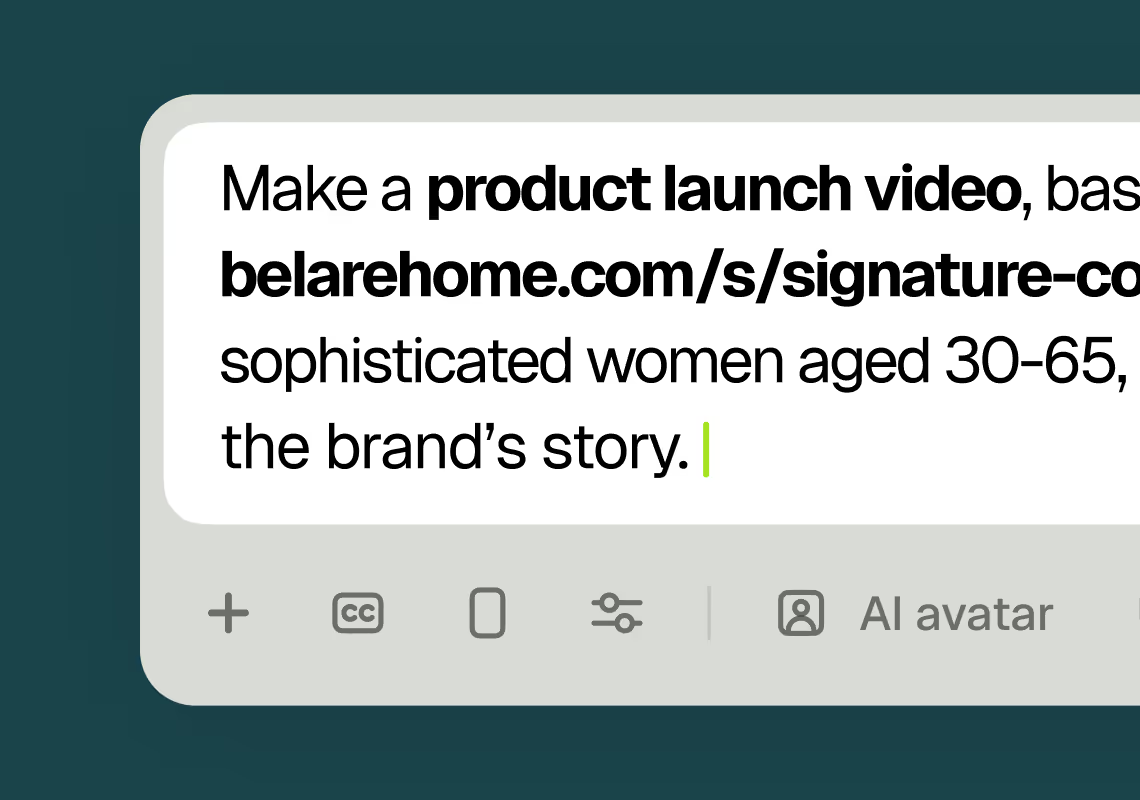
1Describe your video
Paste your promo brief, script, outline, or blog URL into Agent Opus.
 2
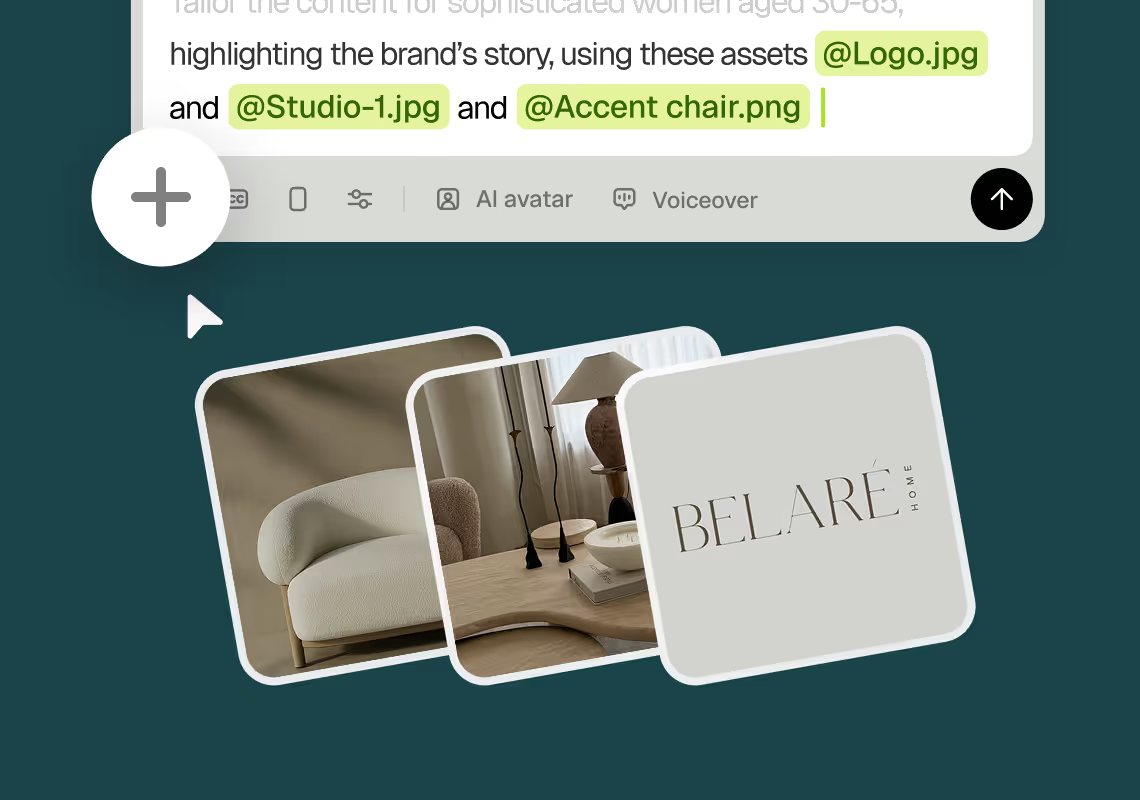
2Add assets and sources
Upload brand assets like logos and product images, or let the AI source stock visuals automatically.
 3
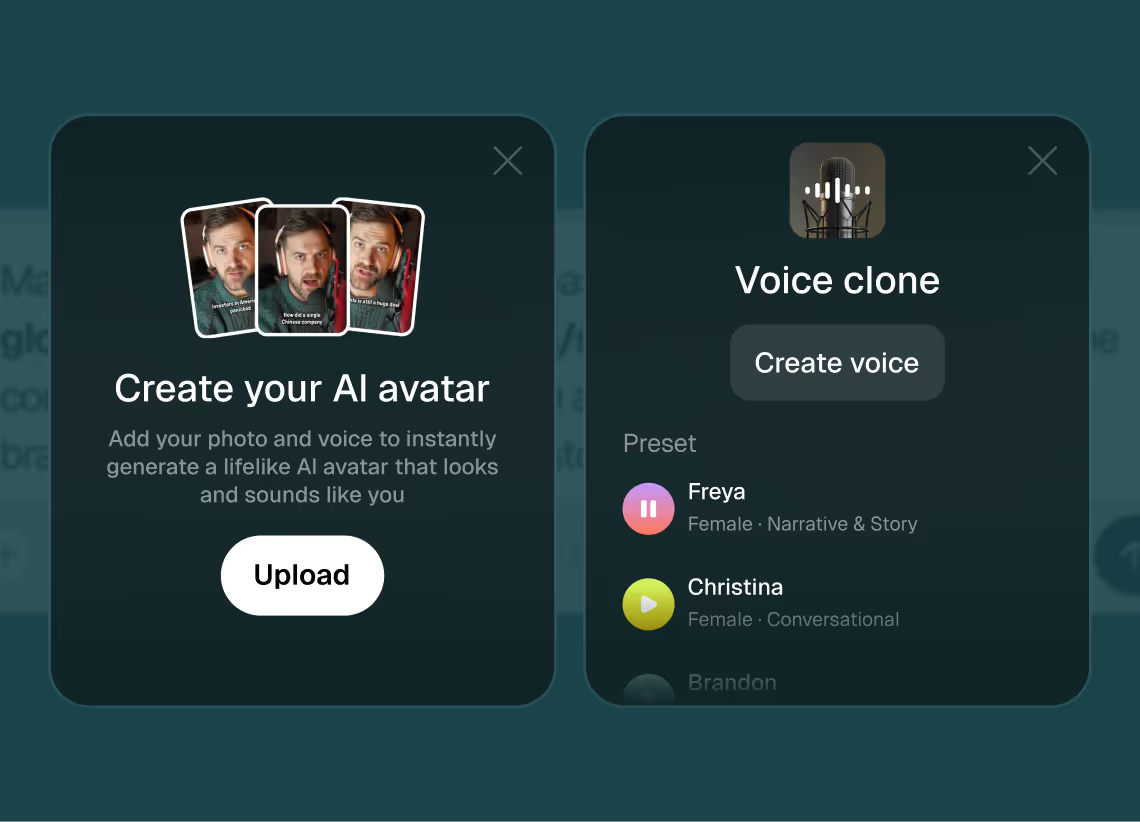
3Choose voice and avatar
Choose voice (clone yours or pick an AI voice) and avatar style (user or AI).
 4
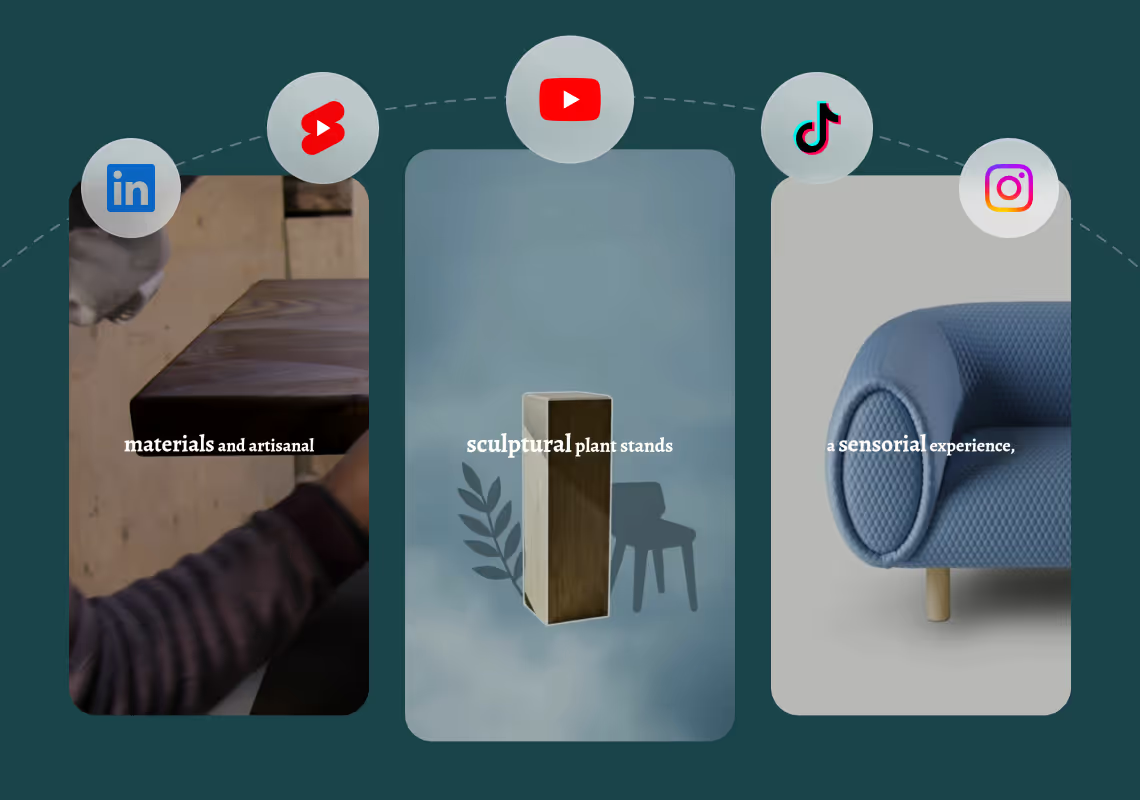
4Generate and publish-ready
Click generate and download your finished promo video in seconds, ready to publish across all platforms.


8 powerful features of Agent Opus' AI Twitter Video Maker
Dynamic Text Animations
Highlight key tweet messages with smooth kinetic typography and animated text effects.
Optimized Aspect Ratios
Generate videos in 16:9 or 1:1 formats perfect for Twitter feeds and timelines.
Mobile-First Preview
See exactly how your Twitter video will appear on phones before publishing or downloading.
Rapid Batch Creation
Generate multiple Twitter videos from different prompts or threads in one workflow session.
Background Music Library
Choose from royalty-free tracks that match your Twitter video's tone and energy level.
Text to Twitter Video
Turn any tweet or thread into a polished video with AI-generated visuals and motion.
Branded Visual Themes
Apply custom colors, fonts, and logos to maintain consistent Twitter branding automatically.
Instant Voiceover Generation
Add AI narration to your Twitter videos with natural-sounding voices in seconds.
Testimonials
Frequently Asked Questions
How does AI Twitter Video Maker handle different input types like prompts versus full scripts?
AI Twitter Video Maker is built to work with whatever level of detail you provide. If you have a short prompt like 'Explain why our SaaS saves time for remote teams,' Agent Opus will generate a complete script, select relevant visuals, pace the scenes, and produce a finished video. The AI interprets your intent, fills in narrative gaps, and structures the video for maximum Twitter engagement. If you already have a full script with specific talking points, timestamps, or scene descriptions, Agent Opus respects that structure and uses it as the blueprint for scene assembly, voiceover timing, and visual selection. You can also submit an outline with bullet points or key messages, and the system will expand those into a cohesive narrative with matching visuals and motion graphics. For blog URLs, Agent Opus extracts the core argument, condenses it into a Twitter-friendly format, and builds a video that captures the essence of the article in under a minute. The key advantage is flexibility: you do not need to be a scriptwriter or video producer. Whether you start with a single sentence or a detailed brief, AI Twitter Video Maker adapts to your input and delivers a publish-ready result. Best practice is to include your main hook or call-to-action in the prompt so the AI can structure the video around that outcome. If you want specific visuals like product demos or founder shots, mention them in the brief and upload the assets. The more context you provide about tone, audience, and goal, the more precisely the AI can match your vision. But even minimal prompts produce high-quality videos because the system is trained on what works on Twitter: fast pacing, strong hooks, clear messaging, and scroll-stopping visuals.
What are the best practices for writing prompts that generate high-performing Twitter videos?
The most effective prompts for AI Twitter Video Maker combine clarity, context, and outcome. Start with the core message or hook you want viewers to remember. For example, instead of 'Make a video about our product,' write 'Show how our tool cuts meeting prep time in half for remote teams.' That gives Agent Opus a clear narrative arc and visual direction. Include your target audience so the AI can adjust tone and pacing. A prompt like 'Explain blockchain to crypto beginners' will produce a different video than 'Explain blockchain to enterprise CTOs.' Specify the desired length if you have a preference: 'Create a 30-second teaser' or 'Build a 60-second explainer.' Twitter videos perform best between 15 and 60 seconds, so Agent Opus defaults to that range unless you request otherwise. If you have brand assets like logos, product screenshots, or founder headshots, mention them in the prompt and upload the files. For example, 'Use our logo in the intro and show our dashboard UI in the middle section.' This ensures the video feels cohesive with your brand identity. Describe the emotional tone or style: 'Make it energetic and fast-paced' or 'Keep it calm and educational.' Agent Opus adjusts motion graphics, music, and scene transitions to match. If you want a specific call-to-action, include it in the prompt: 'End with a CTA to visit our landing page.' The AI will structure the video to build toward that moment. Avoid vague language like 'Make it cool' or 'Do something creative.' Instead, use concrete details: 'Open with a problem statement, show three quick benefits, and close with a testimonial quote.' The more specific your prompt, the less iteration you need. You can also reference successful Twitter videos you admire and ask Agent Opus to match that style. For example, 'Create a video similar to how tech influencers explain SaaS tools on Twitter, with quick cuts and bold text overlays.' Finally, test different prompts for the same idea. AI Twitter Video Maker generates videos fast enough that you can experiment with multiple angles and pick the one that resonates most with your audience.
Can AI Twitter Video Maker maintain consistent branding across multiple videos for campaigns?
Yes, AI Twitter Video Maker is designed to keep your brand identity consistent across every video you generate. When you upload brand assets like logos, color palettes, fonts, and product visuals, Agent Opus stores them and applies them automatically to future videos. This means you can create a series of Twitter videos for a product launch, a weekly thought leadership series, or a multi-week campaign, and every video will share the same visual language. The system remembers your preferences for motion graphics style, voiceover tone, and scene pacing, so you do not have to re-specify those details in every prompt. For example, if your first video uses a bold sans-serif font for text overlays and a fast-paced editing rhythm, Agent Opus will default to that style for subsequent videos unless you request a change. You can also create templates by saving successful prompts and reusing them with updated messaging. If you run a weekly Twitter series called 'Feature Friday,' you can save a prompt structure like 'Highlight one product feature in 30 seconds with upbeat music and a demo clip,' then swap in new feature details each week. Agent Opus will generate videos that feel like part of the same series. Voice consistency is another key advantage. If you use voice cloning to create a custom AI voice that matches your brand's tone, that voice becomes available for all future videos. Whether you are the founder recording your own voice or you are a marketer using a professional AI voice, the same voice can narrate every video in your campaign. This builds familiarity and trust with your Twitter audience. For avatar-based videos, you can use the same AI or user avatar across multiple videos to create a recognizable on-screen presence. Teams can also set brand guidelines at the account level so that every team member generating videos adheres to the same visual and tonal standards. This is especially useful for agencies or companies with multiple creators producing Twitter content. The result is a cohesive video library that reinforces your brand every time someone scrolls past your tweet.
What are the limitations or edge cases when using AI Twitter Video Maker for niche or technical topics?
AI Twitter Video Maker excels at generating videos for a wide range of topics, but there are a few edge cases to keep in mind, especially for highly niche or technical content. First, if your topic requires very specific jargon, proprietary terminology, or industry-specific visuals that are not widely available in stock libraries, you will get better results by uploading custom assets and providing detailed context in your prompt. For example, if you are explaining a rare medical procedure or a cutting-edge AI research paper, Agent Opus may default to generic science visuals unless you supply diagrams, charts, or footage. The more specialized your topic, the more important it is to include reference materials and explicit instructions. Second, Twitter videos perform best when they simplify complex ideas into digestible hooks and quick takeaways. If your topic is extremely technical and requires nuanced explanations, you may need to break it into a series of shorter videos rather than trying to cover everything in one 60-second clip. Agent Opus can help you identify the key points to feature in each video, but the platform is optimized for clarity and engagement over exhaustive detail. Third, if your brand voice is highly unconventional or relies on inside jokes, cultural references, or a very specific tone that deviates from mainstream marketing language, you may need to iterate on prompts to train the AI on your style. The system learns from your feedback, so the more videos you generate and refine, the better it gets at matching your unique voice. Fourth, real-time or breaking news topics can be challenging if you need hyper-current visuals or references that were not part of the AI's training data. In those cases, uploading your own screenshots, news clips, or trending images ensures the video feels timely and relevant. Fifth, if you are targeting a non-English audience or using a language with limited AI voice options, double-check the available voiceover languages and accents before committing to a campaign. Agent Opus supports multiple languages, but some languages have more natural-sounding AI voices than others. Finally, if your video concept relies on live-action footage of people, places, or events that do not exist in stock libraries, you will need to film and upload that footage yourself. Agent Opus can integrate user-uploaded video clips into the final output, but it cannot generate photorealistic live-action footage from scratch. For most use cases, these limitations are minor and easily addressed by providing clear prompts and custom assets. The key is to treat AI Twitter Video Maker as a co-pilot: the more context and materials you provide, the more precisely it can execute your vision.