AI Video Anime Opening Parody Generator
Turn your brand, product, or idea into an epic AI video anime opening parody. Agent Opus generates complete anime-style parody videos from a simple text prompt. Describe your vision, add your logo or product shots, and watch Agent Opus assemble dynamic motion graphics, dramatic voiceover, and authentic anime opening aesthetics. No animation skills, no manual editing. Just prompt-to-publish parody videos ready for TikTok, YouTube Shorts, Instagram Reels, and LinkedIn. Perfect for creators and marketers who want memorable, scroll-stopping content that captures anime opening energy without the production overhead.

Explore what's possible with Agent Opus

Reasons why creators love Agent Opus' AI Video Anime Opening Parody Generator
Ship in Minutes, Not Hours
Generate a publish-ready video in under 10 minutes from a single prompt — no timeline editing, no asset hunting, no creative dry spells.
Zero Editing Skills Required
Describe your concept and Agent Opus handles scene composition, motion graphics, voiceover, and platform formatting automatically — even if you've never opened a video editor.
Studio-Grade Output
Cinematic motion graphics, beat-synced cuts, professional voiceover, and precise typography — every video ships looking production-quality from the first generation.
Stays On-Brand
Upload your logo, fonts, and color palette once. Agent Opus applies them across every video automatically so your content stays visually consistent.
How to use Agent Opus’ AI Video Anime Opening Parody Generator
 1
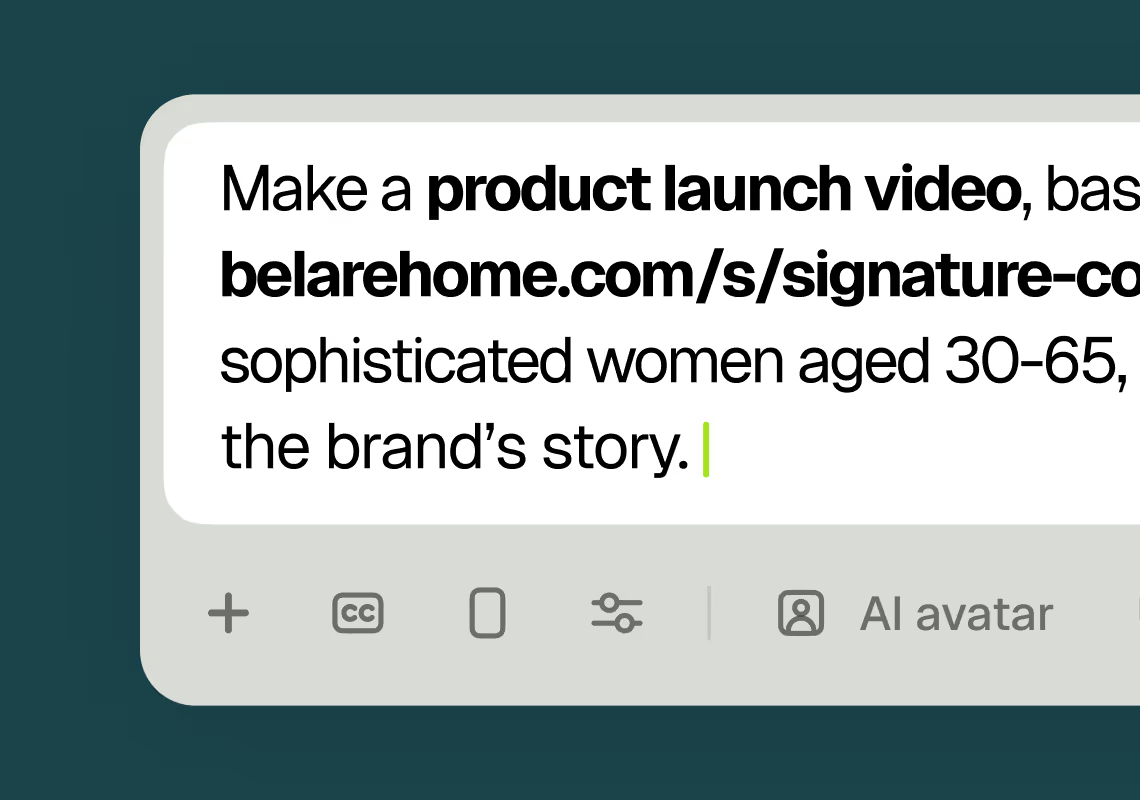
1Describe your video
Paste your promo brief, script, outline, or blog URL into Agent Opus.
 2
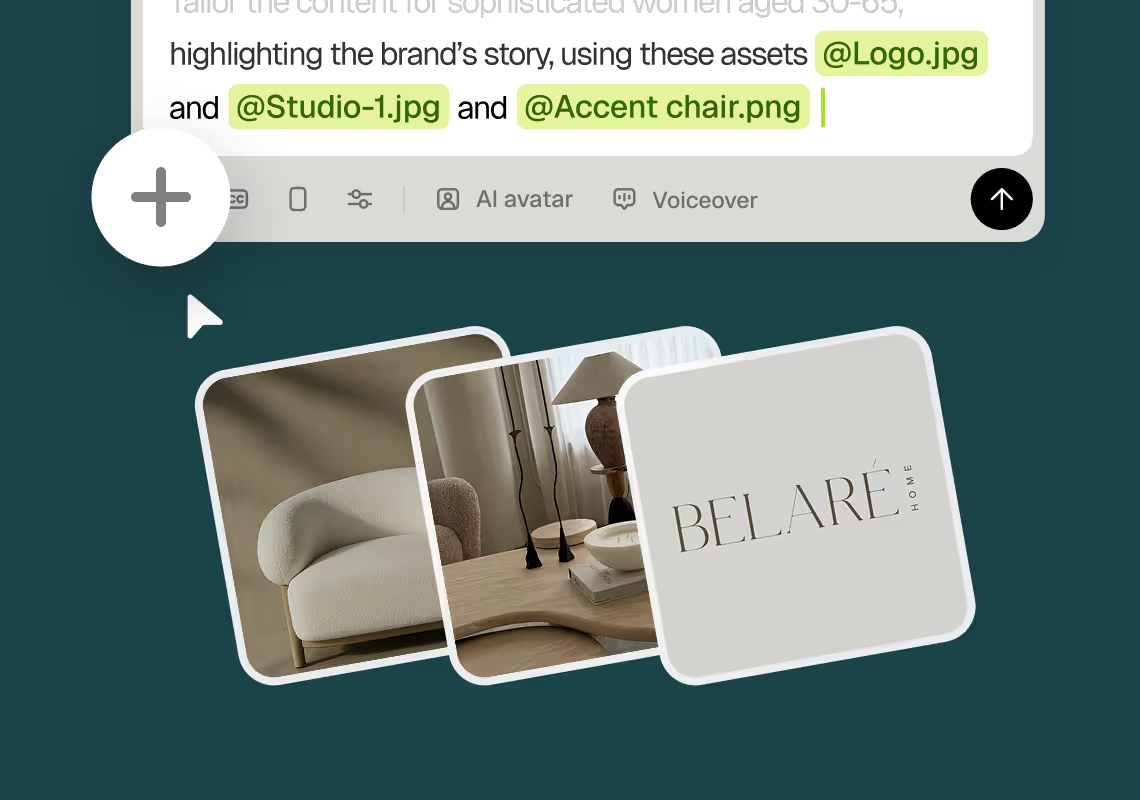
2Add assets and sources
Upload brand assets like logos and product images, or let the AI source stock visuals automatically.
 3
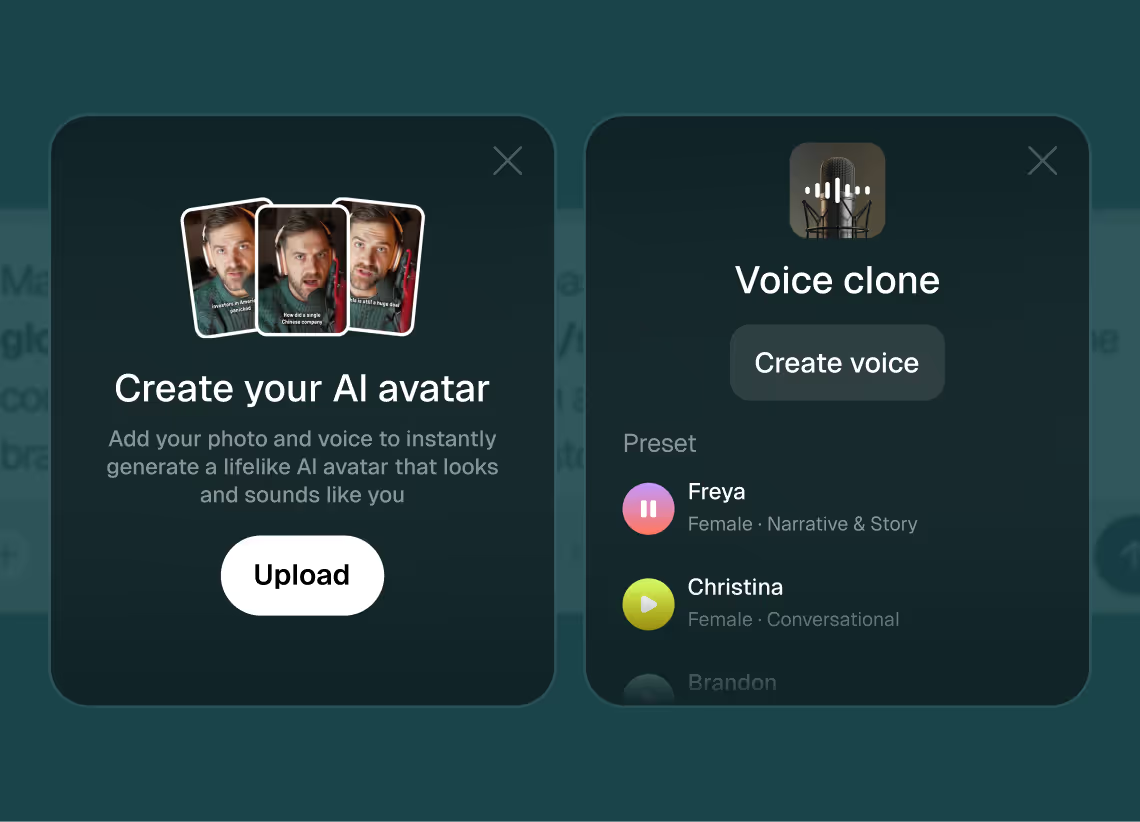
3Choose voice and avatar
Choose voice (clone yours or pick an AI voice) and avatar style (user or AI).
 4
4Generate and publish-ready
Click generate and download your finished promo video in seconds, ready to publish across all platforms.


8 powerful features of Agent Opus' AI Video Anime Opening Parody Generator
Prompt-to-Video Generation
Turn a one-line idea into a finished video. The agent handles structure, pacing, B-roll selection, and final assembly automatically.
Script and Outline Support
Paste a full script, drop in an outline with section headers, or supply a blog or article URL — Agent Opus reads any of them and builds a video around the content.
AI Voiceover and Voice Cloning
Pick from natural-sounding AI voices in 30+ languages, or clone your own voice once. Every video then ships with your authentic narration.
Beat-Synced Motion Graphics
Dynamic visuals that lock to the beat of your audio or the pacing of your script — kinetic typography, transitions, and effects, no manual keyframing required.
Automatic Captions and Subtitles
Burn-in captions for short-form, soft subtitles for long-form, and multi-language translations — all generated and synced automatically.
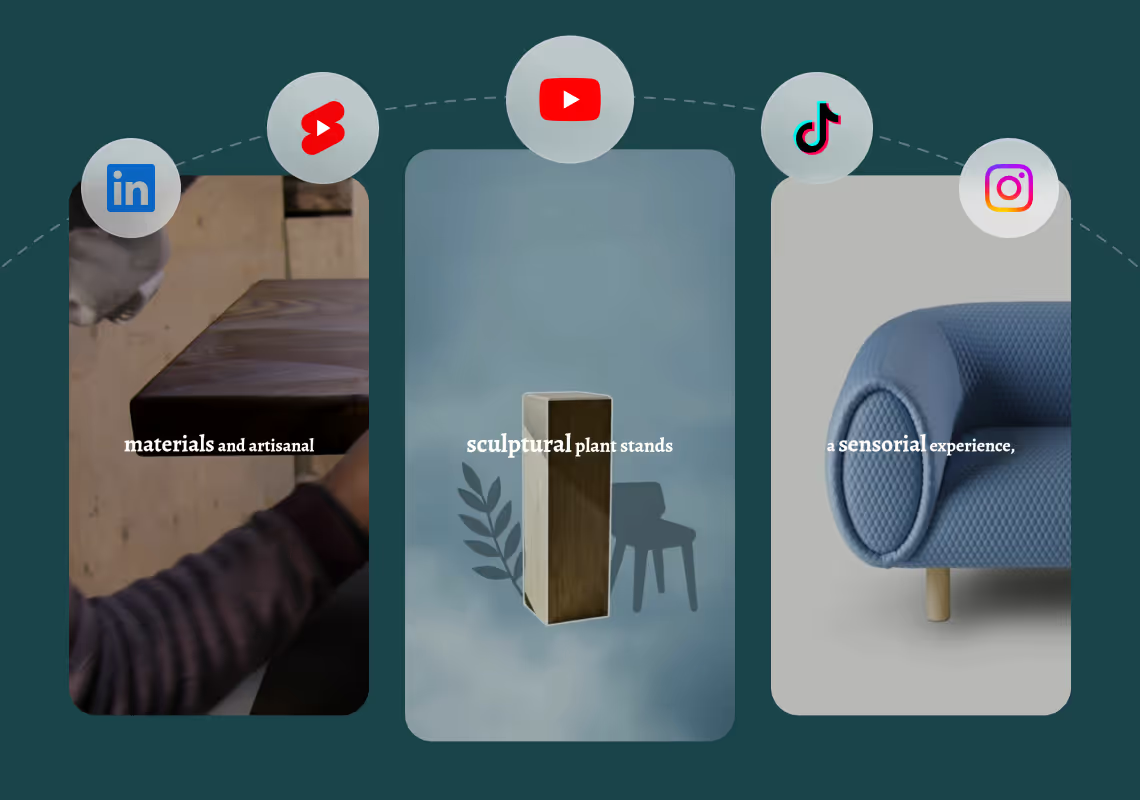
Multi-Aspect-Ratio Export
9:16, 1:1, and 16:9 outputs from one job, with intelligent reframing of text, motion graphics, and focal elements for each ratio.
Brand Asset Integration
Upload your logo, watermark, fonts, and color palette. Agent Opus applies them consistently across every video automatically.
Avatar and Talking Head Support
Add an AI avatar, your own video footage, or a synthetic spokesperson to any video — useful for explainers, ads, and personal-brand content.
Testimonials
wow that's actually great 🔥
irtaza65
I reviewed version a and I was very impressed with this version, it did very well in almost all aspects that users need, you would only have to make very small changes and maybe replace one of 2 of the pictures, but even saying that it could be used as is and still receive decent views or even chances at going viral depending on the story or the content the user chooses.
Jeremy
all in all LOVE THIS agent. I'm curious to see how I can push it (within reason) Just need to learn to get the consistency right with my prompts
Rebecca
Frequently Asked Questions
How does AI video anime opening parody generation handle different content types and brand styles?
Agent Opus adapts anime opening parody generation to match your specific content needs and brand identity. When you provide a prompt describing your parody concept, the system analyzes the tone, visual references, and brand elements you want to highlight. For SaaS products, Agent Opus might generate parody sequences showing your dashboard interface with dramatic zoom effects and speed lines, mimicking classic anime transformation scenes. For consumer brands, it can create parody openings featuring your product as the hero item with epic reveal moments and dynamic motion graphics. The key is specificity in your prompt. Instead of writing "make an anime parody," describe the anime opening style you want to reference (shonen action, magical girl transformation, mecha launch sequence) and how your brand fits that narrative. Agent Opus then assembles scenes with appropriate pacing: quick cuts for action-style parodies, slower dramatic builds for emotional openings, freeze-frame character introductions for ensemble casts. You can upload your logo, product photos, team headshots, or custom graphics, and Agent Opus integrates them into the parody sequence with authentic anime visual treatment. The motion graphics engine applies effects like speed lines, screen flashes, dramatic text overlays, and color grading that match anime opening aesthetics. For voiceover, you can clone your own voice to narrate the parody with your personal delivery style, or select AI voices with dramatic, epic tones that fit anime opening narration. The system handles timing automatically, syncing visual beats to voiceover pacing and suggested background music. This means your parody maintains authentic anime opening rhythm without manual keyframing or timeline editing. Agent Opus also respects brand guidelines. If you need specific colors, fonts, or logo placement rules, include those details in your prompt or upload a brand kit, and the system applies them throughout the parody sequence. The result is a parody video that feels both authentically anime and unmistakably on-brand.
What are best practices for writing prompts that generate effective anime opening parody videos?
Effective prompts for AI video anime opening parody generation combine three elements: anime style reference, brand narrative structure, and specific visual moments. Start by identifying which anime opening style matches your content goals. Shonen action openings (like Naruto or My Hero Academia) work well for product launches and competitive positioning because they emphasize power, transformation, and dramatic reveals. Magical girl openings (like Sailor Moon) suit beauty, fashion, or lifestyle brands with transformation sequences and sparkle effects. Mecha openings (like Gundam) fit tech products and SaaS platforms with assembly sequences and technical diagrams. Slice-of-life openings (like K-On) match community-focused brands and team culture content with character introductions and everyday moments elevated to epic status. Once you choose a style, structure your prompt around a narrative arc. Anime openings typically follow a pattern: mysterious opening shot, character or product introduction, conflict or challenge hint, power-up or transformation moment, team assembly or feature showcase, climactic visual peak, and final logo or title card. Describe each beat in your prompt. For example: "Open with a dark cityscape, zoom into our office building, show our team members one by one with name overlays and dramatic lighting, reveal our product dashboard with speed lines and screen flashes, montage of customer success moments, end with our logo exploding onto screen with particle effects." Be specific about visual moments you want. Instead of "make it look cool," write "freeze-frame on our CEO with their name in bold Japanese-style text, then quick-cut to product features appearing as floating holographic panels." Mention specific anime visual tropes: speed lines, screen flashes, dramatic zooms, split-screen character reveals, silhouette transformations, particle effects, lens flares. Agent Opus recognizes these references and applies appropriate motion graphics. Include your brand assets and how they should appear. "Use our logo as the final title card with a shatter effect" or "show our product packaging rotating in 3D with light rays." For voiceover, specify the tone: "epic narrator voice introducing each team member" or "energetic announcer hyping product features." If you have a script, provide it; if not, describe the key messages and let Agent Opus generate narration that matches anime opening dialogue style. Finally, mention your target platform and audience. "TikTok vertical format for Gen Z audience" tells Agent Opus to emphasize quick cuts and mobile-friendly text sizing. "LinkedIn landscape for B2B audience" signals more professional tone while maintaining parody humor. The more specific your prompt, the more precisely Agent Opus can generate a parody that balances authentic anime aesthetics with your brand message and content goals.
Can AI video anime opening parody generation maintain consistent branding across multiple videos and campaigns?
Yes, Agent Opus supports brand consistency across multiple anime opening parody videos through asset libraries, style references, and prompt templates. When you generate your first parody video, you establish visual and narrative patterns that can be replicated in subsequent videos while varying the specific content. Start by creating a brand asset library within Agent Opus. Upload your logo in multiple formats (horizontal, stacked, icon-only), brand color hex codes, approved fonts, product images, team photos, and any custom graphics you use regularly. Once uploaded, these assets are available for every parody video you generate. Reference them in prompts by name: "Use the horizontal logo for the final title card" or "Apply brand color palette to all motion graphics." This ensures visual consistency without re-uploading assets each time. For style consistency, save your most successful prompt as a template. If your first anime opening parody used a shonen action style with specific motion graphics (speed lines, dramatic zooms, freeze-frame character intros), copy that prompt structure and modify only the variable content for new videos. For example, your template might be: "Shonen action anime opening style. Open with [location], introduce [characters/products] with freeze-frame name overlays, show [key features] with speed lines and screen flashes, climax with [main message], end with logo shatter effect." For each new video, you only change the bracketed variables while maintaining the overall structure and visual treatment. Agent Opus also learns from your feedback. If you generate multiple parody videos and consistently approve certain visual choices (specific transition styles, color grading, text placement), the system recognizes these patterns and applies them to future generations. This creates a signature parody style unique to your brand. For campaign consistency, generate all videos in a series using the same anime opening style reference and similar prompt structure. If you are creating a product launch campaign with five parody videos highlighting different features, use the same opening shot, character introduction pattern, and closing logo treatment across all five, varying only the middle feature showcase section. This creates a cohesive campaign that audiences recognize as part of the same series. Voice consistency matters too. If you use voice cloning for the first parody video, Agent Opus saves your voice profile. Use the same cloned voice across all subsequent parodies to maintain narrator consistency. If using AI voices, select the same voice character for every video in a campaign. For ongoing content series (like weekly parody updates or monthly product spotlights), establish a format template: same opening sequence, same transition style between sections, same closing call-to-action structure. Only the middle content changes week to week. This approach mirrors how actual anime series maintain consistent opening sequences across episodes while updating specific story elements. Agent Opus makes this easy because you are working with text prompts rather than manual timeline editing, so replicating structure is as simple as copying and modifying a prompt template rather than rebuilding a project file from scratch.
What are the limitations and edge cases when generating anime opening parody videos with AI?
AI video anime opening parody generation excels at structure, motion graphics, and visual assembly, but has specific limitations you should understand before creating content. First, Agent Opus generates parody videos based on text descriptions and uploaded assets, not by directly copying or reproducing copyrighted anime openings frame-by-frame. The system creates original motion graphics in anime opening style rather than replicating specific shows. This is a feature, not a bug, because it keeps your content legally safe while capturing the aesthetic and energy of anime openings. However, if you want to exactly match a specific anime's color palette, character design, or shot composition, you need to describe those elements in detail in your prompt rather than expecting Agent Opus to automatically recognize and copy a particular show. Second, character animation complexity has limits. Agent Opus generates dynamic motion graphics, transitions, and visual effects that mimic anime opening aesthetics, but it does not create frame-by-frame character animation like a traditional anime studio. If your parody concept requires detailed character movement (walking cycles, fight choreography, facial expressions), you will get stylized representations using motion graphics, photo manipulation, and dynamic framing rather than full animation. For most parody purposes, this works perfectly because anime opening parodies often rely on dramatic stills, quick cuts, and motion graphics rather than fluid animation. If you need a character to appear, upload a photo or illustration and Agent Opus will integrate it with anime-style visual treatment (speed lines, dramatic lighting, screen effects). Third, music synchronization is semi-automatic. Agent Opus can integrate background music tracks and time visual beats to match general rhythm, but it does not perform frame-perfect music video synchronization where every visual hit matches a specific musical beat. For most parody videos, the automatic pacing works well because Agent Opus structures scenes with anime opening rhythm (quick intro, character reveals, montage section, climax, outro). If you need precise music sync, provide a detailed prompt describing which visual moments should align with which parts of your chosen track. Fourth, text and typography handling follows anime opening conventions but has formatting limits. Agent Opus generates dramatic text overlays, character name cards, and title treatments in anime style, but complex Japanese typography, vertical text layouts, or highly stylized kanji require specific prompt instructions or pre-designed graphics uploaded as assets. For English-language parodies, the system handles text well with anime-inspired fonts and placement. Fifth, brand asset integration works best with clean, high-resolution images. If you upload low-quality logos or poorly lit product photos, Agent Opus will use them but cannot enhance image quality beyond basic processing. For best results, provide vector logos, professional product photography, and well-lit team photos. Sixth, voiceover tone and delivery depend on your prompt specificity. AI voices can deliver epic, dramatic narration suitable for anime opening parodies, but they follow your script or generated narration. If you want specific emotional beats (sarcastic delivery, over-the-top enthusiasm, deadpan humor), describe that in your prompt. Voice cloning captures your vocal characteristics but not necessarily your intended performance style, so provide clear direction in your script. Finally, parody effectiveness depends on audience familiarity with anime opening conventions. If your target audience does not watch anime or recognize opening tropes (dramatic character introductions, transformation sequences, ensemble reveals), the parody may not land as intended. Agent Opus generates technically excellent anime-style parody videos, but the humor and impact depend on your audience's cultural context. For B2B audiences unfamiliar with anime, consider adding a brief text overlay explaining the parody format, or focus on visual drama and energy rather than specific anime references. Understanding these limitations helps you write better prompts, choose appropriate parody concepts, and set realistic expectations for what AI video anime opening parody generation can deliver.