AI Video Generator for Interior Designers
Turn design concepts, project briefs, and portfolio descriptions into polished videos in minutes. Agent Opus is an AI video generator for interior designers that transforms your text into publish-ready content with motion graphics, voiceover, and dynamic visuals. No editing skills required. Describe your space, style, or project vision, and get a complete video ready for Instagram, TikTok, your website, or client presentations. Showcase room transformations, design philosophies, material selections, and before-after narratives without touching a timeline or hiring a videographer.

Explore what's possible with Agent Opus

Reasons why creators love Agent Opus' AI Video Generator for Interior Designers
Your Style, Every Frame
Maintain your signature aesthetic across all video content so every piece reinforces your brand identity automatically.
Client Approvals Without Delays
Show realistic room transformations in video format so clients visualize the final result and say yes faster.
No Camera Crew Required
Create professional design presentations from your 3D models or mood boards without hiring videographers or renting equipment.
Scale Your Marketing Effortlessly
Produce multiple project showcases and social content in the time it used to take for one photoshoot.
Explain Concepts Clearly
Walk clients through spatial flow, lighting choices, and material selections in a format they actually understand and remember.
Portfolio That Stands Out
Turn static renders into dynamic walkthroughs that capture attention and win more projects than flat images ever could.
How to use Agent Opus’ AI Video Generator for Interior Designers
 1
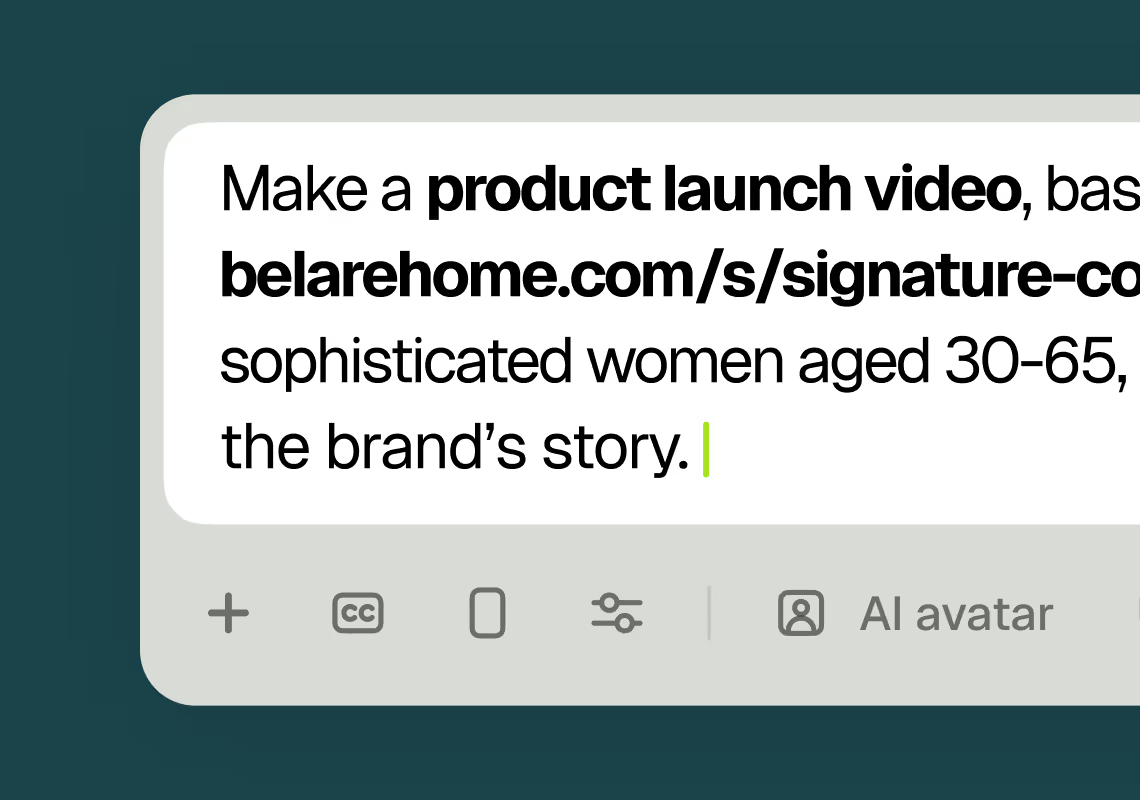
1Describe your video
Paste your promo brief, script, outline, or blog URL into Agent Opus.
 2
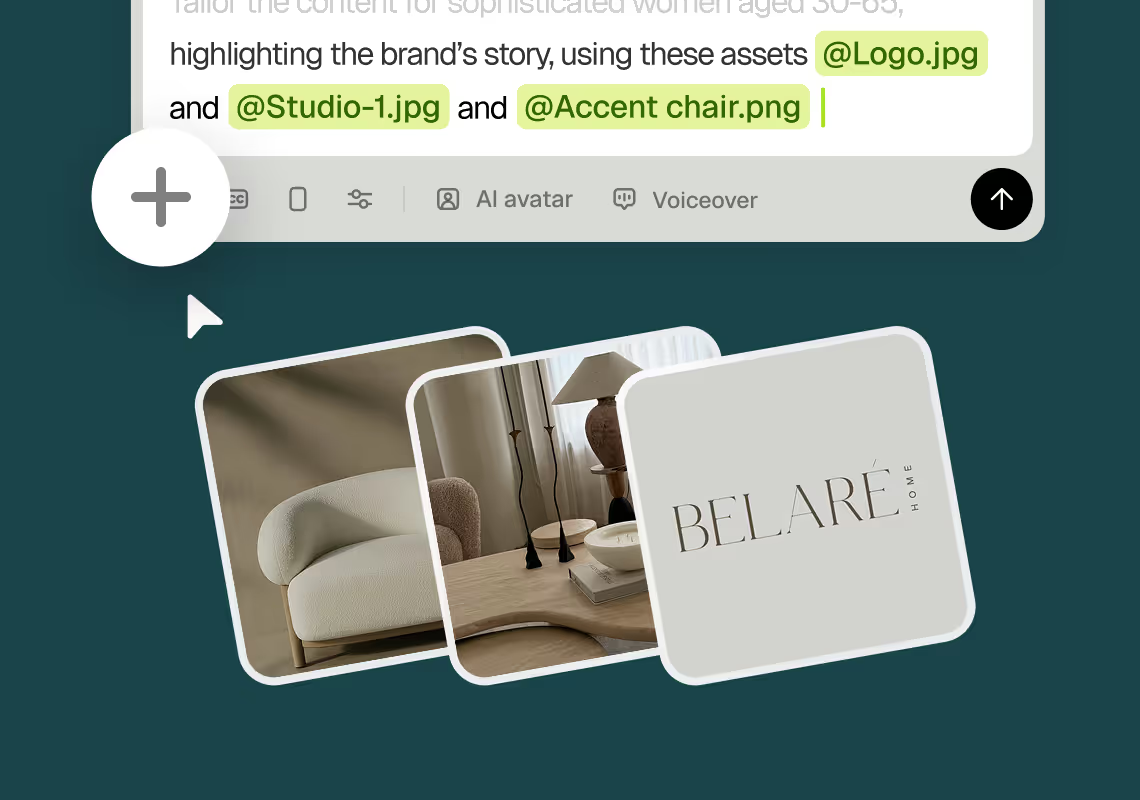
2Add assets and sources
Upload brand assets like logos and product images, or let the AI source stock visuals automatically.
 3
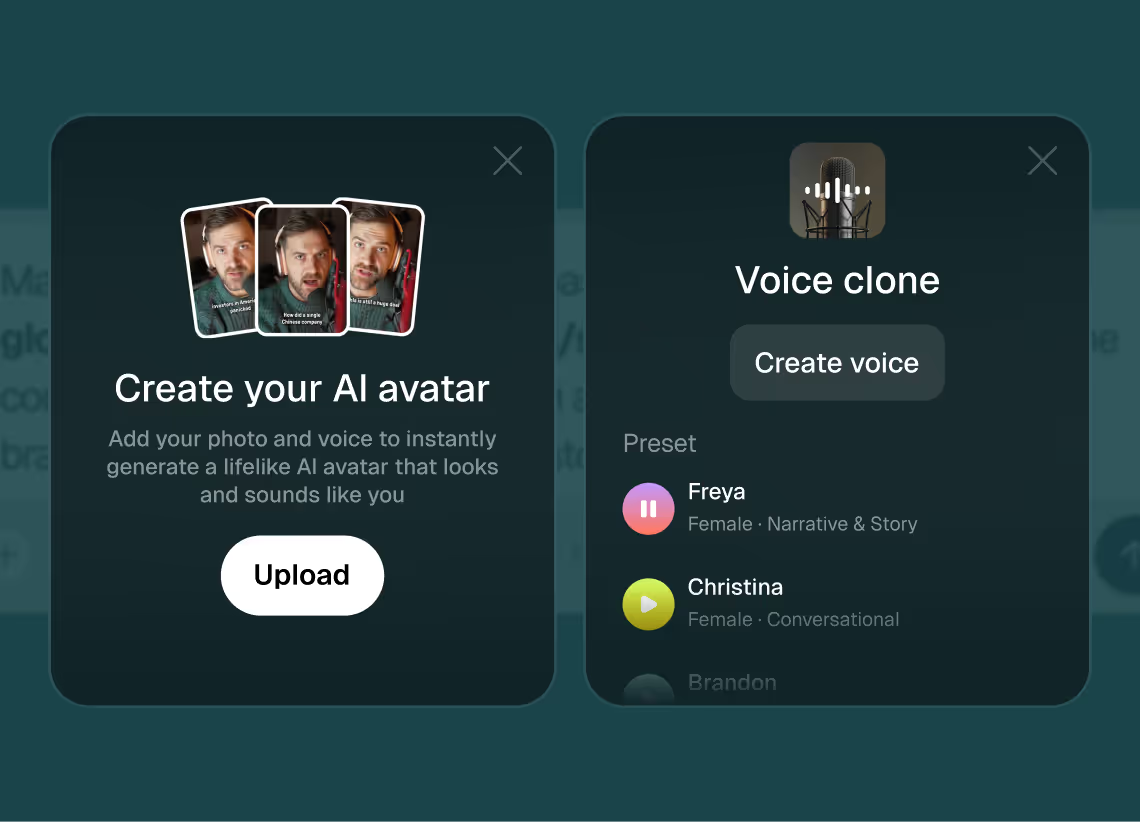
3Choose voice and avatar
Choose voice (clone yours or pick an AI voice) and avatar style (user or AI).
 4
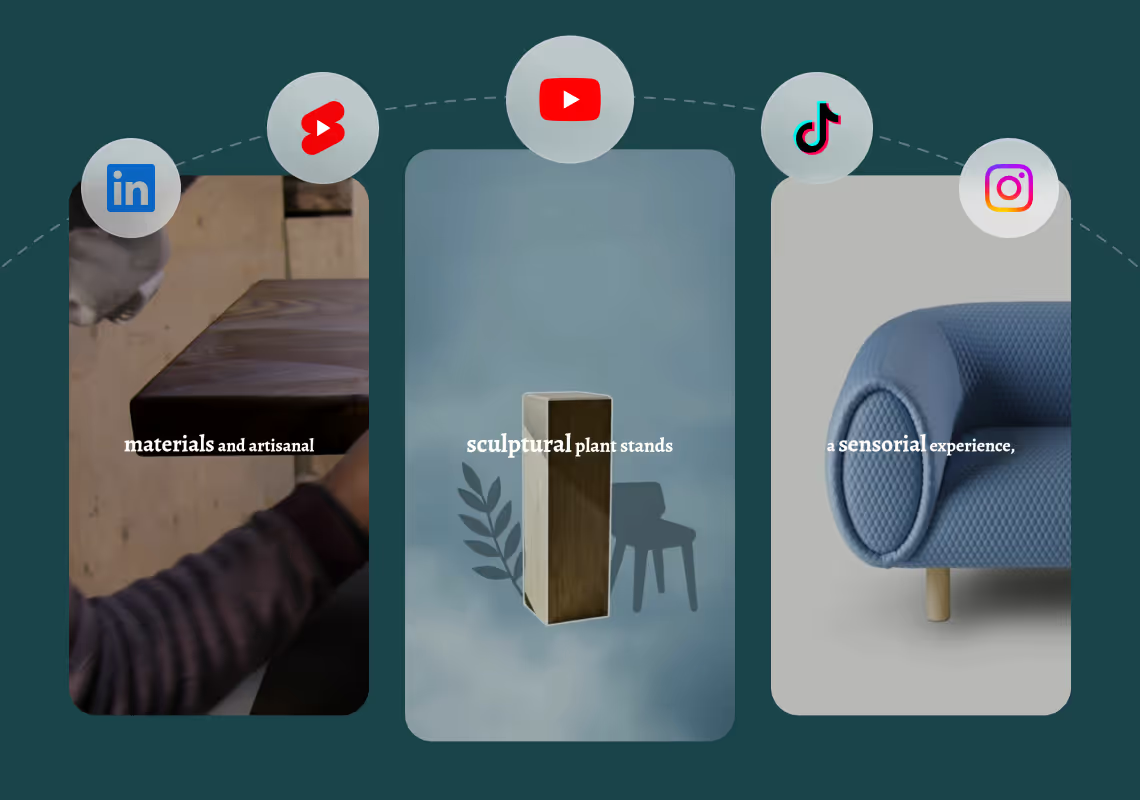
4Generate and publish-ready
Click generate and download your finished promo video in seconds, ready to publish across all platforms.


8 powerful features of Agent Opus' AI Video Generator for Interior Designers
Text to Design Video
Turn project descriptions into polished walkthrough videos showcasing spaces with realistic lighting and textures.
Client Presentation Ready
Create professional reveal videos that showcase design concepts with smooth transitions and branded aesthetics.
Portfolio Video Generation
Turn completed project images into cohesive portfolio videos with music and motion that attract clients.
Concept Pitch Videos
Generate persuasive videos from design briefs that communicate vision and spatial flow to stakeholders.
Instant Mood Board Videos
Generate dynamic videos from style prompts that bring color palettes and material selections to life.
Room Transformation Sequences
Generate before-and-after videos that demonstrate design evolution with cinematic camera movements and pacing.
Material Showcase Videos
Produce videos highlighting fabric swatches, finishes, and fixtures with close-up detail and ambient lighting.
Social Content Creation
Produce shareable design videos optimized for Instagram and TikTok that showcase your signature style.
Testimonials
This looks like a game-changer for us. We're building narrative-driven, visually layered content — and the ability to maintain character and motion consistency across episodes would be huge. If Agent Opus can sync branded motion graphics, tone, and avatar style seamlessly, it could easily become part of our production stack for short-form explainers and long-form investigative visuals.
srtaduck
I reviewed version a and I was very impressed with this version, it did very well in almost all aspects that users need, you would only have to make very small changes and maybe replace one of 2 of the pictures, but even saying that it could be used as is and still receive decent views or even chances at going viral depending on the story or the content the user chooses.
Jeremy
all in all LOVE THIS agent. I'm curious to see how I can push it (within reason) Just need to learn to get the consistency right with my prompts
Rebecca
Frequently Asked Questions
How does an AI video generator for interior designers handle project briefs versus detailed scripts?
Agent Opus adapts to whatever input you provide. If you paste a short project brief like 'Modern minimalist kitchen remodel with white oak cabinetry, quartz countertops, and matte black fixtures,' the AI expands that into a structured narrative, sources relevant imagery, and assembles scenes that highlight each design element. It interprets your brief as a creative direction and builds a video arc that introduces the space, showcases key features, and concludes with the finished aesthetic. For detailed scripts, Agent Opus follows your exact wording and scene descriptions. You might write 'Scene one: wide shot of the open-concept layout. Voiceover: This 400-square-foot kitchen maximizes natural light. Scene two: close-up on the waterfall-edge island.' The AI respects your structure, matches visuals to each scene cue, and synchronizes voiceover timing. If you submit an outline with bullet points like 'Intro: client goals. Body: material selections, lighting plan, color story. Outro: final reveal,' Agent Opus fleshes out each section into full sentences, assigns appropriate pacing, and generates a cohesive video. The system also accepts blog URLs. Paste a link to your portfolio post about a recent residential project, and the AI extracts the narrative, identifies design highlights, and converts the article into a video format. Regardless of input type, the AI video generator for interior designers prioritizes visual storytelling that aligns with design industry standards. It understands terms like 'biophilic design,' 'transitional style,' and 'task lighting,' and sources imagery that reflects those concepts. You control the level of detail; Agent Opus handles the translation from text to motion.
What are best practices for prompts when using an AI video generator for interior designers?
Effective prompts for interior design videos balance creative vision with specific details. Start by defining the project type and style. Instead of 'living room video,' write 'Mid-century modern living room with walnut credenza, teak coffee table, and burnt orange accent chairs.' The AI uses those specifics to source accurate imagery and craft a narrative that emphasizes period-appropriate elements. Include sensory and emotional language. Phrases like 'warm, inviting atmosphere' or 'clean lines and uncluttered surfaces' guide the AI's tone and visual selection. If you want the video to convey tranquility, mention 'soft neutral palette' and 'natural textures.' For energy and boldness, reference 'jewel-tone accents' and 'geometric patterns.' Specify the video's purpose and audience. A prompt for a client presentation might read 'Showcase the master suite renovation for a young professional couple, emphasizing the walk-in closet organization system and spa-like ensuite.' A social media prompt could be 'Create a 30-second Reel highlighting five budget-friendly ways to refresh a rental bathroom, targeting first-time renters.' Purpose shapes pacing, voiceover style, and call-to-action. Mention brand assets explicitly. If you want your logo in the intro, write 'Open with [YourStudio] logo, then transition to the entryway reveal.' If you have signature materials, list them: 'Feature our custom terrazzo samples and the linen drapery line we always recommend.' The AI video generator for interior designers integrates these assets into the final output. Provide context for before-after narratives. Instead of 'show transformation,' describe 'Start with the dated 1980s kitchen with laminate counters and fluorescent lighting, then reveal the updated space with marble backsplash and pendant fixtures.' The AI structures the video to emphasize contrast. Use industry terminology confidently. Terms like 'open floor plan,' 'coffered ceiling,' 'shiplap accent wall,' and 'herringbone tile' help the AI source precise visuals. Avoid vague requests; specificity yields better results. Finally, iterate. Generate a first draft, review the output, then refine your prompt. If the pacing feels rushed, add 'slow, contemplative pacing with lingering shots on texture details.' If the voiceover tone is too formal, request 'conversational, friendly narration as if explaining the design to a friend.' Agent Opus learns from your adjustments and improves alignment with your vision.
Can an AI video generator for interior designers maintain consistent branding across multiple projects?
Yes. Agent Opus supports brand asset integration so every video reflects your studio's identity. Upload your logo once, and the AI places it in the intro, outro, or as a watermark throughout the video. Specify your brand colors in prompts. For example, 'Use our signature sage green and terracotta palette in transitions and text overlays.' The AI applies those hues to motion graphics, lower thirds, and background elements. If you have a custom font or visual style, describe it: 'Clean sans-serif typography, minimal animations, and a muted color scheme.' The system adapts its design language to match. Voice consistency is critical for brand recognition. Clone your own voice during setup, and every video you generate uses that same narration style. Clients and followers will recognize your voice across portfolio showcases, design tips, and project updates. If you prefer an AI voice, select one and save it as your default. The AI video generator for interior designers remembers your choice, ensuring tonal consistency. You can also upload product shots, material samples, and signature decor items. If you frequently feature a specific furniture line or tile collection, add those images to your asset library. When you prompt 'Create a video about our latest bathroom remodel using the marble we always source,' Agent Opus pulls that exact marble imagery. This eliminates generic stock footage and reinforces your unique aesthetic. For studios with multiple designers, create brand guidelines within the platform. Define voiceover preferences, logo placement rules, color codes, and intro/outro templates. Every team member generates videos that align with the studio's visual identity, even if they write different prompts. Consistency extends to pacing and structure. If your brand voice is calm and educational, set a default pacing style: 'Slow transitions, extended shots on details, and a measured voiceover cadence.' If your brand is bold and energetic, request 'Quick cuts, dynamic motion graphics, and upbeat narration.' Agent Opus applies these preferences automatically. The result is a cohesive video library that strengthens brand recognition, whether you are posting daily Reels, updating your website portfolio, or sending client proposals. Every video looks and sounds like it came from the same professional studio, because it did.
What are the limitations or edge cases when using an AI video generator for interior designers?
Agent Opus excels at generating polished videos from text, but understanding its boundaries helps you set realistic expectations. The AI sources imagery from royalty-free libraries and the web, which means highly specific or proprietary visuals may not always be available. If you need footage of a custom furniture piece you designed, upload that image as a brand asset rather than relying on auto-sourcing. The system integrates uploaded assets seamlessly, but it cannot generate original 3D renderings or CAD visualizations from scratch. For projects requiring precise architectural drawings or floor plans, prepare those visuals in your design software and include them in your asset library. The AI will incorporate them into the video narrative. Voiceover quality depends on input. If you clone your voice, record a clean sample in a quiet environment. Background noise or inconsistent audio in the source clip degrades the clone. AI voices are professional but may lack the nuanced inflection a human narrator brings to complex design concepts. Test both options and choose what aligns with your brand. The system does not perform manual editing tasks. You cannot trim individual frames, adjust caption timing, or rearrange scenes in a timeline interface. Agent Opus is a prompt-to-publish tool, not a traditional video editor. If you need granular control over every transition, this is not the right workflow. However, you can regenerate videos with revised prompts to achieve different pacing or structure. Aspect ratio outputs are social-ready, but the AI does not create interactive elements like clickable hotspots or embedded floor plan overlays. If your goal is an interactive virtual tour, you will need specialized software. Agent Opus focuses on linear video storytelling optimized for platforms like Instagram, TikTok, YouTube, and LinkedIn. Language support is broad, but highly technical jargon or region-specific design terms may require clarification in your prompt. If you use niche terminology, add a brief explanation: 'Wabi-sabi aesthetic, which emphasizes imperfection and natural materials.' This ensures the AI selects appropriate imagery. The AI video generator for interior designers works best when you provide clear creative direction. Vague prompts like 'make a nice video' yield generic results. Specificity about style, audience, and purpose produces videos that align with your vision. Finally, the system does not replace human creativity. It accelerates production and handles technical execution, but your design expertise, storytelling instincts, and brand voice remain essential. Use Agent Opus as a tool that amplifies your output, not a substitute for your professional judgment.