AI Video Generator From Script
Turn your script into a finished video in minutes. Agent Opus is an AI video generator from script that assembles scenes, adds motion graphics, sources visuals, and delivers social-ready outputs without manual editing. Paste your script, choose a voice and avatar, and publish. No timeline. No trimming. Just prompt to publish-ready video.

Explore what's possible with Agent Opus

Reasons why creators love Agent Opus' AI Video Generator From Script
Ship in Minutes, Not Hours
Generate a publish-ready video in under 10 minutes from a single prompt — no timeline editing, no asset hunting, no creative dry spells.
Zero Editing Skills Required
Describe your concept and Agent Opus handles scene composition, motion graphics, voiceover, and platform formatting automatically — even if you've never opened a video editor.
Studio-Grade Output
Cinematic motion graphics, beat-synced cuts, professional voiceover, and precise typography — every video ships looking production-quality from the first generation.
Stays On-Brand
Upload your logo, fonts, and color palette once. Agent Opus applies them across every video automatically so your content stays visually consistent.
How to use Agent Opus’ AI Video Generator From Script
 1
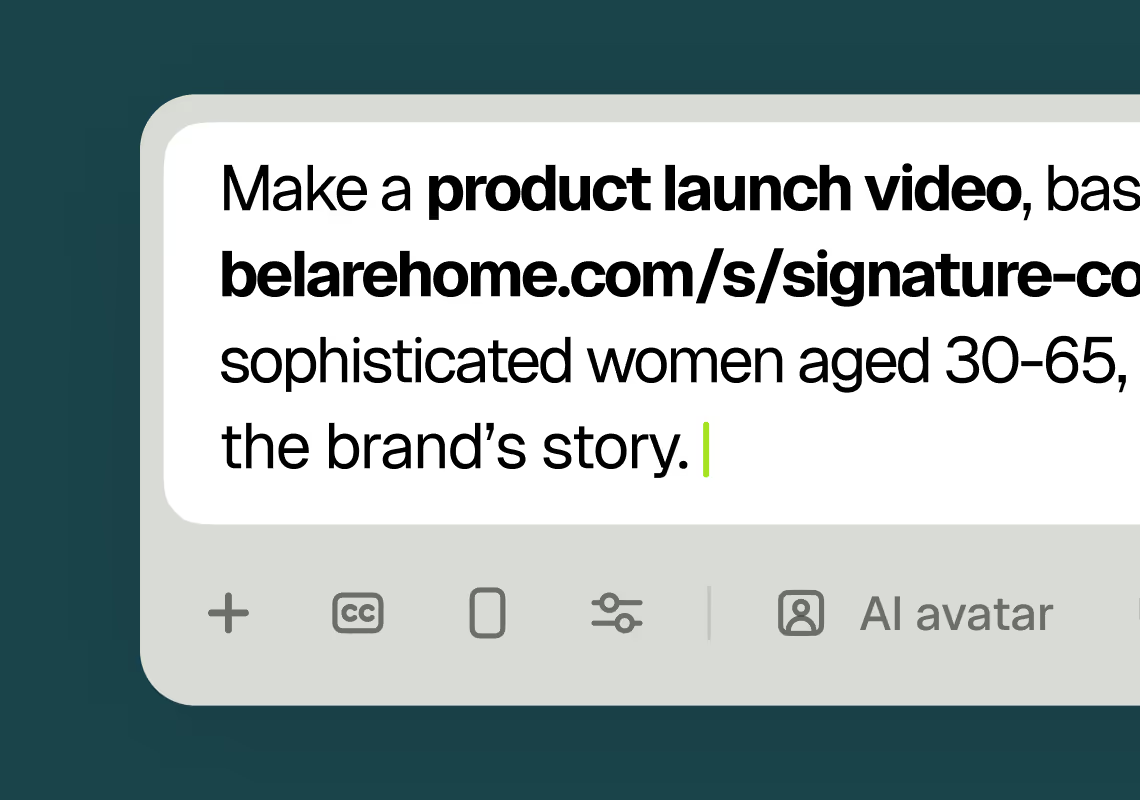
1Describe your video
Paste your promo brief, script, outline, or blog URL into Agent Opus.
 2
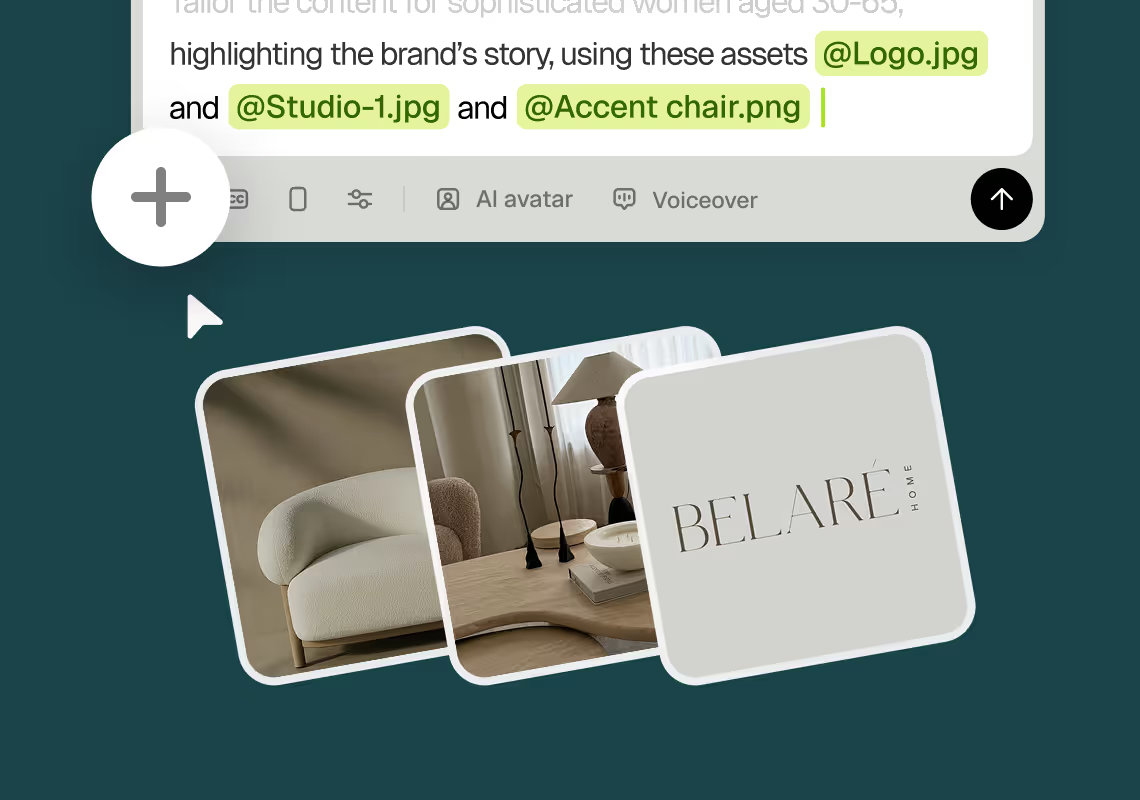
2Add assets and sources
Upload brand assets like logos and product images, or let the AI source stock visuals automatically.
 3
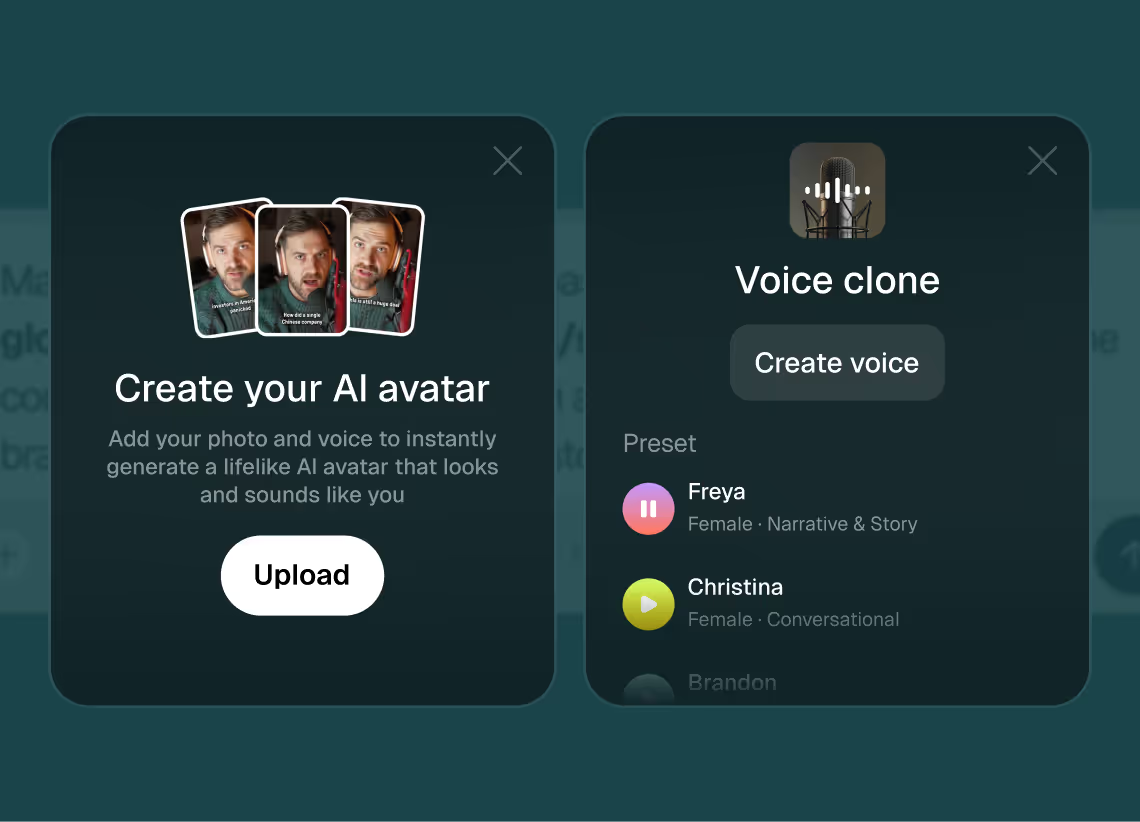
3Choose voice and avatar
Choose voice (clone yours or pick an AI voice) and avatar style (user or AI).
 4
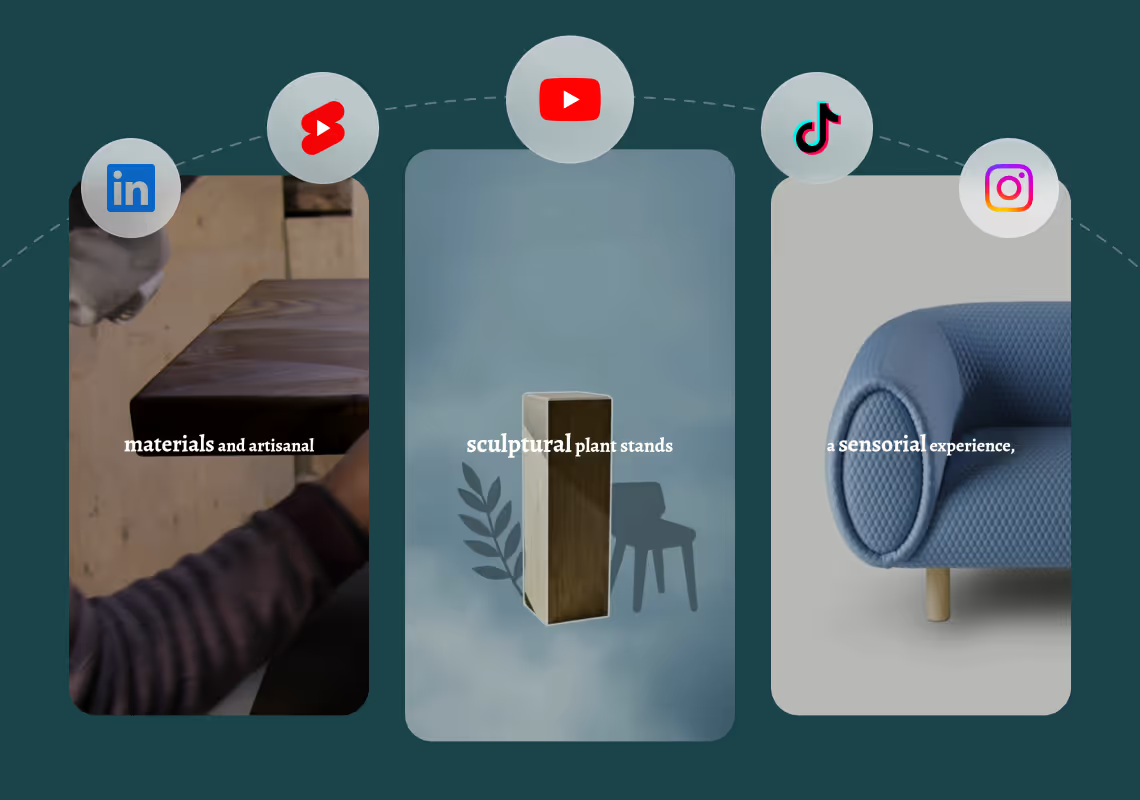
4Generate and publish-ready
Click generate and download your finished promo video in seconds, ready to publish across all platforms.


8 powerful features of Agent Opus' AI Video Generator From Script
Prompt-to-Video Generation
Turn a one-line idea into a finished video. The agent handles structure, pacing, B-roll selection, and final assembly automatically.
Script and Outline Support
Paste a full script, drop in an outline with section headers, or supply a blog or article URL — Agent Opus reads any of them and builds a video around the content.
AI Voiceover and Voice Cloning
Pick from natural-sounding AI voices in 30+ languages, or clone your own voice once. Every video then ships with your authentic narration.
Beat-Synced Motion Graphics
Dynamic visuals that lock to the beat of your audio or the pacing of your script — kinetic typography, transitions, and effects, no manual keyframing required.
Automatic Captions and Subtitles
Burn-in captions for short-form, soft subtitles for long-form, and multi-language translations — all generated and synced automatically.
Multi-Aspect-Ratio Export
9:16, 1:1, and 16:9 outputs from one job, with intelligent reframing of text, motion graphics, and focal elements for each ratio.
Brand Asset Integration
Upload your logo, watermark, fonts, and color palette. Agent Opus applies them consistently across every video automatically.
Avatar and Talking Head Support
Add an AI avatar, your own video footage, or a synthetic spokesperson to any video — useful for explainers, ads, and personal-brand content.
Testimonials
Awesome output, Most of my students and followers could not catch that it was using Agent Opus. Thank you Opus.
Wealth with Gaurav
This looks like a game-changer for us. We're building narrative-driven, visually layered content — and the ability to maintain character and motion consistency across episodes would be huge. If Agent Opus can sync branded motion graphics, tone, and avatar style seamlessly, it could easily become part of our production stack for short-form explainers and long-form investigative visuals.
srtaduck
wow that's actually great 🔥
irtaza65
Frequently Asked Questions
How does an AI video generator from script handle different script lengths and formats?
Agent Opus is built to accept scripts of varying lengths and structures, from tight 30-second social scripts to longer explainer or tutorial formats running several minutes. When you paste your script, the system analyzes sentence structure, paragraph breaks, and natural pacing cues to determine scene boundaries. Shorter scripts with punchy one-liners become fast-paced social videos with quick cuts and bold motion graphics. Longer scripts with detailed explanations are broken into logical chapters, each with its own visual treatment and pacing. If your script includes stage directions, speaker labels, or formatting like bullet points, Agent Opus interprets those as hints for scene composition and visual hierarchy. For example, a bulleted list in your script might trigger an animated checklist or numbered overlay on-screen. Paragraph breaks signal natural pauses where the voiceover can breathe and a new visual can appear. The AI also detects tone and intent: a script with questions or calls-to-action will generate visuals that emphasize those moments with larger text, color shifts, or motion effects. If your script is very short, Agent Opus will still generate a complete video by sourcing high-impact visuals and using dynamic motion graphics to fill the screen time. If your script is long, the system will pace scenes to avoid visual fatigue, alternating between text-heavy moments and image-driven sequences. You can also provide a brief or outline instead of a full script, and Agent Opus will expand it into a complete video with narration and visuals. The key is that the AI video generator from script adapts to your input format rather than forcing you into a rigid template. Whether you write in screenplay format, blog-style paragraphs, or simple bullet points, the system translates your text into a cohesive, watchable video with appropriate pacing, scene transitions, and visual emphasis.
What are best practices for writing scripts that work well with an AI video generator from script?
To get the best results from an AI video generator from script, write with clarity and visual intent. Start each major idea or section with a clear topic sentence, because Agent Opus uses those as scene anchors. If your script says "Here are three ways to boost engagement," the system will create a visual transition and likely display those three points as animated text or a numbered list. Use active verbs and concrete nouns rather than abstract language. Instead of "Our solution provides value," write "Our tool cuts editing time by 80 percent." Concrete claims give the AI clear visual cues: it might show a clock graphic, a before-and-after split screen, or a progress bar. If you want a specific visual to appear, mention it in the script. For example, "Imagine a dashboard filled with real-time analytics" will prompt the system to source or generate a dashboard visual. If you want an on-screen text callout, write it as a standalone sentence or phrase in your script, and Agent Opus will treat it as a graphic element. Keep sentences short and punchy for social videos. Long, complex sentences work fine for explainer content, but if you are targeting TikTok or Reels, aim for one idea per sentence and let the AI handle pacing. Use paragraph breaks to signal scene changes. Each new paragraph is a potential new visual or camera angle. If you want a voiceover pause or a moment of silence, insert a line break or a brief stage direction like "[pause]" and the system will interpret that as a beat. Avoid overly technical jargon unless your audience expects it, because the AI will source visuals based on keyword recognition. If you use niche terms, the system might default to generic stock images. Instead, describe the concept in plain language and let the motion graphics emphasize the technical detail. If you want a specific voice tone, mention it in a brief at the top of your script, like "upbeat and energetic" or "calm and authoritative," and Agent Opus will select or modulate the AI voice accordingly. Finally, test your script by reading it aloud. If it sounds natural and flows well when spoken, it will translate into a strong video. The AI video generator from script is designed to mirror human storytelling instincts, so the more your script feels like a conversation or a clear presentation, the better the output.
Can an AI video generator from script maintain consistent branding across multiple videos?
Yes, Agent Opus is designed to keep your videos on-brand even when generating from different scripts. You can upload brand assets like logos, color palettes, custom fonts, and product images, and the system will prioritize those visuals when assembling scenes. Once uploaded, your logo can appear as a watermark, an intro card, or an end slate in every video. Your product shots will be sourced first before the AI pulls from stock libraries. If you provide a brand style guide or a brief that describes your visual identity, Agent Opus will apply those rules to motion graphics, text overlays, and color grading. For example, if your brand uses a specific shade of blue and bold sans-serif typography, you can specify that in your settings, and the AI will generate text overlays and animated elements that match. Voice consistency is equally important. If you clone your own voice or select a specific AI voice for your first video, you can save that voice profile and reuse it across all future scripts. This ensures that every video sounds like it comes from the same narrator, which is critical for building audience recognition. Avatar consistency works the same way: if you use an AI avatar or your own footage in one video, you can lock that avatar as your default, and every new script will feature the same on-screen presence. The AI video generator from script also learns from your feedback. If you generate a video and adjust the pacing, visual style, or tone in your prompt, those preferences can be saved as a template. The next time you paste a script, Agent Opus will apply the same stylistic choices automatically. This is especially useful for content series, where you want every episode to feel cohesive. For example, if you are creating a weekly tips series, you can establish a visual format in episode one, then generate episodes two through ten by simply pasting new scripts. The system will maintain the same intro sequence, text overlay style, background music, and outro card. You can also create multiple brand profiles if you manage content for different clients or product lines. Each profile stores its own logos, colors, voices, and avatars, so you can switch contexts without manual reconfiguration. The result is a scalable, repeatable video production process that maintains brand integrity across dozens or hundreds of videos, all generated from scripts with zero manual editing.
What are the limitations or edge cases of using an AI video generator from script?
While an AI video generator from script like Agent Opus is powerful, there are scenarios where the system needs clear input to deliver the best results. First, highly abstract or poetic scripts can be challenging for visual generation. If your script is filled with metaphors, ambiguous language, or stream-of-consciousness writing, the AI may default to generic stock visuals because it cannot infer concrete imagery. In these cases, adding brief visual cues or stage directions in brackets can guide the system. For example, instead of "a sea of possibilities," write "a sea of possibilities [show: ocean waves, sunrise]." Second, scripts that rely heavily on cultural references, inside jokes, or niche terminology may not translate well unless you provide context. The AI sources visuals based on keyword recognition, so if your script mentions a specific meme, local landmark, or industry-specific tool, you may need to upload custom images or describe the reference in plainer terms. Third, very long scripts, say over 10 minutes of narration, may require breaking into multiple videos or chapters. While Agent Opus can handle extended content, extremely long single takes can result in pacing issues or visual repetition. If you are creating a long-form tutorial or documentary-style video, consider structuring your script with clear chapter breaks, and the system will treat each chapter as a distinct scene with its own visual arc. Fourth, scripts with rapid speaker changes or dialogue between multiple characters are not yet fully supported. Agent Opus is optimized for single-narrator formats, so if your script is written as a conversation or interview, you may need to reformat it as a monologue or use separate video generations for each speaker. Fifth, real-time or live-action footage requirements are a limitation. If your script calls for specific on-location shots, live demonstrations, or user-generated content, you will need to upload that footage as a custom asset. The AI cannot generate photorealistic live-action scenes from scratch; it sources from stock libraries or uses motion graphics and animations. Sixth, precise timing and frame-accurate synchronization are handled automatically, but if you need a specific visual to appear at an exact timestamp, you may need to adjust your script structure or provide a detailed brief. The system prioritizes natural pacing over rigid timecodes. Finally, while Agent Opus supports voice cloning, the quality of the clone depends on the input audio. If your voice sample is noisy, has background music, or is very short, the clone may not capture your full vocal range. Provide clean, 30-second to one-minute samples for best results. Understanding these edge cases helps you write scripts that play to the AI video generator from script's strengths: clear, concrete, visually descriptive language that translates directly into scenes, motion graphics, and polished video outputs.