AI Video Script Generator
Agent Opus transforms your AI video script into a complete, publish-ready video in minutes. Describe your concept, paste your script, or share a brief, and watch as AI assembles scenes, motion graphics, voiceover, and social-ready outputs. No timeline. No manual editing. Just prompt to video. Whether you're scripting product demos, explainers, or social content, Agent Opus handles the entire production pipeline so you can focus on strategy and distribution instead of production bottlenecks.

Explore what's possible with Agent Opus

Reasons why creators love Agent Opus' AI Video Script Generator
Never Run Out of Content
Overcome creative blocks with AI that suggests angles, hooks, and storylines tailored to your niche and audience.
Scripts That Sound Like You
Generate authentic dialogue that matches your voice and style, so every video feels personal without the guesswork.
Consistent Quality Every Time
Maintain professional script standards across all your videos without hiring a writer or second-guessing your messaging.
Focus on Strategy, Not Syntax
Spend less time wordsmithing and more time refining your creative vision, knowing your script foundation is solid.
Adapt Scripts for Any Platform
Quickly reshape your script for YouTube, TikTok, or LinkedIn so you maximize reach without starting from scratch.
From Idea to Outline in Seconds
Turn a single prompt into a structured script instantly, cutting hours of staring at blank pages from your workflow.
How to use Agent Opus’ AI Video Script Generator
 1
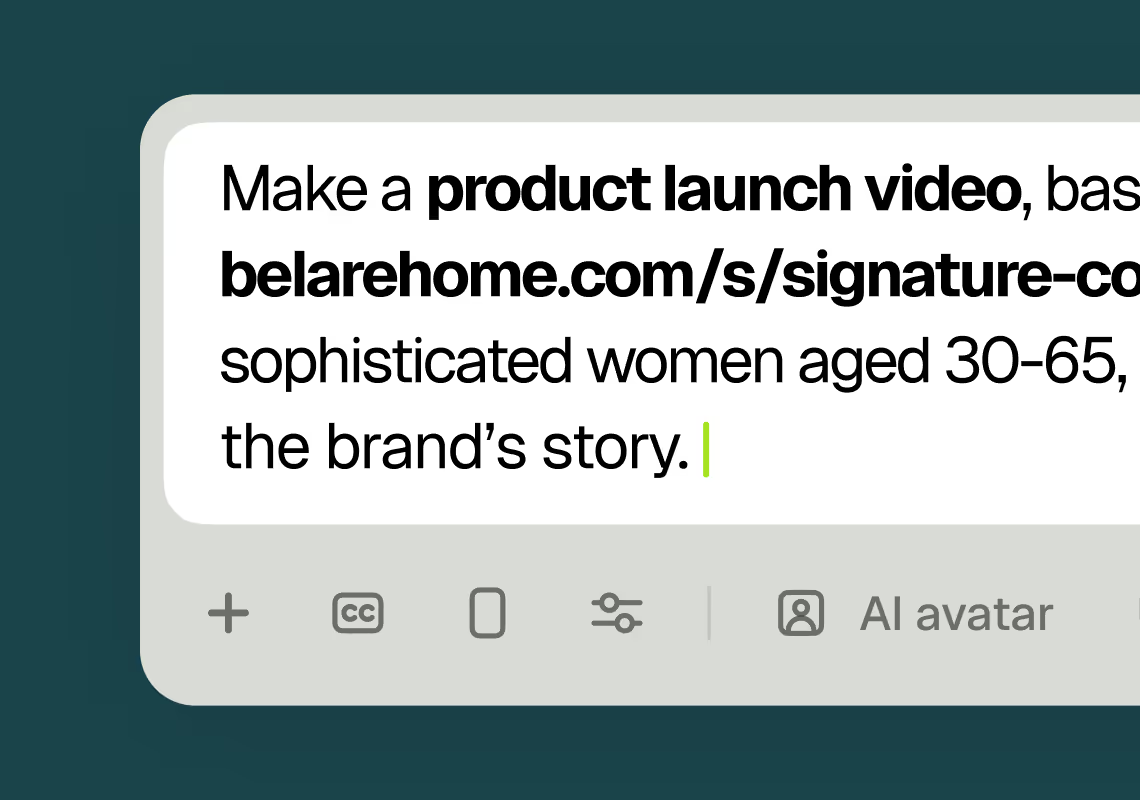
1Describe your video
Paste your promo brief, script, outline, or blog URL into Agent Opus.
 2
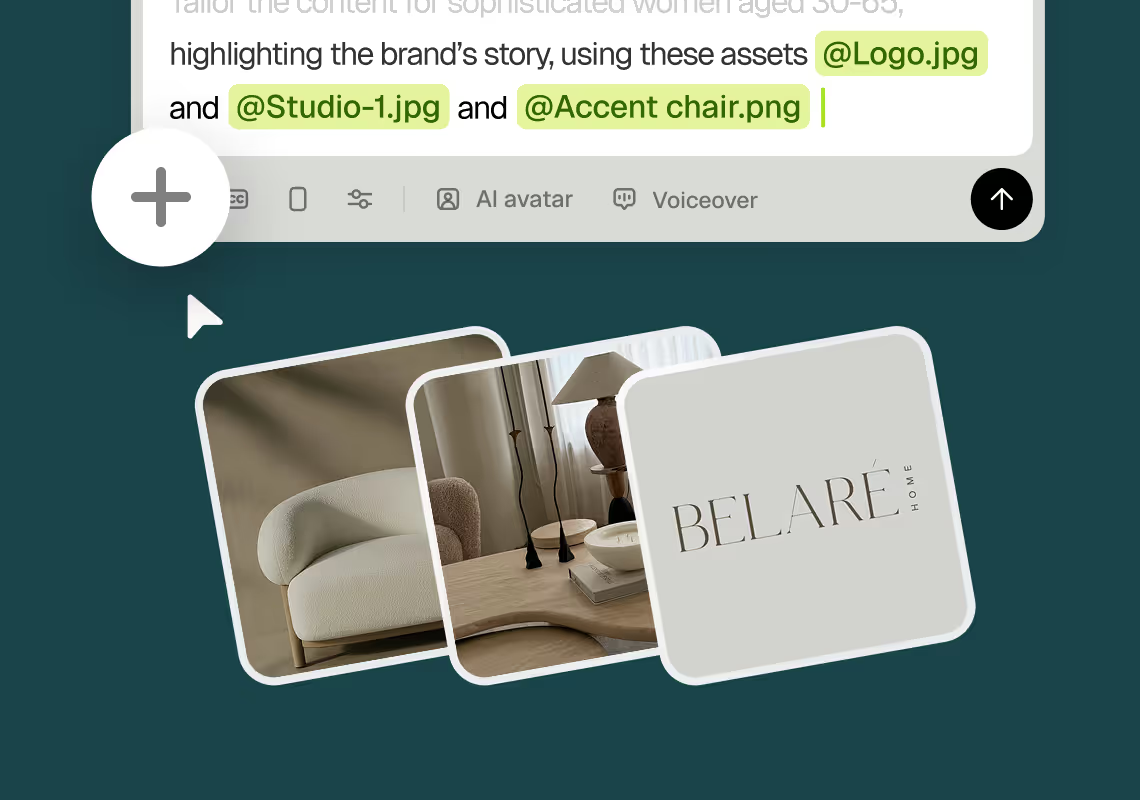
2Add assets and sources
Upload brand assets like logos and product images, or let the AI source stock visuals automatically.
 3
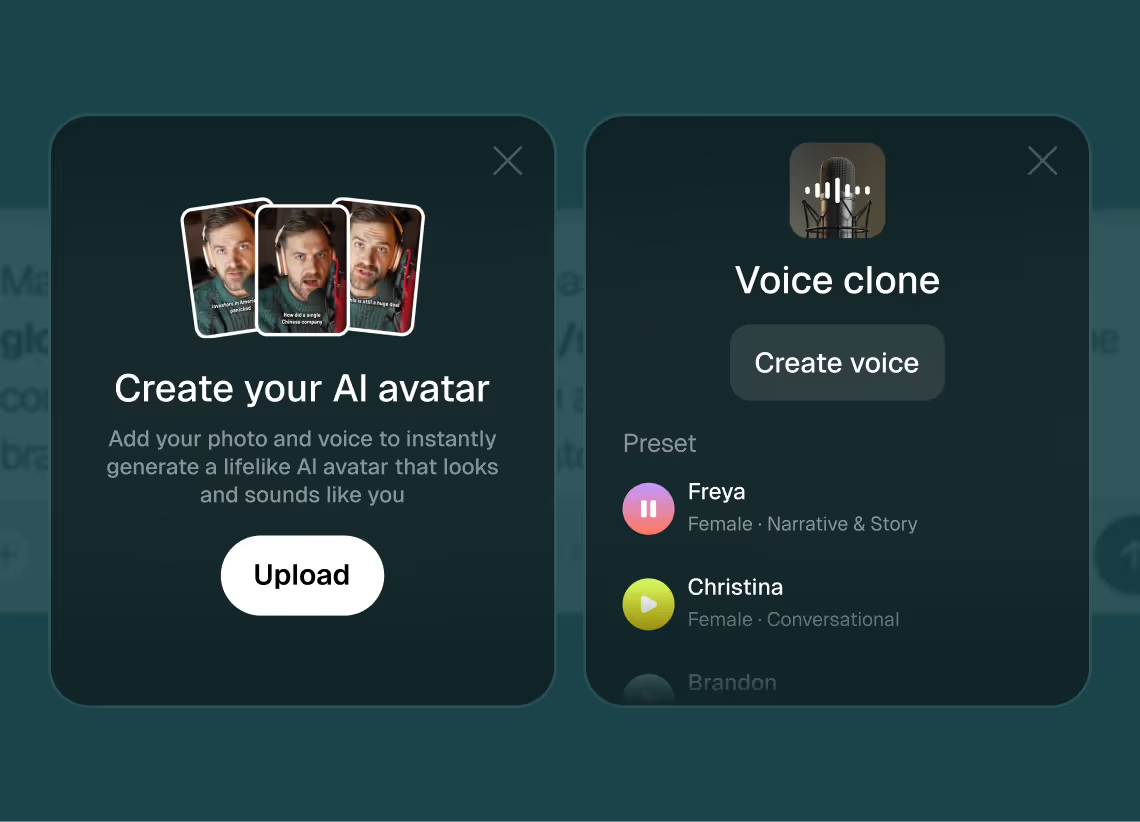
3Choose voice and avatar
Choose voice (clone yours or pick an AI voice) and avatar style (user or AI).
 4
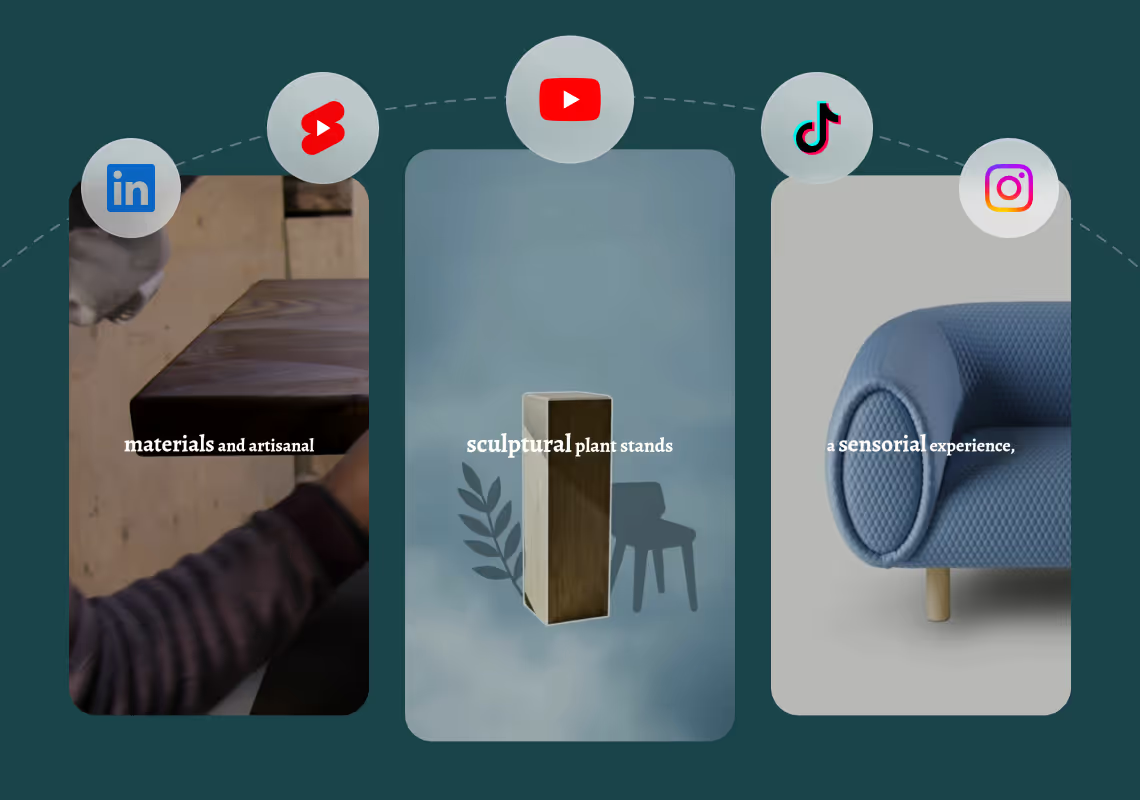
4Generate and publish-ready
Click generate and download your finished promo video in seconds, ready to publish across all platforms.


8 powerful features of Agent Opus' AI Video Script Generator
Export Ready Videos
Agent Opus delivers finished MP4 files optimized for social platforms and presentations.
Auto Scene Breakdown
Agent Opus parses your script into scenes and matches each line with perfect visuals.
Background Music Sync
Agent Opus adds royalty-free music timed to your script's pacing and emotional beats.
Smart Visual Matching
Agent Opus selects stock footage and graphics that align with your script's narrative flow.
Instant Script Previews
See a draft video from your AI video script before finalizing any creative choices.
Voice Narration from Text
Every line in your AI video script becomes natural voiceover with studio-quality audio.
Script to Video in Seconds
Paste your AI video script and watch Agent Opus generate a complete video instantly.
Multi-Format Script Support
Upload plain text, bullet points, or dialogue and Agent Opus adapts to any format.
Testimonials
This looks like a game-changer for us. We're building narrative-driven, visually layered content — and the ability to maintain character and motion consistency across episodes would be huge. If Agent Opus can sync branded motion graphics, tone, and avatar style seamlessly, it could easily become part of our production stack for short-form explainers and long-form investigative visuals.
srtaduck
I reviewed version a and I was very impressed with this version, it did very well in almost all aspects that users need, you would only have to make very small changes and maybe replace one of 2 of the pictures, but even saying that it could be used as is and still receive decent views or even chances at going viral depending on the story or the content the user chooses.
Jeremy
i got to say honestly really impressed me with the subtle click sound on each of the edits, it may seem little but that polish honestly makes it seem near the quality to publish without any further edits
Tony
Frequently Asked Questions
How does Agent Opus turn an AI video script into a finished video?
Agent Opus uses a multi-stage AI pipeline to transform your script into a complete video. First, it analyzes your script's structure, identifying key narrative beats, product mentions, and emotional tone. Then it generates a scene plan, determining how many scenes are needed, their duration, and the visual style for each. Next, the system sources or generates visuals: it can pull royalty-free stock footage, search the web for relevant images, or use your uploaded brand assets like logos and product shots. AI motion graphics are applied to create dynamic transitions, text overlays, and visual effects that match the script's pacing. Simultaneously, Agent Opus generates or clones voiceover based on your preferences, syncing speech to the script's timing. If you choose an avatar, the system animates it to match the voiceover's cadence and emotional tone. Finally, Agent Opus composites all elements, adds a background soundtrack, and exports the video in social-ready aspect ratios. The entire process is automated, so you never open a timeline or manually adjust cuts. You simply input your AI video script, configure voice and style preferences, and receive a publish-ready video. This approach eliminates the traditional bottleneck of manual editing, allowing creators and marketers to scale video production without expanding their team or learning complex software. The system is designed for speed and consistency, ensuring that every video generated from your script maintains professional quality and brand alignment.
What are best practices for writing an AI video script for Agent Opus?
To get the best results from Agent Opus, structure your AI video script with clear narrative beats and visual cues. Start with a strong hook in the first 10 seconds: a question, bold statement, or problem that grabs attention. This helps Agent Opus prioritize dynamic visuals and motion graphics at the open. Break your script into distinct sections or scenes, using paragraph breaks or numbered points to signal transitions. This guides the AI's scene assembly and pacing logic. Be explicit about key visuals you want: if you mention a product feature, name it directly so Agent Opus knows to source or display that asset. For example, instead of 'our solution helps teams,' write 'our dashboard shows real-time analytics.' This specificity improves visual matching. Include tone and style notes if your script has emotional shifts, such as 'urgent,' 'celebratory,' or 'educational.' Agent Opus uses these cues to adjust motion graphics intensity and voiceover delivery. Keep sentences concise and conversational, especially if you're using AI voiceover. Long, complex sentences can sound unnatural when synthesized, so aim for a rhythm that mirrors how you'd speak on camera. If you're uploading brand assets, reference them in the script: 'show logo here' or 'insert product shot.' This ensures Agent Opus places them at the right moments. Finally, test different script lengths. Shorter scripts (30 to 60 seconds) work best for social platforms like TikTok and Reels, while longer scripts (2 to 3 minutes) suit YouTube explainers or tutorials. Agent Opus adapts pacing and scene count based on script length, so align your writing with your distribution goal.
Can Agent Opus keep on-brand voices, logos, and visuals across multiple AI video scripts?
Yes, Agent Opus is designed for brand consistency across all your AI video script projects. Once you upload brand assets like logos, color palettes, fonts, and product images, the system stores them for reuse. Every time you generate a new video from a script, Agent Opus automatically applies these assets, ensuring visual continuity. For voiceover, you can clone your own voice or a team member's voice, and Agent Opus will use that clone for all future videos unless you specify otherwise. This is especially valuable for creators and marketers who produce series content, tutorials, or weekly updates, where a consistent voice builds audience recognition. If you prefer AI voices, you can select a specific voice from the library and save it as your default, so every script you input uses the same vocal tone and cadence. For visual branding, Agent Opus allows you to define style preferences: modern vs classic motion graphics, color schemes, and animation intensity. These preferences are applied globally, so your videos maintain a cohesive look even as you scale production. If you're generating videos for different campaigns or product lines, you can create multiple brand profiles within Agent Opus, each with its own assets and style settings. This lets you switch contexts without losing consistency within each campaign. The system also learns from your feedback: if you adjust visual choices or voiceover delivery in one video, Agent Opus can apply those preferences to future scripts. This iterative approach means your brand voice and visual identity become more refined over time, reducing the need for manual adjustments and ensuring that every AI video script you produce aligns with your established brand standards.
What are the limitations or edge cases of generating videos from an AI video script?
Agent Opus excels at turning structured AI video scripts into finished videos, but there are scenarios where the system's automation has boundaries. First, highly abstract or poetic scripts can challenge the visual matching logic. If your script uses metaphorical language without concrete nouns, Agent Opus may default to generic stock footage or motion graphics. To avoid this, include explicit visual cues or descriptive phrases that guide the AI's sourcing. Second, if your script references very niche or proprietary visuals that aren't available in stock libraries or web searches, you'll need to upload those assets manually. Agent Opus can't generate custom 3D models or illustrations from scratch, so if your product requires specific technical diagrams or unique animations, provide those files upfront. Third, voiceover quality depends on script clarity. If your script has complex jargon, acronyms, or non-standard pronunciation, AI voices may stumble. Voice cloning mitigates this, but even cloned voices need clear, conversational scripts to sound natural. Fourth, Agent Opus generates videos in standard social aspect ratios and durations, but it doesn't support interactive elements like clickable buttons, embedded forms, or branching narratives. If your use case requires those features, you'll need to add them in post-production outside Agent Opus. Fifth, the system is optimized for single-speaker narratives. If your AI video script involves multiple characters or dialogue, Agent Opus can handle it, but you'll need to specify voice changes or avatar switches in the script itself. Finally, while Agent Opus sources royalty-free and stock content, it's your responsibility to verify licensing if you're using the video for commercial purposes in regulated industries. The system provides attribution metadata, but final compliance checks are on the user. Understanding these edge cases helps you write AI video scripts that play to Agent Opus's strengths, ensuring smooth generation and minimal manual intervention.