AI Videos of Nature
Create stunning AI videos of nature from a simple text prompt. Agent Opus transforms your vision into cinematic nature content complete with dynamic motion graphics, professional voiceover, and social-ready formatting. Describe the scene you want – mountain sunrises, ocean waves, forest trails, wildlife moments – and watch Agent Opus assemble a polished, publish-ready video in minutes. No filming equipment, no stock footage hunting, no editing timeline. Just prompt to video, instantly.

Explore what's possible with Agent Opus

Reasons why creators love Agent Opus' AI Videos of Nature
No Travel Required
Access breathtaking landscapes and wildlife scenes from around the world without leaving your workspace.
Consistent Visual Quality
Deliver professional-grade nature content every time, eliminating the unpredictability of outdoor shoots.
Capture Seasons You Missed
Generate stunning nature footage from any season or time of day without waiting for perfect conditions.
Protect Fragile Ecosystems
Showcase sensitive natural environments and rare wildlife without disturbing habitats or causing environmental impact.
Scale Your Content Calendar
Produce multiple nature videos weekly without the logistics, permits, or weather delays of traditional filming.
Budget-Friendly Storytelling
Create cinematic nature documentaries and educational content without expensive equipment, crews, or location fees.
How to use Agent Opus’ AI Videos of Nature
 1
1Describe your video
Paste your promo brief, script, outline, or blog URL into Agent Opus.
 2
2Add assets and sources
Upload brand assets like logos and product images, or let the AI source stock visuals automatically.
 3
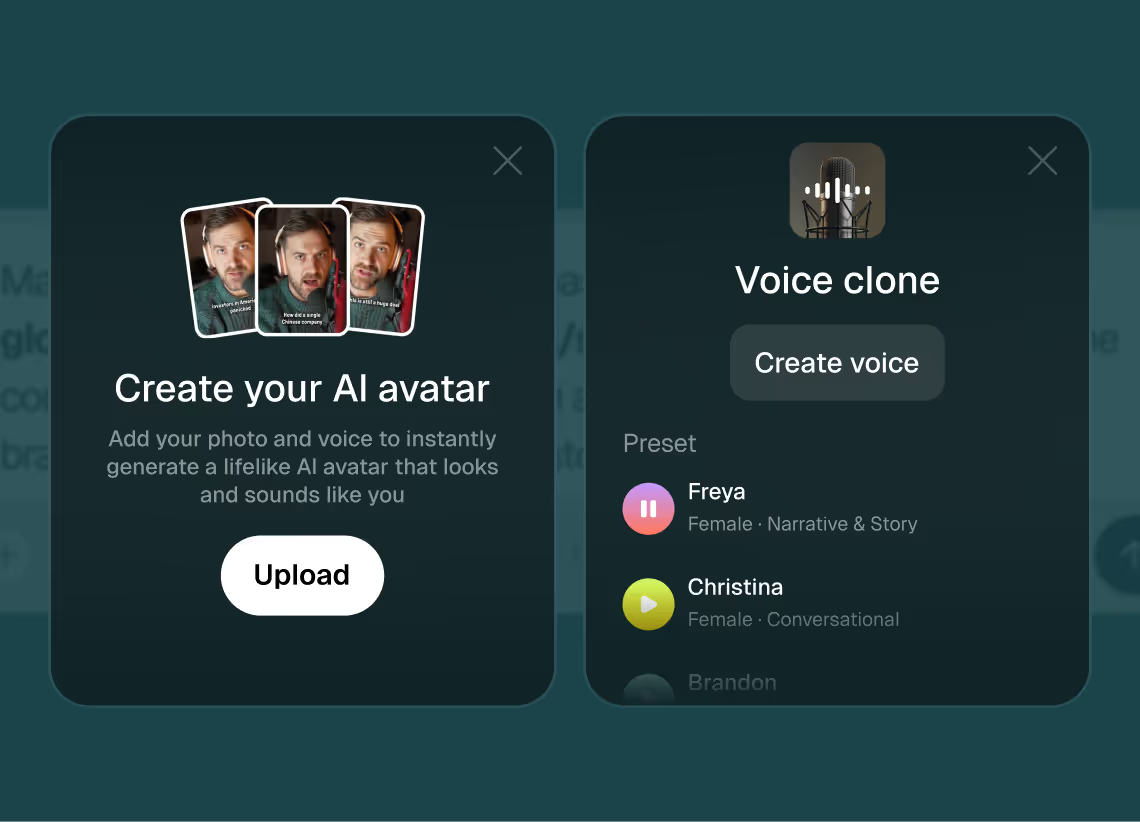
3Choose voice and avatar
Choose voice (clone yours or pick an AI voice) and avatar style (user or AI).
 4
4Generate and publish-ready
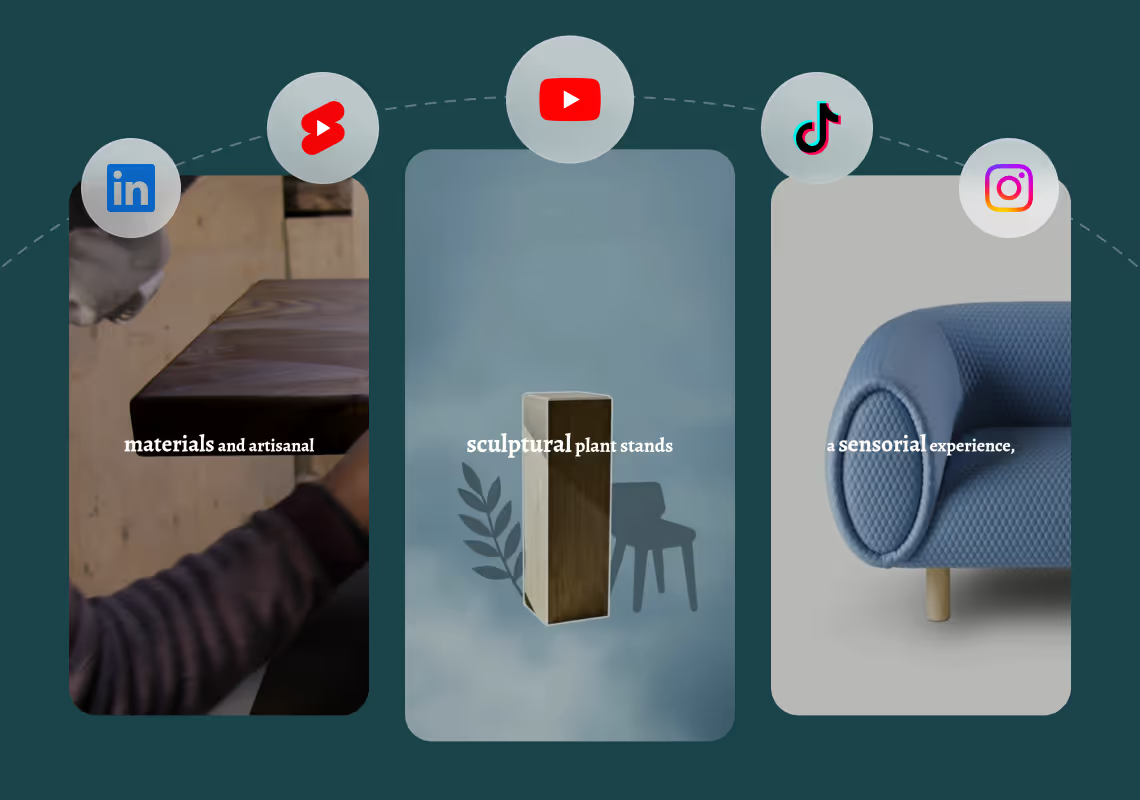
Click generate and download your finished promo video in seconds, ready to publish across all platforms.


8 powerful features of Agent Opus' AI Videos of Nature
Biome Variety
Generate desert dunes, tropical rainforests, or arctic tundra scenes from a single text prompt.
Weather Dynamics
Add fog, snow, or thunderstorms to your nature videos for dramatic environmental storytelling.
Macro Nature Details
Zoom into dewdrops, flower petals, or insect wings with AI-rendered close-up nature cinematography.
Seasonal Transitions
Generate nature videos that shift from spring blooms to autumn leaves with smooth AI transitions.
Prompt to Nature Scene
Describe forests, oceans, or mountains in text and Agent Opus generates cinematic nature footage instantly.
Atmospheric Soundscapes
Agent Opus pairs your nature visuals with rain, wind, or birdsong audio for immersive videos.
Wildlife Motion Graphics
Add animated birds, flowing rivers, or swaying grass to your AI-generated nature landscapes effortlessly.
Time-Lapse Nature Effects
Create sunrise-to-sunset or cloud-drift sequences that compress hours into seconds of stunning footage.
Testimonials
Awesome output, Most of my students and followers could not catch that it was using Agent Opus. Thank you Opus.
Wealth with Gaurav
wow that's actually great 🔥
irtaza65
I reviewed version a and I was very impressed with this version, it did very well in almost all aspects that users need, you would only have to make very small changes and maybe replace one of 2 of the pictures, but even saying that it could be used as is and still receive decent views or even chances at going viral depending on the story or the content the user chooses.
Jeremy
all in all LOVE THIS agent. I'm curious to see how I can push it (within reason) Just need to learn to get the consistency right with my prompts
Rebecca
Frequently Asked Questions
How does AI videos of nature handle different natural environments and seasons?
Agent Opus generates nature videos by interpreting your text description and automatically sourcing relevant visual elements that match your specified environment, season, time of day, and atmospheric conditions. When you describe a scene like 'autumn forest with morning mist and golden sunlight filtering through maple trees,' the system identifies key visual components (autumn foliage, mist effects, morning light quality, maple tree characteristics) and assembles footage that captures those exact elements. The AI understands seasonal variations, so a winter mountain scene will feature snow-covered peaks, bare trees, and cold-weather lighting, while a summer meadow scene includes lush green grass, wildflowers, and warm golden-hour tones. For weather phenomena, you can specify rain, fog, storms, clear skies, or dramatic cloud formations, and Agent Opus sources imagery that matches those atmospheric conditions. The motion graphics engine adds cinematic camera movements appropriate to each environment – slow pans across vast landscapes, gentle tracking shots through forests, aerial perspectives over coastlines, or intimate close-ups of natural details. Time-of-day specifications work seamlessly: sunrise scenes get warm orange and pink tones with low-angle lighting, midday scenes feature bright overhead light, golden hour brings soft warm glows, and twilight scenes include deep blues and purples. Geographic specificity also works well – you can request tropical rainforests, arctic tundra, desert dunes, coral reefs, alpine meadows, or any other ecosystem, and the system sources visuals that authentically represent those environments. The AI also handles seasonal transitions, so you can create videos showing the same location across different seasons or weather changes within a single video. For wildlife content, describe the species, behavior, and habitat, and Agent Opus finds appropriate footage showing animals in their natural environments. The system maintains visual consistency throughout each video, ensuring that lighting, color grading, and atmospheric conditions remain coherent even when combining multiple source elements. This environmental intelligence means you can create highly specific nature content without manually searching stock libraries or traveling to locations.
What are best practices for writing prompts for AI videos of nature?
Effective nature video prompts balance specificity with creative flexibility, giving Agent Opus clear direction while allowing the AI to optimize visual storytelling. Start with the core environment and primary visual focus: 'Pacific Northwest rainforest' or 'Sahara desert at sunset' establishes the foundation. Then layer in sensory details that guide mood and atmosphere: 'misty morning light filtering through ancient redwoods' or 'golden sand dunes with dramatic shadows under orange sky.' Include movement and scale cues to help the AI determine appropriate camera work: 'sweeping aerial view' suggests drone-style footage, 'intimate ground-level perspective' indicates close-up shots, and 'slow walk through' implies tracking or dolly movements. Specify time and lighting explicitly because these dramatically affect visual tone: 'pre-dawn blue hour,' 'harsh midday sun,' 'golden hour glow,' or 'twilight transition' each create distinct atmospheres. For wildlife content, describe behavior and context rather than just species: 'eagle soaring over mountain valley' or 'deer grazing in meadow at sunrise' gives the AI narrative direction beyond static animal shots. Weather and atmospheric conditions add drama and variety: 'storm clouds gathering over ocean,' 'gentle rain in bamboo forest,' or 'snow falling on pine branches' create specific visual moments. Color palette suggestions help maintain brand consistency: 'vibrant autumn colors,' 'muted winter tones,' or 'tropical bright greens and blues' guide the overall look. When creating longer videos or sequences, structure your prompt as a narrative arc: 'Start with wide mountain vista, transition to forest interior, end with waterfall close-up' gives the AI a clear story flow. Include audio cues if voiceover is important: 'calm educational narration about ecosystem' or 'inspirational voiceover about conservation' helps the system match visual pacing to spoken content. For branded content, mention your specific use case: 'outdoor gear product showcase in alpine setting' or 'wellness brand meditation video with ocean waves' ensures the AI prioritizes relevant visual elements. Avoid overly technical cinematography jargon unless you need specific effects; the AI interprets natural language better than camera specs. If you have reference materials like blog posts or articles about the location or topic, provide the URL and let Agent Opus extract key visual concepts automatically. Test different prompt lengths: sometimes a concise 'misty mountain sunrise' works perfectly, while other times a detailed paragraph creates richer results. The system learns from your style over time, so consistent terminology and structure across multiple videos helps maintain visual coherence for series content.
Can AI videos of nature maintain consistent branding and visual style across multiple videos?
Agent Opus provides robust tools for maintaining brand consistency across your nature video library, essential for channels, campaigns, and content series. The system supports custom logo integration, allowing you to place your brand mark consistently in the same position across all videos – typically lower thirds or corner placements that don't interfere with nature visuals. Color grading consistency is achievable through prompt language: if your brand uses specific color palettes or tonal preferences, describe them in each prompt ('warm earth tones,' 'cool blue-green palette,' 'high-contrast dramatic look') and Agent Opus applies those preferences during scene assembly. For voiceover consistency, the voice cloning feature is particularly powerful – record a short sample of your brand voice once, and Agent Opus can generate narration in that exact voice for unlimited videos, ensuring every piece of content sounds authentically like your brand. If you prefer AI voices, select one voice profile and use it consistently across all projects; the system remembers your preferences. Visual pacing and rhythm can be standardized through prompt structure: if your brand style favors slow, meditative nature content, consistently request 'slow pans,' 'gentle transitions,' and 'contemplative pacing' in your prompts. For faster, more energetic content, use language like 'dynamic movement,' 'quick cuts,' and 'energetic pacing.' The motion graphics engine can incorporate recurring visual elements – if your brand uses specific transition styles, lower-third designs, or text treatments, describe these in your prompts and Agent Opus applies them consistently. For series content or multi-video campaigns, create a master prompt template that includes your core brand elements, then customize the nature-specific details for each video while keeping the structural elements constant. This approach works exceptionally well for educational series, travel content, or seasonal campaigns where visual consistency reinforces brand recognition. The system also supports aspect ratio consistency, crucial for channels focused on specific platforms – if you primarily create for Instagram Reels, always generate in 9:16, or if YouTube is your focus, stick with 16:9 across all videos. Background music choices contribute significantly to brand feel; if your nature content always features ambient soundscapes versus upbeat tracks, specify this in prompts to maintain audio consistency. For organizations with detailed brand guidelines, consider creating a brand prompt addendum that gets appended to every nature video request, ensuring elements like logo placement, color preferences, voice selection, and pacing style remain constant without manual specification each time. The AI learns from your patterns, so the more videos you create with consistent elements, the better Agent Opus becomes at automatically applying your brand style to new nature content.
What are the limitations or edge cases when generating AI videos of nature?
Understanding the boundaries of AI videos of nature helps set realistic expectations and optimize your creative approach. Agent Opus generates videos by assembling and enhancing existing visual elements rather than creating photorealistic nature footage from scratch, which means the quality and variety of output depends partly on available source imagery. Extremely rare or highly specific natural phenomena – like particular endangered species in specific behaviors, or very localized geological formations – may have limited source material, potentially resulting in more generic nature visuals that approximate rather than exactly match your vision. The system excels at common nature scenes (forests, mountains, oceans, sunsets, wildlife) where abundant high-quality footage exists, but obscure or newly discovered natural locations may not yet have sufficient visual references. Temporal specificity can be challenging: requesting 'the exact moment a wave crashes' or 'lightning striking a specific tree' works conceptually, but the AI assembles representative footage rather than capturing that precise microsecond. For scientific or documentary content requiring absolute accuracy – like specific animal species identification or precise geological formations – verify that generated visuals meet your accuracy standards, as the AI prioritizes aesthetic quality and narrative flow over scientific precision. Extreme weather events or dangerous natural phenomena are represented through available footage, which may not capture the full intensity of events like hurricanes, volcanic eruptions, or avalanches due to the inherent difficulty of filming such moments. The motion graphics engine creates smooth, professional camera movements, but highly specialized cinematography techniques like specific drone maneuvers, underwater filming angles, or macro photography perspectives may be approximated rather than perfectly replicated. Text overlays and data visualizations work well for educational nature content, but complex scientific diagrams or detailed maps require clear prompt specifications and may need iteration to achieve the exact layout you envision. Voice cloning produces excellent results for narration, but capturing very specific emotional tones or dramatic delivery styles may require multiple generation attempts to match your exact vision. The system handles seasonal and time-of-day variations effectively, but rapid transitions – like time-lapse sequences showing day-to-night changes or seasonal progressions – are created through scene assembly rather than true time-lapse photography. For branded content, while logos and basic branding elements integrate seamlessly, complex animated brand elements or detailed product placements in nature settings may require specific prompt engineering to position correctly within scenes. Video length is optimized for social platforms, so extremely long-form nature documentaries spanning 30-plus minutes would be better created as multiple shorter segments rather than a single generation. Audio mixing balances voiceover, music, and natural ambient sounds automatically, but if you need very specific sound design – like isolating particular bird calls or water sounds at precise volumes – you may need to adjust expectations or provide detailed audio specifications. Geographic authenticity is generally strong, but if your brand requires absolute certainty that footage represents a specific protected area or exact location, the AI's assembled approach may not guarantee that level of geographic precision. Finally, while Agent Opus eliminates manual editing, it also means you're working within a prompt-to-video paradigm rather than having frame-by-frame control; creators who need to manually adjust specific visual moments or timing may find the automated approach limiting. These limitations are trade-offs for the speed and accessibility the system provides, and most creators find that the benefits of instant nature video generation far outweigh the constraints, especially when prompts are crafted with these boundaries in mind.