AI Voice Cloning for Video Creation
Agent Opus combines AI voice cloning with full text-to-video generation. Upload a short voice sample, describe your video concept, and watch as the system creates a finished video using your cloned voice. No recording sessions, no editing timelines. Just prompt-to-publish video content that sounds exactly like you, complete with motion graphics, branded visuals, and social-ready formatting. Perfect for creators and marketers who need consistent voice branding across dozens of videos without spending hours in a recording booth.

Explore what's possible with Agent Opus

Reasons why creators love Agent Opus' AI Voice Cloning for Video Creation
Skip Studio Costs
Record once, reuse your voice across unlimited videos without booking expensive studio time or hiring voice talent.
Scale Without Burnout
Create dozens of personalized videos in your authentic voice while you focus on strategy, not recording sessions.
Sound Like You, Always
Maintain your unique vocal identity across every piece of content so your audience recognizes and trusts your brand instantly.
Launch-Ready in Minutes
Turn scripts into polished, voice-narrated videos faster than scheduling a single recording session with traditional methods.
Scale Without Burnout
Create dozens of videos per week without straining your voice or spending hours in front of a microphone.
Sound Like You, Always
Your audience hears your authentic voice in every video, building trust and recognition across all your content.
How to use Agent Opus’ AI Voice Cloning for Video Creation
 1
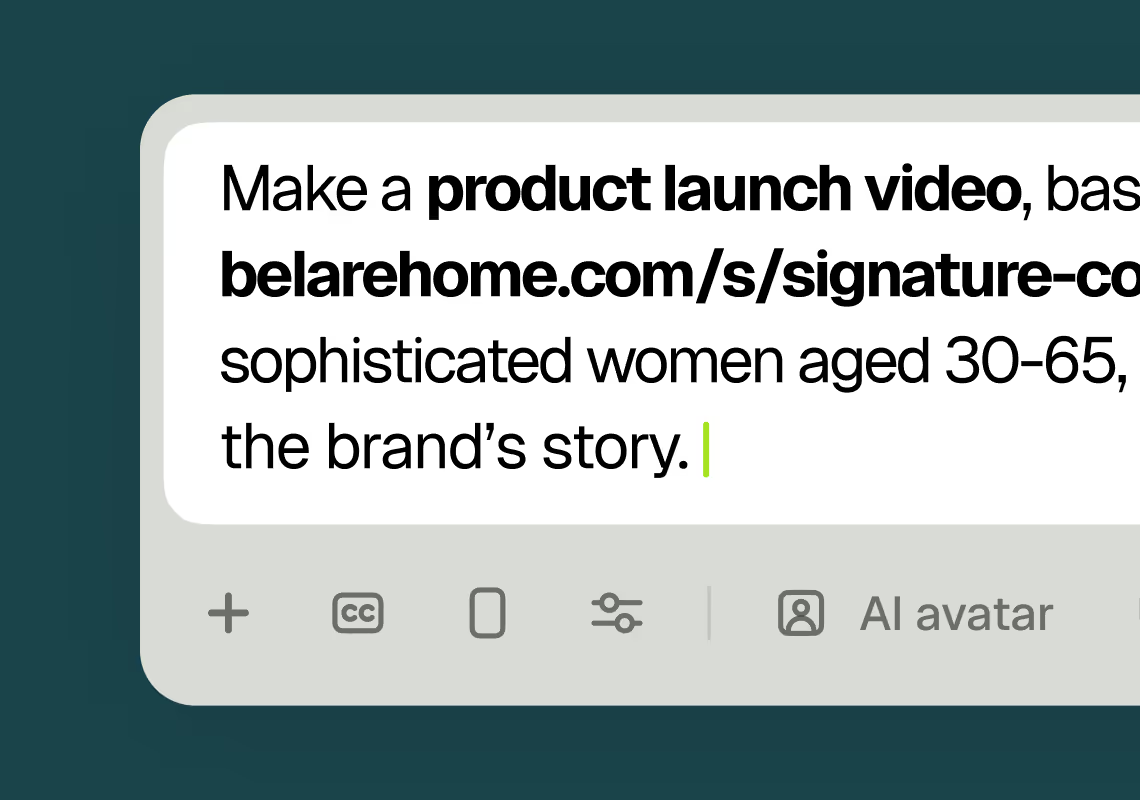
1Describe your video
Paste your promo brief, script, outline, or blog URL into Agent Opus.
 2
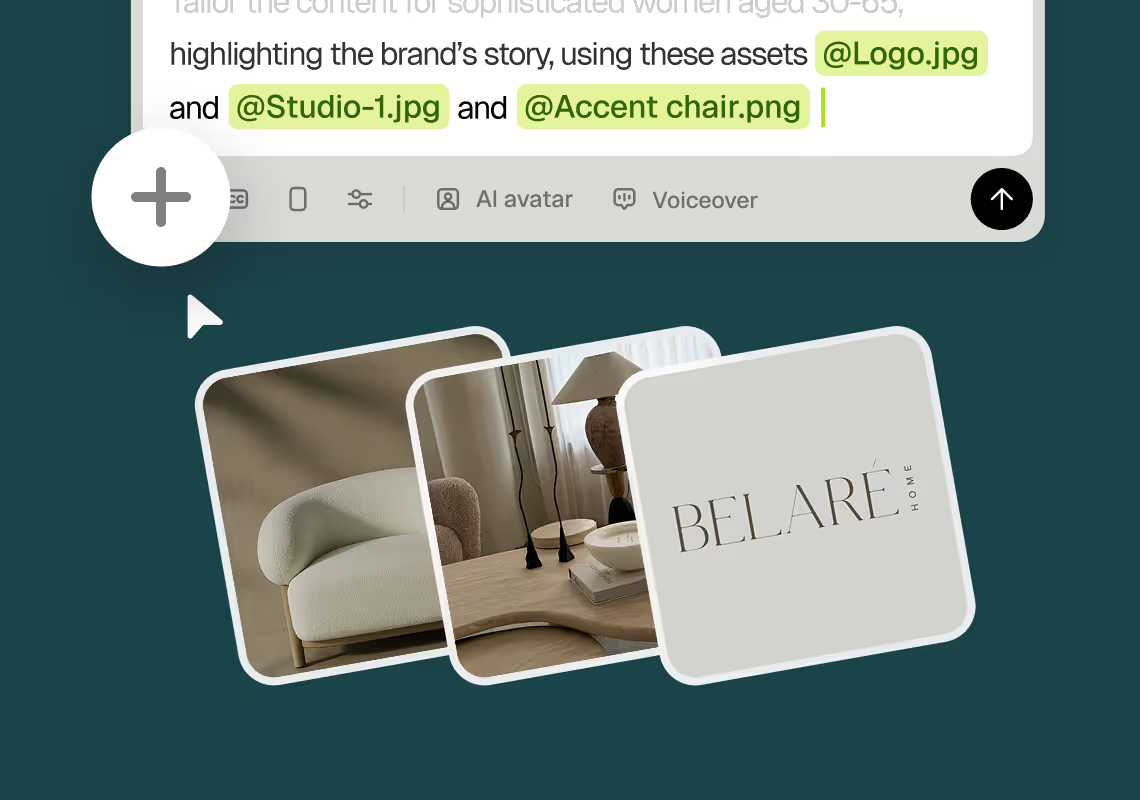
2Add assets and sources
Upload brand assets like logos and product images, or let the AI source stock visuals automatically.
 3
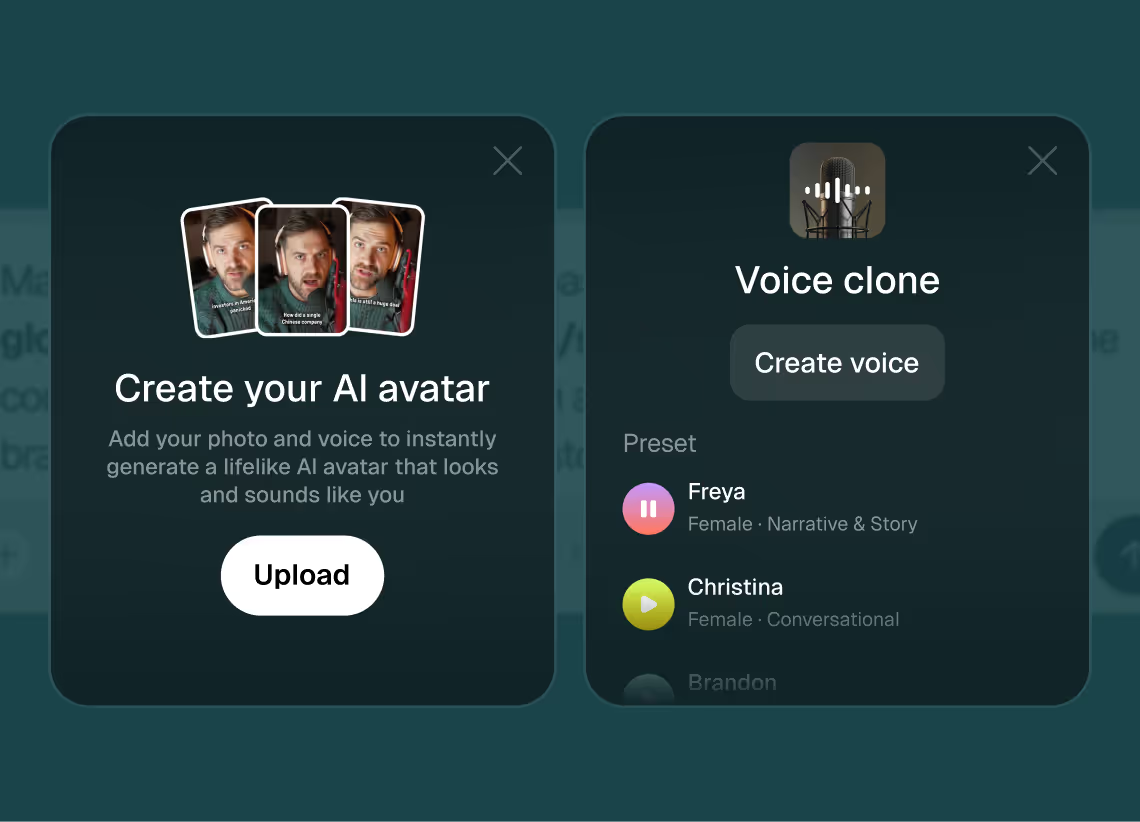
3Choose voice and avatar
Choose voice (clone yours or pick an AI voice) and avatar style (user or AI).
 4
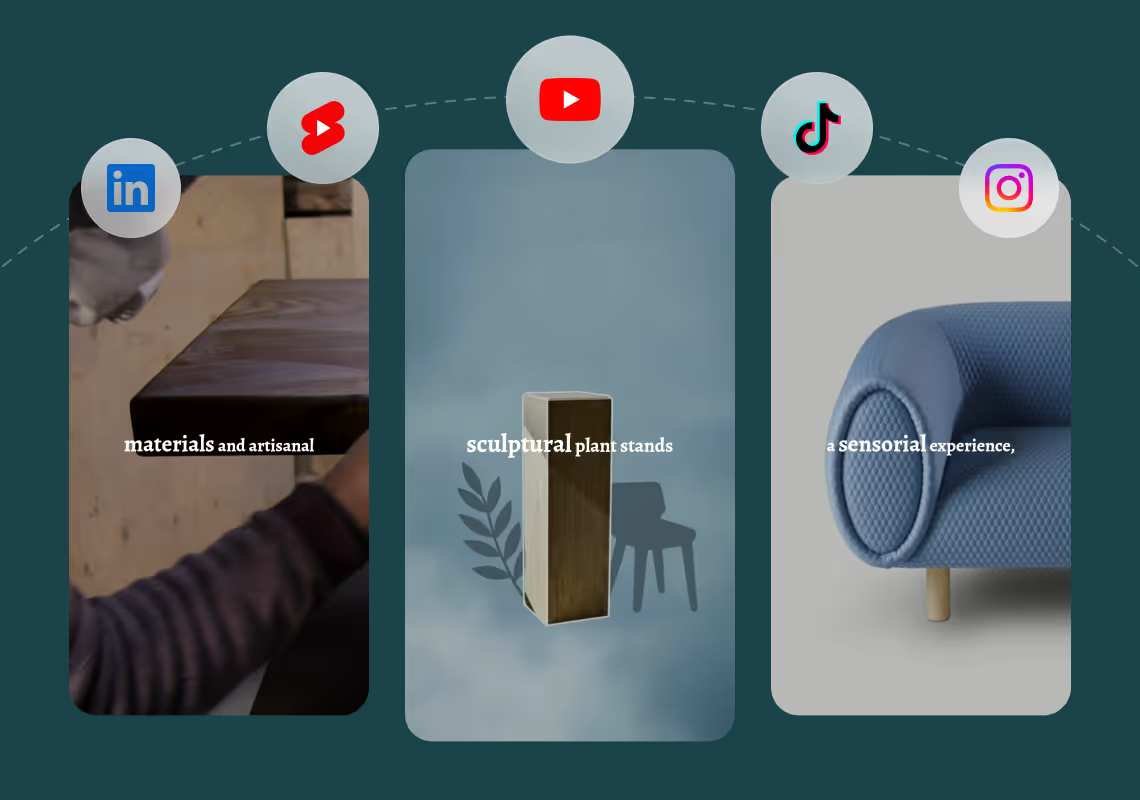
4Generate and publish-ready
Click generate and download your finished promo video in seconds, ready to publish across all platforms.


8 powerful features of Agent Opus' AI Voice Cloning for Video Creation
Script to Cloned Audio
Type any script and instantly generate narration using your cloned voice without recording studios.
Brand Voice Consistency
Maintain the same recognizable voice across every video to strengthen brand identity and trust.
Secure Voice Data
Your voice samples are encrypted and stored privately, ensuring full control over your vocal identity.
Emotion and Tone Control
Adjust pitch, speed, and emphasis so your cloned voice matches the mood of each video.
Natural Speech Synthesis
AI voice cloning delivers human-like intonation, pacing, and emotion in every narrated video.
Instant Voiceover Updates
Revise your script and regenerate cloned narration in seconds without re-recording or editing audio.
Multilingual Voice Cloning
Clone once and generate narration in multiple languages while preserving your unique vocal signature.
Testimonials
I reviewed version a and I was very impressed with this version, it did very well in almost all aspects that users need, you would only have to make very small changes and maybe replace one of 2 of the pictures, but even saying that it could be used as is and still receive decent views or even chances at going viral depending on the story or the content the user chooses.
Jeremy
I dont think id change a thing
Quirky Collectables
This looks like a game-changer for us. We're building narrative-driven, visually layered content — and the ability to maintain character and motion consistency across episodes would be huge. If Agent Opus can sync branded motion graphics, tone, and avatar style seamlessly, it could easily become part of our production stack for short-form explainers and long-form investigative visuals.
srtaduck
Frequently Asked Questions
How does AI voice cloning in Agent Opus handle different script lengths and tones?
Agent Opus processes your voice clone across any script length, from 15-second social hooks to five-minute explainer videos. The system analyzes your original voice sample for pitch range, speaking pace, emphasis patterns, and natural pauses. When you submit a script, the AI applies those vocal characteristics throughout the entire narration, adjusting pacing to match sentence structure and content type. For promotional scripts, the clone maintains energy and urgency. For tutorial content, it adopts a steadier, instructional tone. The voice cloning engine preserves your unique vocal signature while adapting delivery to context. If your script includes questions, the clone raises pitch naturally at the end of interrogative sentences. If you write in short, punchy phrases, the clone delivers them with appropriate pauses and emphasis. You don't need to mark up your script with pronunciation guides or timing cues. The system infers natural delivery from your writing and applies your cloned voice characteristics automatically. This means you can write conversationally and trust the clone to sound like you would if you were reading the script aloud. The AI also handles varied vocabulary without stumbling over technical terms or brand names, as long as they're spelled clearly in your script. For best results, write scripts that match your natural speaking style. If you typically use contractions and casual phrasing, write that way. If your voice sample showed a more formal delivery, write in that register. The clone performs best when script style aligns with the vocal characteristics captured in your original sample.
What are the technical requirements and best practices for creating a high-quality voice clone in Agent Opus?
Agent Opus requires a clean audio sample of at least 30 seconds, though 60 to 90 seconds produces more accurate clones. Record in a quiet space with minimal background noise, echo, or reverb. Use a decent microphone, even a modern smartphone mic works well if you're close to it and in a sound-dampened environment. Avoid recording in large empty rooms, near air vents, or with background music playing. Speak naturally at your normal pace and volume. Don't exaggerate pronunciation or adopt a performance voice. The goal is to capture how you actually sound in everyday conversation or presentation mode. Read a script that includes varied sentence structures, some questions, a few exclamations, and a range of vocabulary. This gives the AI more vocal data to model. Avoid monotone reading. Let your natural inflection and emphasis come through. If you normally pause for breath or emphasis, do that in your sample. The system learns from those patterns. After recording, listen back. If you hear clicks, pops, or distortion, re-record. If your voice sounds muffled or distant, move closer to the mic and try again. Agent Opus can filter light background noise, but starting with clean audio produces a more accurate clone. Once you upload your sample, the system processes it and creates your voice model. You can then test the clone by generating a short video with a simple script. Listen critically. Does the pacing match your natural rhythm? Does the tone sound like you? If the clone feels off, record a new sample with more varied delivery or in a quieter space. Most users get excellent results on the first try if they follow these basics. Clean audio, natural delivery, and a sample that showcases your full vocal range. After your clone is active, you can generate unlimited videos without ever recording again. The system applies your voice to any script you provide, maintaining consistency across all your content.
Can AI voice cloning in Agent Opus maintain brand voice consistency across different video types and campaigns?
Yes, and this is one of the primary use cases for voice cloning in video generation. Once Agent Opus creates your voice clone, that model becomes your consistent audio brand across every video you produce. Whether you're creating product demos, customer testimonials, tutorial series, social ads, or internal training videos, the same cloned voice narrates all of them. This consistency builds recognition and trust. Your audience hears the same voice in a TikTok ad and a YouTube tutorial, reinforcing brand identity without requiring you to record fresh voiceover for each piece. The system maintains vocal characteristics like pitch, pace, and tone, but it also adapts delivery to match the content type. A promotional script gets energetic delivery. An educational script gets clear, measured pacing. The clone sounds like you in different contexts, just as your real voice would shift slightly between a sales pitch and a how-to explanation. For teams, this means one spokesperson can voice dozens of videos per week without recording fatigue. For solo creators, it means you can batch-write scripts and generate a month of content in an afternoon, all narrated in your voice. The clone doesn't drift or degrade over time. Your tenth video sounds as consistent as your first. You can also update your clone if your speaking style evolves or if you want to capture a different vocal register. Record a new sample, create a new clone, and switch between them for different content types. Some users maintain multiple clones: one for formal product videos, another for casual social content. Agent Opus lets you select which clone to use for each video generation. This flexibility supports complex content strategies while maintaining the core benefit of voice cloning, eliminating repetitive recording work and ensuring every video sounds professionally narrated in a voice your audience recognizes.
How does Agent Opus integrate voice cloning with visual generation and motion graphics?
Agent Opus treats voice cloning as one component of a unified text-to-video system. When you submit a prompt or script, the system doesn't just generate voiceover. It creates a complete video where your cloned voice, visual scenes, motion graphics, and pacing all work together. Here's the workflow: you write a script or prompt describing your video concept. Agent Opus analyzes the content, identifies key concepts and visual moments, then assembles a scene sequence. For each scene, it sources relevant visuals from your uploaded brand assets, product images, or royalty-free stock libraries. It applies AI motion graphics to create dynamic transitions, text overlays, and visual emphasis that align with your narration. Your cloned voice narrates the script, and the system synchronizes visual pacing to match vocal delivery. If your clone pauses for emphasis, the visuals hold or transition at that moment. If the narration speeds up, scene cuts quicken to maintain energy. This synchronization happens automatically. You don't manually time scenes to voiceover. The AI handles that coordination. The result is a video that feels professionally edited, where voice, visuals, and motion graphics support each other. For example, if your script says, 'Our new feature saves you hours every week,' the system might show a product interface with animated highlights while your cloned voice delivers that line. The motion graphics emphasize 'hours every week' with a text overlay or visual flourish, timed to your vocal emphasis. This integration is what separates Agent Opus from standalone voice cloning tools. You're not generating a voiceover file and then manually editing it into a video. You're generating a finished video where your cloned voice is already embedded, synchronized, and supported by visuals designed to reinforce your message. This approach scales video production dramatically because you're not juggling separate tools for voice, editing, and motion graphics. One prompt, one system, one finished video with your voice and your branding.