Animated Explainer Video Maker
Turn any brief, script, or blog post into a polished animated explainer video in minutes. Agent Opus is an animated explainer video maker that generates complete videos with AI motion graphics, professional voiceover, and dynamic visuals. No timeline, no editing software, no design skills required. Describe what you need, and Agent Opus assembles a publish-ready explainer video automatically. Perfect for product launches, onboarding flows, educational content, and marketing campaigns. Start with a prompt or paste your script, and get a finished video optimized for YouTube, LinkedIn, your website, or social platforms.

Explore what's possible with Agent Opus

Reasons why creators love Agent Opus' Animated Explainer Video Maker
No Animation Skills Required
Create professional-grade explainers even if you've never touched animation software before today.
Scale Without the Budget Shock
Produce dozens of explainers for different products or audiences without multiplying your production costs.
Launch-Ready in Minutes
Skip weeks of back-and-forth with studios and publish polished explainers the same day you need them.
Iterate Until It's Perfect
Test new messaging, visuals, and scripts instantly so you find what resonates before you commit.
Complex Ideas, Crystal Clear
Turn dense concepts into visuals your audience actually understands, so they stay engaged and take action.
On-Brand in Every Frame
Keep your colors, fonts, and style consistent across every explainer without hiring a design team.
How to use Agent Opus’ Animated Explainer Video Maker
 1
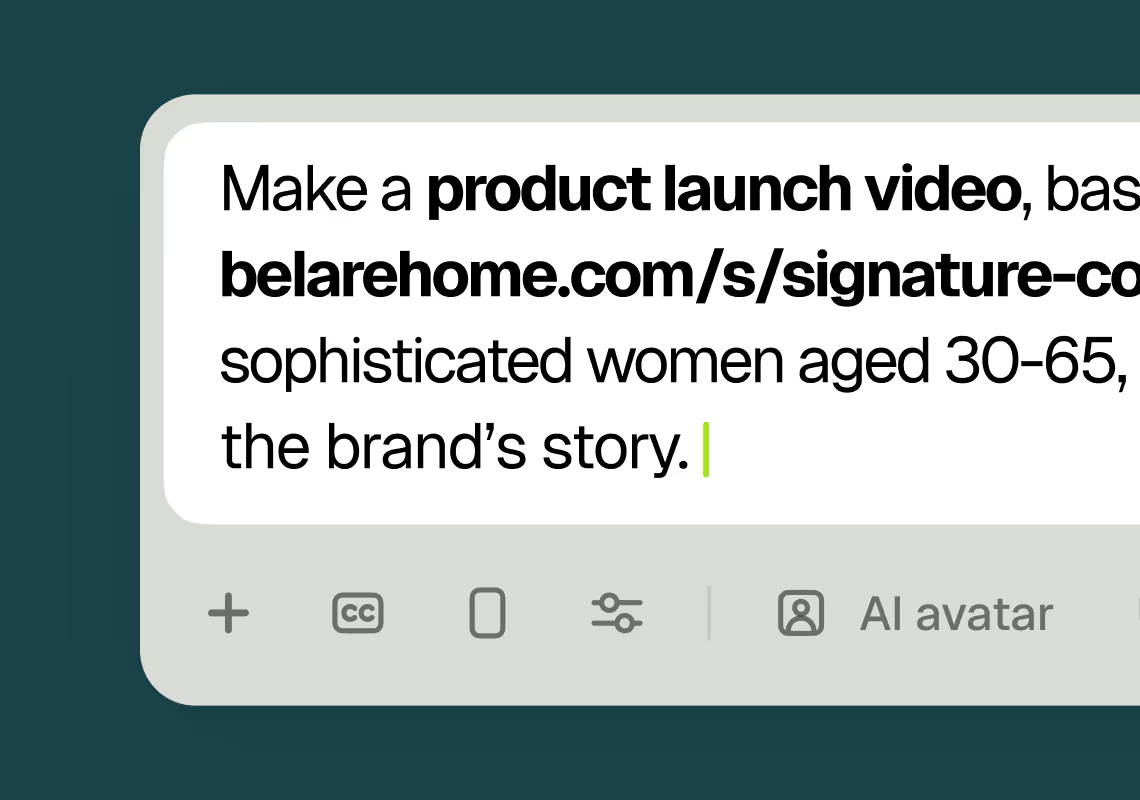
1Describe your video
Paste your promo brief, script, outline, or blog URL into Agent Opus.
 2
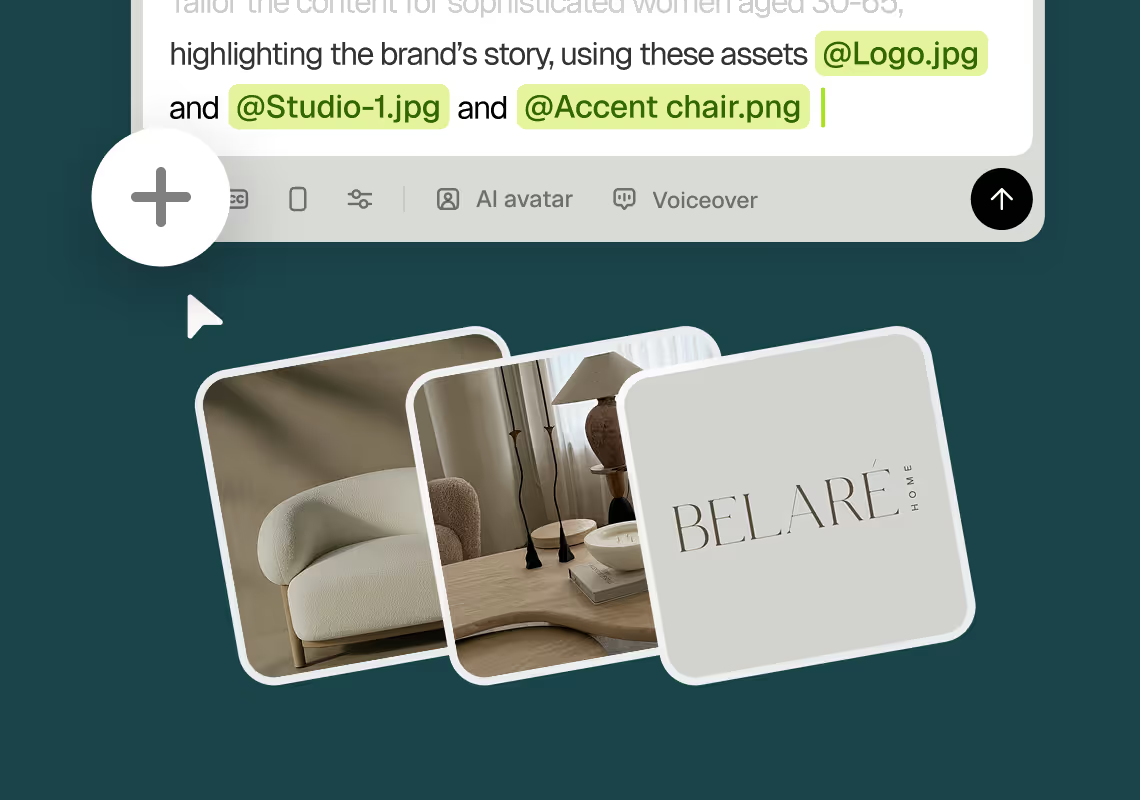
2Add assets and sources
Upload brand assets like logos and product images, or let the AI source stock visuals automatically.
 3
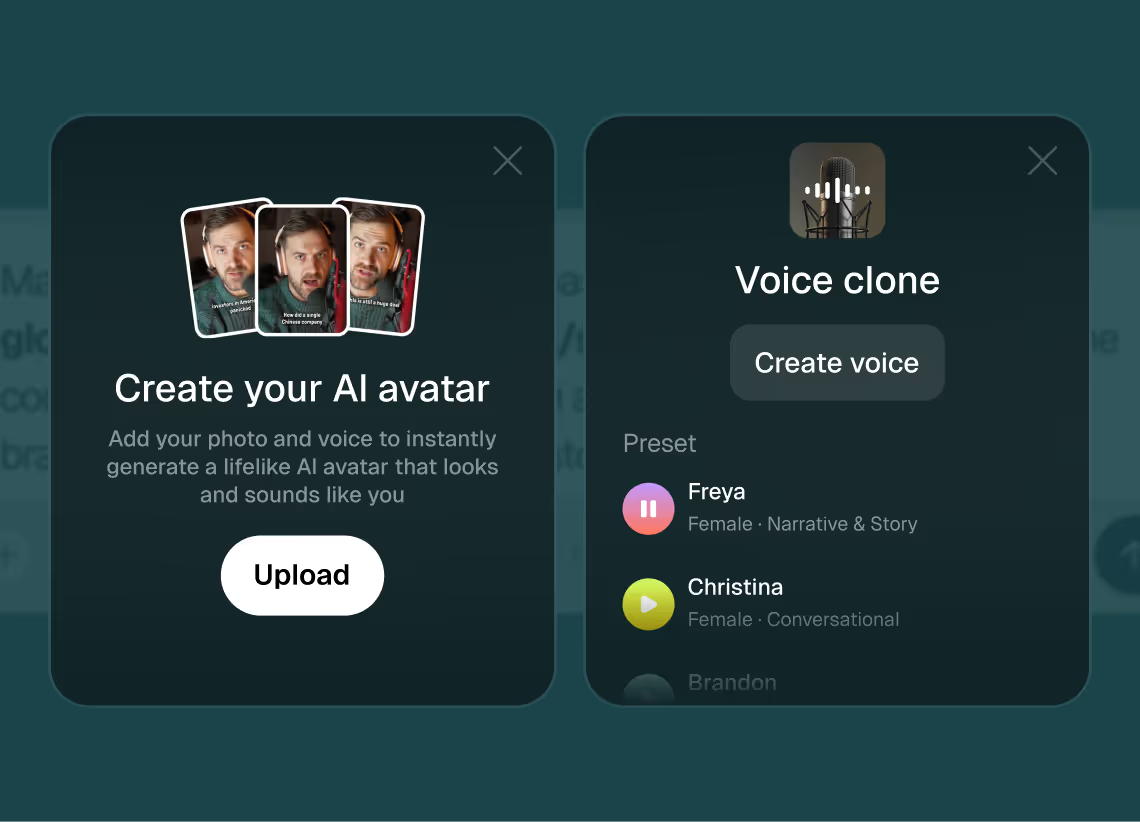
3Choose voice and avatar
Choose voice (clone yours or pick an AI voice) and avatar style (user or AI).
 4
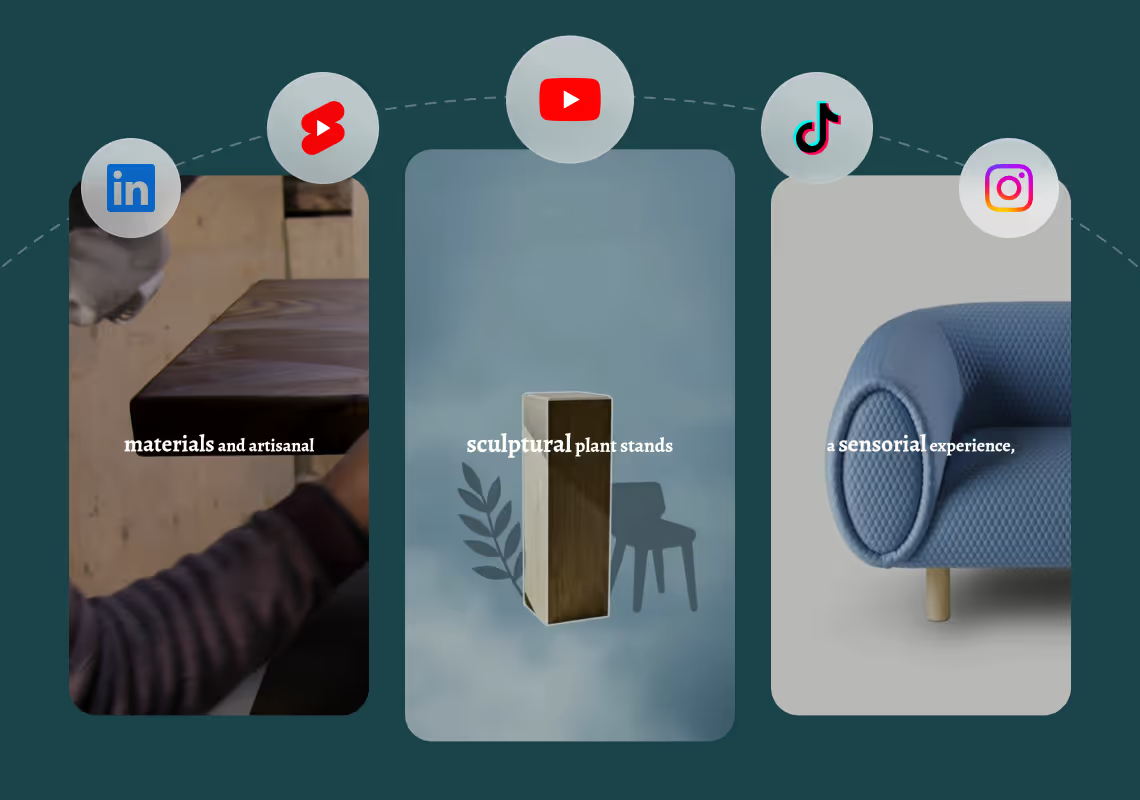
4Generate and publish-ready
Click generate and download your finished promo video in seconds, ready to publish across all platforms.


8 powerful features of Agent Opus' Animated Explainer Video Maker
Voiceover Integration
Add professional AI voiceovers that sync seamlessly with your animated explainer content.
Motion Graphics Library
Access pre-built animated elements and transitions to enhance your explainer video instantly.
Character & Scene Generation
Generate custom animated characters and backgrounds that match your brand story perfectly.
Export Ready Videos
Download your finished animated explainer in high resolution for any platform or presentation.
Brand Style Matching
Generate animations that automatically align with your company's colors and visual identity.
Music & Sound Effects
Enhance your animated explainer with background music and sound effects that fit the mood.
Script to Animation
Transform your written script into a polished animated explainer video in minutes.
Multi-Scene Storytelling
Create complex explainer narratives with multiple animated scenes from a single prompt.
Testimonials
This looks like a game-changer for us. We're building narrative-driven, visually layered content — and the ability to maintain character and motion consistency across episodes would be huge. If Agent Opus can sync branded motion graphics, tone, and avatar style seamlessly, it could easily become part of our production stack for short-form explainers and long-form investigative visuals.
srtaduck
I reviewed version a and I was very impressed with this version, it did very well in almost all aspects that users need, you would only have to make very small changes and maybe replace one of 2 of the pictures, but even saying that it could be used as is and still receive decent views or even chances at going viral depending on the story or the content the user chooses.
Jeremy
all in all LOVE THIS agent. I'm curious to see how I can push it (within reason) Just need to learn to get the consistency right with my prompts
Rebecca
Frequently Asked Questions
How does an animated explainer video maker like Agent Opus handle different input formats?
Agent Opus accepts four input types for animated explainer video creation: a short prompt or brief, a full script, a structured outline, or a blog or article URL. Each format triggers a different generation path. When you provide a brief, Agent Opus expands it into a narrative structure, determines scene count and pacing, and generates the script internally before assembling visuals and motion graphics. If you paste a complete script, the system parses dialogue, identifies key concepts, and maps each segment to a visual scene with corresponding animations and transitions. Outline mode is ideal when you have bullet points or a rough structure but want Agent Opus to fill in connective tissue and voiceover copy. Blog URL input extracts the article text, condenses it into explainer-friendly language, and builds a video that summarizes or illustrates the written content. Across all formats, Agent Opus applies the same motion graphics engine, sourcing relevant stock images or web visuals, layering kinetic text, and synchronizing voiceover timing. You can upload brand assets like logos or product screenshots regardless of input type, and the system integrates them into the final animation. This flexibility means you can start from any stage of your content workflow, whether you have a polished script ready or just a rough idea, and still get a finished animated explainer video without manual scene assembly or editing.
What makes AI motion graphics in an animated explainer video maker different from template-based tools?
Traditional explainer video tools rely on pre-built templates where you swap text and images into fixed layouts. Agent Opus uses AI motion graphics that generate animations dynamically based on your content and context. Instead of choosing a template and filling placeholders, you describe what you want or provide a script, and the system composes scenes from scratch. The AI analyzes your narrative to determine which concepts need visual emphasis, then applies kinetic text animations, shape morphing, icon transitions, and layered compositing to match the pacing and tone of your message. For example, if your script introduces a problem and then a solution, Agent Opus might animate a split-screen transition with contrasting visuals, or use a reveal effect to highlight the solution moment. These decisions happen automatically, informed by the semantic meaning of your script rather than a one-size-fits-all template. The motion graphics engine also adapts to the assets you upload. If you provide a product screenshot, Agent Opus can animate it with zoom, pan, or highlight overlays to draw attention to specific features. If you include a logo, the system positions and animates it as a branded element within the scene flow. This approach means every animated explainer video is unique to your content, not constrained by template boundaries. You get professional-grade motion design without needing After Effects skills or a motion designer on staff, and the output feels custom-built rather than cookie-cutter.
Can an animated explainer video maker maintain consistent branding across multiple videos?
Agent Opus supports brand consistency through asset uploads and style memory. When you create your first animated explainer video, you can upload your logo, brand colors as reference images, product shots, and any custom graphics you want to appear in the animation. The system stores these assets and applies them across scenes, ensuring your logo appears in the intro or outro, your product visuals are used when relevant, and the overall color palette aligns with your brand identity. For subsequent videos, Agent Opus can reuse these assets automatically, so you do not need to re-upload every time. This is especially valuable for teams producing a series of explainer videos, such as onboarding tutorials, feature announcements, or educational modules, where visual consistency reinforces brand recognition. Voice consistency is another key element. If you use voice cloning, Agent Opus captures your vocal signature and applies it to every video, so your explainer series sounds like it comes from the same presenter. If you prefer AI voices, you can select a specific voice profile and reuse it across projects. The motion graphics engine also learns from your preferences over time. If you generate multiple videos with similar prompts or scripts, the system recognizes patterns in your content style and adapts scene composition, pacing, and transition choices to match. This does not mean every video looks identical, but rather that the underlying design language stays cohesive. For agencies or brands managing multiple clients, you can create separate asset libraries and voice profiles per client, ensuring each animated explainer video aligns with the correct brand guidelines without manual intervention.
What are the best practices for writing prompts or scripts for an animated explainer video maker?
Effective prompts and scripts for Agent Opus balance clarity, structure, and visual cues. Start by defining your core message in one sentence, then expand into a three-act structure: problem, solution, and call to action. For prompts, be specific about the audience, tone, and key points you want to cover. Instead of a vague brief like create an explainer video about our app, write create a 60-second animated explainer video for small business owners explaining how our invoicing app saves time by automating payment reminders and tracking overdue invoices, with a friendly, professional tone. This gives Agent Opus enough context to generate a focused narrative and select appropriate visuals and motion graphics. When writing a full script, use short sentences and active voice. Explainer videos thrive on concise, punchy language that translates well to voiceover. Avoid jargon unless your audience expects it, and break complex ideas into bite-sized chunks. Include visual cues in your script by describing what should appear on screen. For example, instead of just writing our platform integrates with your existing tools, add show icons of popular tools like Slack, Google Drive, and Salesforce appearing on screen. Agent Opus interprets these cues and sources or generates the corresponding visuals. Pacing matters. Aim for roughly 150 words per minute of video, which gives the voiceover room to breathe and the motion graphics time to register. If your script runs long, Agent Opus may compress scenes or speed up transitions, which can reduce impact. Structure your script with clear transitions between sections. Use phrases like but here is the problem or here is how it works to signal narrative shifts, and Agent Opus will apply visual transitions like wipes, fades, or split-screens to reinforce those moments. Finally, specify any brand elements you want included. Mention your logo placement, product screenshots, or specific colors in the prompt or script notes, and upload the corresponding assets so Agent Opus can integrate them seamlessly into the animation.