Architecture Explainer Video Maker
Turn architectural concepts, design briefs, and technical documentation into polished explainer videos instantly. Agent Opus is an architecture explainer video maker that transforms your text into finished videos with AI motion graphics, dynamic floor plans, 3D renderings, and professional voiceover. Describe your project, upload your script or blog post, and get a publish-ready video for client presentations, social media, or portfolio showcases. No timeline editing, no stock footage hunting, no production delays.

Explore what's possible with Agent Opus

Reasons why creators love Agent Opus' Architecture Explainer Video Maker
Win More Project Approvals
Present your vision with cinematic clarity that builds confidence and gets decision-makers excited to move forward.
No Rendering Delays
Skip the overnight render queues and deliver polished architectural explainers in the same day you conceive them.
Complex Concepts Made Clear
Turn intricate architectural designs into visual stories that clients and stakeholders instantly understand without technical jargon.
Scale Your Client Communication
Create personalized architectural walkthroughs for every prospect without multiplying your production time or budget.
Consistent Studio Quality
Every explainer maintains your professional standard without hiring videographers or learning complex animation software.
Stand Out in Proposals
Replace static PDFs with dynamic video explainers that make your architectural proposals impossible to ignore.
How to use Agent Opus’ Architecture Explainer Video Maker
 1
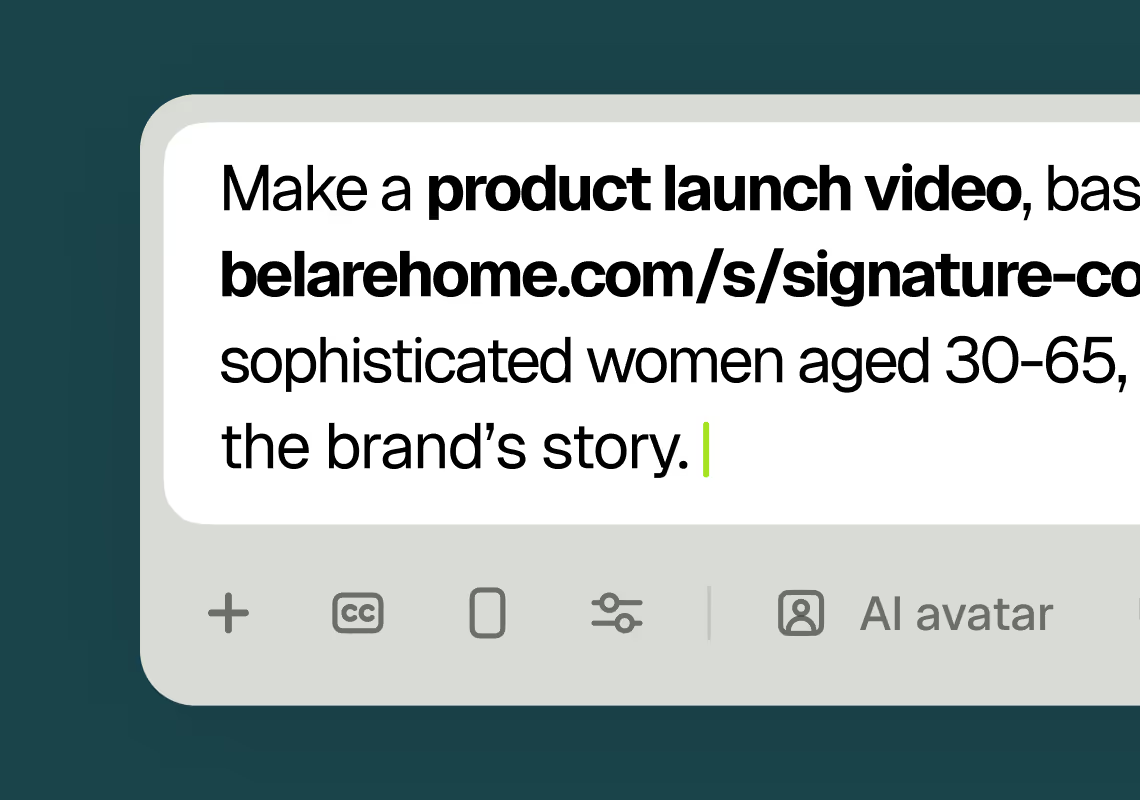
1Describe your video
Paste your promo brief, script, outline, or blog URL into Agent Opus.
 2
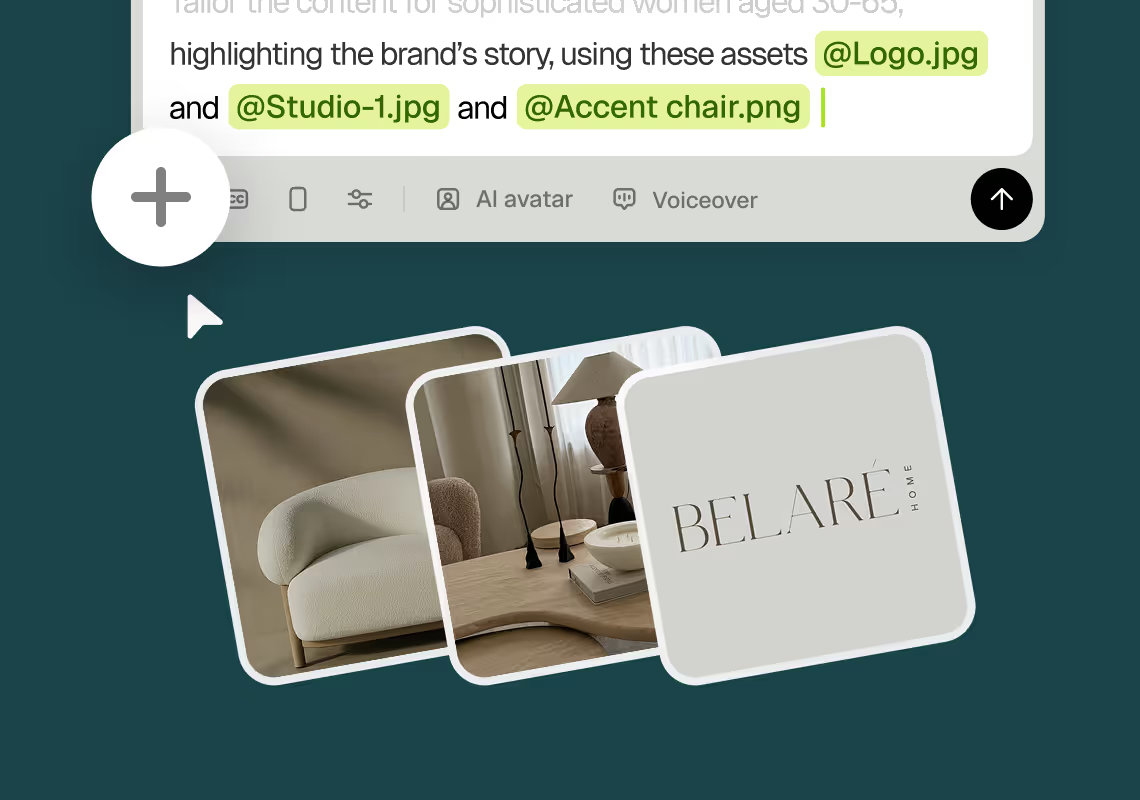
2Add assets and sources
Upload brand assets like logos and product images, or let the AI source stock visuals automatically.
 3
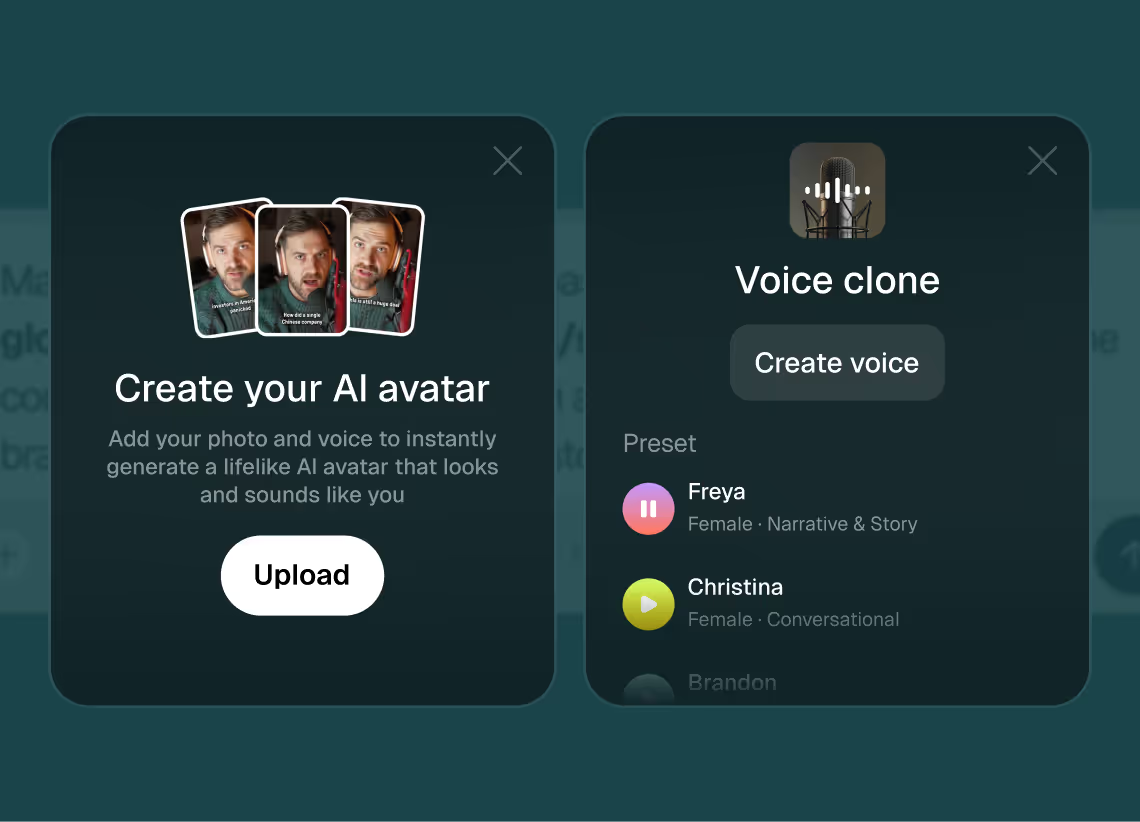
3Choose voice and avatar
Choose voice (clone yours or pick an AI voice) and avatar style (user or AI).
 4
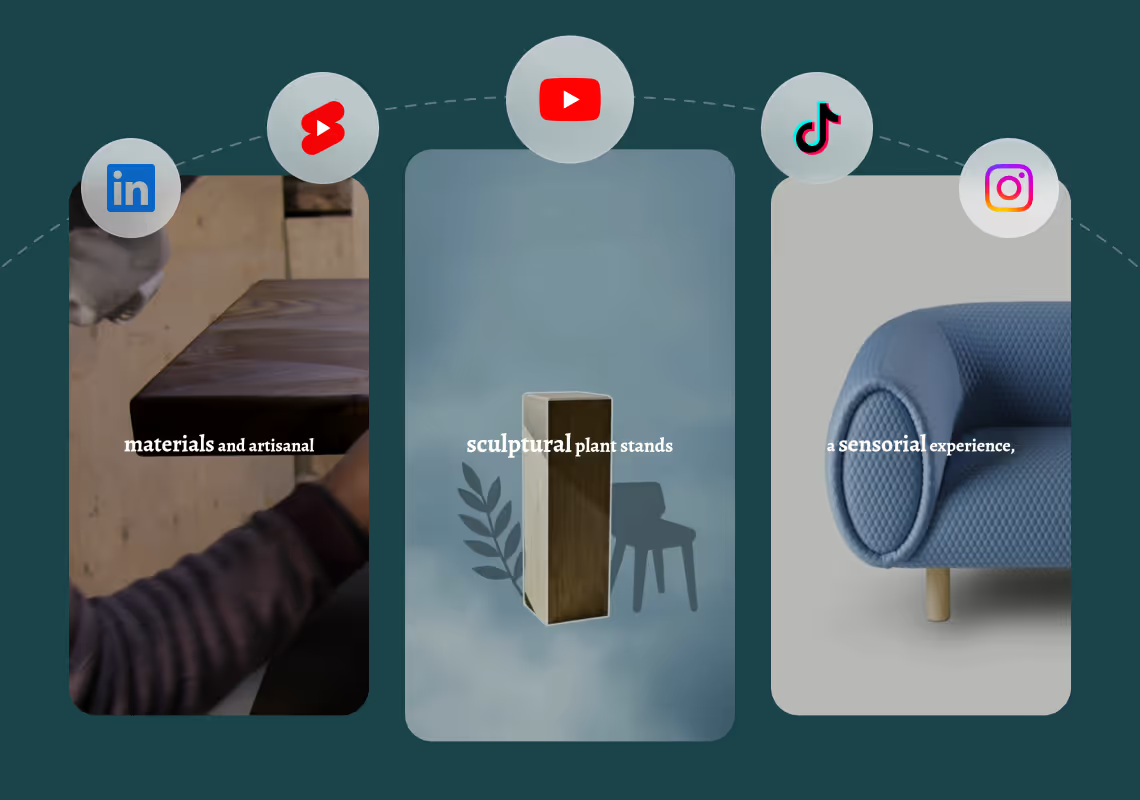
4Generate and publish-ready
Click generate and download your finished promo video in seconds, ready to publish across all platforms.


8 powerful features of Agent Opus' Architecture Explainer Video Maker
Client Presentation Videos
Create polished explainer videos that communicate architectural vision to clients without requiring technical knowledge.
Instant Blueprint Visualization
Transform architectural plans and concepts into animated explainer videos that showcase design intent clearly.
Material and Finish Showcase
Produce explainer videos highlighting texture, lighting, and material choices that define the architectural aesthetic.
Technical Detail Narration
Add AI voiceover that explains structural elements, materials, and design decisions in professional architectural terms.
Sustainable Feature Highlights
Create videos explaining green design elements, energy systems, and sustainability strategies in accessible language.
Spatial Walkthrough Generation
Generate video walkthroughs that guide viewers through spaces, highlighting key architectural features and flow.
Scale and Proportion Display
Generate videos that demonstrate spatial relationships and dimensions through dynamic camera movements and annotations.
Design Process Storytelling
Turn conceptual sketches and iterations into narrative videos showing how architectural solutions evolved.
Testimonials
This looks like a game-changer for us. We're building narrative-driven, visually layered content — and the ability to maintain character and motion consistency across episodes would be huge. If Agent Opus can sync branded motion graphics, tone, and avatar style seamlessly, it could easily become part of our production stack for short-form explainers and long-form investigative visuals.
srtaduck
I reviewed version a and I was very impressed with this version, it did very well in almost all aspects that users need, you would only have to make very small changes and maybe replace one of 2 of the pictures, but even saying that it could be used as is and still receive decent views or even chances at going viral depending on the story or the content the user chooses.
Jeremy
all in all LOVE THIS agent. I'm curious to see how I can push it (within reason) Just need to learn to get the consistency right with my prompts
Rebecca
Frequently Asked Questions
How does an architecture explainer video maker handle technical drawings versus narrative descriptions?
Agent Opus processes both technical content and narrative storytelling for architecture explainer videos. When you input a script heavy on spatial descriptions, floor plan callouts, or material specifications, the AI identifies key technical moments and applies motion graphics to animate those elements. For example, if your text describes a double-height atrium with clerestory windows, the system will source or generate visuals that highlight vertical space and natural light, then animate arrows, labels, or zoom effects to emphasize those features. If you upload a blog post that tells the story of a project's design evolution, the AI structures scenes chronologically, matching narrative beats to visual transitions. You can mix both approaches in one prompt: start with the client's problem statement, move into technical solutions with floor plan annotations, and close with lifestyle imagery of the finished space. The architecture explainer video maker adapts scene pacing and graphic style to the content type. Technical sections receive precise, diagram-focused visuals with slower pacing for comprehension. Narrative sections get dynamic B-roll, smoother transitions, and emotive music cues. You control the balance by adjusting your input text. A bullet-point outline yields a more technical, feature-focused video. A conversational script produces a story-driven piece. The AI maintains visual coherence across both modes, ensuring your brand colors, logo watermarks, and typographic style remain consistent whether you're explaining structural systems or showcasing interior atmospheres.
What are best practices for prompts when creating architecture explainer videos?
Effective prompts for architecture explainer video generation start with clear project context: building type, location, scale, and primary design intent. Begin with a one-sentence summary, such as 'A sustainable mixed-use development in Portland featuring mass timber construction and rooftop agriculture.' This anchors the AI's visual sourcing and tone. Next, structure your content in logical sections: problem or site constraints, design response, key features, and impact or results. Use specific architectural language when you want technical accuracy. Terms like 'curtain wall,' 'passive solar orientation,' or 'modular prefabrication' signal the AI to source imagery and apply graphics that match industry standards. If you want the video to emphasize a particular aspect like sustainability, materials, or community impact, state that priority early and reinforce it with supporting details. For example, 'This video should highlight our net-zero energy strategy' followed by descriptions of photovoltaic arrays, geothermal systems, and high-performance envelopes. Include visual cues in your prompt: 'Show the transition from site analysis diagrams to final renderings' or 'Open with an aerial view, then move inside to reveal the central courtyard.' These directions guide scene sequencing. Mention your target audience. A video for potential tenants needs lifestyle imagery and amenity highlights. A video for a design award submission requires construction details and innovation callouts. Specify voiceover tone: authoritative and technical for industry peers, warm and accessible for community stakeholders. If you have brand assets like logos, project photos, or a specific color palette, note that in your prompt or upload them separately. The architecture explainer video maker will integrate them automatically. Finally, indicate desired video length and platform. 'Create a 60-second Instagram Reel' yields tighter pacing and vertical framing. 'Generate a 3-minute YouTube video' allows deeper exploration and horizontal composition.
Can an architecture explainer video maker maintain on-brand visuals, voices, and project-specific assets?
Agent Opus ensures brand consistency and project specificity in every architecture explainer video. Upload your studio's logo, and it appears as a watermark or intro/outro graphic. Provide project-specific renderings, construction photos, or site images, and the AI prioritizes those assets over generic stock footage. If your firm has a defined color palette, specify hex codes or upload a brand guide excerpt in your prompt. The system applies those colors to motion graphics, lower thirds, and text overlays. Voice consistency works through cloning or selection. Record a 30-second sample of your voice describing a past project, and Agent Opus generates narration in your tone, cadence, and accent for all future videos. This is especially valuable for principals or lead designers who want their personal voice on client presentations. Alternatively, choose from a library of professional AI voices and save your preferred narrator as a default. Once selected, that voice becomes your studio's signature across all explainer videos, creating audio brand recognition. For firms with multiple team members, you can clone several voices and assign them to different video types: the principal's voice for thought leadership, a project manager's voice for technical walkthroughs, a marketing lead's voice for social content. Typography and motion graphic style also remain consistent. If your brand uses a specific sans-serif font for titles and a particular animation style for diagrams, describe that in your first prompt or upload a reference video. The architecture explainer video maker learns those preferences and applies them to subsequent projects. Project-specific assets integrate seamlessly. Upload a folder of images from a single project, and the AI sequences them logically: site context, design development sketches, construction progress, and final photography. It identifies which images show exteriors versus interiors, daytime versus nighttime, and applies appropriate transitions and pacing. If you include CAD exports or Revit screenshots, the system recognizes technical drawings and adds animated callouts or zoom effects to highlight key details. This level of customization means your architecture explainer videos look and sound like extensions of your existing marketing materials, not generic AI-generated content.
What are the limitations or edge cases when generating architecture explainer videos from text?
Agent Opus excels at transforming written architectural content into visual narratives, but understanding its boundaries helps you craft better inputs and set realistic expectations. The architecture explainer video maker relies on text descriptions and uploaded assets to generate visuals. If your prompt is vague or lacks specific details, the AI will source generic stock imagery that may not perfectly match your project's unique character. For example, 'a modern office building' yields broad results, while 'a five-story mass timber office with exposed CLT ceilings and floor-to-ceiling glazing on the south facade' produces targeted visuals. Always provide specificity. The system cannot generate original 3D renderings or CAD drawings from scratch. If you need custom visualizations of an unbuilt design, upload your own renderings, SketchUp exports, or Revit screenshots. The AI will animate and integrate them, but it won't create new 3D models. For projects still in schematic design, use conceptual language and reference images to guide the visual direction, then replace placeholder footage with actual renderings as they become available. Complex animations like structural load simulations, daylighting analysis, or parametric design processes require pre-rendered video clips. Agent Opus can incorporate those clips into the final explainer video, but it won't generate physics-based simulations on its own. If your project's story depends on showing how a diagrid structure distributes loads or how a building's form responds to solar angles, create those animations in specialized software first, then upload them as assets. The architecture explainer video maker will sequence them with narration and supporting visuals. Voiceover quality depends on input text clarity. Run-on sentences, excessive jargon without context, or unclear pronoun references can result in awkward pacing or emphasis. Write your script as you would speak it, using natural pauses and clear antecedents. If you're cloning your voice, background noise or inconsistent recording quality in your sample will affect the clone's fidelity. Record in a quiet space with a decent microphone for best results. Platform-specific constraints apply to output formats. A 60-second Instagram Reel cannot convey the same depth as a 5-minute YouTube video. If your project has a complex narrative involving site history, community engagement, design iterations, and construction challenges, prioritize the most compelling elements for short-form content and reserve comprehensive storytelling for longer formats. Finally, the system's stock image library, while extensive, may not include hyper-local or culturally specific imagery. If your project is in a less-documented region or involves vernacular architecture, upload your own location photos to ensure authenticity.