Biology Explainer Video Maker
Turn biology concepts into engaging explainer videos instantly. Agent Opus is a biology explainer video maker that transforms your script, outline, or article into a complete video with AI motion graphics, voiceover, and dynamic visuals. Describe cellular respiration, photosynthesis, or DNA replication, and get a publish-ready educational video in minutes. No timeline, no manual editing—just prompt to video. Perfect for educators, science communicators, and content creators who need professional biology content at scale.

Explore what's possible with Agent Opus

Reasons why creators love Agent Opus' Biology Explainer Video Maker
Consistent Scientific Accuracy
Maintain precise terminology and visual representations across your entire biology content library.
Scale Your Teaching Impact
Reach thousands of learners with professional biology videos instead of repeating the same lecture.
Complex Concepts Made Clear
Turn dense biological processes into visual stories students actually understand and remember.
Students Stay Engaged Longer
Hold attention through dynamic visuals that make abstract biology concepts tangible and memorable.
No Animation Skills Required
Explain cellular mechanisms and systems without hiring illustrators or learning complex software.
Publish While It's Relevant
Create timely explainers on emerging research or curriculum topics without waiting weeks for production.
How to use Agent Opus’ Biology Explainer Video Maker
 1
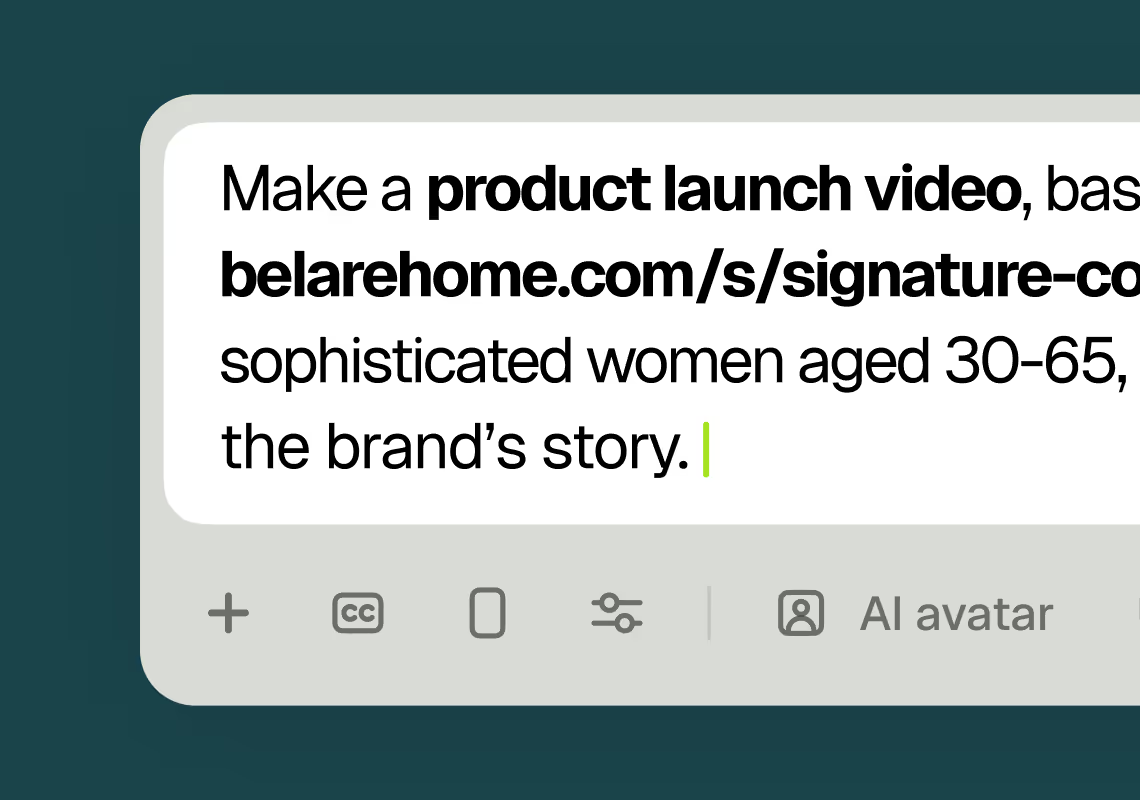
1Describe your video
Paste your promo brief, script, outline, or blog URL into Agent Opus.
 2
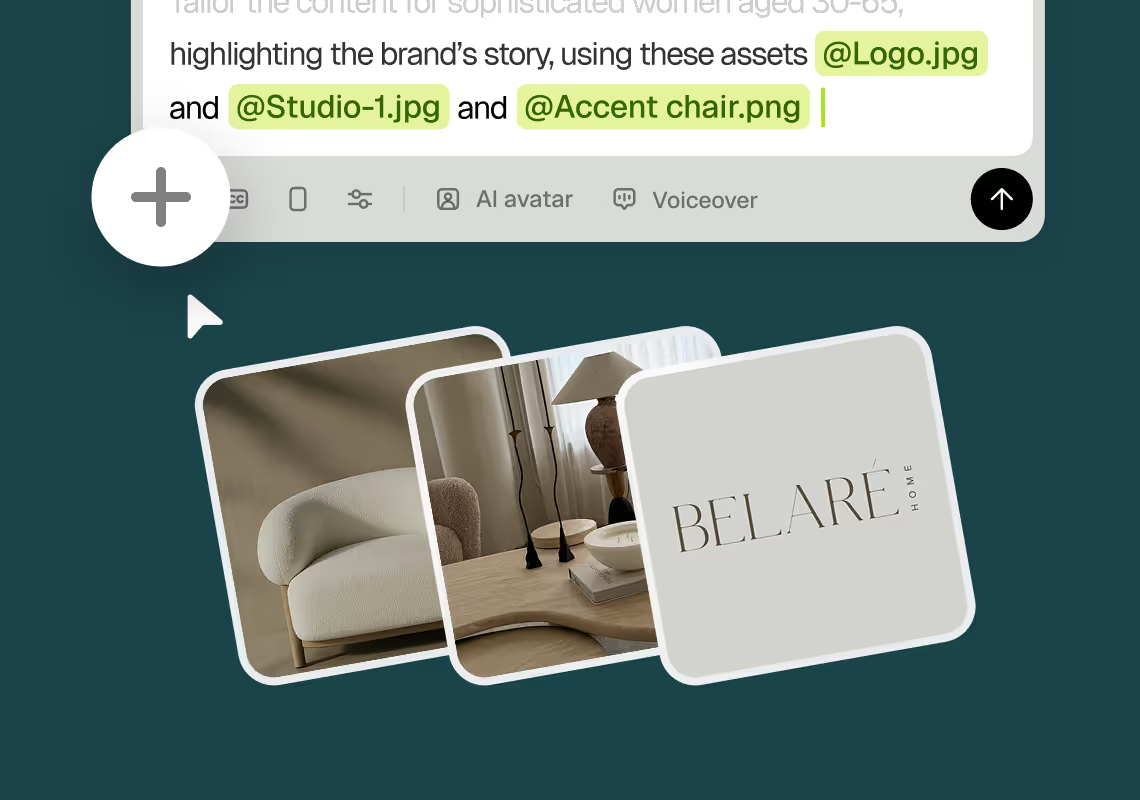
2Add assets and sources
Upload brand assets like logos and product images, or let the AI source stock visuals automatically.
 3
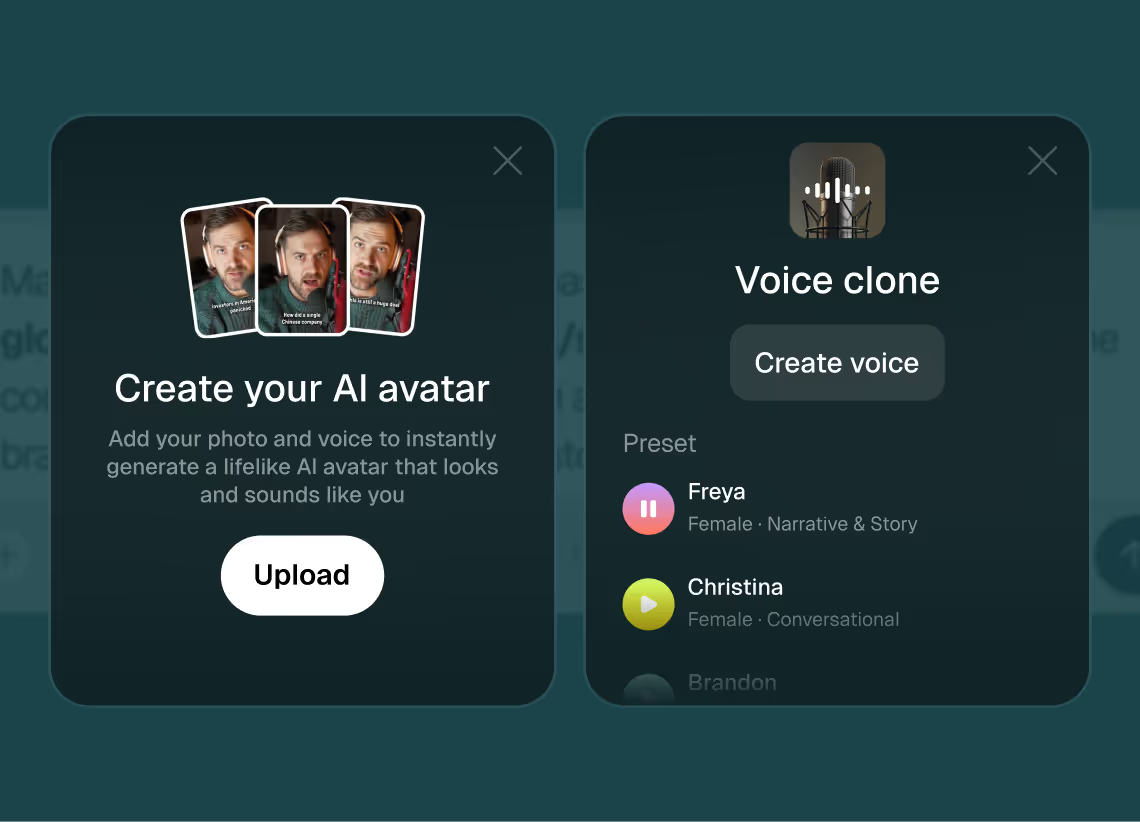
3Choose voice and avatar
Choose voice (clone yours or pick an AI voice) and avatar style (user or AI).
 4
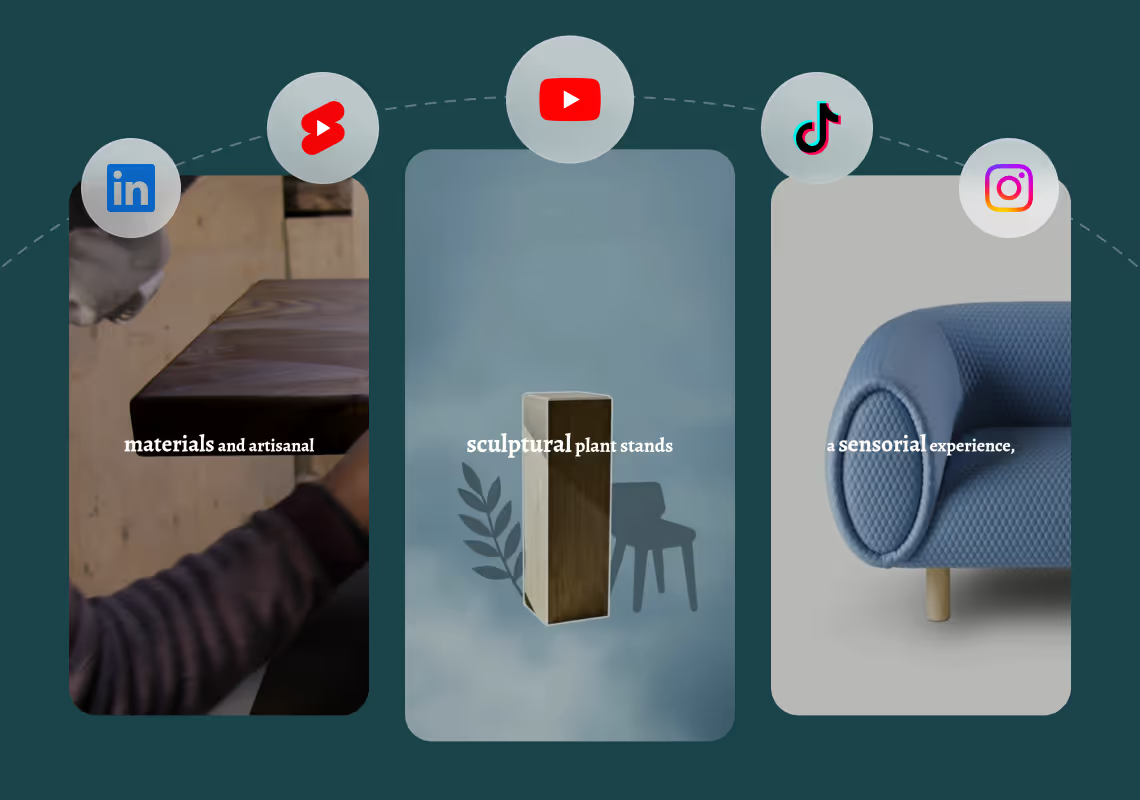
4Generate and publish-ready
Click generate and download your finished promo video in seconds, ready to publish across all platforms.


8 powerful features of Agent Opus' Biology Explainer Video Maker
Diagram Animation
Transform static biology diagrams into dynamic explainer videos with smooth transitions and labels.
Scientific Accuracy
Produce biology explainer videos with precise terminology and scientifically accurate visual representations.
Educational Pacing
Generate biology videos with learner-friendly pacing that breaks down complex topics into digestible segments.
Concept Visualization
Convert abstract biology topics like photosynthesis or mitosis into clear, visual explainer videos.
Voiceover Narration
Generate professional AI voiceovers that clearly explain complex biological concepts in your videos.
Text to Biology Video
Turn written explanations of cellular processes or ecosystems into animated biology videos instantly.
Multi-Topic Support
Create explainer videos covering genetics, anatomy, ecology, or any biology subject from text prompts.
Student-Ready Format
Produce classroom-ready biology explainer videos optimized for student comprehension and engagement.
Testimonials
This looks like a game-changer for us. We're building narrative-driven, visually layered content — and the ability to maintain character and motion consistency across episodes would be huge. If Agent Opus can sync branded motion graphics, tone, and avatar style seamlessly, it could easily become part of our production stack for short-form explainers and long-form investigative visuals.
srtaduck
I reviewed version a and I was very impressed with this version, it did very well in almost all aspects that users need, you would only have to make very small changes and maybe replace one of 2 of the pictures, but even saying that it could be used as is and still receive decent views or even chances at going viral depending on the story or the content the user chooses.
Jeremy
all in all LOVE THIS agent. I'm curious to see how I can push it (within reason) Just need to learn to get the consistency right with my prompts
Rebecca
Frequently Asked Questions
How does a biology explainer video maker handle complex scientific processes?
Agent Opus approaches biological processes by breaking your script into conceptual scenes, then sourcing and assembling visuals that match each stage. When you describe photosynthesis, for example, the system identifies key phases like light-dependent reactions and the Calvin cycle, then finds relevant diagrams, microscopy images, or stock footage for each step. The AI motion graphics engine creates transitions and animations that show progression—arrows indicating electron flow, labels appearing on chloroplast structures, or zoom effects highlighting specific organelles. You don't need to specify camera movements or animation timing; the system interprets your educational narrative and builds visual sequences that support comprehension. For multi-step processes like cellular respiration or DNA replication, Agent Opus maintains visual continuity across scenes, using consistent color coding and diagram styles. The voiceover syncs automatically with visual reveals, so when your script mentions 'the mitochondrial matrix,' the corresponding structure highlights on screen. This approach works whether you provide a detailed lesson script with technical terminology or a simpler outline describing the concept you want students to understand. The biology explainer video maker adapts visual complexity to match your content depth, ensuring accurate representation of scientific concepts without requiring you to source individual images or create animations manually.
What are best practices for writing prompts for biology explainer videos?
Effective prompts for biology explainer video creation focus on clear learning objectives and logical concept flow. Start by stating the specific biological topic and target audience level—'Explain mitosis for high school biology students' gives Agent Opus context for visual complexity and terminology. Structure your script or outline in sequential steps that mirror how the process unfolds in nature: for enzyme action, describe substrate binding, catalysis, and product release in order. Use precise biological terminology where accuracy matters, but include brief definitions or analogies for complex terms—this helps the system select appropriate visuals and ensures voiceover clarity. Specify key visuals you want featured: 'Show a labeled diagram of a neuron' or 'Include microscopy footage of cell division' guides the image sourcing. For comparative concepts like mitosis versus meiosis, explicitly structure your script with side-by-side sections so the video can present parallel visuals. Include transition language that signals visual changes: 'Moving to the next stage' or 'Now let's examine' helps the AI understand when to shift scenes. If your biology lesson includes quantitative data, mention it in context—'The human body contains approximately 37 trillion cells'—so the system can incorporate relevant infographics. Avoid overly dense paragraphs; break complex explanations into shorter segments that allow for visual emphasis on each point. The biology explainer video maker performs best when your input balances scientific accuracy with pedagogical clarity, giving it both the content to teach and the structure to present it effectively.
Can biology explainer videos maintain consistent branding and visual style?
Agent Opus supports brand consistency across all biology explainer videos through several mechanisms. You can upload your institution's logo, course branding elements, and color schemes, which the system incorporates into video intros, lower thirds, and transitions. For educational series, this means every video on topics from genetics to ecology carries the same visual identity. The platform remembers your voice clone, so all lessons feature the same instructor voice, building familiarity with students. If you use an AI avatar presenter, that same avatar appears across videos, creating continuity in your educational content. Visual style preferences persist across projects—if your first biology video uses a particular diagram style or animation approach that works well, subsequent videos maintain similar aesthetics. For schools and educational organizations producing curriculum content, this consistency is crucial for professional presentation. You can also specify visual preferences in your prompts: 'Use clean, minimalist diagrams' or 'Include realistic 3D cell models' guides the image sourcing toward your preferred educational approach. The biology explainer video maker treats each video as part of your broader content library, not as isolated projects. When you generate multiple videos on related topics—say, a series on human body systems—Agent Opus can maintain visual threads like consistent anatomical illustration styles or recurring graphical elements that help students connect concepts. This brand and style consistency happens automatically once you establish preferences, eliminating the need to manually enforce visual standards across dozens of educational videos.
How does the biology explainer video maker source accurate scientific imagery?
Agent Opus uses a multi-layered approach to find scientifically accurate visuals for biology content. The system searches both curated stock libraries with verified scientific imagery and web sources, prioritizing educational and research-grade visuals over generic stock footage. When your script mentions specific structures like 'Golgi apparatus' or 'sarcomere,' the AI identifies these as precise biological terms and seeks labeled diagrams or microscopy images that accurately represent them. For processes like osmosis or active transport, it looks for animations or sequential diagrams that show mechanism rather than static images. The visual sourcing considers context—a video on plant biology will pull botanical illustrations and photosynthesis diagrams, while a human anatomy lesson sources medical-grade anatomical charts. Agent Opus cross-references your script content with image metadata to ensure relevance: if you're explaining cardiac muscle contraction, it won't use skeletal muscle imagery. The system also evaluates visual clarity and educational value, selecting diagrams with clear labels over ambiguous images, and choosing illustrations that highlight the specific aspect you're teaching. For topics requiring microscopy, like cell organelles or tissue types, the platform prioritizes actual microscope imagery when available, giving students authentic views of biological structures. You can enhance accuracy by being specific in your script—'cross-section of a leaf showing palisade mesophyll' yields more precise results than just 'leaf structure.' The biology explainer video maker also handles scale appropriately, using macro photography for organism-level concepts and electron microscopy for molecular biology. This intelligent sourcing means you get educationally appropriate, scientifically accurate visuals without manually vetting hundreds of images or purchasing specialized scientific illustration libraries.