Blog to Video
Turn any blog post or article into a professional video in minutes. Agent Opus reads your blog URL or article text and generates a complete, publish-ready video with AI voiceovers, motion graphics, and dynamic visuals. No editing, no timeline, no manual work. Just paste your blog link, describe your vision, and get a social-ready video that brings your written content to life. Perfect for creators and marketers who want to maximize reach across YouTube, TikTok, Instagram, and LinkedIn without spending hours in video editors.

Explore what's possible with Agent Opus

Reasons why creators love Agent Opus' Blog to Video
Ship in Minutes, Not Hours
Generate a publish-ready video in under 10 minutes from a single prompt — no timeline editing, no asset hunting, no creative dry spells.
Zero Editing Skills Required
Describe your concept and Agent Opus handles scene composition, motion graphics, voiceover, and platform formatting automatically — even if you've never opened a video editor.
Studio-Grade Output
Cinematic motion graphics, beat-synced cuts, professional voiceover, and precise typography — every video ships looking production-quality from the first generation.
Stays On-Brand
Upload your logo, fonts, and color palette once. Agent Opus applies them across every video automatically so your content stays visually consistent.
How to use Agent Opus’ Blog to Video
 1
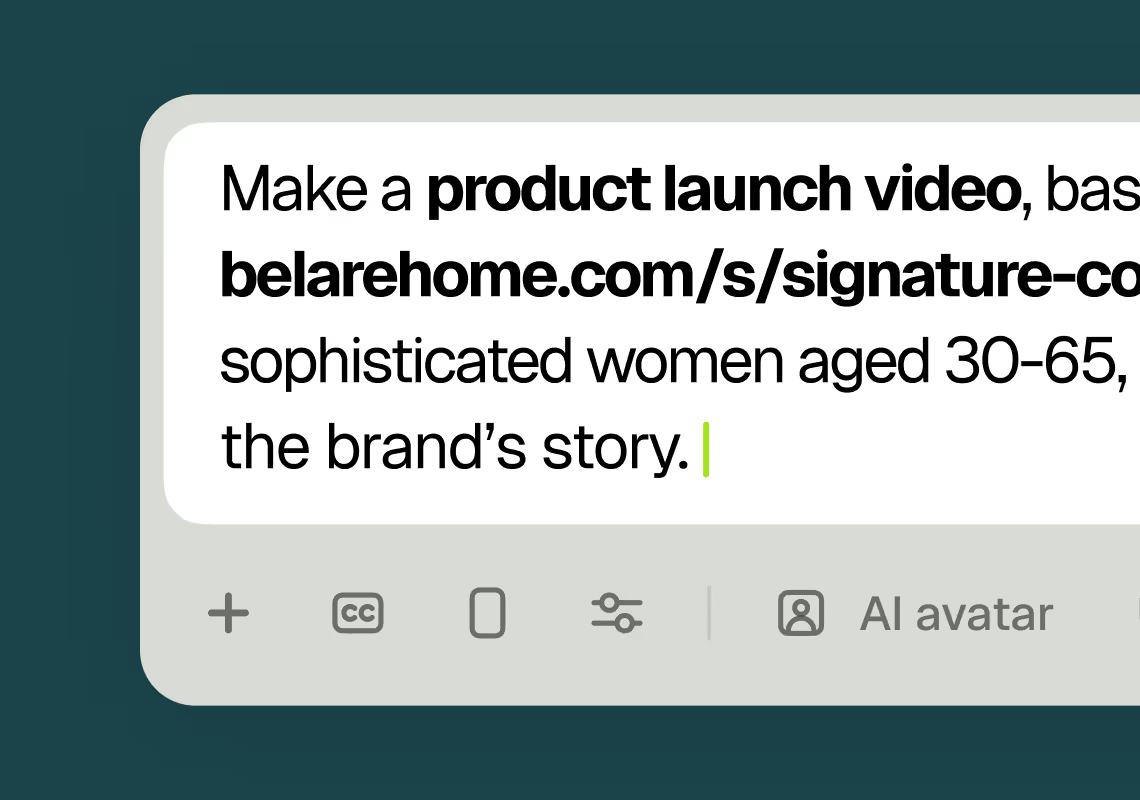
1Describe your video
Paste your promo brief, script, outline, or blog URL into Agent Opus.
 2
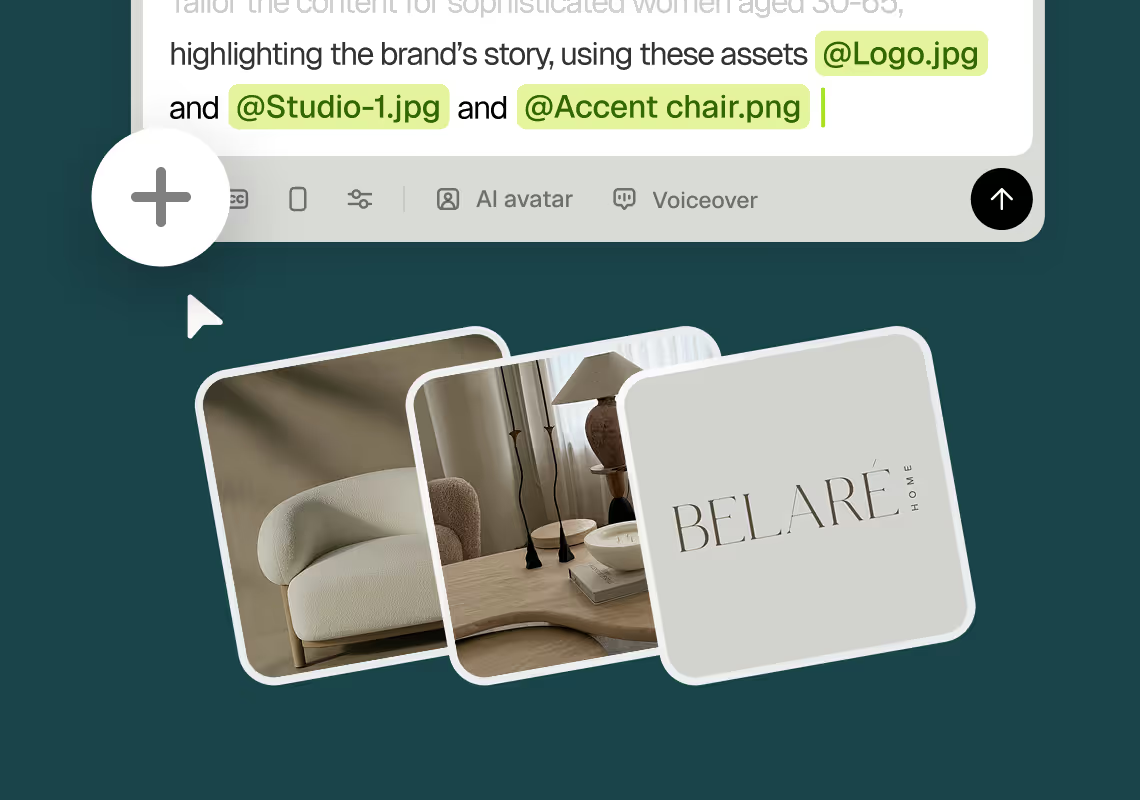
2Add assets and sources
Upload brand assets like logos and product images, or let the AI source stock visuals automatically.
 3
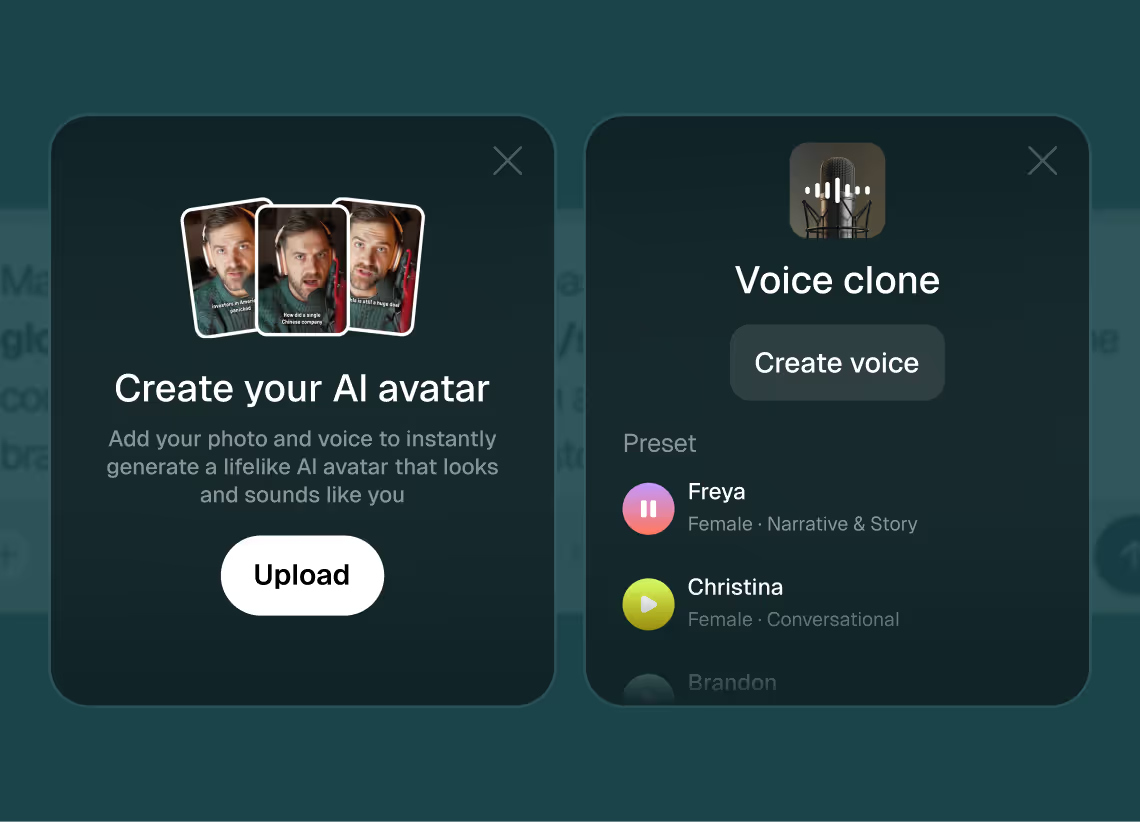
3Choose voice and avatar
Choose voice (clone yours or pick an AI voice) and avatar style (user or AI).
 4
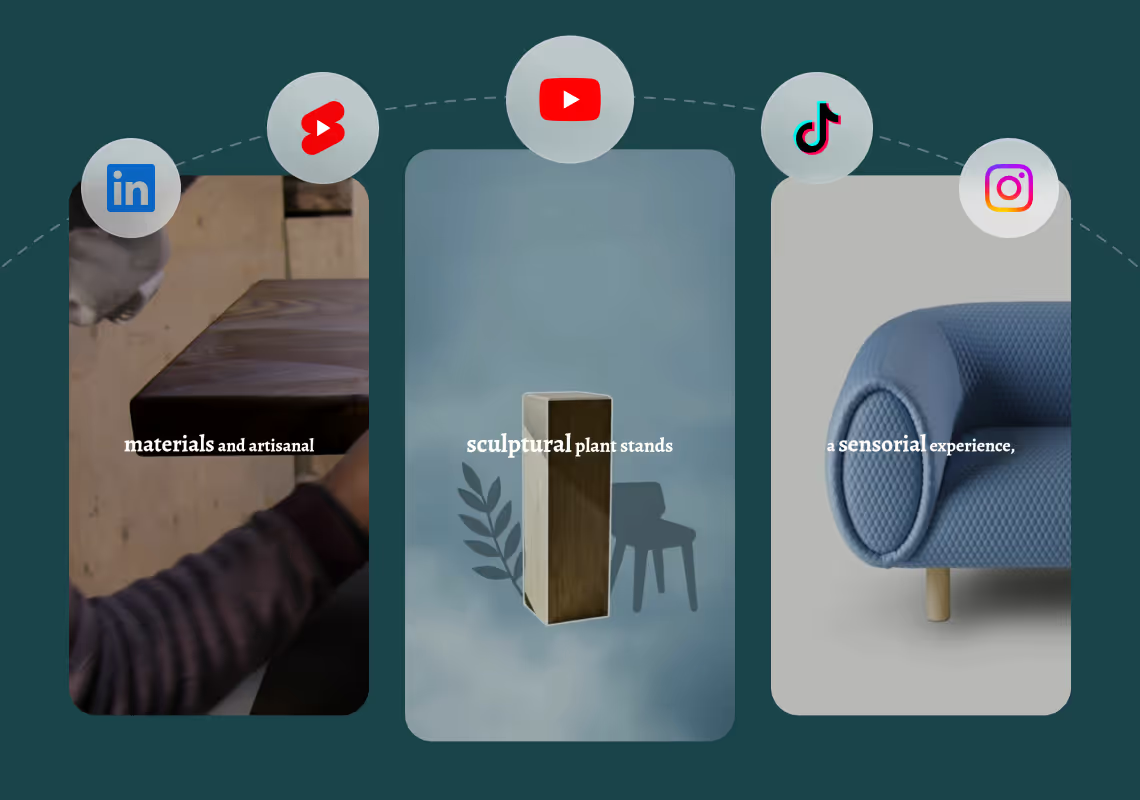
4Generate and publish-ready
Click generate and download your finished promo video in seconds, ready to publish across all platforms.


8 powerful features of Agent Opus' Blog to Video
Prompt-to-Video Generation
Turn a one-line idea into a finished video. The agent handles structure, pacing, B-roll selection, and final assembly automatically.
Script and Outline Support
Paste a full script, drop in an outline with section headers, or supply a blog or article URL — Agent Opus reads any of them and builds a video around the content.
AI Voiceover and Voice Cloning
Pick from natural-sounding AI voices in 30+ languages, or clone your own voice once. Every video then ships with your authentic narration.
Beat-Synced Motion Graphics
Dynamic visuals that lock to the beat of your audio or the pacing of your script — kinetic typography, transitions, and effects, no manual keyframing required.
Automatic Captions and Subtitles
Burn-in captions for short-form, soft subtitles for long-form, and multi-language translations — all generated and synced automatically.
Multi-Aspect-Ratio Export
9:16, 1:1, and 16:9 outputs from one job, with intelligent reframing of text, motion graphics, and focal elements for each ratio.
Brand Asset Integration
Upload your logo, watermark, fonts, and color palette. Agent Opus applies them consistently across every video automatically.
Avatar and Talking Head Support
Add an AI avatar, your own video footage, or a synthetic spokesperson to any video — useful for explainers, ads, and personal-brand content.
Testimonials
This looks like a game-changer for us. We're building narrative-driven, visually layered content — and the ability to maintain character and motion consistency across episodes would be huge. If Agent Opus can sync branded motion graphics, tone, and avatar style seamlessly, it could easily become part of our production stack for short-form explainers and long-form investigative visuals.
srtaduck
I dont think id change a thing
Quirky Collectables
Frequently Asked Questions
How does blog to video handle long articles versus short blog posts?
Blog to video intelligently adapts to article length and structure. For long-form content like 2,000-word guides or tutorials, Agent Opus identifies key sections and creates a condensed video that captures the main points, typically running 60 to 90 seconds for social platforms. You can guide this process in your prompt by specifying which sections to emphasize or requesting a specific video length. For shorter blog posts under 500 words, the system generates tighter videos around 30 to 45 seconds, perfect for quick tips or announcements. The AI analyzes your article's heading structure, paragraph breaks, and content hierarchy to determine natural scene divisions. If your blog has clear H2 or H3 subheadings, Agent Opus uses those as scene markers. For articles without strong structure, it identifies topic shifts and key points automatically. You can also paste just an excerpt or specific paragraphs if you want to focus the video on one section of a longer piece. The blog to video process preserves your article's core message while adapting pacing and visual density for video consumption. Longer articles get more dynamic scene transitions and varied visuals to maintain engagement, while shorter posts receive focused, punchy treatment that drives a single call to action.
What are best practices for prompts when converting blog posts to video?
Effective blog to video prompts combine article context with visual direction and audience intent. Start by specifying your target platform and audience, such as 'Create a 60-second TikTok video for small business owners' or 'Make a LinkedIn video for B2B marketers.' This helps Agent Opus choose appropriate pacing, tone, and visual style. Next, highlight which parts of your blog matter most. If your article covers five tips but you want to focus on three, say 'Focus on tips 2, 4, and 5 about email automation.' If your blog includes data or statistics, mention 'Emphasize the 73 percent conversion stat with on-screen text.' For visual direction, describe the mood and style you want. Phrases like 'modern tech aesthetic with blue and white colors' or 'warm, friendly vibe with lifestyle imagery' guide the AI's visual sourcing and motion graphics choices. Specify voiceover preferences clearly. 'Use my cloned voice with an energetic delivery' or 'Choose a calm, authoritative AI voice' ensures the audio matches your brand. If your blog promotes a product or service, include a clear call to action in your prompt like 'End with a signup CTA' or 'Drive viewers to the product page.' For blogs with complex topics, request simplified explanations such as 'Break down the technical concepts for beginners' or 'Use analogies to explain blockchain.' The blog to video system works best when you treat your prompt as a creative brief that bridges your written content and your video goals.
Can blog to video maintain consistent branding across multiple article videos?
Yes, blog to video supports comprehensive brand consistency across all your article-based videos. Agent Opus lets you upload brand assets like logos, color palettes, custom fonts, and product images that persist across projects. Once uploaded, these elements automatically appear in appropriate contexts throughout your videos. Your logo can be positioned as a watermark or intro card, your brand colors influence motion graphics and text overlays, and your product shots integrate naturally into relevant scenes. For voice consistency, clone your voice once and reuse it across unlimited blog to video projects, ensuring every article video sounds authentically like you or your brand spokesperson. If you prefer AI voices, select a specific voice profile and save it as your default so all videos maintain the same vocal character. Avatar consistency works the same way. Upload your face or choose an AI avatar, and that presenter appears in every video you generate, building recognition with your audience. The blog to video system also remembers visual style preferences. If you generate one video with a 'minimalist tech aesthetic' and like the result, you can reference that style in future prompts with phrases like 'Use the same visual style as my last video.' For teams and agencies managing multiple client blogs, Agent Opus supports project-level branding where each client's assets, voices, and style preferences stay separate and organized. This means you can convert blog posts for different brands without cross-contamination of visual elements or voice profiles, maintaining perfect brand integrity across your entire content library.
How does blog to video source and select visuals for different article topics?
The blog to video visual sourcing engine combines semantic understanding with contextual relevance to match imagery with your article content. When you input a blog URL, Agent Opus analyzes the full text to identify key concepts, entities, and themes. For a blog about 'sustainable fashion,' it recognizes related concepts like eco-friendly materials, ethical manufacturing, and clothing recycling, then searches both web sources and stock libraries for relevant imagery. The system prioritizes visuals that match the specific context of each scene. If your article section discusses cotton farming, Agent Opus sources cotton field imagery rather than generic fashion photos. For abstract concepts like 'brand trust' or 'customer loyalty,' the AI selects metaphorical visuals such as handshakes, smiling customers, or quality badges that communicate the idea visually. You can guide visual selection through your prompt. Specify preferences like 'Use product photos over stock imagery' or 'Prioritize charts and data visualizations for the statistics section.' If your blog already contains images, you can reference them with 'Use the infographic from section three' or 'Include the before-and-after photos from the case study.' The blog to video system also adapts visual density to content type. Tutorial blogs get step-by-step visual sequences, listicle blogs receive distinct imagery for each point, and narrative blogs flow with cinematic visuals that support the story arc. For technical or niche topics where relevant stock footage is limited, Agent Opus generates AI motion graphics, animated text, and icon-based visuals to illustrate concepts clearly. The result is a video where every visual element reinforces your article's message and maintains viewer engagement from first frame to last.