Case Study Video Maker
Transform customer success stories into professional case study videos without filming or editing. Agent Opus is a case study video maker that turns your client wins, testimonials, and results into polished video content. Describe your case study, paste a brief or blog post, and get a publish-ready video with branded visuals, motion graphics, voiceover, and social-ready formatting. No timeline. No manual assembly. Just prompt to video.

Explore what's possible with Agent Opus

Reasons why creators love Agent Opus' Case Study Video Maker
Ship in Minutes, Not Hours
Generate a publish-ready video in under 10 minutes from a single prompt — no timeline editing, no asset hunting, no creative dry spells.
Zero Editing Skills Required
Describe your concept and Agent Opus handles scene composition, motion graphics, voiceover, and platform formatting automatically — even if you've never opened a video editor.
Studio-Grade Output
Cinematic motion graphics, beat-synced cuts, professional voiceover, and precise typography — every video ships looking production-quality from the first generation.
Stays On-Brand
Upload your logo, fonts, and color palette once. Agent Opus applies them across every video automatically so your content stays visually consistent.
How to use Agent Opus’ Case Study Video Maker
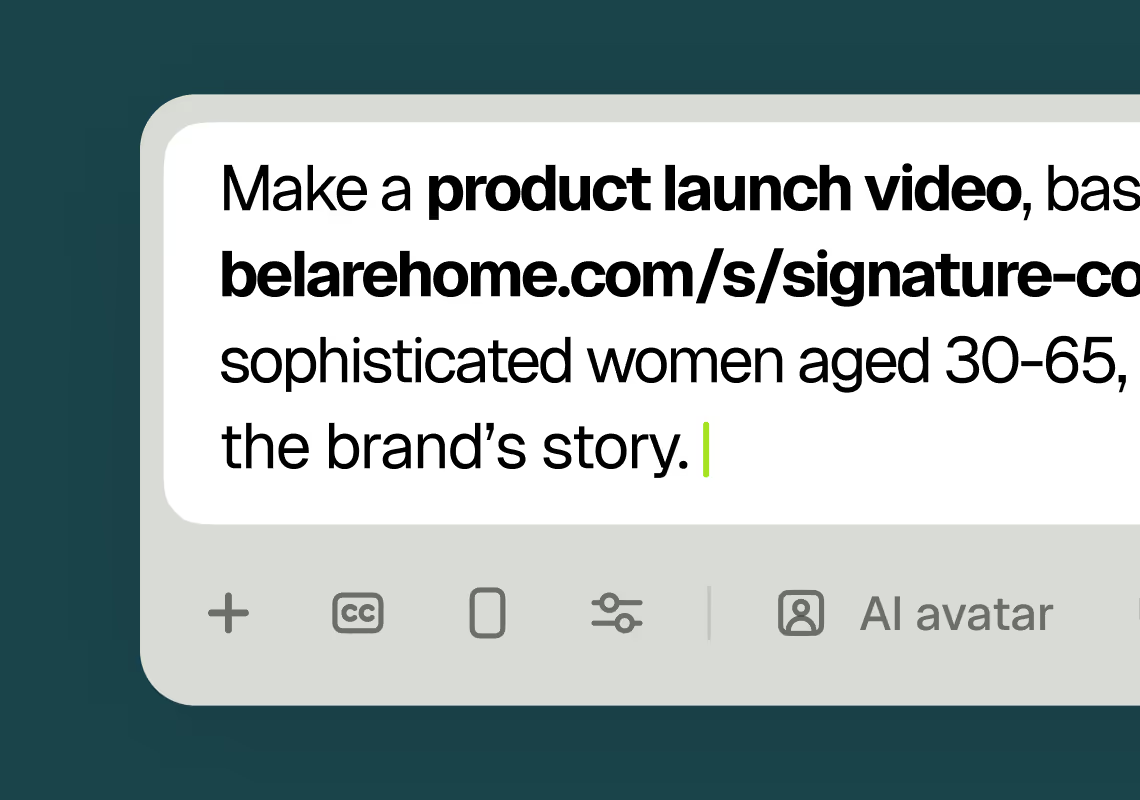 1
1Describe your video
Paste your promo brief, script, outline, or blog URL into Agent Opus.
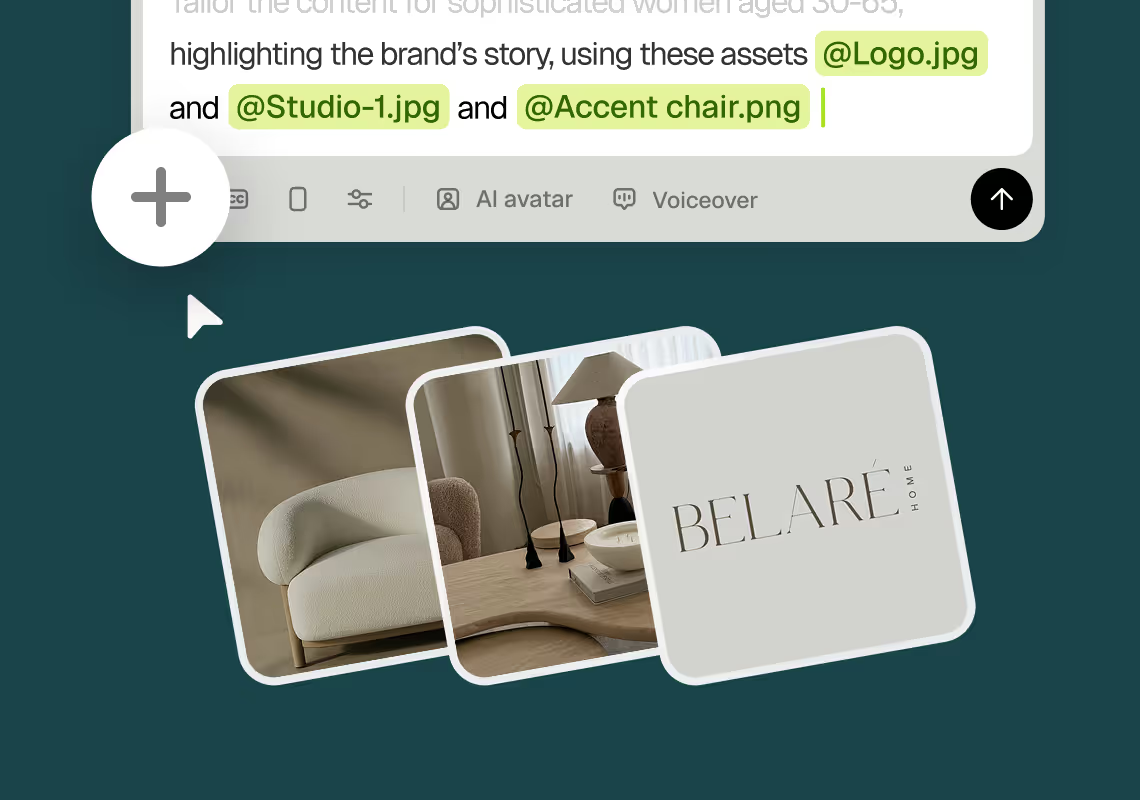 2
2Add assets and sources
Upload brand assets like logos and product images, or let the AI source stock visuals automatically.
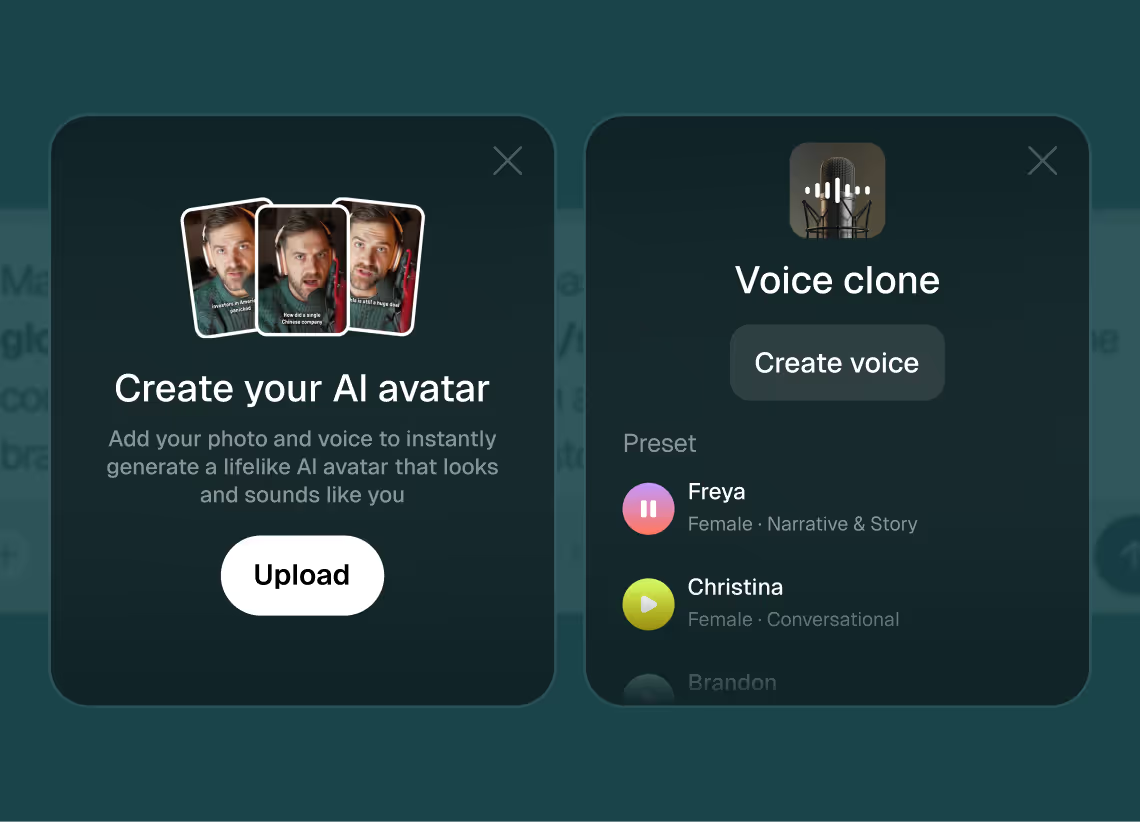 3
3Choose voice and avatar
Choose voice (clone yours or pick an AI voice) and avatar style (user or AI).
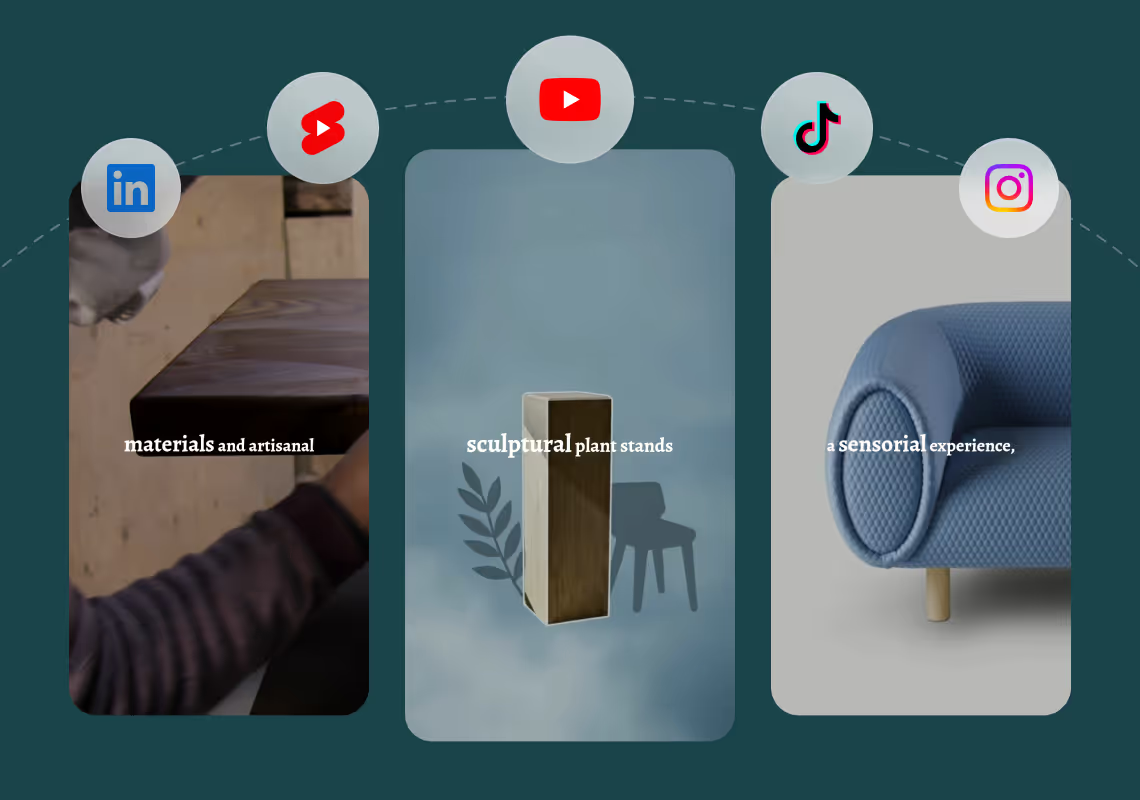 4
4Generate and publish-ready
Click generate and download your finished promo video in seconds, ready to publish across all platforms.


8 powerful features of Agent Opus' Case Study Video Maker
Prompt-to-Video Generation
Turn a one-line idea into a finished video. The agent handles structure, pacing, B-roll selection, and final assembly automatically.
Script and Outline Support
Paste a full script, drop in an outline with section headers, or supply a blog or article URL — Agent Opus reads any of them and builds a video around the content.
AI Voiceover and Voice Cloning
Pick from natural-sounding AI voices in 30+ languages, or clone your own voice once. Every video then ships with your authentic narration.
Beat-Synced Motion Graphics
Dynamic visuals that lock to the beat of your audio or the pacing of your script — kinetic typography, transitions, and effects, no manual keyframing required.
Automatic Captions and Subtitles
Burn-in captions for short-form, soft subtitles for long-form, and multi-language translations — all generated and synced automatically.
Multi-Aspect-Ratio Export
9:16, 1:1, and 16:9 outputs from one job, with intelligent reframing of text, motion graphics, and focal elements for each ratio.
Brand Asset Integration
Upload your logo, watermark, fonts, and color palette. Agent Opus applies them consistently across every video automatically.
Avatar and Talking Head Support
Add an AI avatar, your own video footage, or a synthetic spokesperson to any video — useful for explainers, ads, and personal-brand content.
Testimonials
This looks like a game-changer for us. We're building narrative-driven, visually layered content — and the ability to maintain character and motion consistency across episodes would be huge. If Agent Opus can sync branded motion graphics, tone, and avatar style seamlessly, it could easily become part of our production stack for short-form explainers and long-form investigative visuals.
srtaduck
wow that's actually great 🔥
irtaza65
Awesome output, Most of my students and followers could not catch that it was using Agent Opus. Thank you Opus.
Wealth with Gaurav
Frequently Asked Questions
How does a case study video maker handle different story formats and data types?
A case study video maker like Agent Opus is designed to work with the full spectrum of customer success content, from short testimonial quotes to multi-page case study documents. You can input a brief bullet list of results, a full narrative script, an outline with key metrics, or even paste a URL to an existing blog-based case study. The AI analyzes the structure and identifies critical elements like the customer challenge, your solution, implementation steps, and measurable outcomes. It then organizes these into a logical video narrative with distinct scenes for problem setup, solution introduction, results reveal, and testimonial or call-to-action close. For data-heavy case studies with charts, percentages, or timelines, the motion graphics engine automatically visualizes metrics as animated overlays, comparison slides, or progress bars. If your case study includes customer quotes, the AI can present them as text overlays, voiceover narration, or both. The system also adapts tone and pacing based on content length: a 200-word brief becomes a punchy 30-second highlight reel, while a 1,500-word case study expands into a 90-second deep dive with multiple chapters. You maintain full control by adjusting the prompt to emphasize specific outcomes, add context about industry or use case, or request a particular visual style. This flexibility means one case study video maker can serve B2B SaaS teams showcasing ROI, e-commerce brands highlighting customer transformations, agencies presenting campaign results, and consultants building thought leadership, all without requiring separate tools or workflows for each format.
What are best practices for prompts when using a case study video maker?
Effective prompts for a case study video maker start with clarity about the customer and the outcome. Begin by naming the customer or customer type, the challenge they faced, and the measurable result your solution delivered. For example, instead of a vague prompt like 'make a case study video,' try 'create a 60-second case study video showing how Acme Corp reduced support tickets by 40% in three months using our AI chatbot.' This gives the AI concrete anchors for scene structure and visual emphasis. Next, specify any brand assets or visuals you want included. Mention if you have a customer logo, product screenshots, before-and-after images, or team photos. The AI will integrate these into the video automatically, but calling them out in the prompt ensures they appear in the right scenes. If your case study has standout metrics like revenue growth, time savings, or user adoption rates, list them explicitly and ask the AI to highlight them with motion graphics. For example, 'emphasize the 3x ROI and 25% faster onboarding with animated charts.' Tone and style matter too. Indicate whether you want a formal, data-driven presentation or a warm, testimonial-focused story. Phrases like 'professional B2B tone' or 'friendly, customer-first narrative' guide the AI's language and pacing choices. If you have a specific platform in mind, mention it. Saying 'optimized for LinkedIn' will produce a square or vertical video with text overlays sized for mobile, while 'YouTube case study' might yield a longer, landscape format with chapter markers. Finally, if you want voiceover or an avatar, specify that upfront. You can request your cloned voice, an AI voice with a particular accent or gender, or an on-camera avatar to present the case study as a talking-head video. The more context you provide about audience, platform, and desired emphasis, the more precisely the case study video maker will match your vision on the first generation.
Can a case study video maker keep on-brand voices, logos, and visual styles across multiple videos?
Yes, a case study video maker like Agent Opus is built to maintain brand consistency across every video you generate. Once you upload your logo, brand colors, fonts, and any visual assets like product screenshots or team photos, the system stores them and applies them automatically to future projects. This means every case study video you create will feature your logo in the same position, use your brand's color palette for motion graphics and text overlays, and incorporate your visual identity without requiring manual setup each time. Voice consistency works the same way. If you clone your voice or a team member's voice, that audio profile is saved and can be reused across all case study videos. This is especially valuable for teams producing multiple customer stories, because every video will sound like it comes from the same narrator, reinforcing brand voice and building audience familiarity. You can also define style preferences at the account level. For example, if your brand aesthetic is minimalist with bold sans-serif text and clean transitions, you can set that as a default, and the AI will apply it to every case study video unless you override it with a specific prompt. The same goes for pacing and structure. If your case studies always follow a problem-solution-results format with a testimonial close, you can template that flow so the AI generates videos in that structure by default. For agencies or enterprises managing multiple clients, Agent Opus supports project-level branding, so you can switch between different brand kits without cross-contamination. This eliminates the need to manually adjust colors, logos, or fonts in each video and ensures that whether you're creating one case study or fifty, every output looks and sounds like it belongs to the same cohesive brand family. The result is faster production, stronger brand recognition, and a professional polish that would traditionally require a dedicated design and video team to maintain.
What are the limitations or edge cases of a case study video maker for complex customer stories?
A case study video maker excels at transforming structured customer success stories into video, but there are scenarios where the tool's automation has natural boundaries. First, highly technical or niche case studies with deep domain jargon may require additional context in your prompt to ensure the AI interprets terms correctly. For example, if your case study involves specialized software, medical devices, or financial instruments, providing a brief explanation of key terms or acronyms helps the AI generate accurate narration and visuals. Without that context, the system might default to generic descriptions or miss the nuance that makes the case study compelling to your target audience. Second, case studies that rely heavily on proprietary data visualizations or custom infographics may need you to upload those assets directly. While the AI can generate motion graphics for standard metrics like percentages, timelines, and comparisons, it cannot recreate a complex, multi-variable dashboard or a branded chart design from scratch. In these cases, you would upload your existing graphic as an image, and the AI will integrate it into the video with transitions and overlays. Third, case studies with multiple customer voices or interview clips present a challenge for fully automated generation. If your case study includes quotes from three different stakeholders, the AI can present them as text overlays or narrate them in a single voice, but it cannot generate distinct voice clones for each person unless you provide separate audio samples. For video testimonials or on-camera interviews, you would need to upload those clips, and the AI can weave them into the generated video alongside motion graphics and B-roll. Fourth, very long case studies over 2,000 words may require you to either condense the content or split it into multiple videos. While the AI can handle extended narratives, video length impacts engagement, and most platforms favor shorter formats. The tool will prompt you to prioritize key sections if the input is too dense for a single video. Finally, case studies that depend on live-action footage, such as factory tours, event coverage, or hands-on product demos, fall outside the scope of text-to-video generation. The AI cannot create original live-action scenes, but you can upload that footage and use the case study video maker to add branded intros, motion graphics for results, voiceover narration, and a polished outro. Understanding these boundaries helps you prepare the right inputs and set realistic expectations, ensuring the case study video maker delivers maximum value for your specific use case.