Chemistry Explainer Video Maker
Agent Opus is a chemistry explainer video maker that transforms text into finished educational videos. Describe your chemistry concept, paste a script, or share an article URL, and Agent Opus generates a complete video with AI motion graphics, molecular diagrams, voiceover, and social-ready formatting. No timeline editing, no stock hunting, no manual assembly. Perfect for educators, science communicators, and marketers who need engaging chemistry content fast. From reaction mechanisms to periodic trends, turn complex science into clear, visual stories in minutes.

Explore what's possible with Agent Opus

Reasons why creators love Agent Opus' Chemistry Explainer Video Maker
Professional Quality, Zero Budget
Deliver polished educational content that rivals expensive production studios without hiring a video team.
Students Stay Engaged Longer
Dynamic visuals and clear narration keep learners focused through challenging topics like stoichiometry and equilibrium.
Scale Your Curriculum Fast
Produce an entire semester of chemistry explainers in days, not months of filming and editing.
Consistent Teaching Voice
Record your explanation once and reuse your voice across dozens of chemistry topics without re-recording.
Complex Concepts Made Clear
Turn abstract molecular structures and reactions into visual stories that students actually understand and remember.
No Lab Setup Required
Create demonstrations of dangerous or expensive experiments safely from your desk, without equipment or chemicals.
How to use Agent Opus’ Chemistry Explainer Video Maker
 1
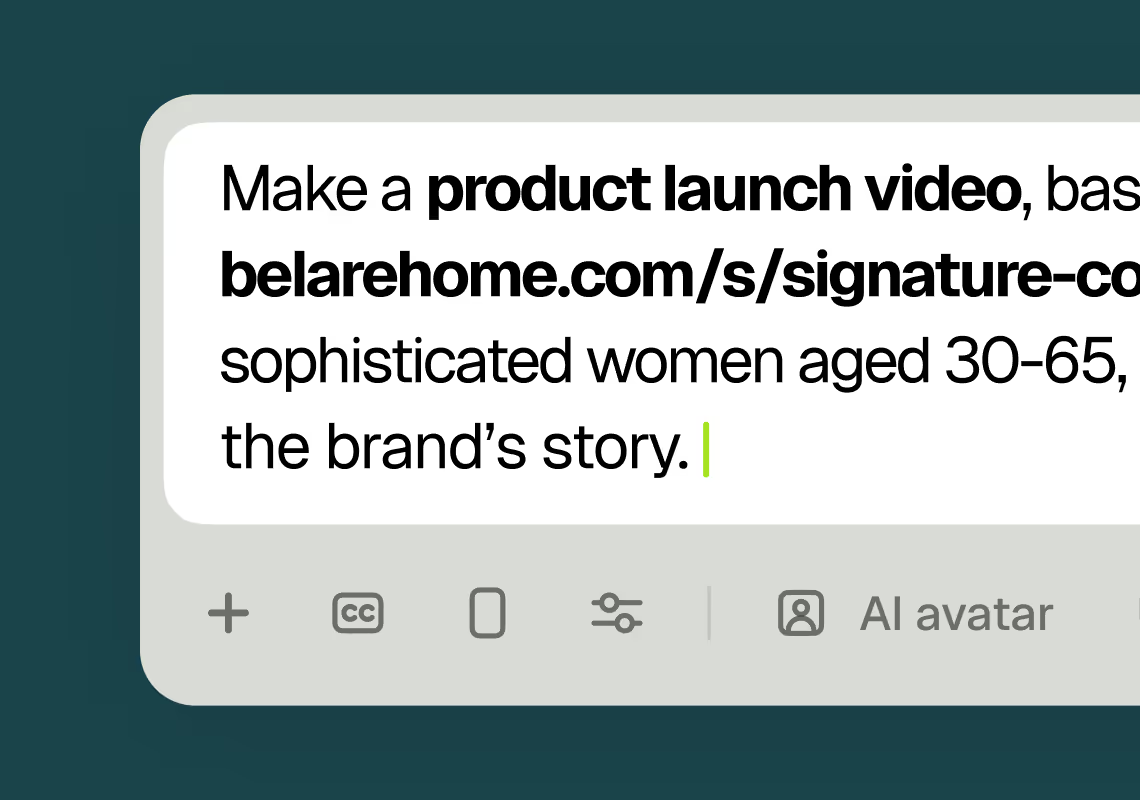
1Describe your video
Paste your promo brief, script, outline, or blog URL into Agent Opus.
 2
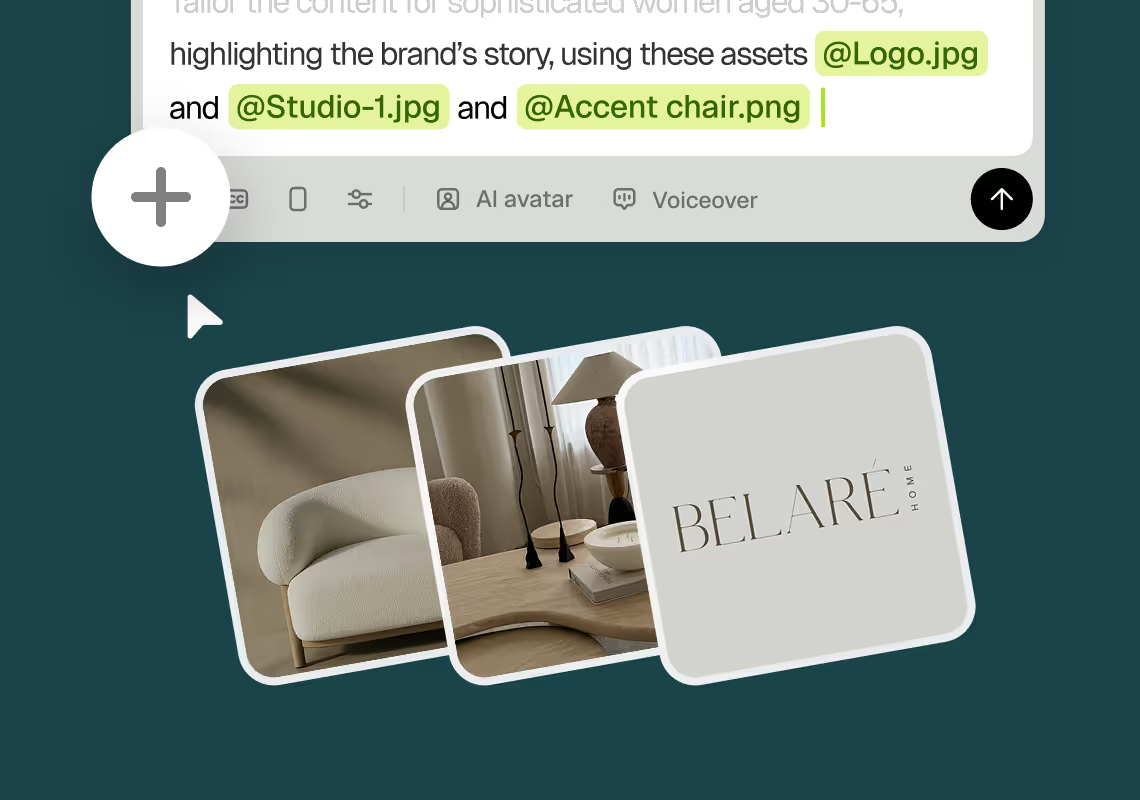
2Add assets and sources
Upload brand assets like logos and product images, or let the AI source stock visuals automatically.
 3
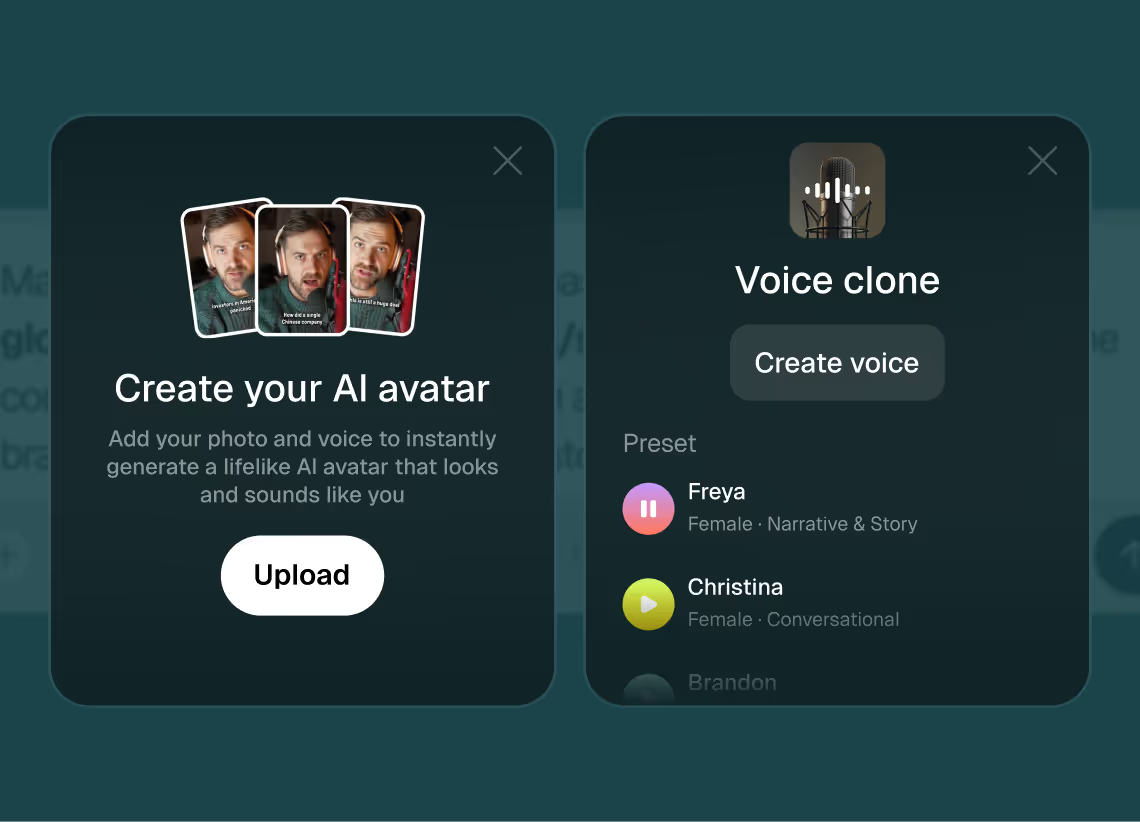
3Choose voice and avatar
Choose voice (clone yours or pick an AI voice) and avatar style (user or AI).
 4
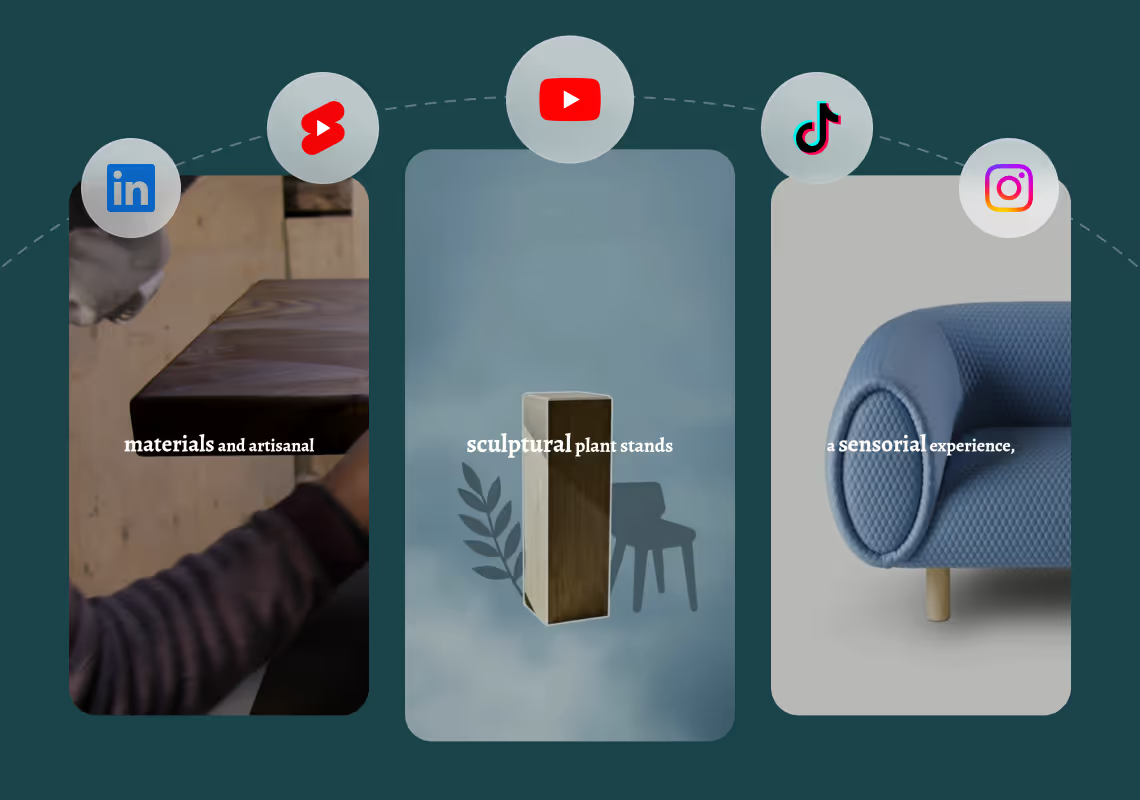
4Generate and publish-ready
Click generate and download your finished promo video in seconds, ready to publish across all platforms.


8 powerful features of Agent Opus' Chemistry Explainer Video Maker
Reaction Mechanism Videos
Produce animated videos showing electron movement and bond formation in organic chemistry reactions.
Chemistry Concept Narration
Add AI voiceover to explain acid-base theory, thermodynamics, or kinetics in your generated videos.
Educational Chemistry Shorts
Generate short-form chemistry explainer videos optimized for classroom use or social media sharing.
Molecular Animation Generation
Generate 3D molecular structures and reaction pathways from simple text descriptions automatically.
Lab Process Videos
Create step-by-step laboratory procedure videos from written protocols or safety instructions.
Equation Visualization
Transform chemical equations and stoichiometry problems into clear, animated visual explanations.
Text to Chemistry Video
Turn written explanations of reactions, formulas, or concepts into animated chemistry videos instantly.
Periodic Table Explainers
Generate videos explaining element properties, trends, and relationships directly from your prompts.
Testimonials
This looks like a game-changer for us. We're building narrative-driven, visually layered content — and the ability to maintain character and motion consistency across episodes would be huge. If Agent Opus can sync branded motion graphics, tone, and avatar style seamlessly, it could easily become part of our production stack for short-form explainers and long-form investigative visuals.
srtaduck
I reviewed version a and I was very impressed with this version, it did very well in almost all aspects that users need, you would only have to make very small changes and maybe replace one of 2 of the pictures, but even saying that it could be used as is and still receive decent views or even chances at going viral depending on the story or the content the user chooses.
Jeremy
all in all LOVE THIS agent. I'm curious to see how I can push it (within reason) Just need to learn to get the consistency right with my prompts
Rebecca
Frequently Asked Questions
How does a chemistry explainer video maker handle complex molecular diagrams and reaction mechanisms?
Agent Opus generates chemistry explainer videos by interpreting your script or prompt and automatically creating visual representations of molecular structures, reaction pathways, and lab techniques. When you describe a concept like nucleophilic substitution or redox balancing, the AI motion graphics engine builds diagrams, arrows, electron flow animations, and structural formulas that match your narration. You can provide a detailed script with specific molecule names and reaction steps, or write a short prompt like 'explain SN2 mechanism with ethyl bromide and hydroxide' and Agent Opus will assemble the visual sequence. The system sources royalty-free chemistry imagery from stock libraries and the web, then layers AI-generated motion graphics on top to illustrate bonding changes, energy diagrams, and lab apparatus. If you upload your own molecular models, lab photos, or brand assets, Agent Opus integrates them into the scene assembly. The result is a chemistry explainer video that visually tracks your spoken explanation without requiring you to animate each bond break or electron shift manually. This approach works for organic chemistry, inorganic reactions, physical chemistry concepts, and biochemistry pathways. The AI handles pacing so diagrams appear in sync with voiceover, and it adjusts visual complexity based on the depth of your script. For educators creating lesson series or marketers producing science content at scale, this means you can generate a new chemistry explainer video for each topic in minutes rather than spending hours in animation software.
What are best practices for writing prompts or scripts for a chemistry explainer video maker?
To get the best results from a chemistry explainer video maker like Agent Opus, structure your prompt or script with clear concept definitions, step-by-step explanations, and specific visual cues. Start with a one-sentence summary of the chemistry topic, then break the explanation into logical sections: introduction, mechanism or theory, real-world application, and conclusion. For example, a script on acid-base equilibrium might open with 'Acids donate protons, bases accept them,' then walk through the Bronsted-Lowry definition, show a sample reaction with hydrochloric acid and ammonia, and close with buffer system applications. Use precise chemical terminology and molecule names so the AI can source accurate diagrams and structures. If you want a specific visual, call it out in the script: 'show the Lewis structure of water' or 'animate the electron transfer in this redox reaction.' Agent Opus interprets these cues and generates corresponding motion graphics. Keep sentences concise and narration-friendly since the voiceover will read your script verbatim or use it as a guide. If you are working from a blog post or article URL, ensure the content has clear headings and logical flow so the AI can segment scenes effectively. For advanced topics like orbital hybridization or reaction kinetics, include analogies or simplified explanations alongside technical details to help the AI balance visual complexity. Mention any branding requirements upfront: 'include our lab logo in the intro' or 'use our product image when discussing the catalyst.' Avoid overly long paragraphs; break explanations into bite-sized chunks that map to individual video scenes. This structure helps the chemistry explainer video maker pace visuals, voiceover, and motion graphics for maximum clarity and engagement across educational and marketing contexts.
Can a chemistry explainer video maker keep on-brand voices, logos, and lab visuals across multiple videos?
Yes, Agent Opus supports brand consistency across all chemistry explainer videos you generate. Upload your logo once and the system will place it in the intro or outro of every video, ensuring your educational content or product demos carry your visual identity. If you have specific lab photos, product shots, or custom molecular diagrams, you can include them in your asset library and reference them in your script or prompt. For example, if you manufacture chemistry lab equipment, upload images of your glassware, spectrometers, or safety gear, and Agent Opus will integrate them into scenes when the script mentions those items. Voice consistency is equally straightforward: record a short sample of your voice and Agent Opus clones it for all future chemistry explainer videos, so every video sounds like you without re-recording narration each time. This is valuable for educators building a recognizable teaching voice or brands maintaining a consistent spokesperson across science content. If you prefer an AI voice, select one from the library and use it across your entire video series for uniform tone and pacing. The chemistry explainer video maker also remembers your preferred aspect ratios and platform targets, so if you always publish to YouTube and LinkedIn, it will default to those outputs. For teams, this means multiple creators can generate chemistry videos that look and sound cohesive even if different people write the scripts. Brand colors, fonts, and motion graphic styles can be set as defaults, reducing the need to specify them in every prompt. This level of consistency is critical for educational institutions, science communication channels, and companies producing regular chemistry content for marketing or training. Agent Opus turns your brand guidelines into automated video production rules, so every chemistry explainer video reinforces your identity without manual design work.
What are the limitations or edge cases of a chemistry explainer video maker for highly specialized or niche topics?
A chemistry explainer video maker like Agent Opus excels at generating videos for mainstream chemistry concepts, common reactions, and widely taught topics, but highly specialized or cutting-edge research areas may require additional input to achieve the desired accuracy and visual detail. For example, if you are explaining a novel catalytic mechanism published in a recent journal article, the AI may not have pre-existing motion graphics templates for that specific reaction pathway. In these cases, provide a detailed script with step-by-step descriptions and upload any custom diagrams, molecular models, or lab images from your research. Agent Opus will integrate your assets and generate motion graphics around them, but the initial visual library may lean toward standard chemistry visuals like common functional groups, periodic table elements, and textbook reaction types. Similarly, if your topic involves proprietary compounds, experimental techniques, or industry-specific processes, mention those details explicitly in your prompt and supply any branded or confidential imagery you want included. The system will not auto-source visuals for unpublished or proprietary content. Another edge case is extremely long or complex multi-step syntheses: while Agent Opus can handle detailed scripts, breaking a 20-step organic synthesis into multiple shorter videos often yields clearer results than cramming everything into one. The AI paces scenes based on script length and narration, so overly dense content may result in rushed visuals. For niche audiences like graduate-level physical chemistry or computational chemistry, ensure your script balances technical depth with visual storytelling; pure equation derivations without visual anchors can be harder for the motion graphics engine to illustrate dynamically. Finally, if you need interactive elements like clickable molecular models or embedded quizzes, those fall outside the scope of a chemistry explainer video maker focused on linear video output. Agent Opus generates publish-ready videos optimized for social platforms and video hosting, not interactive learning modules. For most educational and marketing use cases, these limitations are minor, and the speed and automation benefits far outweigh the need for manual adjustments on highly specialized content.