Economics Explainer Video Maker
Transform complex economic concepts into clear, engaging videos in minutes. Agent Opus is an economics explainer video maker that turns your brief, script, or article into a complete video with AI motion graphics, voiceover, and dynamic visuals. No editing required. Describe supply and demand, fiscal policy, or market trends, and get a publish-ready video optimized for YouTube, LinkedIn, TikTok, and Instagram. Perfect for educators, content creators, and marketers who need professional economics content fast.

Explore what's possible with Agent Opus

Reasons why creators love Agent Opus' Economics Explainer Video Maker
Complex Ideas, Crystal Clear
Turn dense economic theories into visuals your audience actually understands and remembers.
Scale Without Burnout
Cover more topics and reach wider audiences without doubling your workload or team size.
Publish While It's Relevant
React to market shifts and policy changes with explainers ready in hours, not weeks.
Data Comes to Life
Transform charts and statistics into compelling stories that drive real comprehension.
Consistent Authority Every Time
Build trust with a polished, on-brand look that positions you as the expert.
No Studio, No Problem
Skip studio costs and still sound like a pro in every video you create.
How to use Agent Opus’ Economics Explainer Video Maker
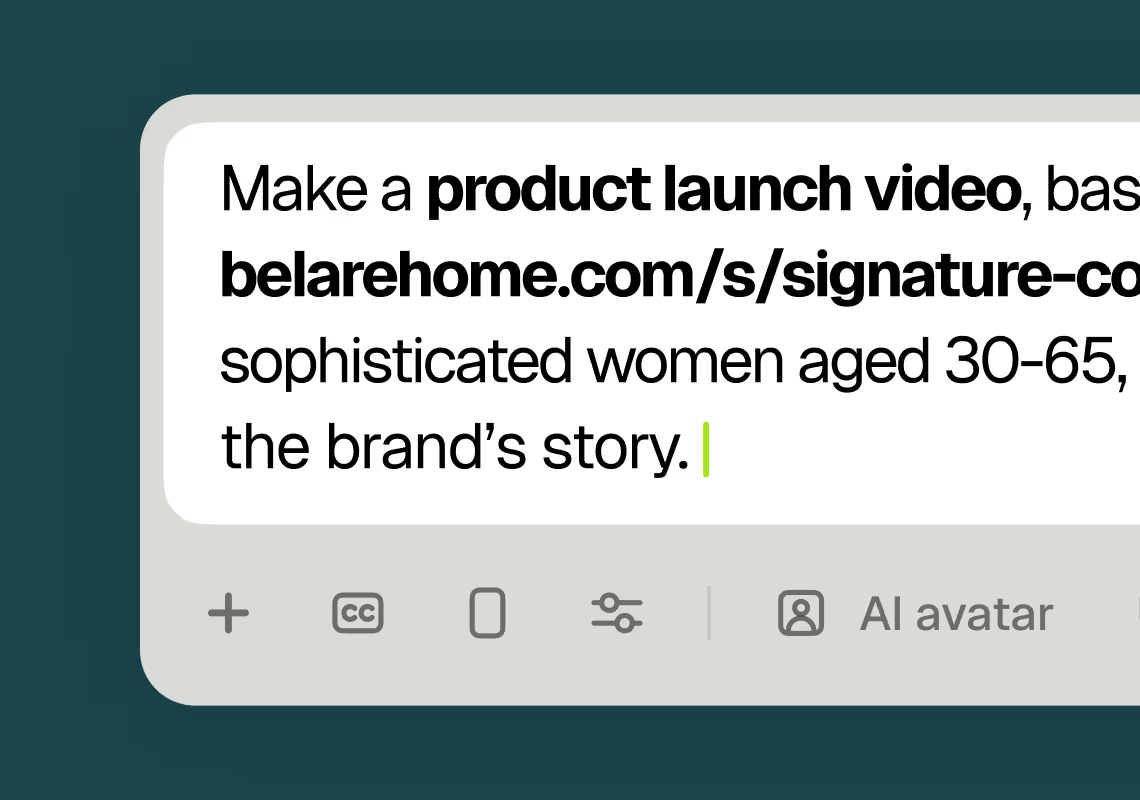 1
1Describe your video
Paste your promo brief, script, outline, or blog URL into Agent Opus.
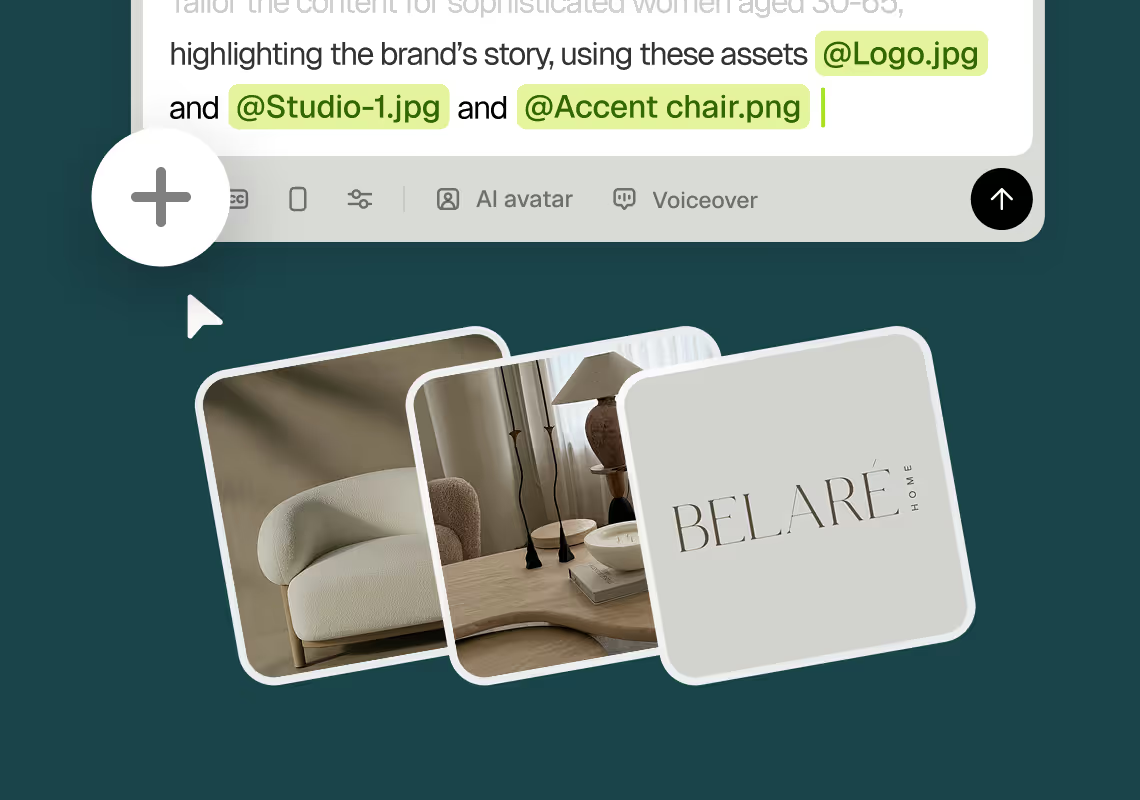 2
2Add assets and sources
Upload brand assets like logos and product images, or let the AI source stock visuals automatically.
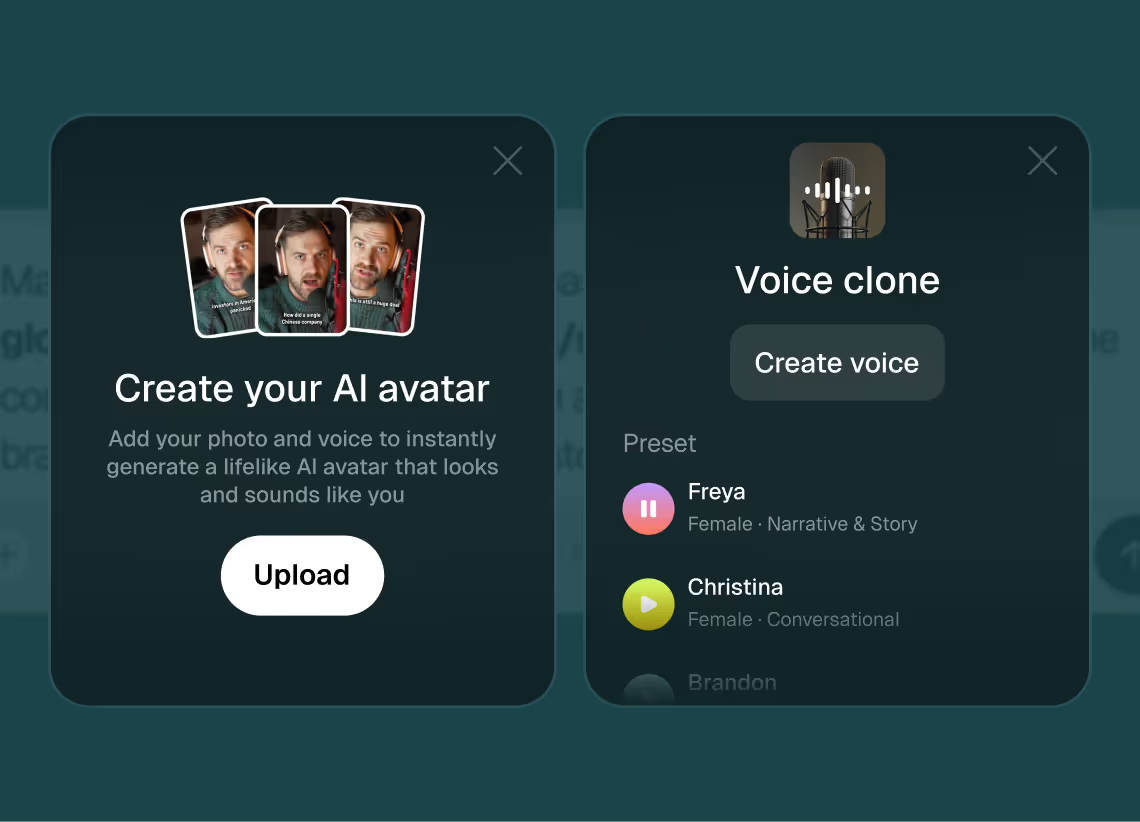 3
3Choose voice and avatar
Choose voice (clone yours or pick an AI voice) and avatar style (user or AI).
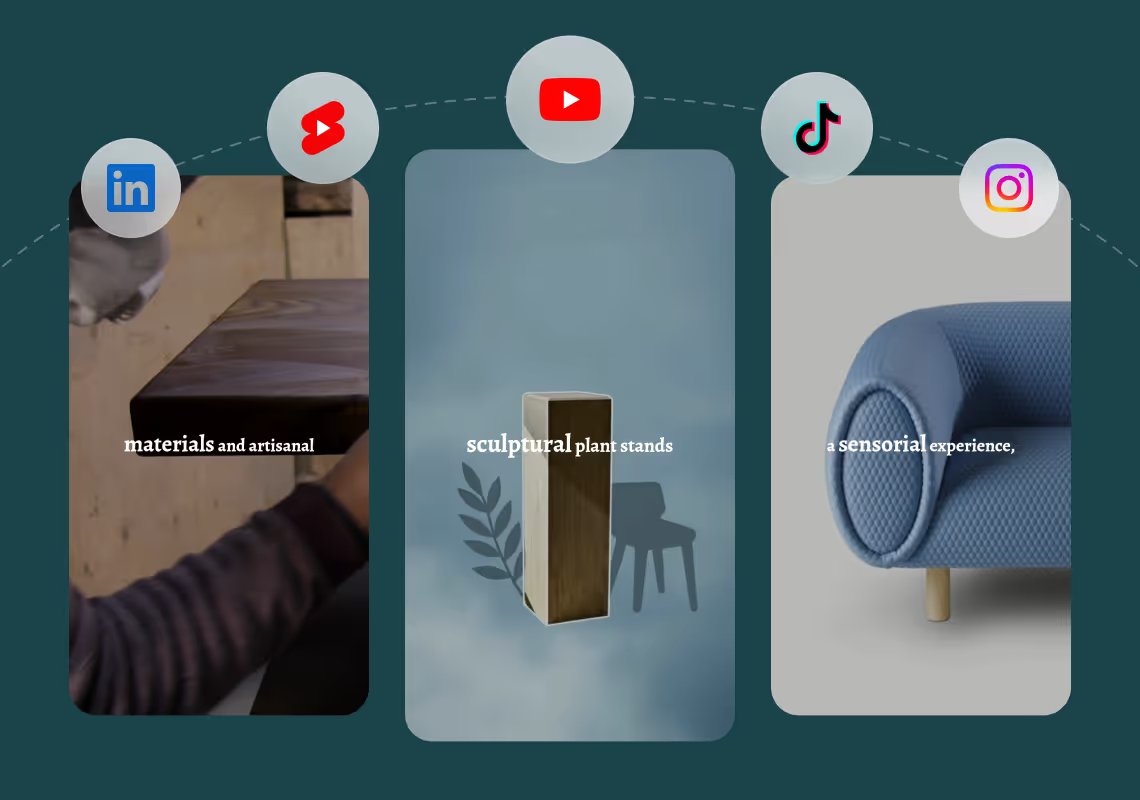 4
4Generate and publish-ready
Click generate and download your finished promo video in seconds, ready to publish across all platforms.


8 powerful features of Agent Opus' Economics Explainer Video Maker
Educational Pacing
Generate videos with timing optimized for teaching complex economic ideas without overwhelming learners.
Branded Economics Content
Create explainer videos with your institution's colors, fonts, and style for consistent branding.
Voiceover Narration
Add professional AI voiceovers that explain economic principles clearly and maintain viewer attention.
Animated Graph Generation
Generate dynamic charts and graphs that illustrate economic concepts with smooth motion graphics.
Script to Economics Video
Turn written explanations of supply, demand, or market trends into clear visual videos instantly.
Multi-Concept Sequencing
Build videos that connect multiple economic topics in logical order with smooth transitions.
Data-Driven Scenes
Convert economic data points and statistics into compelling video scenes with visual emphasis.
Concept Visualization
Transform abstract economic theories into engaging visual metaphors and animated diagrams automatically.
Testimonials
This looks like a game-changer for us. We're building narrative-driven, visually layered content — and the ability to maintain character and motion consistency across episodes would be huge. If Agent Opus can sync branded motion graphics, tone, and avatar style seamlessly, it could easily become part of our production stack for short-form explainers and long-form investigative visuals.
srtaduck
I reviewed version a and I was very impressed with this version, it did very well in almost all aspects that users need, you would only have to make very small changes and maybe replace one of 2 of the pictures, but even saying that it could be used as is and still receive decent views or even chances at going viral depending on the story or the content the user chooses.
Jeremy
all in all LOVE THIS agent. I'm curious to see how I can push it (within reason) Just need to learn to get the consistency right with my prompts
Rebecca
Frequently Asked Questions
How does an economics explainer video maker handle technical terms and data visualization?
Agent Opus is built to understand economic terminology and automatically generate appropriate visual representations. When you input a script or prompt about concepts like marginal utility, comparative advantage, or Phillips curves, the AI identifies key data points and relationships that need visual support. It then creates motion graphics including animated line graphs, bar charts, pie charts, and flow diagrams that illustrate these concepts clearly. For example, if your script discusses supply and demand equilibrium, Agent Opus generates intersecting curves with labeled axes, equilibrium points, and animated shifts to show market changes. The system sources relevant real-world imagery to ground abstract concepts. A discussion of international trade might include container ships, currency symbols, or factory footage. The AI matches visual complexity to audience level. An intro to inflation gets simpler graphics than a deep dive into monetary transmission mechanisms. You control this through your prompt by specifying your target audience. The voiceover pronunciation handles economic jargon correctly, whether you use voice cloning or AI voices. Terms like Keynesian, liquidity trap, or elasticity of substitution are delivered naturally. Motion graphics sync precisely to narration timing, so when the voiceover says the unemployment rate rose, viewers see the graph line climb simultaneously. This synchronization happens automatically based on script analysis. You can include specific data in your prompt, and Agent Opus will visualize it accurately. Paste GDP figures, inflation rates, or trade balances, and the AI generates charts with correct scales and labels. For blog-to-video conversion, the system extracts data from tables or inline statistics and transforms them into animated visuals. The economics explainer video maker also handles comparative scenarios well. Explaining fiscal versus monetary policy? Agent Opus creates side-by-side visuals or sequential scenes that contrast the approaches. The AI understands cause-and-effect relationships central to economics and represents them through arrows, flow charts, or before-and-after comparisons. Background elements reinforce context without distraction. A video about central banking might show Federal Reserve buildings or currency printing, while a piece on consumer behavior includes shopping scenes or household imagery. All visuals are royalty-free and commercially licensed. The result is a video where every economic concept has a clear visual anchor, making abstract theory concrete and memorable for viewers.
What are best practices for writing prompts for economics explainer videos?
Effective prompts for an economics explainer video maker balance clarity, structure, and audience awareness. Start by defining your core concept and target viewer. A prompt like "Explain inflation to high school students" yields different pacing and visuals than "Analyze inflation targeting for MBA candidates." Agent Opus adjusts complexity based on these cues. Include your main points in logical order. Economics builds on foundational concepts, so structure matters. A prompt about monetary policy might outline: definition of money supply, central bank tools, interest rate mechanisms, then real-world effects. This sequence helps the AI create a narrative flow where each scene builds on the previous one. Specify any data or examples you want included. If you're discussing the 2008 financial crisis, mention key events like subprime mortgages, Lehman Brothers, or TARP. The AI will source relevant imagery and create timeline graphics. For theoretical concepts, provide analogies or real-world parallels. Describing opportunity cost? Mention choosing between college and work, or investing in stocks versus bonds. Agent Opus translates these into visual scenarios. Indicate your desired tone. "Conversational explanation of game theory" produces different voiceover pacing than "Formal lecture on Nash equilibrium." The AI matches vocabulary, sentence structure, and visual style to your tone specification. For script-based input, write naturally but include visual cues. Phrases like "as shown in this graph" or "consider this example" signal where the AI should insert graphics or scenario footage. You don't need to specify exact visuals; the system infers appropriate charts, images, or animations from context. When converting blog posts or articles, ensure the source content has clear section breaks and examples. Agent Opus performs better with well-structured writing that separates concepts into digestible chunks. Dense academic paragraphs may need light editing for optimal video pacing. Mention any branding requirements in your prompt. "Include our company logo" or "Use our product screenshots when discussing pricing strategy" ensures the economics explainer video maker integrates your assets. You can upload logos and images separately, and the AI composites them into scenes. Specify platform and length preferences. "Create a 90-second TikTok about supply and demand" yields a faster-paced video with bolder graphics than "Produce a 10-minute YouTube deep dive on Keynesian multipliers." Agent Opus optimizes aspect ratio, pacing, and visual density accordingly. Avoid overloading a single prompt. If you're covering multiple economic theories, consider separate videos or clearly delineate sections. A prompt covering both microeconomics and macroeconomics in three minutes will feel rushed. Better to focus each video on one concept done well. Review and iterate. Generate a first version, note what works, then refine your prompt. You might discover the AI needs more context about a specific graph type or that your analogy needs clarification. Prompt refinement is fast and improves results significantly. The economics explainer video maker learns from your input structure, so developing a template for your content type saves time on future videos.
Can economics explainer videos maintain consistent branding and voice across a content series?
Yes, Agent Opus is designed for creators building ongoing economics content libraries with unified branding and voice. Consistency across videos is critical for channels, courses, and marketing campaigns, and the economics explainer video maker provides several mechanisms to achieve this. Voice cloning ensures every video sounds like you. Upload a short audio sample once, and Agent Opus replicates your voice across unlimited videos. Whether you're explaining microeconomics fundamentals or advanced econometric models, viewers hear the same trusted voice. This builds channel identity and viewer loyalty. If you're a team, you can clone your subject matter expert's voice so all economics content carries their authority, even when other team members write scripts. AI voices offer another consistency path. Choose one AI voice for your economics series and use it across all videos. The voice handles technical terminology consistently and maintains the same tone, pacing, and pronunciation. This works well for institutional content where individual personality matters less than professional delivery. Visual branding stays consistent through asset integration. Upload your logo, color palette, and any recurring graphics like channel intro cards or lower thirds. Agent Opus incorporates these elements into every video automatically. Your economics explainer videos look like a cohesive series, not random one-offs. For educational series, you can establish visual conventions. Use the same chart styles for supply and demand across all microeconomics videos, or consistent color coding where blue represents consumers and red represents producers. Include these preferences in your prompts, and the AI maintains them. The system remembers your brand assets, so you don't re-upload logos for each video. Template prompts help maintain content structure consistency. If your economics videos follow a pattern like definition, real-world example, graph explanation, then application, save that structure as a prompt template. Adjust only the specific concept for each new video. Agent Opus generates videos with parallel organization, making your series easy to follow. Tone consistency comes from prompt language. Use similar phrasing in your prompts to maintain voice. If your first video prompt said "Explain in a conversational, approachable tone," use that exact phrase in subsequent prompts. The AI maintains stylistic consistency across your content library. For course creators, this means every module video feels like part of a unified curriculum. Students experience smooth transitions between topics without jarring changes in presentation style. Marketing teams benefit when all economics content supporting a product launch shares visual language and messaging tone. The economics explainer video maker also supports series-specific customization. You might want your macroeconomics videos to use global imagery like world maps and international landmarks, while microeconomics videos focus on individual businesses and consumer scenarios. Specify these preferences per series, and Agent Opus adapts while maintaining your core brand elements. Consistency extends to technical specs. Set your preferred aspect ratio, video length range, and platform optimization once. Every economics video you generate matches these parameters unless you explicitly override them. This ensures your YouTube library has uniform thumbnails and your LinkedIn content fits platform best practices. The system's memory of your preferences means faster production over time. Your tenth economics explainer video generates quicker than your first because Agent Opus has learned your brand voice, visual preferences, and content structure. You spend less time on specifications and more time on economic concepts. For agencies managing multiple clients, you can maintain separate brand profiles. Economics videos for a fintech startup look different from those for a university economics department, and Agent Opus keeps these identities distinct. The result is a professional, cohesive economics content library that builds audience trust and recognition across every video.
How does the economics explainer video maker handle different economic schools of thought and controversial topics?
Agent Opus approaches economic theory and debate with flexibility, allowing you to present any school of thought or controversial topic according to your perspective and audience needs. The economics explainer video maker doesn't impose a particular economic ideology; it visualizes and narrates the concepts you provide in your prompt or script. When explaining competing theories, you control the framing. A prompt about inflation might present monetarist, Keynesian, and Austrian perspectives sequentially, with Agent Opus generating distinct visual treatments for each. Monetarist sections might show money supply graphs, Keynesian portions feature aggregate demand curves, and Austrian segments use time-preference illustrations. The AI creates clear visual separation so viewers understand these are different frameworks. For balanced presentations, structure your prompt to give equal weight to multiple viewpoints. "Explain the minimum wage debate, covering both employment effects argued by classical economists and income effects emphasized by institutional economists." Agent Opus generates scenes for each perspective with neutral language and comparable visual emphasis. Neither side appears favored unless you specify otherwise. Alternatively, advocate for a specific position. A prompt like "Argue why supply-side tax cuts stimulate growth, using Laffer curve analysis and historical examples" produces a video supporting that view. The AI sources imagery and data that reinforce your argument, creates graphics emphasizing your key points, and structures narration persuasively. This works for any economic position you want to advance. Controversial topics require careful prompt construction. For subjects like wealth inequality, trade policy, or cryptocurrency regulation, specify your angle clearly. "Present the case for progressive taxation" yields different content than "Critique progressive taxation from a libertarian perspective." The economics explainer video maker follows your lead, generating visuals and voiceover that match your stated viewpoint. When discussing politically sensitive economics, you can choose neutral academic framing or explicit advocacy. A video on universal basic income might present empirical studies and pilot program results without endorsement, or it might argue forcefully for or against implementation. Your prompt determines the approach, and Agent Opus executes accordingly. Historical economic events with contested interpretations benefit from explicit framing. The Great Depression, 2008 financial crisis, or COVID-19 economic response can be explained through various lenses. Specify which interpretation you're presenting, and the AI selects imagery, data visualizations, and narrative structure that support that analysis. For educational content requiring objectivity, prompt for multiple perspectives and let viewers draw conclusions. "Explain quantitative easing, including arguments from proponents about preventing deflation and critics concerned about asset bubbles." Agent Opus creates a balanced video that educates without prescribing a position. The system handles technical economic debates well. Discussions about rational expectations, real business cycle theory, or modern monetary theory can be presented at various technical levels. Specify your audience's economics background in the prompt, and the AI adjusts complexity. An MMT explainer for general audiences uses simpler language and analogies, while one for economics students includes technical terminology and formal models. Controversial data gets visualized as you direct. If you're discussing income inequality and want to emphasize top-percentile wealth concentration, say so in your prompt. Agent Opus creates graphics highlighting that aspect. If you prefer to focus on absolute poverty reduction, the AI generates visuals showing rising living standards over time. The same underlying topic yields different videos based on your analytical focus. The economics explainer video maker also handles evolving economic consensus. Topics where professional opinion has shifted, like inflation-unemployment tradeoffs or optimal capital controls, can be presented historically or with current understanding. Your prompt determines whether you're explaining past beliefs, current mainstream views, or heterodox alternatives. For creators building economics content across the political spectrum, Agent Opus adapts to each project's needs. A video series for a free-market think tank looks and sounds different from one for a progressive policy organization, even when covering the same topics. The AI doesn't impose a house view; it amplifies yours. This flexibility extends to international economics and development. Explain trade policy from a developed-nation perspective or a developing-nation view. Discuss globalization's benefits or its disruptions. The economics explainer video maker generates content reflecting your chosen framework, with culturally appropriate imagery and examples. The result is economics video content that authentically represents your perspective, educates your target audience, and advances your content goals, regardless of where you stand on economic debates.