Fantasy Character Creator
Bring your fantasy character creator vision to life with Agent Opus. Describe your hero, villain, mystical creature, or entire cast in plain text, and watch as AI assembles a finished video complete with motion graphics, voiceover, and avatar. No timeline, no editing, no stock footage hunting. Just prompt to publish-ready video for your game pitch, story trailer, worldbuilding showcase, or social content. Perfect for indie game devs, fantasy authors, tabletop creators, and marketing teams who need character reveal videos fast.

Explore what's possible with Agent Opus

Reasons why creators love Agent Opus' Fantasy Character Creator
No Casting Calls Required
Build entire fantasy casts without auditions, scheduling conflicts, or location shoots eating your budget.
Characters That Feel Alive
Your fantasy heroes move, speak, and emote with cinematic realism that pulls viewers into your world.
Your Vision, Uncompromised
Bring mythical beings and impossible creatures to life exactly as you pictured them, no creative concessions.
Scale Your Fantasy Universe
Expand your world with new characters, spin-offs, and storylines without multiplying production costs.
Consistent Across Every Scene
Keep your character's look, voice, and personality locked in from opening shot to final frame.
How to use Agent Opus’ Fantasy Character Creator
 1
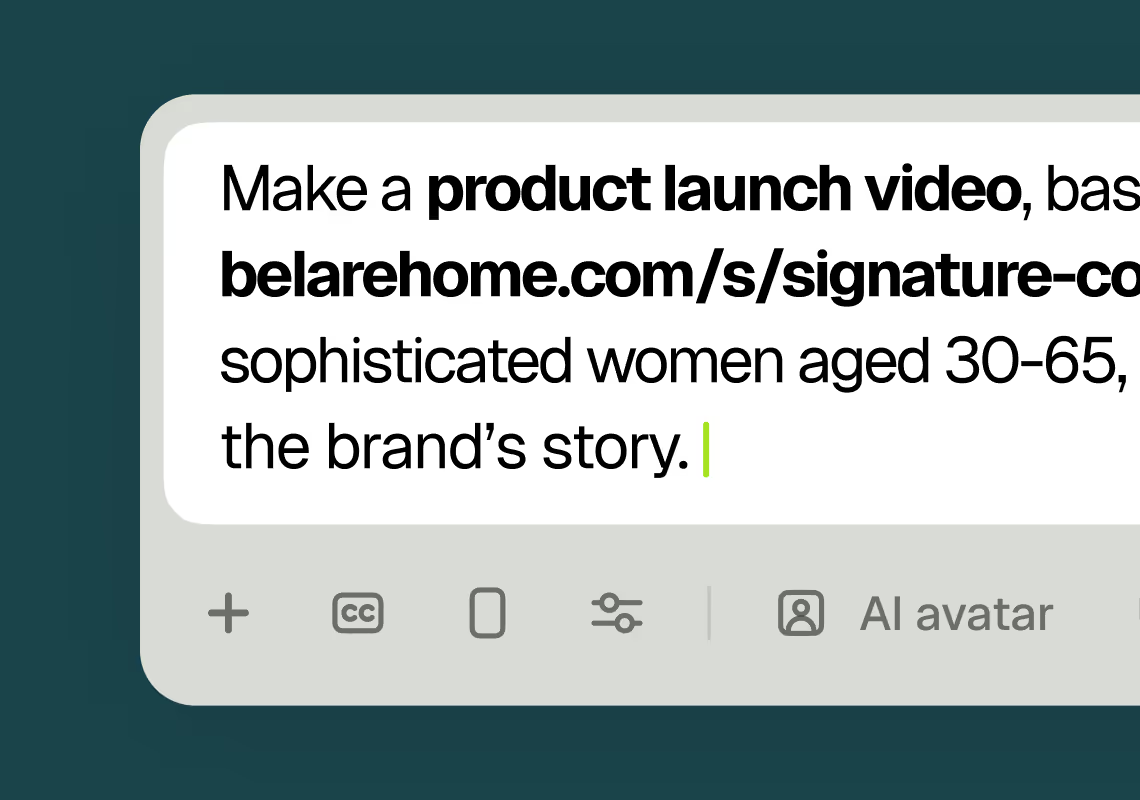
1Describe your video
Paste your promo brief, script, outline, or blog URL into Agent Opus.
 2
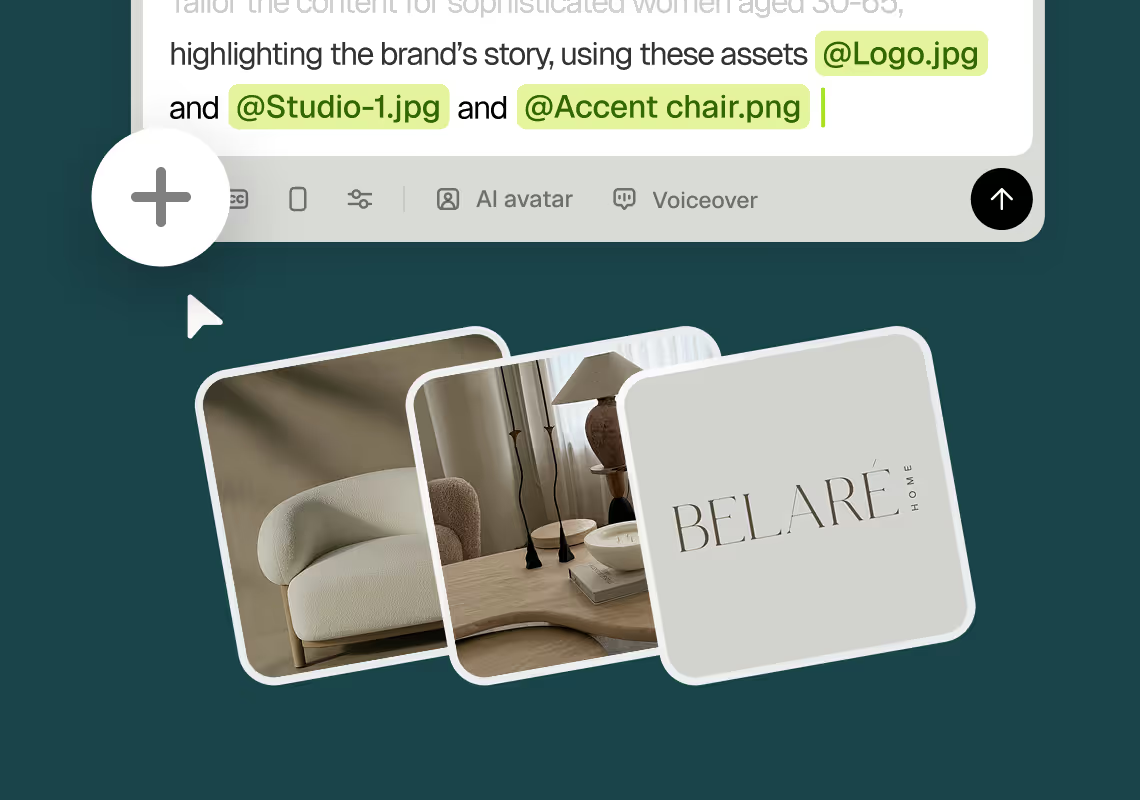
2Add assets and sources
Upload brand assets like logos and product images, or let the AI source stock visuals automatically.
 3
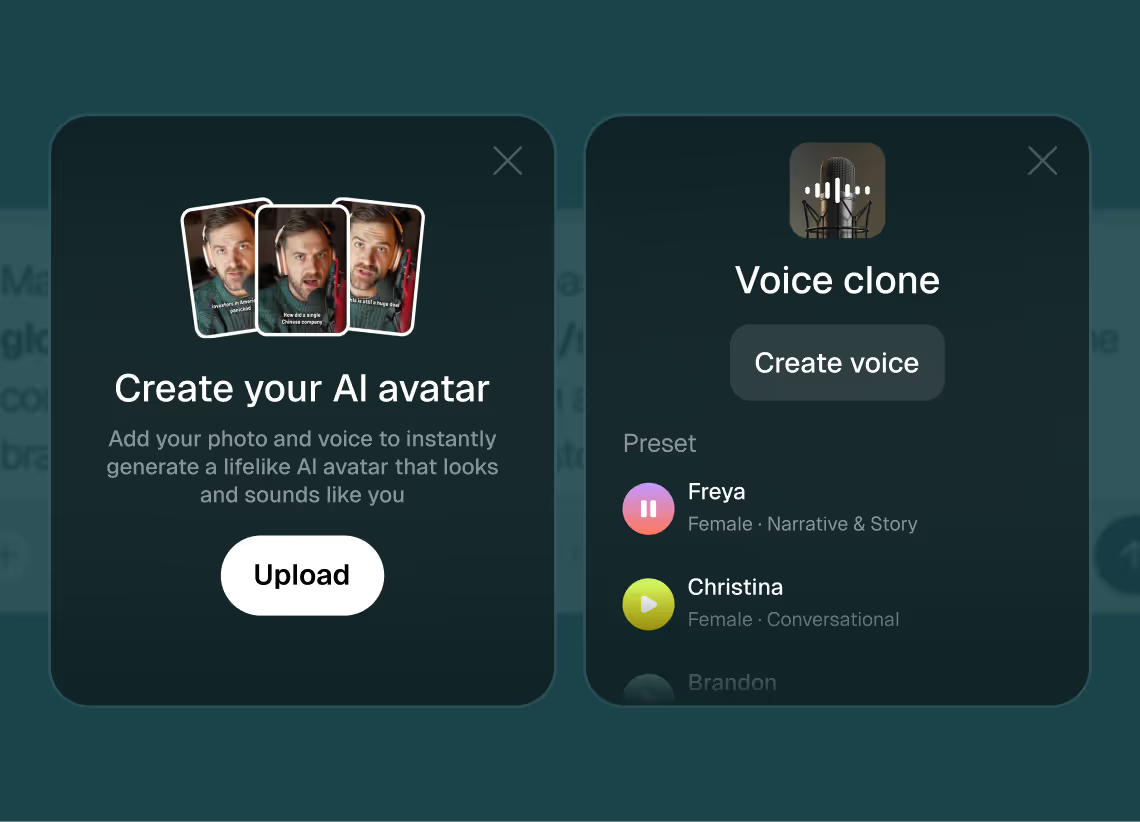
3Choose voice and avatar
Choose voice (clone yours or pick an AI voice) and avatar style (user or AI).
 4
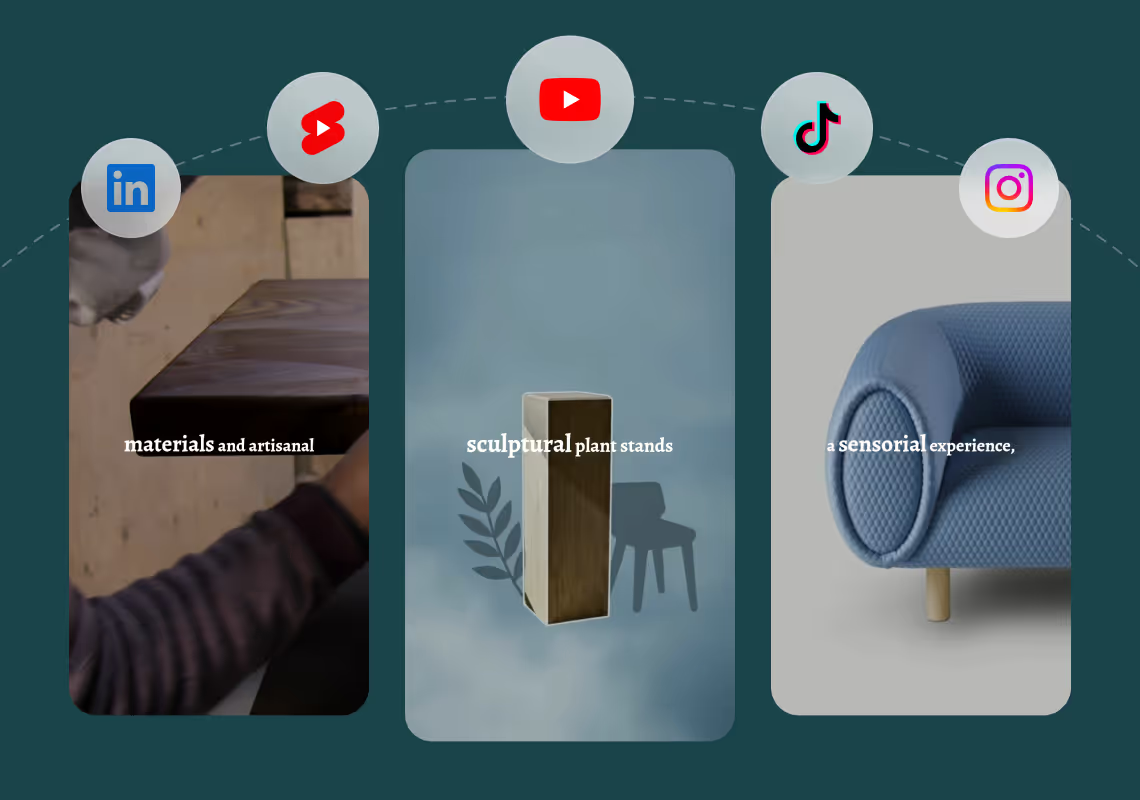
4Generate and publish-ready
Click generate and download your finished promo video in seconds, ready to publish across all platforms.


8 powerful features of Agent Opus' Fantasy Character Creator
Custom Fantasy Worlds
Place your created characters in enchanted forests, mystical castles, or otherworldly realms with matching atmospheric visuals.
Species and Race Variety
Create elves, dragons, wizards, warriors, or hybrid creatures by specifying traits in your character generation prompt.
Costume and Armor Details
Define intricate armor, robes, weapons, and accessories in text to generate characters with rich visual detail.
Multiple Character Scenes
Generate videos featuring interactions between multiple fantasy characters, each designed from your unique text prompts.
Animated Character Actions
Bring your fantasy characters to life with motion, gestures, and dynamic poses generated from simple text descriptions.
Character Backstory Videos
Turn written lore or origin stories into cinematic character introduction videos with matching visuals and pacing.
Instant Visual Consistency
Generate multiple scenes featuring the same fantasy character with consistent appearance, clothing, and style throughout.
Prompt-Based Character Design
Describe your fantasy hero or villain in text and watch Agent Opus generate a fully realized character video.
Testimonials
This looks like a game-changer for us. We're building narrative-driven, visually layered content — and the ability to maintain character and motion consistency across episodes would be huge. If Agent Opus can sync branded motion graphics, tone, and avatar style seamlessly, it could easily become part of our production stack for short-form explainers and long-form investigative visuals.
srtaduck
wow that's actually great 🔥
irtaza65
Awesome output, Most of my students and followers could not catch that it was using Agent Opus. Thank you Opus.
Wealth with Gaurav
Frequently Asked Questions
How does a fantasy character creator handle different levels of detail in my brief?
Agent Opus adapts to the depth of your input. If you provide a short prompt like 'a fire mage with red robes and a staff,' the AI will source visuals that match those keywords and assemble a concise character intro. If you supply a full backstory, personality traits, powers, and world context, the system uses that richness to select more specific imagery, apply thematic motion graphics, and pace the narration to reflect character arc. For best results, include visual descriptors (colors, silhouette, signature items), personality keywords (brooding, heroic, mischievous), and any powers or abilities that should be visualized. The fantasy character creator interprets your text semantically, so natural language works better than rigid templates. You can also paste a character profile from a wiki, novel draft, or game design doc, and Agent Opus will extract the key visual and narrative beats. If the first output feels too generic, add one or two more sensory details or emotional beats in your next iteration. The AI learns from specificity. Because there's no manual timeline, you're not locked into a structure. Refine your brief, regenerate, and compare versions in minutes instead of days.
What are best practices for prompts in a fantasy character creator workflow?
Start with a clear character archetype and one signature visual hook. For example, 'a shadow assassin with twin daggers and a cloak that dissolves into smoke' gives the AI strong visual anchors. Then layer in personality and powers: 'silent, ruthless, can teleport through darkness.' This combination helps the fantasy character creator select motion graphics that reflect both appearance and abilities. If your character has a transformation or power-up moment, describe the before and after states so the AI can structure a reveal. Use sensory language: 'glowing runes,' 'crackling lightning,' 'ancient armor.' Avoid vague terms like 'cool' or 'epic' without context. If your world has a specific aesthetic (steampunk fantasy, dark gothic, high elven), name it. Agent Opus pulls from a wide visual library, and genre keywords help narrow the search. For voiceover, specify tone: 'ominous narrator,' 'heroic announcer,' 'character's own voice, confident and sarcastic.' If you're cloning your voice, record a short sample that matches the energy you want in the final video. For avatar, decide whether the character should have a visible face or remain abstract. If you want an AI avatar, describe the face type: 'young warrior, scarred, determined expression.' If you prefer no avatar, say 'voiceover only, focus on visuals.' Finally, mention the video's purpose: 'character reveal for a game trailer,' 'backstory intro for a tabletop campaign,' 'social teaser for a fantasy novel.' This context helps the AI pace and structure the video appropriately.
Can a fantasy character creator keep on-brand visuals, logos, and voice across multiple characters?
Yes. Agent Opus supports brand asset integration, so you can upload your game logo, book cover, or studio watermark and have it appear consistently in every character video. If you're building a roster of heroes and villains for the same world, use the same voice (either your cloned voice or a chosen AI voice) across all videos to maintain narrative continuity. For visual consistency, include world-building keywords in every brief: 'set in the Ember Kingdoms,' 'dark fantasy aesthetic,' 'neon-lit cyberpunk magic.' The fantasy character creator will prioritize imagery that matches those recurring themes. If you have custom character art or concept sketches, you can reference them in your brief or provide URLs to guide the AI's visual selection. While Agent Opus auto-sources images, it interprets your text to find the closest matches, so detailed descriptions and repeated style cues help unify the look. For voice, cloning your own narration once and reusing it across characters ensures every video sounds like it's from the same storyteller. If you're using AI voices, pick one and note it in your workflow so you don't accidentally switch tones between videos. For avatar, decide early whether your brand uses a consistent host (your face or an AI avatar) or if each character gets a unique visual treatment. Agent Opus doesn't force a single template, but consistency comes from how you structure your prompts and asset choices. Think of each brief as a chapter in the same book: same world, same voice, different character spotlight.
What are the limitations or edge cases of a fantasy character creator for complex characters?
Agent Opus excels at single-character spotlights and straightforward power showcases, but highly complex multi-character interactions or intricate fight choreography may require more detailed scripting. If your character has a dozen powers and you want each visualized separately, break the brief into scenes or prioritize the top three signature abilities. The fantasy character creator assembles visuals based on your text, so if you describe too many elements at once, the AI may emphasize some over others. For best results, focus each video on one character moment: the origin, the power reveal, the transformation, or the villain monologue. If you need a ensemble cast video, describe the group dynamic and let the AI handle the composition, but expect a broader overview rather than individual deep dives. Another edge case: highly specific character designs that don't exist in stock or web image libraries. If your character is a six-armed crystal dragon with bioluminescent wings, the AI will find the closest visual matches, but it may not be pixel-perfect to your mental image. In those cases, provide reference URLs or describe the character in terms of existing archetypes plus unique modifiers. For example, 'a dragon, but made of living gemstones, with wings that glow like stained glass.' This gives the AI a visual starting point and a direction to modify. Voice cloning works best with clear, consistent audio samples. If your recording has background noise or varies in energy, the cloned voice may sound uneven. Record in a quiet space and match the tone you want in the final video. Finally, Agent Opus generates publish-ready videos, but it doesn't offer a manual editing UI. If you need frame-by-frame control or want to adjust a single transition, you'll need to refine your brief and regenerate rather than tweak the output directly. This trade-off keeps the workflow fast but means iteration happens at the prompt level, not in post-production.