Formula 1 AI Video Generator
Create professional Formula 1 videos from a simple text prompt. Agent Opus is a Formula 1 AI video generator that transforms race briefs, team updates, or driver stories into finished videos with dynamic motion graphics, AI voiceover, and social-ready formatting. Describe your F1 content vision and get a publish-ready video in minutes, no editing required. Perfect for race recaps, team announcements, driver profiles, and championship updates across TikTok, Instagram Reels, YouTube Shorts, and LinkedIn.

Explore what's possible with Agent Opus

Reasons why creators love Agent Opus' Formula 1 AI Video Generator
Ship in Minutes, Not Hours
Generate a publish-ready video in under 10 minutes from a single prompt — no timeline editing, no asset hunting, no creative dry spells.
Zero Editing Skills Required
Describe your concept and Agent Opus handles scene composition, motion graphics, voiceover, and platform formatting automatically — even if you've never opened a video editor.
Studio-Grade Output
Cinematic motion graphics, beat-synced cuts, professional voiceover, and precise typography — every video ships looking production-quality from the first generation.
Stays On-Brand
Upload your logo, fonts, and color palette once. Agent Opus applies them across every video automatically so your content stays visually consistent.
How to use Agent Opus’ Formula 1 AI Video Generator
 1
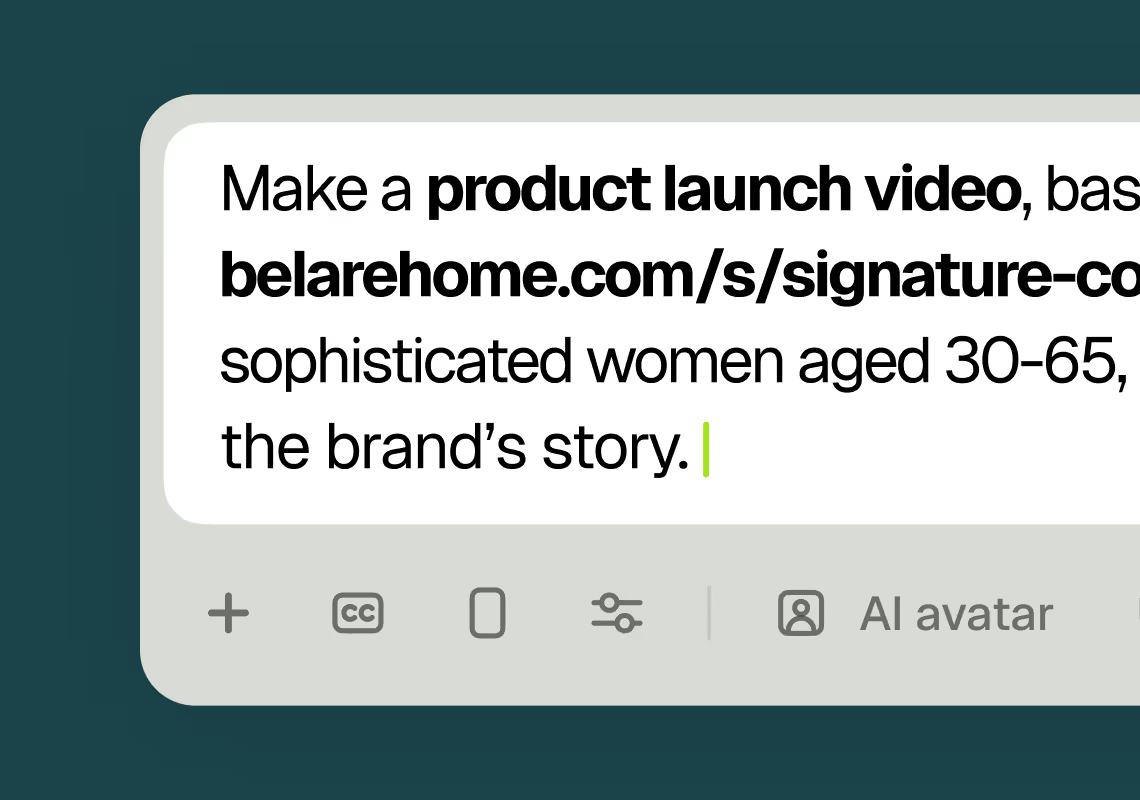
1Describe your video
Paste your promo brief, script, outline, or blog URL into Agent Opus.
 2
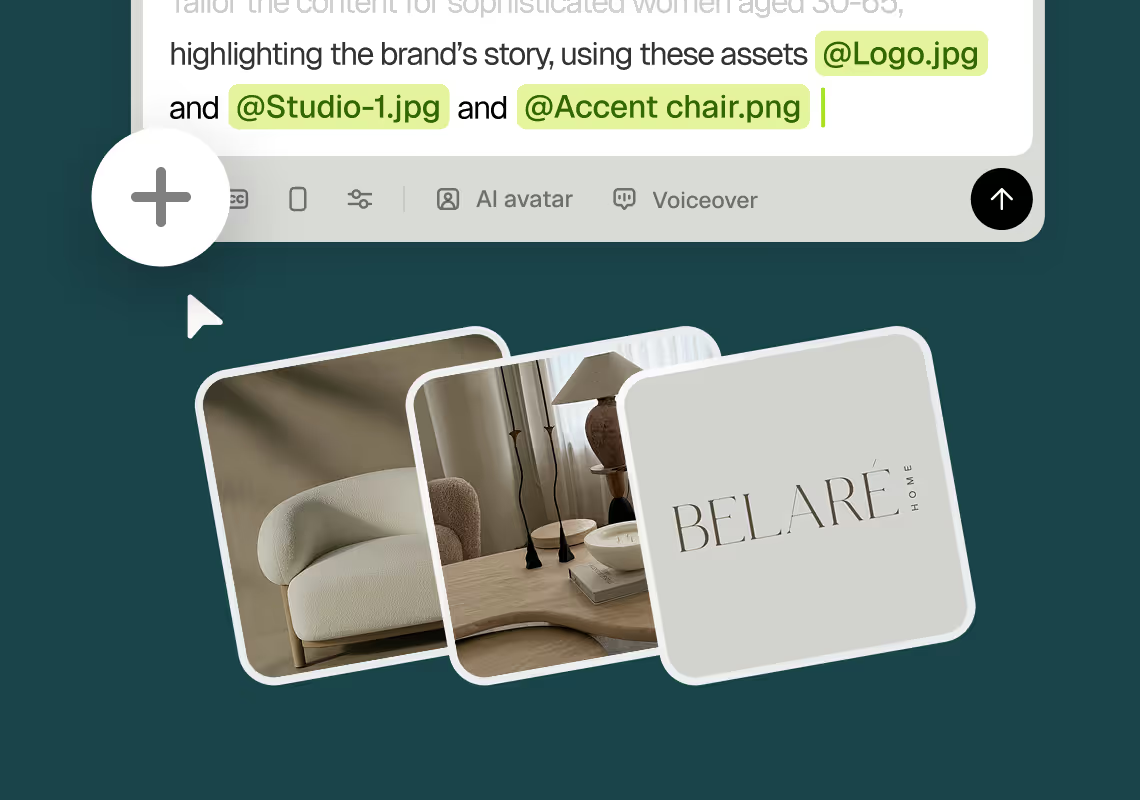
2Add assets and sources
Upload brand assets like logos and product images, or let the AI source stock visuals automatically.
 3
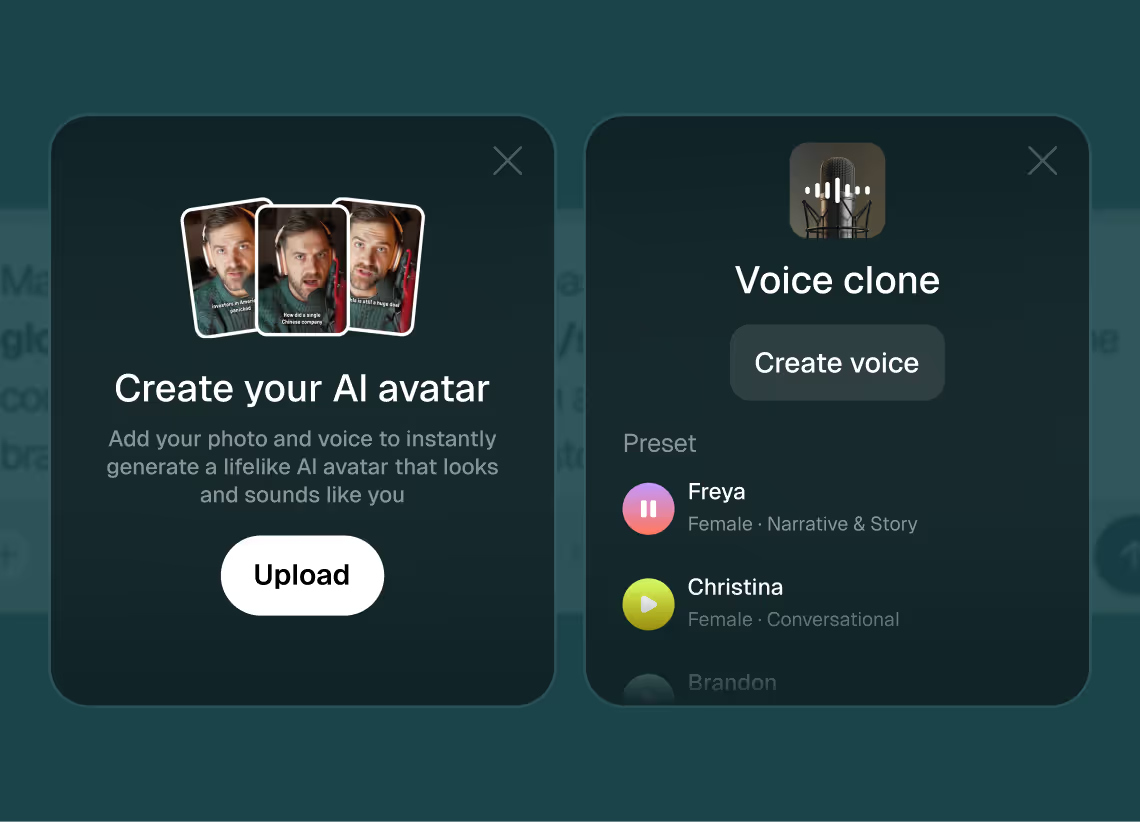
3Choose voice and avatar
Choose voice (clone yours or pick an AI voice) and avatar style (user or AI).
 4
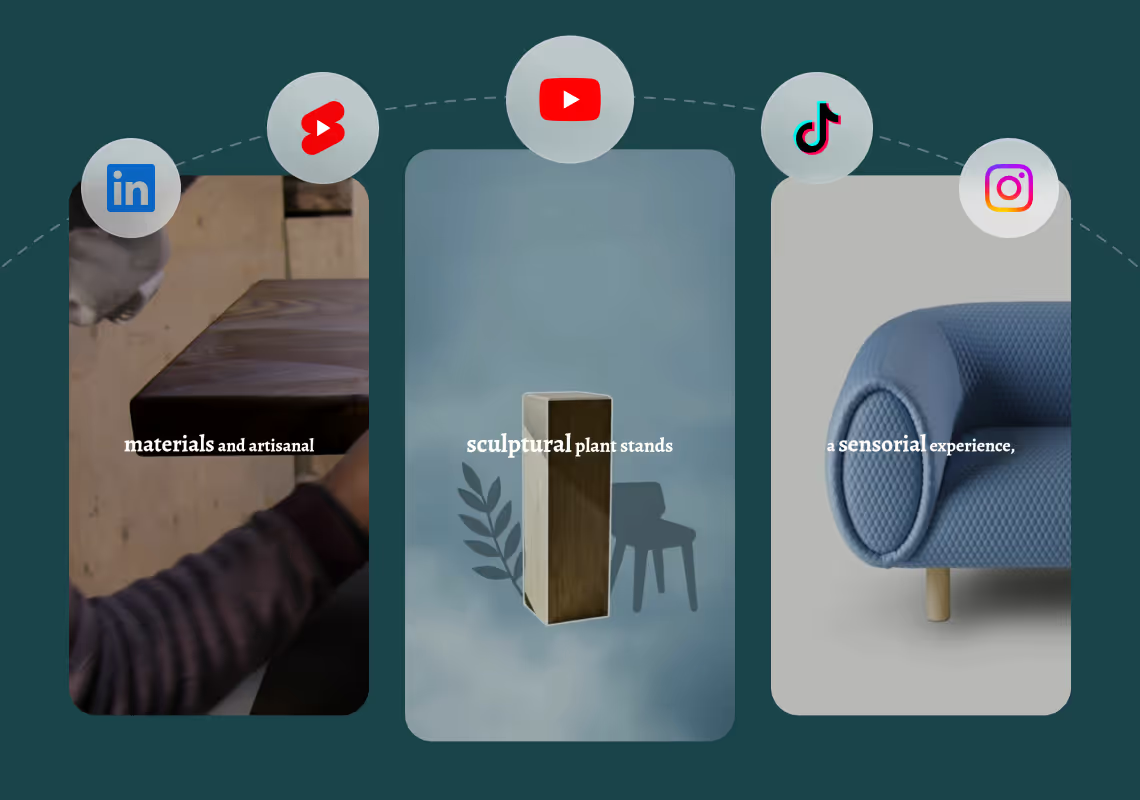
4Generate and publish-ready
Click generate and download your finished promo video in seconds, ready to publish across all platforms.


8 powerful features of Agent Opus' Formula 1 AI Video Generator
Prompt-to-Video Generation
Turn a one-line idea into a finished video. The agent handles structure, pacing, B-roll selection, and final assembly automatically.
Script and Outline Support
Paste a full script, drop in an outline with section headers, or supply a blog or article URL — Agent Opus reads any of them and builds a video around the content.
AI Voiceover and Voice Cloning
Pick from natural-sounding AI voices in 30+ languages, or clone your own voice once. Every video then ships with your authentic narration.
Beat-Synced Motion Graphics
Dynamic visuals that lock to the beat of your audio or the pacing of your script — kinetic typography, transitions, and effects, no manual keyframing required.
Automatic Captions and Subtitles
Burn-in captions for short-form, soft subtitles for long-form, and multi-language translations — all generated and synced automatically.
Multi-Aspect-Ratio Export
9:16, 1:1, and 16:9 outputs from one job, with intelligent reframing of text, motion graphics, and focal elements for each ratio.
Brand Asset Integration
Upload your logo, watermark, fonts, and color palette. Agent Opus applies them consistently across every video automatically.
Avatar and Talking Head Support
Add an AI avatar, your own video footage, or a synthetic spokesperson to any video — useful for explainers, ads, and personal-brand content.
Testimonials
This looks like a game-changer for us. We're building narrative-driven, visually layered content — and the ability to maintain character and motion consistency across episodes would be huge. If Agent Opus can sync branded motion graphics, tone, and avatar style seamlessly, it could easily become part of our production stack for short-form explainers and long-form investigative visuals.
srtaduck
I reviewed version a and I was very impressed with this version, it did very well in almost all aspects that users need, you would only have to make very small changes and maybe replace one of 2 of the pictures, but even saying that it could be used as is and still receive decent views or even chances at going viral depending on the story or the content the user chooses.
Jeremy
all in all LOVE THIS agent. I'm curious to see how I can push it (within reason) Just need to learn to get the consistency right with my prompts
Rebecca
Frequently Asked Questions
How does a Formula 1 AI video generator handle race-specific prompts versus general motorsport content?
Agent Opus processes Formula 1 prompts by analyzing the competitive, data-driven nature of race content and structuring videos accordingly. When you submit a race-specific brief like qualifying results or championship standings, the system identifies key narrative elements such as driver positions, lap times, team performance, and championship implications, then assembles scenes that highlight these competitive dynamics. For general motorsport content like season previews or team culture stories, the generator adapts pacing and visual style to match the broader narrative. The AI motion graphics engine automatically selects appropriate visual treatments: race recaps get fast-paced data overlays and position changes, while team announcements receive cleaner, brand-focused compositions. You can guide this by being specific in your prompt. A brief stating 'Max Verstappen wins Monaco Grand Prix, overtakes Leclerc on lap 45, extends championship lead' will produce a different video structure than 'Red Bull Racing announces 2024 driver lineup.' The system also recognizes Formula 1 terminology like DRS, pit strategy, tire compounds, and safety car periods, using this context to source relevant imagery and structure the narrative flow. For best results, include the specific race event, key moments, and desired tone in your initial prompt. The more context you provide about whether this is breaking news, historical recap, or analysis content, the better the generator can match pacing, music intensity, and graphic style to Formula 1's unique blend of speed, precision, and drama.
What are best practices for prompts when creating Formula 1 videos with this AI video generator?
Effective Formula 1 prompts balance narrative clarity with racing-specific details. Start with the core story: 'Create a 60-second video recapping the 2024 Japanese Grand Prix where Verstappen secured his fourth championship.' Then layer in key moments that define the race: 'Show the start crash that eliminated three drivers, Verstappen's dominant pace in clean air, and the final lap celebration.' Include data points that matter to F1 fans: 'Highlight his 15-second winning margin and mention this is his 13th win of the season.' The generator uses these specifics to structure scene progression and select appropriate motion graphics. For team content, clarify the announcement type and brand requirements: 'Produce a team announcement video for McLaren revealing their 2025 livery, emphasizing papaya orange color scheme and new title sponsor logos, upbeat tone for social media launch.' Specify voiceover style: 'Use energetic commentary voice for race action' versus 'Professional presenter tone for technical updates.' When working from scripts, format them with clear scene breaks. A script like 'Scene 1: Lights out at Monza, 20 cars accelerate into Turn 1. Scene 2: Leclerc takes the lead from pole position. Scene 3: Verstappen stalks in second place, DRS active' gives the AI explicit pacing cues. For blog-to-video conversion, ensure your article has clear section headers and strong topic sentences; the generator extracts these as scene anchors. Always specify target platform and duration: 'Create a 90-second YouTube Short' versus 'Create a 15-second Instagram Reel teaser.' The Formula 1 AI video generator performs best when prompts combine racing narrative with production intent.
Can a Formula 1 AI video generator maintain consistent team branding across multiple race videos?
Yes, Agent Opus supports brand consistency for Formula 1 team content through asset integration and style persistence. Upload your team logo, sponsor lockups, driver headshots, and car livery images once, then reference them across all video generations. When you create a race recap, the system automatically incorporates these branded elements into motion graphics, lower thirds, and transition frames. For example, a Mercedes team account can ensure every video features the correct silver-black color palette, Petronas sponsor placement, and team logo positioning without re-uploading assets each time. The voice cloning feature is particularly valuable for brand consistency. Record a single voiceover sample from your team's regular presenter or commentator, and Agent Opus will clone that voice for all future race recaps, driver interviews, and team announcements. This creates a recognizable audio identity across your content library. Fans hear the same voice whether you're covering qualifying, race day, or mid-week team updates. For visual consistency, describe your preferred style in prompts: 'Use fast-cut editing with red accent graphics' or 'Maintain clean, minimal lower thirds with white text on team blue background.' The AI learns these preferences and applies them to motion graphics generation. You can also specify recurring format structures: 'Always open with team logo animation, then race location title card, then action footage.' When generating a series like 'Race Recap: Every 2024 Grand Prix,' maintain consistent prompt structure across all 24 videos so pacing, graphic style, and narrative flow remain uniform. The system doesn't automatically remember previous videos, so consistency comes from deliberate prompt engineering and asset reuse. Store your brand guidelines in a prompt template, then customize race-specific details for each event while keeping the structural and visual framework identical.
What are the limitations or edge cases when using a Formula 1 AI video generator for race content?
Agent Opus excels at generating Formula 1 videos from text descriptions but has specific constraints creators should understand. The system cannot access live race footage or official F1 broadcast material; it sources royalty-free racing imagery, stock footage, and web-available photos. This means your videos will feature generic racing visuals, historical F1 images, and motion graphics rather than actual race broadcast clips. For teams and creators who own race footage, you cannot currently upload and integrate custom video clips into the generation process. The output is assembled from AI motion graphics and sourced still imagery. This works well for data-driven content like championship standings, race previews, and analytical breakdowns where graphics and narration carry the story, but limits pure race action recaps that depend on specific overtaking moments or crash footage. Prompt complexity also has boundaries. Extremely detailed prompts with 15-plus scene descriptions may result in the AI prioritizing certain elements over others. Best practice is to focus on 5-8 key narrative beats per video and let the system handle pacing. The generator performs best with clear, linear storytelling rather than complex non-linear narratives or abstract concepts. For highly technical F1 content involving aerodynamic analysis or engine specifications, the motion graphics will be illustrative rather than engineering-precise. If your content requires exact CAD renderings or telemetry data visualization, you'll need specialized tools beyond text-to-video generation. Voice cloning requires a clean audio sample of at least 30 seconds; background noise or multiple speakers reduce quality. AI voices, while professional, may not capture the intense energy of live race commentary; they work better for structured recaps and announcements. Platform-specific limitations exist: while Agent Opus outputs social-ready aspect ratios, extremely short formats like 6-second bumpers may not provide enough time for the AI to establish narrative context. Finally, the system generates one complete video per prompt; you cannot request multiple variations simultaneously or A/B test different cuts from a single generation. Understanding these boundaries helps you craft prompts that play to the Formula 1 AI video generator's strengths in data visualization, brand storytelling, and rapid content production.