Gradient Video Maker
Create professional gradient videos in seconds with Agent Opus, the AI gradient video maker that transforms text prompts into polished visual content. Describe your vision—color schemes, motion styles, pacing—and watch Agent Opus generate a complete video with smooth transitions, dynamic motion graphics, and social-ready formatting. No timeline editing, no manual keyframing, no design software required. From brand intros to product showcases to abstract visual content, Agent Opus delivers publish-ready gradient videos that capture attention across every platform.

Explore what's possible with Agent Opus

Reasons why creators love Agent Opus' Gradient Video Maker
Hours Saved on Manual Editing
Skip the tedious process of color-grading each frame and let AI generate cohesive gradient transitions in seconds.
Flexible Styles for Any Platform
Adapt your gradient aesthetic instantly for YouTube, Instagram, TikTok, or LinkedIn without starting from scratch each time.
Professional Results on Zero Budget
Get the premium gradient effects that usually require expensive motion designers, without hiring anyone or learning complex tools.
Brand Consistency Across Every Video
Lock in your signature gradient palette once and watch every video automatically match your brand's aesthetic perfectly.
Polished Visuals Without Design Skills
Create stunning gradient backgrounds that look professionally designed, even if you've never touched editing software before.
How to use Agent Opus’ Gradient Video Maker
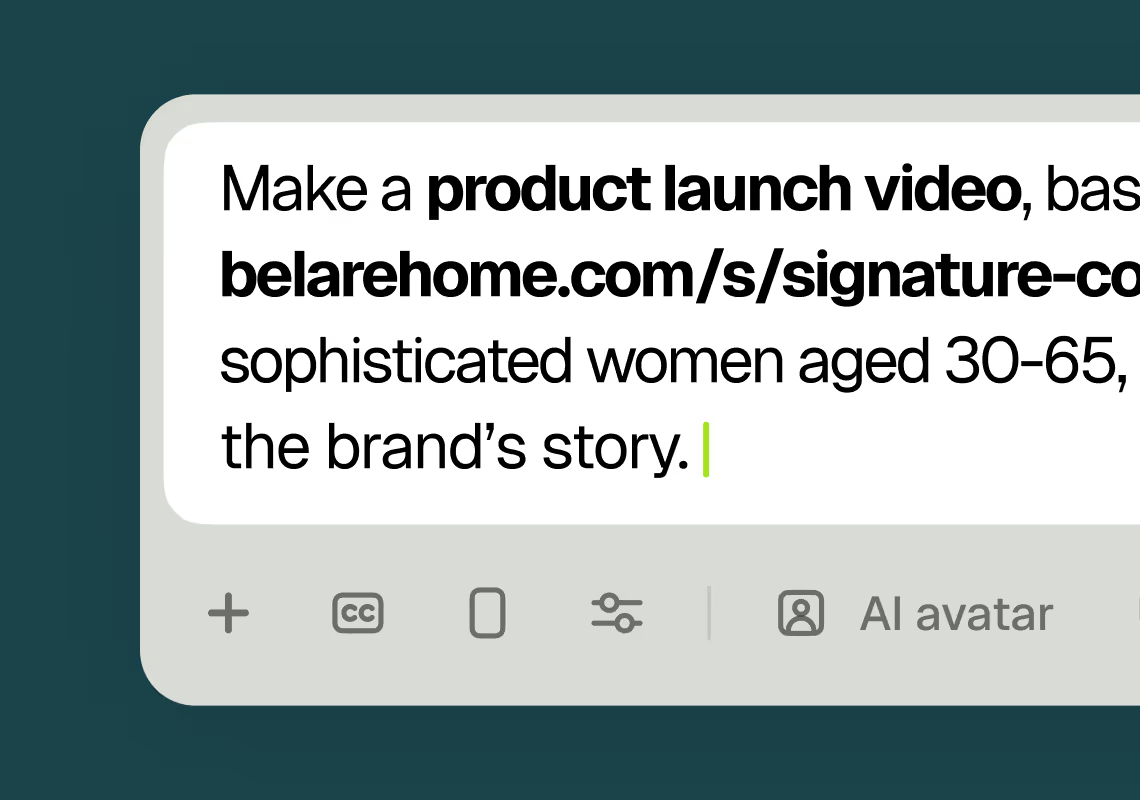 1
1Describe your video
Paste your promo brief, script, outline, or blog URL into Agent Opus.
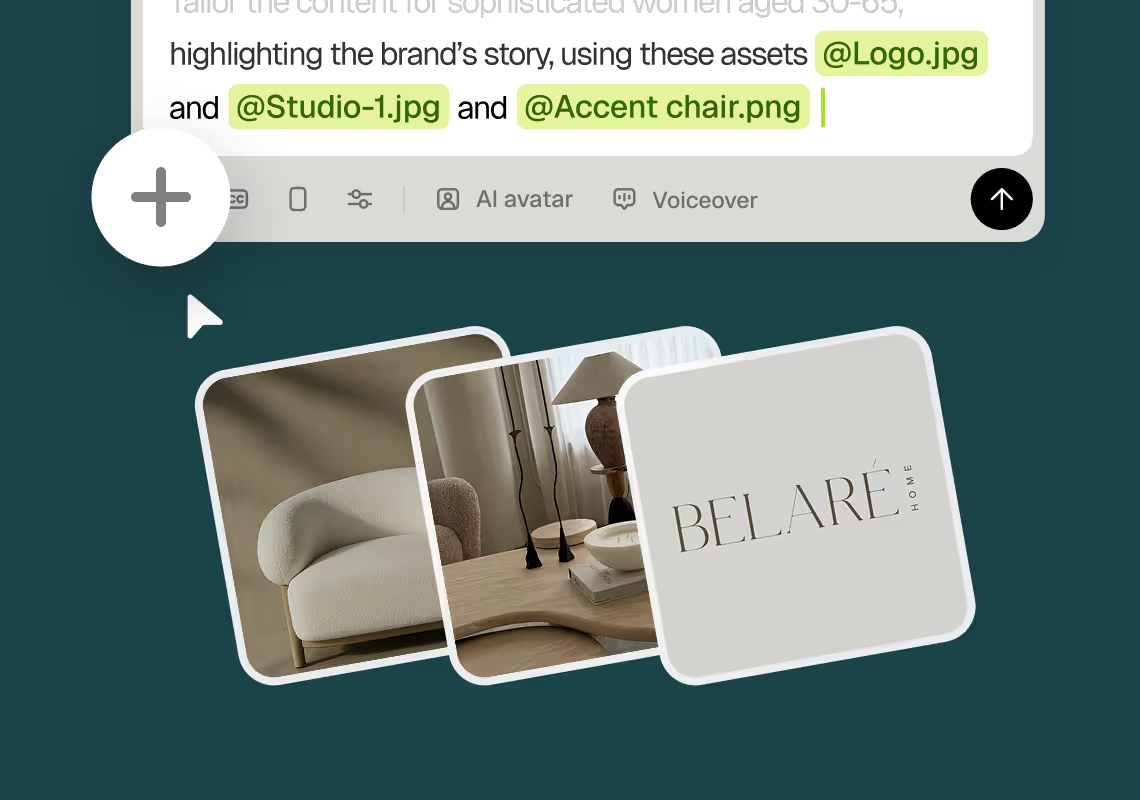 2
2Add assets and sources
Upload brand assets like logos and product images, or let the AI source stock visuals automatically.
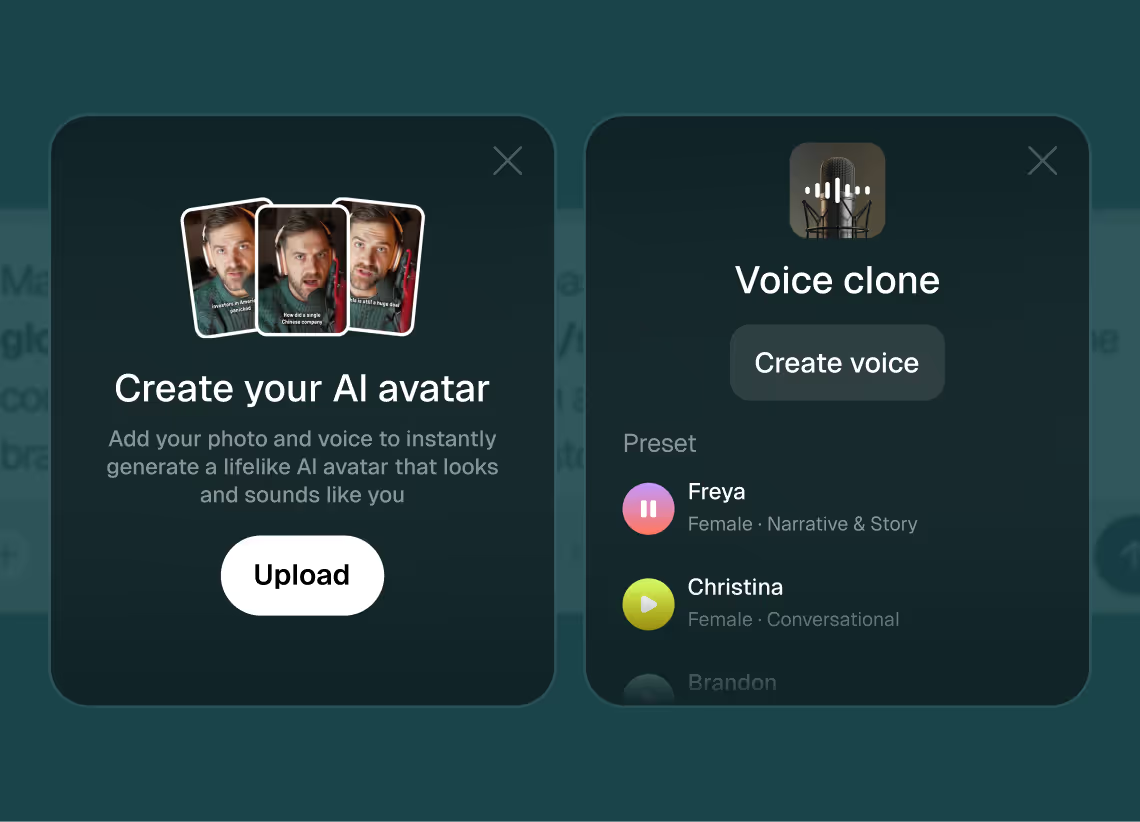 3
3Choose voice and avatar
Choose voice (clone yours or pick an AI voice) and avatar style (user or AI).
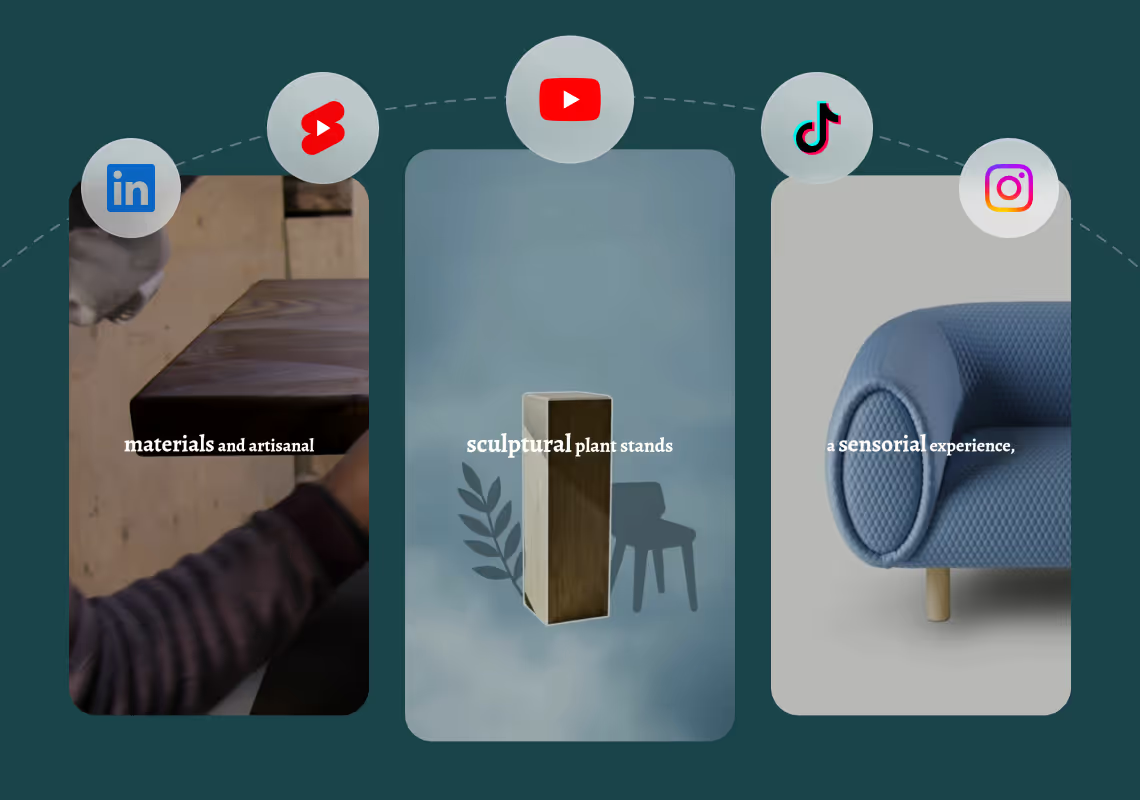 4
4Generate and publish-ready
Click generate and download your finished promo video in seconds, ready to publish across all platforms.


8 powerful features of Agent Opus' Gradient Video Maker
Text Over Gradient
Overlay animated text and graphics on gradient backgrounds for social media posts.
Dynamic Motion Effects
Apply flowing gradient movements that shift and pulse throughout your video timeline.
Export Ready Gradients
Download high-resolution gradient videos optimized for web, mobile, and presentation use.
Looping Gradient Clips
Create seamless looping gradient videos perfect for backgrounds and digital displays.
Preset Gradient Styles
Choose from curated gradient palettes like sunset, ocean, or neon for instant results.
Custom Color Transitions
Define start and end colors to create branded gradient animations that match your style.
Instant Gradient Backgrounds
Generate videos with smooth, animated gradient backdrops from a single text prompt.
Multi-Layer Gradient Compositing
Stack multiple gradient layers with varying opacity for depth and visual richness.
Testimonials
wow that's actually great 🔥
irtaza65
This looks like a game-changer for us. We're building narrative-driven, visually layered content — and the ability to maintain character and motion consistency across episodes would be huge. If Agent Opus can sync branded motion graphics, tone, and avatar style seamlessly, it could easily become part of our production stack for short-form explainers and long-form investigative visuals.
srtaduck
Awesome output, Most of my students and followers could not catch that it was using Agent Opus. Thank you Opus.
Wealth with Gaurav
Frequently Asked Questions
How does a gradient video maker handle different color schemes and motion styles?
Agent Opus interprets your text prompt to generate gradient videos with precise color control and motion characteristics. When you describe a gradient—whether it's a two-color linear fade, a radial burst with multiple hues, or a complex animated spectrum—the AI translates your intent into visual parameters. You can specify exact hex codes if you need brand-perfect colors, or use descriptive language like 'warm sunset tones' or 'cool corporate blues' for the AI to interpret creatively. Motion styles are equally flexible: request smooth linear transitions for calm, professional content, or dynamic radial sweeps for energetic brand intros. The gradient video maker applies professional easing curves automatically, ensuring color shifts feel natural rather than abrupt. For advanced users, prompts can include timing details—'three-second fade from teal to coral, then hold coral for two seconds'—and Agent Opus will structure the gradient animation accordingly. The AI also considers how gradients interact with other visual elements: if your prompt includes text overlays or product images, the gradient video maker adjusts contrast and saturation to maintain readability. This intelligent color management means your gradient backgrounds always enhance rather than compete with foreground content. The system draws on design principles around color harmony, so even experimental prompts yield aesthetically balanced results. Whether you're creating abstract visual content, brand backgrounds, or product showcase environments, the gradient video maker adapts its rendering to match your described vision while maintaining professional visual standards.
What are best practices for prompts in a gradient video maker?
Effective gradient video maker prompts balance specificity with creative flexibility. Start by defining your core color palette—two to four colors typically work best for clean, professional gradients. Specify whether you want linear, radial, or angular gradient patterns, as this dramatically affects the visual feel. For example, 'linear gradient from deep purple at top to bright cyan at bottom' creates a different mood than 'radial gradient expanding from golden center to dark blue edges.' Include motion direction and speed: 'slowly shifting left to right' versus 'rapid pulsing expansion' tells the gradient video maker how dynamic your visual should be. Context matters enormously—describe the video's purpose and platform. A prompt like 'calming gradient background for 15-second meditation intro, Instagram Reels format, soft lavender to pale pink, gentle upward drift' gives Agent Opus everything needed to generate appropriate pacing, aspect ratio, and visual intensity. If you're overlaying text or logos, mention that: 'vibrant orange-to-red gradient with space in center third for product shot, high contrast for text readability.' The gradient video maker will adjust saturation and brightness accordingly. For brand consistency, reference existing visual assets: 'gradient matching our brand colors, logo in top right, similar energy to our homepage hero.' Agent Opus can analyze provided brand guidelines or sample images to match your established aesthetic. Avoid overly complex prompts initially—start simple, review the output, then iterate with refinements. A prompt like 'modern tech gradient' might yield something close to your vision, which you can then refine: 'same style but cooler tones, faster motion, add subtle grid overlay.' The gradient video maker learns from your iterations, and you'll quickly develop an intuition for which descriptive language produces your desired results. Remember that gradients serve your content—they should enhance, not distract—so prompts should always consider the final context where viewers will see your video.
Can a gradient video maker integrate brand assets and maintain visual consistency?
Agent Opus functions as a gradient video maker that seamlessly incorporates your brand identity into every generated video. Upload your logo, product images, or brand style guide, and the AI composites these assets over gradient backgrounds with professional placement and timing. The system analyzes your brand colors and can generate gradients that harmonize with your existing palette—if your logo uses navy and gold, the gradient video maker can create complementary backgrounds that enhance rather than clash with those signature colors. Visual consistency extends beyond color matching. Agent Opus maintains aspect ratios, safe zones, and composition rules across all your gradient videos, so content feels cohesive whether you're posting to TikTok, LinkedIn, or YouTube. If you generate multiple gradient videos for a campaign, the AI can apply consistent motion styles and timing patterns, creating a recognizable visual language for your brand. Voice consistency matters too: clone your own voice or select a specific AI voice, then use it across all gradient video content so your audio brand matches your visual identity. For teams managing multiple brands or clients, Agent Opus lets you save brand profiles—color schemes, logo files, preferred gradient styles, voice settings—so every gradient video maker session starts with your established guidelines. This eliminates the risk of off-brand content slipping through. The gradient video maker also respects hierarchy: it understands that your logo should remain prominent and readable, so it adjusts gradient intensity in areas where brand marks appear. If you're showcasing products, the AI ensures gradient backgrounds complement rather than overwhelm product shots, using subtle color shifts that draw attention to what you're selling. For ongoing content series—weekly tips, product launches, customer testimonials—the gradient video maker can replicate successful visual formulas while introducing enough variation to keep content fresh. This balance between consistency and creativity is difficult to achieve manually but happens automatically when you provide clear brand context in your prompts.
What are the limitations or edge cases of a gradient video maker?
While Agent Opus excels as a gradient video maker for most use cases, understanding its boundaries helps you set realistic expectations and craft better prompts. Extremely complex gradient animations—those requiring dozens of color stops with precise timing choreography—may need iterative refinement rather than perfect first-generation results. The AI interprets creative prompts intelligently, but highly abstract requests like 'gradient that feels like nostalgia' require more descriptive language to translate subjective emotions into specific visual parameters. If your vision involves intricate gradient interactions with multiple foreground elements, break your prompt into clear layers: describe the background gradient separately from overlay elements, specifying how they should interact. The gradient video maker generates social-ready outputs, but if you need ultra-high-resolution files for large-format displays or cinema screens, you may need to specify resolution requirements in your prompt or adjust export settings. Brand color matching is sophisticated but not perfect on first try—if you need exact Pantone or hex code fidelity, include those specifications directly in your prompt rather than relying on descriptive color names. The system sources royalty-free images and stock footage to complement gradients, but if you have highly specific visual requirements—particular product angles, specific model demographics, niche industry imagery—providing your own assets yields better results than relying solely on auto-sourcing. Timing precision is another consideration: while the gradient video maker handles pacing well for standard social content, if you need frame-perfect synchronization with external audio tracks or precise beat-matching for music videos, you may need to iterate and provide detailed timing instructions. The AI generates complete videos from text, but it's not a replacement for human creative direction on high-stakes projects—think of it as an incredibly fast first draft that captures 80-90% of your vision, with room for prompt refinement to nail the final 10-20%. For edge cases like accessibility requirements—specific contrast ratios for colorblind viewers, or gradients that work in grayscale—include those constraints in your prompt so the gradient video maker can optimize accordingly. Finally, while Agent Opus eliminates manual editing, it doesn't eliminate the need for strategic thinking: the best gradient videos come from clear creative briefs, not vague requests, so invest time in articulating your vision before generation.