Images to Video
Turn your images into professional videos in minutes. Agent Opus transforms static photos, product shots, logos, and graphics into dynamic, publish-ready videos with AI motion graphics, voiceover, and automatic visual assembly. Describe what you want or provide a script, and watch your images come to life as polished video content for social media, marketing campaigns, and presentations. No editing skills required, no timeline to manage. Just upload your images, add your vision, and generate videos that convert.

Explore what's possible with Agent Opus

Reasons why creators love Agent Opus' Images to Video
Ship in Minutes, Not Hours
Generate a publish-ready video in under 10 minutes from a single prompt — no timeline editing, no asset hunting, no creative dry spells.
Zero Editing Skills Required
Describe your concept and Agent Opus handles scene composition, motion graphics, voiceover, and platform formatting automatically — even if you've never opened a video editor.
Studio-Grade Output
Cinematic motion graphics, beat-synced cuts, professional voiceover, and precise typography — every video ships looking production-quality from the first generation.
Stays On-Brand
Upload your logo, fonts, and color palette once. Agent Opus applies them across every video automatically so your content stays visually consistent.
How to use Agent Opus’ Images to Video
 1
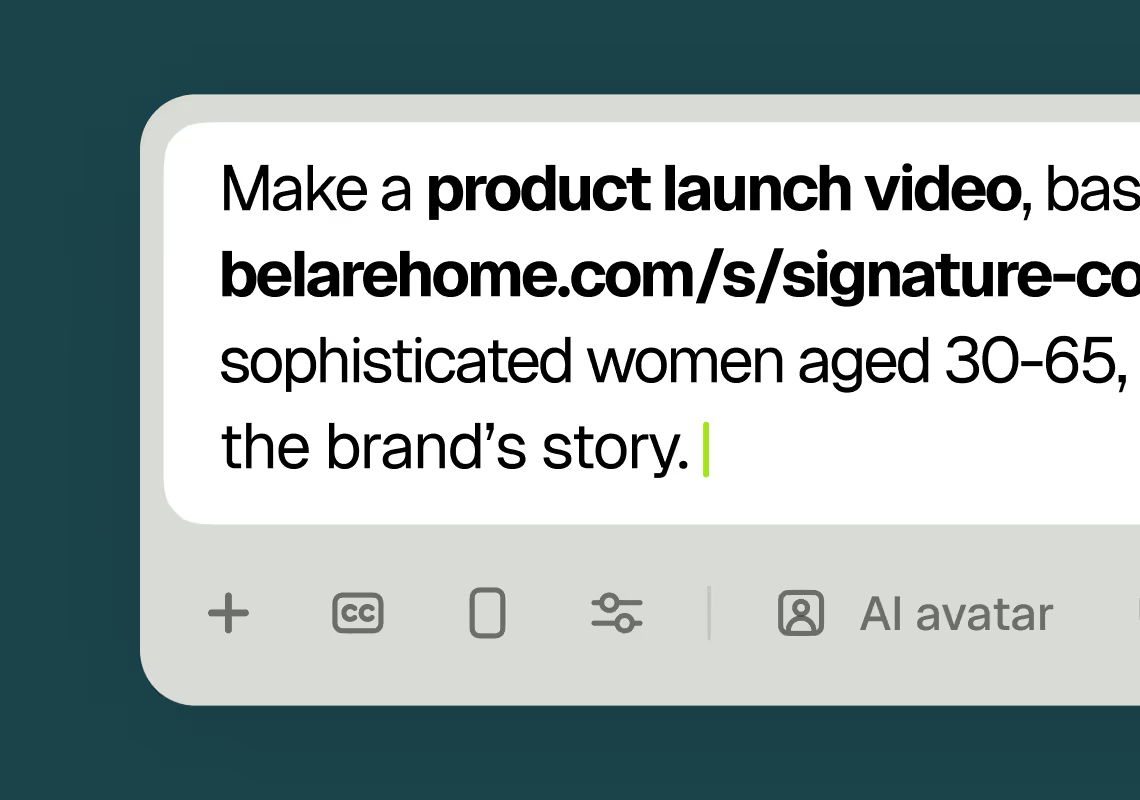
1Describe your video
Paste your promo brief, script, outline, or blog URL into Agent Opus.
 2
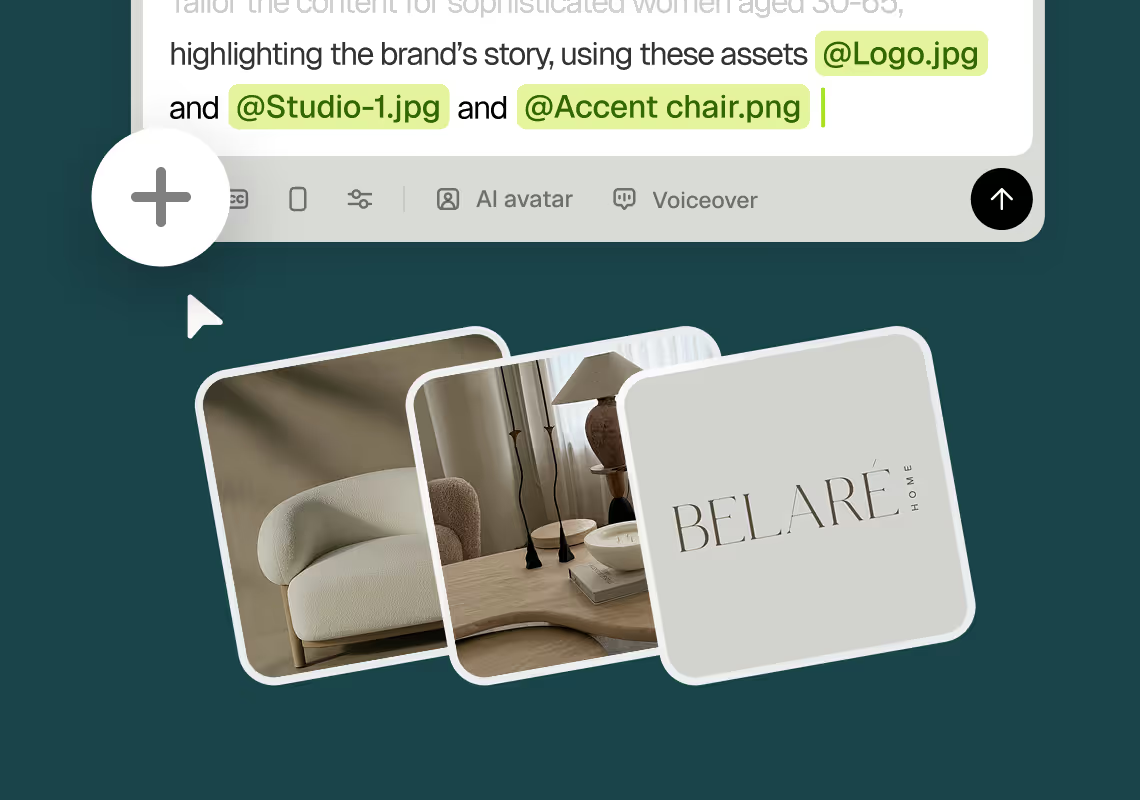
2Add assets and sources
Upload brand assets like logos and product images, or let the AI source stock visuals automatically.
 3
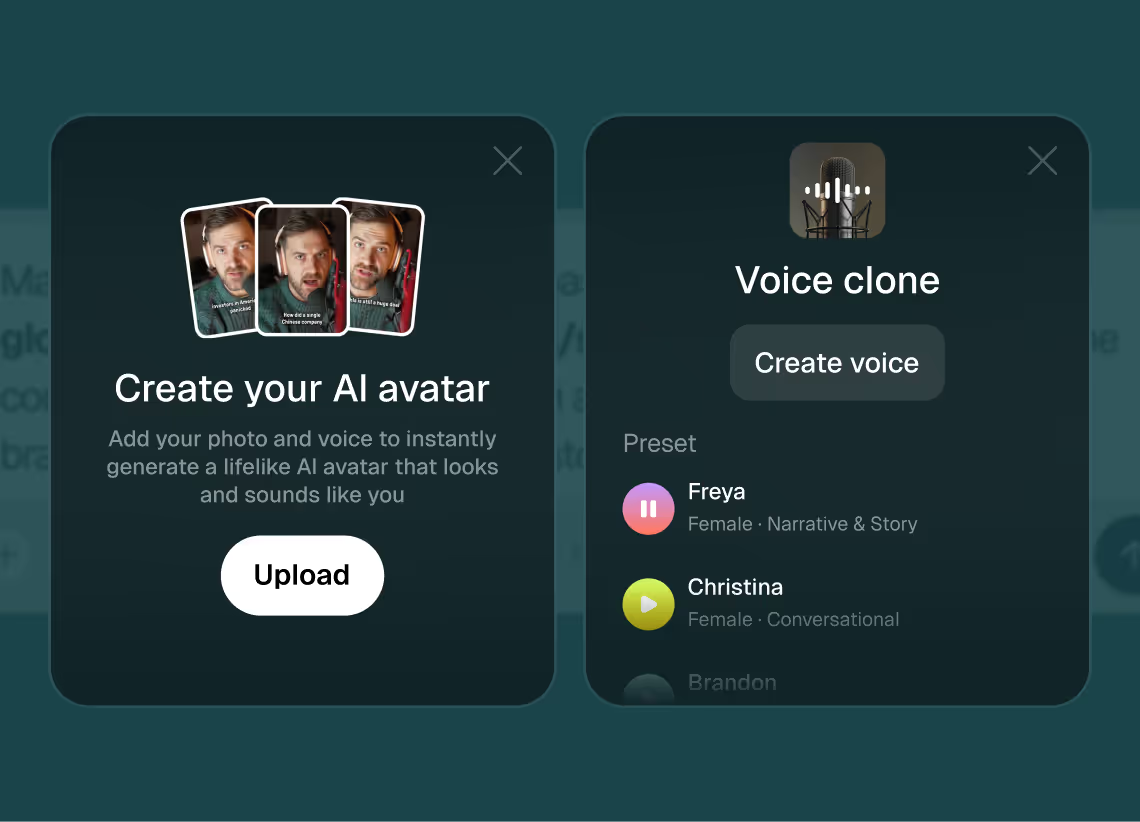
3Choose voice and avatar
Choose voice (clone yours or pick an AI voice) and avatar style (user or AI).
 4
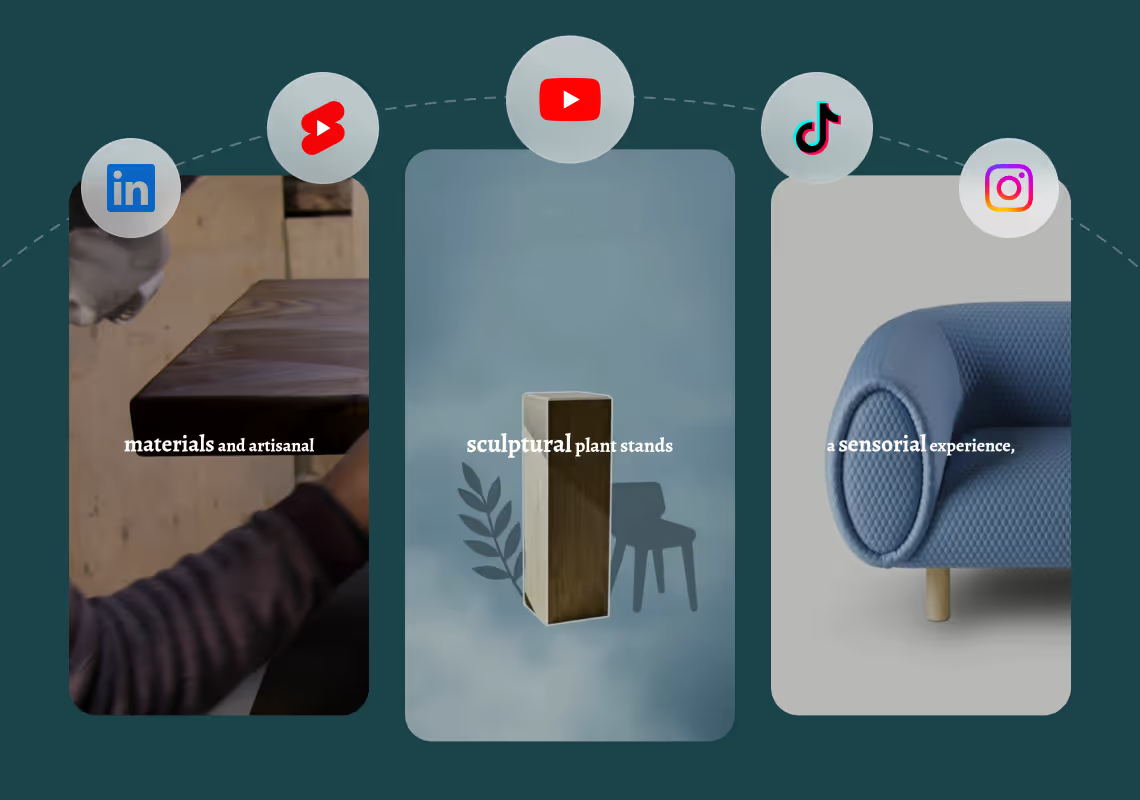
4Generate and publish-ready
Click generate and download your finished promo video in seconds, ready to publish across all platforms.


8 powerful features of Agent Opus' Images to Video
Prompt-to-Video Generation
Turn a one-line idea into a finished video. The agent handles structure, pacing, B-roll selection, and final assembly automatically.
Script and Outline Support
Paste a full script, drop in an outline with section headers, or supply a blog or article URL — Agent Opus reads any of them and builds a video around the content.
AI Voiceover and Voice Cloning
Pick from natural-sounding AI voices in 30+ languages, or clone your own voice once. Every video then ships with your authentic narration.
Beat-Synced Motion Graphics
Dynamic visuals that lock to the beat of your audio or the pacing of your script — kinetic typography, transitions, and effects, no manual keyframing required.
Automatic Captions and Subtitles
Burn-in captions for short-form, soft subtitles for long-form, and multi-language translations — all generated and synced automatically.
Multi-Aspect-Ratio Export
9:16, 1:1, and 16:9 outputs from one job, with intelligent reframing of text, motion graphics, and focal elements for each ratio.
Brand Asset Integration
Upload your logo, watermark, fonts, and color palette. Agent Opus applies them consistently across every video automatically.
Avatar and Talking Head Support
Add an AI avatar, your own video footage, or a synthetic spokesperson to any video — useful for explainers, ads, and personal-brand content.
Testimonials
Awesome output, Most of my students and followers could not catch that it was using Agent Opus. Thank you Opus.
Wealth with Gaurav
I dont think id change a thing
Quirky Collectables
all in all LOVE THIS agent. I'm curious to see how I can push it (within reason) Just need to learn to get the consistency right with my prompts
Rebecca
Frequently Asked Questions
How does images to video generation handle different photo types and quality levels?
Agent Opus processes any image format and resolution, from high-resolution product photography to smartphone snapshots, social media graphics, and logo files. The system analyzes each image's composition, subject matter, and visual weight to determine optimal placement within your video sequence. Low-resolution images receive intelligent upscaling and enhancement to maintain professional output quality, while high-resolution photos are optimized for web delivery without losing detail. The AI identifies focal points in each image, whether that's a product, person, text overlay, or design element, and applies motion graphics that draw viewer attention to those key areas. Mixed-quality image sets are automatically balanced so transitions feel cohesive rather than jarring. If you're working with product catalogs, the system recognizes similar items and creates visual groupings that make sense narratively. For brand assets like logos and graphics, Agent Opus maintains aspect ratios and applies subtle animation that adds polish without overwhelming your design. The motion graphics engine adapts its approach based on image content: lifestyle photos get cinematic pans and zooms, infographics receive highlight animations that guide the eye through data points, and text-heavy images hold longer on screen with gentle movement that maintains readability. You can upload images in any order, and the AI will suggest optimal sequencing based on visual flow, color harmony, and narrative logic, though you retain control to override these suggestions through your prompt or script instructions.
What are best practices for writing prompts when converting images to video?
Effective images to video prompts balance creative direction with technical clarity. Start by describing your video's purpose and target audience, such as 'Create a 60-second product launch video for Instagram Reels targeting millennial home decor enthusiasts' or 'Generate a professional portfolio showcase for LinkedIn highlighting architectural photography.' This context helps Agent Opus select appropriate pacing, tone, and motion styles. Next, specify how you want your images sequenced. You can request chronological order ('Show the product evolution from sketch to final design'), thematic grouping ('Group all outdoor shots together, then transition to indoor scenes'), or emotional progression ('Start with problem images, build to solution reveal'). Include voiceover guidance by describing the narrative style: 'Energetic voiceover explaining each feature' or 'Calm, authoritative narration walking through the process.' If you want specific images emphasized, reference them by filename or description: 'Spend extra time on hero-product-shot.jpg with dramatic zoom' or 'Use the logo as a recurring visual anchor between sections.' Specify desired video length, which influences how long each image appears and how many motion effects are applied. Shorter videos (15-30 seconds) work best with 5-8 key images and punchy transitions, while longer formats (60-90 seconds) can accommodate 12-20 images with more elaborate motion graphics. Mention any brand guidelines: 'Maintain minimal, clean aesthetic consistent with our Scandinavian design brand' or 'Use bold, high-energy transitions matching our sports apparel identity.' For voice selection, describe the tone you need: 'Professional female voice, mid-30s, confident but approachable' or 'Use my cloned voice for authentic founder story.' The more specific your prompt, the closer the first generation will match your vision, though Agent Opus handles vague prompts intelligently by making smart defaults based on image content and common use cases.
Can images to video generation maintain consistent branding across multiple videos?
Agent Opus excels at brand consistency through several built-in mechanisms. When you upload brand assets like logos, color palettes, and style guides alongside your images, the system treats these as persistent elements that should appear consistently across all generated videos. Your logo can be set to appear as a watermark, intro card, outro frame, or recurring element throughout the video, maintaining the same position, size, and animation style you specify once. Voice consistency is automatic when using voice cloning: your first recording establishes the voice profile that Agent Opus applies to all subsequent videos, ensuring every piece of content sounds authentically like you or your designated brand voice. For AI voices, selecting a specific voice model creates consistency, and you can save that selection as your default. Motion graphics styles can be templated: if your first images to video generation uses smooth, elegant transitions with subtle zooms, you can instruct Agent Opus to apply that same motion style to future image sets, creating a recognizable visual signature. Color grading and filters work similarly. The system can analyze your brand images to extract dominant color schemes and apply those tones consistently across videos, even when incorporating auto-sourced stock images or web visuals. Font choices for any text overlays or title cards remain consistent once established. For teams and agencies managing multiple client brands, Agent Opus allows you to create separate brand profiles, each with its own logo set, voice clone, motion style preferences, and visual guidelines. Switching between brands is seamless, ensuring you never accidentally mix client assets or styles. The script-based workflow reinforces consistency: you can develop script templates for recurring video types (product launches, weekly updates, testimonial showcases) that maintain structural consistency while allowing content variation. This approach transforms images to video generation from a one-off creative task into a scalable content system that builds brand recognition through repetition and professional polish.
How does the system handle images with text, infographics, or data visualizations?
Agent Opus applies specialized processing when it detects text-heavy images, infographics, charts, or data visualizations in your upload set. The AI performs optical character recognition to understand text content and hierarchy, ensuring that motion graphics enhance rather than obscure readability. For infographics, the system identifies individual data points, chart sections, and callout boxes, then applies sequential highlight animations that guide viewers through the information in logical order. A bar chart might animate with each bar growing in sequence while the voiceover explains what each represents. Pie charts can rotate into view with segments highlighting as they're discussed. Text-based slides receive subtle motion that maintains focus: gentle zooms that draw attention to key phrases, or light parallax effects that add depth without causing motion sickness. The pacing automatically adjusts for text-heavy images, holding them on screen longer than purely visual photos to give viewers adequate reading time. Agent Opus calculates reading time based on word count and adjusts both the visual duration and voiceover pacing to match. If your script mentions specific data points or text elements, the system synchronizes visual highlights with those verbal references, creating a cohesive educational experience. For comparison images (before/after, old vs new, competitor analysis), the AI can apply split-screen effects, side-by-side reveals, or sequential presentation based on your prompt instructions. Screenshots and UI mockups receive special treatment: the system can simulate scrolling through a webpage, clicking through an app interface, or zooming into specific features, making software demos and product tutorials feel interactive. When mixing text-heavy images with photographs, Agent Opus creates natural transitions that shift viewer attention from reading mode to visual absorption, using motion cues and pacing changes to signal these shifts. The voiceover integration is particularly sophisticated with data visualizations, as the AI ensures spoken numbers and statistics align precisely with their visual appearance, reinforcing comprehension through multi-sensory presentation.