London Marathon AI Video Generator
Turn race briefs, scripts, or blog posts into polished London Marathon videos in minutes. Agent Opus is a London Marathon AI video generator that builds complete, publish-ready videos from text. Describe your vision for race highlights, training montages, charity appeals, or event promos, and watch AI assemble scenes, motion graphics, voiceover, and soundtrack automatically. No timeline, no trimming, no manual editing. Just prompt to publish-ready video for Instagram Reels, TikTok, YouTube Shorts, and LinkedIn. Perfect for race organizers, running clubs, sports marketers, and content creators who need professional marathon content at scale.

Explore what's possible with Agent Opus

Reasons why creators love Agent Opus' London Marathon AI Video Generator
Ship in Minutes, Not Hours
Generate a publish-ready video in under 10 minutes from a single prompt — no timeline editing, no asset hunting, no creative dry spells.
Zero Editing Skills Required
Describe your concept and Agent Opus handles scene composition, motion graphics, voiceover, and platform formatting automatically — even if you've never opened a video editor.
Studio-Grade Output
Cinematic motion graphics, beat-synced cuts, professional voiceover, and precise typography — every video ships looking production-quality from the first generation.
Stays On-Brand
Upload your logo, fonts, and color palette once. Agent Opus applies them across every video automatically so your content stays visually consistent.
How to use Agent Opus’ London Marathon AI Video Generator
 1
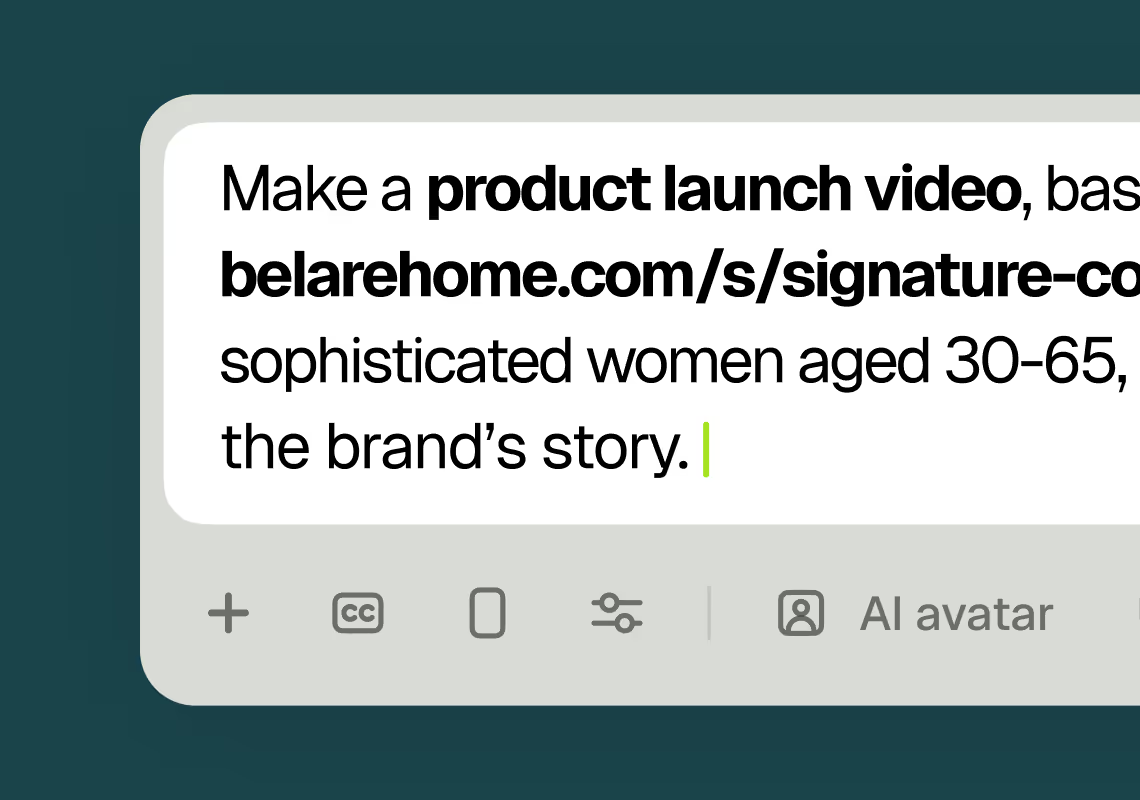
1Describe your video
Paste your promo brief, script, outline, or blog URL into Agent Opus.
 2
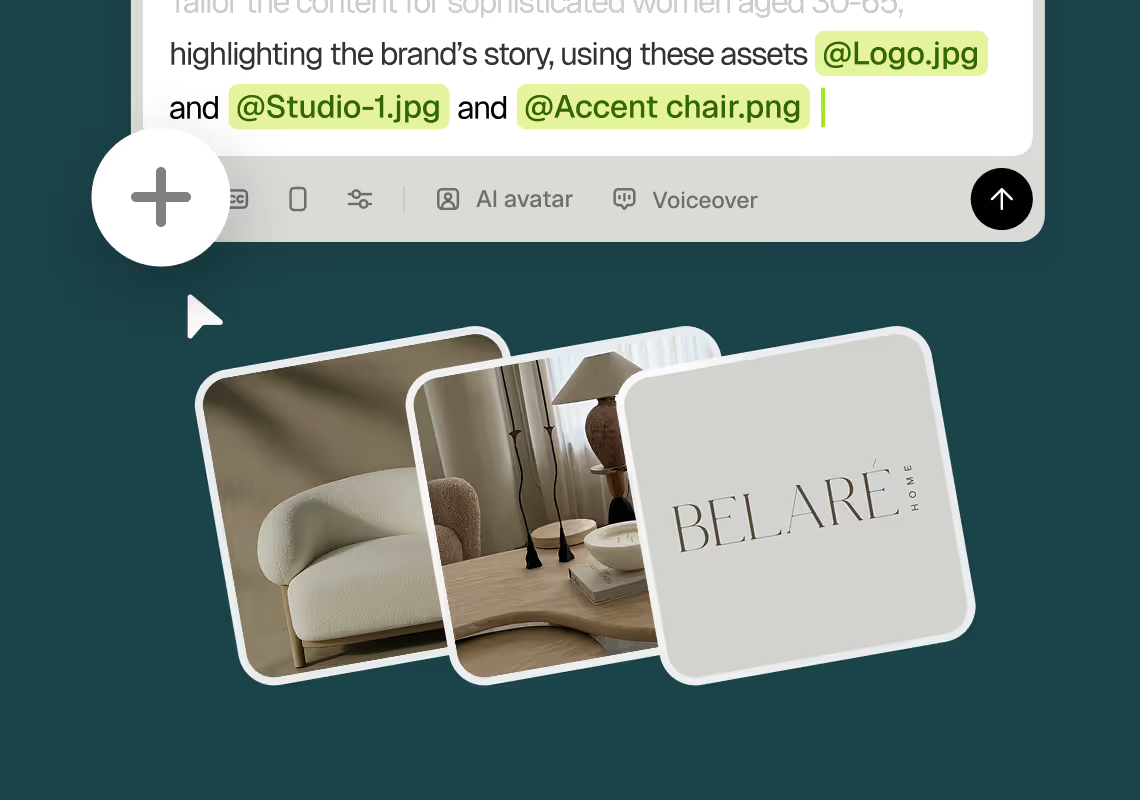
2Add assets and sources
Upload brand assets like logos and product images, or let the AI source stock visuals automatically.
 3
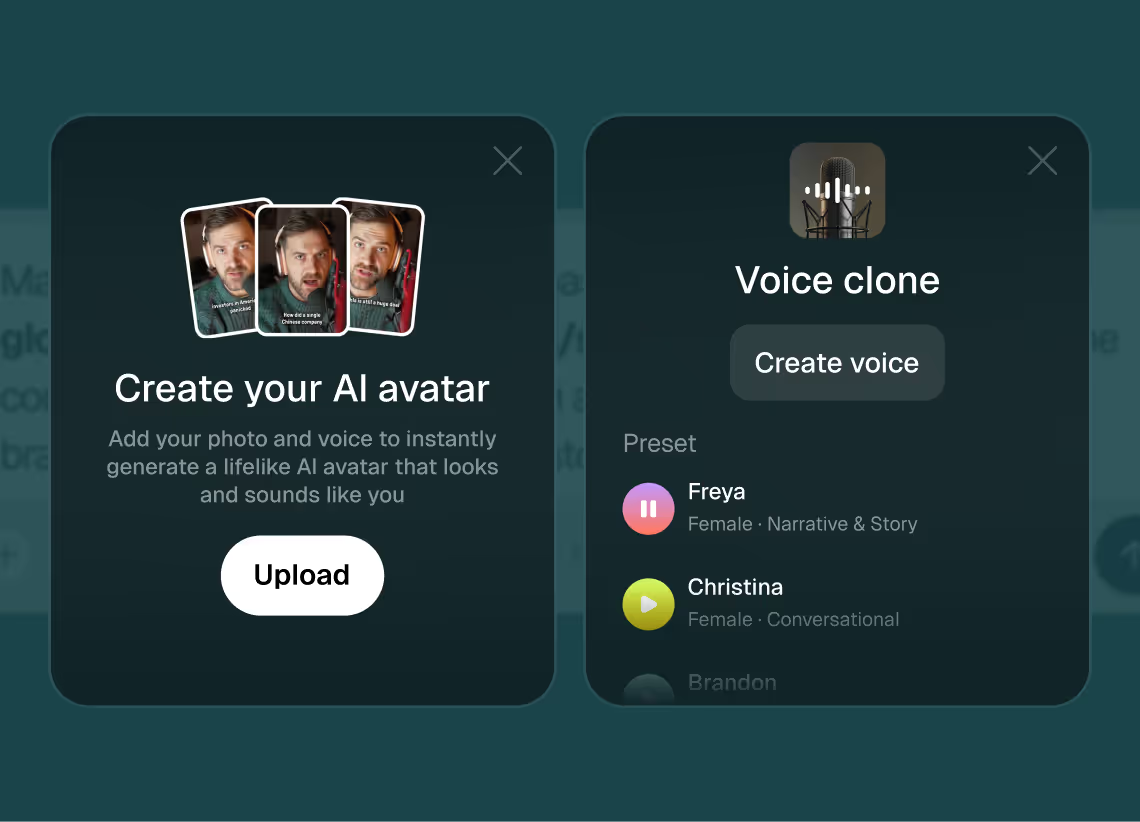
3Choose voice and avatar
Choose voice (clone yours or pick an AI voice) and avatar style (user or AI).
 4
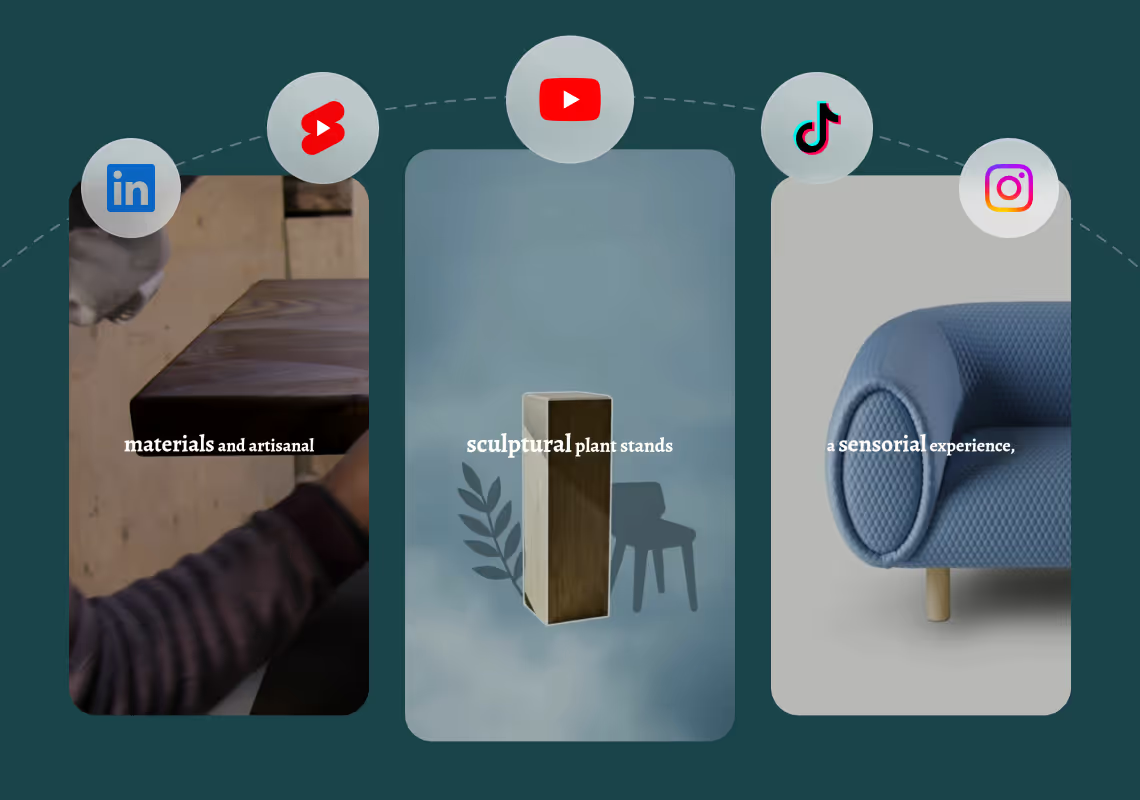
4Generate and publish-ready
Click generate and download your finished promo video in seconds, ready to publish across all platforms.


8 powerful features of Agent Opus' London Marathon AI Video Generator
Prompt-to-Video Generation
Turn a one-line idea into a finished video. The agent handles structure, pacing, B-roll selection, and final assembly automatically.
Script and Outline Support
Paste a full script, drop in an outline with section headers, or supply a blog or article URL — Agent Opus reads any of them and builds a video around the content.
AI Voiceover and Voice Cloning
Pick from natural-sounding AI voices in 30+ languages, or clone your own voice once. Every video then ships with your authentic narration.
Beat-Synced Motion Graphics
Dynamic visuals that lock to the beat of your audio or the pacing of your script — kinetic typography, transitions, and effects, no manual keyframing required.
Automatic Captions and Subtitles
Burn-in captions for short-form, soft subtitles for long-form, and multi-language translations — all generated and synced automatically.
Multi-Aspect-Ratio Export
9:16, 1:1, and 16:9 outputs from one job, with intelligent reframing of text, motion graphics, and focal elements for each ratio.
Brand Asset Integration
Upload your logo, watermark, fonts, and color palette. Agent Opus applies them consistently across every video automatically.
Avatar and Talking Head Support
Add an AI avatar, your own video footage, or a synthetic spokesperson to any video — useful for explainers, ads, and personal-brand content.
Testimonials
This looks like a game-changer for us. We're building narrative-driven, visually layered content — and the ability to maintain character and motion consistency across episodes would be huge. If Agent Opus can sync branded motion graphics, tone, and avatar style seamlessly, it could easily become part of our production stack for short-form explainers and long-form investigative visuals.
srtaduck
I reviewed version a and I was very impressed with this version, it did very well in almost all aspects that users need, you would only have to make very small changes and maybe replace one of 2 of the pictures, but even saying that it could be used as is and still receive decent views or even chances at going viral depending on the story or the content the user chooses.
Jeremy
all in all LOVE THIS agent. I'm curious to see how I can push it (within reason) Just need to learn to get the consistency right with my prompts
Rebecca
Frequently Asked Questions
How does the London Marathon AI video generator handle different input types like prompts versus full scripts?
Agent Opus accepts four input formats for London Marathon video generation, each optimized for different workflows. First, short prompts work best for quick social content. Type something like 'Create a 30-second finish-line highlight reel with uplifting music and sponsor logos' and the system interprets intent, selects appropriate London imagery, structures pacing, and assembles scenes automatically. This is ideal for race-day rapid response or when you need a dozen variations of the same concept. Second, full scripts give you precise narrative control. Paste a 200-word voiceover script describing the race route, charity impact, or runner stories, and Agent Opus matches visuals to each sentence, timing scene transitions to your exact wording. This works well for charity appeals, event recaps, and training content where messaging must be exact. Third, outlines let you define structure without writing every word. Bullet points like 'Intro: race history, Scene 2: course highlights, Scene 3: charity mission, Outro: call to action' guide the AI to generate appropriate narration and visuals for each segment while maintaining your intended flow. Fourth, blog or article URLs allow you to repurpose written race recaps, training guides, or sponsor announcements into video. Paste the link, and Agent Opus extracts key points, generates a video script, sources relevant London Marathon imagery, and assembles a complete video. The system adapts motion graphics complexity, pacing, and visual density based on input length. A two-sentence prompt yields a punchy 15-second Reel. A 500-word script becomes a detailed 90-second YouTube video. You can mix formats too. Start with a prompt to test concepts, refine with an outline, then finalize with a full script. Every format supports custom logo uploads, voice cloning, and multi-platform export, so your workflow stays consistent regardless of how you prefer to brief the AI.
What are best practices for writing prompts that generate high-quality London Marathon videos?
Effective prompts for London Marathon AI video generation balance specificity with creative freedom. Start by defining the video purpose and audience. 'Create a sponsor thank-you video for Instagram Reels targeting corporate partners' gives Agent Opus clear direction on tone, pacing, and visual style. Include the desired video length. '30-second vertical video' or '60-second landscape YouTube video' helps the system allocate scene time and select appropriate motion graphics complexity. Specify key visual elements you want featured. Mention 'Tower Bridge backdrop,' 'finish-line crowd shots,' 'runner close-ups,' or 'charity logo overlay' to guide asset selection. Agent Opus auto-sources London imagery, but explicit requests ensure your must-have visuals appear. Describe the emotional tone or energy level. Words like 'inspirational,' 'high-energy,' 'heartfelt,' or 'celebratory' influence music selection, pacing, and motion graphics style. For voiceover, indicate whether you want narration and in what style. 'Upbeat female AI voice' or 'clone my voice for authentic race commentary' sets the audio direction. If you have specific branding requirements, mention them. 'Use official London Marathon red and blue color scheme' or 'feature our charity logo in the lower third throughout' ensures brand consistency. For training or educational content, outline the structure. 'Intro: race history, middle: course breakdown with map graphics, outro: registration call to action' gives the AI a clear narrative arc. Avoid vague prompts like 'make a marathon video.' Instead, try 'Create a 45-second Instagram Reel showcasing the London Marathon route from start to finish, with dynamic map animations, uplifting orchestral music, and a female AI voiceover encouraging viewers to register for next year.' The more context you provide about purpose, audience, tone, and key visuals, the more precisely Agent Opus can generate a video that matches your vision. You can always regenerate with adjusted prompts if the first output needs refinement. Experiment with different prompt styles to discover what works best for your content goals.
Can the London Marathon AI video generator maintain consistent branding across multiple videos for the same event or organization?
Yes, Agent Opus supports robust brand consistency for London Marathon video campaigns through asset libraries and style memory. When you upload custom assets like event logos, sponsor branding, charity imagery, official race photography, or specific color palettes, the system stores them in your workspace. Every subsequent video you generate can reference these assets by name in your prompt. For example, after uploading the official London Marathon logo and your charity's branding, you can write prompts like 'Use the London Marathon logo in the intro and our charity logo in the lower third throughout' and Agent Opus automatically integrates those exact files into the video. This eliminates the need to re-upload assets for each new video. Voice consistency works similarly. If you clone your voice for race commentary or charity appeals, that voice profile becomes reusable across all videos. Prompt with 'Use my cloned voice' and every video maintains the same narrator, building audience familiarity. For visual style, you can establish templates by describing your preferred motion graphics approach in detail once, then referencing it in future prompts. 'Use the same dynamic map animation style as the course overview video' tells Agent Opus to replicate specific visual treatments. Color scheme consistency is maintained by specifying brand colors in prompts. 'Use red and blue motion graphics matching official London Marathon branding' ensures every video adheres to the same palette. For organizations running multi-video campaigns, this means you can generate a dozen different videos for training tips, charity spotlights, sponsor thank-yous, and race-day highlights while maintaining unified branding across all content. The system also supports batch generation. Write a master prompt template with placeholders, then generate variations for different sponsors, runners, or charity partners while keeping core branding elements identical. This is particularly valuable for race organizers who need to produce personalized videos for hundreds of finishers or dozens of charity teams without manual editing. Agent Opus remembers your asset library and style preferences, so brand consistency improves over time as the system learns your visual language.
What are the limitations or edge cases when generating London Marathon videos with AI?
Understanding the boundaries of London Marathon AI video generation helps you set realistic expectations and plan workflows effectively. First, Agent Opus generates videos from text and auto-sourced imagery, so it cannot create footage of specific individuals unless you upload their photos. If you need a video featuring a particular runner crossing the finish line, upload that runner's image and reference it in your prompt. The system will integrate it into the video, but it cannot generate realistic footage of people who do not exist in its asset library. Second, highly specific London landmarks or race moments require clear prompting or custom uploads. While Agent Opus auto-sources general London imagery like Tower Bridge, Big Ben, and marathon crowd scenes, niche locations like a specific mile marker or a particular charity water station may need you to upload reference images. Third, real-time race-day content generation depends on asset availability. If you want to create a video about an event that happened hours ago, you will need to upload fresh photography or describe the moments in detail so Agent Opus can source similar stock footage. The system excels at creating promotional, educational, and recap content but cannot access live race feeds. Fourth, video length affects complexity. A 15-second Reel allows for punchy, high-impact visuals and simple messaging. A 3-minute YouTube video requires more detailed scripting to maintain pacing and viewer engagement. Agent Opus handles both, but longer videos benefit from structured outlines or full scripts rather than short prompts. Fifth, voice cloning requires a clean audio sample. If your recording has background noise or poor quality, the cloned voice may lack clarity. Record a short script in a quiet space for best results. Sixth, brand asset integration works best when you upload high-resolution files. Low-quality logos or pixelated images may not render well in motion graphics. Seventh, music selection is automatic but not infinitely customizable. Agent Opus chooses soundtracks based on your described tone, but if you need a specific licensed track, you will need to handle music licensing separately and add it in post-production outside the platform. Eighth, the system generates publish-ready videos, but it does not offer a manual editing UI. If you need frame-by-frame adjustments, you will need to refine your prompt and regenerate rather than trim or tweak the output directly. Most users find that iterating on prompts achieves the desired result faster than traditional editing, but it is a different workflow. Finally, Agent Opus is optimized for social and marketing video formats, not feature-length documentaries. It excels at creating 15-second to 3-minute videos for platforms like TikTok, Instagram, YouTube Shorts, and LinkedIn. For longer-form content, consider breaking your narrative into multiple shorter videos and publishing them as a series.