Medical Explainer Video Maker
Turn complex medical concepts into clear, engaging videos instantly. Agent Opus is a medical explainer video maker that transforms your scripts, prompts, or blog posts into publish-ready videos with AI motion graphics, professional voiceover, and dynamic visuals. No timeline, no editing, no stock footage hunting. Describe your medical topic, and Agent Opus assembles a complete video with anatomical diagrams, procedure animations, and patient-friendly explanations. Perfect for healthcare marketers, medical device companies, patient education teams, and health content creators who need professional medical videos without production overhead.

Explore what's possible with Agent Opus

Reasons why creators love Agent Opus' Medical Explainer Video Maker
Multilingual Patient Reach
Serve diverse patient populations by delivering the same medical explanations in multiple languages without reshooting or hiring translators.
Reduced No-Show Rates
Help patients arrive prepared and less anxious by sending pre-appointment videos that clearly explain what to expect during their visit.
HIPAA-Friendly Content Creation
Generate professional medical videos without filming real patients or exposing protected health information in your educational materials.
Consistent Brand Authority
Build patient confidence with polished, on-brand medical content that positions your practice as a trusted source of health information.
Patient Trust Through Clarity
Turn complex diagnoses and procedures into clear visual explanations that help patients feel informed and confident about their care decisions.
Clinical Accuracy Without Delays
Create medically precise explainer videos in minutes instead of weeks, so your practice can respond quickly to patient education needs.
How to use Agent Opus’ Medical Explainer Video Maker
 1
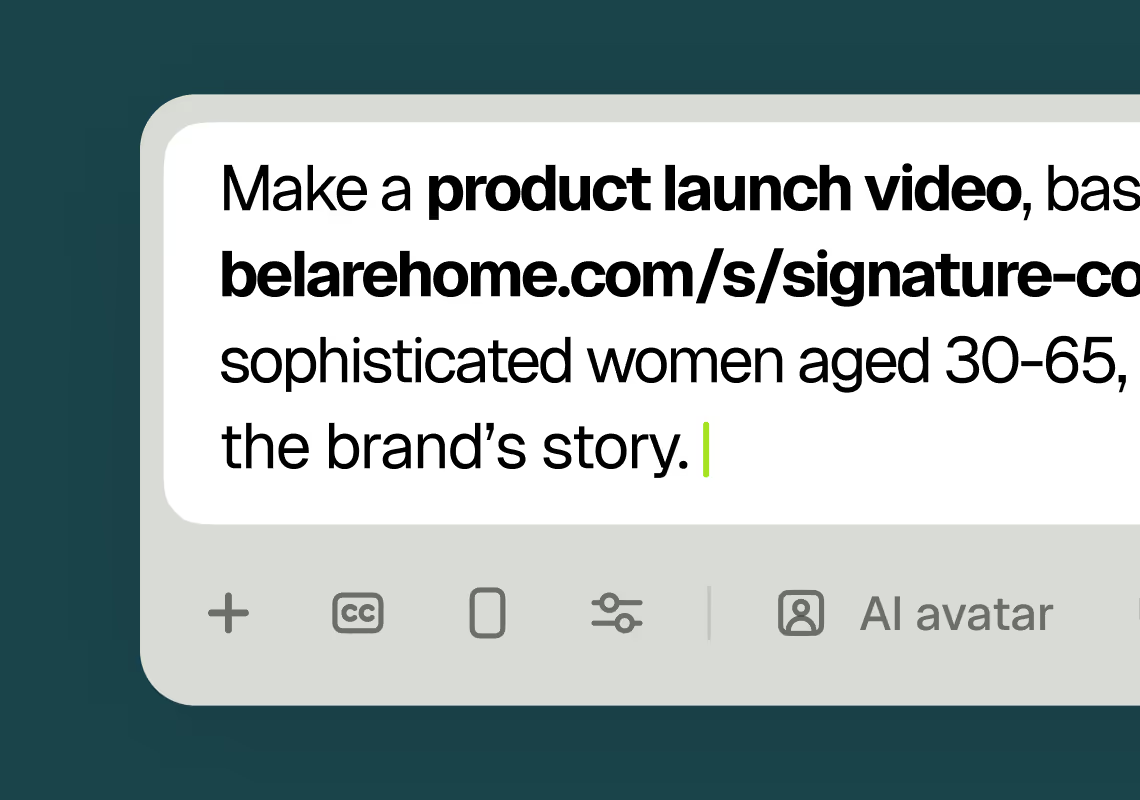
1Describe your video
Paste your promo brief, script, outline, or blog URL into Agent Opus.
 2
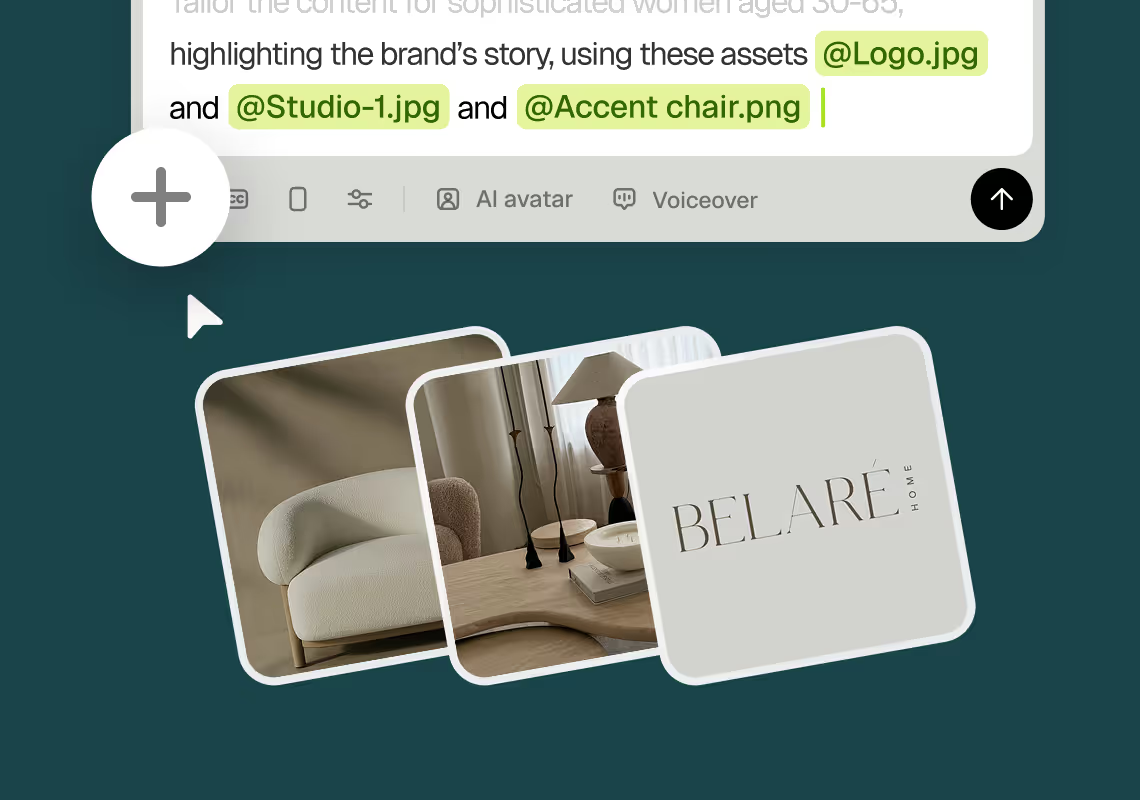
2Add assets and sources
Upload brand assets like logos and product images, or let the AI source stock visuals automatically.
 3
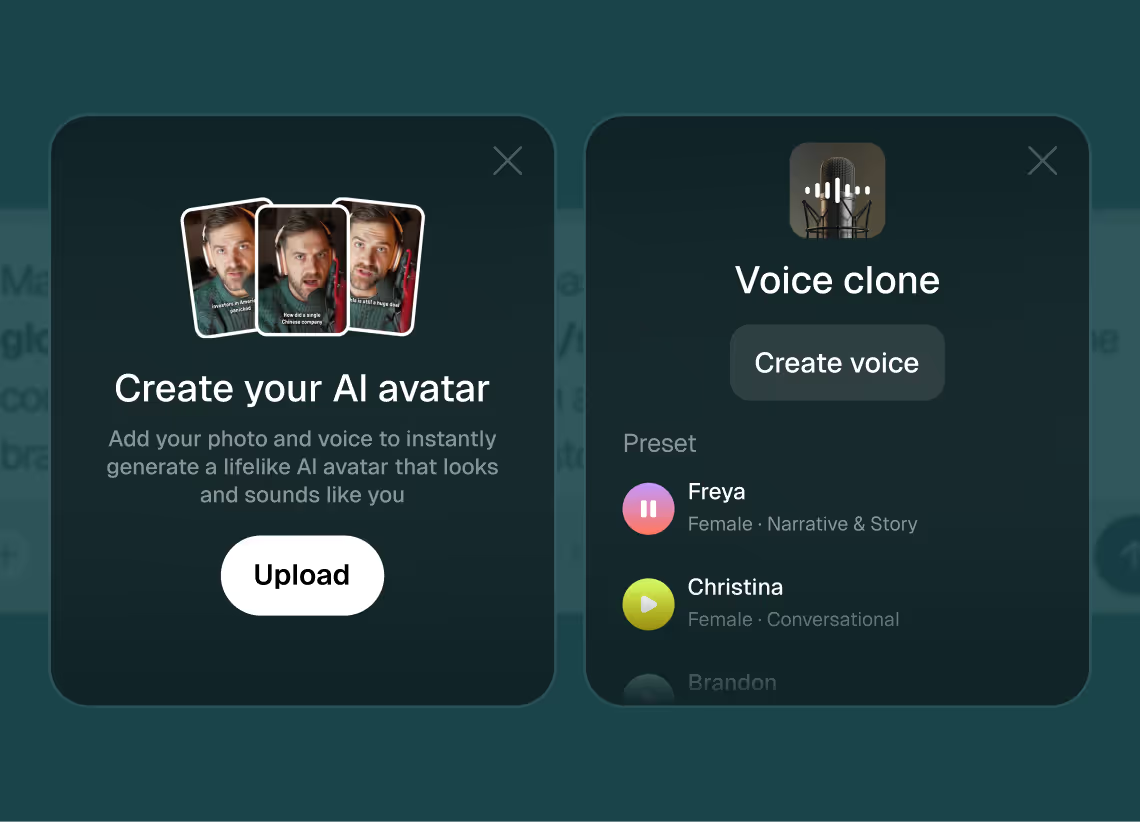
3Choose voice and avatar
Choose voice (clone yours or pick an AI voice) and avatar style (user or AI).
 4
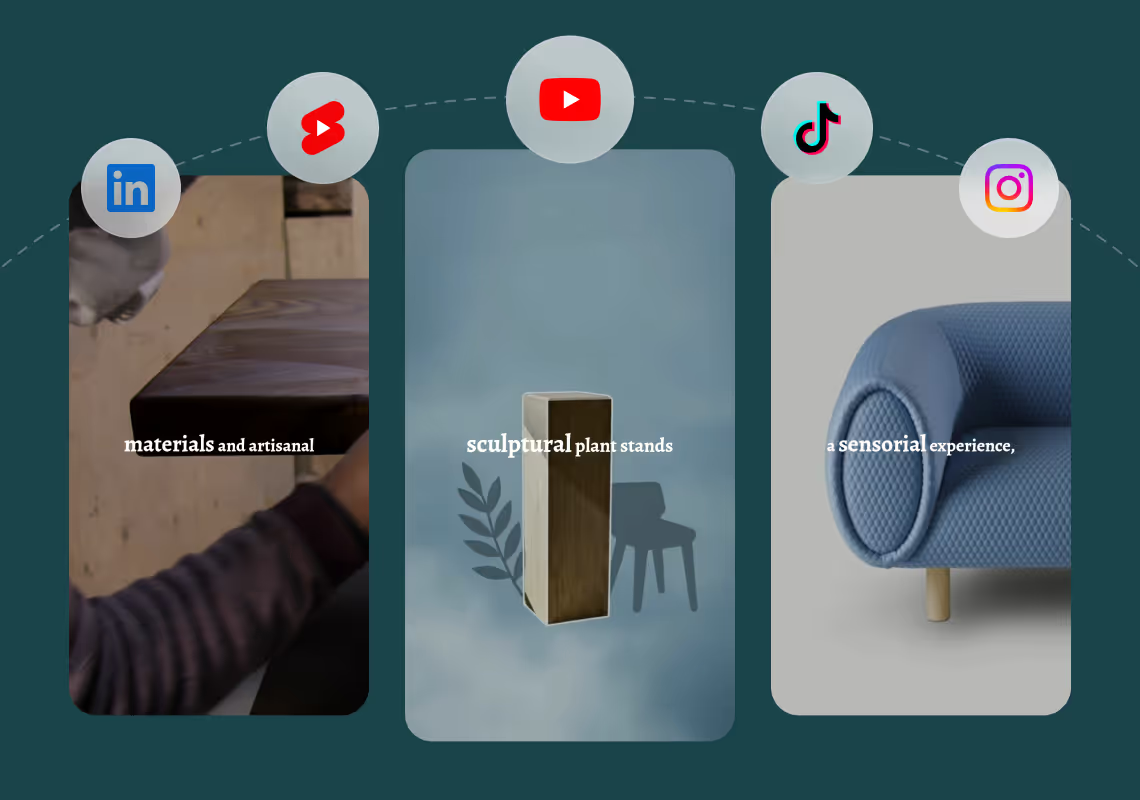
4Generate and publish-ready
Click generate and download your finished promo video in seconds, ready to publish across all platforms.


8 powerful features of Agent Opus' Medical Explainer Video Maker
Clinical Concept Clarity
Turn medical terminology and clinical processes into visual narratives that healthcare professionals can share confidently.
Healthcare Training Content
Produce medical training videos with step-by-step visual guidance for staff education and protocol demonstrations.
Anatomical Visualization
Generate videos with precise anatomical diagrams and medical illustrations that simplify complex health concepts.
Medical Script to Video
Transform complex medical scripts into clear, professional explainer videos with accurate visuals and narration.
Health Literacy Videos
Create medical explainer content that breaks down health information into digestible, visually engaging video formats.
Pharmaceutical Mechanism Videos
Explain drug mechanisms and treatment pathways through animated medical explainer videos with scientific accuracy.
Medical Device Demonstrations
Generate explainer videos showing medical device usage and benefits for both practitioners and patients.
Patient Education Videos
Create accessible medical explainer videos that help patients understand procedures, conditions, and treatment options.
Testimonials
This looks like a game-changer for us. We're building narrative-driven, visually layered content — and the ability to maintain character and motion consistency across episodes would be huge. If Agent Opus can sync branded motion graphics, tone, and avatar style seamlessly, it could easily become part of our production stack for short-form explainers and long-form investigative visuals.
srtaduck
I reviewed version a and I was very impressed with this version, it did very well in almost all aspects that users need, you would only have to make very small changes and maybe replace one of 2 of the pictures, but even saying that it could be used as is and still receive decent views or even chances at going viral depending on the story or the content the user chooses.
Jeremy
all in all LOVE THIS agent. I'm curious to see how I can push it (within reason) Just need to learn to get the consistency right with my prompts
Rebecca
Frequently Asked Questions
How does a medical explainer video maker handle technical medical terminology and visual accuracy?
Agent Opus approaches medical content with a multi-layer system designed for both accuracy and accessibility. When you input a script or prompt containing medical terminology, the platform analyzes the clinical concepts and matches them to appropriate visual representations. For anatomical explanations, it sources diagrams of organs, systems, and cellular structures from royalty-free medical libraries and web sources. For procedural content, it identifies step-by-step sequences and assembles visuals that show progression, whether that is a surgical technique, diagnostic process, or treatment protocol. The AI motion graphics layer then animates these visuals to highlight specific areas, draw attention to pathways or affected regions, and create visual flow that mirrors your narration. If your script discusses cardiovascular function, the medical explainer video maker will source heart diagrams, animate blood flow with directional graphics, and time these animations to sync with voiceover explanations of valves, chambers, and circulation. The key advantage is contextual assembly: rather than forcing you to hunt for the right stock clip of a beating heart or manually animate arrows showing blood flow, Agent Opus interprets your medical content and builds those visual sequences automatically. You maintain control by refining your input prompt or script. If initial results need adjustment, you can specify more detail in your text, request focus on particular anatomical features, or clarify the patient audience level. The system adapts to both highly technical content for healthcare professionals and simplified explanations for patient education, adjusting visual complexity and pacing based on the language and structure of your input.
What are best practices for writing prompts or scripts for a medical explainer video maker?
Effective medical video prompts balance clinical precision with narrative structure. Start by defining your audience and goal in the opening sentence of your prompt or script. Specify whether you are creating patient education for a general audience, training material for medical staff, or a product demo for healthcare buyers. This context shapes how the medical explainer video maker selects visuals and paces information. Structure your script in clear sections: introduction of the medical problem or topic, explanation of anatomy or mechanism, description of the procedure or treatment, and conclusion with outcomes or next steps. Use descriptive medical language where accuracy matters, but also include plain-language explanations if your audience is patients. For example, write both the clinical term and the layman explanation: atrial fibrillation (irregular heartbeat). This dual approach helps the platform source both technical diagrams and patient-friendly visuals. When describing processes, use active verbs and sequential language. Instead of writing the medication blocks receptors, write the medication enters the bloodstream, travels to the brain, and blocks specific receptors that trigger pain signals. This sequential phrasing helps the medical explainer video maker assemble a visual timeline with motion graphics that animate each step. Include specific visual cues in your script when certain imagery is critical. If you need to show a specific surgical approach or highlight a particular organ region, mention it explicitly: focus on the left ventricle or show the laparoscopic entry points. The platform interprets these cues and prioritizes matching visuals. For brand consistency, mention your product name, device, or clinic early in the script so the system knows to integrate your uploaded logos or product shots at appropriate moments. If you are working from a blog post or article URL, ensure the source content has clear headings and structured explanations. The medical explainer video maker performs better with well-organized source material that separates concepts into distinct sections. Avoid walls of text without subheadings. Finally, consider voiceover tone in your script. If you want a reassuring, empathetic patient education video, use conversational language and shorter sentences. If you need authoritative clinical training content, use precise medical terminology and longer explanatory passages. The AI voice or your cloned voice will match the tone of the written script, so write in the voice you want to hear.
Can a medical explainer video maker maintain brand consistency across multiple healthcare videos?
Brand consistency is critical in healthcare communication, and Agent Opus is built to maintain visual and tonal identity across every medical explainer video you generate. The platform allows you to upload brand assets once, then automatically integrates them into all subsequent videos. Upload your clinic logo, hospital system branding, medical device product shots, or pharmaceutical brand colors, and the medical explainer video maker will place these elements in appropriate contexts throughout your videos. Logos appear in lower thirds or end cards, product shots are woven into demonstration sequences, and brand colors influence motion graphics and text overlays. This ensures that whether you are creating a video about diabetes management, a new surgical device, or telehealth services, every output carries your visual identity. Voice consistency is equally important. If you are a physician, healthcare marketer, or patient educator creating a series of medical videos, you can clone your voice once and use it across all projects. This creates a recognizable, trusted voice for your patient education library or product training series. Patients and healthcare professionals come to associate that specific voice with your brand, building familiarity and credibility. If you prefer AI voices, you can select one professional voice and use it consistently, ensuring tonal uniformity across dozens or hundreds of videos. The medical explainer video maker also maintains stylistic consistency in how it assembles scenes and applies motion graphics. Once you establish a pattern with your first few videos, such as starting with a patient problem statement, moving to anatomical explanation, then showing treatment steps, the platform learns to replicate that structure. You can reinforce this by using similar script templates or prompt formats for related topics. For example, if you are creating a series of surgical procedure videos, write each script with the same section headings: Patient Indication, Anatomical Overview, Procedure Steps, Recovery Expectations. The medical explainer video maker will generate videos with parallel visual structures, making your content library feel cohesive and professionally produced. Compliance and regulatory consistency also benefit from this approach. If your healthcare organization has specific visual or messaging guidelines, you can encode them into your script templates and brand assets. The platform then generates videos that meet those standards automatically, reducing compliance review time and ensuring every patient-facing or provider-facing video adheres to your protocols.
What are the limitations or edge cases when using a medical explainer video maker for complex clinical topics?
While Agent Opus excels at generating medical explainer videos from text, understanding its limitations helps you set realistic expectations and optimize your workflow. The platform relies on available visual resources, so extremely rare medical conditions or cutting-edge procedures with limited published imagery may require you to provide custom visuals. If you are explaining a novel surgical technique or a newly discovered biomarker, and no stock or web images exist, the medical explainer video maker will source the closest available analogs. In these cases, you can upload your own diagrams, research images, or product photos to ensure accuracy. The platform will integrate these custom assets into the generated video, but you must supply them upfront. Another edge case involves highly specialized motion graphics that require frame-by-frame precision, such as molecular docking animations or cellular signaling cascades at the atomic level. Agent Opus generates dynamic motion graphics that highlight, animate, and guide viewer attention, but it is not a molecular modeling tool. For ultra-technical research presentations requiring exact molecular structures, you may need to create those animations separately and provide them as custom assets. The medical explainer video maker will then incorporate them into the broader narrative video. Language and terminology nuance can also present challenges. Medical language is context-dependent: the term acute means different things in acute care versus acute angle. If your script uses ambiguous terms without sufficient context, the platform may select visuals that do not match your intent. The solution is to write with clarity and specificity. Instead of writing the patient experiences acute symptoms, write the patient experiences sudden, severe chest pain. This specificity guides the visual selection process and ensures the medical explainer video maker interprets your meaning correctly. Regulatory and compliance review is another consideration. Agent Opus generates videos quickly, but it does not replace human oversight for medical accuracy or regulatory compliance. If you are creating patient education materials that must meet FDA guidelines, HIPAA standards, or institutional review board requirements, you still need qualified reviewers to verify content before publication. The medical explainer video maker accelerates production, but final approval remains a human responsibility. Finally, while the platform supports voice cloning and AI avatars, it cannot replicate live clinical demonstrations or patient testimonials. If your medical explainer video requires a real physician performing a physical exam technique or a patient sharing their recovery story on camera, you will need to film that footage separately. Agent Opus can then integrate those clips into a larger narrative video, combining your live-action content with AI-generated explanations, diagrams, and motion graphics. Understanding these boundaries allows you to use the medical explainer video maker strategically: generate the bulk of your explanatory content automatically, then supplement with custom assets or live footage where necessary.