Podcast to Video Generator
Transform your podcast episodes into publish-ready videos in minutes. Agent Opus is a complete podcast to video system that takes your audio content, script, or episode brief and generates a finished video with AI motion graphics, dynamic visuals, voiceover, and optional avatars. No editing, no timeline, no manual work. Describe your podcast episode or paste your script, and Agent Opus assembles a social-ready video automatically. Perfect for creators, marketers, and founders who want to expand their podcast reach across YouTube, TikTok, Instagram Reels, and LinkedIn without spending hours in editing software.

Explore what's possible with Agent Opus

Reasons why creators love Agent Opus' Podcast to Video Generator
Ship in Minutes, Not Hours
Generate a publish-ready video in under 10 minutes from a single prompt — no timeline editing, no asset hunting, no creative dry spells.
Zero Editing Skills Required
Describe your concept and Agent Opus handles scene composition, motion graphics, voiceover, and platform formatting automatically — even if you've never opened a video editor.
Studio-Grade Output
Cinematic motion graphics, beat-synced cuts, professional voiceover, and precise typography — every video ships looking production-quality from the first generation.
Stays On-Brand
Upload your logo, fonts, and color palette once. Agent Opus applies them across every video automatically so your content stays visually consistent.
How to use Agent Opus’ Podcast to Video Generator
 1
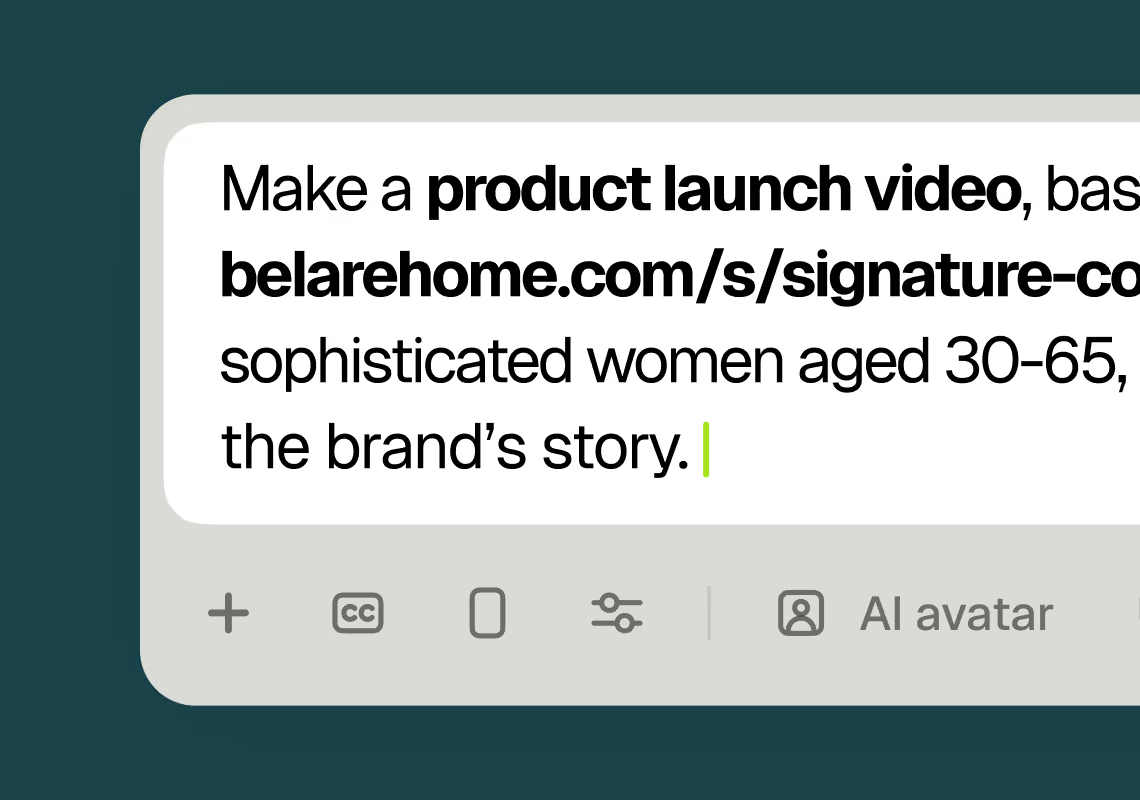
1Describe your video
Paste your promo brief, script, outline, or blog URL into Agent Opus.
 2
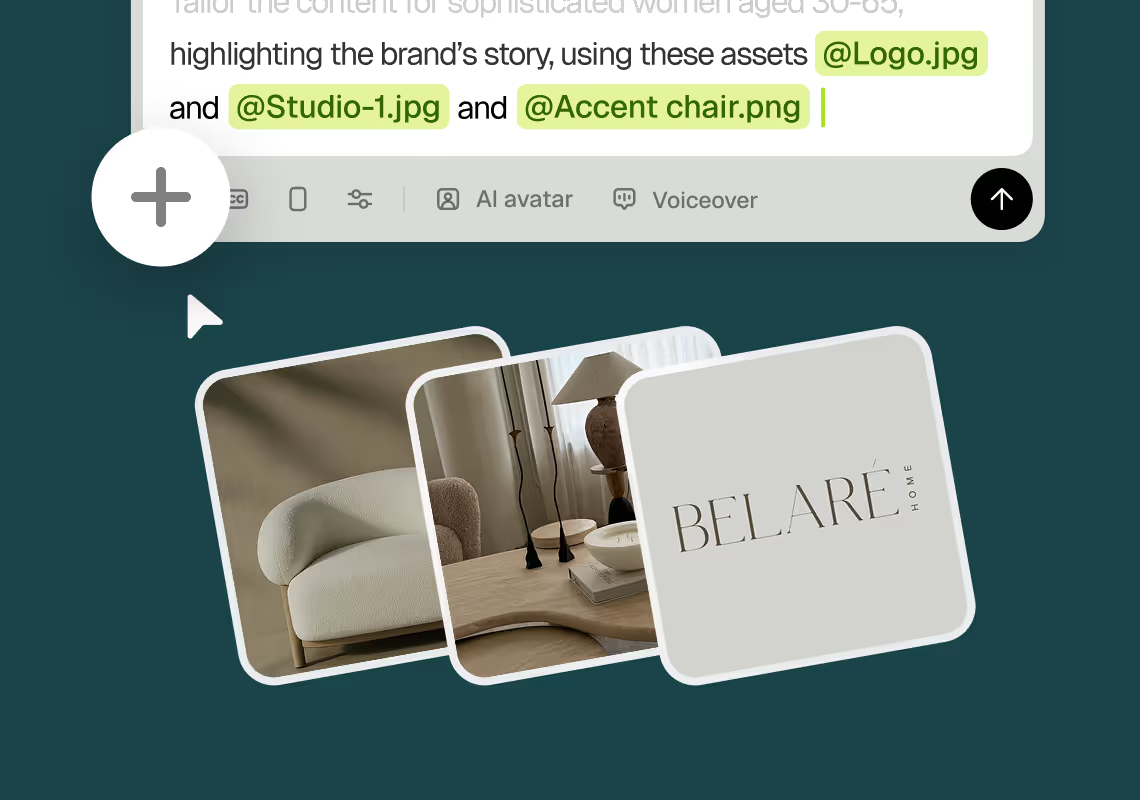
2Add assets and sources
Upload brand assets like logos and product images, or let the AI source stock visuals automatically.
 3
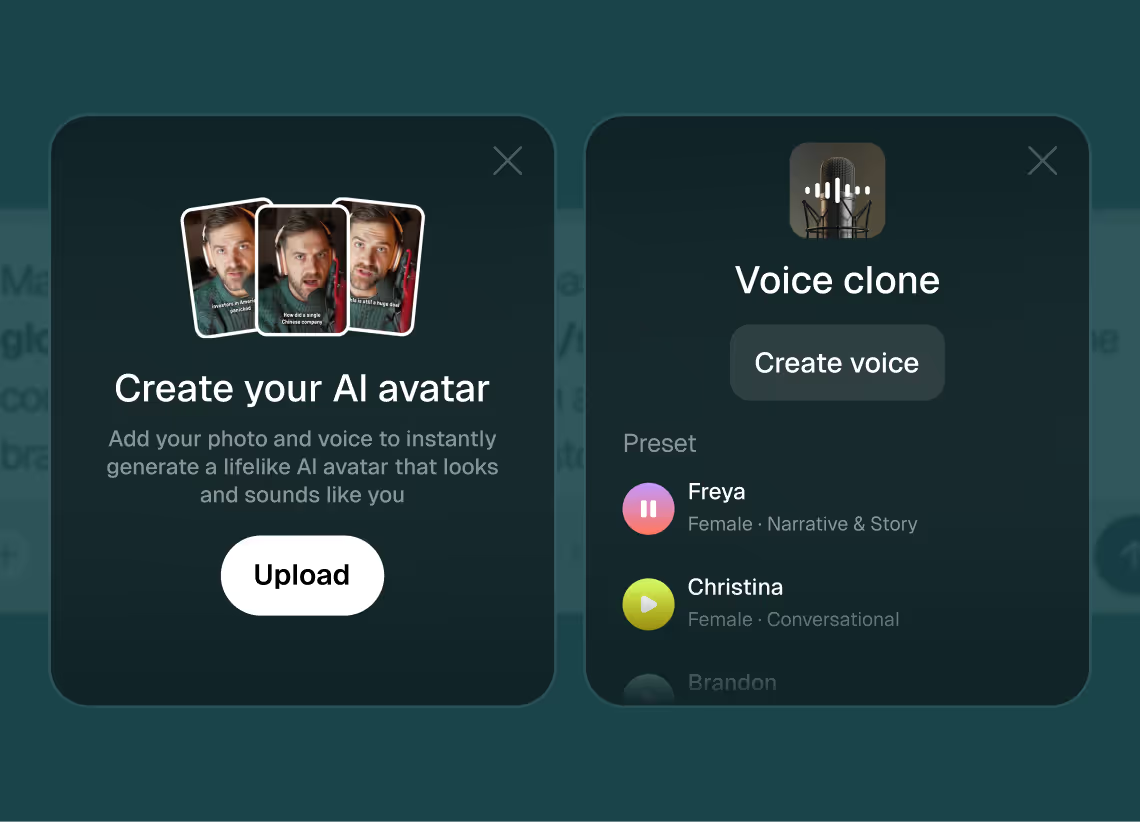
3Choose voice and avatar
Choose voice (clone yours or pick an AI voice) and avatar style (user or AI).
 4
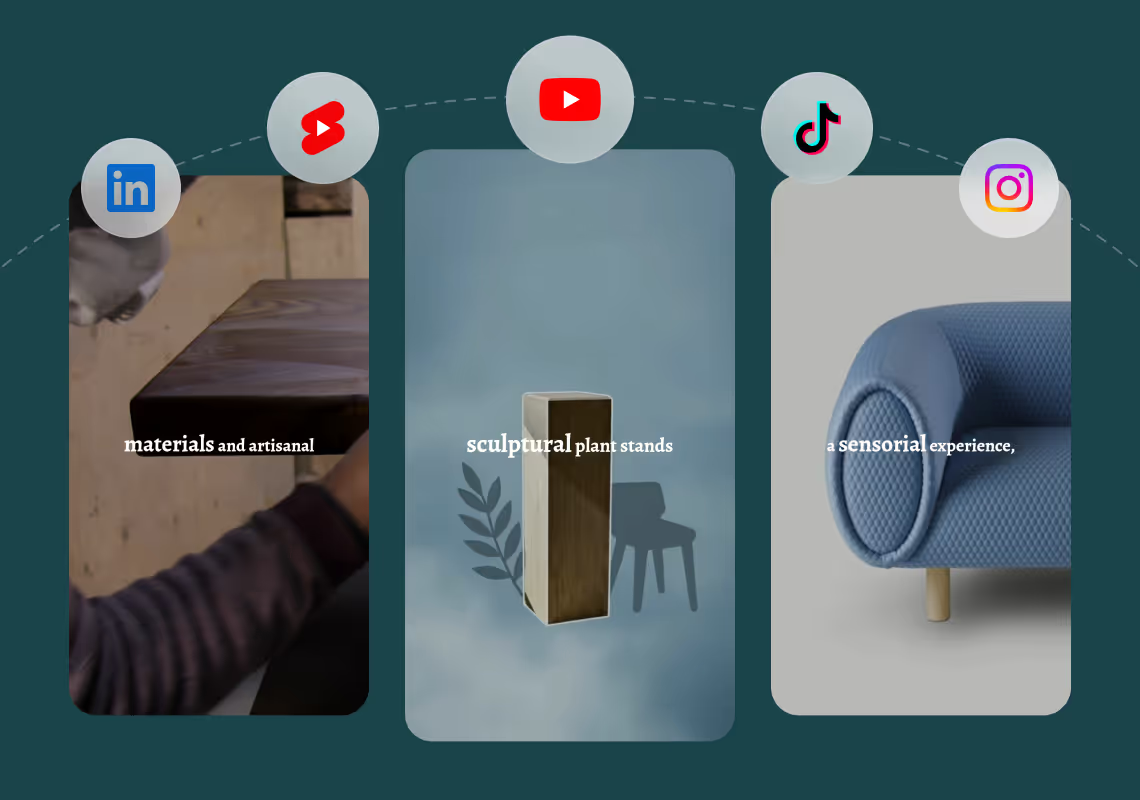
4Generate and publish-ready
Click generate and download your finished promo video in seconds, ready to publish across all platforms.


8 powerful features of Agent Opus' Podcast to Video Generator
Prompt-to-Video Generation
Turn a one-line idea into a finished video. The agent handles structure, pacing, B-roll selection, and final assembly automatically.
Script and Outline Support
Paste a full script, drop in an outline with section headers, or supply a blog or article URL — Agent Opus reads any of them and builds a video around the content.
AI Voiceover and Voice Cloning
Pick from natural-sounding AI voices in 30+ languages, or clone your own voice once. Every video then ships with your authentic narration.
Beat-Synced Motion Graphics
Dynamic visuals that lock to the beat of your audio or the pacing of your script — kinetic typography, transitions, and effects, no manual keyframing required.
Automatic Captions and Subtitles
Burn-in captions for short-form, soft subtitles for long-form, and multi-language translations — all generated and synced automatically.
Multi-Aspect-Ratio Export
9:16, 1:1, and 16:9 outputs from one job, with intelligent reframing of text, motion graphics, and focal elements for each ratio.
Brand Asset Integration
Upload your logo, watermark, fonts, and color palette. Agent Opus applies them consistently across every video automatically.
Avatar and Talking Head Support
Add an AI avatar, your own video footage, or a synthetic spokesperson to any video — useful for explainers, ads, and personal-brand content.
Testimonials
This looks like a game-changer for us. We're building narrative-driven, visually layered content — and the ability to maintain character and motion consistency across episodes would be huge. If Agent Opus can sync branded motion graphics, tone, and avatar style seamlessly, it could easily become part of our production stack for short-form explainers and long-form investigative visuals.
srtaduck
I reviewed version a and I was very impressed with this version, it did very well in almost all aspects that users need, you would only have to make very small changes and maybe replace one of 2 of the pictures, but even saying that it could be used as is and still receive decent views or even chances at going viral depending on the story or the content the user chooses.
Jeremy
all in all LOVE THIS agent. I'm curious to see how I can push it (within reason) Just need to learn to get the consistency right with my prompts
Rebecca
Frequently Asked Questions
How does podcast to video generation work with different input types?
Agent Opus accepts four input types for podcast to video creation: a short prompt describing your episode, a full script with dialogue and talking points, an outline with key sections and topics, or a blog URL if your podcast has written show notes. For prompt-based generation, describe your podcast topic, target audience, key points, and desired tone in a few sentences. Agent Opus interprets your intent and generates a complete video with matching visuals, pacing, and structure. Script input gives you the most control. Paste your full podcast transcript or pre-written script, and Agent Opus uses it verbatim for voiceover while generating complementary motion graphics, B-roll, and scene transitions. Outline input works well when you have bullet points or section headers. Agent Opus expands your outline into full scenes with appropriate visuals and pacing. Blog URL input is ideal when your podcast episode has accompanying written content. Agent Opus reads the article, extracts key points, and generates a video that summarizes or visualizes your podcast topic. Regardless of input type, Agent Opus handles voice generation or cloning, avatar sync if you choose one, motion graphics, and social formatting automatically. The system analyzes your content for natural scene breaks, visual metaphors, and pacing cues. For podcast to video specifically, Agent Opus recognizes conversational flow, interview segments, storytelling beats, and educational explanations, then matches visuals to each content type. You can include brand guidelines, preferred visual styles, or specific imagery requests in your prompt or script notes, and Agent Opus incorporates those elements into the final video.
What are best practices for prompts when creating podcast to video content?
Effective podcast to video prompts balance clarity with creative freedom. Start with your core topic and target audience. For example, instead of 'make a video about marketing,' write 'create a podcast to video for B2B marketers explaining how to use AI tools for content creation, covering three main benefits and two common mistakes.' This gives Agent Opus enough structure to generate relevant visuals and pacing while leaving room for creative motion graphics and scene composition. Include your desired tone and energy level. Podcasts range from casual conversations to formal interviews to high-energy storytelling. Specify 'conversational and friendly,' 'authoritative and data-driven,' or 'fast-paced and entertaining' so Agent Opus matches visual style, motion graphics speed, and scene transitions to your audio vibe. Mention any key visuals, brand elements, or examples you want featured. If your podcast discusses specific products, case studies, or concepts, list them in your prompt. Agent Opus will source relevant imagery, incorporate your logos or product shots, and create visual metaphors for abstract ideas. For interview-style podcasts, note the format. Write 'two-person interview with host and guest' or 'solo narration with occasional listener questions' so Agent Opus structures scenes appropriately. You can request avatar placement, split-screen effects, or single-speaker focus. Specify your target platform and length. 'YouTube video, 8-10 minutes' generates different pacing than 'Instagram Reel, 60 seconds.' Agent Opus adjusts scene count, visual density, and information flow based on platform and duration. Avoid over-scripting visual details. Instead of dictating every scene, focus on content and let Agent Opus handle motion graphics, transitions, and visual composition. The AI excels at matching visuals to spoken content when given thematic direction rather than shot-by-shot instructions.
Can podcast to video generation maintain consistent branding across episodes?
Yes, Agent Opus supports brand consistency for podcast to video series through asset uploads and style preferences. Upload your logo, brand colors, custom fonts, intro/outro graphics, and any recurring visual elements once, then reference them in each episode prompt or script. Agent Opus incorporates these assets automatically, placing your logo in consistent positions, using your color palette for motion graphics and text overlays, and maintaining visual continuity across all podcast to video outputs. For voice consistency, use Agent Opus voice cloning. Record a short voice sample once, and Agent Opus clones your voice for every episode. This ensures your podcast to video content sounds identical across hundreds of episodes without re-recording. Voice cloning captures your tone, pacing, and speaking style, so even if you generate videos from written scripts rather than recorded audio, the output matches your authentic voice. Avatar consistency works the same way. Upload your photo or video sample, and Agent Opus generates a consistent AI avatar for every podcast to video. The avatar maintains the same appearance, positioning, and animation style across episodes, creating a recognizable visual brand. You can also use your own video footage if you prefer recording yourself, and Agent Opus syncs it with generated visuals and motion graphics. For visual style consistency, describe your preferred aesthetic in your first prompt, then reference it in subsequent episodes. For example, 'use the same minimalist motion graphics style with white backgrounds and bold typography as episode 1.' Agent Opus remembers style preferences within your account and applies them to new podcast to video generations. This includes transition styles, text animation speeds, B-roll sourcing preferences, and scene composition patterns. Brand guidelines can be saved as reusable templates. Create a master prompt or style guide that defines your podcast to video look, then append episode-specific content to it. This ensures every video follows your brand standards while covering unique topics.
How does podcast to video handle different podcast formats like interviews, solo shows, and panel discussions?
Agent Opus adapts podcast to video generation based on your format description. For interview podcasts, specify 'two-person interview' or 'host plus guest' in your prompt or script. Agent Opus generates split-screen layouts, alternating speaker focus, and visual cues that indicate who is talking. Motion graphics highlight key points from each speaker, and B-roll imagery supports the conversation topics. If you use avatars, Agent Opus positions them side-by-side or in conversation layouts with appropriate eye lines and gestures. For solo podcasts, Agent Opus focuses on single-speaker presentation with rich motion graphics and B-roll. Since there is no conversational dynamic, the system emphasizes visual storytelling through animated text, data visualizations, product shots, and thematic imagery. Solo podcast to video content often includes more on-screen text and visual metaphors to maintain engagement without multiple speakers. Panel discussions with three or more speakers require format specification. Describe 'three-person panel' or 'roundtable discussion' and Agent Opus creates multi-speaker layouts. The system can generate grid views, rotating focus on active speakers, or picture-in-picture arrangements. Motion graphics and B-roll support the group conversation without overwhelming the screen. Narrative or storytelling podcasts benefit from cinematic visuals. If your podcast tells stories, case studies, or historical accounts, Agent Opus generates illustrative B-roll, dramatic motion graphics, and scene transitions that match the narrative arc. Specify 'storytelling format with dramatic pacing' and the system adjusts visual intensity and scene length accordingly. Educational or tutorial podcasts get step-by-step visual support. Agent Opus generates numbered lists, process diagrams, before-and-after comparisons, and instructional graphics that reinforce your teaching points. For news or commentary podcasts, Agent Opus sources relevant current imagery, creates data visualizations for statistics you mention, and generates lower thirds with topic labels or source citations.