Psychology Explainer Video Maker
Turn psychology concepts into engaging explainer videos instantly. Agent Opus is a psychology explainer video maker that transforms your prompts, scripts, or articles into complete videos with AI motion graphics, professional voiceover, and dynamic visuals. Describe your concept, paste your research, or outline your theory, and get a publish-ready video in minutes. No timeline, no stock footage hunting, no manual editing. Perfect for educators, content creators, and mental health professionals who need to explain complex psychological principles through video.

Explore what's possible with Agent Opus

Reasons why creators love Agent Opus' Psychology Explainer Video Maker
Monetize Your Expertise Faster
Launch your psychology channel or course with high-quality explainer videos in days, not months.
Audience Growth on Autopilot
Hook viewers with compelling psychology narratives that keep them watching and sharing your content.
Consistent Publishing, Zero Burnout
Produce weekly psychology explainers without the exhaustion of traditional video creation workflows.
Complex Ideas, Crystal Clear
Turn dense psychological concepts into visuals your audience actually understands and remembers.
Professional Polish, Beginner Friendly
Create psychology videos that look like they cost thousands, even if you've never edited before.
Credibility Without the Camera
Deliver expert-level psychology content without filming yourself or hiring a production crew.
How to use Agent Opus’ Psychology Explainer Video Maker
 1
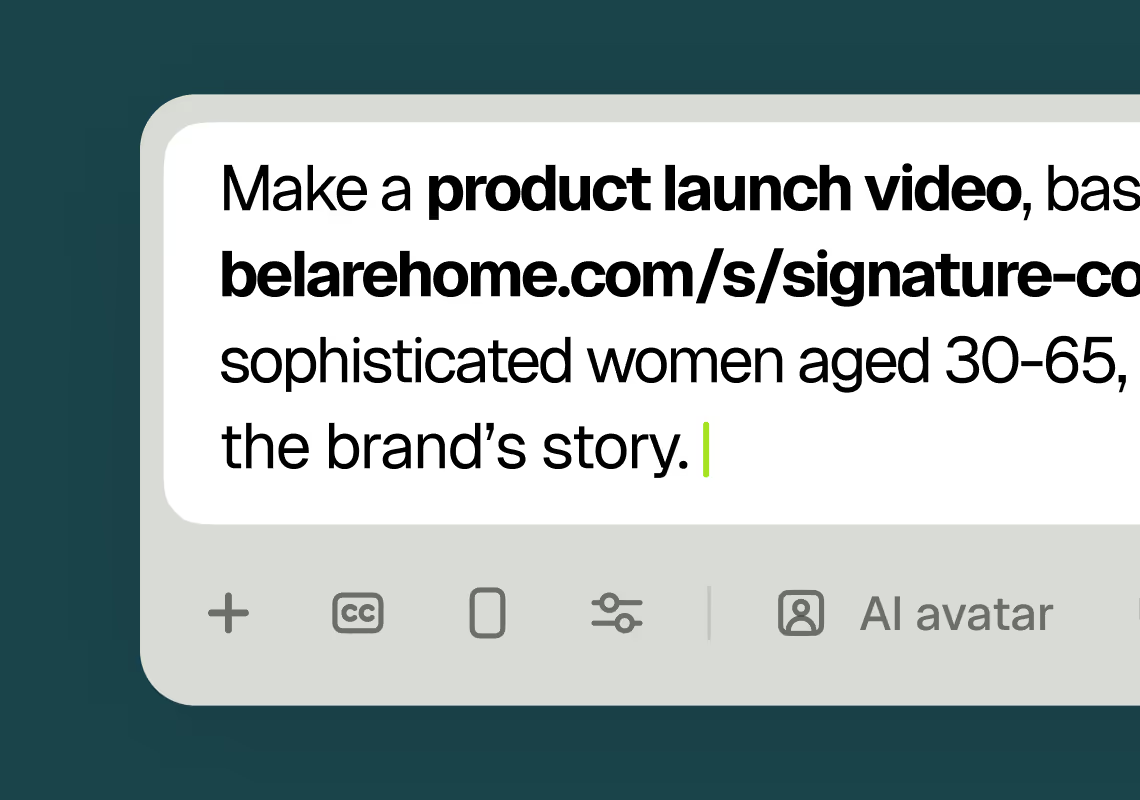
1Describe your video
Paste your promo brief, script, outline, or blog URL into Agent Opus.
 2
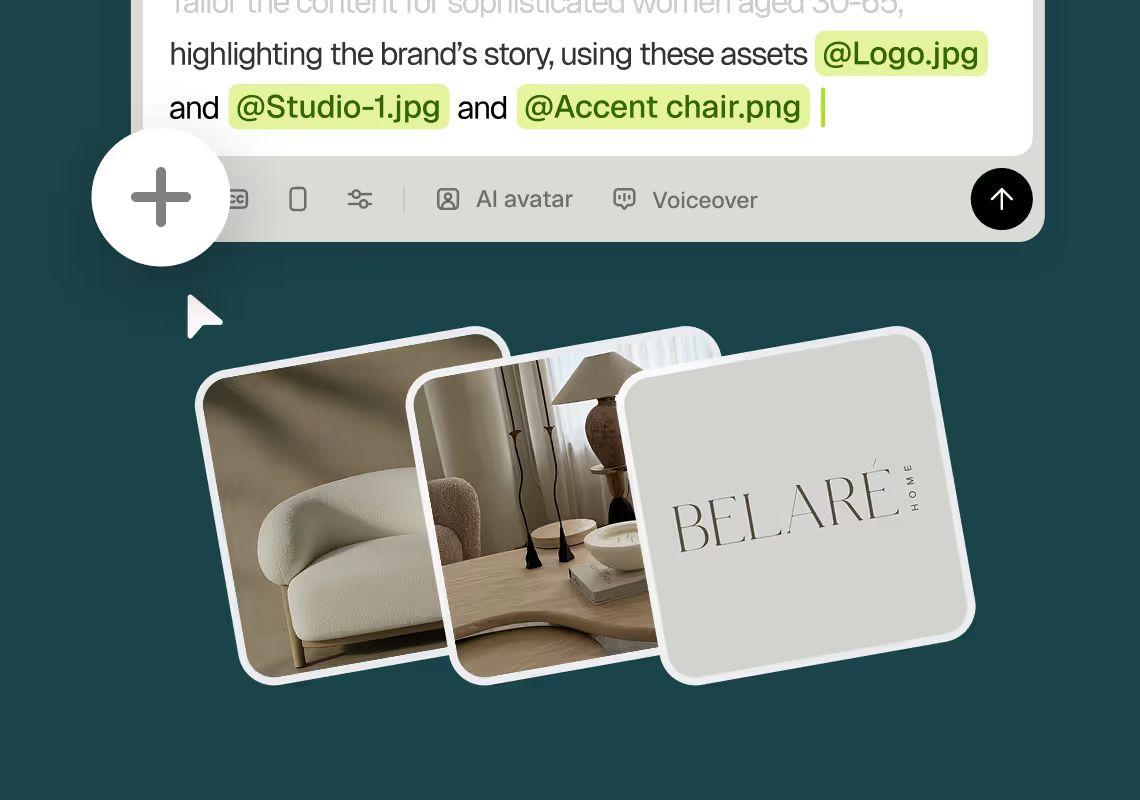
2Add assets and sources
Upload brand assets like logos and product images, or let the AI source stock visuals automatically.
 3
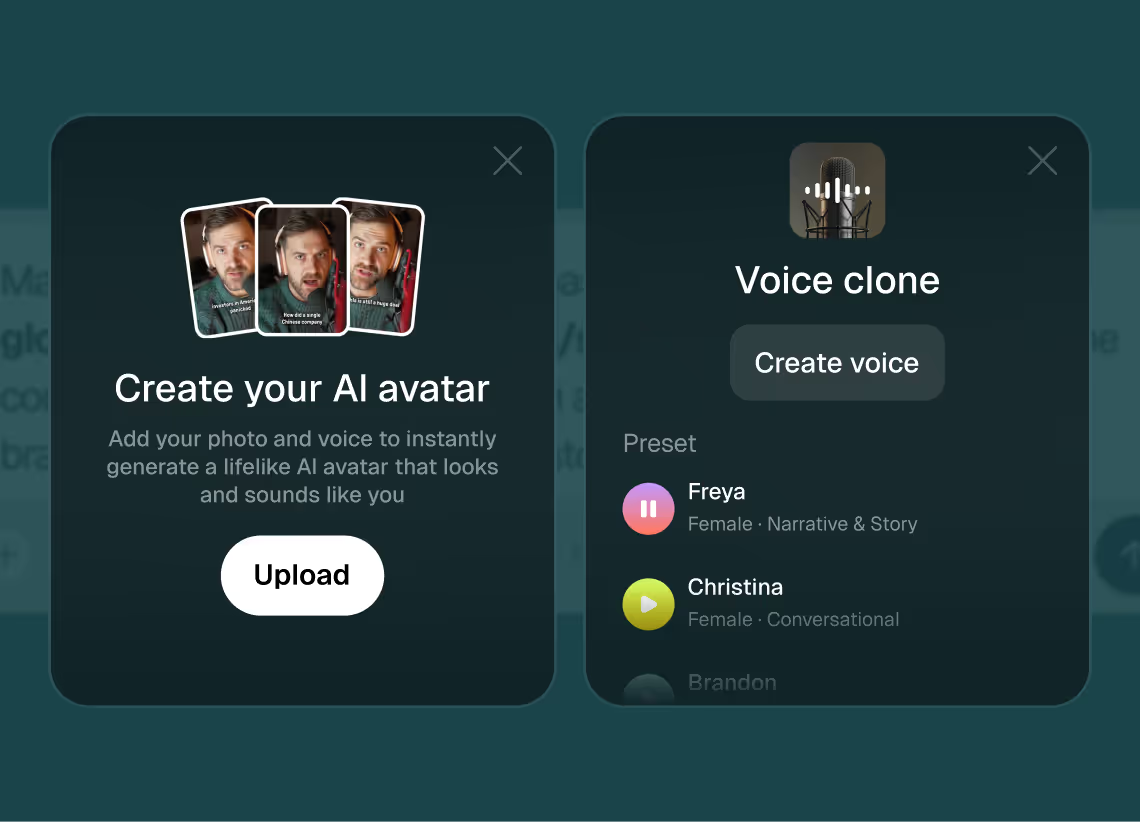
3Choose voice and avatar
Choose voice (clone yours or pick an AI voice) and avatar style (user or AI).
 4
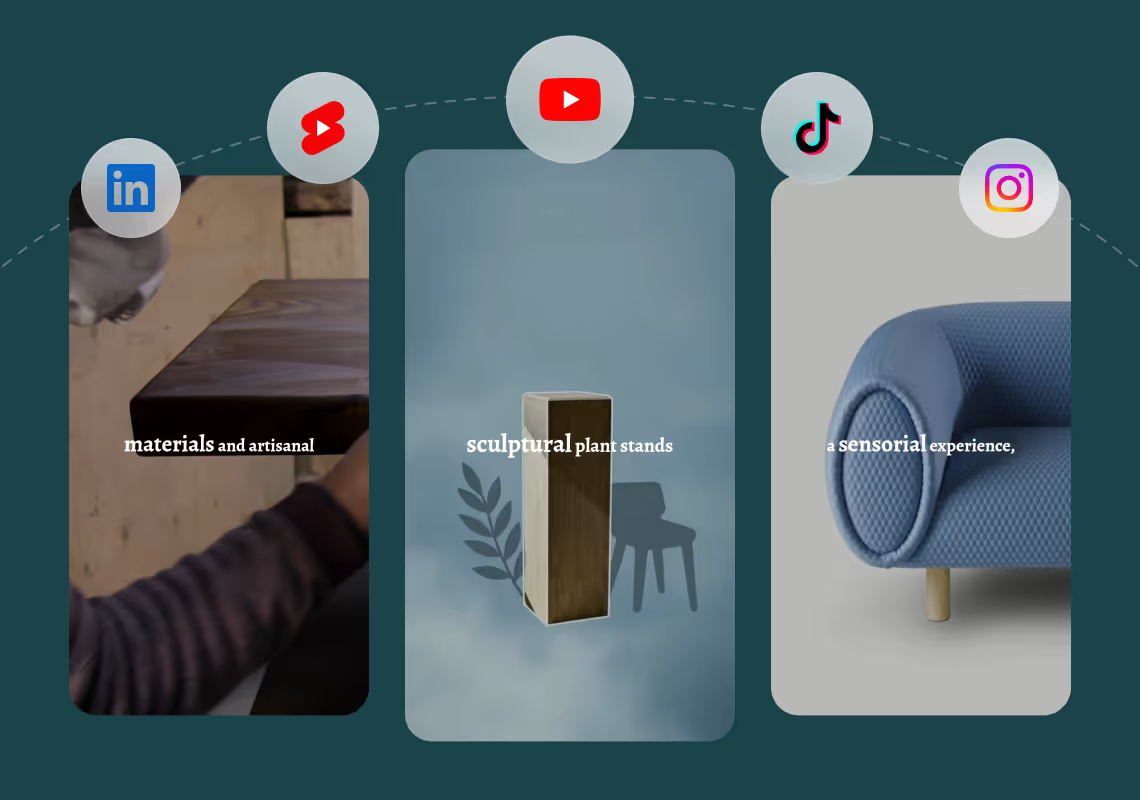
4Generate and publish-ready
Click generate and download your finished promo video in seconds, ready to publish across all platforms.


8 powerful features of Agent Opus' Psychology Explainer Video Maker
Script to Psychology Video
Turn your psychology concepts and theories into clear, engaging explainer videos instantly.
Case Study Visualization
Generate video content that brings psychological case studies and research findings to life visually.
Professional Voiceover Narration
Add AI-generated voiceovers that explain psychological topics with clarity and professional delivery.
Behavioral Model Animation
Produce animated sequences showing behavioral patterns, cognitive processes, and therapeutic techniques in action.
Multi-Format Psychology Content
Create explainer videos optimized for lectures, social media, or online courses from one prompt.
Animated Concept Visualization
Generate animated visuals that illustrate complex psychological principles and mental processes clearly.
Theory Breakdown Videos
Transform dense psychological theories into bite-sized explainer videos perfect for students and professionals.
Educational Graphics Generation
Create diagrams, charts, and infographics that make psychological data and theories easy to understand.
Testimonials
This looks like a game-changer for us. We're building narrative-driven, visually layered content — and the ability to maintain character and motion consistency across episodes would be huge. If Agent Opus can sync branded motion graphics, tone, and avatar style seamlessly, it could easily become part of our production stack for short-form explainers and long-form investigative visuals.
srtaduck
I reviewed version a and I was very impressed with this version, it did very well in almost all aspects that users need, you would only have to make very small changes and maybe replace one of 2 of the pictures, but even saying that it could be used as is and still receive decent views or even chances at going viral depending on the story or the content the user chooses.
Jeremy
all in all LOVE THIS agent. I'm curious to see how I can push it (within reason) Just need to learn to get the consistency right with my prompts
Rebecca
Frequently Asked Questions
How does a psychology explainer video maker handle abstract concepts versus concrete examples?
Psychology presents a unique challenge for video creation because many core concepts like cognitive dissonance, intrinsic motivation, or the unconscious mind have no physical form to film. A psychology explainer video maker like Agent Opus solves this through intelligent visual metaphor generation and motion graphics. When you input a script about confirmation bias, the system doesn't just search for generic stock footage. It analyzes the concept's structure and generates visual representations: animated filters that block contradictory information, or split-screen comparisons showing selective attention in action. For concrete psychological examples like the Stanford Prison Experiment or Pavlov's conditioning, the tool sources historical images and creates animated reconstructions. The key is that you describe what you want to explain, and the AI determines the best visual approach. If you're teaching about neural pathways, you'll get animated brain diagrams with highlighted regions. If you're explaining behavioral conditioning, you'll see stimulus-response loops visualized through motion graphics. The system balances abstract visualization with real-world application footage, creating a rhythm that keeps viewers engaged while building understanding. You can guide this balance in your prompt by specifying whether you want more theoretical diagrams or practical examples, and the psychology explainer video maker adjusts the visual mix accordingly.
What are best practices for writing prompts that generate effective psychology explainer videos?
Effective prompts for psychology explainer videos follow a structure that mirrors how psychological concepts are taught: define, illustrate, apply. Start your prompt by clearly stating the psychological principle or theory you want to explain, using the technical term plus a plain-language definition. For example, instead of just saying 'make a video about cognitive load theory,' write 'explain cognitive load theory, the idea that working memory has limited capacity and instructional design should account for this limitation.' This gives the psychology explainer video maker context for visual generation. Next, specify the level of your audience. Psychology content for marketers needs different examples than content for therapy students. Include phrases like 'for a general audience interested in self-improvement' or 'for undergraduate psychology students' so the tool calibrates complexity and terminology. Then outline 2-3 concrete examples or applications. 'Show how cognitive load affects website design, classroom learning, and multitasking' tells the system to generate visuals for each scenario. If you have a preferred structure, include it: 'Start with a relatable scenario, explain the underlying psychology, then provide three practical applications.' For voice and tone, specify whether you want academic authority, conversational teaching, or motivational coaching. The more you frame your prompt like a lesson plan with clear learning objectives, examples, and audience awareness, the better your psychology explainer video will educate and engage viewers.
Can a psychology explainer video maker maintain scientific accuracy while staying engaging?
Scientific accuracy in psychology videos requires balancing peer-reviewed research with accessible explanation, and a psychology explainer video maker like Agent Opus handles this through source-aware generation and customizable depth. When you input a blog post or article URL, the system preserves the factual claims and research citations from your source material while translating them into visual form. If your article cites a specific study about the mere exposure effect, the video will reference that research while showing animated examples of the phenomenon. You maintain control over accuracy by providing the script or outline yourself. The tool doesn't invent psychological theories; it visualizes what you give it. For sensitive topics like mental health conditions or therapeutic techniques, you can include disclaimers in your script, and they'll appear as text overlays or voiceover segments. The motion graphics generation uses established visual conventions from psychology education: brain region diagrams follow standard anatomical models, therapy technique demonstrations use recognized protocols, and statistical concepts get visualized through accurate charts and graphs. To maximize both accuracy and engagement, structure your content with the 'hook-explain-apply' model common in science communication. Start with a surprising psychological finding or relatable scenario to hook viewers, explain the underlying mechanism with accurate terminology and visuals, then show real-world applications. The psychology explainer video maker excels at this structure because it can generate attention-grabbing opening scenes, detailed explanatory graphics, and practical example footage in a single workflow, maintaining scientific rigor while keeping viewers watching until the end.
How does voice cloning work for psychology educators who want consistent branding across videos?
Voice consistency matters enormously for psychology educators building a recognizable brand, whether you're a therapist creating client resources, a professor developing course content, or a creator building a psychology education channel. Agent Opus voice cloning for psychology explainer videos works by analyzing a short sample of your voice, typically 30-60 seconds of clear speech, and creating a model that can narrate any script in your vocal style. This is particularly valuable for psychology content because the subject matter often requires a specific tone: warm and empathetic for mental health topics, authoritative and clear for research summaries, or energetic and relatable for pop psychology. Once your voice is cloned, every psychology explainer video you generate maintains that consistent vocal presence, even if you're creating videos about vastly different topics like developmental psychology, social psychology, and neuroscience. The practical workflow is simple: record yourself reading a paragraph of psychological content, upload it to Agent Opus, and the system creates your voice profile. From that point forward, you can generate videos by pasting scripts or prompts without ever recording again. This is transformative for educators who produce regular content series like 'Psychology Concept of the Week' or therapists who create psychoeducation videos for different client populations. Your voice remains consistent across all videos, building familiarity and trust with your audience. You can also choose from AI voices if you prefer not to use your own, selecting options that match the gravitas needed for academic psychology versus the approachability needed for self-help content. Either way, the psychology explainer video maker ensures your audio branding stays consistent while you scale video production.