Realistic AI Video Generator
Create lifelike, professional videos from a simple text prompt. Agent Opus is a realistic AI video generator that transforms your ideas, scripts, or blog posts into polished, publish-ready videos with natural motion graphics, authentic voiceovers, and dynamic visual assembly. No timeline, no manual editing, no stock footage hunting. Just describe what you need, and Agent Opus delivers a complete video optimized for social platforms, marketing campaigns, and content strategies. Perfect for creators, marketers, and founders who need high-quality video content without the production overhead.

Explore what's possible with Agent Opus

Reasons why creators love Agent Opus' Realistic AI Video Generator
Ship in Minutes, Not Hours
Generate a publish-ready video in under 10 minutes from a single prompt — no timeline editing, no asset hunting, no creative dry spells.
Zero Editing Skills Required
Describe your concept and Agent Opus handles scene composition, motion graphics, voiceover, and platform formatting automatically — even if you've never opened a video editor.
Studio-Grade Output
Cinematic motion graphics, beat-synced cuts, professional voiceover, and precise typography — every video ships looking production-quality from the first generation.
Stays On-Brand
Upload your logo, fonts, and color palette once. Agent Opus applies them across every video automatically so your content stays visually consistent.
How to use Agent Opus’ Realistic AI Video Generator
 1
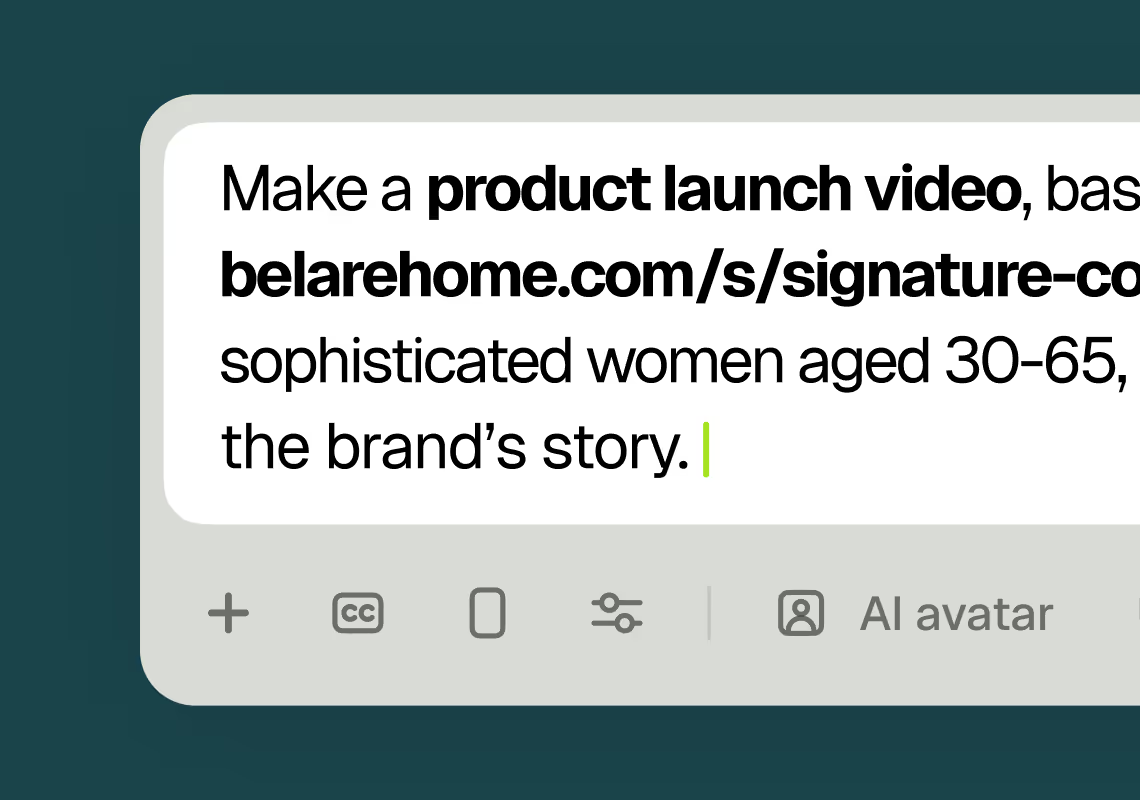
1Describe your video
Paste your promo brief, script, outline, or blog URL into Agent Opus.
 2
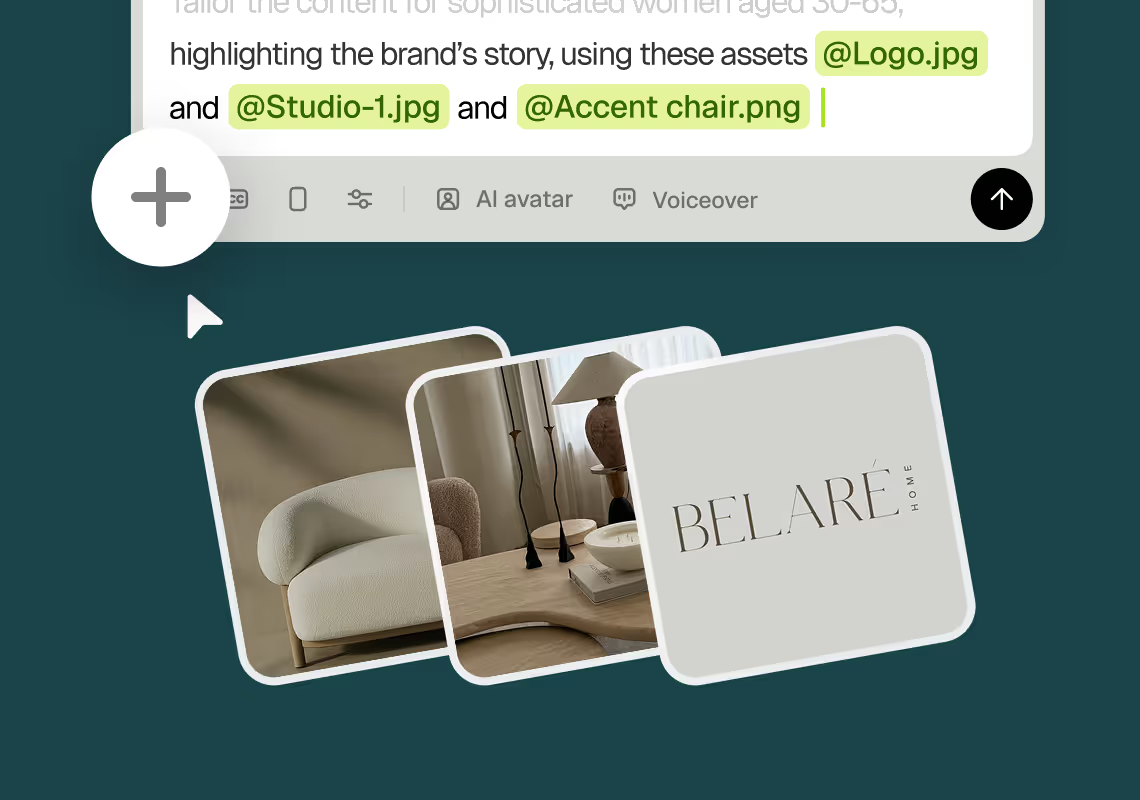
2Add assets and sources
Upload brand assets like logos and product images, or let the AI source stock visuals automatically.
 3
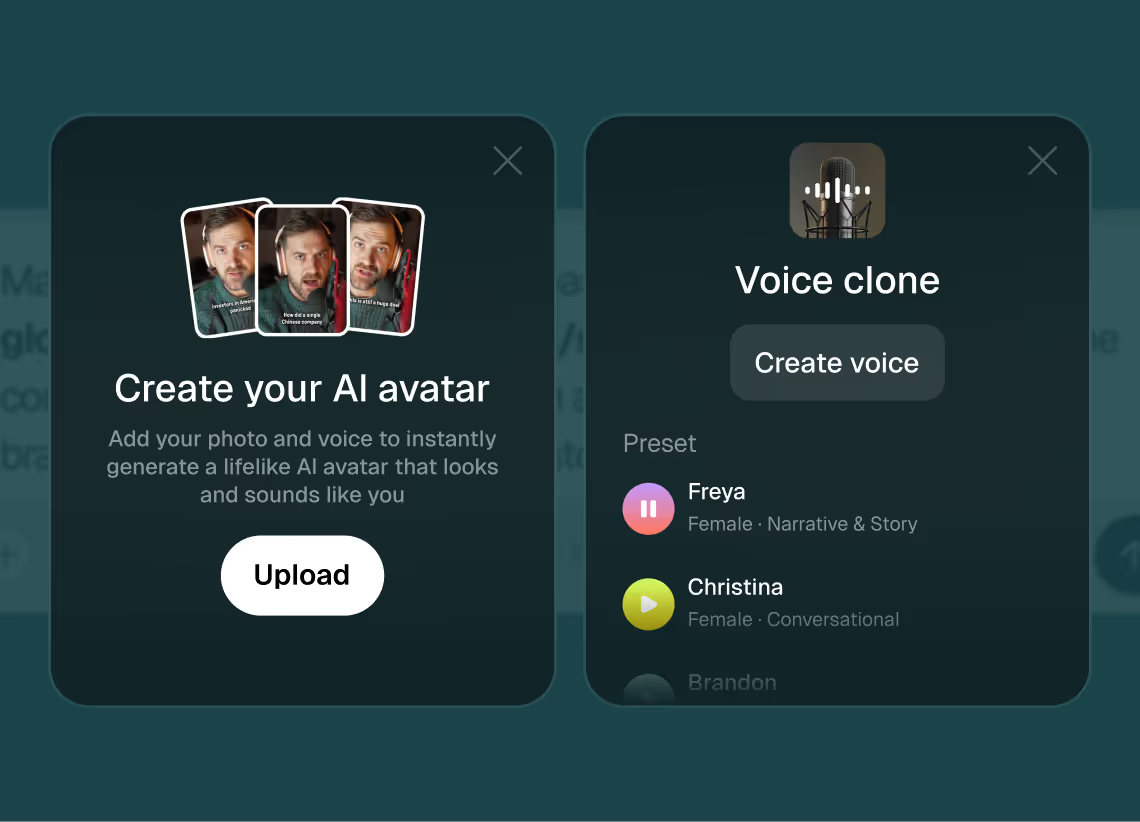
3Choose voice and avatar
Choose voice (clone yours or pick an AI voice) and avatar style (user or AI).
 4
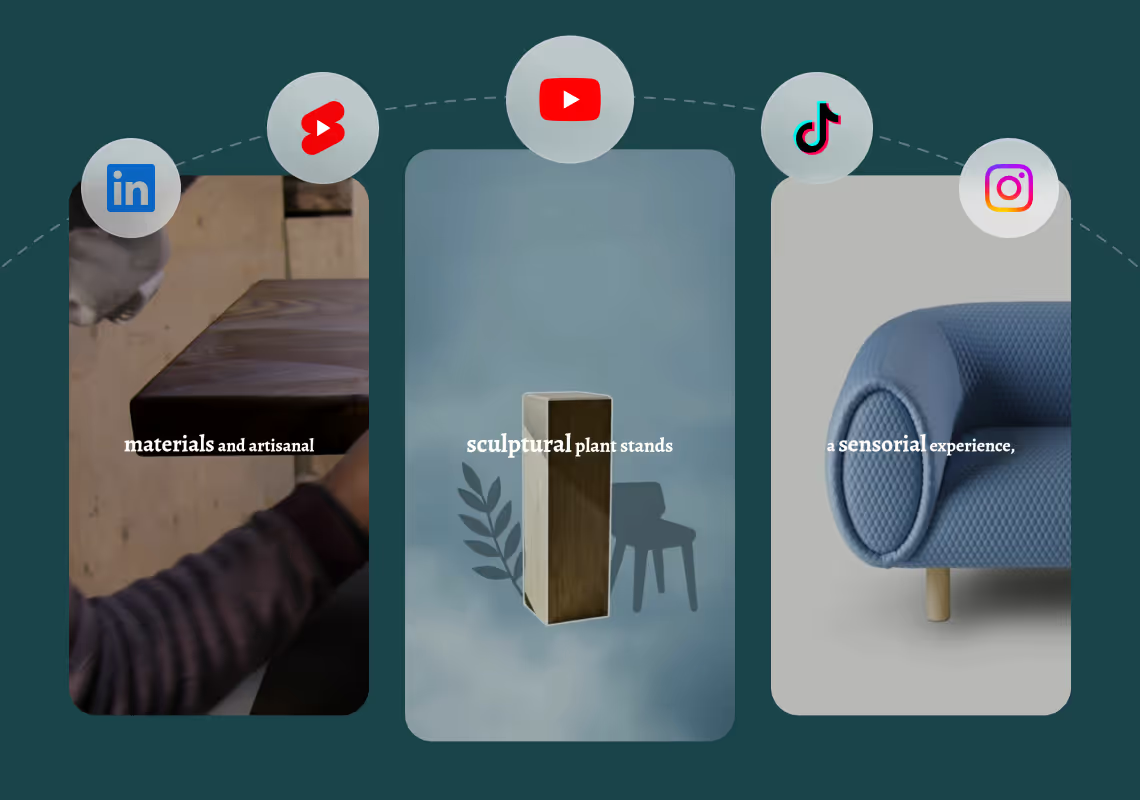
4Generate and publish-ready
Click generate and download your finished promo video in seconds, ready to publish across all platforms.


8 powerful features of Agent Opus' Realistic AI Video Generator
Prompt-to-Video Generation
Turn a one-line idea into a finished video. The agent handles structure, pacing, B-roll selection, and final assembly automatically.
Script and Outline Support
Paste a full script, drop in an outline with section headers, or supply a blog or article URL — Agent Opus reads any of them and builds a video around the content.
AI Voiceover and Voice Cloning
Pick from natural-sounding AI voices in 30+ languages, or clone your own voice once. Every video then ships with your authentic narration.
Beat-Synced Motion Graphics
Dynamic visuals that lock to the beat of your audio or the pacing of your script — kinetic typography, transitions, and effects, no manual keyframing required.
Automatic Captions and Subtitles
Burn-in captions for short-form, soft subtitles for long-form, and multi-language translations — all generated and synced automatically.
Multi-Aspect-Ratio Export
9:16, 1:1, and 16:9 outputs from one job, with intelligent reframing of text, motion graphics, and focal elements for each ratio.
Brand Asset Integration
Upload your logo, watermark, fonts, and color palette. Agent Opus applies them consistently across every video automatically.
Avatar and Talking Head Support
Add an AI avatar, your own video footage, or a synthetic spokesperson to any video — useful for explainers, ads, and personal-brand content.
Testimonials
This looks like a game-changer for us. We're building narrative-driven, visually layered content — and the ability to maintain character and motion consistency across episodes would be huge. If Agent Opus can sync branded motion graphics, tone, and avatar style seamlessly, it could easily become part of our production stack for short-form explainers and long-form investigative visuals.
srtaduck
I reviewed version a and I was very impressed with this version, it did very well in almost all aspects that users need, you would only have to make very small changes and maybe replace one of 2 of the pictures, but even saying that it could be used as is and still receive decent views or even chances at going viral depending on the story or the content the user chooses.
Jeremy
all in all LOVE THIS agent. I'm curious to see how I can push it (within reason) Just need to learn to get the consistency right with my prompts
Rebecca
Frequently Asked Questions
How does a realistic AI video generator create natural-looking motion and visuals?
Agent Opus uses advanced AI motion graphics engines to analyze your script or prompt and determine the optimal visual flow for each scene. Instead of applying generic templates, the system dynamically assembles scenes with context-aware transitions, pacing adjustments, and layered visual elements that mimic professional editing decisions. When you input a script or brief, Agent Opus identifies key narrative beats and matches them with appropriate motion styles—smooth fades for emotional moments, dynamic cuts for action sequences, subtle zooms for emphasis. The AI sources high-quality web images and royalty-free stock visuals that align with your content's tone and subject matter, then applies motion graphics that feel intentional rather than automated. This includes parallax effects, kinetic typography, animated overlays, and compositing techniques that create depth and visual interest. The result is a video where every transition, graphic element, and visual choice reinforces your message with the polish of hand-crafted production. Because Agent Opus handles scene assembly, pacing, and motion graphics in a single integrated workflow, you avoid the disjointed look of videos pieced together from separate tools. The system also adapts visual density and motion intensity based on your content type—educational videos receive clearer, more deliberate pacing, while promotional content gets energetic, attention-grabbing dynamics. This intelligent approach to motion and visual assembly is what makes Agent Opus a truly realistic AI video generator, delivering output that audiences perceive as professionally produced rather than algorithmically generated.
What makes voiceovers and avatars in a realistic AI video generator sound and look authentic?
Authenticity in AI-generated video comes from two core capabilities: voice cloning that captures your unique vocal characteristics and avatar rendering that avoids the uncanny valley. Agent Opus offers voice cloning technology that analyzes a short sample of your speech and replicates your tone, cadence, inflection patterns, and natural speaking rhythm. This means your realistic AI video generator can produce narration that sounds exactly like you recorded it in a studio, complete with the subtle vocal quirks that make speech feel human. If you prefer not to use your own voice, Agent Opus provides a library of lifelike AI voices trained on diverse speech patterns to avoid the robotic monotone common in older text-to-speech systems. These voices handle emphasis, pauses, and emotional coloring naturally, making your video's narration engaging rather than mechanical. For avatar options, you can upload video of yourself to create a custom avatar, or choose from AI-generated avatars designed with realistic facial movements, natural eye contact, and subtle micro-expressions. The key to realistic avatars is avoiding over-animation—Agent Opus avatars move and gesture in ways that feel restrained and genuine, not exaggerated or cartoonish. When combined with your script's pacing and the video's visual flow, these avatars create a sense of presence without distracting from your message. The system synchronizes lip movements, facial expressions, and body language with the voiceover track, ensuring that audio and visual elements feel cohesive. This level of integration is what separates a realistic AI video generator from tools that simply overlay static images with robotic narration. Whether you're creating educational content, product demos, or marketing videos, authentic voice and avatar options help your audience connect with your message as if you were speaking directly to them.
How does a realistic AI video generator handle different content types and maintain brand consistency?
Agent Opus adapts its visual assembly, pacing, and tone based on the content type you provide, whether that's a short promotional prompt, a detailed script, a structured outline, or a full blog article URL. For promotional content, the realistic AI video generator emphasizes dynamic motion graphics, energetic pacing, and attention-grabbing visuals that drive action. Educational or tutorial content receives clearer scene transitions, longer dwell times on key visuals, and a more measured pace that supports comprehension. Product demos get focused shots of features, benefits-driven narration, and visual emphasis on differentiators. This content-aware approach ensures your video feels purpose-built rather than generic. Brand consistency is maintained through asset integration—you can upload your logo, product images, brand colors, and custom visuals that Agent Opus incorporates throughout the video. The system intelligently places these assets in scenes where they reinforce your message without overwhelming the viewer. For example, your logo might appear subtly in lower thirds or end cards, while product shots are featured prominently during benefit explanations. If you're generating multiple videos for a campaign, Agent Opus can apply consistent visual themes, motion styles, and voiceover tones across all outputs, creating a cohesive brand experience. The realistic AI video generator also respects aspect ratio requirements for different platforms—vertical for TikTok and Reels, square for Instagram feed posts, horizontal for YouTube and LinkedIn. Each format is optimized not just for dimensions but for platform-specific viewing behaviors, ensuring your video performs well wherever it's published. This combination of content-type intelligence and brand asset integration means you can generate realistic videos at scale without sacrificing visual identity or message consistency, a critical advantage for marketers and creators managing multi-platform content strategies.
What are the best practices for prompts in a realistic AI video generator to get professional results?
Getting the most realistic output from Agent Opus starts with clear, detailed prompts that give the AI enough context to make smart creative decisions. Begin by defining your video's purpose and audience—are you educating, selling, entertaining, or building authority? A prompt like 'Create a video about productivity tips' is vague; 'Create a 60-second video for busy marketers explaining three time-saving automation tools, with energetic pacing and modern visuals' gives Agent Opus the direction it needs to assemble scenes, choose motion styles, and set the right tone. Include specifics about visual style if you have preferences—'clean and minimal,' 'bold and colorful,' 'professional and corporate'—but trust the realistic AI video generator to interpret these directions intelligently. If you're providing a script rather than a prompt, structure it with clear narrative beats: intro hook, main points with supporting details, and a strong call to action. Agent Opus uses these structural cues to determine scene length, transition timing, and visual emphasis. When uploading a blog article URL, ensure the content is well-organized with subheadings and clear sections, as the AI uses this structure to create a logical video flow. For voice and avatar choices, specify whether you want a formal or conversational tone, and whether an avatar should be present or if the video should be purely visual with voiceover. If you're cloning your own voice, provide a clean audio sample with minimal background noise and natural speech patterns—avoid overly scripted or monotone recordings. One advanced technique is to include scene-level guidance in longer scripts: 'Scene 1: Hook with fast cuts and bold text. Scene 2: Slow zoom on product image while explaining benefits. Scene 3: Customer testimonial with subtle background motion.' This level of detail helps the realistic AI video generator match your creative vision while still handling all the technical execution. Finally, iterate based on results—if your first video's pacing feels too fast or too slow, adjust your prompt's tone descriptors or script structure. Agent Opus learns from the context you provide, so the more specific and intentional your input, the more realistic and on-target your video output will be.