Report to Video Generator
Transform reports into engaging videos in minutes. Agent Opus is a report to video generator that converts data reports, business briefs, and analytical documents into professional, publish-ready videos. Describe your report or paste your content, and watch AI build a complete video with motion graphics, voiceover, and dynamic visuals. No editing, no timeline, no complexity. Just instant video content from your written reports that's ready to share across every platform.

Explore what's possible with Agent Opus

Reasons why creators love Agent Opus' Report to Video Generator
Make Insights Stick
Help your audience retain key findings through dynamic visuals instead of drowning in text-heavy documents.
Present With Confidence
Deliver consistent, professional reporting videos without worrying about on-camera presence or presentation skills.
Skip the Slide Deck Grind
Go from final report to polished video presentation without spending hours formatting slides or recording takes.
Reach Busy Decision-Makers
Get your reports consumed by executives who prefer watching a quick video over reading lengthy PDFs.
Scale Your Reporting
Produce monthly, quarterly, or weekly report videos at the same effort level as creating just one.
Turn Data Into Stories
Transform dense reports into compelling visual narratives that stakeholders actually watch and remember.
How to use Agent Opus’ Report to Video Generator
 1
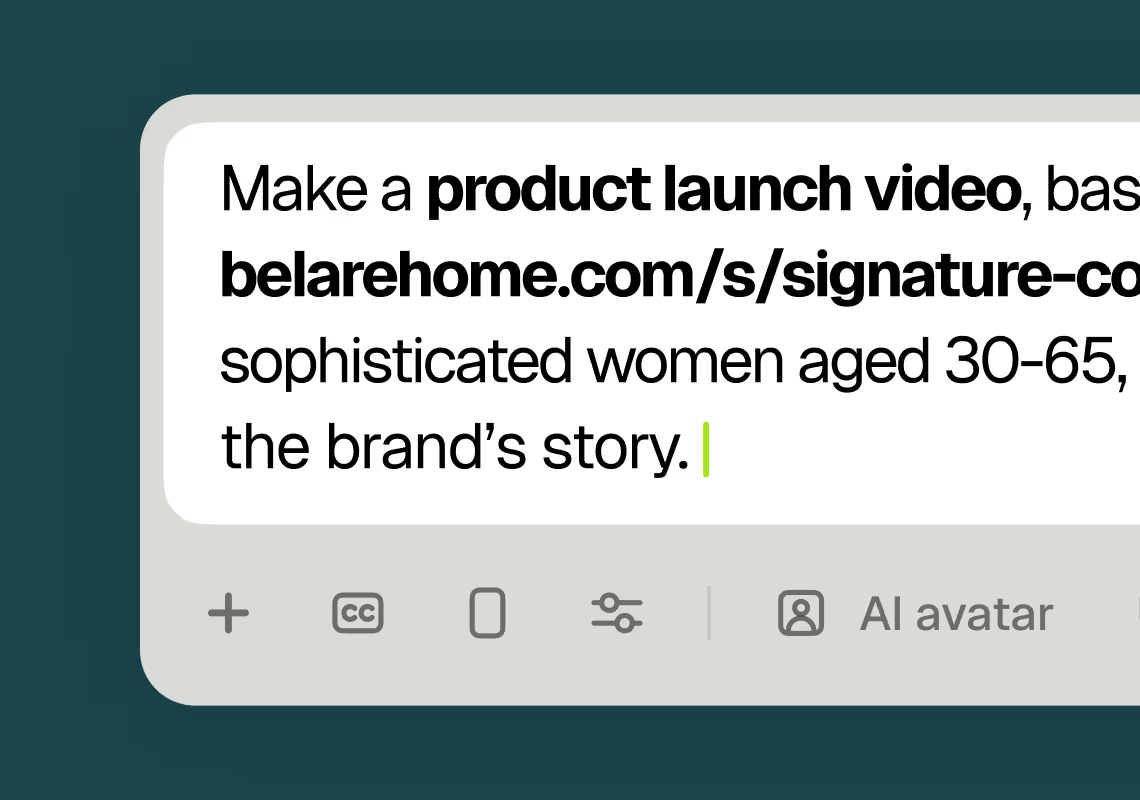
1Describe your video
Paste your promo brief, script, outline, or blog URL into Agent Opus.
 2
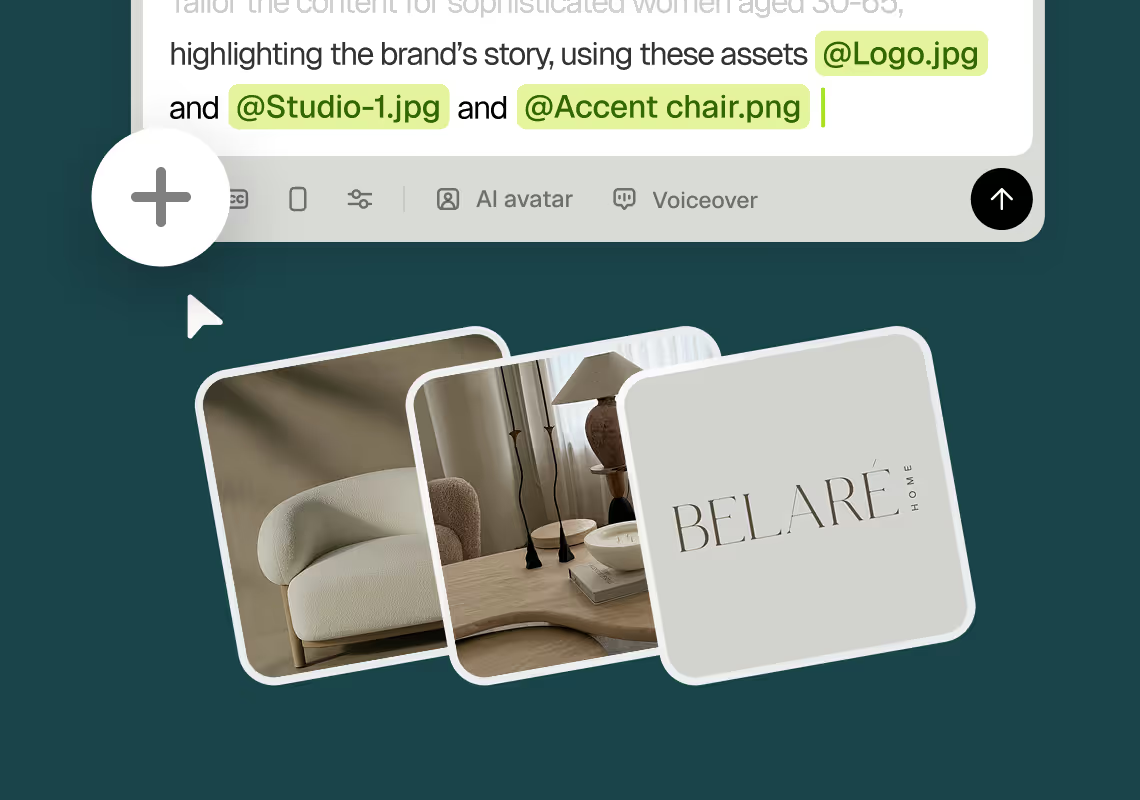
2Add assets and sources
Upload brand assets like logos and product images, or let the AI source stock visuals automatically.
 3
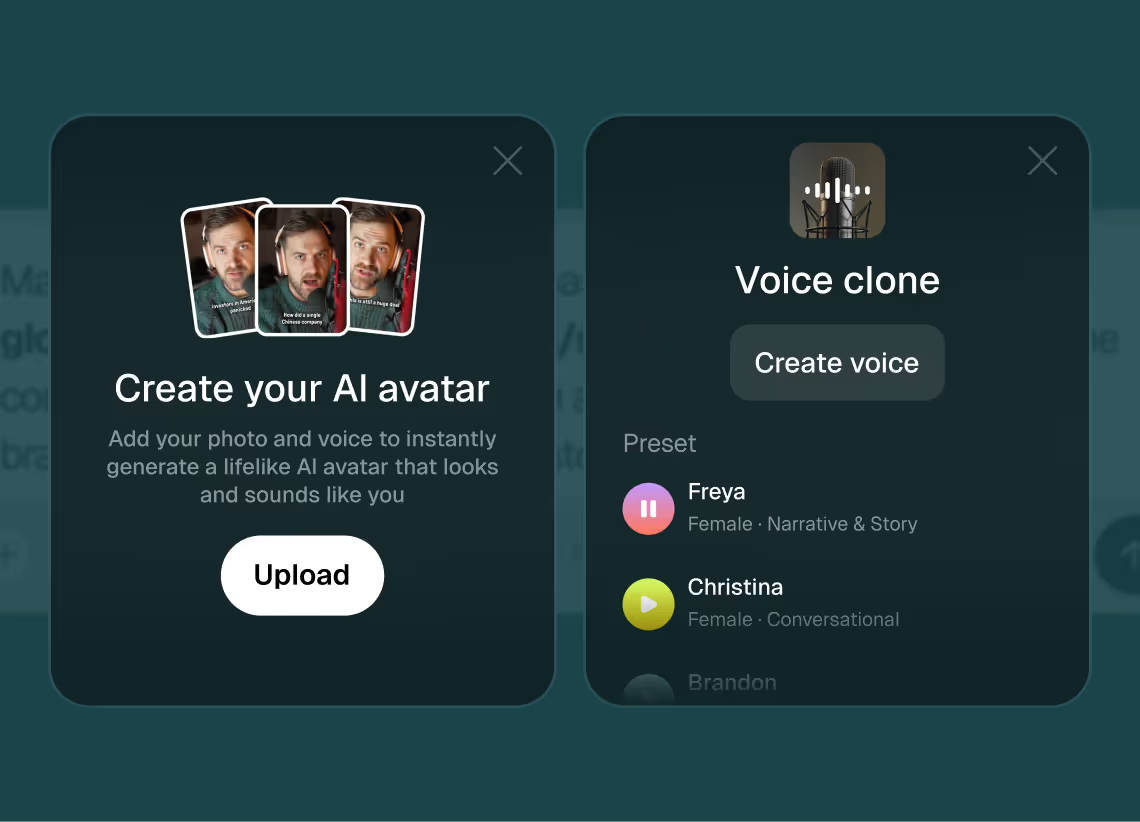
3Choose voice and avatar
Choose voice (clone yours or pick an AI voice) and avatar style (user or AI).
 4
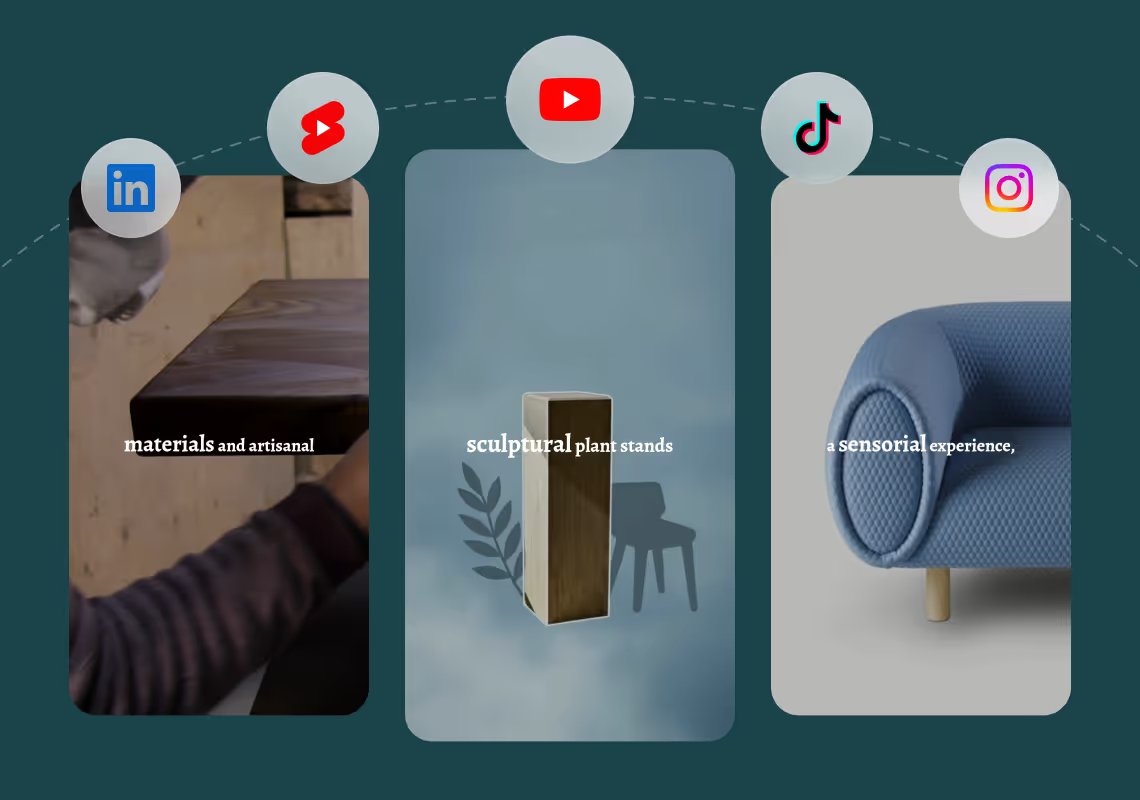
4Generate and publish-ready
Click generate and download your finished promo video in seconds, ready to publish across all platforms.


8 powerful features of Agent Opus' Report to Video Generator
Instant Report Visualization
Transform dense reports into engaging video presentations that highlight key findings and data points.
Data-Driven Narratives
Convert statistics and metrics from reports into compelling visual stories with animated charts and graphs.
Professional Report Delivery
Turn quarterly reports and analytics into polished videos with branded templates and dynamic transitions.
Executive Summary Videos
Generate concise video summaries from lengthy reports perfect for stakeholder presentations and briefings.
Automated Insight Extraction
AI identifies critical report sections and transforms them into focused video segments with voiceover narration.
Multi-Format Report Support
Upload PDFs, spreadsheets, or text documents and watch them become shareable video content instantly.
Branded Report Videos
Generate on-brand video reports with custom colors, logos, and fonts that match your corporate identity.
Visual Data Storytelling
Bring report findings to life with motion graphics that make complex information easy to understand.
Testimonials
Frequently Asked Questions
How does a report to video generator handle different report formats and structures?
Agent Opus processes reports through intelligent content analysis that adapts to your specific format and structure. When you input a quarterly business report, the system identifies key sections like executive summary, performance metrics, market analysis, and forward-looking statements. It recognizes data tables, percentage changes, comparative figures, and narrative insights. For research reports, it distinguishes methodology from findings, background from conclusions, and supporting evidence from primary claims. The report to video generator doesn't require standardized formatting. You can paste raw text from a Word document, upload a PDF with mixed content types, or simply describe your report's main points in a conversational prompt. The AI reads context clues like headers, bullet points, numbered lists, and paragraph structure to understand hierarchy and emphasis. It then maps this structure to video scenes, determining which insights deserve visual emphasis, where motion graphics will clarify data, and how to pace the narrative for maximum comprehension. Complex reports with multiple data sets get broken into digestible segments. Each metric or finding becomes its own scene with appropriate visual treatment. The system maintains logical flow while ensuring no critical insight gets buried. For reports heavy on numerical data, Agent Opus automatically generates animated charts, comparison graphics, and trend visualizations. Text-heavy analytical reports get balanced with relevant imagery, icons, and visual metaphors that reinforce written insights. The generator adapts voiceover pacing to match content density, slowing for complex concepts and maintaining energy through straightforward sections. This intelligent adaptation means you never need to pre-format reports or restructure content for video compatibility.
What are best practices for prompts when using a report to video generator?
Effective prompts for report to video generation balance detail with clarity, giving Agent Opus enough context to make smart creative decisions while avoiding over-specification that limits AI capabilities. Start by identifying your report type and primary audience. A prompt like 'quarterly sales report for executive team highlighting 23 percent revenue growth and new market expansion' immediately frames tone, complexity level, and key metrics. Include the report's core message or conclusion upfront. 'Research findings showing customer preference shifted from feature A to feature B due to mobile usage patterns' tells the system what narrative thread to emphasize throughout the video. Specify any critical data points that must appear, but let the AI determine visual treatment. Instead of 'show a bar chart comparing Q1 to Q4,' say 'compare Q1 and Q4 revenue performance' and trust the motion graphics engine to choose the most effective visualization. Mention brand requirements explicitly. 'Use our logo, maintain professional tone, include product screenshots from our dashboard' ensures visual consistency without micromanaging every frame. If your report has a specific structure you want preserved, outline it: 'Start with problem statement, show three supporting data points, conclude with recommended action.' This guides scene assembly while leaving creative execution to the AI. For voice and pacing, indicate audience expertise level. 'Technical audience familiar with industry terminology' produces different narration than 'general stakeholder overview requiring plain language explanations.' When working from existing report documents, you can simply upload and add brief context: 'Annual impact report for nonprofit donors, emphasize community outcomes over operational details.' The generator reads the full document but uses your guidance to prioritize content. Avoid overly prescriptive prompts that specify exact scene counts, transition types, or visual styles. The report to video generator's strength is intelligent interpretation. Focus your prompt on what matters strategically and let AI handle tactical execution.
Can a report to video generator maintain consistent branding across multiple report videos?
Agent Opus delivers exceptional brand consistency for organizations producing regular report videos. The system learns and applies your visual identity across every video generation, ensuring quarterly reports, monthly updates, and annual summaries all feel cohesive and professionally aligned. Brand consistency starts with asset integration. Upload your logo once and it appears in the same position across all report videos. Specify color schemes and the motion graphics engine applies your palette to charts, transitions, and visual elements automatically. Product screenshots, team photos, and facility images you provide get intelligently incorporated based on report content, maintaining visual familiarity while staying contextually relevant. Voice consistency is particularly powerful for report to video generation. Clone your voice or a designated company spokesperson's voice, and every report video uses that same narration style. Stakeholders hear the same trusted voice whether they're watching Q1 results or year-end summaries. This vocal consistency builds recognition and authority over time. For organizations with established report formats, Agent Opus recognizes structural patterns. If your quarterly reports always open with an executive summary, present departmental updates, then close with forward guidance, the system learns this flow and applies it consistently. New reports automatically follow the established structure without manual templating. The report to video generator also maintains tonal consistency. Specify once that your reports should be 'data-driven but optimistic' or 'analytical and measured,' and that tone carries through subsequent generations. The AI adjusts language, pacing, and visual energy to match your brand voice across all content. For multi-report series, you can reference previous videos. 'Generate Q3 report in the same style as Q2' tells the system to match visual treatment, pacing, and structural approach. This creates seamless series where each installment feels like a natural continuation. Brand consistency extends to platform optimization. If your organization primarily shares report videos on LinkedIn, Agent Opus remembers this context and prioritizes aspect ratios, length, and visual density appropriate for that platform across all future report generations.
How does a report to video generator handle technical or data-heavy content without oversimplifying?
Agent Opus excels at preserving technical accuracy and data integrity while making complex reports visually accessible. The report to video generator doesn't dumb down content; it translates sophistication into engaging visual language that respects audience intelligence. For technical reports with specialized terminology, the system maintains precise language in voiceover while adding visual context that aids comprehension. A financial report discussing EBITDA margins, debt-to-equity ratios, and cash flow projections keeps those exact terms in narration while generating motion graphics that illustrate what those metrics mean in practice. Visual aids support understanding without replacing technical precision. Data-heavy sections get intelligent treatment through layered information presentation. Instead of flashing a complex table on screen, Agent Opus breaks multi-variable data into sequential reveals. A market analysis comparing five product lines across four metrics becomes a series of focused comparisons, each highlighting one relationship before building to the complete picture. This approach maintains data completeness while preventing cognitive overload. The motion graphics engine creates visualizations appropriate to data complexity. Simple percentage changes might get bold animated numbers. Multi-year trend analysis receives line graphs with annotated inflection points. Comparative performance across business units gets matrix layouts or grouped bar charts. The system matches visualization sophistication to data sophistication, never forcing complex information into overly simple graphics. For reports requiring nuanced interpretation, Agent Opus preserves qualifying language and contextual caveats. A research report noting 'statistically significant but modest effect size' or 'correlation without established causation' maintains those important distinctions in narration. The video doesn't oversell findings or strip away the careful language that makes technical reports credible. Technical accuracy extends to sourced visuals. When generating videos about scientific research, medical findings, or engineering reports, the system sources imagery that's contextually appropriate and technically accurate rather than generic stock photos. A biotech research report gets cellular imagery, lab equipment, and molecular structures, not just people in lab coats. The report to video generator also respects pacing requirements for complex content. Dense analytical sections get more time per concept. The voiceover slows slightly, visual elements stay on screen longer, and scene transitions allow processing time. This ensures technical audiences can follow sophisticated arguments without feeling rushed or patronized by oversimplified presentation.