Scene Generator
Agent Opus scene generator turns your text into complete, publish-ready video scenes in seconds. Describe what you need or paste a script, and watch AI assemble motion graphics, source visuals, add voiceover, and deliver social-ready output. No timeline, no editing, no manual asset hunting. One prompt creates one finished video scene, ready to share on TikTok, Reels, YouTube Shorts, or LinkedIn. Perfect for creators, marketers, and founders who need professional video scenes without production overhead.

Explore what's possible with Agent Opus

Reasons why creators love Agent Opus' Scene Generator
Experiment Fearlessly
Try bold scene ideas and iterate fast, knowing you can pivot without wasting time or resources.
Scale Without Burnout
Produce dozens of scene variations for testing or campaigns without draining your creative energy or budget.
Consistent Visual Flow
Every scene transitions smoothly with matching tone and style, so your story feels cohesive from start to finish.
Launch-Ready in Minutes
Go from concept to polished multi-scene video without waiting on editors, studios, or rendering queues.
On-Brand in Every Frame
Maintain your unique visual identity across all scenes, so audiences recognize your work instantly.
Skip the Learning Curve
Create professional multi-scene videos without mastering complex editing software or hiring specialists.
How to use Agent Opus’ Scene Generator
 1
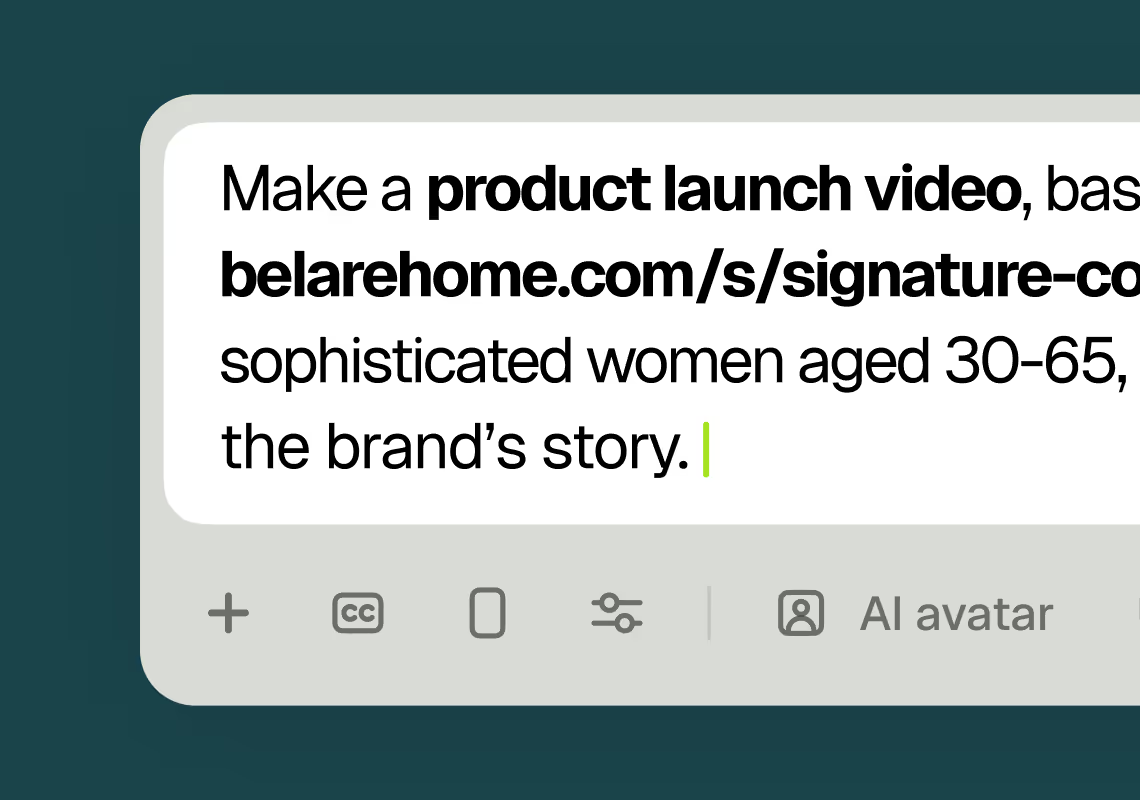
1Describe your video
Paste your promo brief, script, outline, or blog URL into Agent Opus.
 2
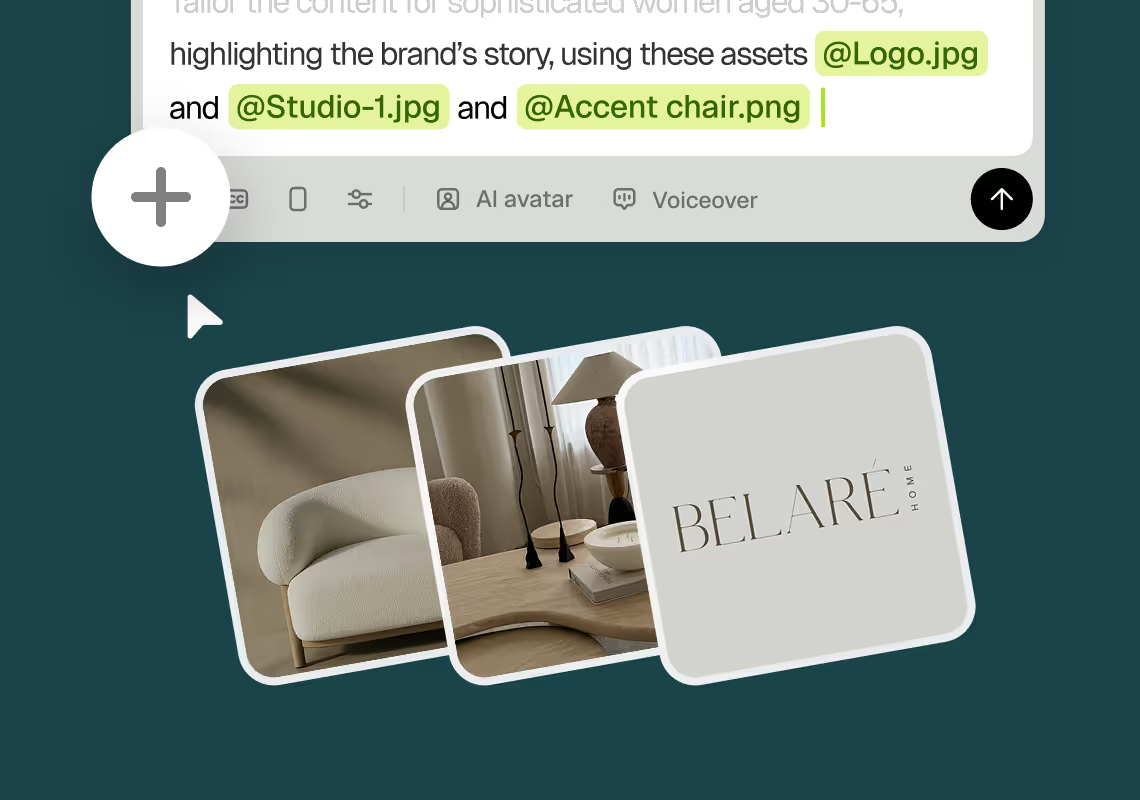
2Add assets and sources
Upload brand assets like logos and product images, or let the AI source stock visuals automatically.
 3
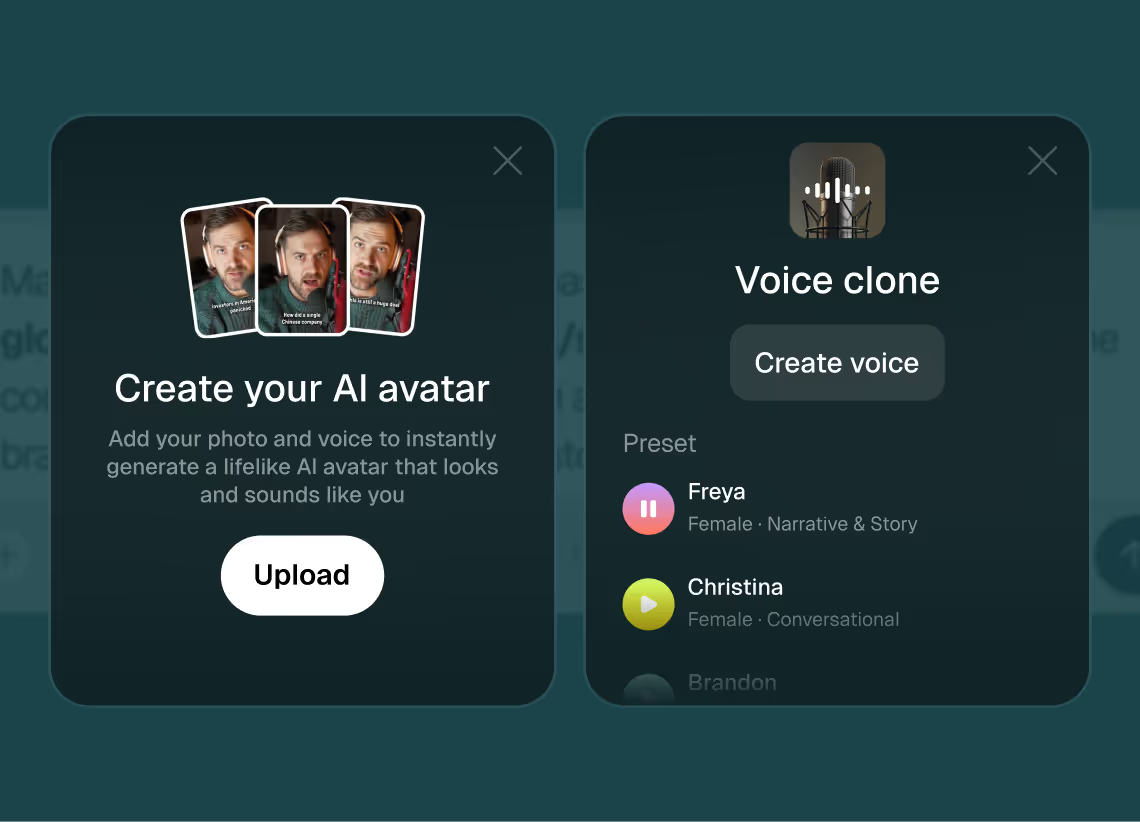
3Choose voice and avatar
Choose voice (clone yours or pick an AI voice) and avatar style (user or AI).
 4
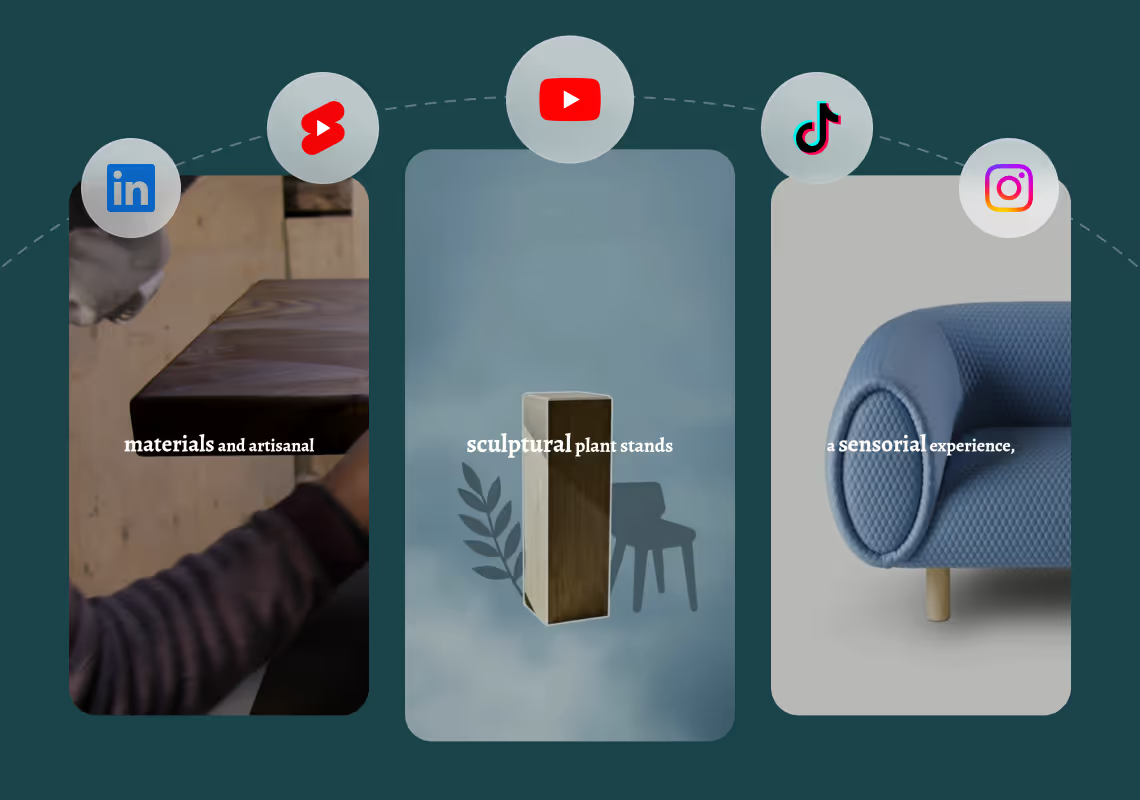
4Generate and publish-ready
Click generate and download your finished promo video in seconds, ready to publish across all platforms.


8 powerful features of Agent Opus' Scene Generator
Prompt to Scene
Type a description and watch Agent Opus generate a complete scene with visuals and motion.
Instant Iteration
Regenerate any scene with a revised prompt until you achieve the exact look you want.
Background Generation
From cityscapes to fantasy worlds, generate rich environments that match your scene's setting.
Dynamic Camera Angles
Agent Opus automatically applies cinematic camera movements to bring each scene to life.
Multi-Scene Sequences
Chain multiple prompts together to build narrative arcs with seamless scene transitions.
Scene Duration Control
Set how long each generated scene plays to match pacing and storytelling needs.
Lighting and Mood Control
Specify tone in your prompt and the generator adjusts lighting and color grading instantly.
Character and Object Placement
Describe subjects and their positions, and the scene generator renders them accurately in frame.
Testimonials
Awesome output, Most of my students and followers could not catch that it was using Agent Opus. Thank you Opus.
Wealth with Gaurav
I reviewed version a and I was very impressed with this version, it did very well in almost all aspects that users need, you would only have to make very small changes and maybe replace one of 2 of the pictures, but even saying that it could be used as is and still receive decent views or even chances at going viral depending on the story or the content the user chooses.
Jeremy
i got to say honestly really impressed me with the subtle click sound on each of the edits, it may seem little but that polish honestly makes it seem near the quality to publish without any further edits
Tony
Frequently Asked Questions
How does the scene generator interpret my text prompt and decide what visuals to show?
Agent Opus scene generator uses advanced natural language processing to parse your prompt or script and identify key visual concepts, actions, and narrative beats. When you describe a scene like 'show a smartphone displaying our app dashboard with animated metrics rising,' the AI breaks that into discrete visual elements: the device, the interface, the specific data visualization, and the motion behavior. It then sources or generates assets that match each element and assembles them with appropriate motion graphics, transitions, and timing. The system prioritizes clarity and narrative flow, so if your prompt mentions a sequence of events, the scene generator stages them in logical order with smooth transitions. For brand-specific content, upload your logos or product images and reference them in your prompt. The AI will integrate them naturally into the scene composition. If your description is abstract or conceptual, the scene generator interprets metaphorically and selects visuals that convey the intended message. For example, 'growth and momentum' might trigger upward motion graphics, rising charts, or forward-moving imagery. The more specific your prompt, the more precisely the scene matches your vision, but the AI handles ambiguity gracefully by defaulting to visually engaging, on-message choices. You can refine results by adding detail to your prompt: specify colors, camera angles, pacing, or emotional tone. The scene generator adapts in real time, so iterating on prompts is fast and requires no technical knowledge.
Can I control scene pacing, transitions, and the order of visual elements in the generated video?
Yes, the scene generator respects narrative structure and pacing cues embedded in your prompt or script. If you write a numbered list or use sequence words like 'first,' 'then,' 'next,' or 'finally,' Agent Opus interprets those as staging instructions and arranges visuals in that order. For example, a prompt like 'First show the problem: cluttered desk. Then reveal the solution: our app organizing tasks. Finally, show the result: clean workspace and happy user' will generate three distinct visual beats with transitions between them. Pacing is inferred from sentence length and tone. Short, punchy sentences produce quick cuts and energetic motion graphics. Longer, descriptive sentences slow the pace and allow visuals to linger. If you want a specific duration for a scene element, include timing hints like 'linger on the product shot for a few seconds' or 'quick transition to the next point.' The AI adjusts motion speed and hold times accordingly. Transitions are selected based on narrative context. Smooth fades work for emotional or reflective moments, while quick cuts or wipes suit high-energy or instructional content. You can also specify transition style in your prompt: 'use a zoom transition between scenes' or 'fade to black before the final message.' The scene generator applies these directives without requiring manual keyframe editing. For maximum control, write your prompt as a mini shot list with explicit instructions for each visual beat. Agent Opus will honor that structure while still handling the technical execution, asset sourcing, and motion graphics automatically.
What types of visuals can the scene generator source or create, and how do I ensure they match my brand?
Agent Opus scene generator pulls from a vast library of royalty-free stock images, video clips, and motion graphics, and it can also generate custom AI visuals when stock assets don't match your prompt. For generic concepts like 'teamwork,' 'innovation,' or 'growth,' the AI selects high-quality stock footage that aligns with modern visual trends. For specific objects, products, or branded elements, you upload your own assets and reference them in your prompt. For example, if you upload your product image and write 'show our smartwatch on a wrist with fitness metrics appearing,' the scene generator composites your product into a realistic scene with animated overlays. The AI handles perspective, lighting, and integration so the result looks professionally produced. For abstract or conceptual visuals, the scene generator creates motion graphics, animated text, iconography, and data visualizations that convey your message without relying on literal imagery. If your prompt says 'visualize data flowing from devices to the cloud,' you'll get animated network diagrams, particle effects, and stylized cloud icons. To maintain brand consistency, upload your logo, color palette reference, or style guide images. The AI will match colors, fonts, and visual tone across all generated scenes. You can also specify style in your prompt: 'use bold, minimalist graphics with our brand blue' or 'match the aesthetic of modern SaaS product demos.' The scene generator adapts its visual choices to fit that direction. If you need human talent, the AI avatar feature lets you add a presenter without hiring actors or filming. Choose from AI avatars or upload footage of yourself, and the scene generator integrates the avatar naturally into the scene composition with appropriate framing and background visuals.
How does voiceover work in the scene generator, and can I use my own voice or script?
Agent Opus scene generator offers two voiceover paths: AI-generated voices and voice cloning from your own audio. For AI voices, select from a library of natural-sounding options across different tones, accents, and speaking styles. The AI reads your script with appropriate pacing, emphasis, and emotional inflection based on the content. If your script includes instructional steps, the voice adopts a clear, tutorial tone. For promotional content, it shifts to energetic and persuasive. Punctuation and sentence structure guide pacing, so short sentences produce snappier delivery while longer ones slow down for clarity. For voice cloning, upload a sample of your voice (as little as 30 seconds of clear audio), and Agent Opus generates a voice model that mimics your tone, cadence, and speaking style. Then provide your script, and the scene generator produces narration in your cloned voice, perfectly synced to the visuals. This is ideal for personal brands, thought leadership content, or any video where authentic voice presence matters. The cloned voice handles pronunciation, emphasis, and natural pauses just like you would, so the result sounds genuinely human. If you prefer silent videos with text overlays, simply omit the voiceover option and the scene generator will emphasize visual storytelling and on-screen text. You can also mix approaches: use AI voice for some scenes and your cloned voice for others, or layer background music without narration. The scene generator adapts to whatever audio strategy you choose and syncs it seamlessly with the visual assembly. All voiceover is generated in real time during scene creation, so there's no separate recording, editing, or syncing step.