Sociology Explainer Video Maker
Turn sociology concepts into engaging explainer videos instantly. Agent Opus is a sociology explainer video maker that transforms your prompts, scripts, or articles into complete videos with AI motion graphics, voiceover, and dynamic visuals. Describe social theories, research findings, or cultural phenomena, and get a publish-ready video in minutes. No timeline, no editing, no stock footage hunting. Just prompt to video for educators, content creators, and social science communicators who need professional sociology content fast.

Explore what's possible with Agent Opus

Reasons why creators love Agent Opus' Sociology Explainer Video Maker
Reach More Learners
Make sociology accessible to visual learners, remote students, and anyone who needs to revisit tough topics at their own pace.
Complex Ideas Made Clear
Turn dense sociological theories into visuals your students actually understand and remember long after class ends.
No Camera, No Problem
Deliver professional sociology content without filming yourself or hiring a production crew to explain every concept.
Lecture Prep in Half the Time
Generate polished sociology explainers in minutes so you can focus on teaching instead of wrestling with video software.
Students Stay Engaged
Hold attention with dynamic visuals that make abstract concepts like stratification and socialization feel real and relatable.
Consistent Quality Every Time
Maintain the same clear, on-brand style across all your sociology videos so your course library feels cohesive and credible.
How to use Agent Opus’ Sociology Explainer Video Maker
 1
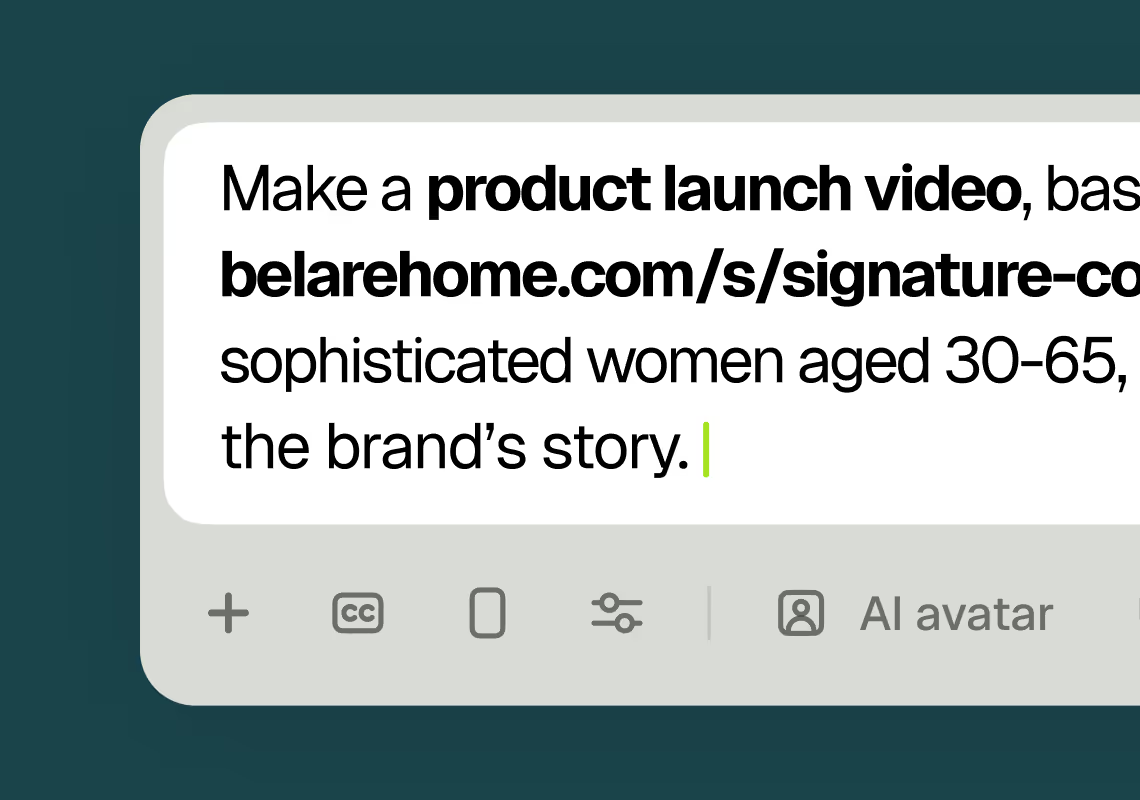
1Describe your video
Paste your promo brief, script, outline, or blog URL into Agent Opus.
 2
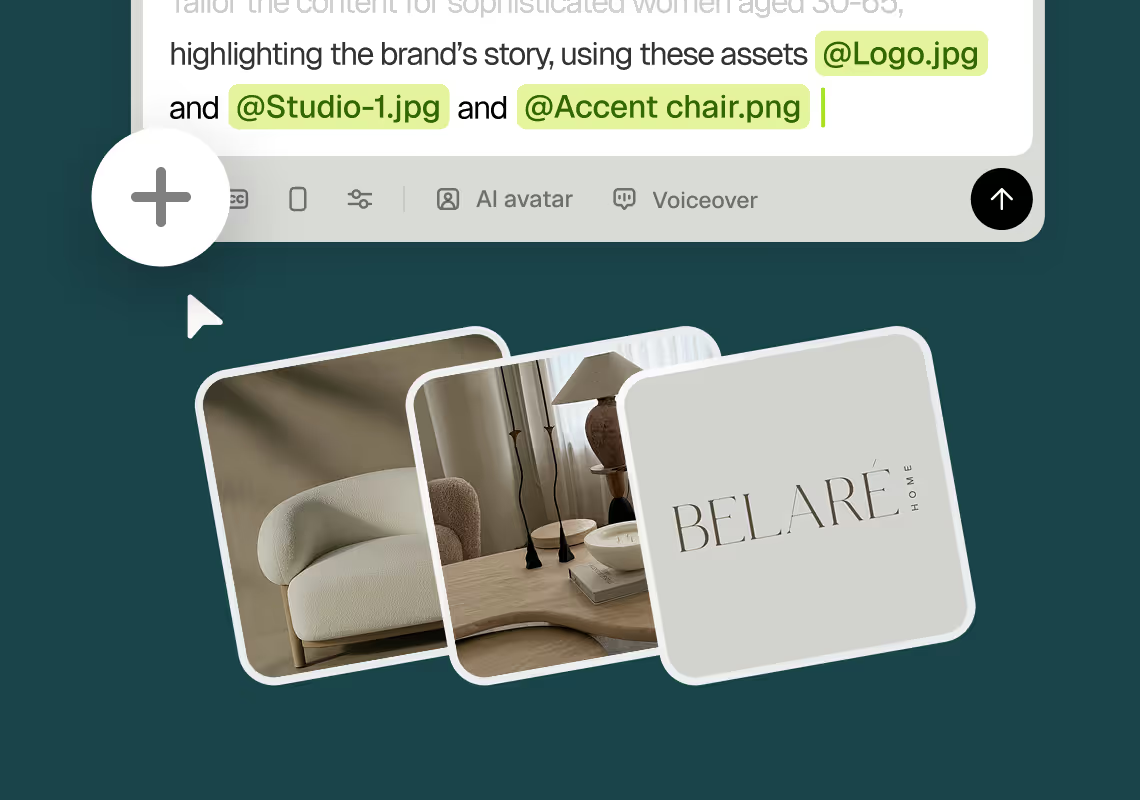
2Add assets and sources
Upload brand assets like logos and product images, or let the AI source stock visuals automatically.
 3
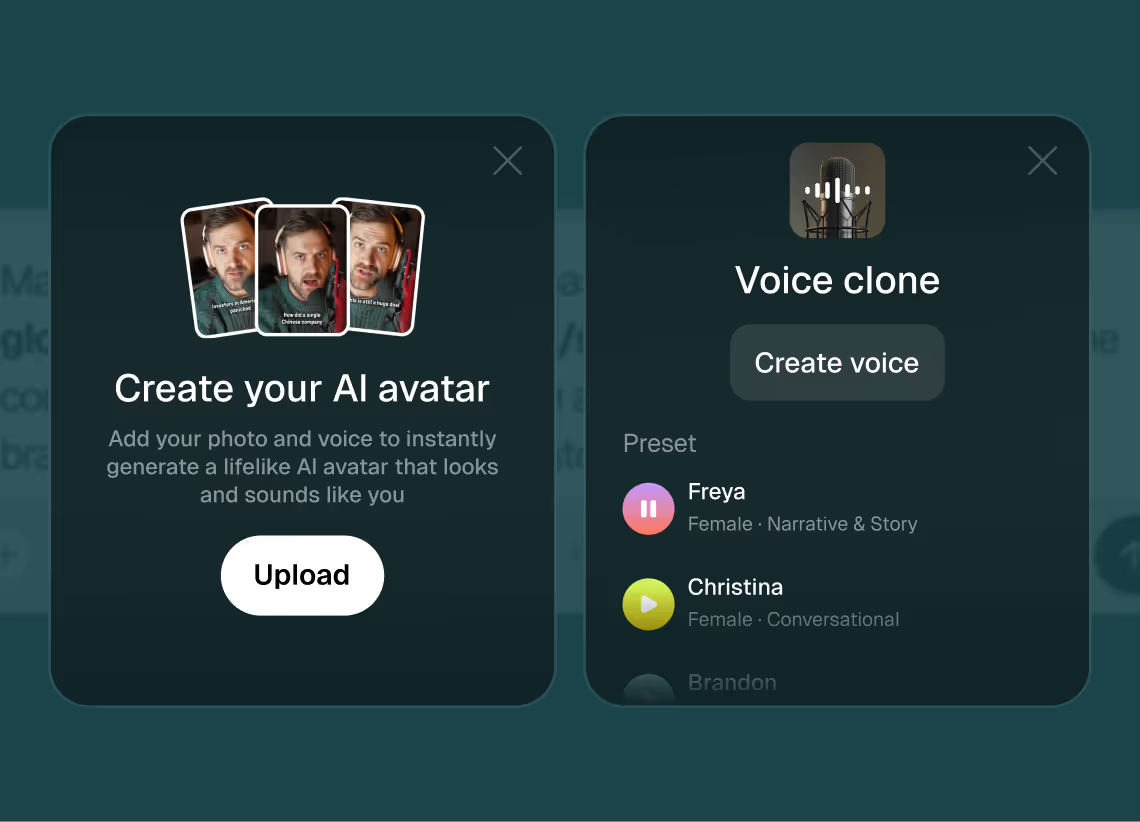
3Choose voice and avatar
Choose voice (clone yours or pick an AI voice) and avatar style (user or AI).
 4
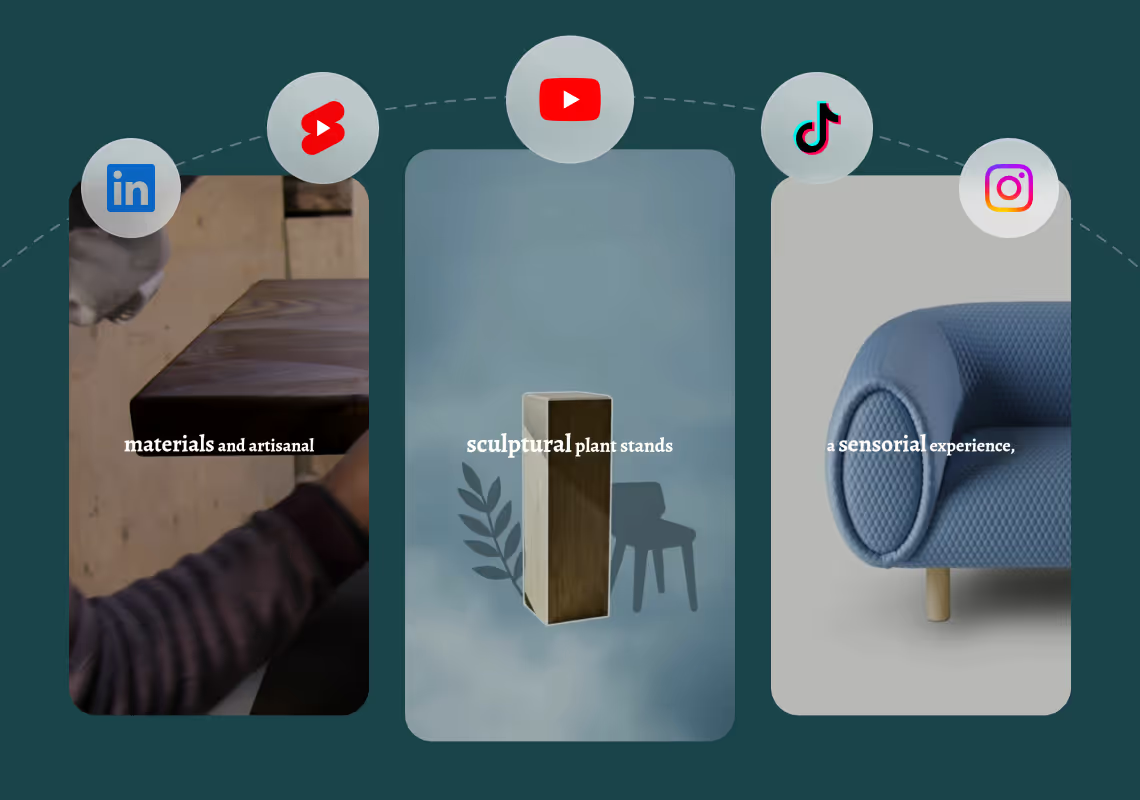
4Generate and publish-ready
Click generate and download your finished promo video in seconds, ready to publish across all platforms.


8 powerful features of Agent Opus' Sociology Explainer Video Maker
Animated Social Models
Bring abstract ideas like stratification, deviance, and institutions to life with motion graphics.
Concept to Video in Seconds
Turn sociology theories and frameworks into clear visual explainers without filming or editing.
Visual Diagrams and Graphics
Automatically create charts, models, and infographics that illustrate sociological concepts and data.
AI Voiceover Narration
Generate natural voiceovers that explain social structures, norms, and research findings with clarity.
Script to Explainer Video
Paste your sociology lesson script and watch it transform into an engaging educational video.
Fast Turnaround for Educators
Create lecture supplements and study aids in minutes, not hours of manual video production.
Branded Educational Content
Generate sociology explainers that match your school or channel's colors, fonts, and style.
Multi-Topic Video Series
Produce consistent explainer videos across multiple sociology topics for courses or social media.
Testimonials
This looks like a game-changer for us. We're building narrative-driven, visually layered content — and the ability to maintain character and motion consistency across episodes would be huge. If Agent Opus can sync branded motion graphics, tone, and avatar style seamlessly, it could easily become part of our production stack for short-form explainers and long-form investigative visuals.
srtaduck
I reviewed version a and I was very impressed with this version, it did very well in almost all aspects that users need, you would only have to make very small changes and maybe replace one of 2 of the pictures, but even saying that it could be used as is and still receive decent views or even chances at going viral depending on the story or the content the user chooses.
Jeremy
all in all LOVE THIS agent. I'm curious to see how I can push it (within reason) Just need to learn to get the consistency right with my prompts
Rebecca
Frequently Asked Questions
How does a sociology explainer video maker handle complex theoretical concepts versus simple definitions?
Agent Opus adapts visual complexity based on your input depth and structure. When you provide a brief prompt like 'explain functionalism in 60 seconds,' the sociology explainer video maker generates a concise overview with foundational visuals and simplified motion graphics. The system identifies core concepts, creates clear metaphors, and assembles a tight narrative arc suitable for social media or quick introductions. For complex theoretical frameworks, provide a detailed script or outline covering multiple dimensions. Describe functionalism's historical context, key theorists like Durkheim and Parsons, core assumptions about social equilibrium, critiques from conflict theory, and contemporary applications. The system responds by generating longer-form content with layered visuals, sequential concept builds, comparative diagrams, and paced narration that allows viewers to absorb dense material. The AI motion graphics engine creates visual hierarchies that distinguish between main theories, sub-concepts, and supporting examples. For research-heavy content, paste findings with data points and methodology notes. Agent Opus will generate charts, demographic visualizations, and statistical representations automatically. The sociology explainer video maker interprets your input structure as a signal for content depth, then matches visual complexity, pacing, and narrative density accordingly. This means the same tool serves both quick social theory explainers for general audiences and comprehensive lecture supplements for advanced students, all without manual adjustment of timelines or graphics.
What are best practices for writing prompts that generate effective sociology explainer videos?
Effective prompts for a sociology explainer video maker combine clear concept identification, audience context, and desired visual emphasis. Start by naming the specific sociological concept or phenomenon you want explained. Instead of 'make a video about culture,' write 'explain cultural relativism and its contrast with ethnocentrism for undergraduate students.' This specificity helps Agent Opus select appropriate terminology, examples, and visual metaphors. Include your target audience because sociology content for TikTok differs dramatically from graduate seminar supplements. A prompt like 'explain social stratification for high school students in 90 seconds' generates accessible language, relatable examples like school cliques or neighborhood differences, and simplified graphics. The same concept for academic audiences might include Marx, Weber, Bourdieu references, and complex diagrams of capital forms. Specify visual priorities when certain elements matter most. If you want data visualization prominent, write 'create a sociology explainer showing income inequality trends with emphasis on statistical charts and demographic breakdowns.' For theory-focused content, note 'visualize symbolic interactionism with emphasis on Mead's concepts of self and social interaction through animated scenarios.' Provide structure cues by outlining sections: 'Introduction to deviance, Merton's strain theory, labeling theory perspective, real-world applications, conclusion.' This guides the sociology explainer video maker's scene assembly and pacing. Include tone preferences like 'conversational and accessible' versus 'formal academic presentation.' When using scripts or articles as input, ensure they contain concrete examples alongside abstract theory. The system generates stronger visuals when it has both conceptual frameworks and real-world illustrations to work with. Avoid overly broad prompts that lack focus, and remember that more context in your input produces more targeted, effective sociology explainer videos.
Can a sociology explainer video maker maintain consistent visual style and branding across multiple videos for a course or series?
Agent Opus supports brand consistency essential for educational series and course content. When creating sociology explainer videos for a multi-part series, you can integrate institutional logos, department branding, and course-specific visual elements that persist across all generated videos. Upload your university logo, department color palette, or custom intro graphics once, then reference them in subsequent prompts. The sociology explainer video maker applies these assets consistently, ensuring every video in your social theory series or research methods course maintains unified branding. For voice consistency, use the voice cloning feature to create a signature instructor voice. Record a short sample of your natural teaching voice, and Agent Opus replicates it across all sociology explainer videos. This creates continuity for students who recognize your voice across lectures on functionalism, conflict theory, symbolic interactionism, and other topics. The same applies to avatar choices if you use on-screen presenters. Select or create an avatar once, then reuse it throughout your series for consistent instructor presence. Visual style consistency extends to motion graphics approaches. If your first sociology explainer video uses a particular animation style for illustrating social structures, subsequent videos can maintain that visual language. Describe your preferred style in prompts: 'use the same minimalist diagram style as previous videos' or 'maintain the animated character approach from the deviance explainer.' The system interprets these references and applies consistent visual treatments. For course sequences, create a master prompt template that includes your branding requirements, preferred voice, avatar choice, and visual style notes. Modify only the sociology content for each new topic while keeping formatting elements constant. This approach lets you build a cohesive library of sociology explainer videos that feel like a unified educational product rather than disconnected one-offs.
How does a sociology explainer video maker handle sensitive topics like inequality, discrimination, or social justice issues?
Agent Opus approaches sensitive sociology topics with the tone, framing, and visual choices you specify in your input. When creating explainer videos about inequality, discrimination, systemic racism, gender dynamics, or other social justice issues, the sociology explainer video maker relies on your script, prompt, or article to establish appropriate framing and language. If you provide academic, research-based language that presents multiple theoretical perspectives, the system generates content reflecting that balanced approach. For example, a prompt like 'explain institutional racism using sociological definitions, historical context, and contemporary research findings' produces content grounded in scholarly frameworks rather than opinion. The AI motion graphics avoid stereotypical imagery when you guide it properly. Specify visual approaches in your prompt: 'illustrate income inequality using abstract data visualizations and statistical charts rather than individual representations' or 'show gender socialization through neutral animated scenarios without reinforcing stereotypes.' This direction helps the system select appropriate stock imagery and generate motion graphics that support educational goals without problematic visuals. Voice tone matters significantly for sensitive content. Choose narration style that matches your educational intent, whether that is clinical and research-focused, empathetic and humanizing, or critically analytical. The sociology explainer video maker adapts pacing and emphasis based on your script structure. If you slow down to define terms carefully or pause to acknowledge complexity, the generated video reflects that thoughtful pacing. For controversial or contested topics, your input should acknowledge multiple perspectives. Write scripts that present conflict theory and functionalist views on inequality, or compare liberal and radical feminist analyses. Agent Opus generates visuals and narration that represent these different frameworks as you have structured them. The system does not inject political positions or value judgments beyond what your source material contains. This makes you, the educator or creator, responsible for framing, which is appropriate for sociology content where theoretical perspective and evidence-based analysis matter deeply. Always review generated content for sensitive topics to ensure visuals and narration align with your educational standards and institutional guidelines.