Text to Animation AI
Turn any text into animated videos in minutes. Agent Opus is a text to animation AI that transforms prompts, scripts, outlines, or blog URLs into publish-ready animated content. No timeline. No manual keyframing. Just describe what you want, and Agent Opus generates motion graphics, dynamic visuals, and social-ready animations automatically. Perfect for creators, marketers, and founders who need professional animated videos without the production overhead. From product explainers to social ads, your text becomes animation instantly.

Explore what's possible with Agent Opus

Reasons why creators love Agent Opus' Text to Animation AI
Ship in Minutes, Not Hours
Generate a publish-ready video in under 10 minutes from a single prompt — no timeline editing, no asset hunting, no creative dry spells.
Zero Editing Skills Required
Describe your concept and Agent Opus handles scene composition, motion graphics, voiceover, and platform formatting automatically — even if you've never opened a video editor.
Studio-Grade Output
Cinematic motion graphics, beat-synced cuts, professional voiceover, and precise typography — every video ships looking production-quality from the first generation.
Stays On-Brand
Upload your logo, fonts, and color palette once. Agent Opus applies them across every video automatically so your content stays visually consistent.
How to use Agent Opus’ Text to Animation AI
 1
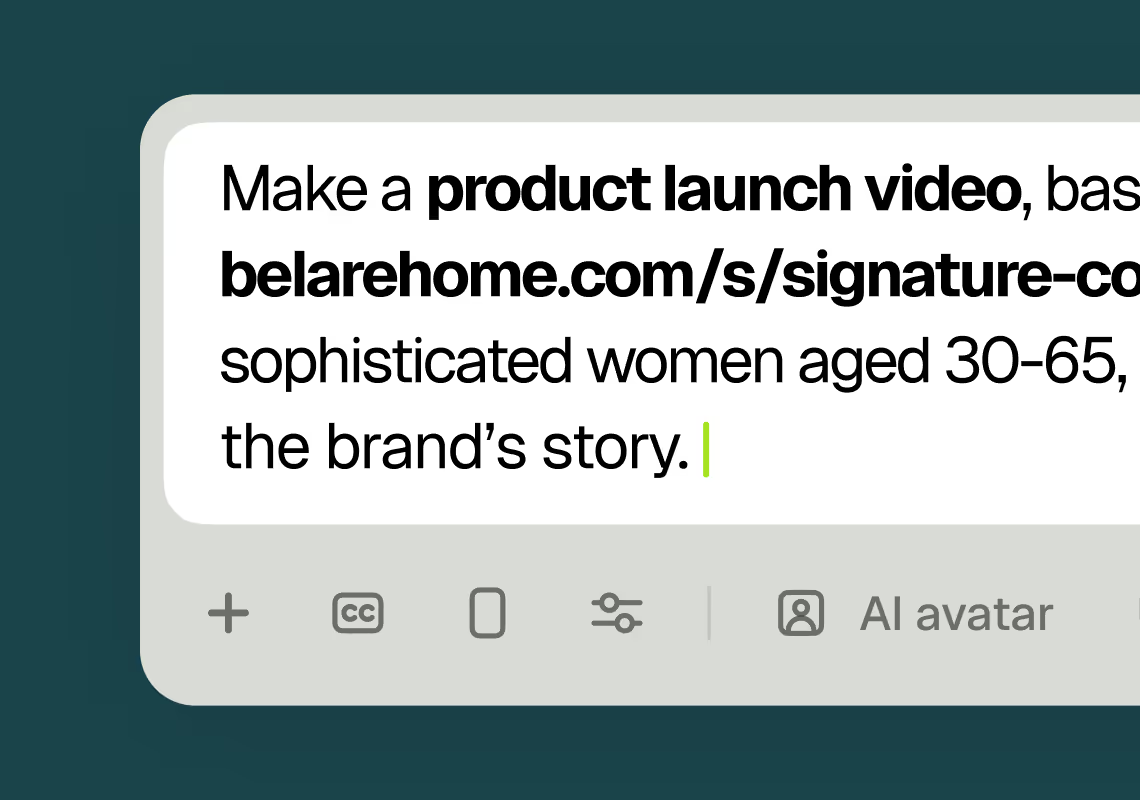
1Describe your video
Paste your promo brief, script, outline, or blog URL into Agent Opus.
 2
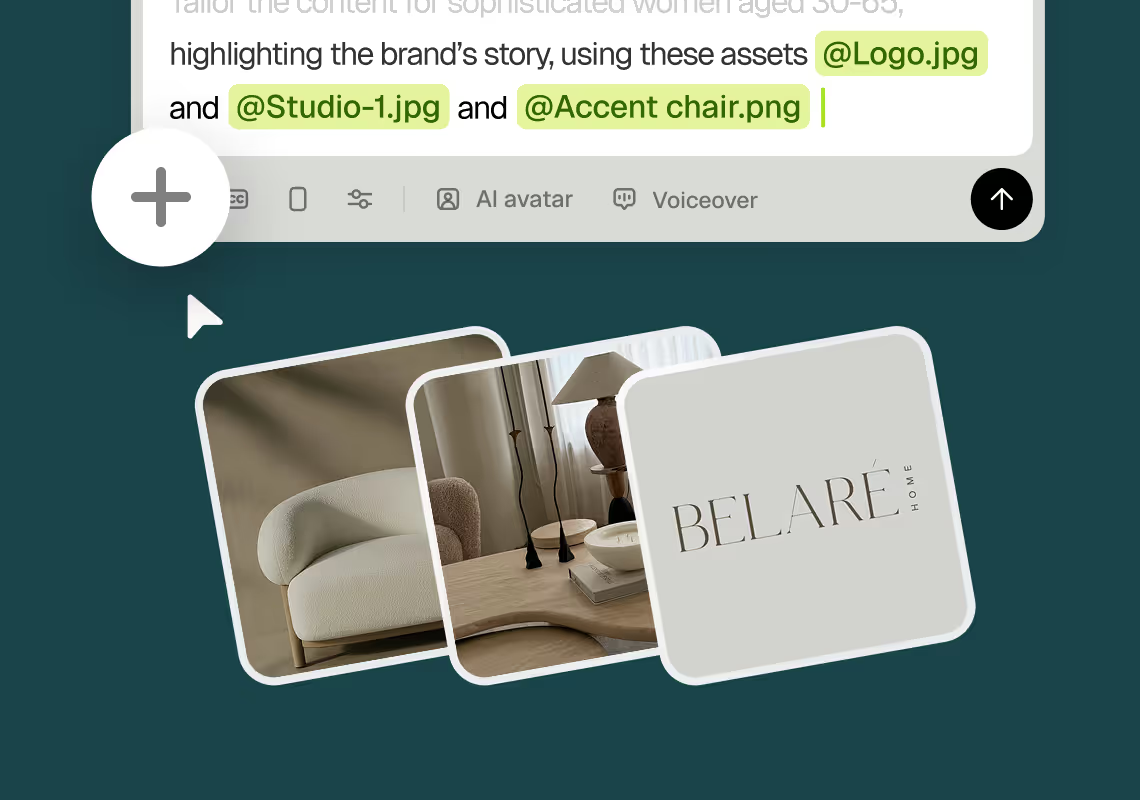
2Add assets and sources
Upload brand assets like logos and product images, or let the AI source stock visuals automatically.
 3
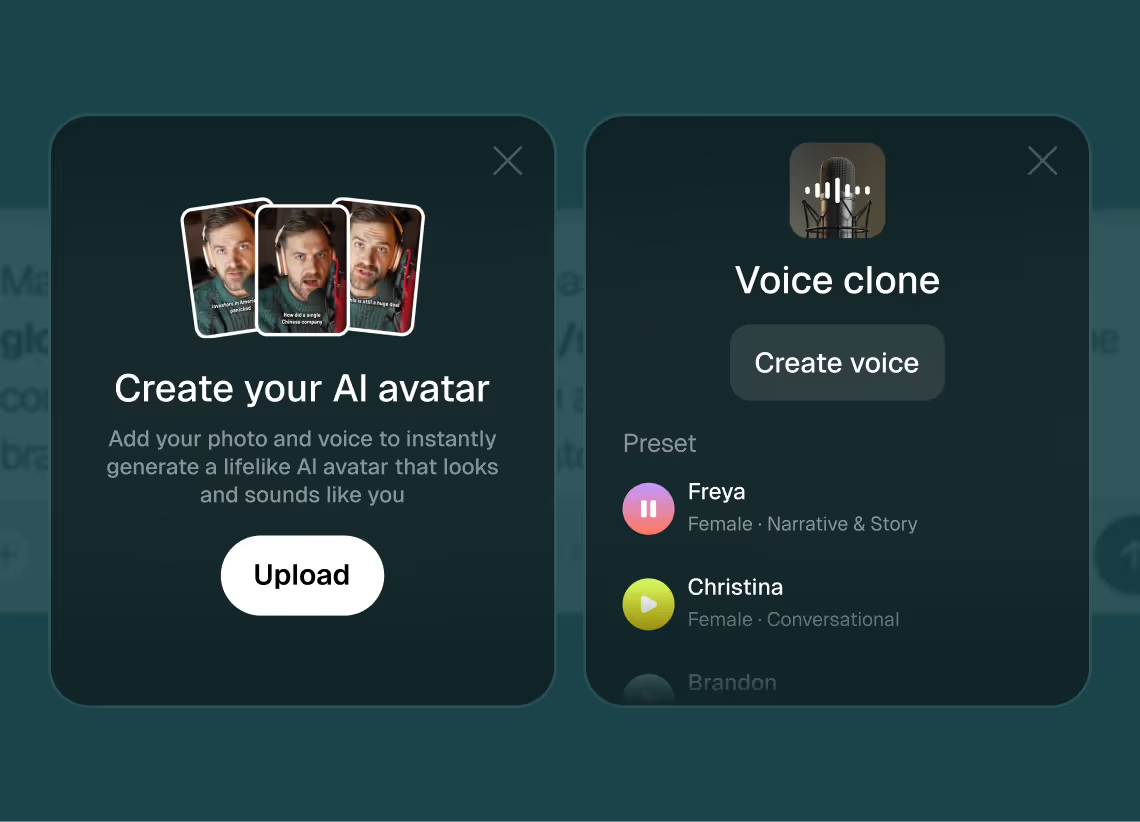
3Choose voice and avatar
Choose voice (clone yours or pick an AI voice) and avatar style (user or AI).
 4
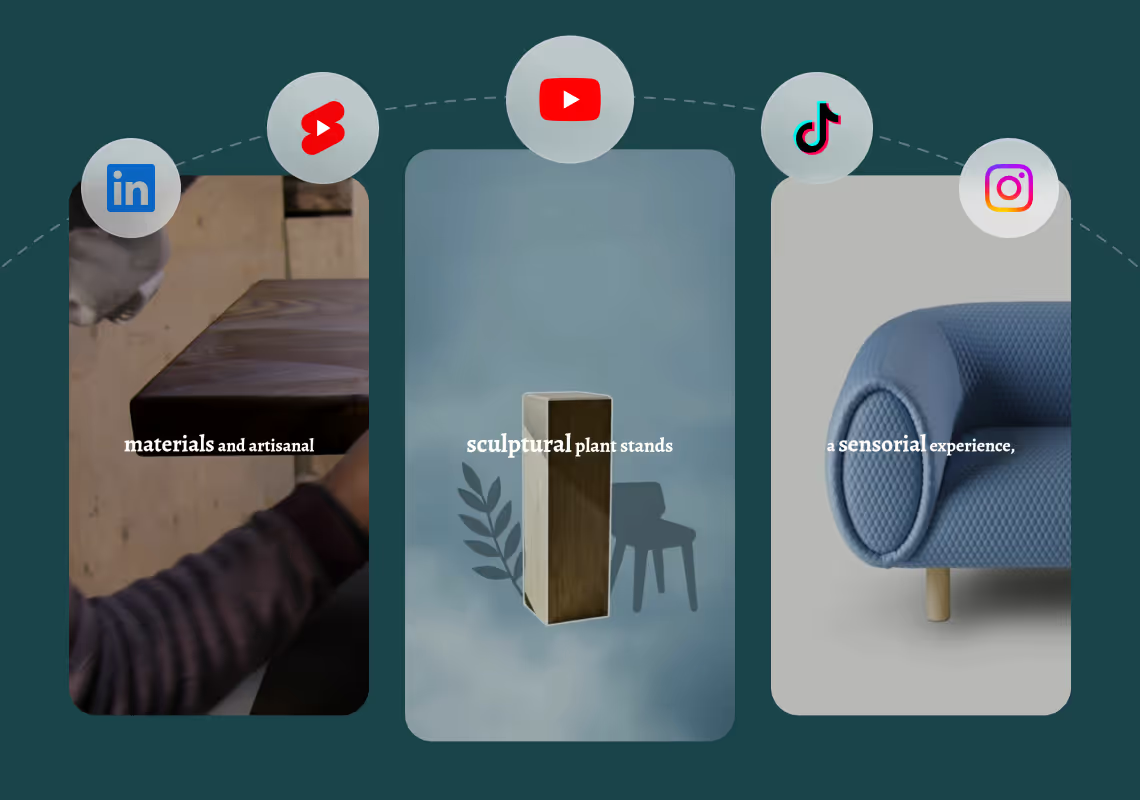
4Generate and publish-ready
Click generate and download your finished promo video in seconds, ready to publish across all platforms.


8 powerful features of Agent Opus' Text to Animation AI
Prompt-to-Video Generation
Turn a one-line idea into a finished video. The agent handles structure, pacing, B-roll selection, and final assembly automatically.
Script and Outline Support
Paste a full script, drop in an outline with section headers, or supply a blog or article URL — Agent Opus reads any of them and builds a video around the content.
AI Voiceover and Voice Cloning
Pick from natural-sounding AI voices in 30+ languages, or clone your own voice once. Every video then ships with your authentic narration.
Beat-Synced Motion Graphics
Dynamic visuals that lock to the beat of your audio or the pacing of your script — kinetic typography, transitions, and effects, no manual keyframing required.
Automatic Captions and Subtitles
Burn-in captions for short-form, soft subtitles for long-form, and multi-language translations — all generated and synced automatically.
Multi-Aspect-Ratio Export
9:16, 1:1, and 16:9 outputs from one job, with intelligent reframing of text, motion graphics, and focal elements for each ratio.
Brand Asset Integration
Upload your logo, watermark, fonts, and color palette. Agent Opus applies them consistently across every video automatically.
Avatar and Talking Head Support
Add an AI avatar, your own video footage, or a synthetic spokesperson to any video — useful for explainers, ads, and personal-brand content.
Testimonials
Awesome output, Most of my students and followers could not catch that it was using Agent Opus. Thank you Opus.
Wealth with Gaurav
I dont think id change a thing
Quirky Collectables
all in all LOVE THIS agent. I'm curious to see how I can push it (within reason) Just need to learn to get the consistency right with my prompts
Rebecca
Frequently Asked Questions
How does text to animation AI handle different input formats like prompts versus full scripts?
Text to animation AI in Agent Opus adapts to whatever text format you provide, whether that's a short creative prompt, a detailed script, a structured outline, or even a full blog article URL. When you submit a brief prompt like 'animated product demo for a fitness app showing workout tracking features,' the AI expands that concept into a complete narrative structure, generates appropriate scenes, and creates motion graphics that visualize your idea. For full scripts, Agent Opus follows your exact narrative flow, timing each animated scene to match your written content and generating visuals that support every line. The system analyzes your text semantically to understand intent, key concepts, and emotional tone, then translates those elements into animated sequences with matching motion graphics, transitions, and visual effects. Outlines receive similar treatment, with the AI filling in narrative gaps while respecting your structural framework. Blog URLs trigger automatic content extraction where Agent Opus reads the article, identifies key points, and transforms written concepts into animated explainer sequences. The text to animation AI doesn't just convert words to visuals; it interprets meaning, paces information delivery, and creates motion graphics that enhance comprehension. Shorter prompts give the AI more creative freedom in visual interpretation, while detailed scripts provide precise control over narrative and pacing. Both approaches produce publish-ready animated videos without requiring you to specify camera angles, transition types, or motion graphic styles. The system handles those production decisions automatically based on content analysis and animation best practices.
What types of motion graphics and animation styles can text to animation AI generate?
Text to animation AI through Agent Opus creates a wide range of motion graphics styles suited to different content types and brand aesthetics. The system generates kinetic typography animations where text elements move, scale, and transition dynamically to emphasize key messages. For product demos, the AI creates animated UI mockups, feature callouts, and visual annotations that highlight functionality without requiring actual screen recordings. Explainer content receives diagram animations, process flows, and conceptual visualizations that make complex ideas accessible through motion. The text to animation AI also produces logo animations, brand element transitions, and visual identity integration that maintains consistency across your animated content. Scene transitions include smooth fades, dynamic wipes, zoom effects, and creative reveals that professional animators typically craft manually. Visual effects like particle systems, light effects, and atmospheric elements add polish and production value automatically. The AI selects animation styles based on your content context; corporate explainers receive clean, professional motion graphics while social content gets more energetic, attention-grabbing animations. You can influence style through prompt language, using terms like 'minimal,' 'bold,' 'playful,' or 'corporate' to guide aesthetic decisions. The motion graphics engine handles timing, easing curves, and animation physics automatically so movements feel natural rather than robotic. Text to animation AI also generates animated charts, data visualizations, and infographic sequences when your content includes statistics or comparative information. Every animation element serves your narrative, with motion graphics timed to reinforce key points and maintain viewer engagement throughout the video.
Can text to animation AI maintain brand consistency across multiple animated videos?
Text to animation AI in Agent Opus maintains brand consistency by integrating your visual assets and learning from your content patterns across multiple video generations. When you upload brand elements like logos, color palettes, product images, or custom graphics, the system incorporates those assets into every animated video you create. The AI recognizes your brand colors and applies them to motion graphics, text overlays, and visual accents automatically. If you generate multiple animated videos using similar prompts or scripts, the text to animation AI identifies recurring themes and maintains visual continuity in how it represents your products, services, or concepts. Voice consistency works similarly; when you use voice cloning for narration, every animated video features the same recognizable voice, building familiarity with your audience. The system also learns stylistic preferences over time. If your first few animated videos use bold, high-energy motion graphics, subsequent generations will favor similar animation intensity unless you specify otherwise in your prompts. For teams managing multiple campaigns, text to animation AI ensures that different team members can generate animated content that feels cohesive even when working independently. Brand asset integration extends to product shots, where the AI positions and animates your actual product images rather than generic stock alternatives. This creates authentic animated demos and explainers that accurately represent your offerings. The motion graphics engine respects brand guidelines by avoiding visual styles that conflict with your identity; corporate brands won't receive overly casual animations, and playful consumer brands won't get stiff, formal motion graphics. Text to animation AI also maintains aspect ratio and format consistency, so if you're building a series of animated social videos, every output matches platform requirements and visual standards automatically.
What are the limitations or edge cases when using text to animation AI for video generation?
Text to animation AI through Agent Opus handles most animation needs automatically, but understanding its boundaries helps you craft better inputs and set realistic expectations. The system excels at conceptual animations, motion graphics, and visual storytelling but doesn't generate photorealistic 3D character animation or complex physics simulations that require specialized rendering engines. If your text describes highly specific, frame-by-frame animation sequences with precise timing requirements, the AI interprets your intent but may not match exact millisecond-level specifications that traditional animation software allows. Text to animation AI works best when you describe outcomes and concepts rather than technical animation parameters. For example, 'show the app interface with smooth transitions between screens' produces better results than 'use a 0.3-second ease-in-out cubic bezier transition.' The system also relies on available visual assets; while it sources royalty-free and stock images automatically, extremely niche or proprietary imagery may require you to upload specific assets. Brand-new products without existing photography might need you to provide product shots for the most accurate animated representations. Text to animation AI generates videos in standard social and web formats, but if you need unusual aspect ratios or resolution specifications for specialized displays, you may need to specify those requirements clearly in your prompt. The system handles multiple languages for text overlays and can work with various voice options, but highly specialized terminology or industry jargon might require additional context in your script to ensure accurate visual representation. Animation length is another consideration; while text to animation AI can generate videos from 15 seconds to several minutes, extremely long-form animated content might be better created as multiple shorter videos that you can sequence. The AI makes intelligent decisions about pacing and scene duration, but if you have non-negotiable timing requirements for specific segments, providing detailed script timing helps guide generation.